
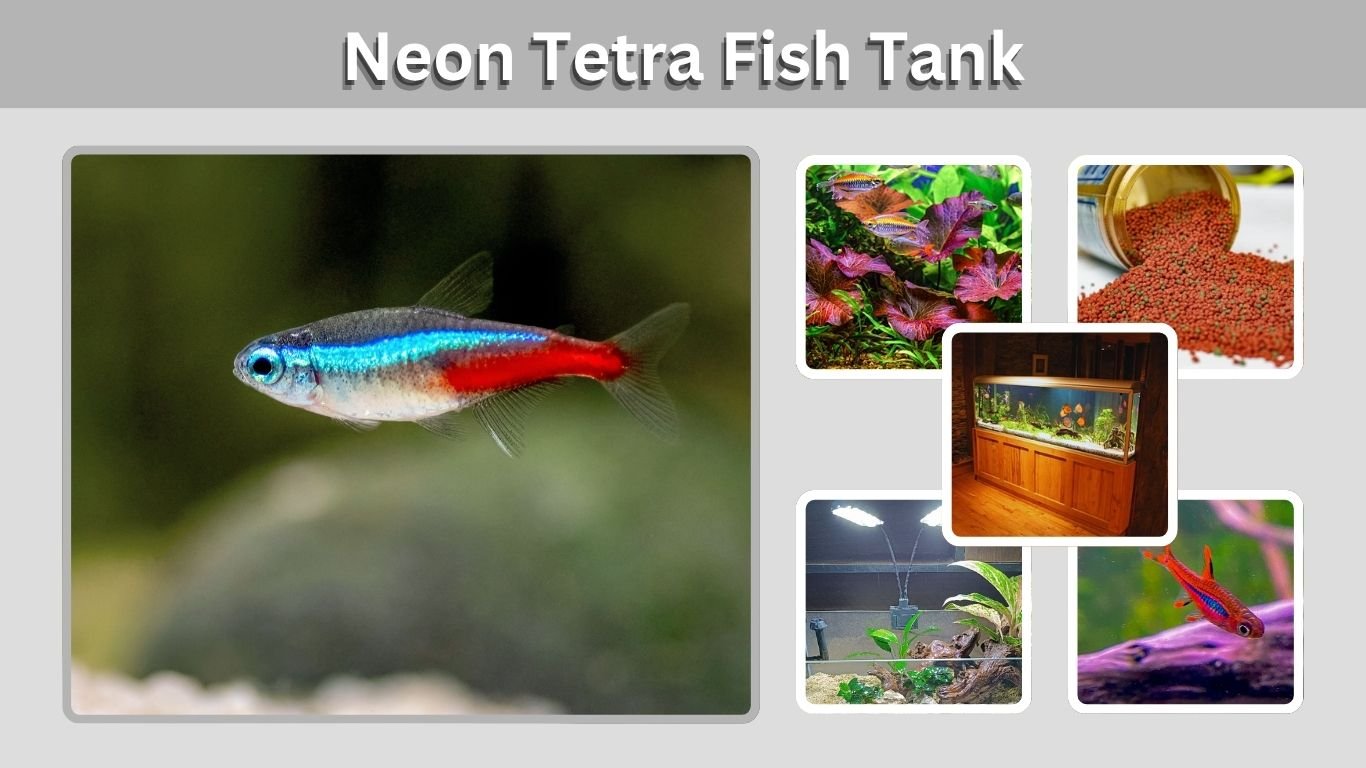
A well-planned neon tetra fish tank brings bright color and constant movement to any room. Although neon tetras are small, they need more swimming space and companionship than many beginners expect. The best setup includes a properly cycled tank, stable tropical water, gentle filtration, plants, and a school of at least six fish. This guide explains the ideal tank size, temperature, equipment, decorations, feeding routine, compatible tank mates, and solutions to common neon tetra tank problems.
Best Fish Tank Size for Neon Tetras
Neon tetras grow to only around 1.5 inches long, but they are active schooling fish. They feel safer and behave more naturally when kept in a group with enough horizontal swimming room.
A 10-gallon tank is generally the minimum practical size for a small school of neon tetras. However, a 15- or 20-gallon aquarium is easier to maintain and provides more space for plants and tank mates.
| Tank size | Recommended neon tetra stocking | Suitability |
| 2–3 gallons | Not recommended | Too small and unstable |
| 5 gallons | Not ideal | Limited swimming space |
| 10 gallons | 6–8 neon tetras | Acceptable minimum |
| 12 gallons | 8–10 neon tetras | Suitable for a small school |
| 18–20 gallons | 10–15 neon tetras | Excellent for a larger school |
These numbers assume that the aquarium is properly filtered, fully cycled, and not overcrowded with other species.
Can Neon Tetras Live in a Small Tank?
Neon tetras should not be kept permanently in a 2- or 3-gallon mini fish tank. Small aquariums experience rapid changes in temperature, ammonia, pH, and oxygen levels. Even a small amount of uneaten food can quickly reduce water quality.
A longer 10-gallon tank is much safer than a narrow or unusually tall aquarium because neon tetras mainly swim through the middle section of the tank.
How Many Neon Tetras Should Be Kept Together?
Keep at least six neon tetras together, although a group of eight to twelve is better. In a larger school, they are generally more confident, colorful, and active.
A single neon tetra or a very small group may hide, lose color, refuse food, or become stressed. Schooling also allows them to display their natural synchronized swimming behavior.
Neon Tetra Fish Tank Setup
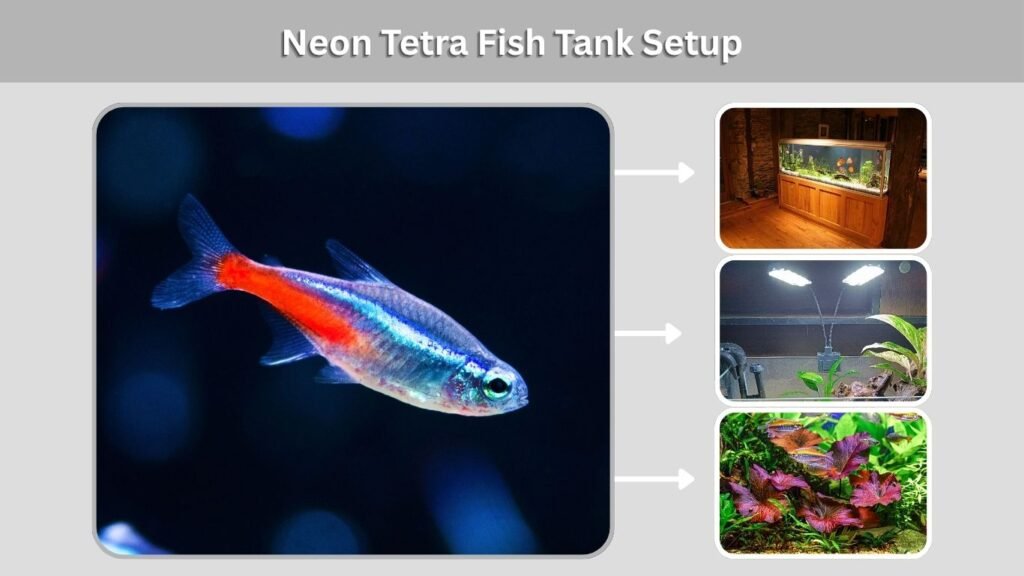
The aquarium should be completely set up and cycled before neon tetras are added. A newly filled tank may look clean, but it does not yet contain enough beneficial bacteria to process fish waste safely.
Essential Tank Equipment
A basic neon tetra fish tank setup should include:
- A 10-gallon or larger aquarium
- A properly sized filter with gentle water flow
- An adjustable aquarium heater
- A reliable thermometer
- A secure lid or cover
- An aquarium light
- Water conditioner
- A liquid water-testing kit
- Gravel, sand, or planted-tank substrate
- Live or artificial plants
- A siphon and bucket for water changes
A sponge filter or adjustable hang-on-back filter can work well. Strong currents should be reduced because neon tetras prefer calm or gently moving water.
Cycle the Aquarium Before Adding Fish
The aquarium cycle develops bacteria that convert toxic ammonia into nitrite and then into less harmful nitrate. Cycling commonly takes several weeks.
Before introducing neon tetras, test the water and confirm:
- Ammonia: 0 ppm
- Nitrite: 0 ppm
- Nitrate: preferably below 20–40 ppm
Adding several neon tetras to a completely new, uncycled tank can cause ammonia poisoning and sudden mass deaths.
Add Plants and Hiding Areas
A neon tetra planted tank closely resembles the shaded streams of their natural environment. Plants also provide security and help absorb some nutrients from the water.
Good aquarium plants include:
- Java fern
- Anubias
- Amazon sword
- Cryptocoryne
- Java moss
- Water sprite
- Floating plants
Place taller plants along the back and sides while leaving open space in the center for schooling. Driftwood, smooth rocks, and dried aquarium-safe leaves can create a natural appearance.
Neon Tetra Fish Tank Temperature and Water Conditions
Neon tetras need stable tropical water. Sudden temperature or chemistry changes are often more dangerous than water conditions that are slightly outside the ideal range.
| Water condition | Recommended range |
| Temperature | 72–78°F or 22–26°C |
| pH | Approximately 6.0–7.5 |
| Ammonia | 0 ppm |
| Nitrite | 0 ppm |
| Nitrate | Below 20–40 ppm |
| Water movement | Gentle |
What Temperature Should a Neon Tetra Tank Be?
A temperature of approximately 74–76°F is comfortable for most neon tetra aquariums. Use an adjustable heater rather than relying on room temperature, especially when temperatures fluctuate between day and night.
Higher temperatures may increase metabolism and reduce dissolved oxygen. Very cold water can weaken the immune system and make the fish inactive.
Maintaining Stable Water Quality
Replace around 20–30% of the tank water every week. Always treat tap water with a conditioner that neutralizes chlorine and chloramine.
Do not replace all the water or rinse filter media under untreated tap water. Doing so may remove beneficial bacteria and destabilize the aquarium cycle.
Test the water whenever fish:
- Gasp near the surface
- Lose color
- Stop eating
- Stay at the bottom
- Swim abnormally
- Die unexpectedly
Best Fish Tank Mates for Neon Tetras
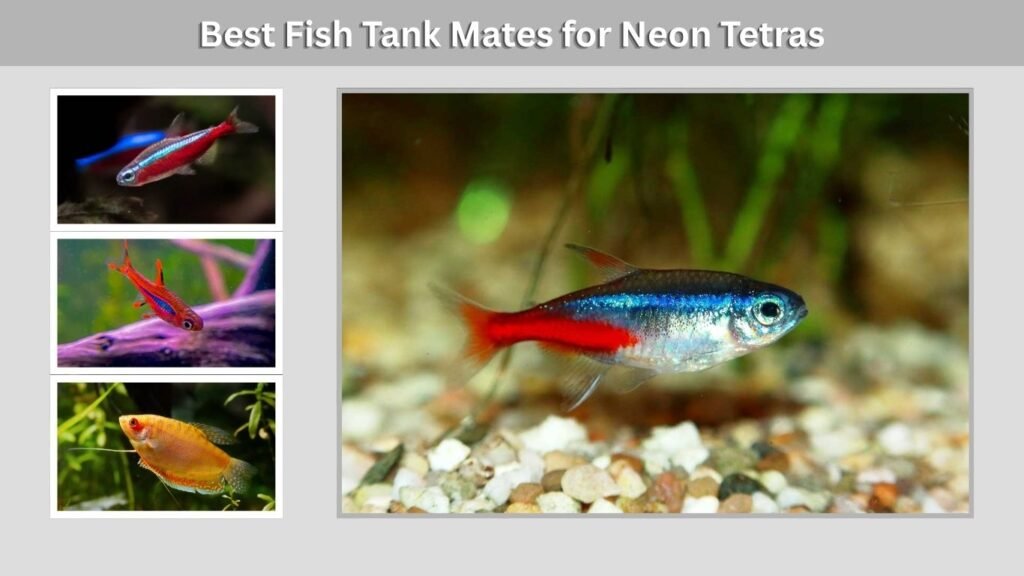
Neon tetras are peaceful and should be kept with small, nonaggressive species that prefer similar water conditions. Avoid large fish that can swallow them and aggressive fish that constantly chase them.
Compatible Tank Mates
Good neon tetra tank mates may include:
- Cardinal tetras
- Ember tetras
- Harlequin rasboras
- Chili rasboras
- Small Corydoras catfish
- Otocinclus catfish
- Kuhli loaches
- Honey gouramis
- Peaceful dwarf shrimp
- Nerite snails
Research the adult size, group requirements, diet, and tank capacity of every species before combining them.
Can Guppies Live With Neon Tetras?
Guppies and neon tetras can sometimes share a tank, particularly when both groups are healthy and the aquarium is large enough. However, guppies usually prefer harder, more alkaline water than neon tetras.
A stable middle range may work for captive-bred fish, but neither species should be forced into unsuitable water conditions merely to keep them together.
Can Neon Tetras Live With a Betta?
A betta and neon tetras may coexist in a planted tank of at least 15–20 gallons, but compatibility is never guaranteed. Some bettas ignore tetras, while others chase or attack them.
Provide dense plants, visual barriers, and enough space for both species. Be prepared to separate them immediately if there is persistent chasing, biting, hiding, or damaged fins.
Feeding Neon Tetras in an Aquarium
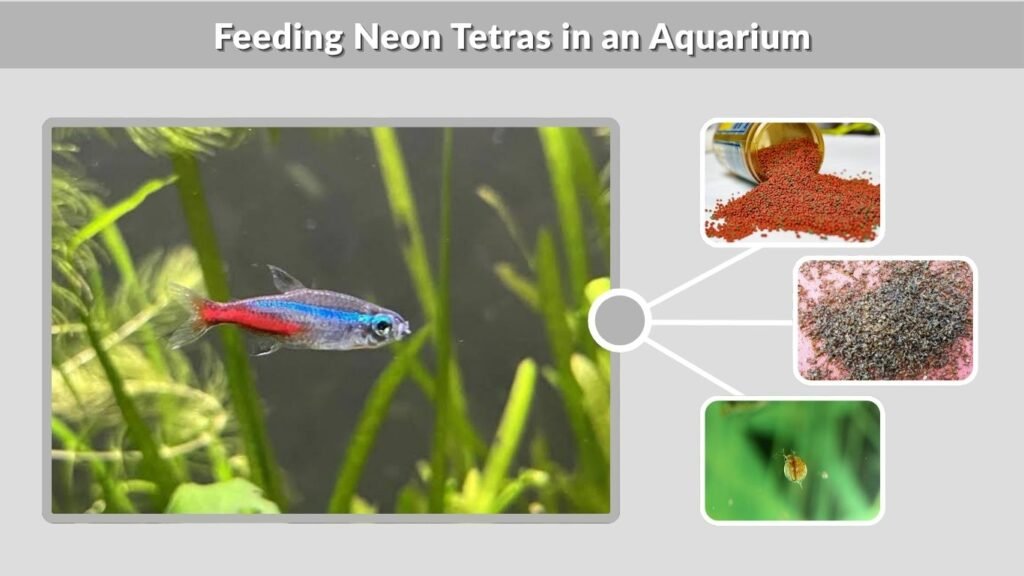
Neon tetras are omnivores with small mouths. Feed a varied diet consisting of quality micro-pellets or finely crushed flakes, supplemented with occasional frozen or live foods.
Suitable foods include:
- Micro-pellets
- Crushed tropical flakes
- Baby brine shrimp
- Daphnia
- Cyclops
- Finely chopped bloodworms
Offer a small amount once or twice daily. The fish should finish the food within one or two minutes. Overfeeding creates waste, increases ammonia, encourages algae, and may cause digestive problems.
Common Neon Tetra Fish Tank Problems
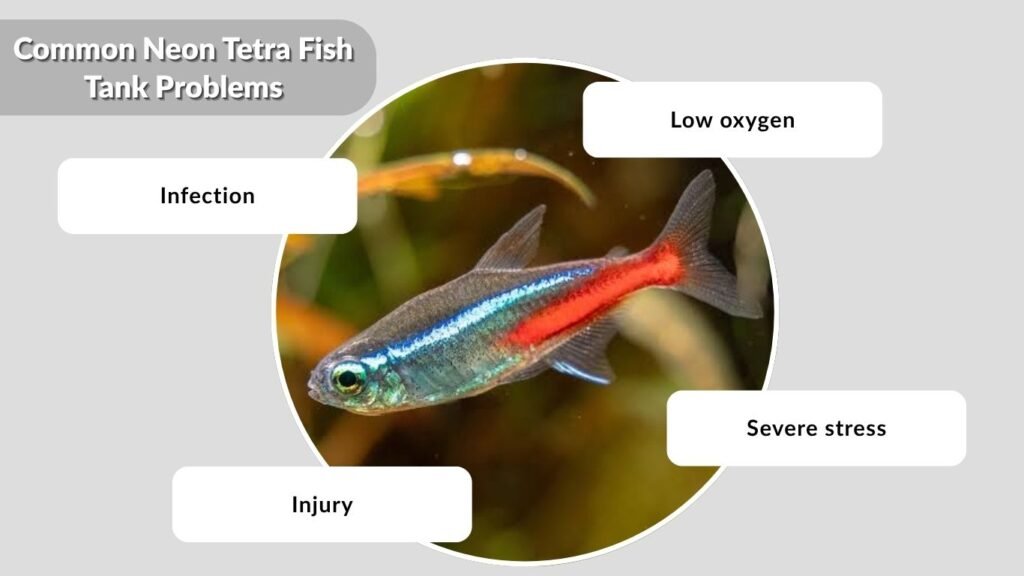
Most problems in neon tetra tanks are connected to poor water quality, immature aquariums, stress, incorrect temperature, overcrowding, or the introduction of sick fish.
Neon Tetra Laying on the Bottom
A neon tetra resting briefly at night may be normal. However, remaining on the bottom during the day can indicate:
- Ammonia or nitrite poisoning
- Temperature shock
- Low oxygen
- Severe stress
- Injury
- Infection
- Advanced age
Test the water immediately. Perform a partial water change if ammonia or nitrite is detected, increase aeration, and observe the fish for spots, swelling, unusual swimming, or rapid breathing.
Neon Tetras Dying in a New Tank
New tank deaths frequently occur because the aquarium has not completed the nitrogen cycle. Other possible causes include untreated tap water, temperature shock, rapid pH changes, overstocking, or introducing unhealthy fish.
Do not continuously replace dead fish without identifying the cause. Test ammonia, nitrite, nitrate, temperature, and pH first.
Fungus in a Neon Tetra Tank
White fuzzy growth on wood, food, or decaying material may be harmless biofilm or fungus feeding on organic waste. White cotton-like patches growing directly on a fish may indicate an infection.
Remove uneaten food and dead plant material, maintain clean water, and quarantine visibly sick fish when possible. Avoid using medication until the condition has been properly identified because unnecessary treatments can stress fish and damage biological filtration.
Neon Tetra Eggs in the Fish Tank
Neon tetras scatter tiny, adhesive eggs among plants. Adults may eat the eggs soon after spawning, making successful breeding unlikely in a community aquarium.
Breeders normally use a separate dimly lit tank with soft, slightly acidic water, fine-leaved plants, or a spawning mesh. The parents are removed after spawning.
FAQs
Is a 10-gallon fish tank big enough for neon tetras?
A 10-gallon aquarium can hold a small school of approximately six to eight neon tetras when it is properly cycled and maintained. A larger tank is preferable because it offers more stable water conditions, greater swimming space, and additional room for plants.
How many neon tetras can live in an 18-gallon tank?
An 18-gallon tank may support approximately 10–15 neon tetras, depending on its dimensions, filtration, maintenance schedule, plant density, and other inhabitants. Always consider the total biological load rather than calculating capacity from neon tetras alone.
Do neon tetras need a heater?
Neon tetras generally need a heater because they require stable tropical temperatures of around 72–78°F. Even when the room feels warm, the water temperature may fall significantly at night or during cooler weather. Pair the heater with a thermometer.
Do neon tetras need live plants?
Live plants are not absolutely required, but they are highly beneficial. They provide shelter, reduce stress, improve the aquarium’s appearance, and give the fish shaded areas. Artificial plants can also work, provided they have soft surfaces that cannot injure the fish.
How long should a tank run before adding neon tetras?
The tank should run until the nitrogen cycle is complete, not merely for a fixed number of days. Add neon tetras only after tests consistently show zero ammonia, zero nitrite, and a measurable amount of nitrate. This process often takes several weeks.