
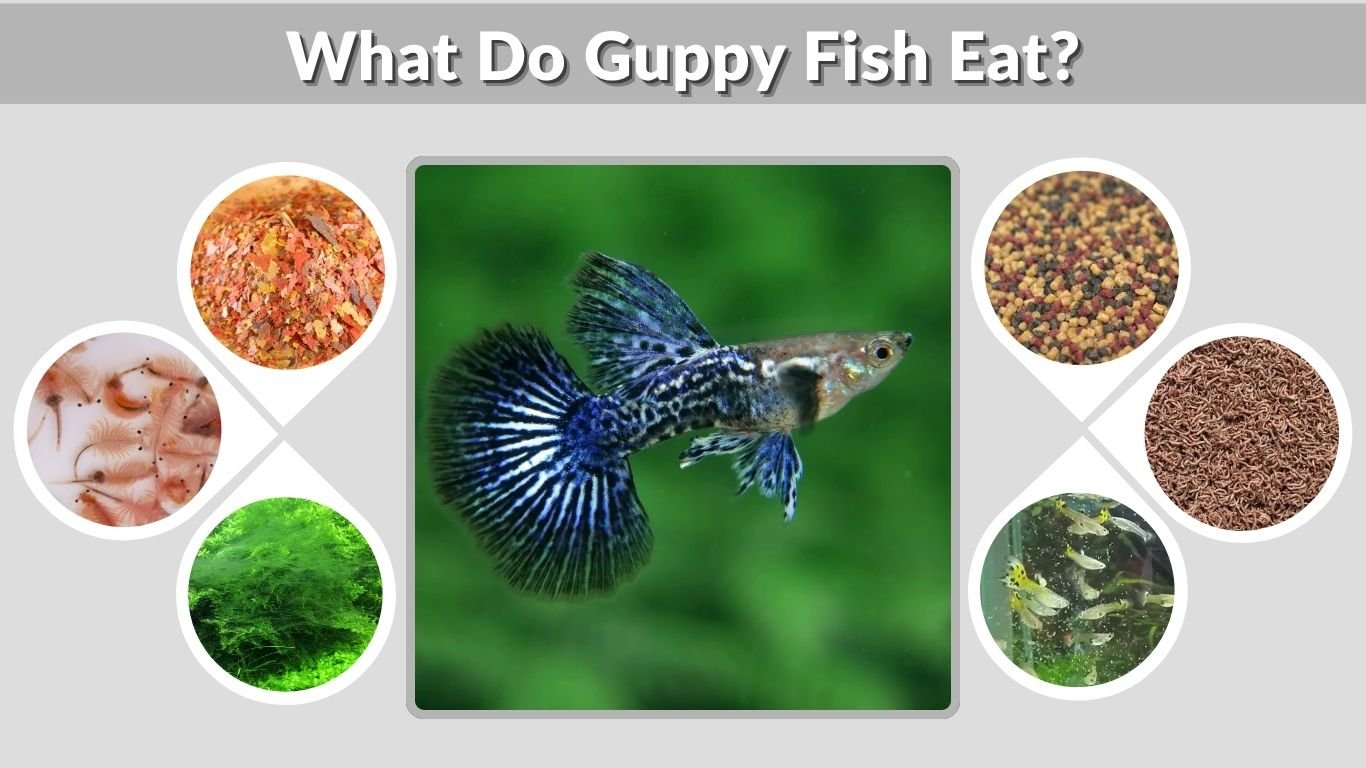
Guppies are one of the most popular freshwater aquarium fish because they are colorful, peaceful, and easy to care for. Like all fish, guppies require a balanced diet to stay healthy, active, and brightly colored. Feeding the right foods can improve growth, strengthen immunity, and increase breeding success.
Since guppies are omnivores, they eat both plant-based foods and protein-rich foods. They enjoy a varied diet that includes flakes, live foods, frozen foods, algae, and small aquatic organisms.
What Do Guppy Fish Eat?
Guppies are opportunistic feeders that will eat a wide variety of foods in aquariums and natural habitats. Their small mouths and active metabolism mean they prefer small, easy-to-digest foods offered multiple times daily.
A healthy guppy diet should include both protein and vegetable matter.
Main Foods Guppies Eat
Common foods for guppies include:
- Tropical fish flakes
- Micro pellets
- Brine shrimp
- Bloodworms
- Daphnia
- Algae
- Mosquito larvae
- Vegetable-based foods
Providing a variety of foods helps guppies maintain bright coloration and strong overall health.
What Do Guppies Eat in the Wild?
Wild guppies naturally feed on tiny aquatic organisms and plant material found in streams and ponds.
Their natural diet often includes:
- Small insects
- Mosquito larvae
- Tiny crustaceans
- Algae
- Plant debris
- Biofilm
This varied diet is one reason guppies adapt so well to aquarium life.
Best Fish Food for Guppies
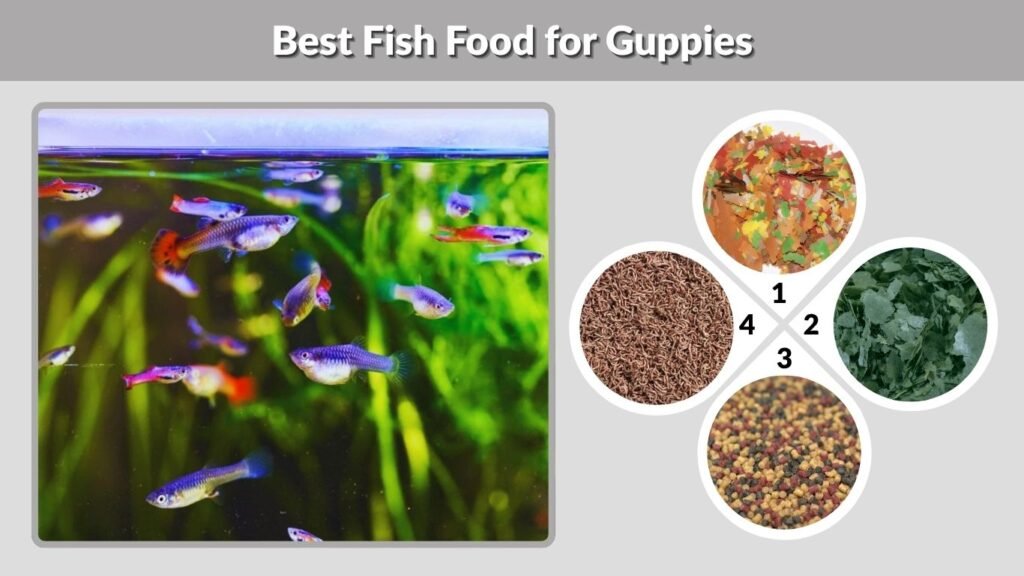
Choosing high-quality fish food is important for maintaining healthy guppies. Commercial guppy foods are designed to provide balanced nutrition while supporting growth and coloration.
Most guppies thrive on a mixture of dry, frozen, and live foods.
Best Commercial Foods for Guppies
Some of the best commercial foods for guppies include:
- Tropical fish flakes
- Spirulina flakes
- Micro pellets
- Freeze-dried bloodworms
- Protein-rich guppy formulas
Foods designed for tropical freshwater fish usually work well for guppies.
What Type of Fish Food Do Guppies Eat?
Guppies can eat many different aquarium foods, but some choices are healthier than others.
| Food Type | Suitable for Guppies? | Benefits |
| Tropical Fish Flakes | Yes | Balanced daily nutrition |
| Micro Pellets | Yes | Easy digestion |
| Betta Food | Occasionally | Higher protein |
| Goldfish Food | Not ideal long-term | Lower protein content |
A balanced tropical fish food is usually the best option for long-term guppy care.
Can Guppies Eat Tropical Fish Flakes?
Yes, tropical fish flakes are one of the best staple foods for guppies. These flakes provide balanced nutrients and are easy for guppies to eat because of their small size.
Benefits of tropical fish flakes include:
- Easy digestion
- Balanced vitamins
- Suitable daily nutrition
- Widely available
High-quality flakes are especially useful for beginner guppy keepers.
Can Guppies Eat Betta Fish Food?
Guppies can occasionally eat betta fish food, but it should not become their primary diet. Betta food usually contains more protein because bettas are carnivorous fish.
Feeding betta food too often may lead to:
- Digestive issues
- Unbalanced nutrition
- Increased waste production
Small amounts are generally safe as an occasional supplement.
Can Guppy Fish Eat Goldfish Food?
Guppies can eat goldfish food occasionally, but it is not ideal for regular feeding. Goldfish foods are formulated differently because goldfish have different nutritional requirements.
Problems with feeding goldfish food long-term include:
- Lower protein levels
- Poor nutrition balance
- Reduced coloration
Tropical fish food remains a better choice for guppies.
Live and Frozen Foods for Guppies
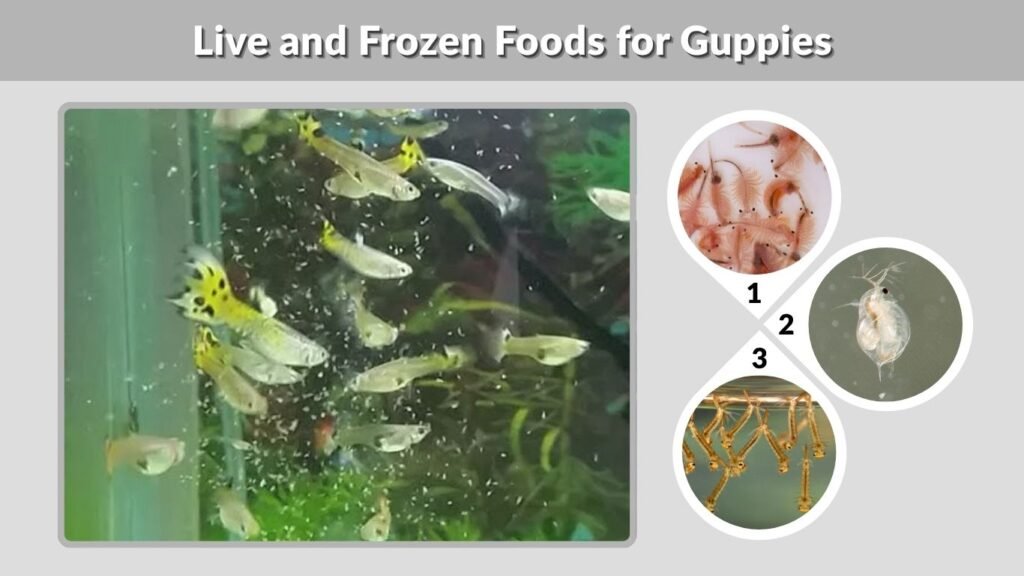
Live and frozen foods provide excellent nutrition for guppies and help stimulate natural feeding behavior. Many aquarists use these foods to improve coloration, breeding success, and overall health.
Protein-rich live foods are especially beneficial for growing fry and breeding adults.
Best Live Foods for Guppies
Popular live and frozen foods include:
- Brine shrimp
- Daphnia
- Bloodworms
- Mosquito larvae
- Vinegar eels
These foods are rich in nutrients and highly attractive to guppies.
Benefits of Live Foods
Adding live foods to a guppy diet offers several advantages.
Important benefits include:
- Improved body coloration
- Increased breeding activity
- Better growth
- Stronger immune system
- More natural hunting behavior
Many breeders use live foods to condition guppies before breeding.
Can Guppy Fish Eat Mosquito Larvae?
Yes, mosquito larvae are an excellent natural food source for guppies. In the wild, guppies frequently eat mosquito larvae from ponds and slow-moving water.
Benefits of mosquito larvae include:
- High protein content
- Natural feeding behavior
- Easy digestion
- Useful mosquito control
Because of this feeding habit, guppies are sometimes used to help reduce mosquito populations in outdoor ponds.
Do Guppies Eat Algae and Plants?
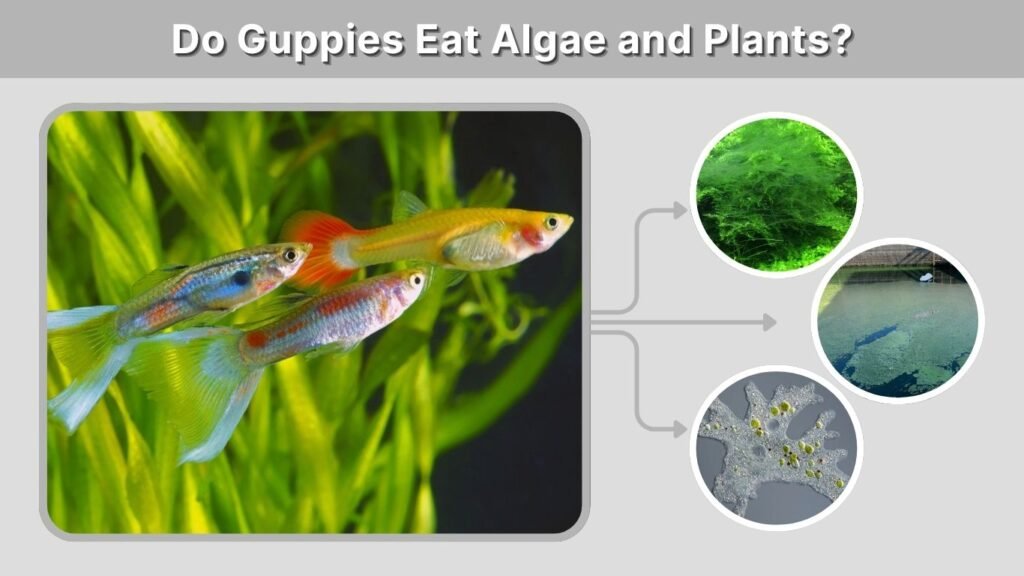
Although guppies are not dedicated algae eaters, they will occasionally graze on algae and biofilm in aquariums. This plant-based feeding behavior helps supplement their omnivorous diet.
Guppies are generally safe for planted aquariums and rarely damage healthy plants significantly.
Do Guppy Fish Eat Algae?
Yes, guppies may nibble on soft algae growing on tank surfaces, decorations, and plants.
However, they are not considered strong algae cleaners like some specialized species.
Guppies mainly eat:
- Soft algae
- Biofilm
- Tiny microorganisms
They should not be relied upon as the main algae-control solution in aquariums.
Do Guppy Fish Eat Plants?
Guppies may occasionally nibble on soft aquarium plants, but they usually do not cause serious damage. Most guppies are more interested in algae, biofilm, and leftover food than healthy plant leaves.
In planted aquariums, guppies commonly interact with:
- Java moss
- Hornwort
- Water sprite
- Duckweed
- Floating plants
Dense plants are also useful because they provide hiding spaces for guppy fry.
Best Algae Eating Fish With Guppies
Many aquarists keep algae eaters alongside guppies to help maintain cleaner tanks.
Some good algae-eating tank mates include:
- Corydoras catfish
- Otocinclus
- Nerite snails
- Amano shrimp
These species are peaceful and generally compatible with guppies in community aquariums.
How Often Should You Feed Guppies?
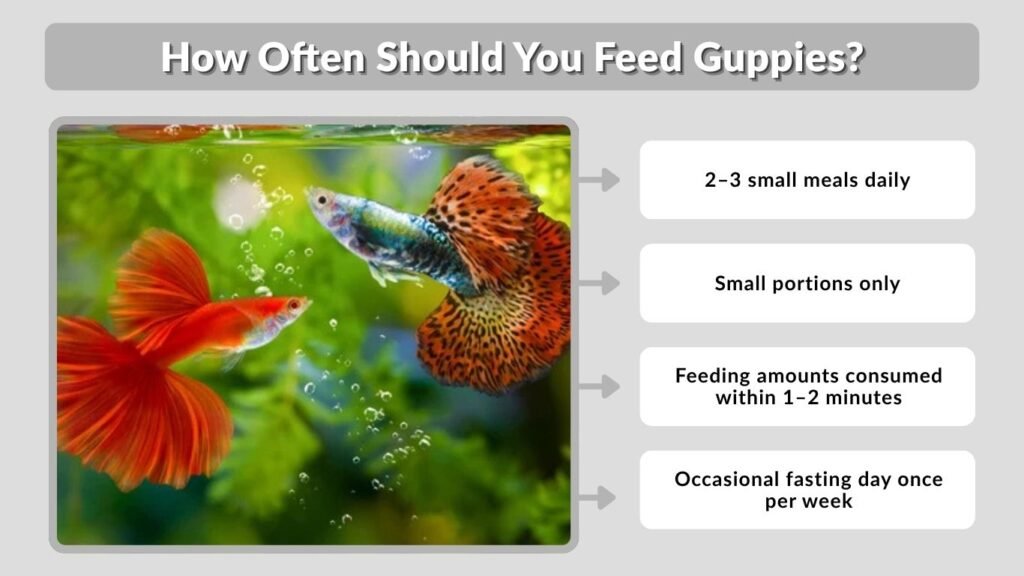
Proper feeding schedules are important for maintaining healthy guppies and clean aquarium water. Overfeeding is one of the most common mistakes beginner fish keepers make.
Because guppies have small stomachs, they do best with smaller meals spread throughout the day.
Ideal Feeding Schedule
A healthy feeding routine usually includes:
- 2–3 small meals daily
- Small portions only
- Feeding amounts consumed within 1–2 minutes
- Occasional fasting day once per week
Frequent small feedings help mimic their natural grazing behavior.
Signs of Overfeeding
Overfeeding can quickly create health problems and poor water quality in aquariums.
Common signs include:
- Cloudy water
- Bloated fish
- Uneaten food
- Increased algae growth
- Poor water quality
Removing leftover food helps keep the aquarium cleaner and healthier.
Guppy Fish Not Eating
If guppies suddenly stop eating, it may indicate stress or illness.
Possible causes include:
- Poor water quality
- Incorrect temperature
- Disease
- Bullying from tank mates
- Stress from sudden changes
Healthy guppies are usually active eaters, so appetite loss should be monitored carefully.
What Do Baby Guppies Eat?
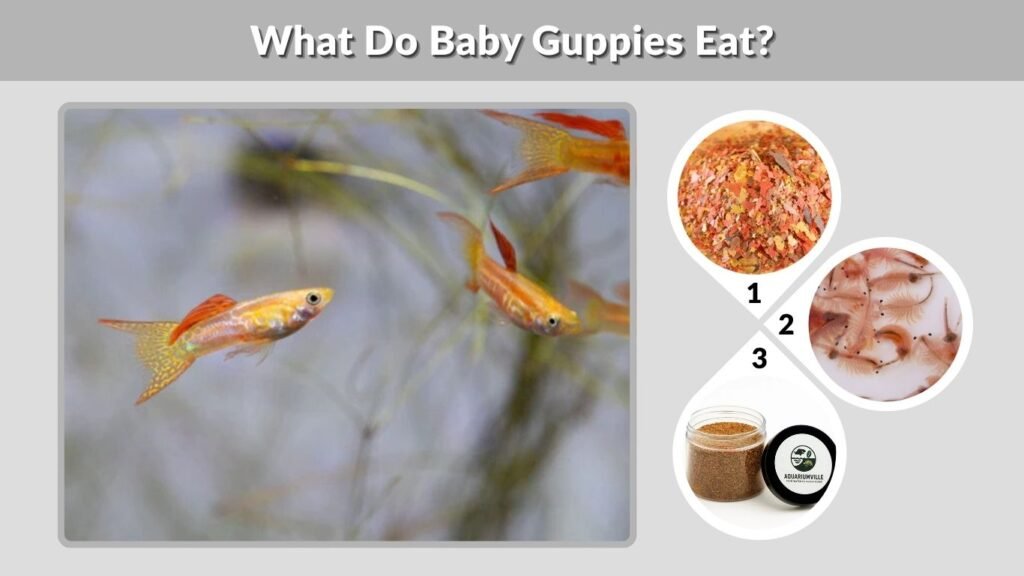
Baby guppies, also called fry, require smaller and more protein-rich foods than adults. Proper feeding is extremely important during the first few weeks of life because fry grow rapidly.
Frequent feeding helps support healthy development and stronger immune systems.
Best Food for Guppy Fry
Suitable foods for guppy fry include:
- Crushed flake food
- Baby brine shrimp
- Powdered fry food
- Microworms
- Finely crushed pellets
Baby brine shrimp is especially valuable because it promotes rapid growth and bright coloration.
How Often to Feed Guppy Fry
Guppy fry should be fed more frequently than adult fish.
Recommended feeding routine:
- 4–5 small feedings daily
- Small protein-rich portions
- Clean water after feeding
- Frequent monitoring
Because fry produce waste quickly, regular water changes are important for healthy growth.
Do Guppies Eat Their Babies?
One of the biggest surprises for beginner breeders is discovering that adult guppies sometimes eat their own fry. This behavior is fairly common in aquariums.
Adult guppies usually do not recognize fry as their offspring and may view them as food.
Do Guppy Fish Eat Their Babies?
Yes, guppies may eat newborn fry, especially in crowded tanks without hiding places.
This behavior happens because of:
- Natural survival instincts
- Hunger
- Stress
- Lack of hiding spaces
Fry survival rates improve significantly when tanks contain dense plants or separate breeding areas.
How to Protect Guppy Fry
Several methods can help increase fry survival.
Useful protection strategies include:
- Adding floating plants
- Using breeding boxes
- Separating fry into another tank
- Feeding adults regularly
- Providing dense hiding spaces
Java moss and hornwort are especially helpful for protecting newborn fry.
What Fish Eat Guppies or Guppy Fry?
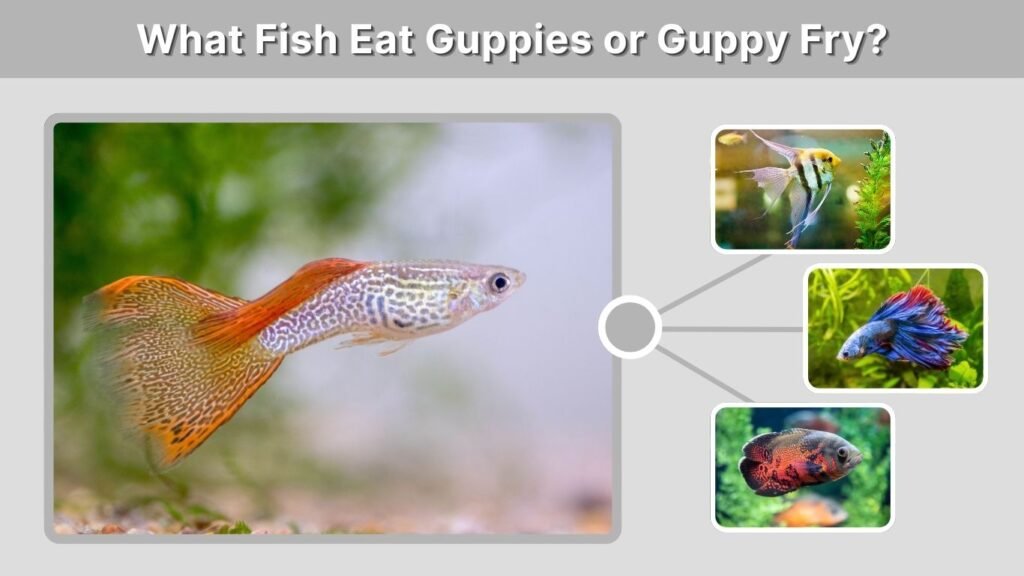
Although guppies are peaceful community fish, many larger aquarium species may prey on them or their fry.
Small fry are especially vulnerable in mixed-species tanks.
Fish That Eat Guppy Fry
Common predators of guppy fry include:
- Angelfish
- Bettas
- Oscars
- Mollies
- Larger tetras
Even peaceful-looking fish may eat fry if given the opportunity.
What Fish Won’t Eat Guppy Fry?
Some peaceful species are safer companions for guppies and fry.
Better tank mates include:
- Corydoras catfish
- Otocinclus
- Small rasboras
- Snails
- Shrimp species
No fish is completely guaranteed to ignore fry, but these species are generally less predatory.
Do Angelfish Eat Guppies?
Yes, angelfish may eat guppy fry and sometimes attack smaller adult guppies. Because angelfish are larger cichlids, they may view small fish as prey.
Bright male guppies are particularly vulnerable because of their long flowing tails.
Do Betta Fish Eat Guppies?
Betta fish may attack guppies, especially colorful males with large fins. Some bettas tolerate guppies peacefully, while others become highly aggressive.
Risks include:
- Fin nipping
- Chasing behavior
- Fry predation
- Stress in community tanks
Careful observation is necessary when housing bettas with guppies.
Foods Guppies Should Avoid
Not all foods are safe for guppies. Some foods can cause digestive problems, water pollution, or nutritional imbalances.
Unsafe Foods for Guppies
Foods guppies should avoid include:
- Bread
- Large food chunks
- Processed human food
- Excess fatty foods
- Spoiled food
Feeding appropriate aquarium foods is the safest way to maintain healthy guppies.
FAQs
What do guppy fish eat every day?
Guppies usually eat tropical fish flakes, micro pellets, algae, and small protein-rich foods every day. A balanced omnivorous diet helps maintain bright colors, healthy growth, and strong immune systems. Feeding small portions two or three times daily is ideal for most guppies.
Can guppies eat tropical fish flakes?
Yes, tropical fish flakes are one of the best staple foods for guppies. They provide balanced nutrition, are easy to digest, and work well for daily feeding. High-quality flakes help support healthy growth and vibrant coloration in guppies.
Do guppies eat algae?
Guppies sometimes graze on soft algae and biofilm in aquariums, but they are not strong algae eaters. While they may help clean small amounts of algae, specialized algae-eating fish or snails are more effective for long-term algae control.
Do guppies eat their babies?
Yes, adult guppies may eat their own fry, especially if the tank lacks hiding spaces. This behavior is natural and common in aquariums. Adding dense plants or separating fry into another tank can improve survival rates significantly.
What fish eat guppy fry?
Many larger aquarium fish eat guppy fry, including angelfish, bettas, oscars, mollies, and larger tetras. Fry are especially vulnerable in community tanks, so providing hiding places or separate breeding tanks helps protect newborn guppies.