
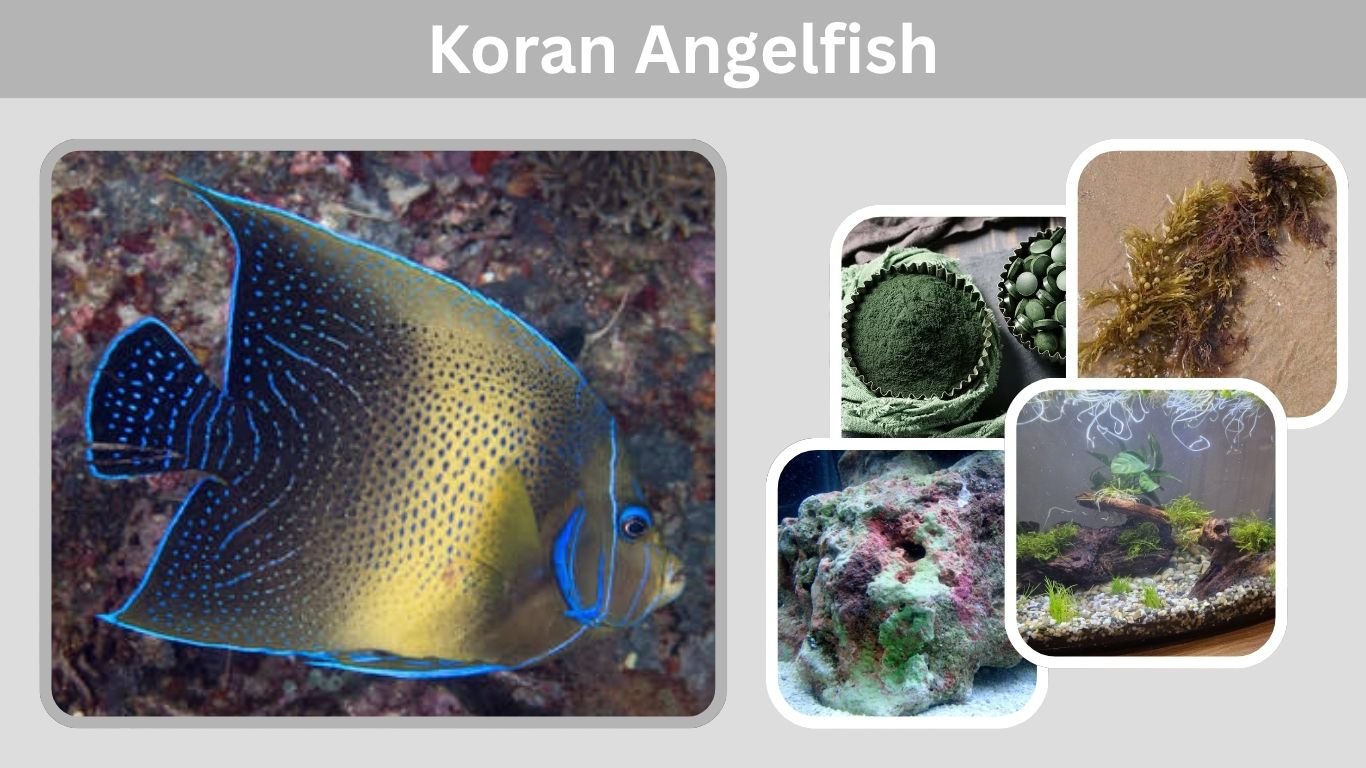
The Koran angelfish (Pomacanthus semicirculatus) is a large saltwater angelfish known for its dramatic transformation from a striped juvenile into a blue-edged, yellow-green adult. Also called the semicircle or half-circled angelfish, it is hardy compared with many large marine angelfish but requires considerable space, stable water conditions, and a varied diet. Because adults may nip at corals and clams, the species is generally better suited to a large fish-only aquarium than a delicate reef system.
Koran Angelfish Facts
| Feature | Details |
| Scientific name | Pomacanthus semicirculatus |
| Common names | Koran, semicircle and half-circled angelfish |
| Family | Pomacanthidae |
| Adult size | Up to about 15–16 inches |
| Minimum tank size | Approximately 250 gallons |
| Temperament | Semi-aggressive |
| Diet | Omnivorous |
| Reef safe | No |
| Care level | Moderate |
| Natural range | Indo-West Pacific |
| Recommended temperature | 72–78°F |
| Recommended pH | 8.1–8.4 |
The species inhabits tropical Indo-West Pacific waters from the Red Sea and East Africa eastward to Samoa, north to southern Japan, and south to Australia. It is found around reefs at depths of approximately 1–40 meters.
What Does a Koran Angelfish Look Like?
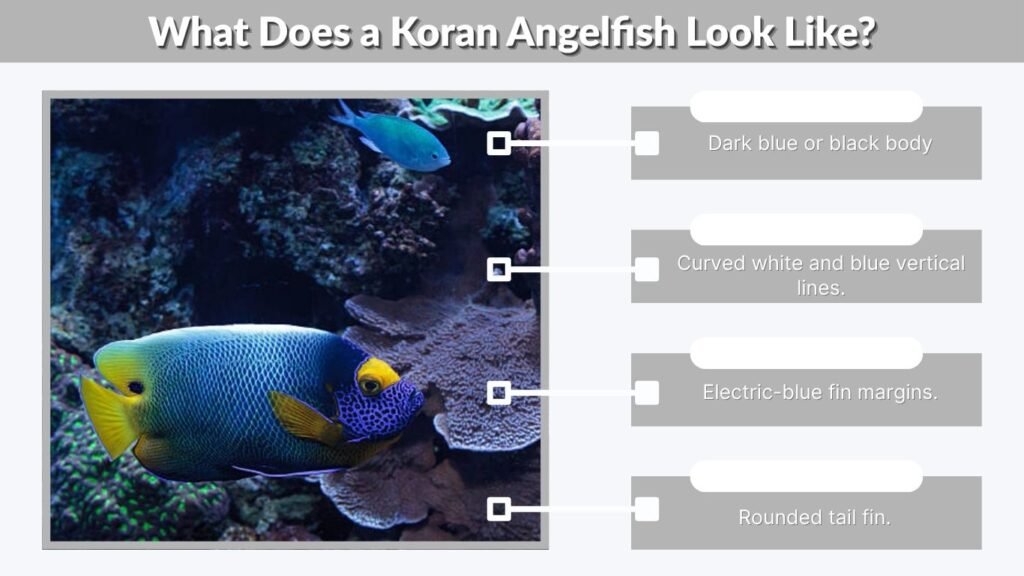
Juvenile and adult Koran angelfish look so different that inexperienced aquarists may mistake them for separate species.
Juvenile Koran Angelfish
Juveniles have a dark blue or nearly black body crossed by curved white and electric-blue bands. These semicircular markings give the species its common name.
Identification features include:
- Dark blue or black body
- Curved white and blue vertical lines
- Electric-blue fin margins
- Rounded tail fin
- Deep, laterally compressed body
- Small spine near the gill cover
Young fish are often more visually striking than adults, making them popular in the aquarium trade.
Adult Koran Angelfish
As the fish matures, the juvenile bands fade and are replaced by an olive, yellow-green or brownish body covered in small blue or yellow spots. Sapphire-blue lines outline the eyes, gill covers and fins.
The adult may also have:
- Yellow-green face
- Blue-ringed eyes
- Blue-edged dorsal and anal fins
- Numerous small spots across the body
- Elongated tips on the dorsal and anal fins
The term blue Koran angelfish normally describes the blue markings of this species rather than a separate color variety.
Koran Angelfish Color Change
The transition from juvenile to adult coloration is gradual. USGS records indicate that juveniles generally begin changing when they reach approximately 8–16 centimeters, or about 3–6 inches, in total length.
During the change, a fish may simultaneously display juvenile stripes, adult spots and developing yellow-green coloration. This uneven transitional pattern is normal and does not necessarily indicate stress or disease.
There is no fixed age or growth rate for the transformation. Growth depends on feeding, aquarium size, water quality, genetics and overall health.
Full Size and Tank Requirements
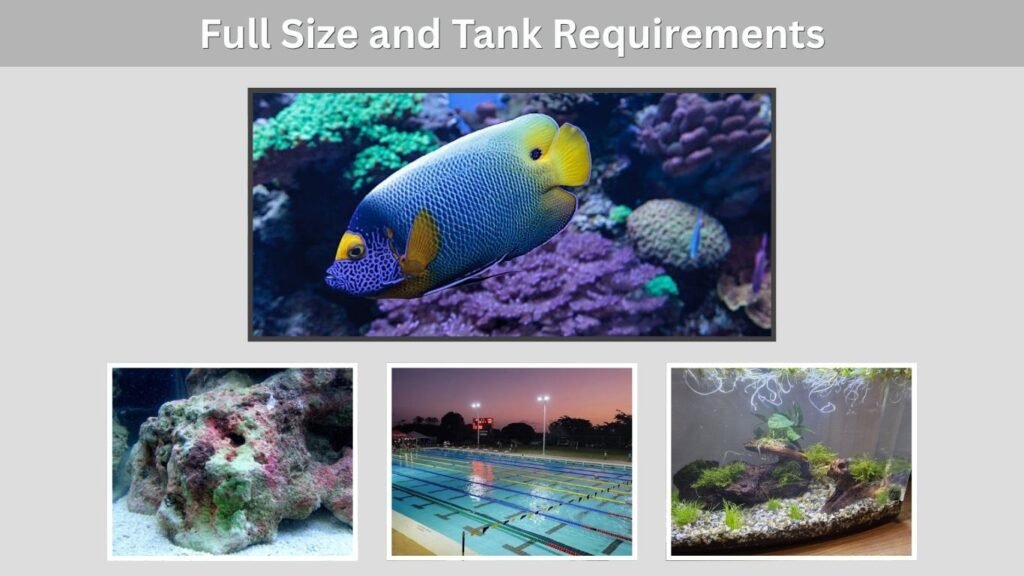
A fully grown Koran angelfish may reach approximately 15–16 inches. Its deep body, territorial behavior and active swimming make a spacious aquarium essential. FishBase records a maximum standard length of 40 centimeters.
Recommended Tank Size
A long-term aquarium should hold at least 250 gallons. A juvenile may temporarily fit in a smaller system, but buying a small fish with no plan for its adult size often leads to crowding, aggression and poor health.
The aquarium should provide:
- Large open swimming areas
- Stable rock structures
- Caves and shaded retreats
- Mature live rock for grazing
- Strong biological filtration
- Efficient protein skimming
- Moderate to strong water circulation
- A secure aquarium cover
Arrange rocks so the angelfish can swim around them rather than creating a solid wall that reduces open space.
Water Conditions
Maintain:
| Parameter | Recommended range |
| Temperature | 72–78°F |
| pH | 8.1–8.4 |
| Specific gravity | 1.020–1.025 |
| Alkalinity | 8–12 dKH |
| Ammonia and nitrite | 0 ppm |
| Nitrate | As low and stable as practical |
Sudden changes are often more stressful than small variations within an acceptable range. Test the water regularly and perform consistent partial water changes.
What Do Koran Angelfish Eat?
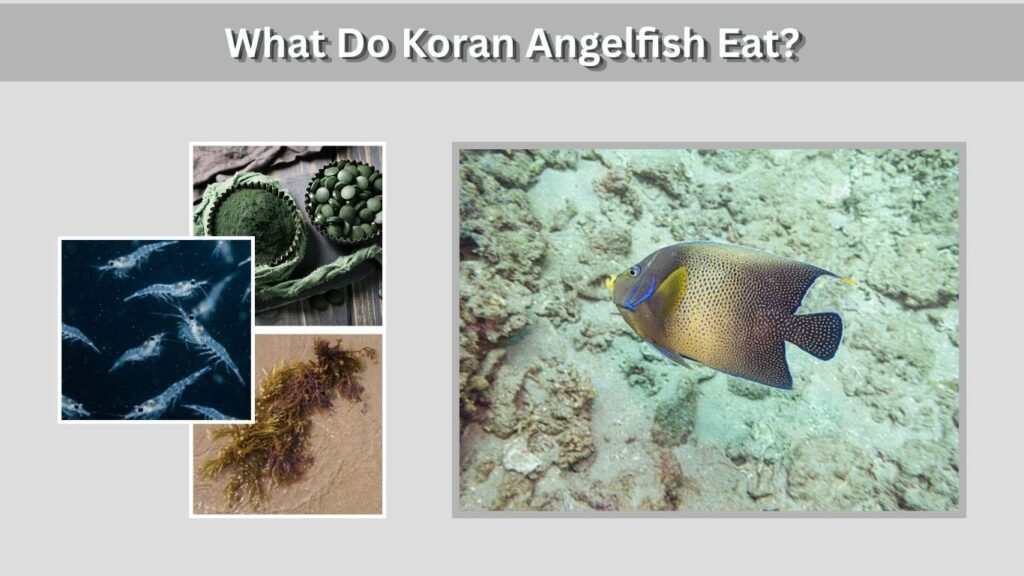
Wild Koran angelfish consume sponges, tunicates, algae and other material collected from reef surfaces. Juveniles often inhabit protected shallow areas, while adults forage around coral-rich coastal reefs.
In captivity, offer a varied diet containing:
- Marine angelfish food containing sponge
- Spirulina-based preparations
- Dried marine algae
- Mysis shrimp
- Chopped shrimp or clam
- Enriched frozen foods
- High-quality marine pellets
- Naturally growing algae on live rock
Feed moderate portions two or three times daily. Several small meals provide better grazing opportunities than one large feeding. LiveAquaria recommends a varied combination of marine algae, angelfish preparations and shrimp-based foods.
A newly introduced Koran angelfish may initially refuse food because of shipping stress. Provide shelter, reduce disturbances and try sponge-based frozen food, algae sheets and mysis shrimp. Persistent refusal to eat requires investigation of water quality, bullying, parasites or disease.
Is the Koran Angelfish Reef Safe?
The Koran angelfish is not considered reef safe. Individuals may nip at:
- Large-polyp and small-polyp stony corals
- Soft coral polyps
- Zoanthids
- Clam mantles
- Sponges
- Tunicates and other sessile invertebrates
Some juveniles behave well temporarily, but feeding the fish heavily cannot guarantee that corals will remain untouched. Its natural diet includes sponges and tunicates, so grazing on ornamental invertebrates is normal behavior rather than simple hunger.
A fish-only-with-live-rock aquarium is the safest setup.
Koran Angelfish Tank Mates
The species is semi-aggressive and may become increasingly territorial as it matures. Introduce it after peaceful fish have settled but before highly dominant species whenever possible.
| Tank mate | Compatibility |
| Tangs and surgeonfish | Usually suitable in a large tank |
| Larger wrasses | Generally compatible |
| Triggerfish | Possible with careful species selection |
| Groupers | Suitable if they cannot swallow the angelfish |
| Large clownfish | Often compatible |
| Gobies and small peaceful fish | May be intimidated |
| Dwarf angelfish | Possible but territorial conflict may occur |
| Other large angelfish | High risk without an exceptionally large tank |
| Shrimp and ornamental invertebrates | May be harassed or eaten |
| Corals and clams | Not reliably compatible |
Avoid keeping two Koran angelfish together unless the aquarium is exceptionally large and the keeper has experience managing territorial marine fish.
Koran Angelfish vs Emperor Angelfish
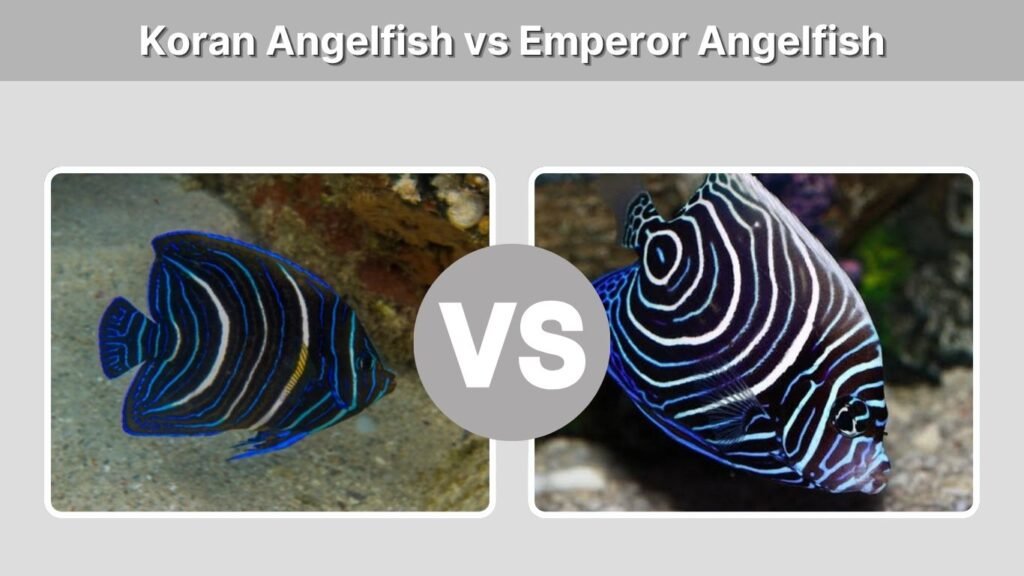
Juveniles of both species have dark bodies with curved blue and white bands, but their patterns differ.
| Feature | Juvenile Koran | Juvenile Emperor |
| Stripe pattern | Broader semicircular lines | Tighter circular lines |
| Tail markings | Lines may extend into the tail | Tail usually has distinct circular patterning |
| Adult appearance | Yellow-green with small spots | Yellow and blue horizontal stripes |
| Adult size | Up to about 15–16 inches | Up to about 15 inches |
| Reef safety | Not reef safe | Not reliably reef safe |
| Temperament | Semi-aggressive | Semi-aggressive to territorial |
Both require very large aquariums, but an emperor angelfish is often considered somewhat more demanding during acclimation.
Common Health Problems
Koran angelfish may be affected by marine ich, velvet, bacterial infections, parasites and nutritional deficiencies. Quarantine new fish before placing them in the main aquarium.
Warning signs include:
- White spots on the body or fins
- Cloudy or swollen eyes
- Rapid breathing
- Scratching against rocks
- Faded coloration
- Refusal to eat
- Frayed fins
- Swimming sideways
- Remaining near the surface or bottom
Cloudy eye may result from physical injury, poor water conditions or infection. Sideways swimming can indicate severe stress, buoyancy trouble, injury or advanced illness. Test water parameters immediately and consult an aquatic veterinarian or experienced marine-fish professional rather than treating the display aquarium without a diagnosis.
Buying a Koran Angelfish
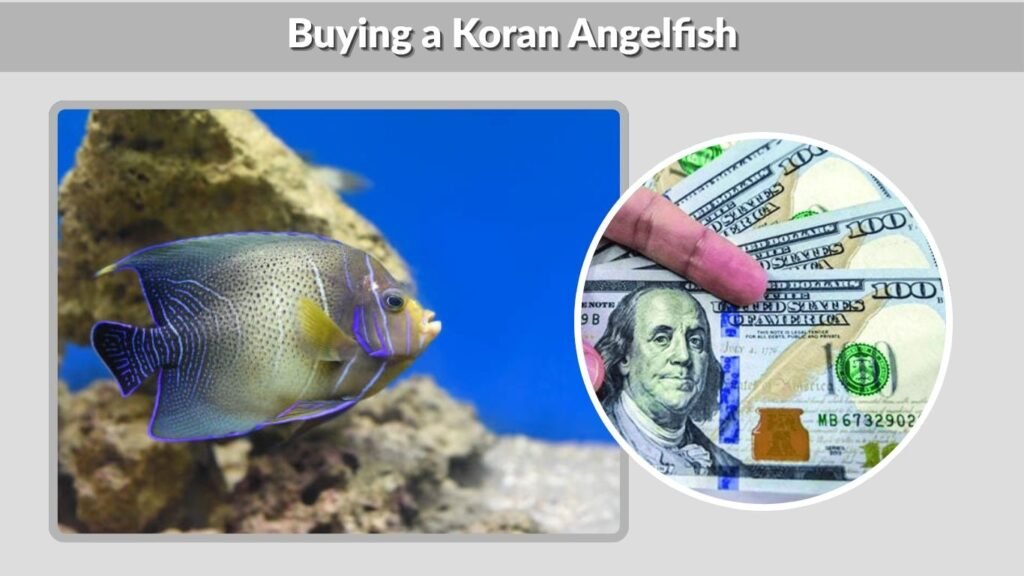
Choose a fish that swims normally, responds to movement and actively accepts prepared food. Avoid specimens with cloudy eyes, damaged mouths, rapid breathing, pinched stomachs, white spots or torn fins.
Ask the seller to feed the fish before purchase. A feeding response is especially important because large marine angelfish that refuse food can be difficult to establish. Price varies according to size, color stage, collection location and availability, with adult and transitioning specimens generally costing more than small juveniles.
FAQs
How large does a Koran angelfish grow?
A Koran angelfish can reach approximately 15–16 inches. Because it also develops a tall, deep body, it requires more room than its length alone suggests. A tank of approximately 250 gallons is recommended for permanent adult care.
How long does a Koran angelfish live?
A precise lifespan is difficult to guarantee, but large marine angelfish are potentially long-lived. With excellent water quality, suitable nutrition, sufficient swimming space and prompt healthcare, a Koran angelfish may remain in an aquarium for many years or even decades.
Why is my juvenile Koran angelfish changing color?
The fish is entering its normal adult transformation. Juvenile white and blue bands gradually disappear as yellow-green coloration, spots and bright blue fin edges develop. The change usually begins when the fish measures roughly 3–6 inches.
Can Koran and emperor angelfish live together?
They may coexist in an exceptionally large aquarium with extensive territories and hiding areas, but aggression is possible. Both become large and territorial. Keeping them together is unsuitable for an ordinary home aquarium and should be attempted only by experienced aquarists.
Is a Koran angelfish suitable for beginners?
It is relatively hardy for a large marine angelfish, but it is not an ideal beginner fish. Its enormous adult size, expensive aquarium requirements, semi-aggressive behavior, specialized diet and lack of reef compatibility make it more appropriate for intermediate or experienced marine keepers.