
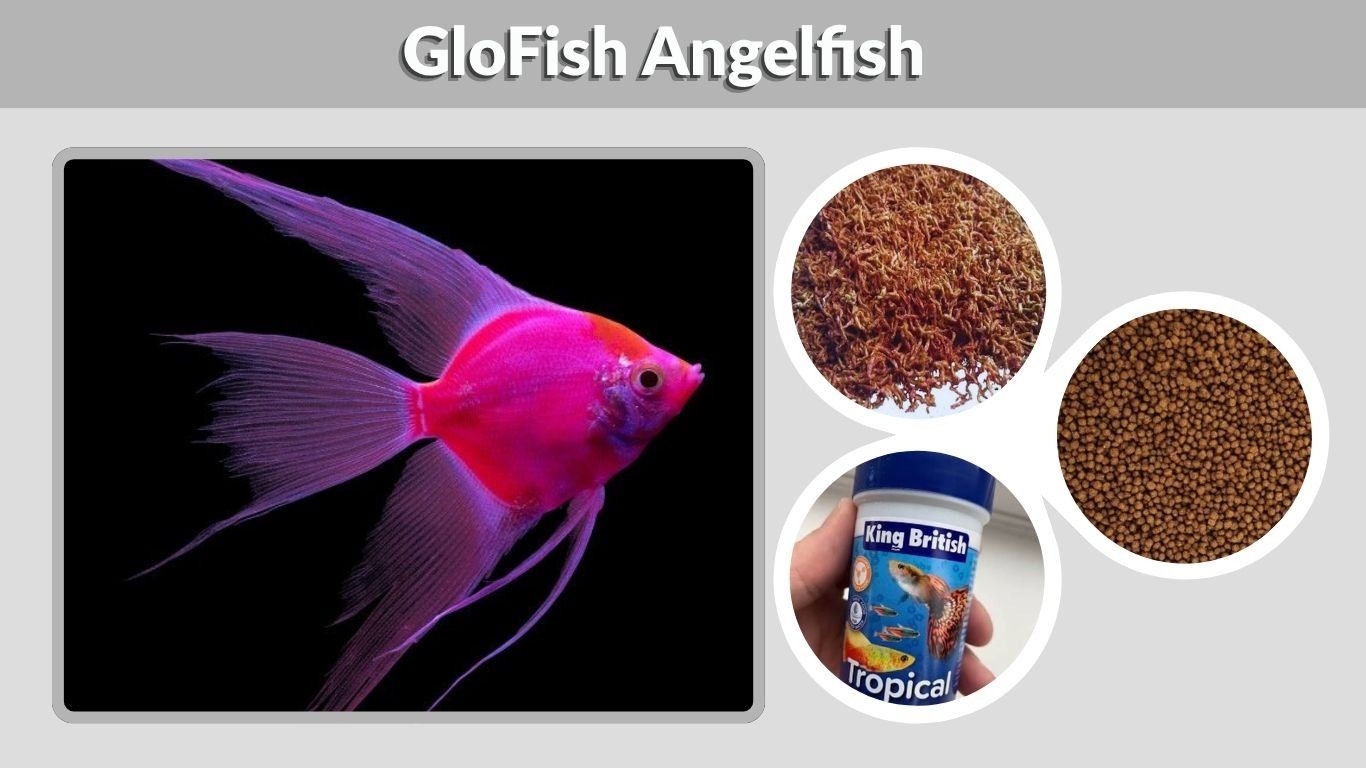
The GloFish angelfish is a fluorescent variety of the freshwater angelfish, best known for its bright color and tall, graceful fins. It is not painted, injected, or artificially dyed. Its fluorescent coloration is inherited, while its behavior and care requirements remain essentially the same as those of traditional freshwater angelfish. GloFish angelfish need a heated, fully cycled aquarium, stable water quality, a varied diet, and carefully selected tank mates.
GloFish Angelfish Quick Facts
| Feature | Description |
| Water type | Freshwater |
| Fish group | Freshwater angelfish |
| Typical species | Pterophyllum scalare |
| Official colors | Starfire Red and Electric Green |
| Adult body length | Up to about 6 inches |
| Total height with fins | Up to about 8 inches |
| Minimum tank | 29 gallons for one |
| Better tank size | 40-gallon breeder or 55 gallons |
| Temperature | Approximately 76–82°F |
| Temperament | Semi-aggressive |
| Diet | Omnivorous |
| Lifespan | Commonly 8–12 years with good care |
Freshwater angelfish have deep, compressed bodies and long dorsal, anal, and pelvic fins. Their height is therefore as important as their body length when choosing an aquarium.
What Is a GloFish Angelfish?
A GloFish angelfish is a domesticated freshwater angelfish that produces fluorescent proteins. Its color is inherited from its parents and remains visible throughout its life.
The fluorescence can be seen under ordinary white aquarium lighting but becomes considerably brighter under blue LED lighting. Blue lighting should be used as part of a normal day-and-night schedule rather than being left on continuously. GloFish recommends no more than approximately 12 hours of aquarium lighting daily.
GloFish angelfish are freshwater fish. They cannot live with marine dwarf angelfish or other saltwater species.
GloFish Angelfish Colors
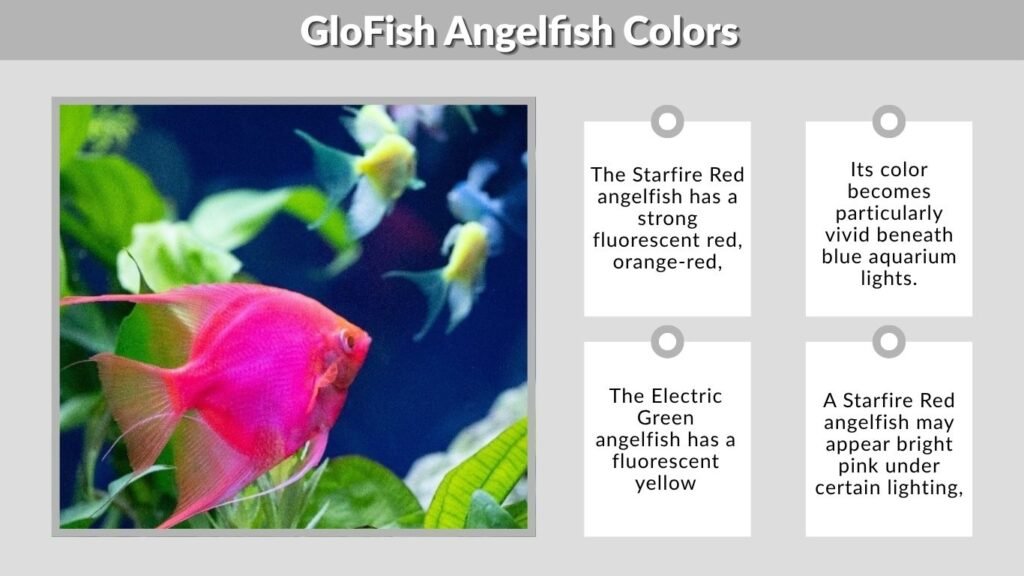
The GloFish brand uses several color names across its complete fish range, but not every color is available in every species.
Starfire Red GloFish Angelfish
The Starfire Red angelfish has a strong fluorescent red, orange-red, or pink-red body. Some individuals have dark marbling or darker fins, creating a patterned appearance.
Starfire Red was the first officially introduced GloFish angelfish color. It is available in standard and patterned appearances, although exact patterns vary between individual fish.
Electric Green GloFish Angelfish
The Electric Green angelfish has a fluorescent yellow-green or lime-green body. Its color becomes particularly vivid beneath blue aquarium lights.
GloFish officially announced the Electric Green angelfish in March 2025, following the earlier introduction of the Starfire Red variety. Its basic care requirements are the same as those of other domesticated angelfish.
Are There Pink or Blue GloFish Angelfish?
A Starfire Red angelfish may appear bright pink under certain lighting, which explains the phrase “pink GloFish angelfish.” However, pink is not currently identified as a separate official angelfish line.
The broader GloFish range includes blue and pink colors in certain tetras, danios, sharks, and other fish. That does not mean official blue or Moonrise Pink angelfish are available. Current official angelfish information focuses on Starfire Red and Electric Green.
GloFish Angelfish Size
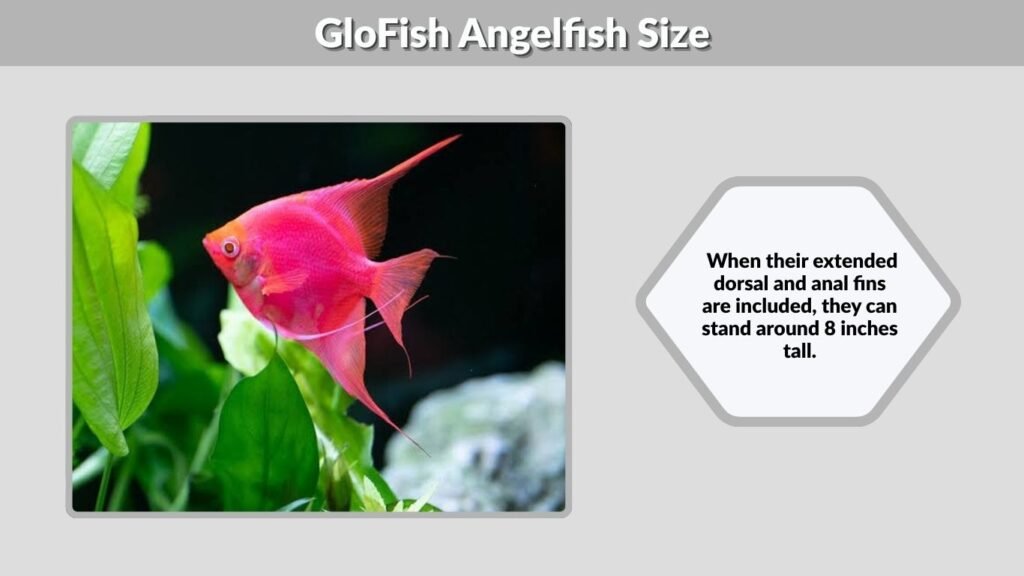
Adult GloFish angelfish may reach approximately 6 inches in body length. When their extended dorsal and anal fins are included, they can stand around 8 inches tall.
Their disc-shaped bodies may look small when the fish are young, but they grow rapidly under favorable conditions. The manufacturer states that they may reach maturity in approximately six months to one year with proper feeding and care.
A tall aquarium is preferable because short tanks may restrict full fin extension. Decorations should not contain narrow gaps or sharp edges that can tear their delicate fins.
GloFish Angelfish Tank Size and Setup
The official minimum recommendation for one GloFish angelfish is 29 gallons. A 40-gallon breeder or 55-gallon aquarium provides more stable water conditions, swimming room, and space for compatible tank mates.
Recommended Tank Conditions
- Temperature between approximately 76 and 82°F
- pH generally between 6.0 and 8.0
- Ammonia and nitrite at zero
- Low nitrate maintained through water changes
- Gentle to moderate water flow
- Tall plants and driftwood
- Open swimming space
- Secure lid and dependable filtration
Freshwater angelfish naturally come from warm South American waters containing dense aquatic or riverside vegetation. Captive-bred individuals tolerate a relatively broad pH range, but sudden changes are more harmful than a stable value slightly outside the ideal midpoint.
Provide broad-leaved plants, vertical wood, and other structures that break up sightlines. These decorations reduce stress and provide shelter when one fish becomes territorial.
What Do GloFish Angelfish Eat?
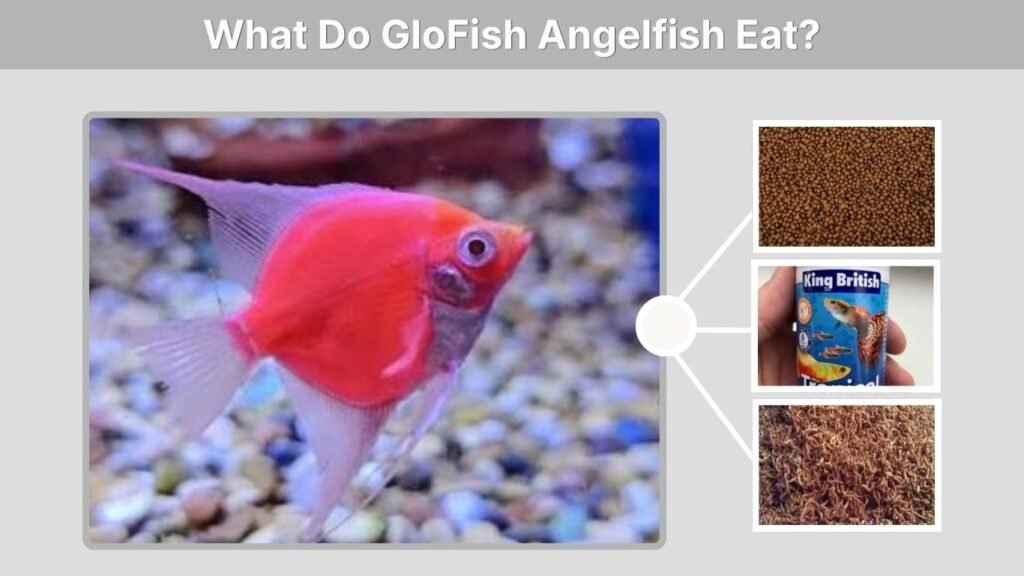
GloFish angelfish are omnivores. They readily accept prepared aquarium food but benefit from dietary variety.
Suitable foods include:
- High-quality tropical flakes
- Small or medium cichlid pellets
- Frozen or freeze-dried bloodworms
- Brine shrimp
- Mysis shrimp
- Insect-based foods
- Occasional live foods from safe sources
Feed small portions two or three times daily, offering only what the fish can consume quickly. Excess food sinks, decomposes, and damages water quality. GloFish states that its complete tropical flakes are suitable for angelfish, while experienced keepers also recommend rotating several prepared and frozen foods.
Can Angelfish Live With GloFish?
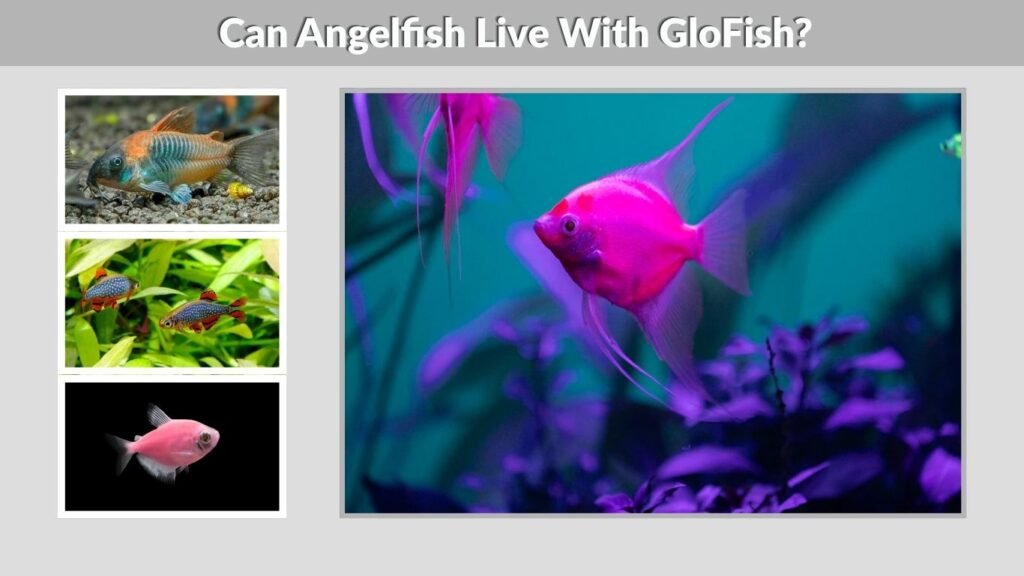
GloFish is a brand covering several different species. Therefore, compatibility depends on the underlying fish species rather than fluorescence.
GloFish Tetras With Angelfish
Adult GloFish skirt tetras may coexist with angelfish in a sufficiently large aquarium. Keep the tetras in a proper school and observe them for fin-nipping behavior.
Long-fin angelfish can become targets when tetras are stressed, crowded, or kept in inadequate groups. Very small tetras may eventually be viewed as food by mature angelfish. The GloFish shop also offers angelfish collections with Pristella tetras, indicating that appropriately sized, peaceful tetras can be considered compatible in a suitable setup.
GloFish Barbs With Angelfish
GloFish tiger barbs are a risky choice. Tiger barbs are active and may nip the long fins of angelfish, particularly when kept in small groups.
The manufacturer recommends keeping GloFish barbs in groups of at least five to reduce aggression. Even in a group, they should be monitored carefully around slow, long-finned angelfish.
GloFish Danios With Angelfish
Danios are fast, energetic swimmers and may outcompete angelfish during feeding. They also generally tolerate cooler water than angelfish prefer. They may coexist in some large community tanks, but they are not the most natural match.
Other Suitable Tank Mates
Potential companions include:
- Corydoras catfish
- Peaceful medium-sized tetras
- Larger rasboras
- Bristlenose plecos
- Peaceful dwarf cichlids in spacious tanks
- Certain medium-sized livebearers
Avoid tiny fish, dwarf shrimp, known fin nippers, and highly aggressive cichlids. Angelfish may eat any animal small enough to fit into their mouths.
GloFish Angelfish Temperament
GloFish angelfish are semi-aggressive cichlids. Juveniles may swim together peacefully, but adults can become territorial as they mature and form breeding pairs.
A pair may defend a plant, filter pipe, piece of wood, or aquarium wall as a spawning site. Chasing becomes more intense when eggs are present. Provide multiple visual barriers and be prepared to separate a severely bullied fish.
Keeping one angelfish as the centerpiece of a community tank can reduce conflicts. Groups require more space and may need to be rearranged when pairs develop.
Buying GloFish Angelfish
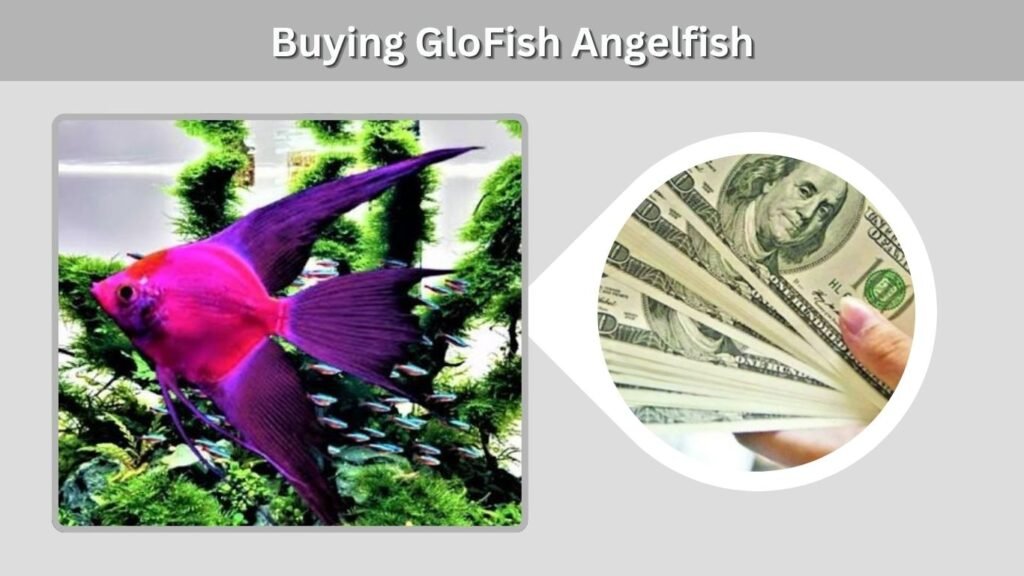
Choose a fish that is active, upright, and interested in food. Avoid specimens with clamped fins, white spots, cloudy eyes, rapid breathing, torn fins, or a hollow abdomen.
Availability and prices vary by retailer and location. Purchase authentic fish through authorized sellers. GloFish angelfish are protected ornamental lines, and intentional commercial breeding, sale, barter, or trading of their offspring is restricted by the brand’s license terms.
Quarantine a new angelfish before adding it to an established community. This provides time to observe its appetite and check for parasites or infections without exposing the main aquarium.
FAQs
Are GloFish angelfish genetically modified?
Yes. Their fluorescent color results from inherited genetic traits. They are born with the coloration and are not painted, injected, or dyed after hatching. Their everyday care remains comparable to that of ordinary domesticated freshwater angelfish.
Can a GloFish angelfish live in a 20-gallon tank?
A 20-gallon aquarium is generally too restrictive for a permanent community setup. One GloFish angelfish requires at least 29 gallons, while a 40-gallon breeder or 55-gallon tank provides better adult space.
Can GloFish tetras live with angelfish?
They sometimes can, provided the tetras are large enough, kept in a suitable school, and housed in a spacious aquarium. Watch carefully for fin nipping and avoid combining adult angelfish with very small tetras.
How long do GloFish angelfish live?
Because they have the same basic care requirements as standard angelfish, they may live approximately 8–12 years when provided with clean water, a suitable aquarium, low stress, and a nutritious diet.
Do GloFish angelfish need blue light?
No. They can live under normal aquarium lighting. Blue LED light simply makes their fluorescence appear more intense. Maintain a regular day-and-night schedule and avoid leaving the aquarium light on continuously.