
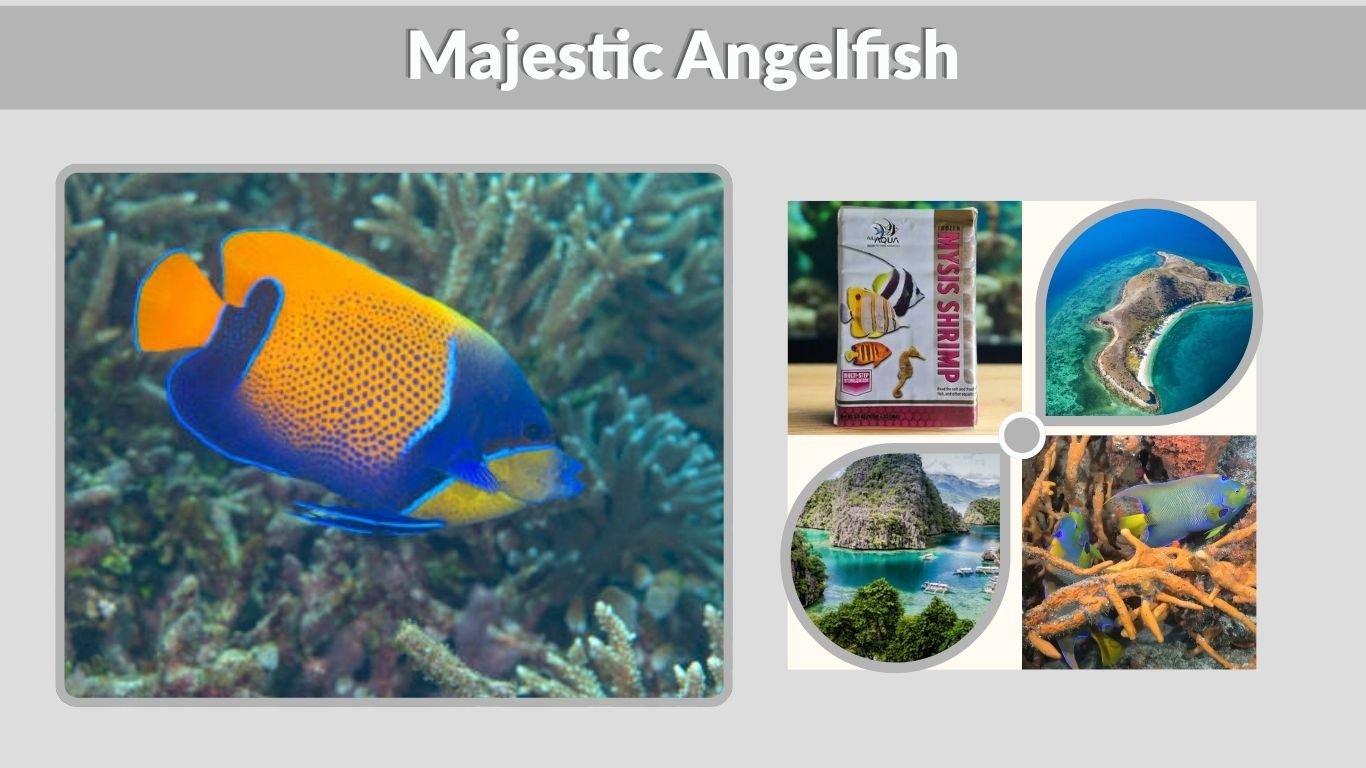
The majestic angelfish (Pomacanthus navarchus) is a brilliantly colored marine species also known as the blue-girdled or navarchus angelfish. Its deep-blue markings, yellow-orange body, and electric-blue outlines make it one of the most desirable large angelfish. However, this fish needs considerably more than an attractive saltwater aquarium. A mature tank, stable water conditions, nutritious food, hiding places, and carefully selected tank mates are essential. With proper care, a majestic angelfish can become a long-lived centerpiece in an experienced aquarist’s marine aquarium.
Majestic Angelfish Quick Facts
Although classified among the large marine angelfish, the majestic angelfish is smaller than many other members of the genus Pomacanthus. It inhabits coral-rich areas of the tropical Indo-Pacific and is usually encountered alone or in pairs. Understanding its adult size, temperament, feeding behavior, and space requirements is essential before purchasing one.
- Scientific name: Pomacanthus navarchus
- Other names: Blue-girdled angelfish, navarchus angelfish and majestic angel
- Family: Pomacanthidae
- Maximum size: Approximately 10–11 inches
- Recommended tank size: At least 125–180 gallons
- Care level: Moderate to advanced
- Temperament: Shy initially but potentially territorial
- Diet: Omnivorous, with a strong preference for sponges and tunicates
- Reef compatibility: Reef-safe only with caution
- Reported lifespan: Up to approximately 15 years
FishBase reports a maximum length of about 28 centimeters, or 11 inches, and a maximum reported age of 15 years. The species naturally occupies clear lagoons, channels and protected outer reef slopes at depths of approximately 3–40 meters.
Appearance and Identification
Adult majestic angelfish have one of the most distinctive color patterns among marine aquarium fish. Their compressed, oval bodies combine yellow-orange and dark-blue sections separated by bright blue edging. The fish’s coloration changes dramatically as it grows, which can make juveniles appear like an entirely different species.
Adult Majestic Angelfish
An adult has a yellow-orange central body covered with small blue spots. Dark blue surrounds the eyes, upper head, pectoral-fin area and lower rear body. Brilliant blue lines border these dark sections, while the dorsal and tail fins remain predominantly yellow-orange.
The broad dark area passing across the head and body creates the “blue girdle” responsible for one of the fish’s common names. Adults also possess a strong spine near the gill cover, so they must be handled carefully.
Juvenile Majestic Angelfish
Juveniles are mainly dark blue with curved pale-blue and white vertical stripes. As they mature, the striped juvenile pattern changes into the yellow-and-blue adult coloration. Intermediate stages are not frequently observed because the transformation can appear relatively abrupt.
A juvenile can be a good choice because younger fish may adapt more readily to prepared aquarium foods. However, buyers must still plan for the fish’s full adult size rather than choosing a tank based on its purchase size.
Natural Habitat and Behavior
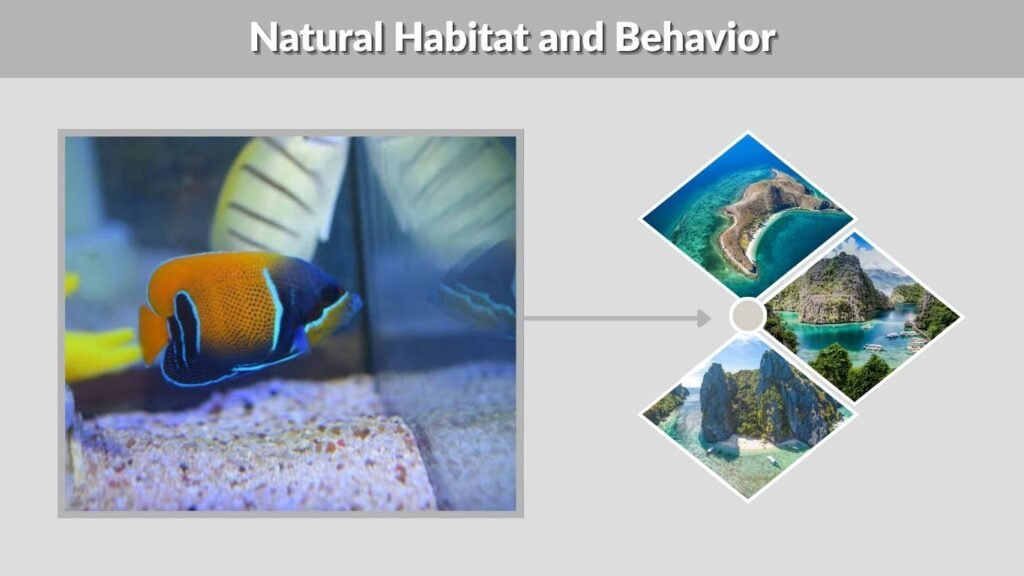
The majestic angelfish originates from the tropical Indo-Pacific, including Indonesia, Papua New Guinea, the Philippines, Micronesia and northern Australia. It inhabits coral-rich lagoons, reef channels and protected outer slopes. Juveniles generally occupy shallower, more sheltered areas than adults.
Temperament
Majestic angelfish are frequently shy when first introduced. A new fish may spend considerable time inside caves and refuse to swim openly until it becomes comfortable. Once established, it can become territorial, particularly toward other large angelfish or fish with a similar body shape.
Compared with some larger Pomacanthus species, the majestic angelfish is often relatively reserved. Nevertheless, each individual behaves differently, and aggression may increase in a cramped aquarium.
Activity
This species naturally explores rockwork while searching for sponges, tunicates, algae and small food particles. The aquarium should therefore contain both open swimming areas and a network of caves, arches and overhangs.
A nearly empty aquarium can leave the fish exposed and stressed. Live rock also provides grazing surfaces and makes the surroundings resemble its natural reef habitat.
Majestic Angelfish Tank Size and Setup
Adult majestic angelfish need substantial swimming space despite being smaller than emperor, French and several other large angelfish. Current professional care recommendations range from a minimum of 125 gallons to 180 gallons. A 180-gallon aquarium offers a safer long-term environment, particularly when the fish will share the tank with other large species.
Recommended Tank Conditions
- Tank capacity: Ideally 180 gallons or larger
- Temperature: 72–78°F
- pH: 8.1–8.4
- Specific gravity: 1.020–1.025
- Alkalinity: Approximately 8–12 dKH
- Aquarium maturity: Fully cycled and biologically established
- Aquascaping: Plenty of live rock, caves and open swimming room
- Water movement: Moderate, with strong filtration and oxygenation
These fish respond poorly to rapid fluctuations. Temperature, salinity, pH and nutrient levels should remain stable, and regular partial water changes are important for maintaining water quality.
Acclimation and Quarantine
Quarantine the fish before adding it to the display aquarium. This period allows the owner to observe its breathing, appetite, skin, fins and behavior while reducing the chance of introducing parasites or infections.
Use slow acclimation and dim lighting during the initial introduction. Arrange several shelters and avoid placing the fish directly into a brightly lit, crowded aquarium. A specimen that is already eating prepared food generally presents a lower risk than one that refuses food at the store.
Majestic Angelfish Diet and Feeding
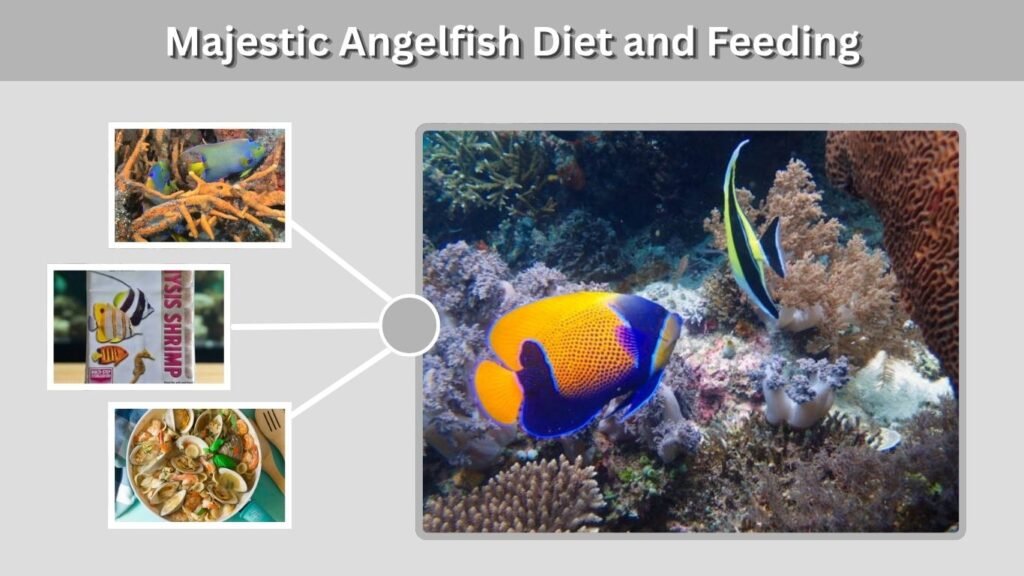
Wild majestic angelfish feed primarily on sponges and tunicates, although they may also consume algae and other small organisms associated with reef surfaces. A simple diet of generic flakes or shrimp is therefore inadequate for long-term health.
Suitable Foods
Provide a varied menu that includes:
- Sponge-based marine angelfish preparations
- Frozen mysis shrimp
- Chopped shrimp, clam and other marine seafood
- Spirulina-enriched foods
- Marine algae and nori
- High-quality marine pellets
- Enriched brine shrimp as an occasional appetite stimulant
- Foods containing both plant and animal ingredients
Feed moderate portions two or three times daily rather than one oversized meal. Variety helps provide the nutrients required for healthy coloration, immune function and body condition.
What to Do When It Is Not Eating
A newly introduced majestic angelfish may refuse food because of transportation stress, unsuitable tank mates, bright lighting or insufficient hiding places. Offer several foods in small amounts and place food close to the fish’s preferred shelter.
Frozen mysis, clam on the half shell and sponge-containing preparations can encourage feeding. Correct environmental problems rather than continually adding uneaten food, which will reduce water quality. Persistent appetite loss, rapid breathing or weight loss requires closer examination.
Is the Majestic Angelfish Reef-Safe?
The majestic angelfish is not considered completely reef-safe. It may nip soft corals, large-polyp stony corals, zoanthids, sponges and clam mantles. Small-polyp stony corals and less palatable soft corals may be ignored, but there is no guarantee.
Some experienced aquarists report better reef compatibility with this species than with several other Pomacanthus angelfish. However, success depends on the individual fish, the corals present, aquarium size and feeding routine. A fish that behaves perfectly for months may later begin damaging a favored coral or clam.
A fish-only-with-live-rock aquarium is the safest choice. Reef keepers should have a practical plan for removing either the fish or vulnerable invertebrates if nipping becomes persistent.
Majestic Angelfish Tank Mates
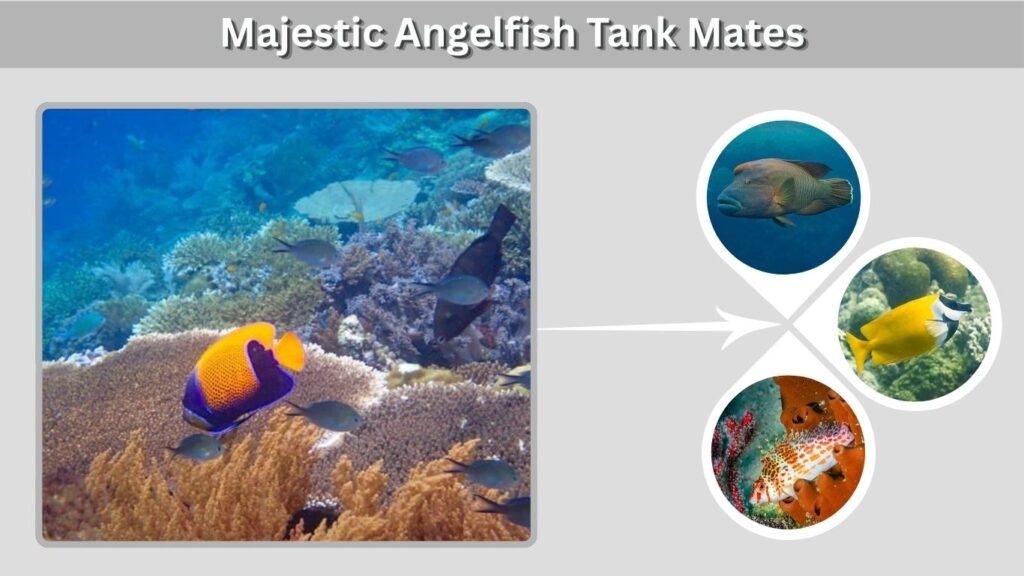
The best companions are robust marine fish that are neither highly aggressive nor small enough to be intimidated. Introduce the majestic angelfish before extremely territorial species whenever possible, allowing it time to become confident.
Potentially Suitable Tank Mates
- Peaceful or moderately assertive tangs
- Larger wrasses
- Rabbitfish
- Hawkfish
- Peaceful triggerfish species
- Larger clownfish
- Marine butterflyfish with compatible requirements
- Dwarf angelfish in sufficiently spacious aquariums
Avoid keeping two majestic angelfish together unless the aquarium is exceptionally large and the fish are a compatible pair. Other large angelfish may also trigger territorial aggression.
Very aggressive triggers, large groupers and established territorial angelfish can prevent a shy majestic angel from feeding. Small, timid fish may also struggle if the angelfish becomes dominant.
Health Problems and Mottled Skin
A healthy majestic angelfish should have clear eyes, full fins, steady breathing and a rounded but not swollen body. Its coloration should appear strong once it has settled into the aquarium.
Watch for:
- Persistent mottled or faded coloration
- Scratching against rockwork
- White spots or excess mucus
- Cloudy eyes
- Frayed fins
- Rapid breathing
- Refusal to eat
- Weight loss
- Pitting around the head or lateral line
Temporary darkening or mottling may result from stress. Persistent discoloration can indicate poor water quality, aggression, parasites, nutritional deficiencies or infection. Quarantine, stable reef-level conditions, a varied diet and prompt treatment greatly improve the likelihood of recovery.
Majestic Angelfish Price and Buying Tips
Majestic angelfish prices vary according to size, coloration, region, source and whether the fish is captive-bred or wild-collected. Availability and shipping expenses can also produce considerable differences between sellers. The species is considered a highly valued aquarium export, so buyers should evaluate health and feeding behavior rather than simply choosing the lowest price.
Before purchasing, confirm that the fish:
- Is actively eating prepared food
- Has clear eyes and undamaged fins
- Breathes normally
- Has no white spots, wounds or cloudy patches
- Is not severely thin
- Responds to movement outside the aquarium
- Has been held and observed by the seller
A healthy, feeding specimen is generally a better investment than a cheaper fish showing stress or refusing food.
FAQs
How big does a majestic angelfish get?
A majestic angelfish can reach approximately 10–11 inches in total length. Although it is smaller than several other large marine angelfish, its active swimming behavior and territorial needs still require a spacious aquarium, preferably around 180 gallons for long-term care.
How long does a majestic angelfish live?
The maximum reported age is approximately 15 years. Actual lifespan depends on aquarium size, diet, water stability, disease prevention and overall husbandry. A properly maintained adult can therefore become a long-term aquarium resident rather than a temporary addition.
Is a majestic angelfish difficult to keep?
Its care level is generally considered moderate to advanced. The fish needs an established saltwater aquarium, stable water parameters, sponge-containing foods, regular feeding and patient acclimation. Initial shyness and occasional refusal to eat can make newly imported specimens challenging.
Can majestic angelfish live in a reef tank?
They can sometimes live in reef aquariums, but they are not reliably reef-safe. Individual fish may nip soft corals, large-polyp stony corals, zoanthids and clam mantles. Continuous observation and a backup removal plan are necessary.
What is the minimum tank size for a majestic angelfish?
Some professional sources recommend at least 125 gallons, while several major marine-fish suppliers recommend 180 gallons. For permanent adult housing, a well-aquascaped 180-gallon or larger aquarium provides better swimming space, shelter and compatibilit