
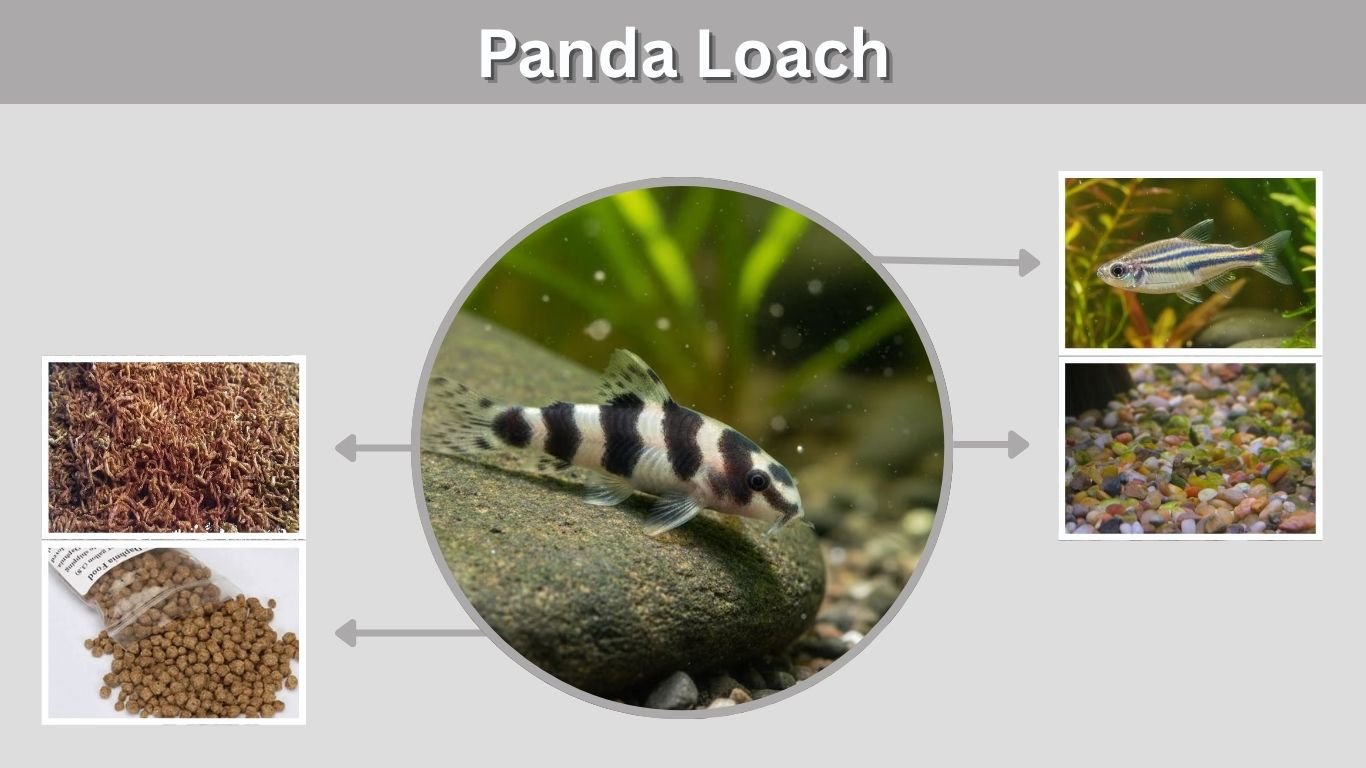
The panda loach (Yaoshania pachychilus) is a small freshwater fish famous for its distinctive black-and-white markings and unusual behavior. Native to mountain streams in southern China, this attractive bottom-dwelling fish has become popular among aquarium enthusiasts. Unlike many tropical aquarium fish, panda loaches prefer cooler, oxygen-rich water with strong currents. Their appearance also changes significantly as they mature. Understanding their adult size, feeding habits, tank requirements, and compatibility is essential for maintaining healthy panda loaches in a home aquarium.
What Is a Panda Loach?
The panda loach is a freshwater hillstream loach scientifically known as Yaoshania pachychilus. It was previously classified as Protomyzon pachychilus and is sometimes sold under that older name or as the panda goby.
This species naturally inhabits fast-flowing mountain streams in China’s Guangxi region. Its flattened body and specialized fins help it cling to submerged rocks, even in powerful currents.
Panda Loach Identification
Young panda loaches have an eye-catching appearance that makes them relatively easy to identify.
Their main physical characteristics include:
- Body color: Juveniles display contrasting black and white markings.
- Body shape: A flattened underside and elongated body adapted to flowing water.
- Head: A broad, slightly flattened head with a downward-facing mouth.
- Fins: Wide pectoral and pelvic fins that help the fish grip rocky surfaces.
- Markings: Distinct dark bands that gradually become less defined with age.
- Movement: They frequently crawl or hop across rocks while searching for food.
Panda loaches are often confused with other small algae-grazing fish, but their juvenile coloration and specialized body shape are distinctive.
Adult Panda Loach Appearance
One of the most interesting characteristics of panda loaches is their changing coloration.
Juveniles have bold black-and-white bands, while adults usually develop a more subdued brown, gray, or olive appearance with irregular dark markings.
These changes are a normal part of maturation.
An adult panda loach may look significantly different from the brightly patterned juvenile commonly displayed in aquarium stores.
Panda Loach Size and Lifespan
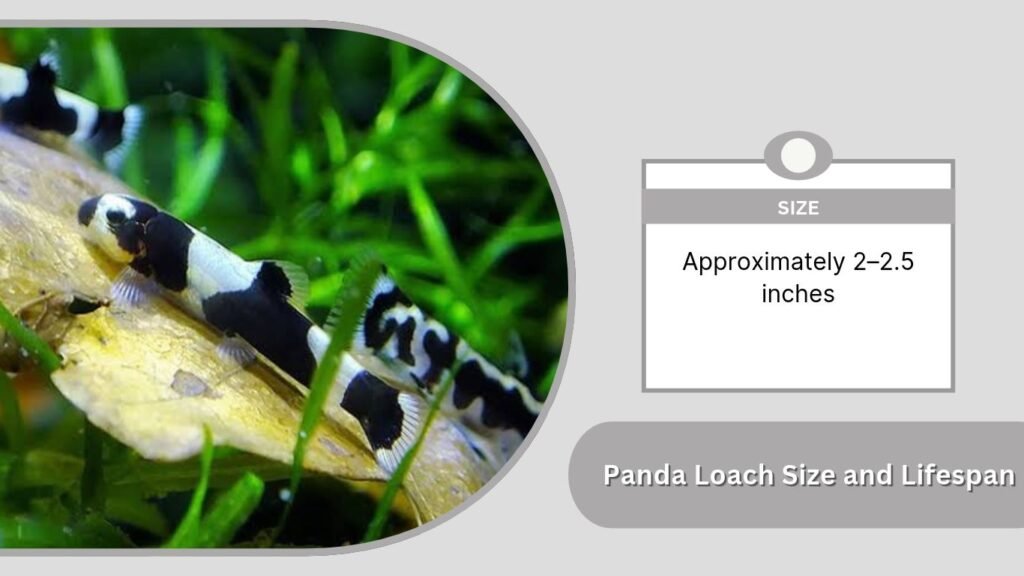
Panda loaches remain relatively small throughout their lives. However, their modest size does not mean they are suitable for every small aquarium.
Their need for flowing, oxygen-rich water makes aquarium dimensions and filtration particularly important.
How Big Do Panda Loaches Get?
A full-grown panda loach typically reaches approximately 2–2.5 inches (5–6 cm) in body length.
Young specimens sold in aquarium stores may measure around 1 inch or less.
Growth depends on nutrition, water quality, environmental stability, and overall health.
Although these fish remain small, they require adequate space for moving between rocks and establishing feeding territories.
How Long Do Panda Loaches Live?
Panda loaches are commonly estimated to live approximately 5–8 years under suitable aquarium conditions, although reliable lifespan records are limited.
Maintaining stable temperatures, strong oxygenation, and appropriate nutrition can help support their long-term health.
Poor water quality, insufficient food, and prolonged exposure to excessive temperatures may shorten their lifespan.
Panda Loach Tank Size and Water Requirements
Panda loaches are adapted to clear, cool mountain streams with strong currents. Their aquarium should reproduce these conditions as closely as practical.
Water quality is especially important because these fish depend on highly oxygenated environments.
An established aquarium containing smooth rocks, algae growth, and suitable filtration provides the foundation for successful care.
Panda Loach Care Requirements
| Requirement | Recommended Conditions |
| Scientific name | Yaoshania pachychilus |
| Adult size | Approximately 2–2.5 inches |
| Tank size | At least 24 × 12 inches of floor space |
| Practical tank choice | 20-gallon long aquarium or larger |
| Temperature | Ideally 68–75°F (20–24°C) |
| pH level | 6.5–7.5 |
| Water hardness | 2–15 dGH |
| Social group | Four or more |
| Diet | Algae, biofilm, and supplementary foods |
| Temperament | Generally peaceful |
| Care level | Moderate to advanced |
The minimum footprint of approximately 24 × 12 inches can accommodate a small group, but larger aquariums offer more flexibility for creating flowing and sheltered areas.
How to Set Up a Panda Loach Aquarium
An appropriate panda loach aquarium should include several important features.
- Strong filtration: Use a reliable filter and additional circulation equipment to maintain flowing, oxygen-rich water.
- Smooth rocks: Arrange rounded stones and pebbles to create natural grazing surfaces.
- Suitable substrate: Choose aquarium-safe sand, smooth gravel, or a combination.
- Natural algae growth: Allow biofilm and appropriate algae to develop on submerged surfaces.
- Sheltered areas: Provide gaps between stable rocks where fish can rest away from the strongest current.
- Stable temperature: Prevent prolonged overheating, particularly during warm weather.
Aquarium decorations must be securely positioned to prevent falling rocks from injuring the fish.
Important: Panda loaches should not be introduced to newly established aquariums. They need mature biological filtration and established grazing surfaces. Ammonia and nitrite should remain at zero.
What Do Panda Loaches Eat?
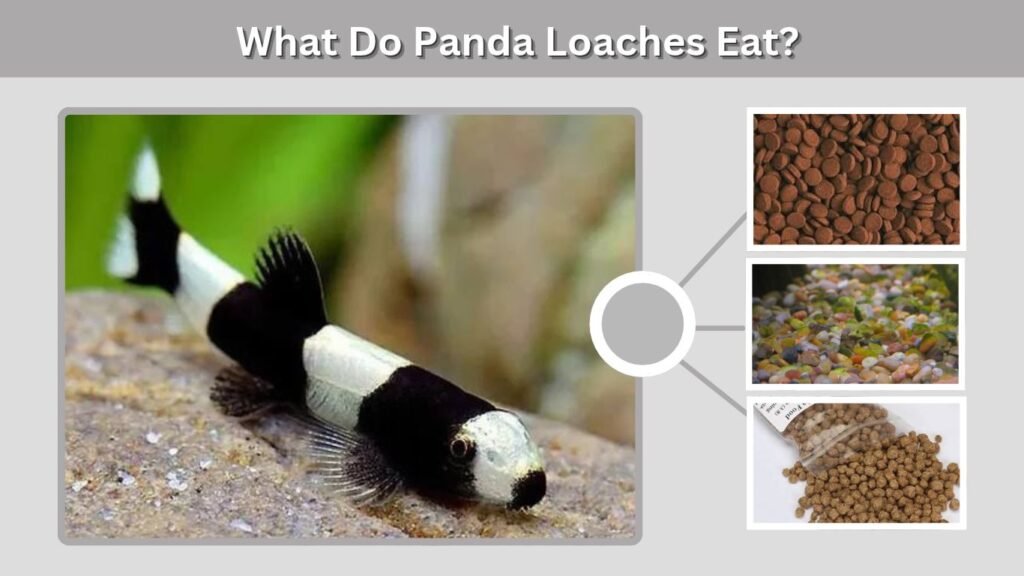
Panda loaches primarily graze on algae, biofilm, and tiny organisms living on submerged surfaces.
Their specialized mouths allow them to collect food while remaining attached to rocks.
Although they consume plant-based material, they are not strictly herbivorous. Their natural feeding activities also involve microorganisms and small aquatic invertebrates.
Best Food for Panda Loaches
A varied feeding routine may include:
- Naturally grown algae on aquarium rocks.
- Established biofilm containing microorganisms.
- High-quality algae wafers.
- Spirulina-based sinking foods.
- Small portions of blanched zucchini or spinach.
- Occasional frozen daphnia or bloodworms.
- Suitable gel foods containing algae and vegetables.
Protein-rich foods should be supplementary rather than the main diet.
Panda loaches may struggle in excessively clean aquariums that lack natural grazing surfaces, especially when competing with other algae-eating fish.
Do Panda Loaches Eat Snails?
Panda loaches are not specialized snail predators.
Unlike some larger loach species, they primarily graze on algae and biofilm rather than actively hunting snails.
They may investigate snail eggs or small organisms while feeding, but they should not be relied upon to control aquarium snail populations.
Do Panda Loaches Eat Shrimp?
Panda loaches are generally compatible with many adult freshwater shrimp because they do not normally hunt larger shrimp.
However, extremely small shrimp and newly hatched shrimplets may be vulnerable to opportunistic feeding.
Compatibility also depends on whether the shrimp species can tolerate the aquarium’s temperature and water movement.
Panda Loach Behavior and Tank Mates
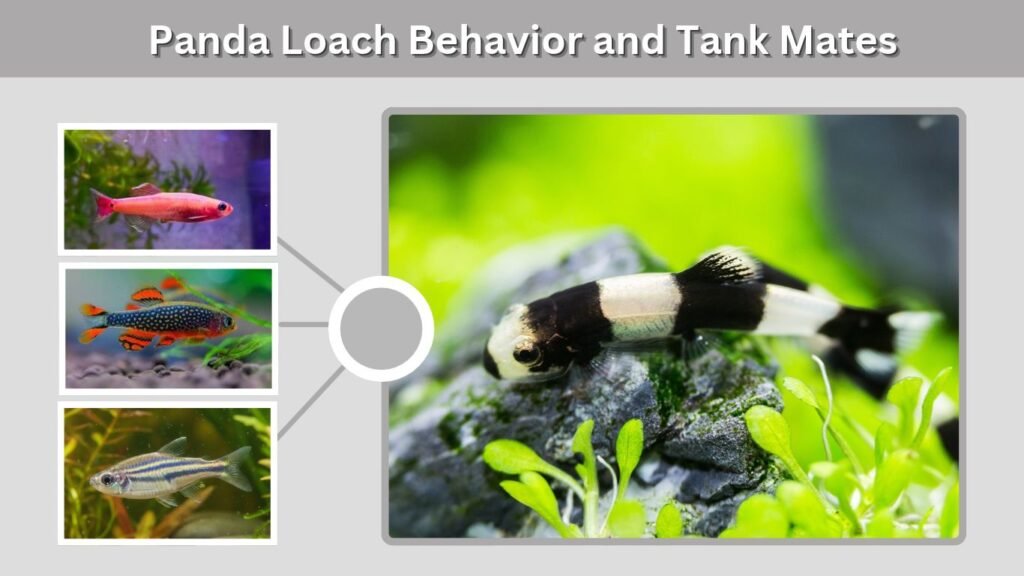
Panda loaches are generally peaceful fish, although they may display territorial behavior around desirable feeding locations.
They often spend their time attached to rocks, moving between grazing surfaces, or resting in sheltered areas.
Their unusual crawling and hopping movements make them particularly interesting to observe.
Best Panda Loach Tank Mates
Suitable companions are fish that tolerate cooler temperatures, strong water movement, and high oxygen levels.
Potential tank mates include:
- White cloud mountain minnows.
- Selected peaceful danio species.
- Compatible small hillstream loaches.
- Suitable peaceful stream-dwelling gobies.
- Other nonaggressive fish adapted to similar conditions.
Avoid aggressive fish that may prevent panda loaches from accessing food.
How Many Panda Loaches Should Be Kept Together?
Panda loaches are social fish that benefit from being maintained in small groups.
Keeping at least four individuals encourages natural interactions and allows the fish to establish their social relationships.
However, each fish should have access to suitable grazing areas.
Occasional chasing or defending a favorite rock can be normal, but persistent aggression indicates that the aquarium may need additional space or hiding places.
Panda Loach vs. Similar Aquarium Fish
Several aquarium fish have names that include the word panda. Despite their similar names, they may belong to different families and have very different care requirements.
Understanding these differences is especially important before purchasing fish for an established aquarium.
| Fish | Scientific Name | Main Difference |
| Panda loach | Yaoshania pachychilus | Small hillstream species with striking juvenile bands |
| Panda garra | Garra flavatra | Larger, active grazing fish from Myanmar |
| Panda kuhli loach | Pangio sp. ‘PAN04’ | Slender, eel-shaped fish preferring calmer water |
| Panda corydoras | Hoplisoma panda | Armored catfish with dark markings around the eyes |
Panda Garra vs. Panda Loach
The panda garra is frequently confused with the panda loach because both species display contrasting dark and light markings.
However, panda garras have different body proportions, grow larger, and belong to the carp family rather than the hillstream loach group.
Their aquarium requirements should be evaluated separately.
Panda Kuhli Loach vs. Panda Loach
The panda kuhli loach is a different type of fish belonging to the genus Pangio.
Unlike the hillstream panda loach, it has an elongated, eel-like body and prefers calmer water with a soft substrate.
The two fish should not be treated as interchangeable simply because they share a common name.
Panda Loach Breeding and Reproduction
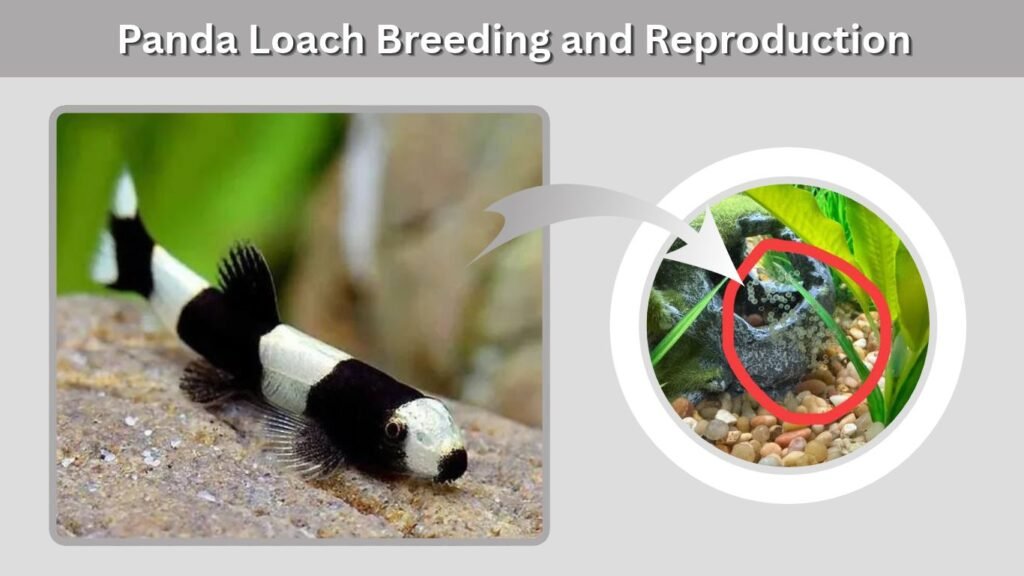
Breeding panda loaches in aquariums is challenging and remains uncommon.
Some experienced aquarists have reported successful reproduction, but their breeding requirements are not as well established as those of many commonly kept freshwater fish.
Environmental conditions, including seasonal temperature changes and suitable rocky spawning areas, may influence reproductive behavior.
Healthy adults require an established aquarium with adequate food and minimal disturbance.
Females may develop fuller bodies when carrying eggs, but body shape alone cannot reliably confirm breeding readiness.
Raising young panda loaches is particularly difficult because fry require suitable shelter, excellent water quality, and appropriately sized natural foods.
Buying Healthy Panda Loaches
Panda loaches are less commonly available than many popular tropical fish, and their availability varies between aquarium retailers.
Their unusual juvenile coloration makes them attractive to collectors, but buyers should consider their long-term needs before purchasing.
When selecting panda loaches:
- Confirm the scientific name on the seller’s listing.
- Choose active fish with intact fins and normal body proportions.
- Avoid specimens showing visible injuries or abnormal breathing.
- Ask about their feeding habits and current water conditions.
- Purchase a suitable group rather than keeping a single fish.
- Prefer responsibly sourced, captive-bred specimens when available.
Wild panda loach populations occupy a restricted natural range, making responsible sourcing particularly important.
FAQs
Are panda loaches good for beginners?
Panda loaches are generally better suited to aquarists with some experience. They require mature aquariums, strong water circulation, high oxygen levels, and carefully controlled temperatures. Beginners may find these conditions challenging compared with the needs of more adaptable freshwater community fish.
Can panda loaches live in warm water?
Panda loaches prefer relatively cool water, ideally around 68–75°F (20–24°C). They may tolerate brief periods of warmer water when oxygen levels remain high, but prolonged exposure to excessive temperatures can cause stress. They are generally unsuitable for consistently warm tropical aquariums.
Why is my panda loach losing its black color?
Panda loaches naturally lose much of their distinctive black-and-white juvenile pattern as they mature. Adults often develop faded brownish or gray markings. However, sudden color changes accompanied by unusual behavior, appetite loss, or rapid breathing may indicate environmental stress or illness.
Can panda loaches live with betta fish?
Panda loaches and bettas are generally not ideal aquarium companions. Panda loaches prefer strong currents and highly oxygenated, relatively cool water, while bettas usually thrive in warmer, calmer environments. Creating conditions that consistently satisfy both species can be difficult.
Are panda loaches algae eaters?
Yes, panda loaches graze on algae and the microorganisms associated with biofilm. However, they should receive supplementary foods to maintain a balanced diet. Established rocks with natural growth are especially valuable, and these fish should not be purchased solely as aquarium algae cleaners.