
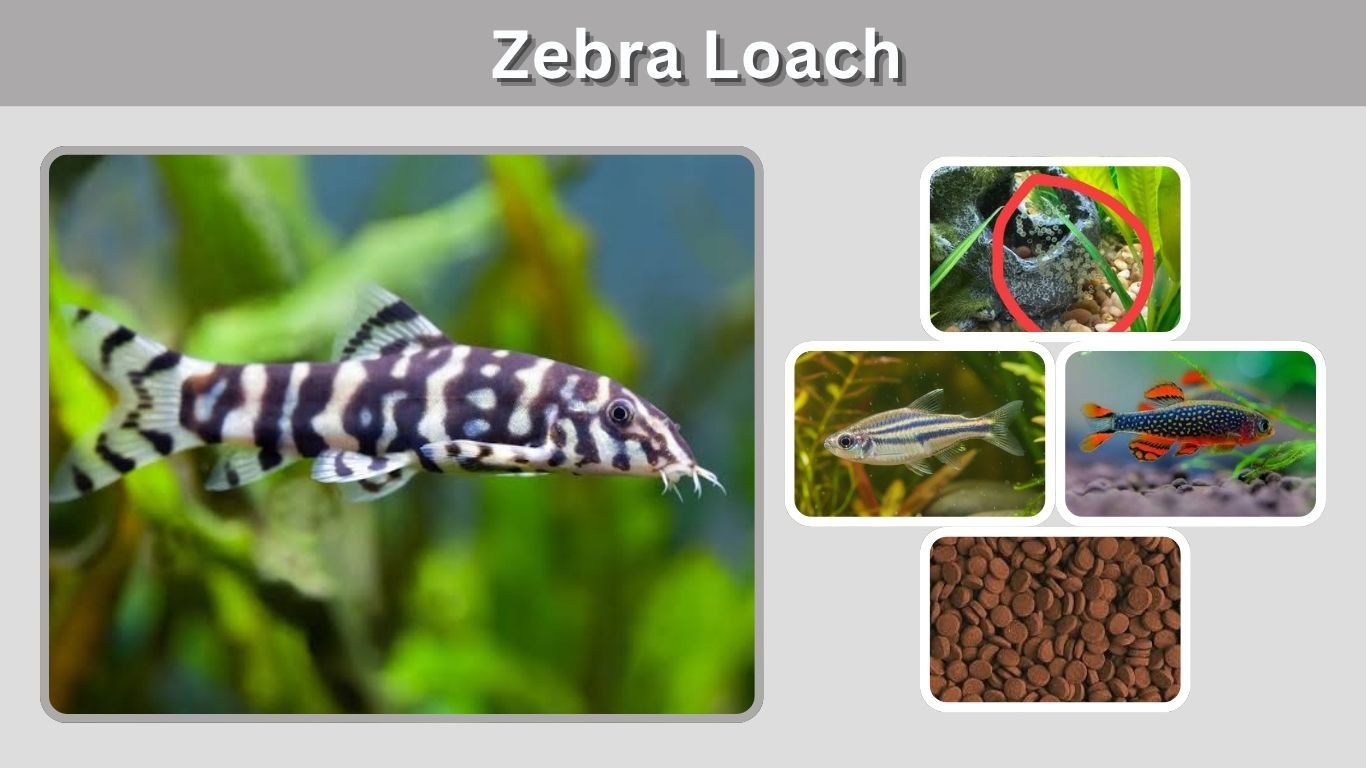
The zebra loach (Botia striata) is a colorful freshwater fish known for its striking black and golden stripes, playful behavior, and bottom-dwelling habits. Native to India, these social fish are popular among aquarium enthusiasts because of their relatively peaceful temperament and interesting feeding activities. Zebra loaches can help control small snails, but they also require proper nutrition, clean water, and companionship. Understanding their adult size, lifespan, tank requirements, and compatibility is essential for keeping them healthy in a home aquarium.
What Is a Zebra Loach?
The zebra loach is a tropical freshwater fish belonging to the family Botiidae. Its scientific name is Botia striata, and it is sometimes called the zebra botia loach or candy stripe loach. This species naturally inhabits freshwater streams in India’s Western Ghats, particularly within the Krishna River drainage.
Unlike some larger loach species, zebra loaches remain relatively small and can adapt well to appropriately sized community aquariums.
Zebra Loach Identification
Zebra loaches have several distinctive physical characteristics that make them relatively easy to recognize.
- Body color: A yellow, golden, or cream-colored body covered with dark vertical stripes.
- Body shape: An elongated, slightly compressed body with a rounded underside.
- Stripes: Numerous dark bands that may become irregular or interconnected as the fish matures.
- Mouth: A downward-facing mouth surrounded by sensitive barbels used for locating food.
- Fins: Small, patterned fins that help the fish maneuver around rocks and aquarium decorations.
Young zebra loaches usually have well-defined stripes, while adults may develop more complex markings. Individual color patterns can vary considerably.
Natural Habitat
Wild zebra loaches inhabit clear streams containing rocks, gravel, sand, and submerged vegetation. These environments provide sheltered areas where the fish can search for insects, worms, and other small aquatic organisms.
Their natural habitat helps explain why captive zebra loaches appreciate gentle water movement, excellent filtration, and numerous hiding places.
Zebra Loach Size and Lifespan
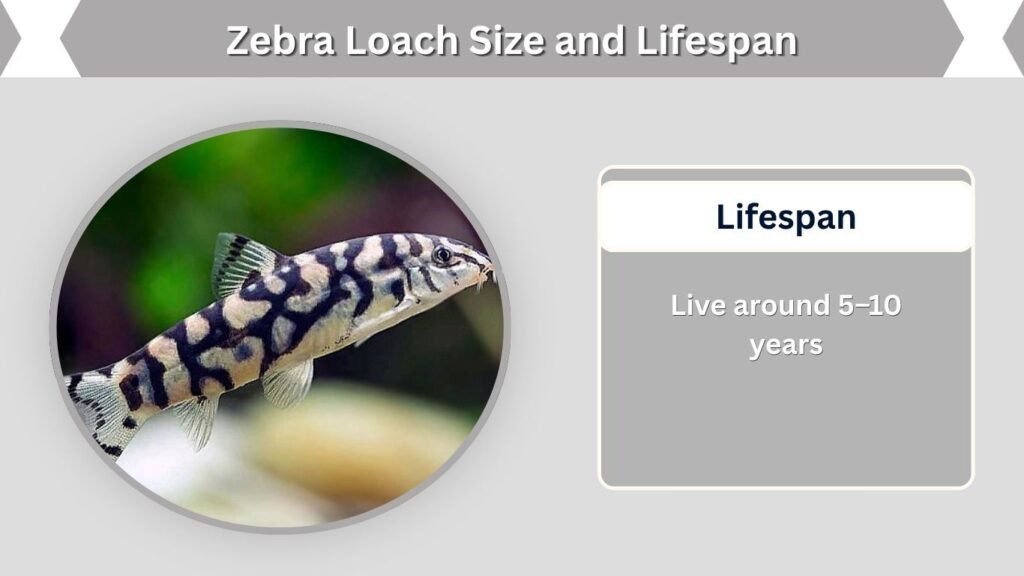
Zebra loaches are relatively small compared with clown loaches and several other members of the loach family. However, their adult size still requires a sufficiently spacious aquarium, especially because they should live in groups.
Healthy zebra loaches can survive for many years when their environmental and nutritional needs are consistently met.
How Big Do Zebra Loaches Get?
A full-grown zebra loach typically reaches approximately 3–4 inches (7.5–10 cm) in total length.
Most aquarium specimens remain within this range, although growth depends on genetics, nutrition, water quality, and overall health.
Juvenile zebra loaches may be sold at approximately 1–2 inches long. They gradually develop their adult body proportions and more complex stripe patterns as they mature.
How Long Do Zebra Loaches Live?
Zebra loaches commonly live around 5–10 years in aquariums, although some individuals may survive 15 years or longer under excellent conditions.
Factors influencing their lifespan include water stability, diet quality, disease prevention, and appropriate social grouping.
Providing a mature aquarium and avoiding sudden environmental changes can significantly improve their long-term well-being.
Zebra Loach Tank Size and Water Requirements
Although zebra loaches are not particularly large, they are energetic fish that spend considerable time exploring the aquarium bottom. They require enough horizontal swimming space to establish social relationships, search for food, and retreat when necessary.
A carefully designed aquarium should combine open areas with sheltered spaces.
Zebra Loach Care Requirements
| Care Requirement | Recommended Conditions |
| Scientific name | Botia striata |
| Adult size | Approximately 3–4 inches |
| Tank size | At least 30 gallons with a long footprint |
| Temperature | 70–79°F (21–26°C) |
| Water pH | 6.0–7.5 |
| Water hardness | 1–10 dGH |
| Group size | Minimum 5–6 |
| Diet | Omnivorous, primarily animal-based foods |
| Temperament | Generally peaceful and social |
| Care difficulty | Moderate |
A tank measuring approximately 48 inches long and 12 inches wide provides an appropriate minimum footprint. A larger aquarium is preferable when keeping a bigger group or additional bottom-dwelling fish.
How to Set Up a Zebra Loach Aquarium
A suitable aquarium should include the following features:
- Soft substrate: Use smooth sand or fine, rounded gravel to protect the fish while they search for food.
- Hiding places: Provide driftwood, caves, smooth rocks, and aquarium-safe decorations.
- Aquatic plants: Add Java fern, Anubias, or other hardy plants that tolerate moderate lighting.
- Reliable filtration: Maintain clean, oxygen-rich water with gentle to moderate circulation.
- Secure aquarium lid: Zebra loaches occasionally jump, so a tightly fitted cover is important.
Avoid decorations with sharp edges or narrow openings where fish could become trapped.
Important care tip: Zebra loaches should only be introduced to a fully cycled aquarium. Ammonia and nitrite must remain at zero, and regular partial water changes help prevent harmful waste accumulation.
What Do Zebra Loaches Eat?

Zebra loaches are omnivorous fish with a strong preference for animal-based foods. In the wild, they feed on aquatic insects, worms, mollusks, and other small invertebrates.
In aquariums, they readily accept various prepared, frozen, and live foods. Providing a balanced diet supports healthy growth, coloration, and natural feeding behavior.
Best Food for Zebra Loaches
A varied diet can include:
- High-quality sinking pellets or bottom-feeder wafers.
- Frozen or live bloodworms.
- Brine shrimp and other small crustaceans.
- Daphnia and suitable insect-based foods.
- Small portions of blanched spinach or zucchini.
- Occasional chopped earthworms from safe sources.
Feed manageable portions and remove uneaten food before it deteriorates.
Do Zebra Loaches Eat Snails?
Yes, zebra loaches commonly eat small freshwater snails. Their feeding behavior allows them to investigate shells and consume accessible soft tissues.
However, they should not be purchased solely to eliminate aquarium snail infestations.
Larger snails may escape predation, and controlling excess feeding and aquarium waste is usually a more sustainable approach to reducing unwanted snail populations.
Do Zebra Loaches Eat Shrimp?
Zebra loaches may eat small shrimp, particularly baby shrimp and vulnerable individuals.
Adult cherry shrimp can also be at risk, especially during molting. Therefore, zebra loaches are not ideal companions for aquariums intended to maintain or breed ornamental shrimp colonies.
Do Zebra Loaches Eat Algae?
Zebra loaches may consume small amounts of algae or vegetable matter while foraging, but they are not specialized algae eaters.
They should not replace dedicated aquarium maintenance or suitable algae-grazing fish.
Zebra Loach Behavior and Tank Mates
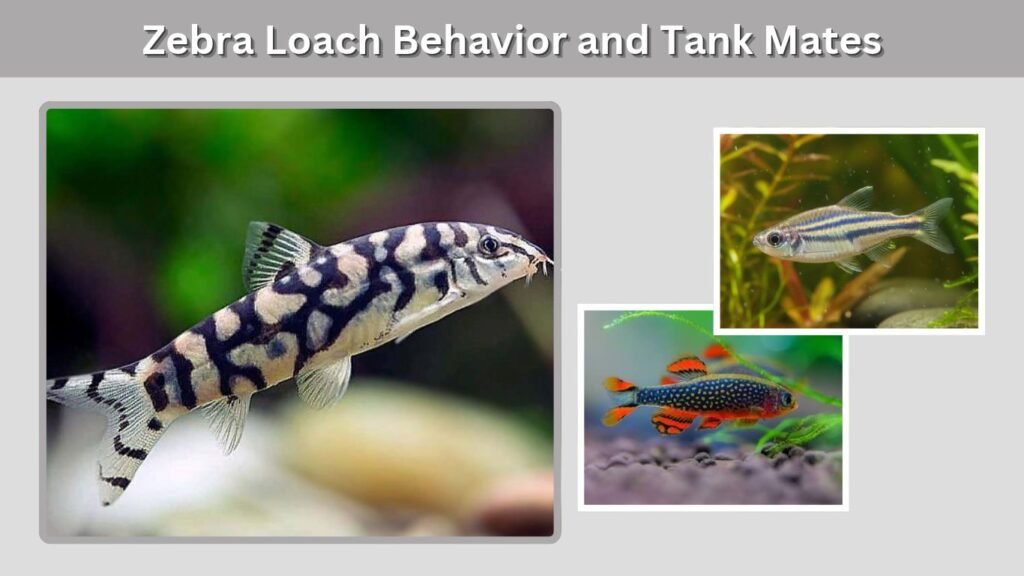
Zebra loaches are generally peaceful compared with many other Botia species. Nevertheless, they are active fish with established social hierarchies.
Individuals may occasionally chase one another or engage in brief territorial interactions. These behaviors are often normal, provided no fish suffers persistent harassment or loses access to food.
Best Zebra Loach Tank Mates
Compatible aquarium companions may include:
- Peaceful rasboras of suitable size.
- Medium-sized, peaceful danios.
- Selected nonaggressive barbs.
- Appropriately sized peaceful tetras.
- Some peaceful catfish, provided sufficient bottom space is available.
- Other compatible loach species in larger aquariums.
All tank mates should tolerate similar water conditions and have enough space to avoid overcrowding.
Avoid highly aggressive fish and slow-moving species with delicate, flowing fins.
Are Zebra Loaches Aggressive?
Zebra loaches are not typically aggressive toward suitable community fish. However, they can become territorial or unusually assertive when housed in inadequate groups.
Keeping at least five or six zebra loaches helps distribute social interactions. Larger groups, when space permits, often produce more natural behavior.
Can Zebra Loaches Live With Bettas?
Zebra loaches are generally not recommended for betta aquariums.
Their energetic movements may disturb slow-moving bettas, and some loaches may nip long fins. Differences in temperament and aquarium requirements can also make this combination unsuitable.
Different Types of Zebra Loaches
Several aquarium fish are sold under names containing the words zebra loach. However, these names do not always refer to the same species.
Understanding the differences helps aquarists choose the right fish and avoid applying incorrect care requirements.
| Common Name | Scientific Name | Approximate Adult Size |
| Zebra loach | Botia striata | 3–4 inches |
| Golden zebra loach | Botia histrionica | Up to approximately 5 inches |
| Hovering zebra loach | Micronemacheilus cruciatus | Approximately 1.5–1.6 inches |
| Zebra hillstream loach | Varies by species and trade name | Species-dependent |
Gold or Golden Zebra Loach
The golden zebra loach usually refers to Botia histrionica, also called the Burmese loach.
It generally develops broader dark markings than Botia striata and can grow considerably larger.
Golden zebra loaches require spacious aquariums and should also be maintained in social groups.
Hovering Zebra Loach
The hovering zebra loach is a much smaller species native to Vietnam.
Unlike Botia striata, it frequently swims or hovers above the substrate. It prefers peaceful tank mates, planted surroundings, and stable water conditions.
Because of its small size and different social requirements, it should not be treated as a miniature version of the standard zebra loach.
Zebra Hillstream Loach
The name zebra hillstream loach is used inconsistently in aquarium listings.
Some striped hillstream loaches have flattened bodies and broad fins adapted for gripping rocks in flowing water.
These fish have different habitat requirements from Botia striata. Always confirm the scientific name before purchasing.
Zebra Loach Breeding and Reproduction
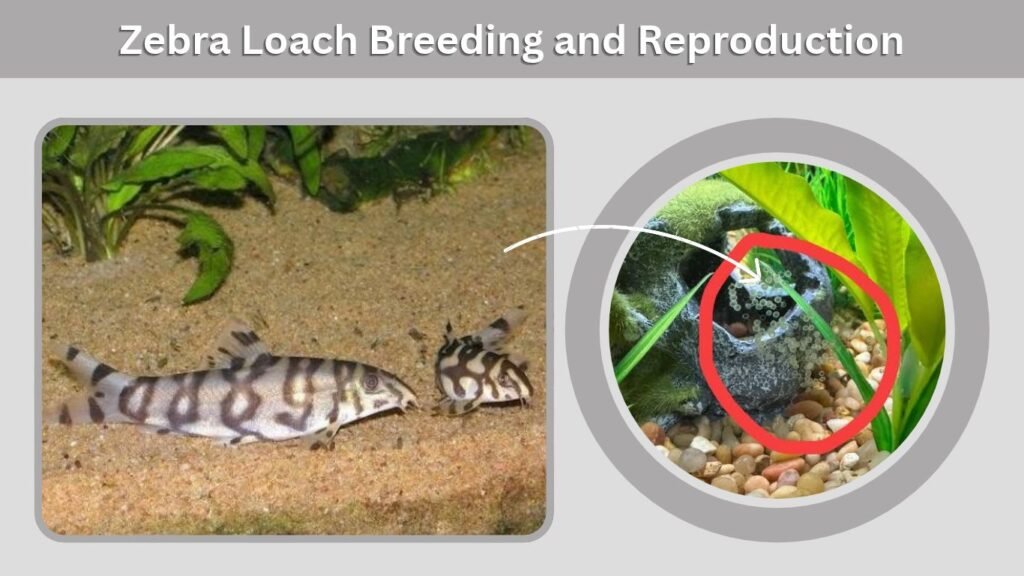
Breeding Botia striata in home aquariums is extremely difficult, and reliable reports of successful natural spawning are scarce.
Commercial production has been achieved using hormone-assisted methods, but these techniques are not practical for typical hobbyists.
Mature females may develop noticeably rounded abdomens when carrying eggs. However, a swollen belly does not automatically indicate pregnancy or readiness to spawn.
Persistent bloating, unusual swimming, appetite loss, or raised scales can suggest health problems rather than reproduction.
Buying and Caring for Healthy Zebra Loaches
Before purchasing zebra loaches, ensure the aquarium has enough space for a proper group and that its biological filtration is established.
Because Botia striata has been assessed as Endangered in the wild, responsible sourcing is especially important.
When selecting zebra loaches:
- Choose active fish with clear eyes and intact fins.
- Avoid specimens with sunken bellies or unusual swelling.
- Check that the seller identifies the fish correctly.
- Ask whether the fish are captive-bred or wild-caught.
- Quarantine new arrivals when possible before introducing them to an established community.
Healthy zebra loaches usually explore their surroundings, search actively for food, and interact regularly with members of their group.
FAQs
Are zebra loaches good for community tanks?
Yes, zebra loaches are suitable for many peaceful community aquariums. They generally coexist well with appropriately sized fish that share similar water requirements. However, their active behavior can disturb timid species, so providing enough swimming space and multiple hiding places is essential.
How many zebra loaches should be kept together?
Zebra loaches should be kept in groups of at least five or six individuals. Larger groups are often preferable when aquarium space allows. They establish social hierarchies and interact frequently. Keeping too few may encourage stress, excessive hiding, or dominance-related aggression.
Are zebra loaches nocturnal?
Zebra loaches are often most active during low-light periods, but they are not exclusively nocturnal. Well-adjusted individuals frequently emerge during the day, especially when kept in groups. Providing shaded areas and secure hiding places helps them feel comfortable enough to explore their aquarium.
Can zebra loaches live in a 10-gallon tank?
A 10-gallon aquarium is too small for a permanent group of Botia striata. These fish need adequate horizontal swimming space and room to establish social relationships. A long aquarium of approximately 30 gallons or more is a more suitable starting point.
What is the difference between a zebra loach and a yoyo loach?
The zebra loach has numerous narrow stripes, while the yoyo loach typically displays larger, irregular markings that may resemble letters. Yoyo loaches also grow larger and can behave more assertively. Both species are social and require spacious aquariums with suitable hiding places.