
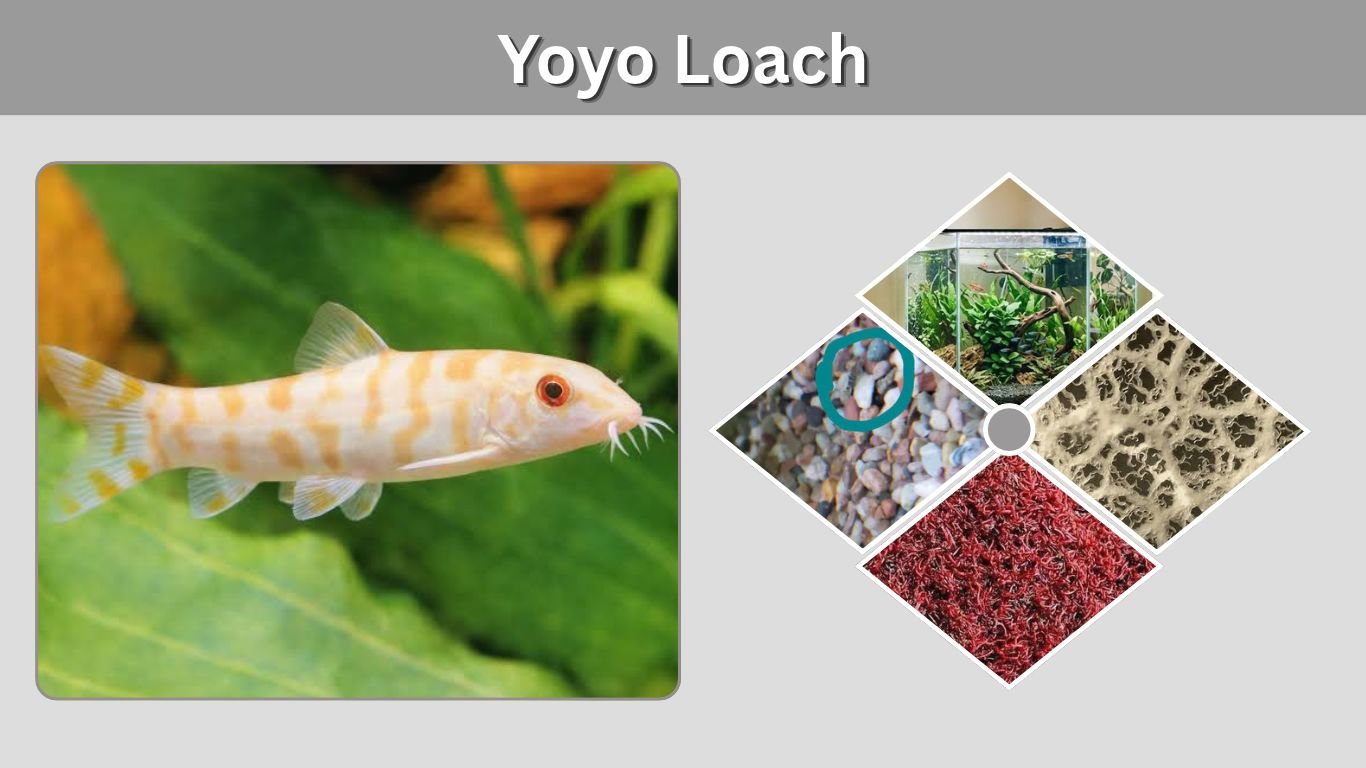
The yoyo loach is a lively freshwater fish known for its unusual body markings, playful personality, and ability to eat small snails. Also called the Pakistani loach, this bottom-dwelling fish has become popular among aquarium enthusiasts because of its curious behavior and attractive appearance. Although yoyo loaches are relatively hardy, they require adequate swimming space, stable water conditions, and companions of their own species. This guide covers yoyo loach size, tank requirements, feeding habits, compatible tank mates, lifespan, breeding, and essential care tips.
What Is a Yoyo Loach?
The yoyo loach is a freshwater fish belonging to the family Botiidae. It is commonly identified as Botia almorhae, although fish sold under this name may belong to closely related species, including Botia lohachata.
The name “yoyo” comes from the dark markings along its body, which can resemble the letters Y and O. These patterns make young fish particularly distinctive.
Yoyo Loach Quick Facts
| Characteristic | Details |
| Common name | Yoyo loach, Pakistani loach |
| Scientific name | Botia almorhae species group |
| Family | Botiidae |
| Origin | South Asia |
| Adult size | Approximately 4–6 inches |
| Lifespan | Commonly 10 years or longer |
| Diet | Omnivorous |
| Temperament | Social, active, occasionally boisterous |
| Minimum group | 5–6 individuals |
| Tank size | Around 64 gallons or larger for a group |
| Care level | Moderate |
Yoyo loaches are often purchased as small juveniles, but their adult size and energetic behavior make them more suitable for spacious, established aquariums.
Yoyo Loach Size and Appearance
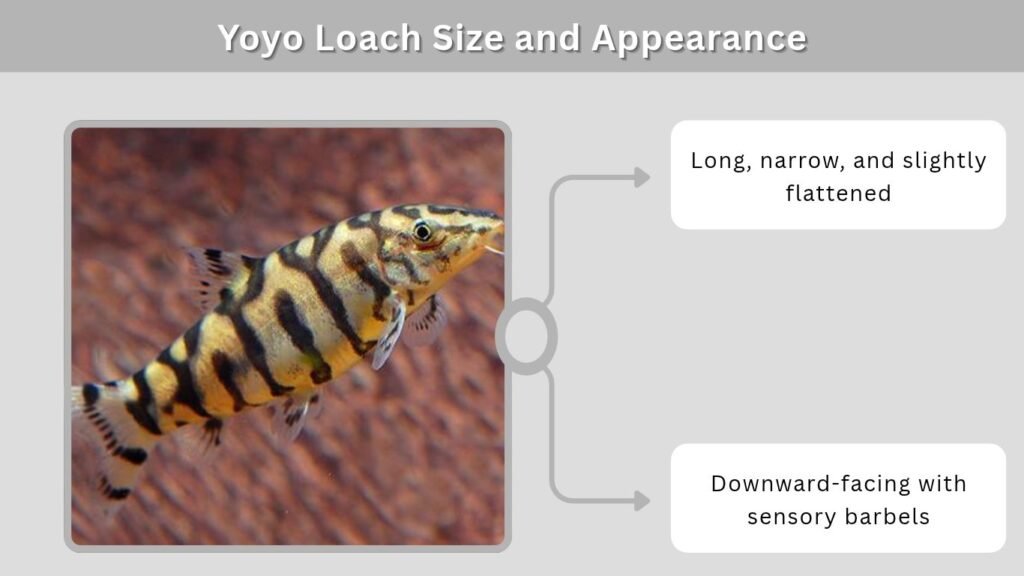
Yoyo loaches have slender, elongated bodies with attractive dark markings over a pale background. Their mouths point downward, allowing them to search through sand and gravel for food. Their appearance changes as they grow, and older individuals may develop more complicated body patterns.
How to Identify a Yoyo Loach
Common physical characteristics include:
- Body shape: Long, narrow, and slightly flattened along the sides.
- Color: Silver, cream, or pale golden with dark markings.
- Patterns: Black or brown bands resembling Y-shaped markings.
- Mouth: Downward-facing with sensory barbels.
- Fins: Mostly transparent with darker markings.
- Eyes: Small and positioned toward the upper sides of the head.
Yoyo loaches also possess retractable defensive spines beneath their eyes. These can become extended when the fish feels threatened.
How Big Do Yoyo Loaches Get?
A full-grown yoyo loach commonly measures about 4–6 inches (10–15 cm). Some individuals remain smaller, while larger specimens may approach 6 inches in body length.
Growth depends on genetics, nutrition, water quality, and available space.
Young loaches sold at approximately 2 inches should not be expected to remain that size permanently.
Their active swimming habits also mean that aquarium dimensions matter more than length alone.
Yoyo Loach Tank Size and Aquarium Setup
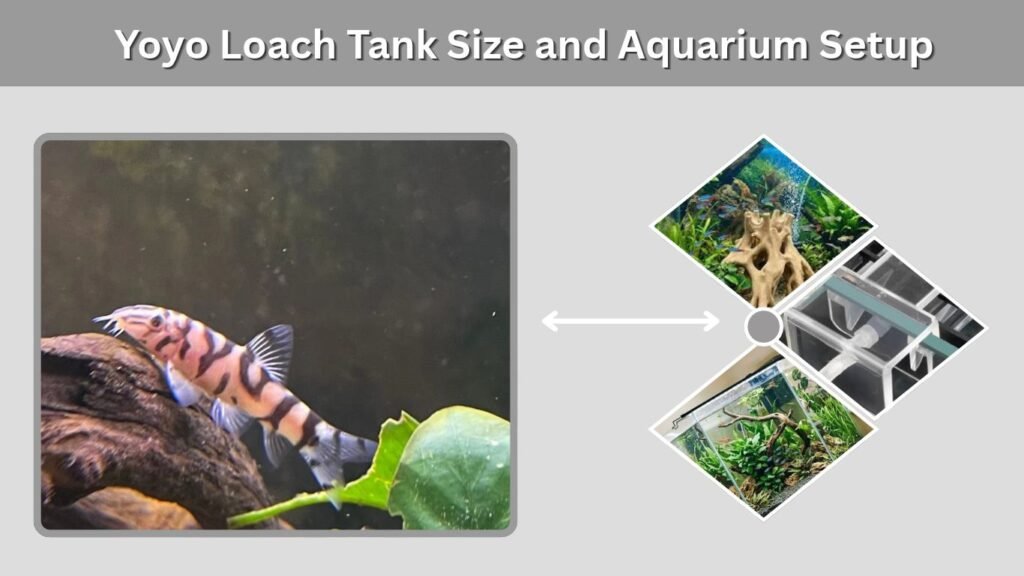
Yoyo loaches need a spacious aquarium that accommodates their adult size and social behavior. They spend considerable time exploring the bottom, but they also swim into open water. A long aquarium with hiding places and a well-maintained filtration system helps create a suitable environment.
What Size Tank Does a Yoyo Loach Need?
For a group of adult yoyo loaches, an aquarium with a base of at least 48 × 18 inches (120 × 45 cm) is recommended. This corresponds to approximately 64 US gallons, depending on tank dimensions.
Larger tanks are preferable when keeping additional species.
Small aquariums may increase territorial disputes and make it difficult for weaker individuals to avoid dominant fish.
Best Tank Decorations
A suitable aquarium should provide:
- Fine sand or smooth gravel
- Driftwood branches and roots
- Smooth rocks and aquarium caves
- Several hiding places
- Open swimming areas
- A tightly fitted aquarium lid
Java fern, Anubias, and Java moss are useful plant options.
Avoid decorations with sharp edges or openings that could trap fish. Yoyo loaches are curious and frequently squeeze into narrow spaces.
Yoyo Loach Water Temperature and Conditions
Yoyo loaches naturally inhabit freshwater river systems and pools with rocky or gravel-covered bottoms. They prefer clean, oxygen-rich water with some movement.
Stable conditions are especially important because these fish can become stressed when water chemistry changes suddenly.
Recommended Water Parameters
| Water Parameter | Suitable Range |
| Temperature | 66–82°F (19–27.5°C) |
| pH | 6.0–7.5 |
| Hardness | 2–12 dGH |
| Ammonia | 0 ppm |
| Nitrite | 0 ppm |
| Nitrate | Keep low |
| Water flow | Gentle to moderate |
A temperature around 75–79°F (24–26°C) works well for many established aquarium groups.
Regular water testing, effective filtration, and partial water changes help maintain a healthy environment.
Never introduce yoyo loaches into an uncycled aquarium.
What Do Yoyo Loaches Eat?
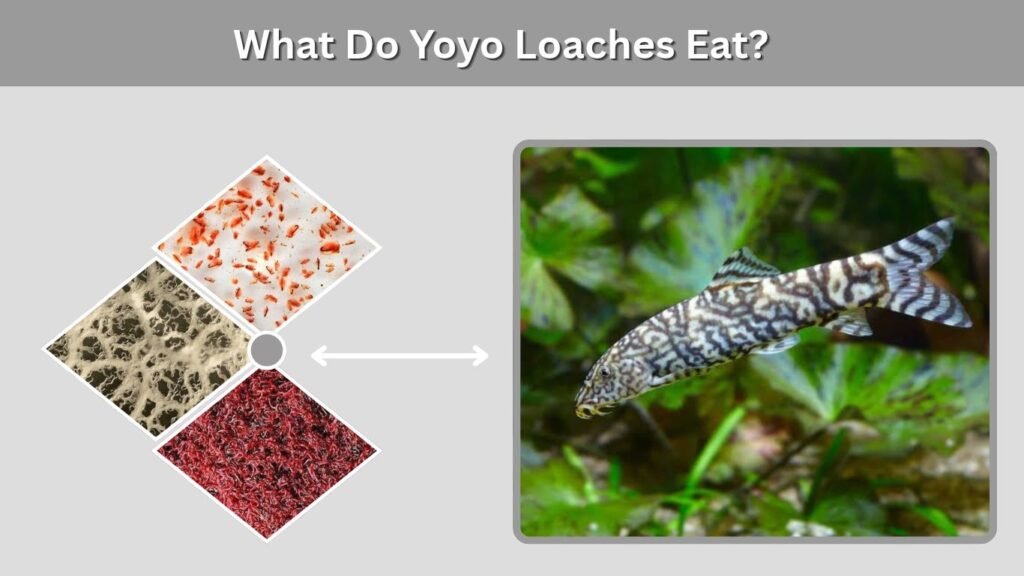
Yoyo loaches are omnivorous but naturally consume substantial amounts of animal-based food. In the wild, they feed on worms, insects, mollusks, and other small aquatic organisms.
Captive individuals readily accept commercial foods, although a varied diet is important for their health and development.
Best Foods for Yoyo Loaches
Suitable foods include:
- Quality sinking pellets
- Bottom-feeder tablets
- Frozen bloodworms
- Brine shrimp
- Small aquatic worms
- Blanched zucchini
- Blanched spinach
- Occasional cucumber pieces
Offer an appropriate portion once or twice daily, adjusting the amount to the aquarium’s feeding conditions.
Remove uneaten food to prevent waste accumulation.
Do Yoyo Loaches Eat Snails?
Yes, yoyo loaches eat many small freshwater snails. They may consume bladder snails, pond snails, and other accessible species.
However, their effectiveness depends on snail size and shell structure.
Large snails may be ignored or only occasionally attacked.
Although yoyo loaches can reduce unwanted snails, they should not be purchased solely for pest control. Their long lifespan and social requirements make them a significant commitment.
Yoyo Loach Tank Mates and Behavior
Yoyo loaches are generally peaceful toward compatible aquarium fish, but their energetic nature can intimidate delicate species.
They establish social hierarchies and may chase one another during normal interactions.
Choosing appropriate companions reduces unnecessary stress and helps maintain a balanced community aquarium.
Best Yoyo Loach Tank Mates
Potential companions include active, appropriately sized fish that tolerate similar water conditions.
| Fish | Compatibility |
| Peaceful schooling barbs | Generally good |
| Larger rasboras | Generally good |
| Compatible danios | Generally good |
| Selected Corydoras catfish | Possible with enough bottom space |
| Other compatible Botia loaches | Possible in spacious tanks |
| Long-finned bettas | Usually unsuitable |
| Fancy guppies | Risk of fin nipping |
| Small ornamental shrimp | May be eaten |
Individual behavior varies, so monitor interactions when introducing new fish.
Are Yoyo Loaches Aggressive?
Yoyo loaches are not inherently aggressive, but they can become territorial or dominant within small groups.
Keeping at least five or six individuals encourages more natural social interactions.
When kept alone or in pairs, a loach may become withdrawn or direct aggression toward other fish.
Providing sufficient hiding spaces helps weaker individuals avoid conflicts.
Do Yoyo Loaches Play Dead?
Yoyo loaches sometimes rest on their sides or in unusual positions, creating the appearance of a dead fish.
This behavior can be normal when the fish is relaxed.
However, persistent immobility accompanied by rapid breathing, loss of appetite, or difficulty swimming may indicate illness.
Observe the fish’s overall behavior before assuming that unusual resting positions are harmless.
Yoyo Loach Lifespan and Health
Yoyo loaches are relatively long-lived aquarium fish. With proper conditions, they may survive for 10 years or longer, while some care references report lifespans approaching 15–20 years.
Their long-term health depends on clean water, appropriate nutrition, stable temperatures, and suitable social conditions.
Common Health Problems
Potential warning signs include:
- White spots on the body
- Damaged fins
- Persistent loss of appetite
- Rapid breathing
- Unusual swelling
- Significant weight loss
Sudden color changes or unusual hiding may also indicate stress.
Test aquarium water promptly when these signs appear. Because loaches can be sensitive to certain medications, treatments should be selected carefully.
Yoyo Loach Breeding and Reproduction
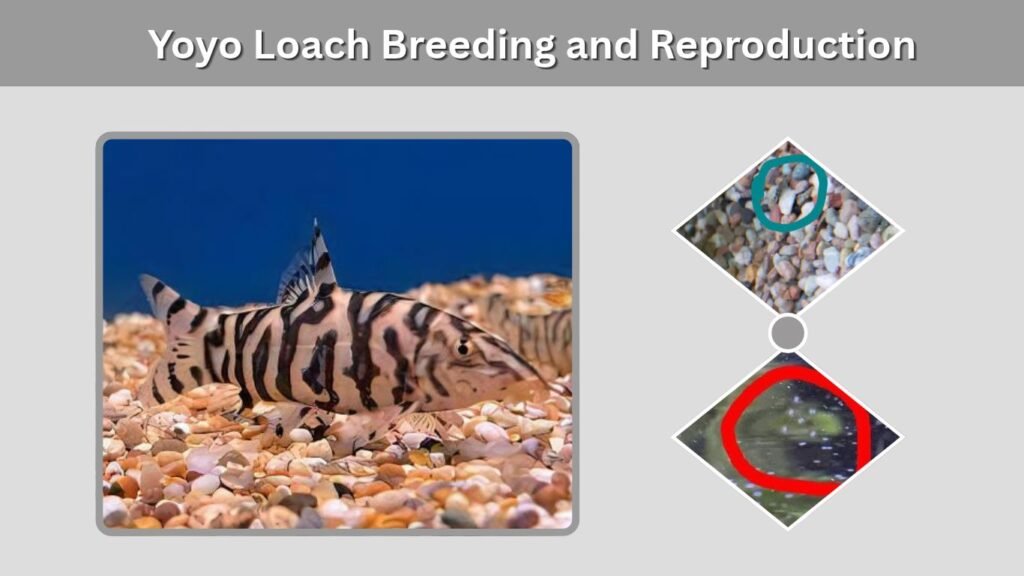
Breeding yoyo loaches in home aquariums is exceptionally difficult. Their natural reproductive behavior appears to depend on seasonal environmental conditions that are challenging to reproduce in captivity.
Reliable, repeatable home-breeding methods have not been established.
Yoyo Loach Male vs. Female
Mature female yoyo loaches often have fuller, rounder bodies than males.
However, body shape alone cannot reliably identify sex, particularly in young individuals.
A swollen abdomen does not necessarily mean a female is carrying eggs. Overfeeding, digestive problems, or illness may produce similar appearances.
Yoyo Loach Eggs and Fry
Yoyo loaches are egg-laying fish rather than livebearers.
Natural reproduction involves spawning rather than pregnancy, and the adults do not provide extended parental care.
Because successful home breeding is extremely rare, detailed information about yoyo loach fry development under ordinary aquarium conditions remains limited.
FAQs
1. Can Yoyo Loaches Live Alone?
Yoyo loaches should not live alone because they are social fish that benefit from regular interaction with their own species. Solitary individuals may become stressed, withdrawn, or unusually aggressive. A group of at least five or six is recommended, provided the aquarium has adequate space.
2. Are Yoyo Loaches Algae Eaters?
Yoyo loaches may occasionally consume algae or plant material, but they are not effective dedicated algae eaters. Their diet primarily consists of small invertebrates and prepared aquarium foods. They should receive nutritious sinking pellets and varied supplements rather than depend on algae for sustenance.
3. Can Yoyo Loaches Live With Bettas?
Yoyo loaches are generally poor companions for bettas. Their energetic swimming behavior can disturb slower fish, and they may nip long, flowing fins. Bettas also have different social and environmental preferences. Keeping these species separately is usually the safer option.
4. How Many Yoyo Loaches Should Be Kept Together?
At least five or six yoyo loaches should be kept together to support natural social behavior. Larger groups can work well when sufficient swimming space and hiding places are available. Keeping only two or three individuals may lead to dominance problems and unnecessary stress.
5. Do Yoyo Loaches Eat Shrimp?
Yes, yoyo loaches may eat small freshwater shrimp, particularly juveniles and newly hatched shrimp. Even larger ornamental shrimp can be disturbed or attacked. Therefore, yoyo loaches are not ideal companions for valuable shrimp colonies or aquariums designed specifically for breeding shrimp.