
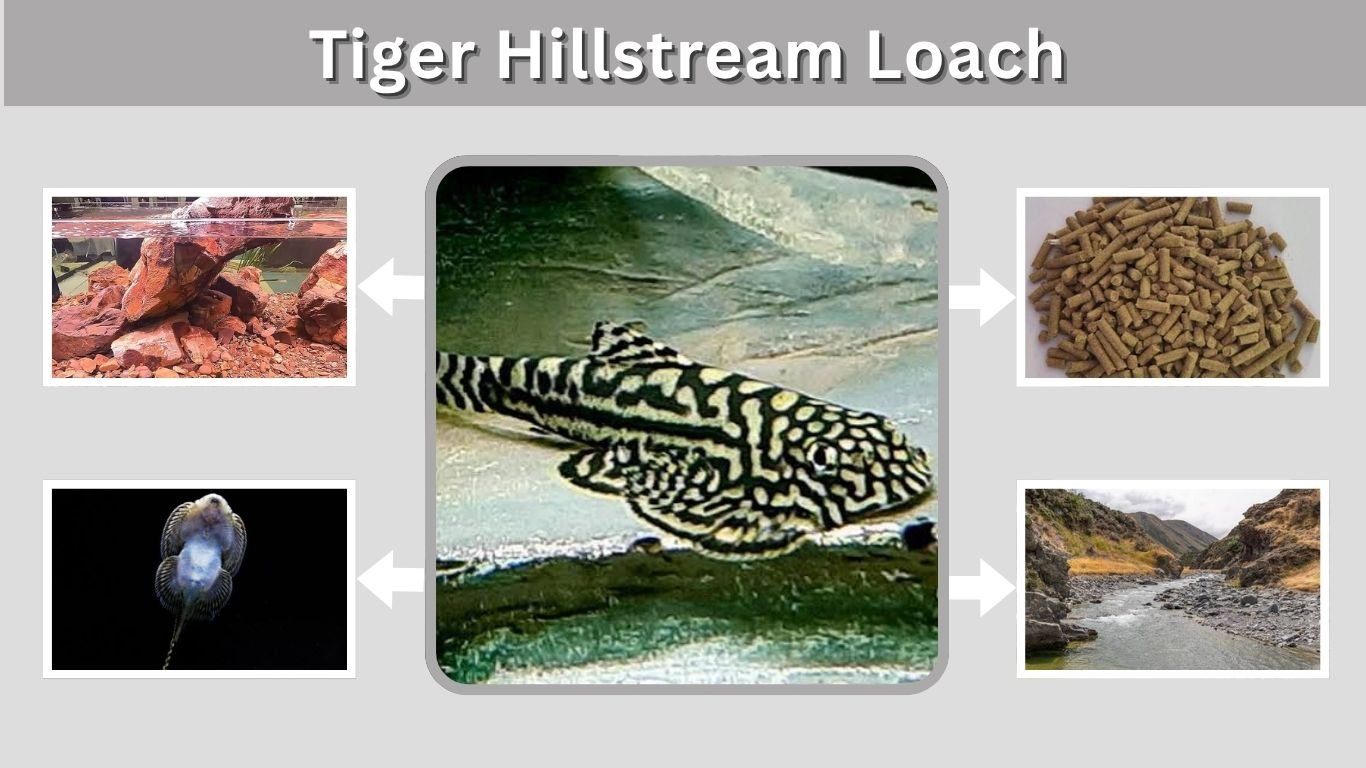
The tiger hillstream loach (Sewellia lineolata) is a small freshwater fish admired for its maze-like markings and ability to grip rocks in flowing water. Also called the reticulated hillstream loach, it comes from rocky Vietnamese streams and is popular in aquariums. Although peaceful with most suitable companions, it needs special conditions to thrive. Healthy fish depend on mature grazing surfaces, clean water, adequate oxygen, and a varied diet. This guide explains its identification, adult size, habitat, tank setup, feeding, behavior, and breeding.
Tiger Hillstream Loach Identification
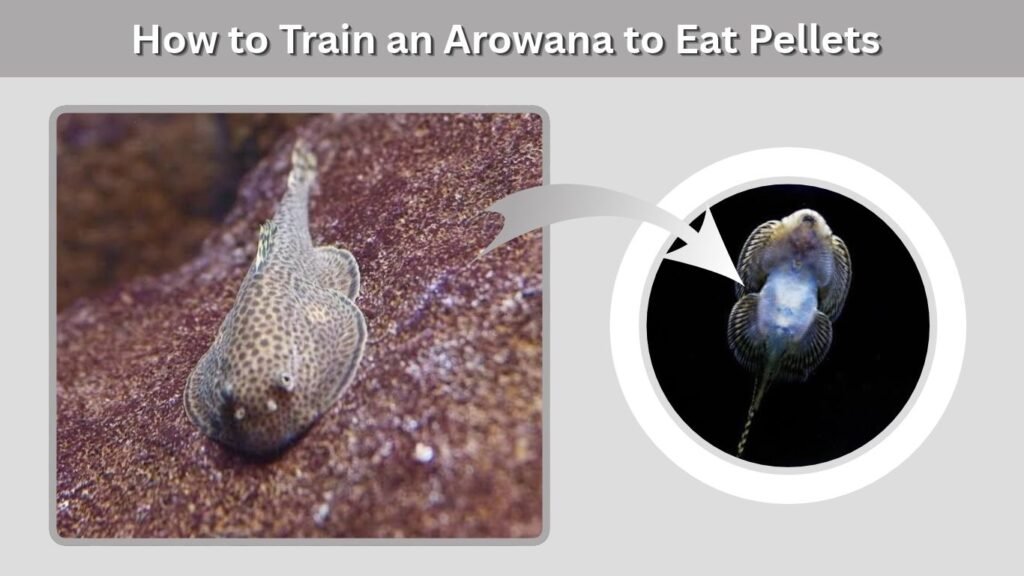
The tiger hillstream loach resembles a miniature ray but belongs to the loach family Gastromyzontidae. Its flattened body and broad fins help it cling to underwater surfaces. Its striking stripes give the species its common name, though markings vary among individuals.
Physical Characteristics
You can recognize a tiger hillstream loach by these features:
- Body shape: Low, flattened body with wide, rounded pectoral and pelvic fins.
- Color: Usually brown to dark olive with cream or golden markings.
- Pattern: Linked spots and winding stripes across the body and fins.
- Mouth: Positioned underneath for grazing along rocks and glass.
- Movement: Often crawls over surfaces instead of swimming in open water.
Tiger vs. Reticulated Hillstream Loach
Tiger hillstream loach and reticulated hillstream loach usually mean the same species, Sewellia lineolata. “Gold ring butterfly sucker” is another trade name. It is different from tiger barbs, plecos, and other hillstream loaches.
Natural Habitat and Distribution
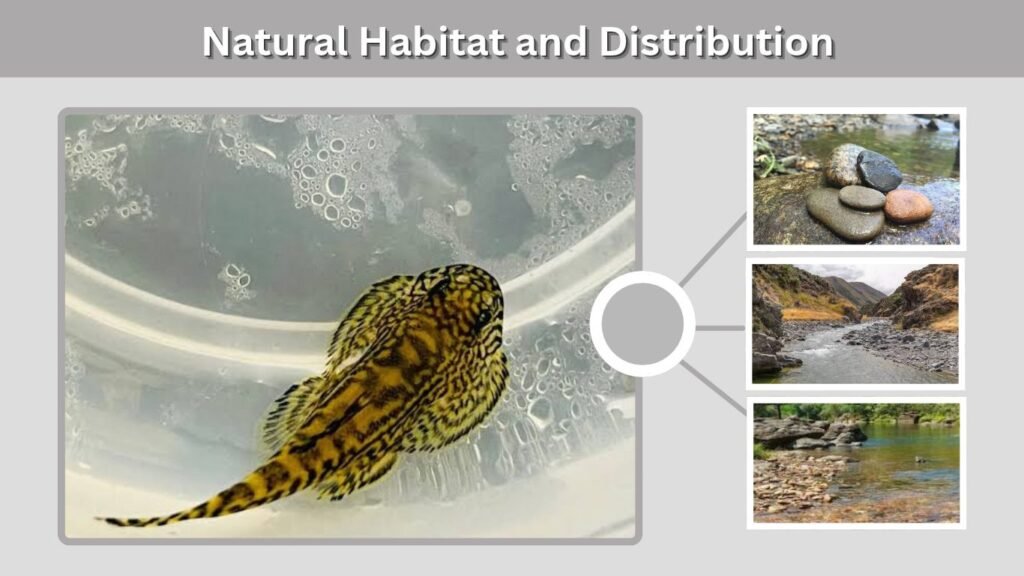
Tiger hillstream loaches are native to central Vietnam, inhabiting swift rivers and rocky streams with gravel, smooth stones, and calmer pools. Flowing water provides oxygen, while sunlight encourages algae and microorganisms to grow on submerged surfaces. Those layers supply natural food.
Its broad fins help it resist current as it grazes. The connection between flow, oxygen, and food explains why a mature aquarium matters. A completely bare river tank is unnecessary, but natural grazing surfaces are valuable.
Tiger Hillstream Loach Size and Lifespan
Adults generally reach 2–2.6 inches (5–6.5 cm) in length. Despite their size, they need substantial grazing space and clean water. With consistent care, they can live several years; hobbyist estimates sometimes reach 8–10 years.
Tiger Hillstream Loach Tank Setup and Care
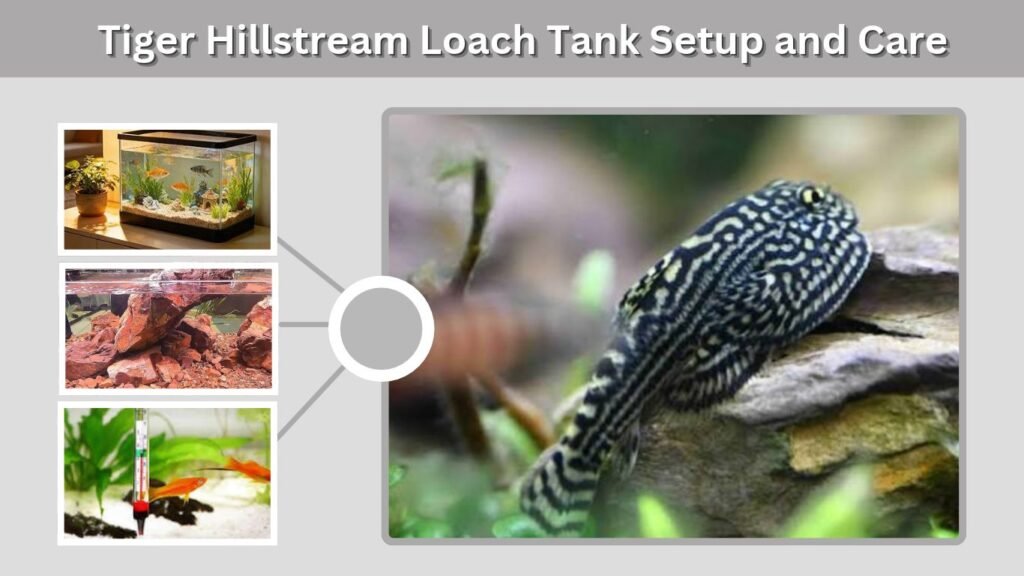
Choose a mature, stable aquarium with ample surfaces to explore. Footprint matters more than height because these fish spend their time on rocks and glass. Use a secure lid: they can climb glass and escape through equipment gaps.
Tank Size and Equipment
A 20-gallon (75-liter) aquarium with a base around 30 × 12 inches is a practical starting point. Groups need larger tanks with more grazing and resting spots. Include:
- Strong biological filtration to keep ammonia and nitrite at zero.
- Moderate to strong water flow with some quieter resting areas.
- Good aeration through surface movement or an air stone.
- Smooth rocks and gravel with crevices and sheltered spaces.
Water Temperature and Parameters
The following conditions are sensible targets for Sewellia lineolata, though the fish should be acclimated carefully and sudden changes avoided.
| Parameter | Recommended starting range |
| Temperature | 68–75°F (20–24°C) |
| pH | Approximately 6.0–7.5 |
| General hardness | About 1–10 dGH |
| Ammonia | 0 ppm |
| Nitrite | 0 ppm |
| Nitrate | Keep low with regular water changes |
Hotter water contains less dissolved oxygen. Monitor temperature, maintain circulation, and never add fish to an uncycled aquarium. Let algae and biofilm develop on some stones.
What Do Tiger Hillstream Loaches Eat?
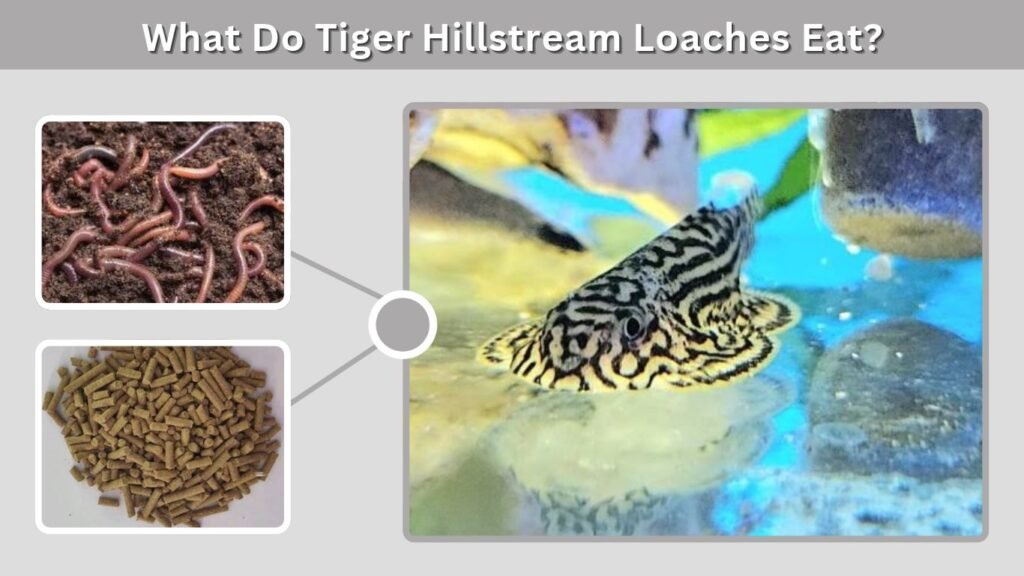
These fish are sold as algae eaters, but their diet includes biofilm, microscopic organisms, and small aquatic invertebrates. Offer natural grazing opportunities alongside nutritious supplemental foods; visible algae alone may not provide enough nutrition.
Best Foods to Offer
Useful choices include:
- Naturally algae-coated rocks: Support ongoing grazing.
- Sinking algae wafers: Provide convenient daily supplements.
- Spirulina-rich gel or prepared foods: Add variety to the diet.
- Small frozen foods: Brine shrimp and daphnia offer animal-based nutrition.
Feeding Schedule
Offer small daily portions and ensure each fish gets food. Fast-feeding companions can take it first. Remove leftovers, and remember that spotless new tanks may lack the grazing growth loaches needed.
Behavior and Tank Mates
Active during the day, tiger hillstream loaches graze on glass and stones. They are usually peaceful toward other species but may defend feeding spots against fellow loaches. Brief chasing is common; repeated exclusion from food is concerning.
Suitable Companions
Fish that tolerate similar water conditions can work well, including:
- Small danios that enjoy moving water.
- Peaceful minnows suited to cooler temperatures.
- Some freshwater shrimp in a well-structured aquarium.
- Peaceful snails that do not compete aggressively for food.
Avoid predators and aggressive bottom dwellers. A tiger hillstream loach can live alone, but groups display interesting behavior when space allows. Provide several shelters and grazing areas.
Tiger Hillstream Loach Breeding
Unlike many hillstream loaches, Sewellia lineolata breeds in home aquariums. Success depends on a mature setup, well-fed adults, and suitable substrate. Tiny fry may remain hidden among gravel before being noticed.
Male and Female Differences
Females tend to have fuller bodies and rounder outlines. Males usually have squarer heads and more angular pectoral fins. Mature males can develop small breeding tubercles on the head and front fin rays. Juveniles are difficult to sex.
Eggs and Fry Care
During courtship, pairs may rise into the water and release eggs. Rounded gravel protects eggs and fry; sponge-covered filter intakes reduce losses. Young fry need microscopic foods such as infusoria before larger live foods. Breeding is never guaranteed.
Tiger Hillstream Loach Names and Buying Tips
Names such as flame tiger hillstream loach and lemon-fin tiger hillstream loach may be retailer labels rather than recognized varieties of Sewellia lineolata. Confirm the scientific name. Choose active fish with intact fins and healthy body condition, ask about feeding, and quarantine new arrivals if possible.
FAQs
Are Tiger Hillstream Loaches Aggressive?
They are generally peaceful toward other suitable aquarium species. Males may chase or push one another when defending rocks or feeding spots, but serious injury is uncommon in a spacious setup. Persistent bullying is a sign that more cover, space, or feeding areas may be needed.
How Many Tiger Hillstream Loaches Should Be Kept Together?
One can be maintained alone, but groups may display more natural interactions. If keeping several, use a larger tank with abundant rocks, shelters, and food. Do not add multiple individuals to a small aquarium without considering territorial behavior and the available grazing surfaces.
Do Tiger Hillstream Loaches Eat Algae?
Yes. They graze on some soft algae and the microorganisms growing with it. However, they are not a complete algae-control solution and should not be expected to survive on aquarium growth alone. Supplement their diet with appropriate sinking and protein-containing foods.
Can Tiger Hillstream Loaches Live With Bettas?
The combination is generally not ideal. Bettas often prefer gentle water movement and warmer conditions, while tiger hillstream loaches benefit from cooler, highly oxygenated, flowing areas. A compromise setup may suit neither fish particularly well, so compatibility should be assessed carefully.
Are Tiger Hillstream Loaches Hard to Keep?
They are manageable for aquarists who maintain stable water quality and established biological filtration. The biggest difficulties are insufficient natural grazing food, poor oxygenation, and adding them to immature tanks. Setting up the aquarium in advance makes their long-term care much easier.