
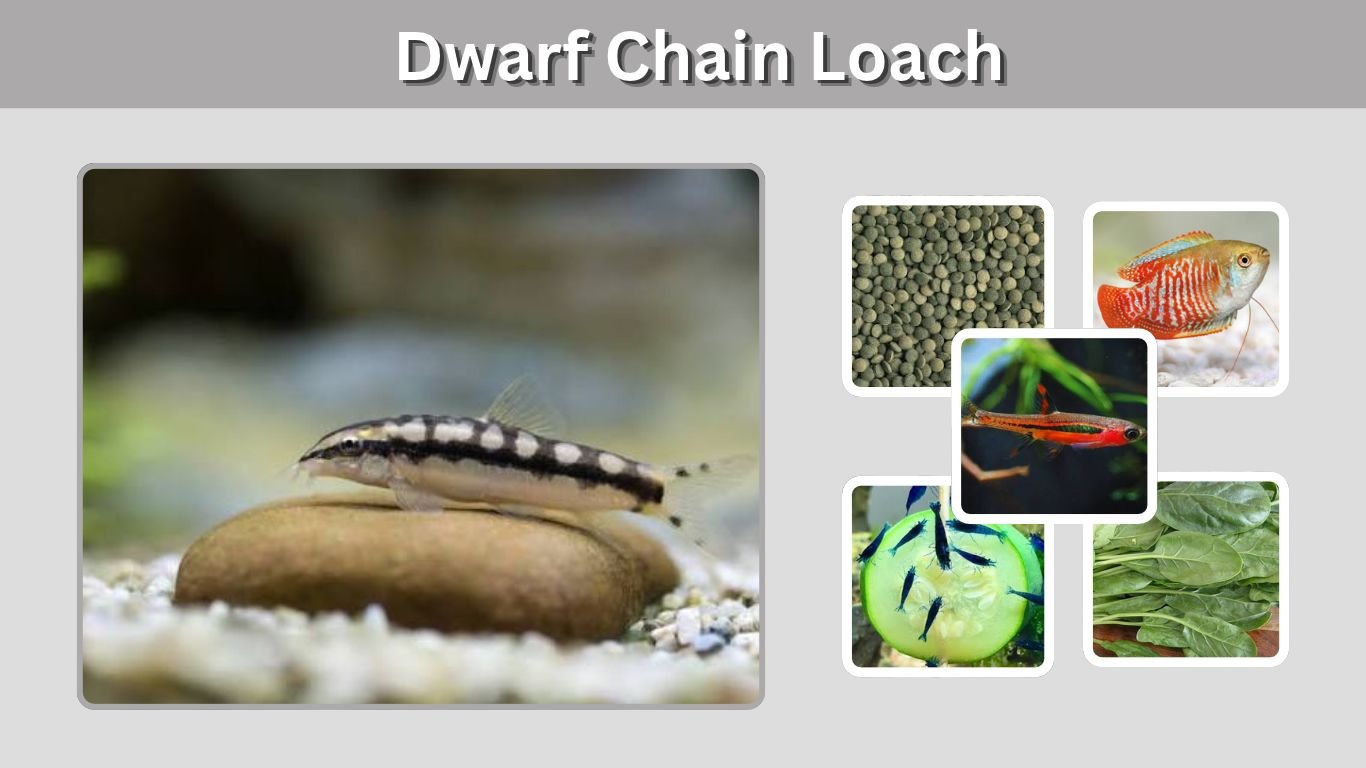
The dwarf chain loach is a small, energetic freshwater fish recognized for its attractive chain-like markings and playful behavior. Unlike many bottom-dwelling loaches, this species frequently swims through the middle of the aquarium, making it an interesting addition to a peaceful community tank. Although dwarf chain loaches remain relatively small, they need adequate swimming space, companions of their own species, and clean water to thrive. This guide covers dwarf chain loach size, natural habitat, tank requirements, diet, compatible tank mates, breeding, and long-term care.
What Is a Dwarf Chain Loach?
The dwarf chain loach (Ambastaia sidthimunki) is a small freshwater fish belonging to the Botiidae family. It is also known as the dwarf botia, dwarf loach, or chain loach.
This species is native to parts of Thailand and nearby river systems along the Myanmar border. It is especially recognizable for the dark chain-like pattern running along its body.
Despite being smaller than many other loaches, it has an active personality and complex social behavior.
Dwarf Chain Loach Quick Facts
| Characteristic | Details |
| Scientific name | Ambastaia sidthimunki |
| Common names | Dwarf chain loach, dwarf botia |
| Family | Botiidae |
| Origin | Thailand and nearby border drainages |
| Adult size | Approximately 2–2.5 inches |
| Lifespan | Commonly around 5–10 years |
| Diet | Omnivorous |
| Temperament | Social, active, sometimes territorial |
| Recommended group | 6 or more; 10+ preferred |
| Minimum aquarium | Around 20 gallons long |
| Care level | Moderate |
| Conservation status | Endangered |
Dwarf chain loaches are sometimes confused with other patterned loaches, but their compact size and distinctive body markings help distinguish them.
Dwarf Chain Loach Size and Appearance
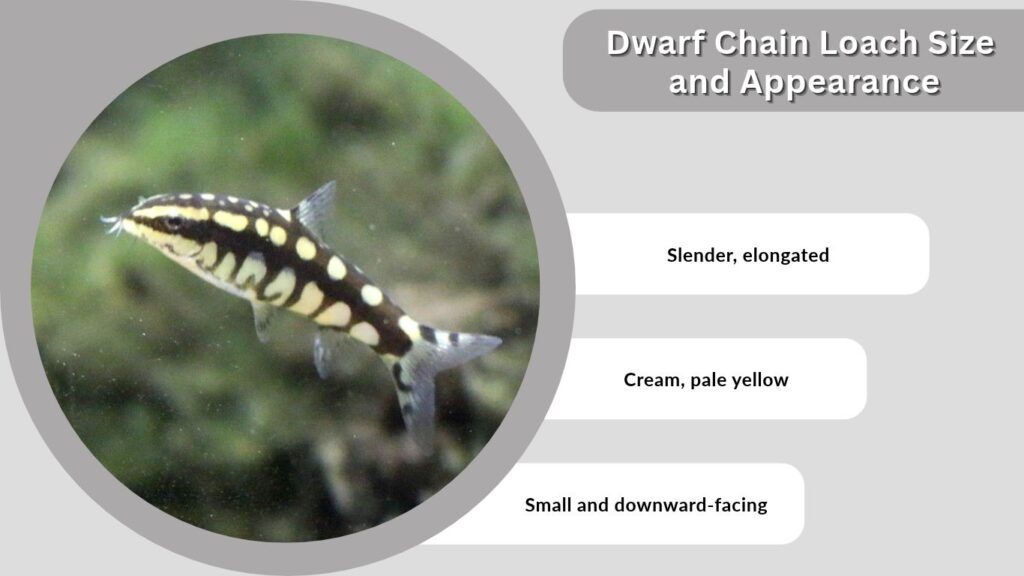
Dwarf chain loaches have slender bodies with pale cream or yellowish coloring and dark horizontal markings. Their most recognizable feature is the interconnected pattern along their sides, which resembles links in a chain. The markings may become more pronounced as the fish reaches adulthood.
How to Identify a Dwarf Chain Loach
Common identification features include:
- Body shape: Slender, elongated, and slightly compressed.
- Body color: Cream, pale yellow, or light golden.
- Dark markings: Chain-like black or brown patterns.
- Mouth: Small and downward-facing.
- Barbels: Short sensory projections around the mouth.
- Fins: Mostly transparent with subtle dark markings.
- Behavior: Active swimming near the bottom and middle of the aquarium.
Their appearance is similar to the black-lined loach (Ambastaia nigrolineata), but adult dwarf chain loaches generally have more prominent vertical connecting bars.
How Big Do Dwarf Chain Loaches Get?
A full-grown dwarf chain loach typically reaches approximately 2–2.5 inches (5–6 cm).
Females may grow slightly larger and develop fuller bodies than males.
Although their size makes them attractive for smaller aquariums, their constant movement and social requirements mean they need more space than many fish of similar length.
Dwarf Chain Loach Habitat and Distribution
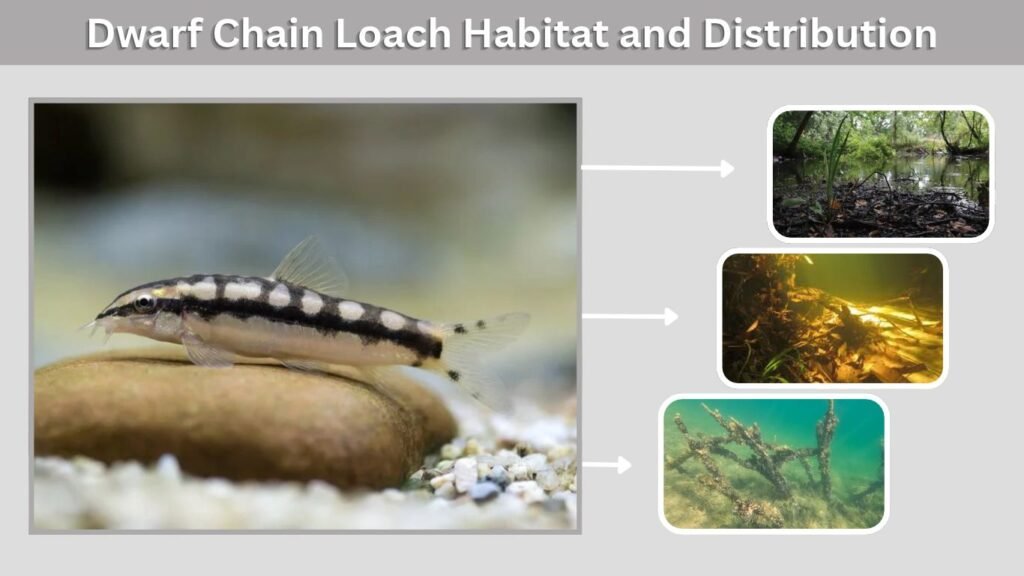
Dwarf chain loaches originate from freshwater environments in Southeast Asia. Their confirmed natural range is associated mainly with the Mae Klong River basin in western Thailand, with additional reports from the Ataran drainage near Myanmar.
These fish inhabit streams and sheltered sections of waterways containing rocks, sand, submerged wood, and natural debris.
Natural Habitat
Their preferred habitat includes relatively clear, oxygen-rich water and numerous places to hide.
Submerged branches, stones, and leaf litter provide shelter while supporting the small aquatic organisms these fish eat.
Unlike loaches that remain hidden beneath rocks throughout the day, dwarf chain loaches frequently explore open water.
Their natural habitat provides useful guidance for designing an aquarium that supports normal behavior.
Dwarf Chain Loach Tank Size and Setup
Dwarf chain loaches need a well-established aquarium with enough space for swimming and social interaction. Although they remain small, they should not be treated as solitary nano-aquarium fish. Their activity level and need for a group make horizontal swimming space especially important.
Minimum Tank Size
A long aquarium with a base of at least 31 × 12 inches (80 × 30 cm), approximately 19–20 gallons, is a practical minimum for a small group.
A larger aquarium is preferable when housing ten or more loaches or additional community fish.
A 10-gallon aquarium is generally too small for maintaining an appropriate social group over the long term.
Best Aquarium Decorations
A suitable setup should include:
- Fine sand or smooth gravel
- Driftwood branches
- Smooth rocks and caves
- Hardy aquatic plants
- Multiple hiding places
- Open swimming areas
- A secure aquarium lid
Plants such as Java fern, Anubias, and Java moss can provide useful shelter.
Avoid sharp decorations and narrow openings where these curious fish could become trapped.
Dwarf Chain Loach Water Parameters
Maintaining stable water conditions is essential for dwarf chain loaches. They prefer clean, well-oxygenated water with gentle to moderate movement.
These fish should only be added to aquariums with an established biological filtration system.
Recommended Water Conditions
| Water Parameter | Suitable Range |
| Temperature | 68–86°F (20–30°C) |
| pH | 5.5–7.5 |
| Water hardness | 1–12 dGH |
| Ammonia | 0 ppm |
| Nitrite | 0 ppm |
| Nitrate | Keep low |
| Water movement | Gentle to moderate |
A stable temperature around 75–80°F (24–27°C) is suitable for many home aquariums.
Regular partial water changes help prevent waste accumulation. Avoid sudden changes in temperature, pH, or hardness.
What Do Dwarf Chain Loaches Eat?
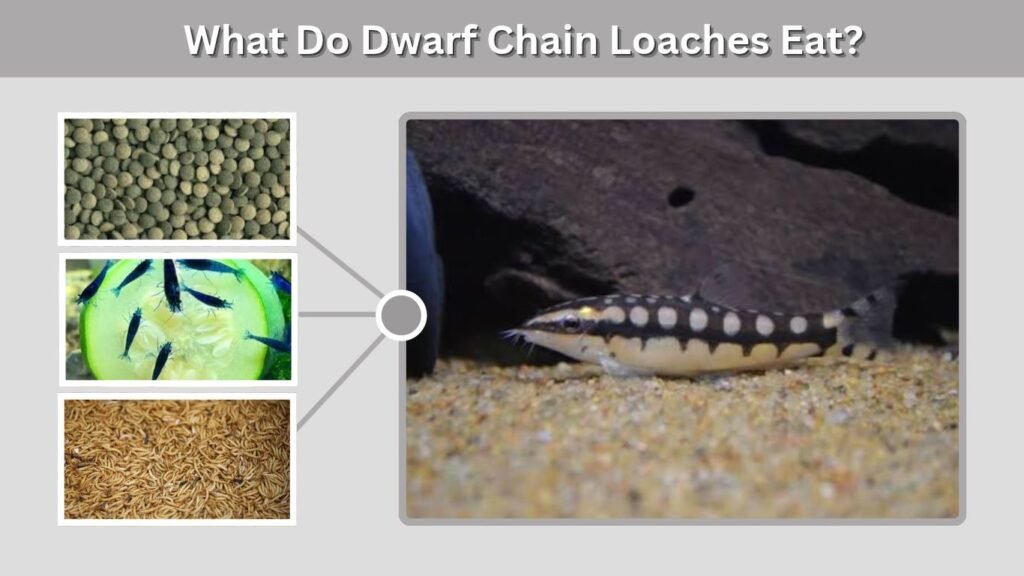
Dwarf chain loaches are omnivorous fish that feed heavily on small aquatic invertebrates. In nature, their diet includes insects, worms, and other tiny organisms found among rocks and submerged vegetation.
Captive fish generally accept prepared aquarium foods alongside frozen or live foods.
Best Foods for Dwarf Chain Loaches
A varied diet can include:
- High-quality sinking pellets
- Small bottom-feeder tablets
- Frozen bloodworms
- Brine shrimp
- Daphnia
- Small aquatic worms
- Blanched zucchini
- Occasional spinach or cucumber
Feed small portions that the fish can finish without leaving substantial waste.
Because dwarf chain loaches may swim into the middle of the aquarium during feeding, they are not limited to eating food directly from the substrate.
Do Dwarf Chain Loaches Eat Snails?
Yes, dwarf chain loaches eat small freshwater snails and may reduce populations of tiny pest snails.
However, they are not guaranteed to eliminate an infestation.
Larger snails, including mature nerite snails, may be less vulnerable, although harassment is still possible.
These loaches should not be purchased solely for snail control because they need proper social groups and long-term care.
Dwarf Chain Loach Tank Mates
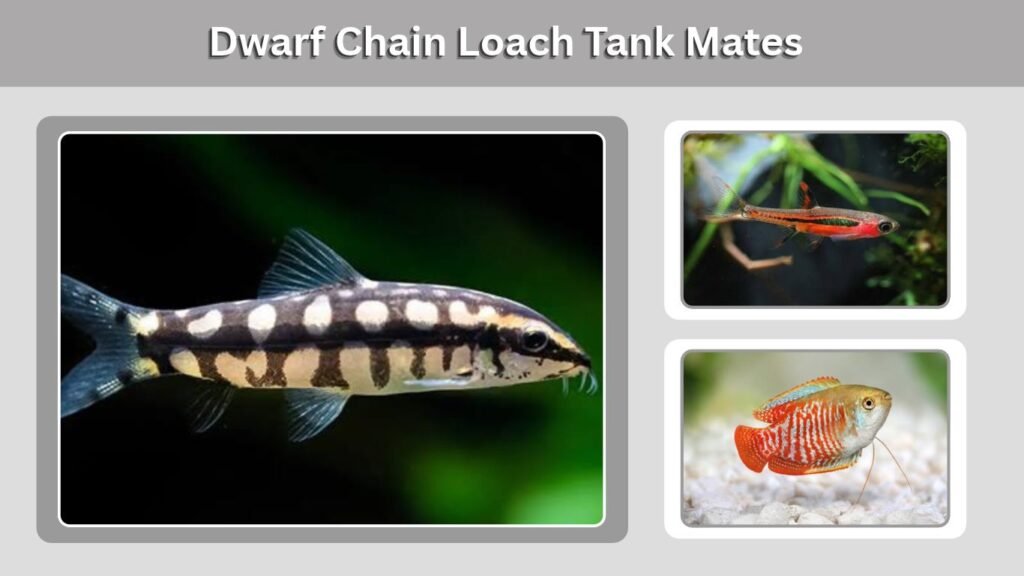
Dwarf chain loaches can live in community aquariums with carefully selected species. Their small size makes them less intimidating than larger loaches, but their energetic behavior can disturb slow or delicate companions.
Individual temperament varies, and occasional chasing or fin nipping may occur.
Compatible Tank Mates
| Tank Mate | Compatibility |
| Peaceful rasboras | Generally good |
| Small, active tetras | Generally good |
| Peaceful schooling barbs | Generally good |
| Small danios | Generally good |
| Corydoras catfish | Possible with sufficient space |
| Dwarf gouramis | Use caution |
| Long-finned bettas | Generally unsuitable |
| Cherry shrimp | Young shrimp may be eaten |
| Amano shrimp | Adults may coexist, but risks remain |
| African dwarf frogs | Usually unsuitable |
Always consider aquarium size, feeding behavior, and individual temperament when choosing companions.
Are Dwarf Chain Loaches Aggressive?
Dwarf chain loaches are generally social, but they establish dominance hierarchies.
Occasional chasing and brief disputes are common within groups.
Keeping only one or two may increase stress or encourage aggression toward other fish.
Groups of six or more are recommended, while ten or more individuals can provide richer social interaction when space allows.
Dwarf Chain Loach Lifespan and Health
Dwarf chain loaches can live for several years with proper aquarium care. A lifespan of approximately 5–10 years is commonly reported, although individual longevity varies.
Clean water, balanced feeding, and an appropriate social environment are essential.
Potential health problems include white spot disease, damaged fins, weight loss, and infections associated with poor water conditions.
Keeping Dwarf Chain Loaches Healthy
Important care practices include:
- Testing water parameters regularly
- Maintaining effective filtration
- Providing a balanced diet
- Avoiding overcrowding
- Keeping an appropriate group size
- Monitoring unusual behavior
Sudden paleness may occur during social disputes, but persistent color loss combined with unusual behavior can indicate stress or illness.
Dwarf Chain Loach Breeding
Breeding dwarf chain loaches in home aquariums is difficult and uncommon.
Commercial breeding programs have successfully produced this species, sometimes using hormone-assisted techniques.
A small number of spontaneous breeding events have also been documented in established home aquariums.
Male vs. Female Dwarf Chain Loach
Mature females generally have fuller bodies and may grow slightly larger than males.
Adult males can develop somewhat longer snouts and thicker lips.
However, distinguishing sexes in younger fish is challenging.
Dwarf Chain Loach Eggs and Fry
Dwarf chain loaches reproduce by laying eggs rather than giving birth to live young.
Successful reproduction requires suitable conditions, but reliable home-breeding methods remain poorly established.
In one documented aquarium case, juvenile dwarf chain loaches appeared in a large, established group without a deliberately controlled breeding procedure.
Aquarists interested in breeding should prioritize stable water quality, mature fish, and a spacious social environment.
Dwarf Chain Loach Conservation Status
The dwarf chain loach is classified as Endangered on the IUCN Red List, based on an assessment published in 2011.
Habitat degradation and historical pressure from aquarium collection have contributed to concerns about its wild populations.
Captive breeding helps provide fish for the aquarium trade without relying entirely on wild collection.
Aquarists should choose reputable suppliers and ask whether available fish are captive-bred.
FAQs
1. Can Dwarf Chain Loaches Live in a 10-Gallon Tank?
A 10-gallon aquarium is generally too small for a proper group of dwarf chain loaches. Although individual fish remain small, they are active and highly social. A longer aquarium of approximately 20 gallons or more provides better swimming space and supports healthier group behavior.
2. Can Dwarf Chain Loaches Live With Bettas?
Dwarf chain loaches are not ideal tank mates for bettas. Their energetic swimming and occasional fin-nipping behavior may stress slow-moving fish with long fins. Individual compatibility varies, but keeping them with active, peaceful schooling fish is generally a safer choice.
3. Do Dwarf Chain Loaches Eat Shrimp?
Dwarf chain loaches may eat baby shrimp and very small individuals. Larger Amano shrimp sometimes coexist with them, but compatibility is not guaranteed. Aquariums intended for breeding cherry shrimp or other small ornamental shrimp are generally unsuitable for dwarf chain loaches.
4. How Many Dwarf Chain Loaches Should Be Kept Together?
A minimum group of five or six dwarf chain loaches is generally recommended, with ten or more preferable in a sufficiently spacious aquarium. Groups allow natural social interactions and help distribute dominance-related behavior. Keeping one or two fish may cause unnecessary stress.
5. Are Dwarf Chain Loaches Good for Beginners?
Dwarf chain loaches are better suited to aquarists with some experience. They require stable water conditions, a properly established aquarium, and suitable companions. Their feeding requirements are manageable, but maintaining a healthy social group and preventing stress require attention and consistent aquarium maintenance.