
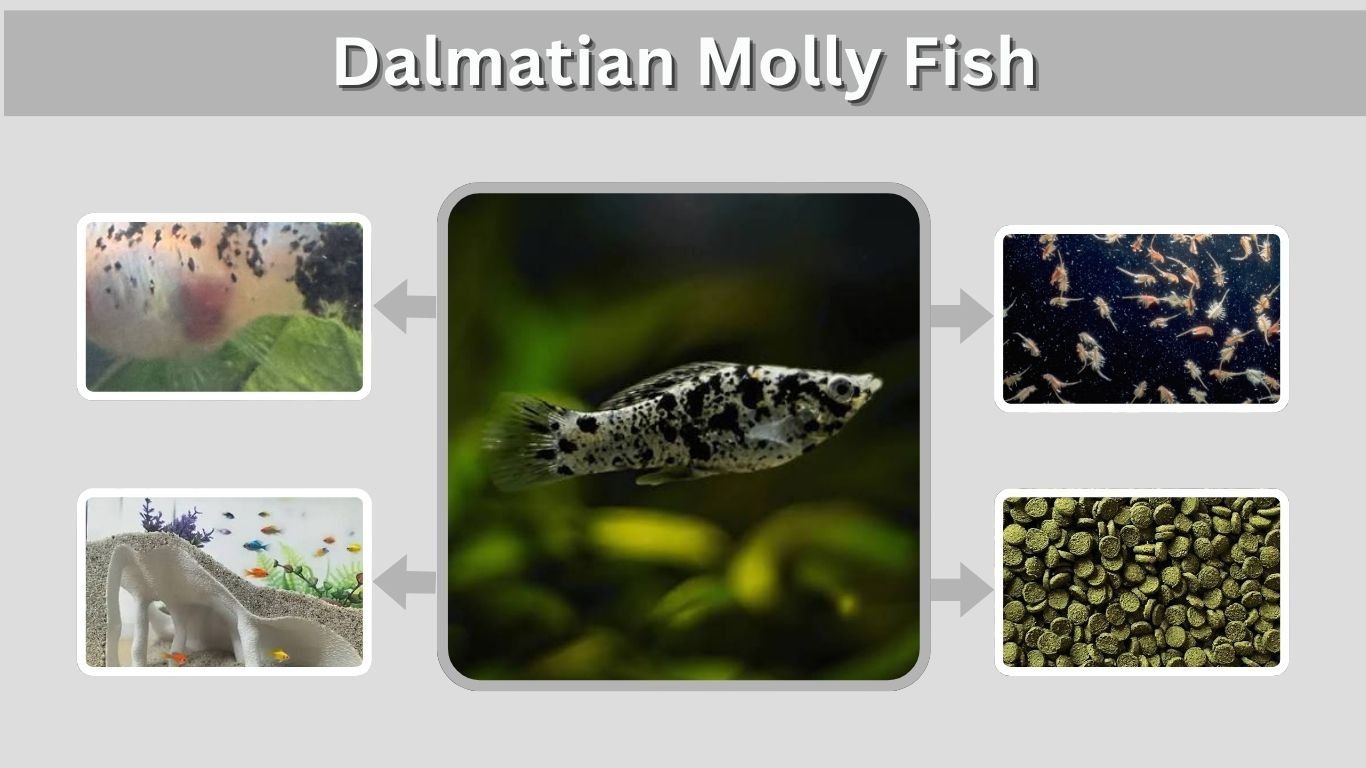
The Dalmatian Molly fish is a popular freshwater livebearer known for its attractive black-and-white spotted pattern, peaceful personality, and active swimming behavior. These fish are easy to recognize and can be a good choice for community aquariums when kept under proper conditions. Dalmatian Mollies need warm, clean, mineral-rich water, enough swimming space, and a balanced diet. They are also prolific breeders, so owners frequently notice pregnancy and newborn fry. This guide covers care, food, lifespan, tank size, behavior, breeding, male vs female differences, and pregnancy signs.
Dalmatian Molly Fish Care
Dalmatian Mollies are relatively hardy, but stable water conditions are essential for keeping them healthy. They prefer warm, moderately hard to hard freshwater with good filtration. Poor water quality can quickly lead to stress, clamped fins, unusual swimming, or disease. Providing enough space and maintaining consistent conditions can significantly improve their lifespan and overall behavior.
Ideal Tank Conditions
For healthy Dalmatian Mollies, aim for:
- Tank size: At least 20 gallons for a small group
- Temperature: Around 75–80°F
- pH: Approximately 7.5–8.5
- Water hardness: Moderate to hard
- Ammonia: 0 ppm
- Nitrite: 0 ppm
- Nitrate: Kept low
- Filtration: Strong biological filtration
- Lighting: Moderate aquarium lighting
- Plants: Live plants and open swimming areas
A larger aquarium is preferable when keeping several mollies because they are active and produce considerable waste.
How Long Do Dalmatian Molly Fish Live?
Dalmatian Molly fish generally live around 3 to 5 years in a properly maintained aquarium.
Water quality is one of the biggest factors influencing lifespan. Fish exposed to ammonia, unstable temperatures, overcrowding, or poor nutrition may live significantly shorter lives.
Good genetics, proper feeding, regular water changes, compatible tank mates, and enough swimming room give these mollies the best chance of reaching the upper end of their expected lifespan.
What Do Dalmatian Molly Fish Eat?
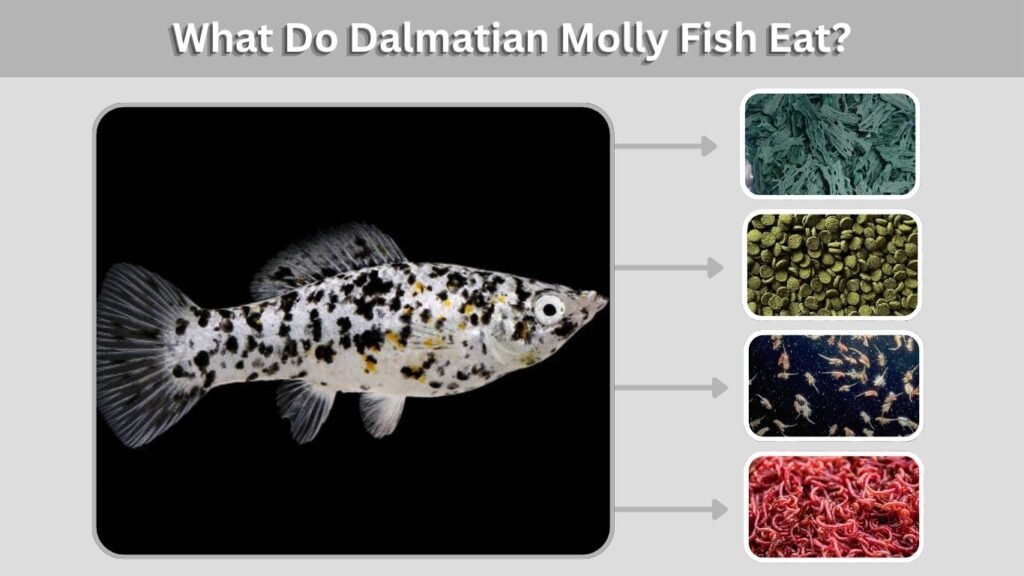
Dalmatian Mollies are omnivores, but plant-based foods should form an important part of their diet. In aquariums, they frequently graze on algae and biofilm throughout the day. Offering varied foods helps maintain their immune system, digestion, coloration, growth, and reproductive health.
Best Foods for Dalmatian Mollies
Suitable foods include:
- High-quality tropical flakes
- Molly-specific pellets
- Spirulina flakes
- Algae wafers
- Brine shrimp
- Daphnia
- Bloodworms occasionally
- Blanched zucchini
- Spinach
- Shelled peas
- Small amounts of live food
Feed only what the fish can consume within a short period.
How Often Should You Feed Them?
Adult Dalmatian Mollies can normally be fed once or twice daily.
Small portions are better than one large meal because leftover food can quickly deteriorate water quality. Fry require more frequent feeding because they are growing rapidly and have smaller stomachs.
Young mollies can be offered crushed flakes, powdered fry food, baby brine shrimp, and other appropriately sized foods several times per day.
Dalmatian Molly Fish Male vs Female
Male and female Dalmatian Mollies can usually be distinguished once they become sexually mature. The easiest way is to examine the anal fin. Males possess a specialized reproductive structure called a gonopodium, while females have a broad, fan-shaped anal fin.
Male vs Female Differences
Look for these characteristics:
- Male: Narrow, pointed gonopodium
- Female: Broad, fan-shaped anal fin
- Male size: Usually slightly smaller and slimmer
- Female size: Often larger and rounder
- Male behavior: More likely to chase females
- Female abdomen: Becomes noticeably fuller during pregnancy
- Male dorsal fin: May appear more prominent in some varieties
Females generally have heavier bodies, especially when carrying developing fry.
Are Dalmatian Mollies Aggressive?
Dalmatian Mollies are usually peaceful community fish, but chasing can occur.
Male mollies commonly chase females during breeding attempts. Males may also compete with each other, especially when the tank is small or there are too few females.
A commonly used ratio is one male for every two or three females. This prevents one female from receiving constant attention.
Occasional chasing is normal. Repeated biting, damaged fins, hiding, or preventing another fish from eating can indicate bullying and may require separating aggressive individuals.
Pregnant Dalmatian Molly Fish
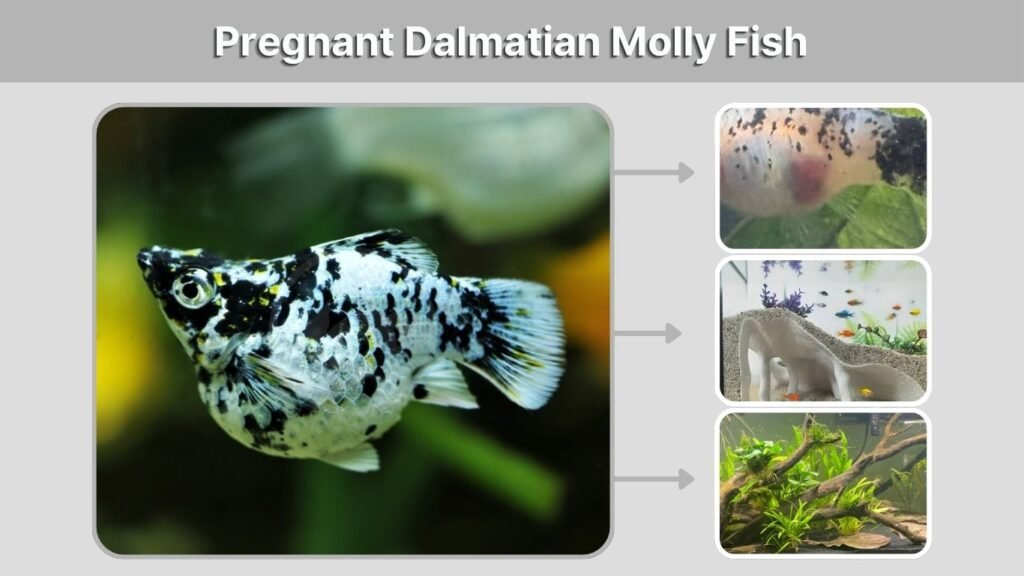
Dalmatian Mollies are livebearing fish, which means females give birth to free-swimming babies rather than laying traditional eggs. Females can become pregnant frequently when males are present, and they may store sperm, allowing them to produce multiple broods after a previous mating.
Signs of a Pregnant Dalmatian Molly
Common pregnancy signs include:
- Enlarged abdomen
- Belly becoming more square near delivery
- Increased appetite early in pregnancy
- Reduced activity shortly before birth
- Spending more time around plants
- Hiding near aquarium corners
- Darkened gravid area in some individuals
- Increased sensitivity toward other fish
- Searching for secluded areas
- Rapid or restless swimming before delivery
Because Dalmatian Mollies naturally have black markings, the gravid spot can sometimes be difficult to see.
How Long Are Dalmatian Molly Fish Pregnant?
Pregnancy generally lasts about four to six weeks, although water temperature, age, health, and genetics can affect the exact period.
As delivery approaches, the abdomen often becomes noticeably larger and more box-shaped. The female may isolate herself or remain near dense vegetation.
Avoid repeatedly moving a heavily pregnant female because excessive handling can cause unnecessary stress.
Dalmatian Molly Fish Giving Birth
Giving birth can happen quickly or continue over several hours. Females usually seek quieter areas of the aquarium and may become less active immediately before delivering.
The babies emerge as fully formed, free-swimming fry.
Dalmatian Molly Babies and Birth
Important breeding facts include:
- Mollies give birth to live young.
- A female may produce dozens of fry.
- Larger females can produce larger broods.
- Newborn fry can swim immediately.
- Adults may eat newborn babies.
- Dense plants improve fry survival.
- Females can store sperm after mating.
- Multiple pregnancies may occur without a male remaining in the tank.
Do Dalmatian Mollies Eat Their Babies?
Yes. Adult mollies may eat their own fry if they can catch them.
This is normal fish behavior rather than unusual aggression. Newborn fry are simply small enough to be viewed as food.
Java moss, guppy grass, hornwort, floating plants, and other dense vegetation provide hiding areas. Another option is moving fry to a separate grow-out tank after birth.
Dalmatian Molly Fish Behavior
Healthy Dalmatian Mollies are active and curious. They normally swim throughout the middle and upper portions of the aquarium and frequently explore plants, decorations, and glass surfaces. Sudden changes in swimming behavior can sometimes indicate stress, poor water conditions, social conflict, or illness.
Why Is My Dalmatian Molly Acting Strangely?
Possible warning signs include:
- Lying on the bottom
- Staying near the water surface
- Shaking or shimmying
- Swimming vertically
- Rapid back-and-forth swimming
- Clamped fins
- Hiding constantly
- Refusing food
- Heavy breathing
- Loss of balance
If these behaviors appear suddenly, test ammonia, nitrite, nitrate, pH, and temperature first.
“Molly shimmy” is commonly associated with environmental stress, especially unsuitable water chemistry or sudden changes in conditions.
Dalmatian Molly Tank Mates
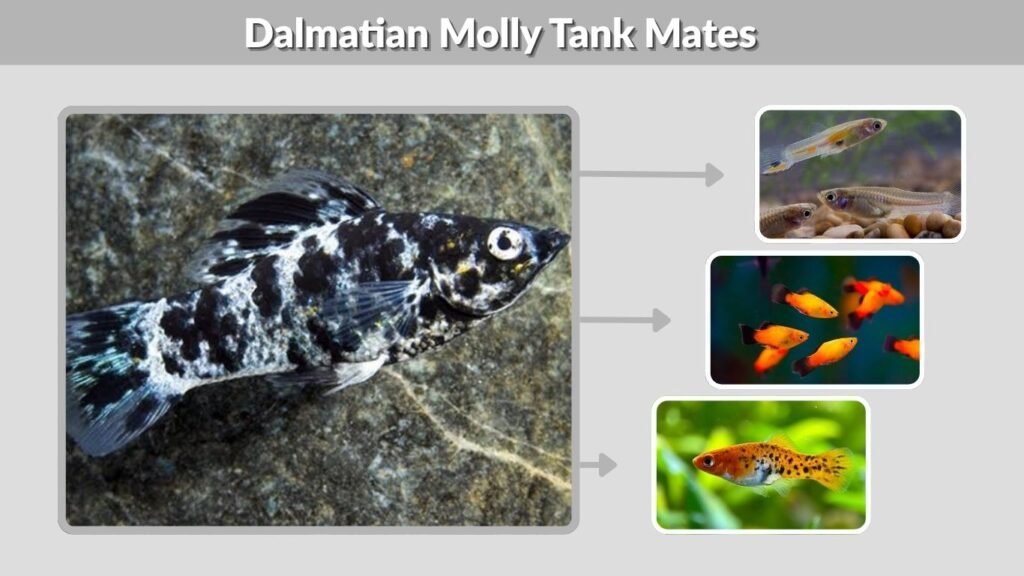
Dalmatian Mollies work well in many peaceful community tanks. Tank mates should preferably enjoy similar warm, relatively hard water conditions. Avoid aggressive fish that may attack mollies or species requiring dramatically different temperatures or water chemistry.
Good Tank Mates
Possible companions include:
- Guppies
- Platies
- Swordtails
- Other mollies
- Some peaceful gouramis
- Certain rainbowfish
- Peaceful snails
- Some compatible bottom-dwelling fish
Guppies, platies, and swordtails are especially convenient because they share many of the same environmental requirements.
Can Dalmatian Mollies Live With GloFish?
Some GloFish species may coexist with mollies, but compatibility depends on which species the GloFish actually is.
For example, GloFish tetras and danios have different behaviors and somewhat different ideal water conditions. Tank size, temperament, and water chemistry should therefore be considered before combining them.
Dalmatian Molly Fish Size and Appearance
The spotted pattern gives this molly its distinctive name. Individual fish may be predominantly white with scattered black markings, while others can become heavily black with smaller pale areas. Their coloration can also change somewhat as they mature.
Dalmatian Molly Fish Facts
- Adults commonly reach around 3–5 inches depending on variety.
- Females usually grow larger than males.
- Dalmatian Mollies are livebearers.
- They can produce several broods after one mating.
- They are omnivores with a strong preference for plant matter.
- They usually live about 3–5 years.
- Males possess a gonopodium.
- Females have a fan-shaped anal fin.
- They prefer warm, hard, alkaline freshwater.
- Dalmatian patterns vary greatly between individuals.
FAQs
1. How big do Dalmatian Molly fish get?
Most adult Dalmatian Mollies grow around 3 to 5 inches, depending on genetics, sex, diet, and the particular molly variety.
2. How long is a Dalmatian Molly pregnant?
Pregnancy generally lasts around four to six weeks. The female’s belly usually becomes increasingly large and box-shaped as birth approaches.
3. Do Dalmatian Molly fish lay eggs?
No. Dalmatian Mollies are livebearers. Females retain developing babies inside their bodies and give birth to free-swimming fry.
4. Why is my Dalmatian Molly chasing other fish?
Chasing may result from breeding behavior, competition between males, overcrowding, or territorial disputes. Maintaining more females than males and providing sufficient space can reduce persistent chasing.
5. What is the minimum tank size for Dalmatian Mollies?
Around 20 gallons is a practical minimum for a small group. Larger aquariums are preferable because mollies are active swimmers, reproduce quickly, and benefit from stable water conditions.