
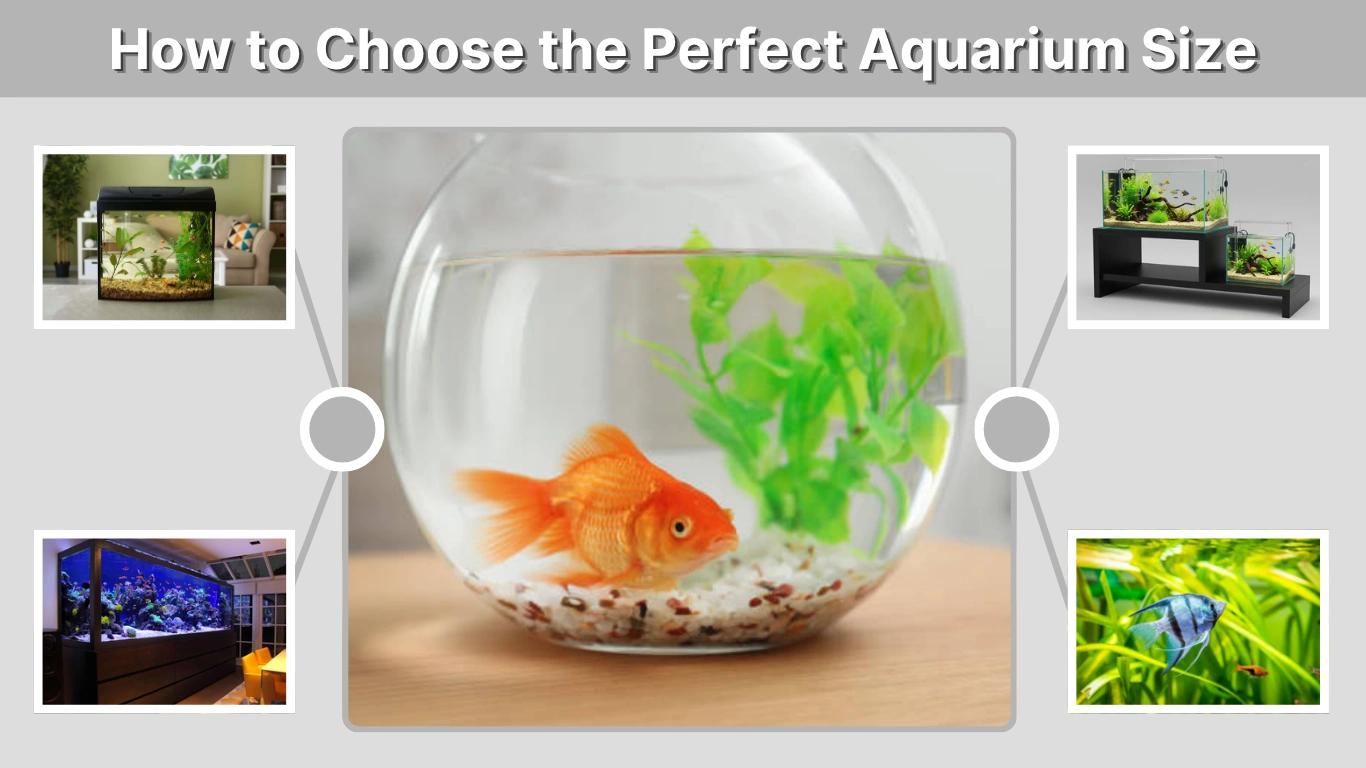
Choosing the right aquarium size is one of the most important decisions when starting a fish tank. Many beginners assume that smaller tanks are easier to manage, but in reality, the opposite is often true. A tank that is too small can lead to unstable water conditions, stressed fish, and frequent maintenance issues.
The perfect aquarium size depends on several factors, including the type of fish, how many you plan to keep, and your available space. In this guide, you’ll learn how to select the ideal tank size and understand the basic calculation method to avoid common mistakes.
Why Aquarium Size Is Important
Aquarium size directly affects the health of your fish and the overall stability of the tank environment. A properly sized tank creates a balanced ecosystem that is easier to maintain.
Key Reasons
- Better water stability
Larger tanks dilute waste more effectively, reducing harmful ammonia and nitrate spikes - Healthier fish
Fish have enough space to swim and grow naturally - Improved oxygen levels
More water volume allows better oxygen distribution - Easier maintenance
Bigger tanks require less frequent corrections compared to small tanks
A small tank may seem convenient, but it often requires more attention and care to keep conditions stable.
Factors to Consider When Choosing Aquarium Size
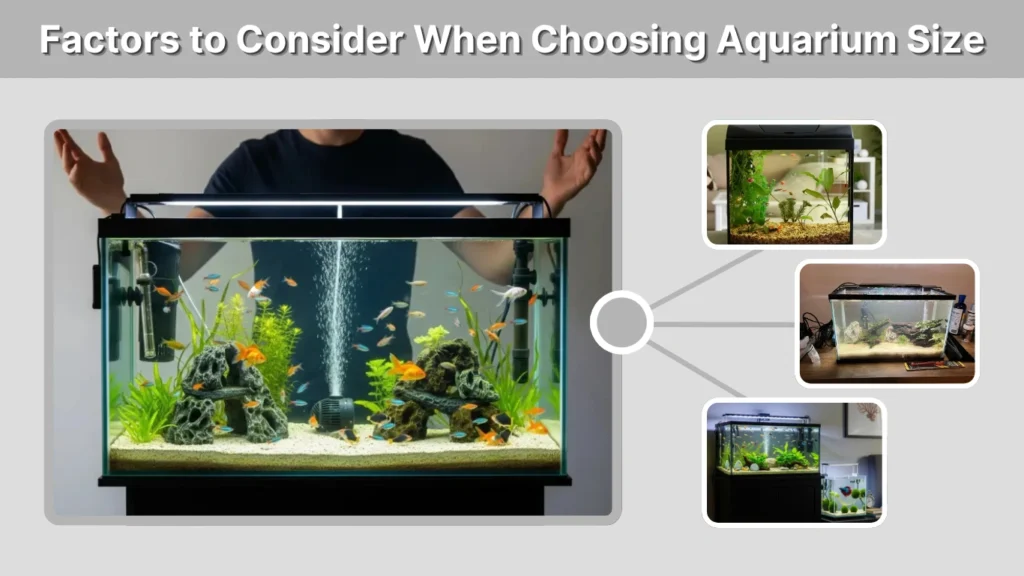
Selecting the right tank isn’t just about picking a size—it’s about matching the tank to your fish and environment.
Fish Type and Species
Different fish have different space requirements.
- Small fish like guppies and tetras need less space
- Medium fish like angelfish require more room
- Large fish like goldfish or cichlids need significantly bigger tanks
Active swimmers and territorial fish usually require more space than slow-moving species.
Number of Fish
Overcrowding is one of the most common mistakes in aquarium setups.
- More fish = more waste
- Overcrowding leads to poor water quality
- It increases stress and aggression among fish
Even if fish are small, keeping too many in one tank can quickly cause problems.
Adult Size of Fish
Always plan based on the adult size, not the size you see in the store.
- Many fish sold in stores are juveniles
- Some species grow 2–3 times larger than their initial size
- A tank that seems fine today may become overcrowded later
Planning ahead prevents the need for constant upgrades.
Tank Location
Where you place your aquarium also affects the size you can choose.
- Ensure there is enough space for the tank
- Larger tanks require strong, stable surfaces
- Easy access is important for cleaning and maintenance
Avoid placing tanks in direct sunlight, as it can cause algae growth and temperature fluctuations.
Budget Considerations
Aquarium size also impacts your budget.
- Larger tanks cost more upfront
- Equipment like filters, heaters, and lighting may also be more expensive
- However, larger tanks are often more stable and cost less to maintain long-term
It’s better to invest in the right size from the beginning rather than upgrading later.
Aquarium Size Calculator (Basic Concept)
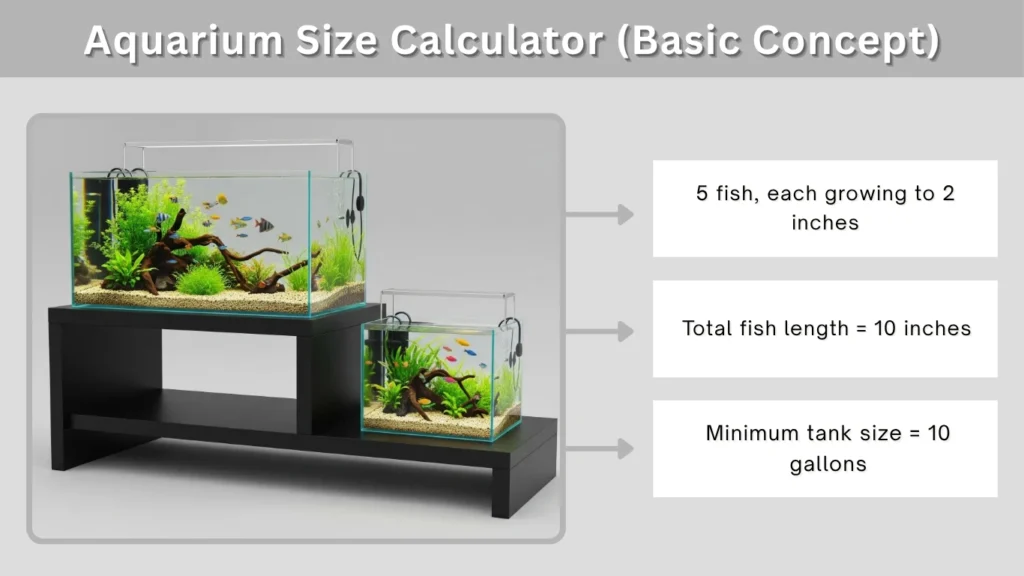
Choosing the correct aquarium size becomes easier when you use a simple calculation method. While no single formula works for every situation, a basic guideline can help beginners estimate the minimum tank size.
Basic Rule
A common starting point is:
- 1 inch of fish per gallon of water
This means if your fish total 10 inches in length, you would need at least a 10-gallon tank.
Example Calculation
- 5 fish, each growing to 2 inches
- Total fish length = 10 inches
- Minimum tank size = 10 gallons
Important Note
This rule is only a rough estimate and works best for small, non-aggressive fish. It does not apply well to:
- Large fish
- Territorial species
- Fish that produce a lot of waste (like goldfish)
For these cases, a larger tank is always recommended.
Aquarium Size Chart (Quick Reference)
| Tank Size | Suitable For | Example Fish |
| 5–10 gallons | Very small setups | Betta, shrimp |
| 10–20 gallons | Small community tanks | Guppies, tetras |
| 20–40 gallons | Medium tanks | Gourami, angelfish |
| 40+ gallons | Large or mixed tanks | Cichlids, goldfish |
This chart provides a general idea, but actual requirements may vary depending on fish behavior and compatibility.
Small vs Large Aquarium – Which Is Better?
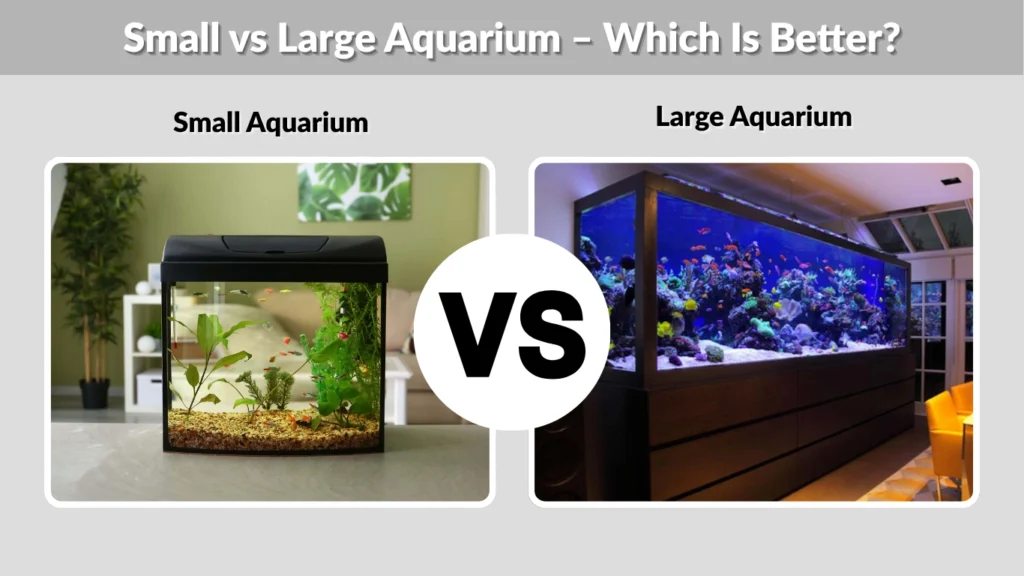
Choosing between a small and large aquarium can be confusing, especially for beginners.
| Feature | Small Tank | Large Tank |
| Cost | Lower upfront | Higher upfront |
| Maintenance | More difficult | Easier |
| Water Stability | Low | High |
| Fish Options | Limited | Wide variety |
| Beginner Friendly | Less ideal | More ideal |
In most cases, a slightly larger tank is the better choice because it provides a more stable and forgiving environment.
Best Aquarium Size for Beginners
For beginners, choosing the right starting size can make a huge difference in success and enjoyment.
A 20-gallon tank is widely considered the ideal starting point. It offers enough water volume to maintain stable conditions while still being manageable in terms of cost and space.
Why 20 Gallons Is Ideal
- Easier to maintain stable water chemistry
- Allows a wider variety of fish
- More forgiving of beginner mistakes
- Requires less frequent adjustments than smaller tanks
Very small tanks (under 10 gallons) may seem easier, but they are actually harder to maintain due to rapid changes in water quality.
Aquarium Size Based on Fish Type
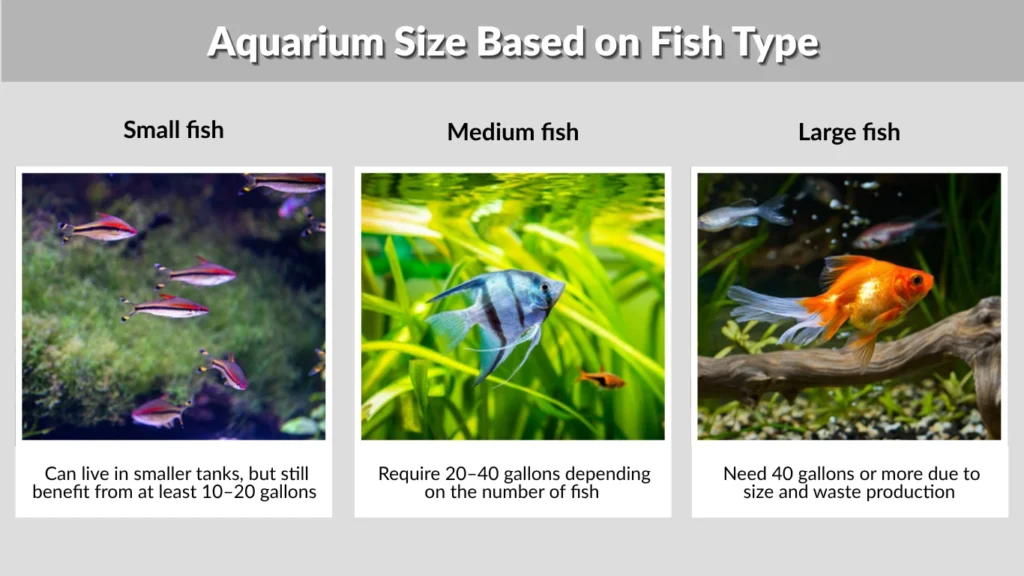
Different fish have different space needs, so your tank size should always match the type of fish you plan to keep.
Freshwater Fish
- Small fish (guppies, tetras)
Can live in smaller tanks, but still benefit from at least 10–20 gallons - Medium fish (angelfish, barbs)
Require 20–40 gallons depending on the number of fish - Large fish (goldfish, cichlids)
Need 40 gallons or more due to size and waste production
Goldfish, in particular, require much larger tanks than most beginners expect.
Saltwater Fish
Saltwater aquariums generally require larger tanks because they are more sensitive to environmental changes.
- Minimum recommended size: 20–30 gallons
- Larger tanks provide better stability
- Marine fish often need more swimming space
For beginners, starting with a larger saltwater tank can actually make maintenance easier.
Common Aquarium Size Mistakes to Avoid
Avoiding these mistakes will save you time, money, and frustration.
Common Errors
- Choosing a tank that is too small
Leads to unstable water and stressed fish - Overstocking the aquarium
Too many fish increase waste and reduce oxygen - Ignoring adult fish size
Fish quickly outgrow small tanks - Underestimating filtration needs
Small tanks still require strong filtration - Not planning for growth
Future upgrades can be costly and stressful for fish
Being aware of these mistakes helps you make better decisions from the start.
How to Calculate Aquarium Size Manually
If you want a more accurate estimate, you can calculate tank size step by step.
Step-by-Step Guide
- List all fish species
Decide what fish you want in your aquarium - Check adult size
Look up the full-grown size of each fish - Calculate total fish length
Add the lengths of all fish together - Apply stocking guideline
Use the 1 inch per gallon rule as a basic estimate - Adjust for behavior
Increase tank size for aggressive or active fish
This method gives you a better idea of the minimum tank size needed.
Tips for Choosing the Right Aquarium Size
Making the right choice becomes easier with a few expert tips.
Practical Tips
- Go bigger if possible
A slightly larger tank is always safer and easier to manage - Think long-term
Choose a size that will support fish as they grow - Invest in good filtration
A proper filter improves water quality significantly - Plan your fish selection first
Choose fish before selecting tank size - Leave room for aquascaping
Decorations and plants take up space inside the tank
These tips help ensure your aquarium remains healthy and enjoyable.
FAQs
What is the best aquarium size for beginners?
A 20-gallon tank is generally the best choice for beginners. It provides enough space for fish, maintains stable water conditions, and is easier to manage compared to smaller tanks that require frequent adjustments.
Is a bigger aquarium easier to maintain?
Yes, larger aquariums are usually easier to maintain because they have more stable water conditions. Waste and toxins are diluted more effectively, reducing the risk of sudden changes that can harm fish.
How many fish can I keep in a tank?
The number of fish depends on their size, species, and behavior. A common guideline is 1 inch of fish per gallon of water, but this rule has limitations and should be adjusted for larger or more active fish.
Can I use the 1 inch per gallon rule?
You can use it as a basic starting point, but it is not accurate for all fish types. Larger, aggressive, or messy fish require more space than this rule suggests, so adjustments are necessary.
What happens if the aquarium is too small?
A tank that is too small can lead to poor water quality, stress, disease, and stunted growth in fish. It also requires more frequent maintenance to keep conditions stable.