
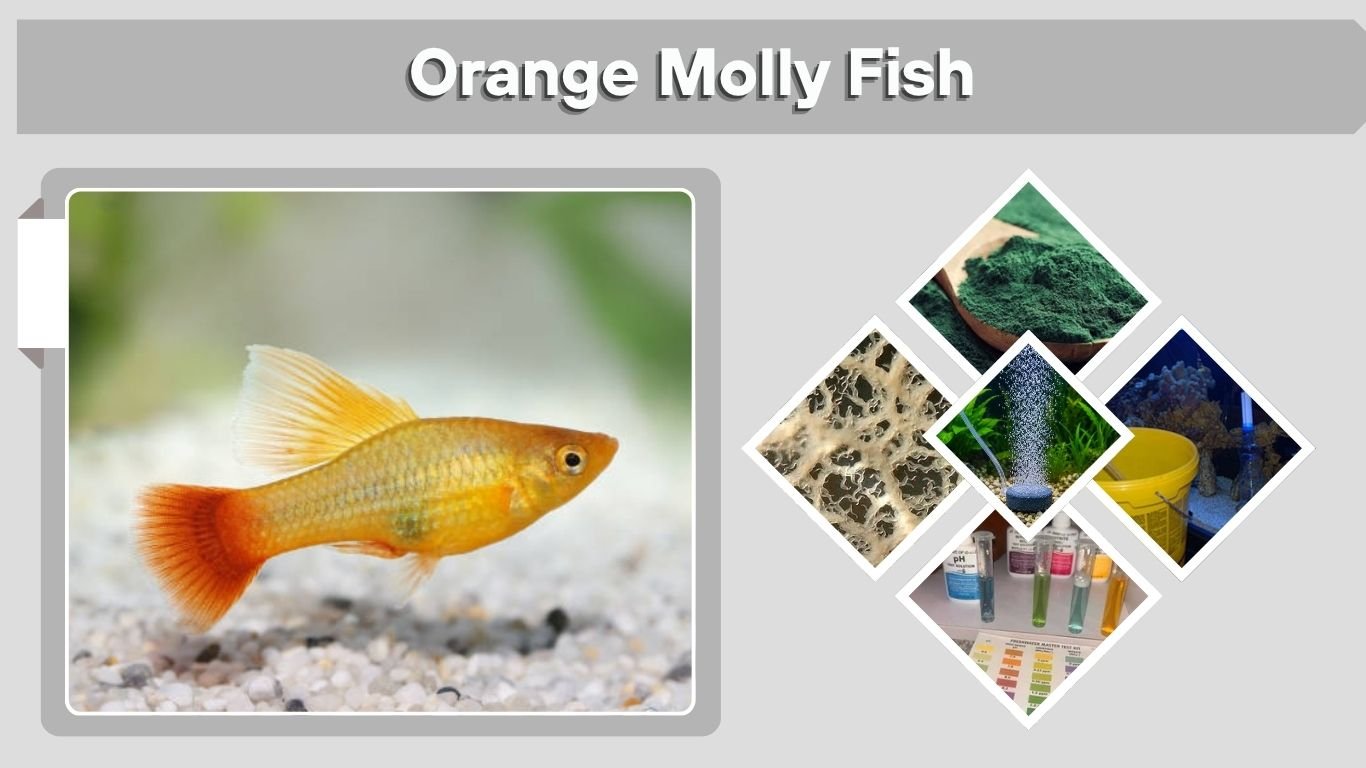
Orange Molly fish are colorful freshwater livebearers known for their bright orange bodies, active personalities, and easy breeding habits. Some varieties are solid orange, while others display black, white, silver, or red markings. They are generally peaceful community fish and can adapt well to home aquariums when kept in stable, warm, mineral-rich water. Orange Mollies are also popular because females give birth to live fry instead of laying eggs. With proper feeding, tank mates, and water care, they can remain healthy and colorful for several years.
What Is an Orange Molly Fish?
Orange Molly fish are selectively bred color varieties of common aquarium mollies. Their exact appearance depends on the strain, and they may be descended from shortfin, sailfin, balloon, or hybrid molly lines. Rather than representing one unique species, “Orange Molly” is mainly an aquarium trade name describing mollies with dominant orange or reddish coloration.
Orange Molly Fish Identification
Common characteristics include:
- Color: Bright orange, orange-red, or golden orange
- Patterns: May include black, white, silver, or spotted markings
- Body shape: Elongated or rounded depending on the variety
- Adult size: Usually around 3–5 inches
- Temperament: Peaceful but active
- Diet: Omnivorous
- Reproduction: Livebearer
- Swimming level: Mostly middle and upper portions of the aquarium
- Water preference: Warm, hard, slightly alkaline freshwater
Orange Balloon Mollies have shorter, rounder bodies, while Orange Sailfin Mollies have taller dorsal fins and may grow larger.
Orange and Black Molly Fish
Orange and black mollies are especially popular because of their strong color contrast. Some have orange bodies with black tails, while others have dark patches scattered across the head, back, or sides.
These patterns may be sold under names such as orange-black molly, gold-and-black molly, or mixed-color molly.
Color alone does not indicate a different care requirement. Most orange and black mollies need the same basic conditions as other common molly varieties.
Orange Molly Fish Care
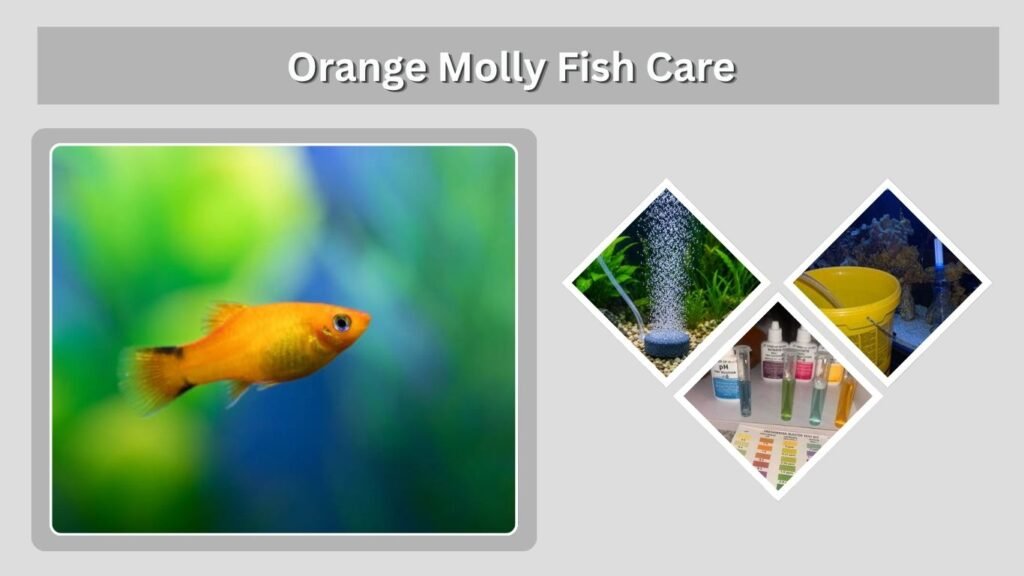
Orange Mollies are considered relatively easy aquarium fish, but they still need clean water and stable conditions. They generally prefer harder water than many tropical species and can become stressed in very soft, acidic aquariums. A mature, properly filtered tank with open swimming room and some planted areas creates a suitable environment.
Ideal Water and Tank Conditions
Good conditions include:
- Tank size: At least 20 gallons for a small group
- Temperature: Around 72–82°F
- pH: Approximately 7.0–8.5
- Water hardness: Moderate to hard
- Filtration: Strong biological filtration
- Water changes: Regular partial changes
- Plants: Useful for shelter and fry protection
- Swimming space: Keep part of the aquarium open
- Lighting: Moderate lighting is usually suitable
Larger tanks are better for groups because mollies are active swimmers and can reproduce quickly.
Do Orange Mollies Need Aquarium Salt?
Orange Molly fish do not necessarily require salt.
They can thrive in freshwater when hardness, pH, temperature, and cleanliness are appropriate. Mollies tolerate some salinity better than many freshwater fish, but adding salt should not be treated as a universal requirement.
Salt may also be unsuitable for certain plants, shrimp, catfish, and other tank mates.
The safest approach is to maintain stable mineral-rich freshwater unless there is a specific reason to use salt.
Orange Molly Fish Diet
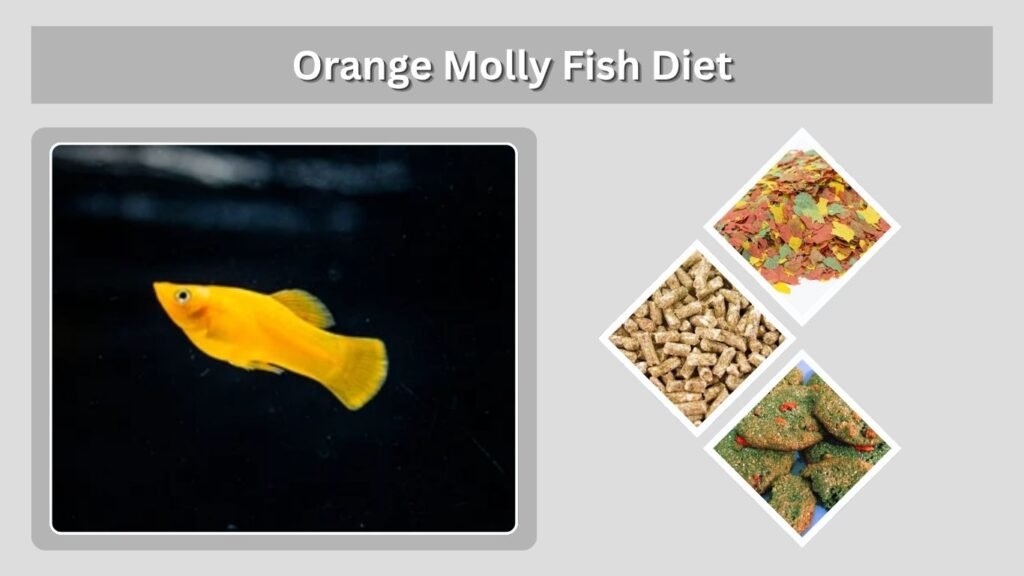
A balanced diet helps Orange Mollies maintain their bright coloration and good health. They are omnivores, but plant-based foods are especially important because mollies naturally graze on algae and vegetable matter. Providing several types of food is better than relying on one flake or pellet every day.
What Do Orange Molly Fish Eat?
Suitable foods include:
- Tropical fish flakes
- Small molly pellets
- Spirulina flakes
- Algae wafers
- Blanched spinach
- Zucchini
- Shelled peas
- Brine shrimp
- Daphnia
- Bloodworms in moderation
- Other small frozen foods
Feed only what they can consume quickly. Excess food can raise ammonia and nitrate levels and make fish more susceptible to disease.
How Often Should Orange Mollies Be Fed?
Most adult Orange Mollies do well with one or two small meals each day.
Juveniles and fry can be fed smaller portions several times daily because they are actively growing.
Vegetable-based foods should appear regularly in their diet. Protein-rich foods are useful but should not completely replace algae, spirulina, and other plant ingredients.
Orange Molly Fish Male and Female Differences
Male and female Orange Mollies may have nearly identical coloration, so body color is not a reliable way to determine sex. The easiest method is to examine the anal fin underneath the fish. Adult females also tend to become larger and fuller-bodied.
How to Tell Male and Female Orange Mollies Apart
Look for these differences:
- Male anal fin: Long and pointed
- Female anal fin: Broad and fan-shaped
- Male body: Usually slimmer
- Female body: Generally fuller
- Male behavior: More likely to chase females
- Pregnant female: Develops a noticeably swollen abdomen
The pointed male reproductive fin is called a gonopodium.
Best Male-to-Female Ratio
Keeping approximately one male for every two or three females is usually recommended.
Male mollies can repeatedly chase females, especially in smaller aquariums. Too many males may create constant stress.
A higher number of females spreads male attention and gives individual females more opportunities to rest.
Pregnant Orange Molly Fish
Orange Mollies reproduce easily in community aquariums. They are livebearers, meaning females develop embryos internally and give birth to free-swimming baby fish. Females can also store sperm after mating, so one mating may result in multiple future pregnancies.
Signs of a Pregnant Orange Molly
Common signs include:
- Enlarged abdomen
- Belly becoming more square near birth
- Increased appetite during pregnancy
- Hiding near plants or decorations
- Spending more time alone
- Reduced activity before giving birth
- Darkened area near the rear abdomen
- Faster breathing shortly before delivery
The gravid spot may be difficult to see on darker orange-and-black individuals.
How Long Is an Orange Molly Pregnant?
Pregnancy usually lasts around four to six weeks, although timing varies with temperature, genetics, age, and overall health.
Females can produce several dozen fry in one birth. Larger, mature females generally produce more babies than young females.
Orange Molly Fish Giving Birth
A female nearing birth may stay near plants, corners, or quieter sections of the aquarium.
Molly fry are born able to swim and eat immediately.
Adult mollies may eat newborn fry, so dense vegetation can greatly improve survival. Java moss, guppy grass, hornwort, and floating plants provide useful hiding areas.
A separate nursery tank can be used when the goal is to raise a large percentage of the babies.
Baby Orange Molly Fish and Fry Care
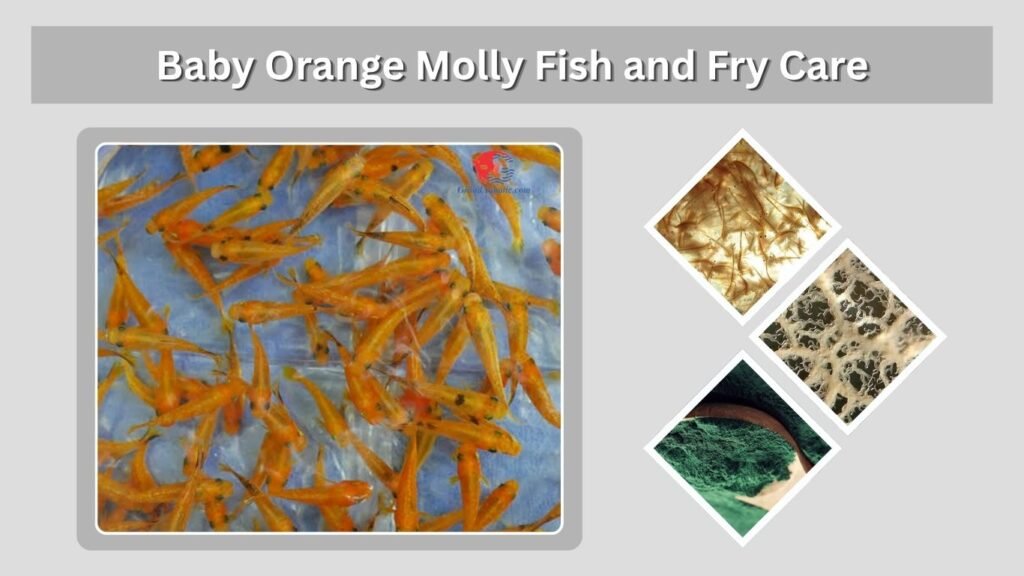
Orange Molly fry are relatively easy to raise compared with many egg-laying fish because they are born fairly developed. Their main requirements are clean water, frequent small meals, and protection from larger fish.
What to Feed Orange Molly Fry
Good fry foods include:
- Finely crushed flakes
- Powdered fry food
- Baby brine shrimp
- Microworms
- Crushed spirulina
- Very small daphnia
Small meals three or more times daily can support faster growth, but overfeeding should be avoided.
Regular small water changes are especially useful in nursery tanks.
When Do Orange Molly Babies Get Their Color?
Some babies show orange coloration shortly after birth, while others initially look gray, silver, or pale.
Their final pattern often becomes clearer over several weeks or months.
If one parent is black, white, spotted, or another color variety, the fry may develop mixed patterns rather than becoming solid orange.
Orange Molly Fish Tank Mates
Orange Mollies are generally peaceful and work well in community tanks with fish that prefer similar water conditions. Their active behavior can sometimes overwhelm very shy species, so tank mates should be selected carefully.
Good Tank Mates
Possible companions include:
- Other mollies
- Platies
- Swordtails
- Guppies
- Peaceful rainbowfish
- Some peaceful barbs
- Compatible tetras
- Corydoras in suitable water conditions
- Peaceful snails
Avoid overly aggressive cichlids, large predators, and persistent fin-nipping fish.
Can Orange Mollies Live With Goldfish?
Keeping Orange Mollies with goldfish is generally not recommended.
Mollies are tropical fish that prefer warm water, while many goldfish varieties are better suited to cooler temperatures. Goldfish also create significantly more waste and may eventually become much larger.
A tropical community tank is usually a better environment for Orange Mollies.
Orange Molly Fish Lifespan and Health
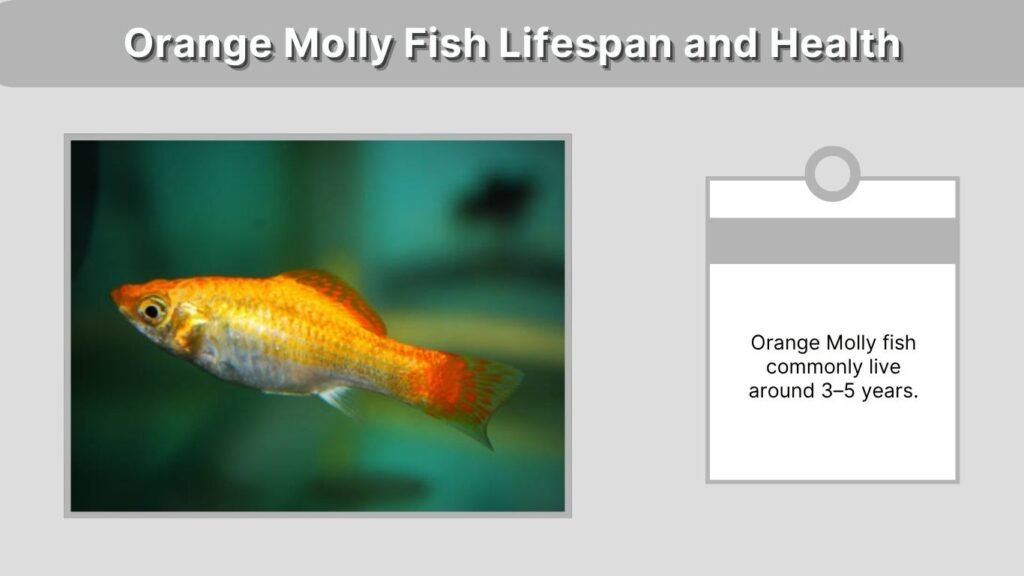
Orange Molly fish commonly live around 3–5 years when maintained in good conditions. Poor water quality, stress, overcrowding, nutritional deficiencies, and frequent pregnancies can reduce lifespan.
Color changes sometimes occur naturally, but sudden fading may indicate a problem.
Why Is My Orange Molly Turning White?
Possible causes include:
- Natural color development
- Stress
- Poor water quality
- Skin infection
- Parasites
- Injury
- Temperature shock
- Genetic color changes
Always check ammonia, nitrite, nitrate, temperature, and pH when a fish changes color and begins acting unusually.
Orange Molly Fish Pineconing
Pineconing occurs when the scales stick outward, making the fish resemble a pine cone.
This is a serious symptom often associated with severe internal swelling or dropsy rather than a specific disease itself.
A fish showing pineconing should be isolated if possible, and water quality should be checked immediately. Treatment depends on the underlying cause, and advanced cases can be difficult to reverse.
FAQs
1. How big do Orange Molly fish get?
Most Orange Mollies grow around 3–5 inches long. Sailfin varieties may become larger, while some Balloon Mollies remain more compact.
2. How can I tell if my Orange Molly is pregnant?
A pregnant female usually develops an enlarged abdomen that becomes more square near birth. She may also hide more often and become less active.
3. Do Orange Molly fish lay eggs?
No. Mollies are livebearers. Females give birth to free-swimming fry instead of laying external eggs.
4. Can orange and black mollies breed together?
Yes. Different color varieties of compatible mollies can breed with each other, and their offspring may develop mixed orange, black, white, or spotted patterns.
5. How long do Orange Molly fish live?
Orange Mollies commonly live around 3–5 years with clean water, proper nutrition, enough swimming space, and compatible tank mates.