
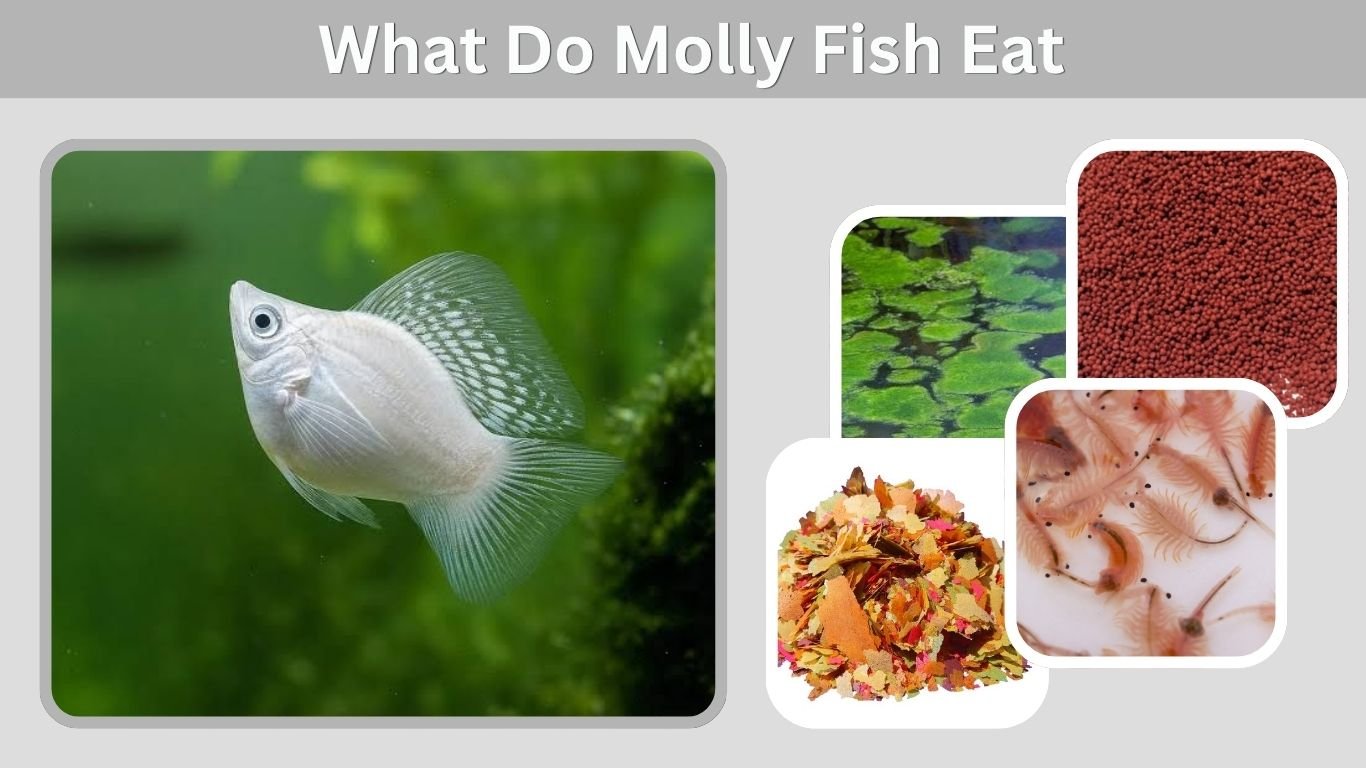
Molly fish are omnivores that eat both plant matter and small animal-based foods. In aquariums, they do best on a varied diet that combines quality flakes or pellets with vegetables, algae-based foods, and occasional protein-rich treats. Black mollies, Dalmatian mollies, balloon mollies, and silver mollies have similar dietary needs. Feeding the right foods helps support healthy growth, bright coloration, breeding, and digestion. Below are 10 of the best foods for molly fish, along with feeding tips for adults and babies.
What Do Molly Fish Eat?
Mollies naturally consume a mixture of algae, plant material, tiny aquatic organisms, and other organic matter. Their digestive system is well suited to a diet containing plenty of vegetable matter, although they also benefit from protein. In captivity, variety is important because relying on only one food may result in nutritional deficiencies.
Molly Fish Are Omnivores
Molly fish can eat:
- Algae and plant matter
- Quality tropical fish flakes
- Small pellets
- Vegetables
- Brine shrimp
- Daphnia
- Bloodworms
- Small aquatic organisms
A balanced diet should contain more than just high-protein foods. Plant-based ingredients are especially valuable for mollies.
10 Best Foods for Molly Fish
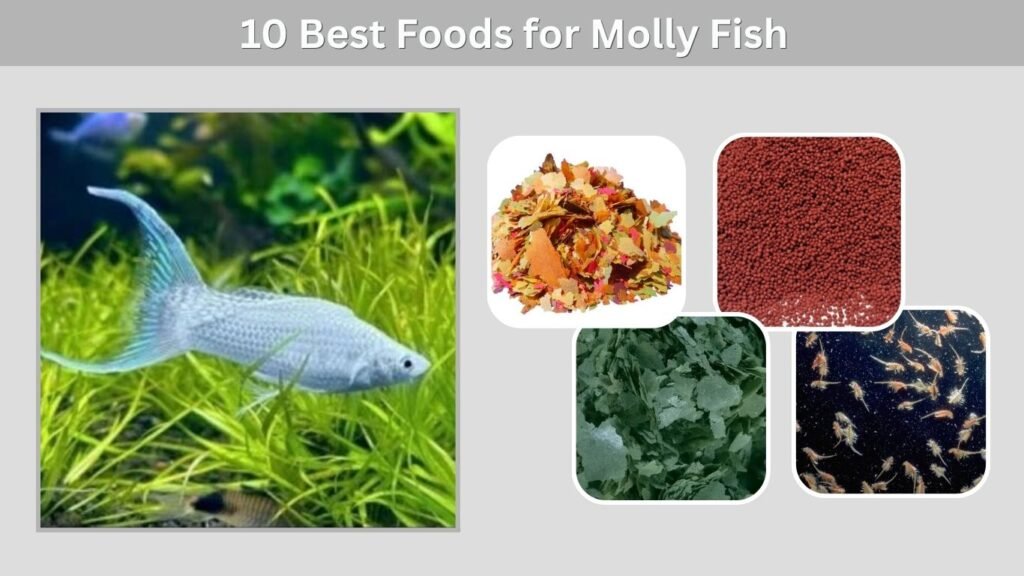
There are many foods mollies will accept, but some provide better everyday nutrition than others. Combining a good staple food with vegetables and occasional live or frozen foods helps mimic their naturally varied diet.
1. High-Quality Tropical Fish Flakes
Fish flakes are one of the easiest staple foods for mollies. Choose a quality formula designed for omnivorous tropical fish.
Flakes usually contain a blend of plant ingredients, proteins, vitamins, and minerals. Crush larger flakes slightly before feeding smaller mollies so they can swallow them comfortably.
Feed only as much as your fish can finish within a short period. Uneaten flakes quickly break down and can reduce aquarium water quality.
2. Spirulina Flakes
Spirulina is particularly useful for mollies because these fish naturally consume algae and vegetable matter.
Spirulina-based flakes provide plant protein, vitamins, minerals, and natural pigments. They can help supplement an aquarium where little natural algae is available.
You can alternate spirulina flakes with regular tropical flakes rather than feeding the same food at every meal.
3. Small Fish Pellets
Small sinking or slow-sinking pellets provide another convenient staple food.
Choose pellets that are small enough for a molly’s mouth and preferably contain both vegetable and animal-based ingredients. Pellets can be useful because portion sizes are easier to control than with some flake foods.
Avoid adding excessive pellets at once because uneaten food may sink into the substrate.
4. Brine Shrimp
Brine shrimp are a nutritious protein-rich treat for molly fish.
They are available live, frozen, or freeze-dried. Adult mollies usually eat them eagerly, and baby brine shrimp are especially useful for growing fry.
Brine shrimp should complement rather than completely replace plant-rich foods. Offering them once or several times weekly as part of a varied feeding schedule works well.
5. Daphnia
Daphnia are small aquatic crustaceans that provide protein while also being relatively easy for mollies to digest.
Live or frozen daphnia can encourage natural feeding behavior as mollies chase small pieces through the aquarium.
Their outer shells also contribute some roughage, which can support digestion. Daphnia are particularly useful as an occasional alternative to heavier foods such as bloodworms.
6. Bloodworms
Bloodworms are another protein-rich food enjoyed by many mollies.
Frozen or freeze-dried bloodworms are readily available from aquarium stores. Because they are rich foods, they should normally be offered as an occasional treat rather than the primary daily diet.
Break larger portions into smaller pieces when feeding young or small mollies.
7. Blanched Spinach
Mollies can eat soft leafy vegetables such as spinach.
Briefly blanching spinach makes the leaves softer and easier for fish to nibble. Place a small piece in the aquarium and allow the mollies to graze on it.
Remove uneaten vegetables after a few hours so they do not begin decomposing and polluting the water.
8. Zucchini
Thin slices of softened zucchini can provide useful fiber and plant nutrients.
Blanch the zucchini briefly before adding it to the tank. Mollies may initially take time to recognize vegetables as food, particularly if they have always been fed flakes.
Once accustomed to it, many mollies will repeatedly graze along the soft surface.
9. Shelled Peas
Cooked, softened peas can be offered occasionally.
Remove the outer skin and crush the inside into small pieces before feeding. Peas contain plant matter and fiber and can add variety to the diet.
They should not be treated as a medical cure for every digestive problem, but they can be a useful occasional vegetable food.
10. Algae Wafers
Although commonly marketed for bottom-feeding fish, algae wafers can also be useful for mollies.
Mollies naturally graze on algae and may pick at softened wafers throughout the tank. Select wafers with algae or spirulina among the main ingredients.
If your aquarium contains plecos, snails, or other fish that also eat wafers, make sure enough food reaches each species without overfeeding.
What Do Molly Fish Eat in the Wild?
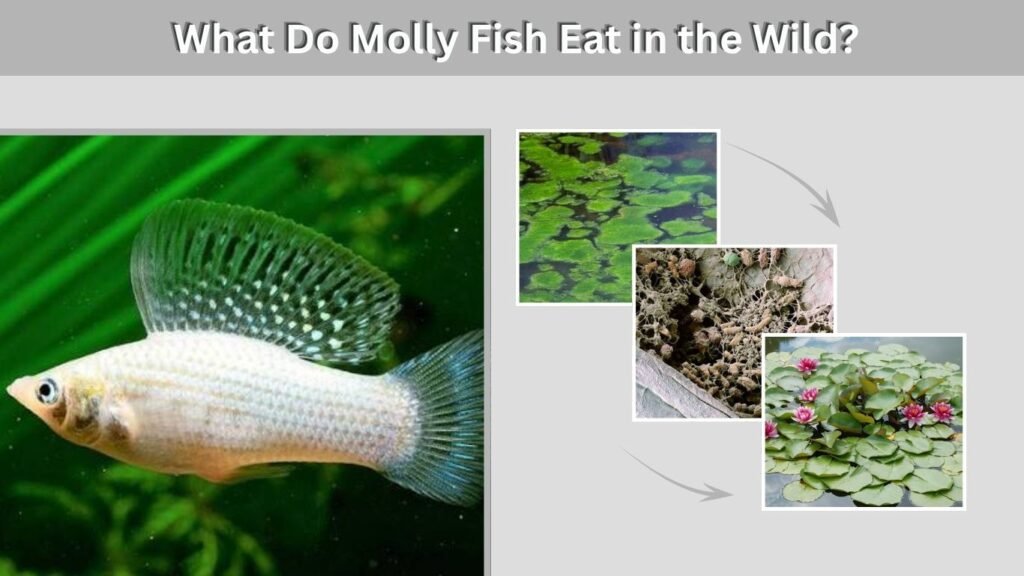
Wild mollies spend much of their time grazing and searching for small food items. Their natural diet varies depending on habitat, availability, and species.
Natural Foods for Mollies
Wild mollies may consume:
- Algae
- Biofilm
- Aquatic plants
- Tiny crustaceans
- Insect larvae
- Small worms
- Organic debris
- Microscopic aquatic organisms
This explains why captive mollies generally perform well when given both vegetable-based foods and moderate amounts of animal protein.
What Do Baby Molly Fish Eat?
Baby mollies, called fry, are born as free-swimming fish and can begin feeding almost immediately. Because their mouths are extremely small, their food must be appropriately sized.
Best Foods for Molly Fry
Baby mollies can eat finely crushed flakes, powdered fry food, baby brine shrimp, microworms, and other tiny foods.
Feed small portions several times throughout the day because growing fry has high energy requirements. However, avoid leaving excess food in the nursery tank, since poor water quality can quickly become dangerous for young fish.
What Do Black, Dalmatian and Balloon Mollies Eat?
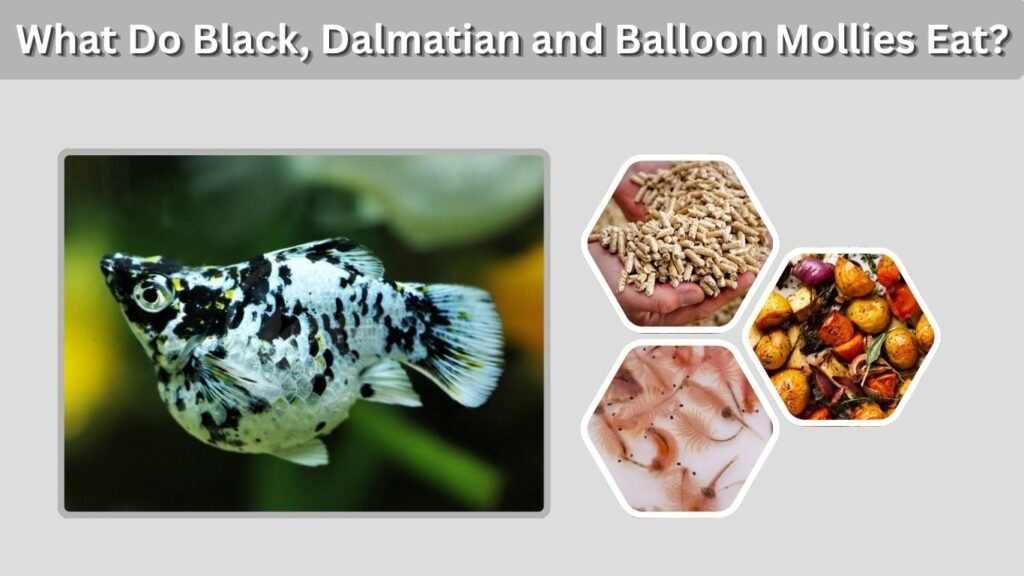
Different color varieties of common aquarium mollies generally have very similar nutritional requirements. Their appearance does not mean they need completely different foods.
Black Molly Fish
Black mollies should receive quality omnivore flakes or pellets together with spirulina, algae-based foods, and occasional protein treats.
Dalmatian Molly Fish
Dalmatian mollies can eat the same balanced combination of flakes, pellets, vegetables, brine shrimp, and daphnia.
Balloon Molly Fish
Balloon mollies also require a varied omnivorous diet. Because of their compact body shape, controlled feeding is particularly sensible. Avoid continuously offering large amounts of rich food.
How Often Should You Feed Molly Fish?
Healthy adult mollies generally do well with small meals once or twice per day. Young fish may require more frequent feeding.
Avoid Overfeeding
Give only the amount your fish can consume within roughly one or two minutes.
Overfeeding can cause:
- Cloudy water
- Rising ammonia levels
- Excessive waste
- Algae growth
- Digestive problems
- Poor aquarium conditions
If food repeatedly reaches the bottom uneaten, reduce the portion at the next feeding.
Foods to Avoid Feeding Molly Fish
Mollies may attempt to eat many things, but that does not mean every food is safe or nutritionally appropriate.
Foods You Should Avoid
Avoid frequently feeding:
- Bread
- Crackers
- Processed human foods
- Sugary foods
- Salty snacks
- Seasoned meat
- Large pieces they cannot swallow
- Spoiled or moldy foods
Human foods containing oils, seasoning, salt, or preservatives can create digestive and water-quality problems.
FAQs
What is the best food for molly fish?
A high-quality omnivore flake or small pellet can serve as the main food. Supplement it with spirulina, vegetables, and occasional protein-rich foods such as brine shrimp or daphnia.
What do black molly fish eat?
Black mollies eat algae, fish flakes, pellets, spirulina foods, vegetables, brine shrimp, daphnia, and other small protein-rich foods.
What do Dalmatian molly fish eat?
Dalmatian mollies have the same basic omnivorous diet as other mollies. Feed quality flakes or pellets along with plant foods and occasional live or frozen foods.
What do newborn molly fish eat?
Newborn mollies can eat powdered fry food, finely crushed flakes, baby brine shrimp, and other microscopic or very small foods.
Can molly fish eat vegetables?
Yes. Mollies can eat vegetables such as blanched spinach, zucchini, and small amounts of softened peas. Vegetables provide useful plant matter and dietary variety.