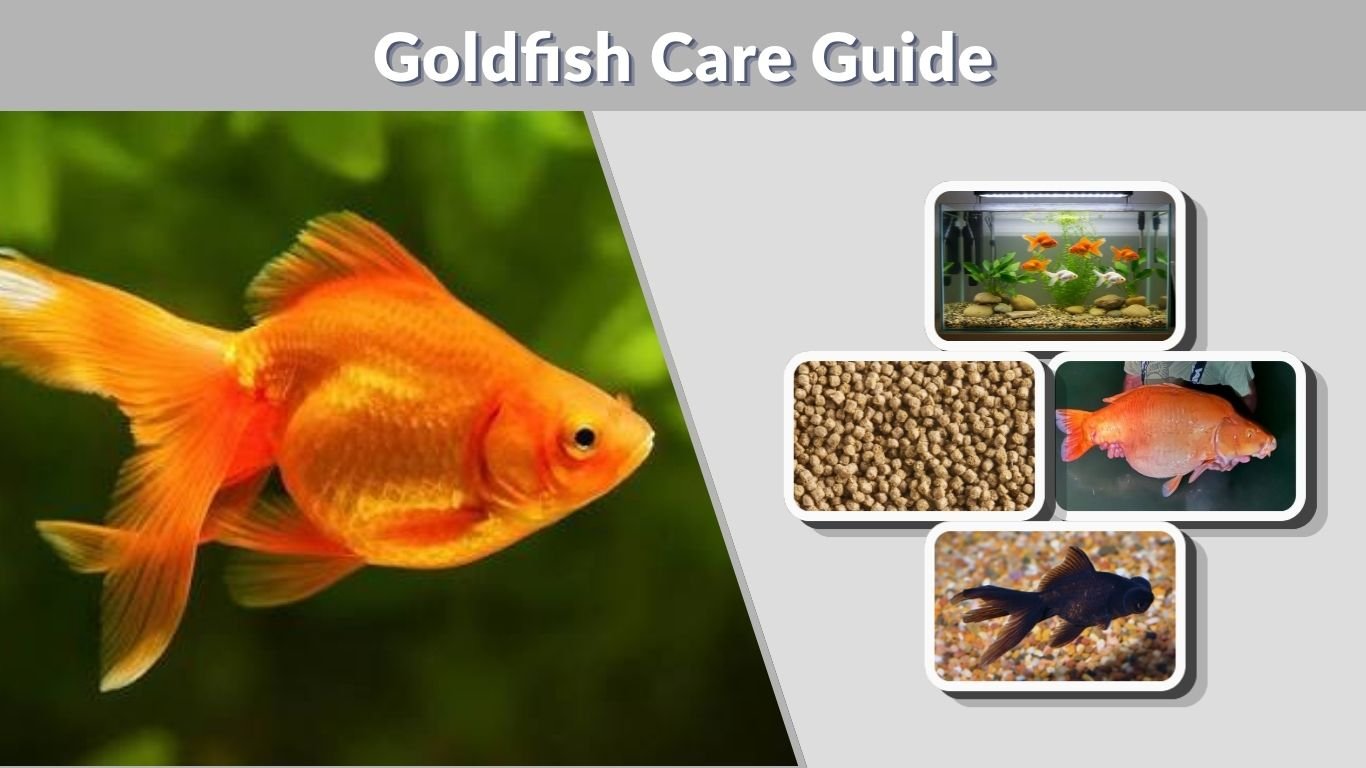
Goldfish are one of the most popular aquarium fish, but they need more care than many beginners expect. A healthy goldfish can live for many years when it has enough space, clean water, proper food, and the right tank setup. This guide explains goldfish lifespan, tank needs, feeding, common types, and simple care tips for keeping them active and healthy.
What Makes Goldfish Popular Aquarium Fish?
Goldfish are bright, peaceful, and easy to recognize, which makes them a favorite choice for homes, classrooms, and beginner aquariums. However, they are often misunderstood. Many people think goldfish can live well in small bowls, but they grow large, produce a lot of waste, and need filtered water.
Goldfish Are Hardy but Not Care-Free
Goldfish are hardy compared with many tropical fish, but hardy does not mean maintenance-free. They need a stable environment, enough oxygen, and regular water changes. When kept in poor conditions, they may become stressed, stop eating, develop fin problems, or live much shorter lives.
A healthy goldfish usually has:
- Clear eyes and smooth scales
- Steady swimming behavior
- A strong appetite
- Upright fins
- Bright coloring for its variety
If a goldfish sits at the bottom, gasps at the surface, swims sideways, or loses color suddenly, something in the tank may be wrong.
How Long Do Goldfish Live?
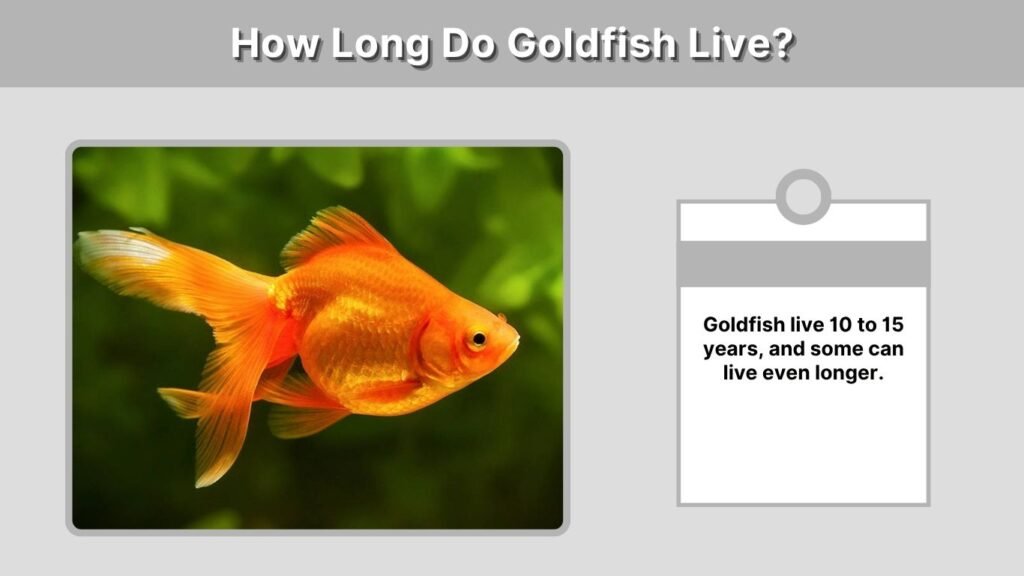
Many people search for how long goldfish live because goldfish are often sold as short-term pets. In reality, they can live much longer than most people expect. With proper care, many goldfish live 10 to 15 years, and some can live even longer.
Goldfish Lifespan Depends on Care
Goldfish lifespan depends on several factors, including tank size, water quality, diet, genetics, and the type of goldfish. Common goldfish and comet goldfish are usually stronger swimmers and may live longer than delicate fancy goldfish. Fancy types, such as oranda, ranchu, fantail, and black moor goldfish, may need gentler tank conditions because of their body shape and fins.
Poor water quality is one of the main reasons goldfish die early. A small bowl without filtration can quickly collect ammonia from fish waste. Even if the water looks clear, harmful chemicals can build up and stress the fish.
How to Help Goldfish Live Longer
To support a longer goldfish lifespan:
- Use a proper tank with filtration
- Test water regularly
- Avoid overfeeding
- Change part of the water weekly
- Keep similar goldfish types together
- Avoid sudden temperature or water chemistry changes
The goal is not just to keep goldfish alive, but to give them enough space and stability to grow normally.
Goldfish Tank Setup for Beginners
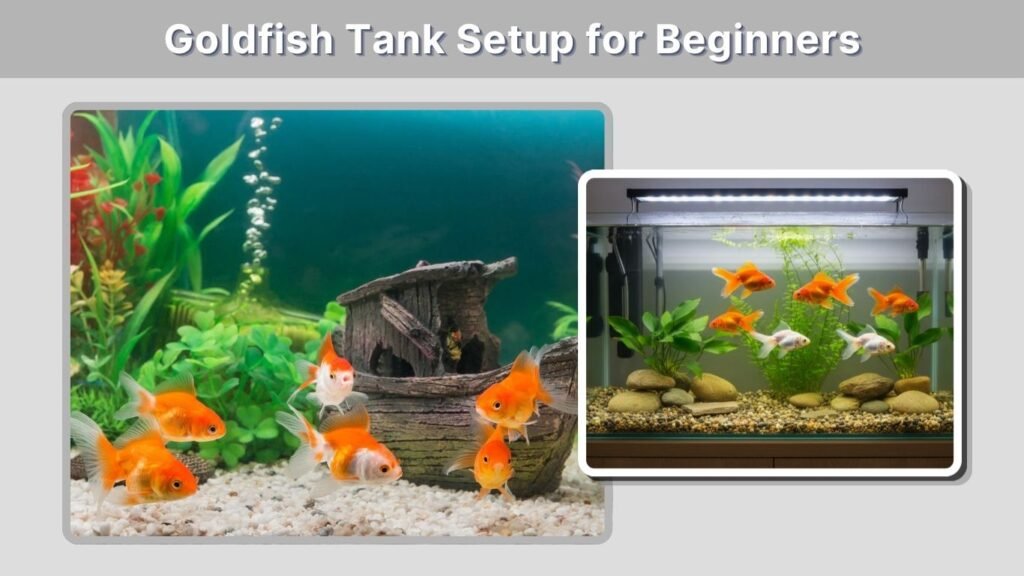
A good goldfish tank should provide space, filtration, oxygen, and safe decorations. Goldfish are active fish, and many varieties grow larger than beginners expect.
Choosing the Right Tank Size
Tank size matters because goldfish produce more waste than many small aquarium fish. A small tank can become dirty very quickly, even with a filter. For a single fancy goldfish, a spacious aquarium is much better than a bowl. Common and comet goldfish often need even more room because they swim fast and can grow large.
| Goldfish Type | Best For Beginners? | Tank Need | Care Notes |
| Common goldfish | Yes | Very spacious tank or pond | Active and hardy |
| Comet goldfish | Yes | Very spacious tank or pond | Fast swimmer |
| Fantail goldfish | Yes | Large filtered aquarium | Good beginner fancy type |
| Oranda goldfish | Moderate | Large filtered aquarium | Sensitive head growth |
| Ranchu goldfish | Moderate | Gentle aquarium setup | Poor swimmer compared with slim types |
| Black moor goldfish | Moderate | Calm aquarium | Poor eyesight, avoid sharp decor |
Filtration and Water Quality
A filter is essential for a goldfish tank. It helps remove waste, supports beneficial bacteria, and keeps the water moving. Goldfish also need oxygen-rich water, so good surface movement is helpful.
Water quality should be checked for:
- Ammonia
- Nitrite
- Nitrate
- pH
- Temperature
Ammonia and nitrite should stay at zero. Nitrate should be kept low through regular water changes. New aquariums also need to cycle before adding fish, because beneficial bacteria must develop to process waste.
Decorations and Substrate
Goldfish like to explore, but decorations must be safe. Avoid sharp rocks, rough ornaments, and small objects they might swallow. Smooth stones, soft artificial plants, or hardy live plants can work well.
Goldfish may dig through gravel, so substrate should be either too large to swallow or fine enough to pass safely. Many keepers use sand or large smooth pebbles.
What Do Goldfish Eat?
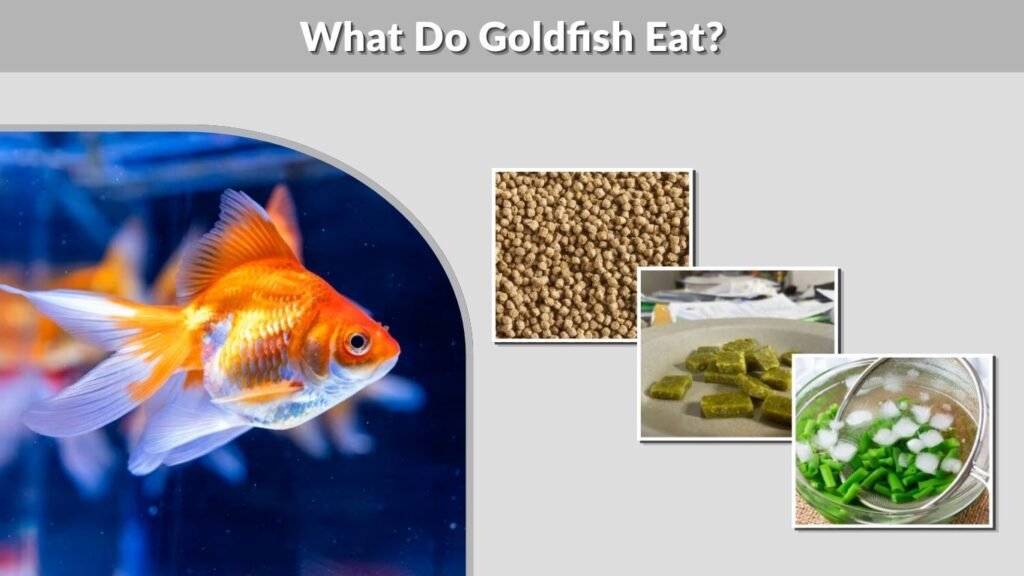
Goldfish food should be balanced and suitable for their digestive system. They are omnivores, which means they eat both plant-based and animal-based foods. A quality pellet or gel food can be the main diet, with occasional vegetables or treats.
Best Daily Goldfish Food
Sinking pellets are often better than floating flakes because goldfish may swallow air when feeding at the surface. This can sometimes contribute to buoyancy issues, especially in fancy goldfish.
Good daily foods include:
- High-quality goldfish pellets
- Gel food made for goldfish
- Blanched vegetables
- Occasional frozen or live foods
- Spirulina-based foods
Goldfish can eat peas, lettuce, spinach, zucchini, and other soft vegetables when prepared properly. Uneaten food should be removed so it does not pollute the water.
How Often Should You Feed Goldfish?
Most goldfish do well with small meals once or twice a day. Feed only what they can finish quickly. Overfeeding is one of the most common beginner mistakes because extra food breaks down and harms water quality.
A goldfish that always acts hungry is not necessarily starving. Goldfish naturally search for food often, so it is better to feed measured portions than to keep adding food whenever they beg.
Types of Goldfish to Know
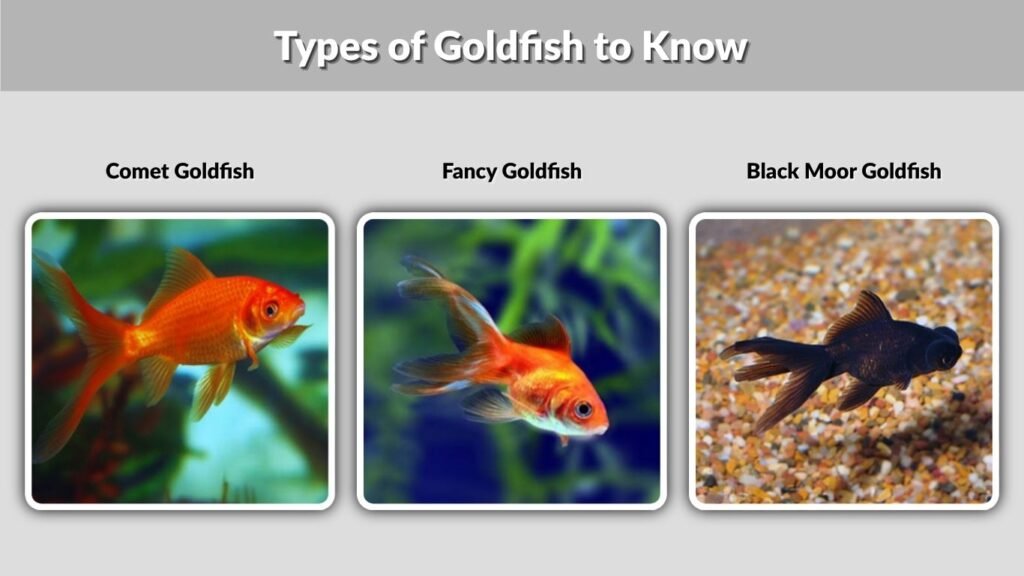
There are many types of goldfish, and each has different care needs. Before choosing one, it helps to understand the difference between slim-bodied goldfish and fancy goldfish.
Common and Comet Goldfish
Common goldfish and comet goldfish have long, slim bodies and strong swimming ability. They are active, hardy, and can grow quite large. Because they need a lot of swimming space, they are often better for large tanks or outdoor ponds than small aquariums.
Common goldfish usually have shorter fins, while comet goldfish have longer, flowing tails. Both are good choices for experienced keepers who can provide enough room.
Fancy Goldfish
Fancy goldfish have rounded bodies and slower swimming styles. Popular types include fantail, oranda, ranchu, ryukin, telescope, bubble eye, and black moor goldfish. They are beautiful but may be more sensitive than common goldfish.
Fancy goldfish should usually be kept with other fancy goldfish, not with fast common or comet types. Faster fish may outcompete them for food.
Oranda, Ranchu, and Black Moor Goldfish
Oranda goldfish are known for the fleshy head growth called a wen. They need clean water because debris and bacteria can irritate the wen.
Ranchu goldfish have a rounded body and no dorsal fin. They are poor swimmers compared with common goldfish, so they do best in calm tanks with gentle flow.
Black moor goldfish have telescope eyes and dark coloring. Their eyesight is not strong, so they need a peaceful tank without sharp decorations.
Common Goldfish Care Mistakes
Many goldfish problems come from simple mistakes that can be prevented. Beginners often buy goldfish before preparing the tank, then struggle with cloudy water, illness, or sudden fish loss.
Keeping Goldfish in Bowls
A bowl is usually too small for goldfish. It does not provide enough swimming room, stable water quality, or proper filtration. Goldfish kept in bowls often suffer from waste buildup and low oxygen.
Mixing the Wrong Fish
Goldfish are coldwater fish and should not be mixed randomly with tropical fish. They may also eat very small tank mates. Slim-bodied goldfish should not be kept with slow fancy goldfish because they are faster and more competitive.
Skipping Water Changes
A filter helps, but it does not replace water changes. Regular partial water changes remove nitrate and dissolved waste. Clean water is one of the most important parts of goldfish care.
How Big Do Goldfish Get?
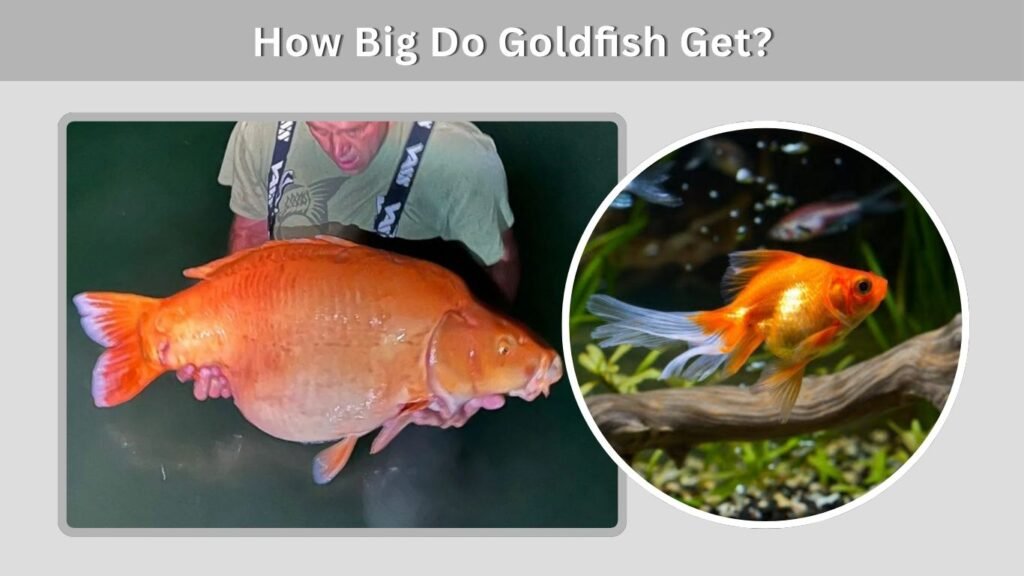
Goldfish can grow much larger than many people expect. Their final size depends on genetics, type, food, tank size, and water quality. Common and comet goldfish can become especially large in ponds or very spacious aquariums.
Growth Needs Space and Clean Water
A small tank does not truly keep a goldfish “small” in a healthy way. Poor conditions may stunt growth, but that is not good for the fish. Stunting can affect long-term health and lifespan.
To support healthy growth, provide:
- Enough swimming space
- Strong filtration
- Regular water testing
- A varied diet
- Low-stress tank mates
A goldfish that grows steadily, swims well, and eats normally is usually a sign of better care.
Do Goldfish Sleep?
Goldfish do sleep, but not in the same way people do. They rest quietly, often hovering near the bottom or in a calm area of the tank. Their eyes remain open because they do not have eyelids.
Creating a Healthy Day and Night Cycle
Goldfish need a regular light schedule. Keep aquarium lights on during the day and off at night. Too much light can stress fish and encourage algae growth.
A simple routine helps:
- 8 to 10 hours of light per day
- Darkness at night
- No sudden bright lights
- Calm tank conditions during rest time
If a goldfish rests all day, clamps its fins, or refuses food, that is different from normal sleep and may signal illness or poor water quality.
Goldfish Health and Warning Signs
Healthy goldfish are active and alert. They swim smoothly, eat well, and interact with their environment. Changes in behavior are often the first clue that something is wrong.
Signs Your Goldfish May Be Sick
Watch for these warning signs:
- Gasping at the water surface
- Sitting at the bottom for long periods
- Clamped fins
- White spots on body or fins
- Torn or red fins
- Swollen belly
- Floating sideways
- Loss of appetite
When symptoms appear, test the water first. Many health issues begin with ammonia, nitrite, or nitrate problems. Fixing water quality is often the first step before using medication.
FAQs
How long do goldfish live?
Goldfish can live 10 to 15 years or longer with proper care. Their lifespan depends on tank size, water quality, diet, genetics, and goldfish type. Many goldfish die early because they are kept in small bowls or unfiltered tanks.
What size tank does a goldfish need?
Goldfish need more space than many beginners expect. A filtered aquarium is much better than a bowl. Fancy goldfish need a large, stable tank, while common and comet goldfish often need very spacious aquariums or ponds because they grow larger and swim faster.
What is the best food for goldfish?
High-quality sinking pellets or gel food are good daily choices. Goldfish also benefit from vegetables such as blanched peas, spinach, lettuce, or zucchini. Feed small amounts once or twice a day and remove uneaten food to protect water quality.
Can different types of goldfish live together?
Similar types usually live together best. Fancy goldfish should be kept with other fancy goldfish because they swim slowly. Common and comet goldfish are faster and may outcompete fancy goldfish for food, so they are often better kept separately.
Do goldfish need a filter?
Yes, goldfish need a filter because they produce a lot of waste. A filter supports beneficial bacteria, improves water movement, and helps keep the tank stable. Regular water changes are still necessary because filtration alone does not remove all dissolved waste.