
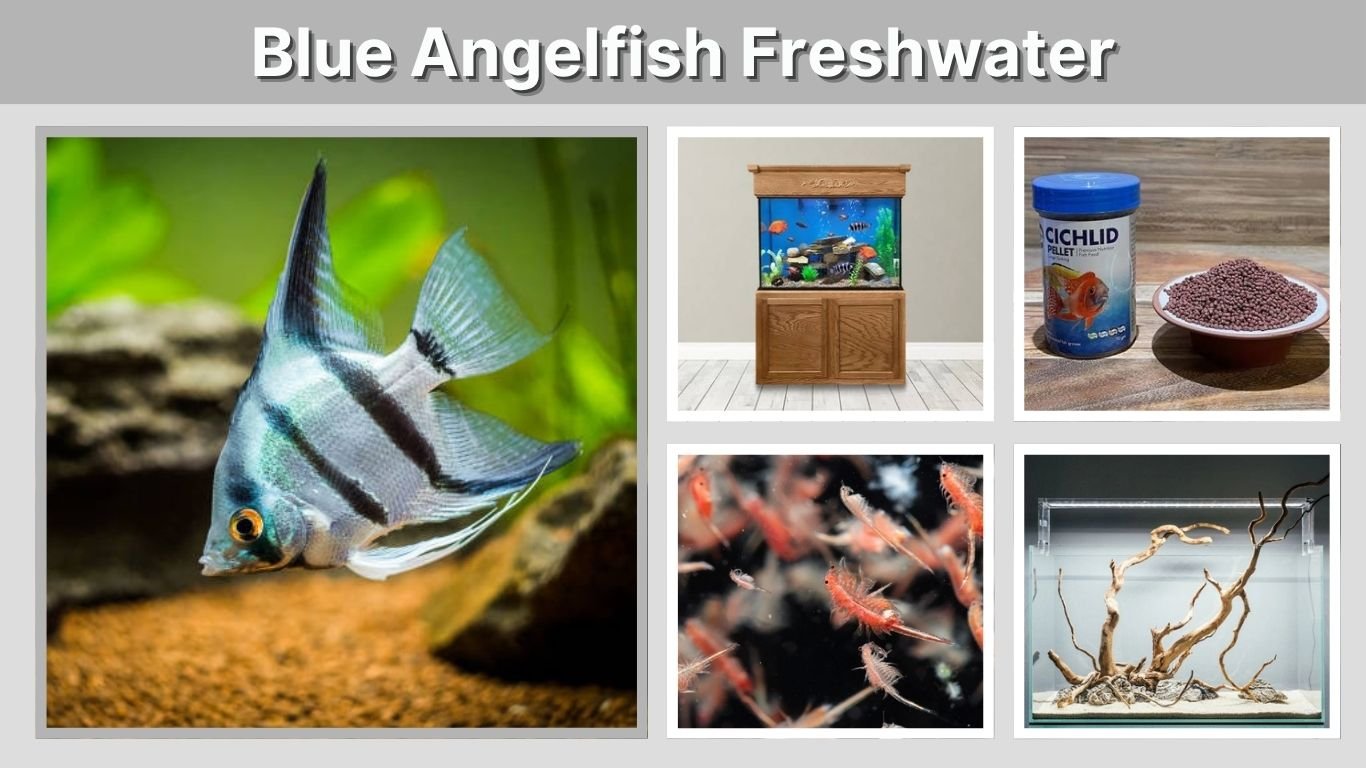
The blue freshwater angelfish is one of the most eye-catching color varieties of aquarium angelfish. Most blue angelfish in the freshwater hobby are selectively bred forms of Pterophyllum scalare, rather than a separate blue species. Depending on their genetics, they may appear metallic blue, silver-blue, turquoise, smoky blue, or blue with black stripes and marbling. Popular varieties include Philippine Blue, Blue Zebra, Blue Marble, Blue Blushing, and Pinoy angelfish. Like other freshwater angelfish, they need warm, clean water, adequate vertical swimming space, and compatible tank mates.
What Is a Blue Freshwater Angelfish?
A blue freshwater angelfish is generally a captive-bred angelfish in which selective breeding and color genetics produce enhanced blue or iridescent coloration.
The commonly kept freshwater angelfish, Pterophyllum scalare, is a South American cichlid with a strongly compressed body and elongated dorsal and anal fins. FishBase records a maximum total length of approximately 15 cm, although the long fins make adults appear much taller than their body length alone suggests.
Blue Angelfish Identification
Common characteristics include:
- Tall, triangular body
- Metallic blue or silver-blue coloration
- Long dorsal and anal fins
- Threadlike pelvic fins
- Dark vertical stripes in some varieties
- Iridescent scales
- Relatively flat body when viewed from the front
- Color that becomes more noticeable as some fish mature
The strength of the blue coloration varies significantly among individual fish, genetic lines, age, lighting, and other inherited color traits. Hobbyist genetics references describe the blue trait as a recessive modifier that can increase visible iridescence in domestic angelfish strains.
Types of Blue Freshwater Angelfish
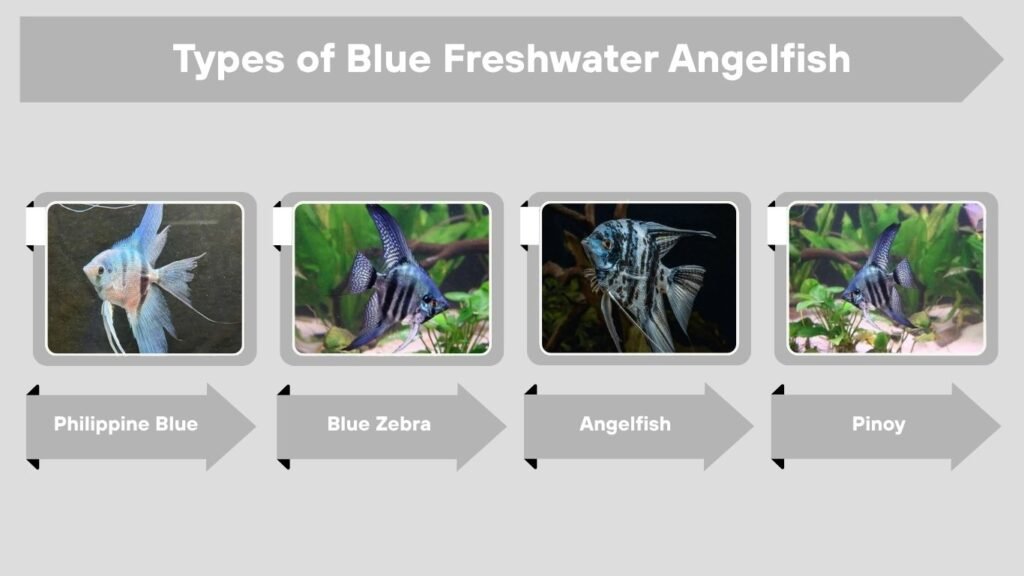
Blue is often combined with other established angelfish patterns. Consequently, two fish sold as “blue angelfish” can look dramatically different.
| Variety | Typical Appearance |
| Philippine Blue | Silver to metallic blue body |
| Blue Zebra | Blue-silver body with dark vertical bars |
| Blue Marble | Blue body with irregular dark marbling |
| Pinoy | Darker body with strong blue iridescence |
| Blue Blushing | Pale blue/silver body with reduced striping |
| Smokey Blue | Blue-gray coloration with dark smoky areas |
Philippine Blue Angelfish
The Philippine Blue angelfish is among the best-known blue freshwater varieties.
In aquarium breeding terminology, the Philippine Blue trait is associated with a recessive color mutation that enhances iridescence. The blue effect may be relatively subtle in young fish and become stronger as they mature.
Philippine Blues can also be crossed with other color varieties, producing fish with blue coloration combined with dark, marble, zebra, or stripeless patterns.
Blue Zebra Angelfish
A blue zebra angelfish combines blue or silver-blue coloration with additional dark vertical stripes.
Traditional zebra-type domestic angelfish typically show more vertical bars than standard silver angelfish. Combining that striped appearance with blue-enhancing genetics can create an especially dramatic fish. Angelfish genetics references recognize zebra as an inherited pattern and blue as a separate modifying trait.
Blue Marble Angelfish
Blue marble angelfish combine irregular black or gray marble-like markings with blue iridescence.
Unlike zebra angelfish, their dark markings do not form neat vertical bars. Instead, each fish may develop a unique patchy pattern across the body and fins. Commercially bred Blue Marble lines are generally based on P. scalare and combine marble-type patterning with blue-enhancing traits.
Blue Blushing Angelfish
Blue blushing angelfish tend to have a cleaner, less strongly striped body.
The “blushing” appearance is associated with stripeless genetics. Young blushing angelfish may show translucent gill covers that allow the reddish gill area beneath to remain visible, while blue iridescence can become more apparent as the fish develops.
Pinoy Angelfish
Pinoy angelfish are among the darker-looking blue varieties.
In hobby genetics terminology, Pinoy generally refers to fish combining the Philippine Blue trait with dark coloration. The result can be a deep steel-blue, black-blue, or metallic appearance depending on the individual’s genetics and lighting.
How Big Do Blue Freshwater Angelfish Get?
Because most blue varieties are domestic forms of Pterophyllum scalare, their basic adult size is similar to that of other common freshwater angelfish.
FishBase reports a maximum total length of approximately 15 cm (5.9 inches) for P. scalare. Their long dorsal and anal fins make them considerably taller than their body length might suggest.
Blue Freshwater Angelfish Size
A mature fish may have:
- Body length approaching 6 inches
- Considerable additional vertical height from the fins
- Long trailing pelvic fins
- A broad, vertically oriented profile
Because of this shape, tank height matters. FishBase recommends an aquarium at least 100 cm long for keeping the species, while aquarium husbandry sources also emphasize giving adults enough vertical room to fully extend their fins.
Freshwater Blue Angelfish Care
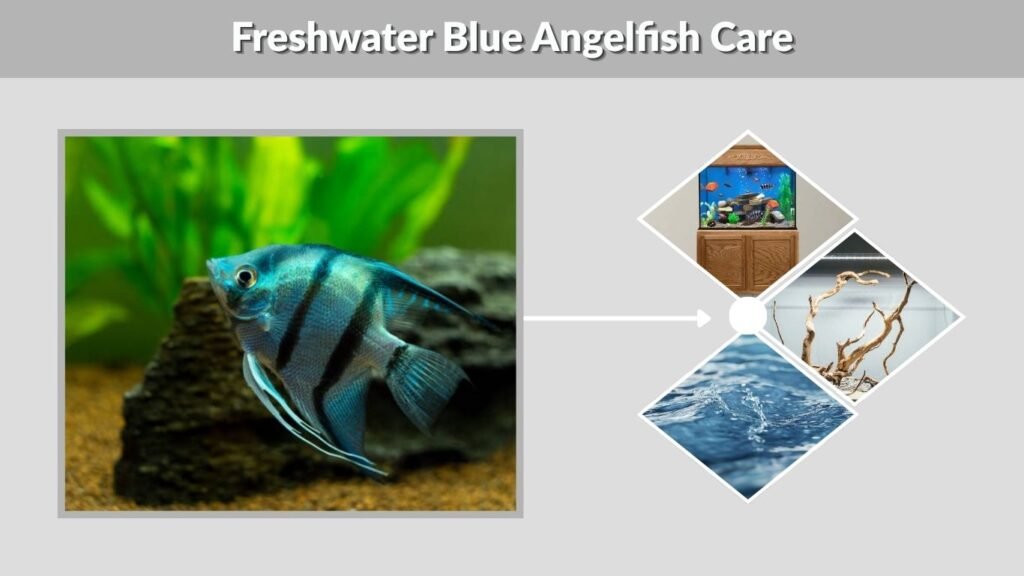
Blue coloration does not substantially change the fundamental husbandry requirements of Pterophyllum scalare.
They need warm freshwater, stable water quality, appropriate filtration, open swimming space, and places where they can retreat.
Tank Setup
A suitable aquarium can include:
- Tall aquarium dimensions
- Live or artificial plants
- Driftwood
- Open swimming areas
- Gentle to moderate water movement
- Efficient biological filtration
- Stable water conditions
Wild P. scalare inhabit vegetated swamps and flooded habitats with clear or silty water, helping explain why vertically oriented plants and structured environments work well for aquarium angelfish.
Water Conditions
Captive-raised angelfish tolerate a range of aquarium conditions, but consistency is extremely important.
A widely used care range for domestic angelfish is approximately 78–84°F (26–29°C) with a pH around 6.8–7.8. Regular partial water changes and adequate filtration help prevent deterioration of water quality.
What Do Blue Freshwater Angelfish Eat?

Blue angelfish are omnivorous aquarium fish with a strong appetite for animal-based foods.
A varied captive diet can include:
- Quality angelfish flakes
- Cichlid pellets
- Brine shrimp
- Bloodworms
- Mysis shrimp
- Other appropriately sized frozen foods
Freshwater angelfish readily accept prepared foods, while meaty foods can provide useful variety. They can also prey on sufficiently small fish, so very tiny tank mates may eventually be viewed as food.
Blue Angelfish Temperament and Tank Mates
Freshwater angelfish are cichlids, and their graceful appearance can hide a somewhat territorial personality.
Juveniles may live together peacefully, while adults—particularly breeding pairs—can defend territories and chase other fish.
Suitable companions often include peaceful fish that are not small enough to be swallowed and not likely to nip the angelfish’s long fins.
Avoid combining them casually with:
- Very small fish that may become prey
- Aggressive cichlids
- Persistent fin-nippers
- Fish requiring dramatically different temperatures
Tank size and individual temperament have a major influence on compatibility.
Are Blue Freshwater Angelfish Rare?
Some blue varieties are less common than traditional silver, marble, gold, or koi angelfish, but “blue” does not automatically mean extremely rare.
Philippine Blue genetics can now be found in numerous captive breeding lines, including Blue Marble and darker Pinoy combinations. Availability varies considerably between regions and breeders.
A particularly unusual combination of blue coloration, pattern genetics, fin type, and high-quality breeding may command more attention than a standard blue juvenile.
Blue Freshwater Angelfish Price
There is no single fixed blue freshwater angelfish price.
Cost varies according to:
- Variety
- Size
- Color intensity
- Fin type
- Age
- Genetics
- Breeder reputation
- Local availability
- Shipping requirements
Young Philippine Blue fish may be relatively affordable from some breeders, while mature breeding-quality or unusual genetic combinations can cost considerably more. Current prices should therefore be checked directly with reputable aquarium stores or breeders rather than relying on a universal price estimate.
Where to Buy Blue Freshwater Angelfish
When looking for a blue angelfish for sale, choose healthy captive-bred specimens from established aquarium shops or specialist breeders.
Look for fish with:
- Upright fins
- Clear eyes
- Normal swimming behavior
- Full body shape
- No white spots or visible lesions
- No severely damaged fins
- Strong feeding response
Do not judge juveniles solely by how intensely blue they appear. Some blue traits become much more apparent as the fish ages, and lighting can greatly affect how iridescent coloration appears.
FAQs
Are blue freshwater angelfish naturally blue?
Most intensely blue freshwater aquarium angelfish are captive-bred color forms rather than a separate naturally blue species. Selective breeding combines inherited traits that increase blue or iridescent coloration while retaining the characteristic shape of Pterophyllum scalare.
What is a Philippine Blue angelfish?
A Philippine Blue is a domestic freshwater angelfish carrying a recessive blue-enhancing trait. It can produce increased iridescence and may be combined with other angelfish genetics to create Blue Marble, Pinoy, and additional blue-patterned varieties.
How big do blue freshwater angelfish get?
Most blue freshwater angelfish are forms of Pterophyllum scalare, which FishBase records at up to approximately 15 cm or 5.9 inches in total length. Their elongated fins can make mature fish appear much taller.
What is the difference between Blue Zebra and Blue Marble angelfish?
Blue Zebra angelfish typically display relatively organized dark vertical bars against a blue or silver-blue background. Blue Marble angelfish instead have irregular black or gray patches scattered across the body, creating a less symmetrical pattern.
Are blue angelfish difficult to keep?
They are manageable for aquarists who can provide a properly sized, warm, stable freshwater aquarium. Their main requirements are good water quality, adequate tank height, appropriate food, and compatible tank mates. They may become territorial when forming breeding pairs.