
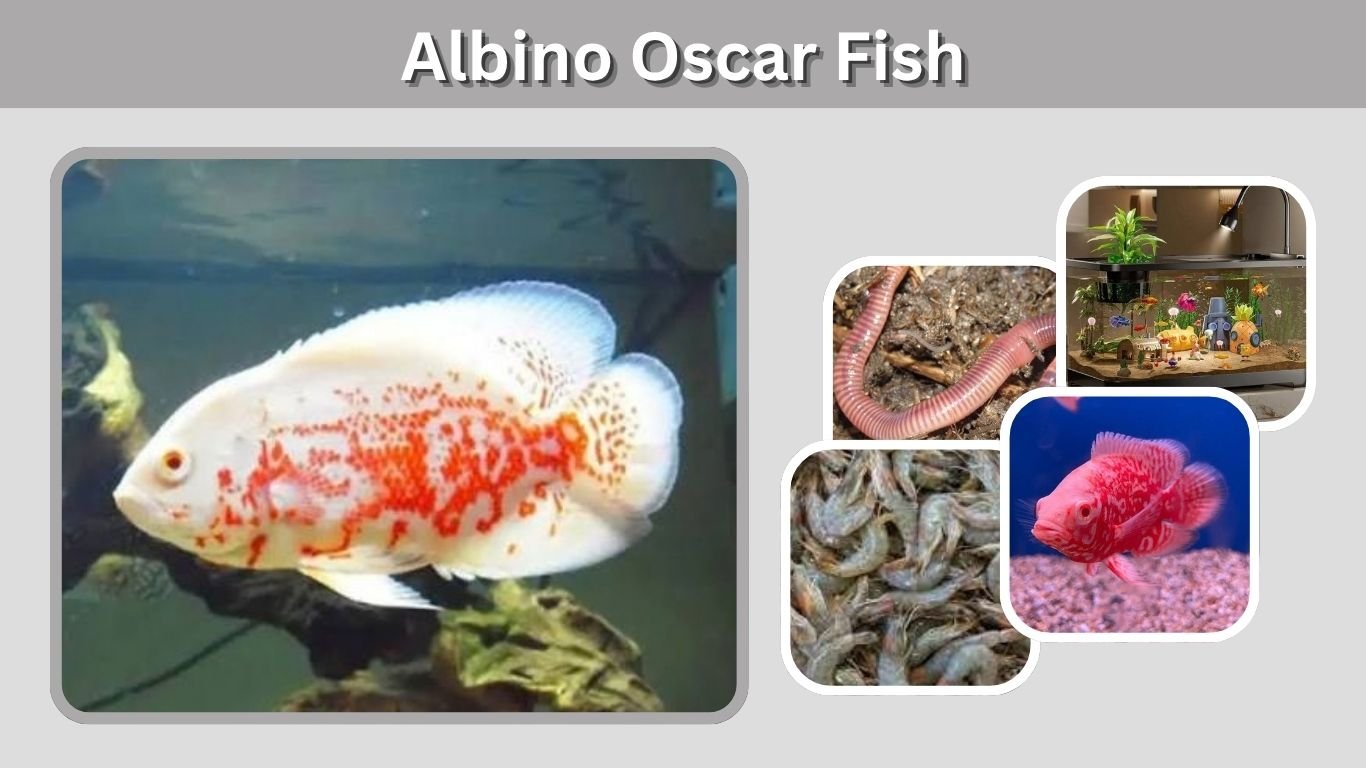
The albino Oscar fish is a striking color variety of the Oscar cichlid (Astronotus ocellatus), recognized by its pale white or cream body, orange-red markings, and typically pink or reddish eyes. Despite its unusual coloration, its basic care requirements are similar to those of tiger and red Oscars. These intelligent South American cichlids grow rapidly, produce considerable waste, and need substantial aquarium space. This guide covers albino Oscar fish care, tank size, food, growth, lifespan, behavior, breeding, color changes, and popular varieties.
What Is an Albino Oscar Fish?
An albino Oscar is a selectively bred form of the Oscar cichlid rather than a separate species. Standard Oscars naturally have dark pigmentation with orange markings, while albino forms lack much of the dark melanin responsible for normal coloration. Their care, adult size, feeding needs, and general behavior remain essentially the same as those of other Astronotus ocellatus varieties.
Albino Oscar Fish Identification
- Scientific name: Astronotus ocellatus
- Family: Cichlidae
- Body color: White, cream, or pale yellow
- Markings: Orange to reddish patches
- Eyes: Usually pink or red in true albino individuals
- Body shape: Deep, oval, and muscular
- Fins: Broad dorsal, anal, and rounded tail fins
- Temperament: Large, predatory and territorial cichlid
True albino and lutino Oscars are frequently confused in the aquarium trade. Eye coloration is often the easiest practical clue: true albinos usually show pink or red eyes, while fish sold as lutinos generally retain darker eye pigmentation. Retail names, however, are not always genetically precise.
Albino Oscar Fish Size and Growth Rate
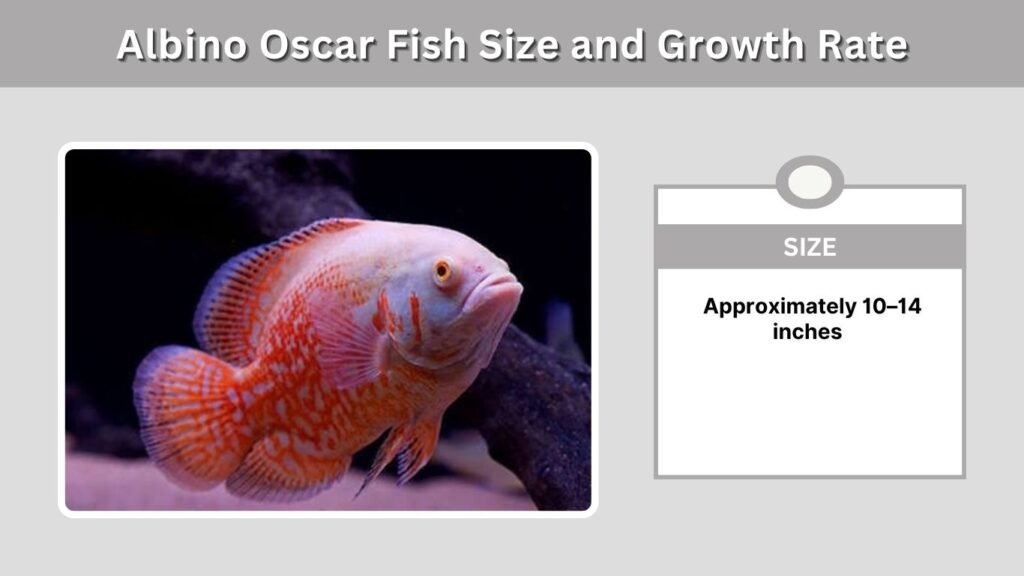
Juvenile albino Oscars may look manageable when sold at only a few inches long, but they are large aquarium fish. Domestic Oscars commonly reach approximately 10–14 inches with good care, while FishBase records substantially larger maximum sizes for the species in general. Rapid juvenile growth means owners should plan for the adult fish rather than choosing an aquarium based on its current size.
How Big Do Albino Oscar Fish Get?
Most aquarium Oscars reach around 10–14 inches (25–35 cm), although individual size varies with genetics, nutrition, environment, and age. FishBase reports a maximum recorded total length of 45.7 cm for Astronotus ocellatus.
Oscars can grow especially quickly during their first year. Aquarium Co-Op notes that juveniles may reach roughly two-thirds of their adult size within their first 6–12 months before growth gradually slows.
Adult Albino Oscar Fish
An adult develops a heavy body, large mouth, and considerable swimming power. Its pale background can make the red-orange pattern increasingly impressive as it matures.
Because these fish become both long and deep-bodied, tank length and width are important. An aquarium that technically holds enough water but provides little turning space is not appropriate for a full-grown Oscar.
Albino Oscar Fish Tank Setup and Water Conditions
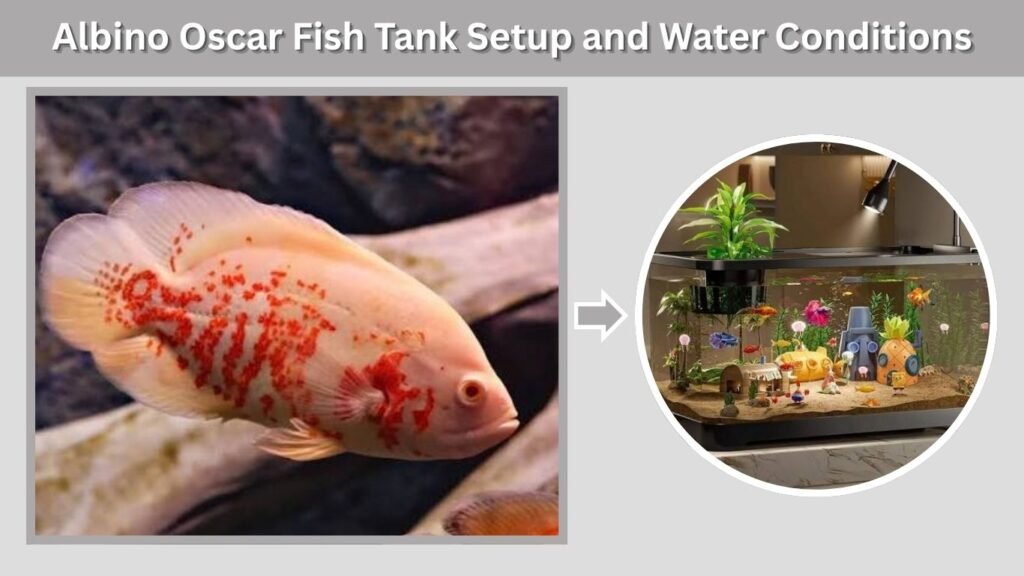
Albino Oscars are relatively hardy, but their size and heavy waste production make aquarium maintenance demanding. Strong biological filtration, adequate swimming space, stable temperature, and frequent water changes are more important than elaborate decoration. Oscars also rearrange their surroundings and may dig into substrate, so a carefully planted aquascape can quickly be disturbed.
Recommended Tank Conditions
- Tank size: Around 75 gallons or larger is commonly recommended for one adult; more space is preferable
- Temperature: Approximately 74–82°F (23–28°C)
- pH: Roughly 6.0–8.0 for captive-bred Oscars
- Filtration: Strong filtration capable of handling a heavy bioload
- Substrate: Sand, smooth gravel, or a simple bottom
- Decor: Large driftwood and stable rocks
- Lighting: Moderate or subdued lighting can suit pale fish
- Water changes: Regular substantial water changes are essential
Seriously Fish recommends a footprint around 150 × 60 cm and approximately 540 liters for a single adult, alongside efficient filtration and weekly water changes of roughly 30–50%. Aquarium Co-Op uses 75 gallons as a practical starting point for one Oscar.
Why Strong Filtration Matters
Oscars eat large quantities of food and consequently produce considerable waste. Accumulating organic waste can reduce water quality even when the water appears visually clear.
An adequately sized filter, regular substrate cleaning, and scheduled water changes help keep ammonia and nitrite controlled while preventing excessive nitrate buildup. Good water quality also supports appetite, color, growth, and long-term health.
What Do Albino Oscar Fish Eat?
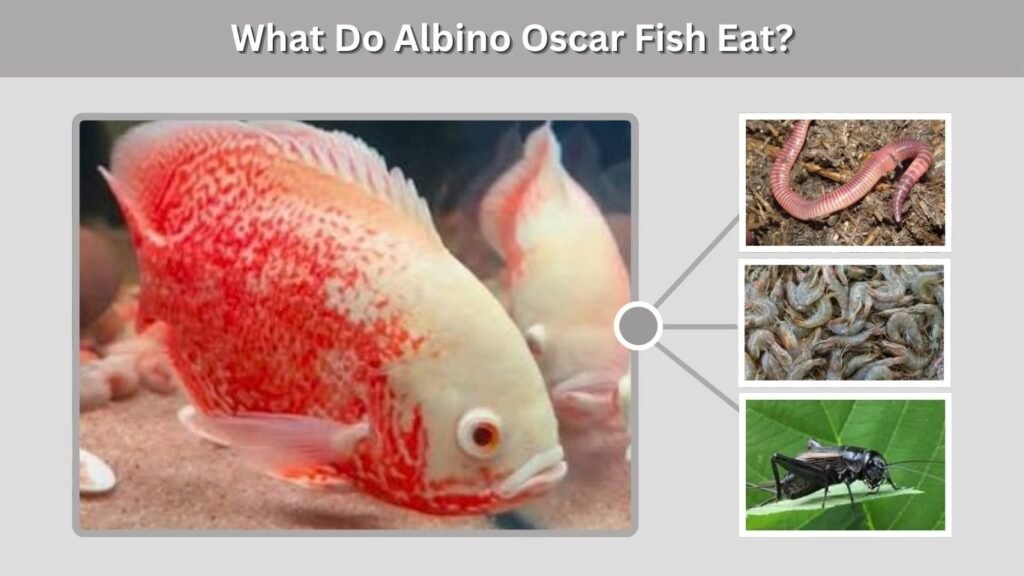
Albino Oscars are omnivorous but have a strong preference for animal-based foods. Wild Astronotus ocellatus consume small fish, crustaceans, worms, insects, insect larvae, and some plant material. Captive fish benefit from a balanced prepared cichlid food as the foundation of the diet rather than being fed exclusively on live prey.
Best Foods for Albino Oscars
- High-quality large cichlid pellets
- Krill
- Earthworms
- Shrimp or prawns
- Crickets
- Insect-based foods
- Appropriate frozen foods
- Occasional plant-containing formulated foods
A varied diet can provide better nutritional coverage than relying on one food. Oscars are also enthusiastic feeders and often appear hungry even when they have eaten enough, so overfeeding should be avoided.
Should Oscars Eat Feeder Fish or Meat?
Routine feeder-fish use is generally unnecessary. Poorly managed feeder fish can introduce parasites or disease and may not provide balanced nutrition.
Seriously Fish also advises against regularly feeding mammal or bird meats such as beef heart or chicken because their nutritional composition is not appropriate as a normal diet for predatory fish.
Albino Oscar Fish Behavior and Tank Mates
Oscars are famous for their interactive behavior. Many aquarium keepers observe them approaching the glass when their owner appears, anticipating food, and responding noticeably when decorations are moved. However, this personality should not be mistaken for peaceful community behavior. Oscars are powerful predatory cichlids capable of eating smaller fish and becoming territorial toward larger companions.
Are Albino Oscars Aggressive?
Albino coloration does not fundamentally change normal Oscar behavior. They can defend territory, compete over food, and become aggressive during pairing or breeding.
Smaller tank mates that can fit into an Oscar’s mouth are especially vulnerable. Even larger fish may experience conflict when aquarium space is inadequate.
Suitable Tank Mates
In very large aquariums, potential companions may include appropriately sized South American cichlids, silver dollars, and certain large catfish. Individual temperament matters, so compatibility cannot be guaranteed simply because two species are commonly recommended together.
Keeping multiple Oscars requires considerably more space than housing one adult.
Albino Tiger, Red and White Oscar Varieties
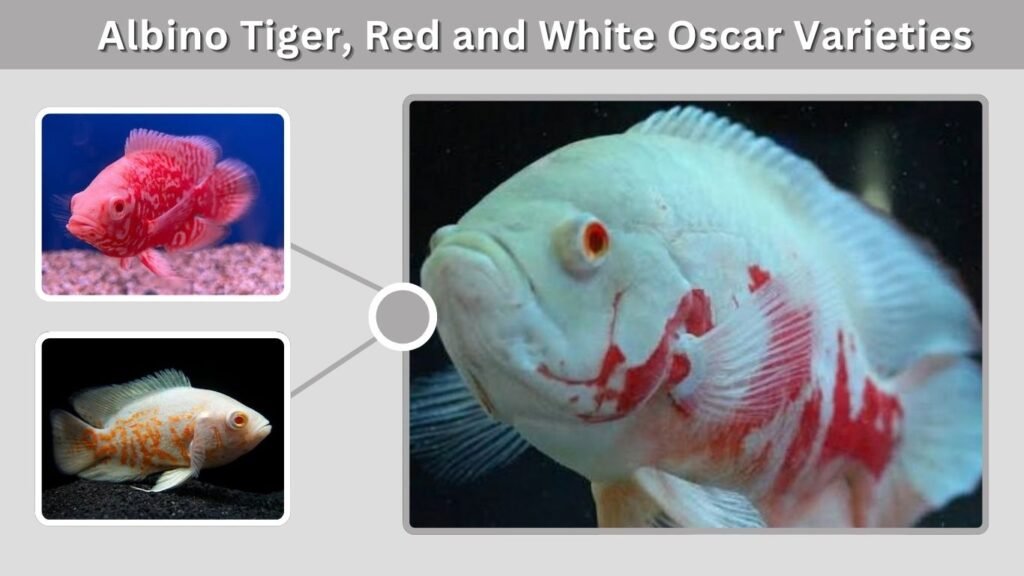
Selective breeding has produced several pale Oscar forms with different distributions of white, orange, red, or yellow coloration. Hobby names are sometimes inconsistent between breeders and retailers, so appearance alone does not always establish the exact genetics of a fish. Regardless of coloration, these varieties belong to the same species and generally require the same fundamental aquarium care.
Albino Tiger Oscar
The albino tiger Oscar typically has a white or cream base covered with irregular orange-red markings that resemble the pattern of a conventional tiger Oscar without the dark background.
Young fish may show relatively faint coloration that becomes more obvious as they mature.
Albino Red Oscar
Albino red Oscars are selected for more extensive red or orange coloration over the pale body. Some fish develop large areas of red rather than broken tiger-like markings.
Diet, genetics, age, environment, and physical condition can influence how intense the coloration appears.
White and Lemon-Like Oscars
Very pale white or yellow Oscars are also sold under names such as white, lemon, lutino, or albino. These commercial labels can overlap.
A pink or reddish eye is generally associated with true albinism, while darker eyes suggest the fish may represent another reduced-pigment variety rather than complete albinism.
Why Is My Albino Oscar Fish Turning Black?
Color changes can attract immediate attention in a normally pale fish. Oscars are capable of altering the appearance and intensity of their pigmentation in response to mood and environmental conditions. However, persistent unusual darkening accompanied by poor appetite, hiding, rapid breathing, abnormal swimming, or other symptoms deserves closer investigation.
Stress and Environmental Changes
Temporary coloration changes may accompany stress, territorial encounters, transport, water changes, or changes to the aquarium. A fish may also look different as it matures.
If the color change persists, check temperature, ammonia, nitrite, nitrate, filtration, recent environmental changes, appetite, and behavior rather than judging health from coloration alone.
Albino Oscar Fish Lifespan and Breeding
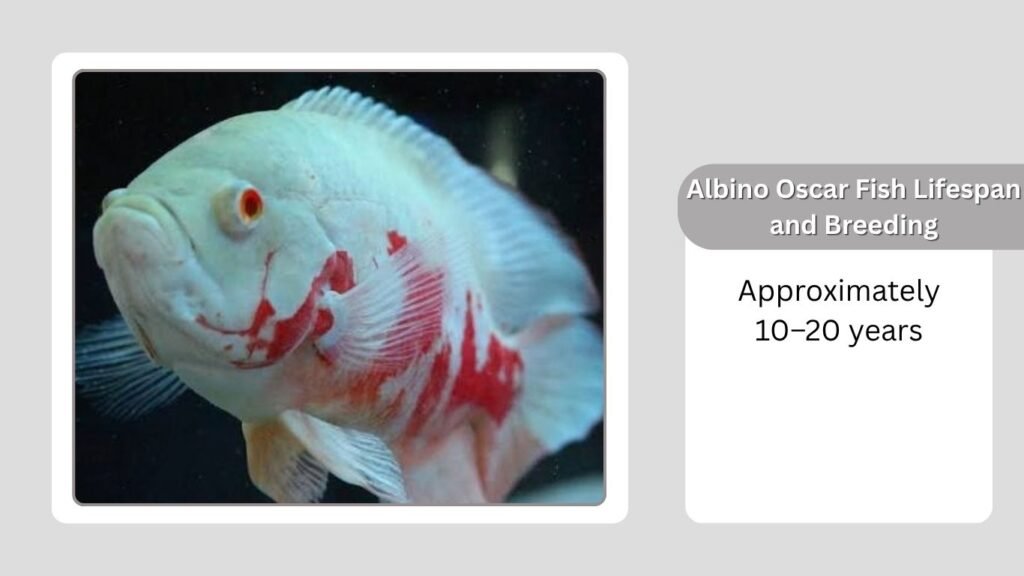
An Oscar represents a long-term commitment. Seriously Fish gives a typical lifespan of approximately 10–20 years, meaning proper tank planning matters from the beginning. Albino varieties are still Astronotus ocellatus, so their expected longevity and reproductive behavior broadly follow those of other Oscars when they receive suitable nutrition, water quality, and housing.
Male and Female Albino Oscar Fish
Determining sex visually is difficult because Oscars show little reliable external sexual dimorphism. Body size, fin shape, or coloration alone cannot confidently identify sex.
During breeding, the female’s reproductive structures can provide clearer evidence. Keeping a group of juveniles until a compatible pair naturally forms is one approach used by experienced breeders.
Albino Oscar Breeding
Oscars form pairs and spawn on solid surfaces. A breeding pair typically cleans a flat rock or another suitable surface before eggs are deposited.
Both parents can participate in guarding the eggs and offspring. Seriously Fish notes that a female may produce as many as about 2,000 eggs, which means breeding should only be attempted when adequate space and resources are available for potentially large numbers of young fish.
FAQs
1. How big do albino Oscar fish get?
Most aquarium Oscars grow to roughly 10–14 inches, although the species is capable of reaching larger sizes. Their rapid juvenile growth makes a large adult-sized aquarium important from an early stage.
2. How long do albino Oscar fish live?
With appropriate care, Oscars commonly have a lifespan of around 10–20 years, making them a much longer commitment than many aquarium fish.
3. What size tank does an albino Oscar need?
A 75-gallon aquarium is commonly suggested as a practical minimum starting point for one adult, although larger dimensions provide better swimming space and make water quality easier to manage.
4. What is the difference between an albino and a lutino Oscar?
A true albino generally has pink or red eyes due to greatly reduced melanin, whereas fish sold as lutino usually have darker eyes and pale yellow, cream, or orange coloration. Retail terminology can sometimes be inconsistent.
5. Can albino Oscars live with other fish?
Yes, but only with carefully selected, sufficiently large tank mates in a spacious aquarium. Small fish may be eaten, while territorial disputes can occur with other large fish. Compatibility depends heavily on aquarium size and individual temperament.