
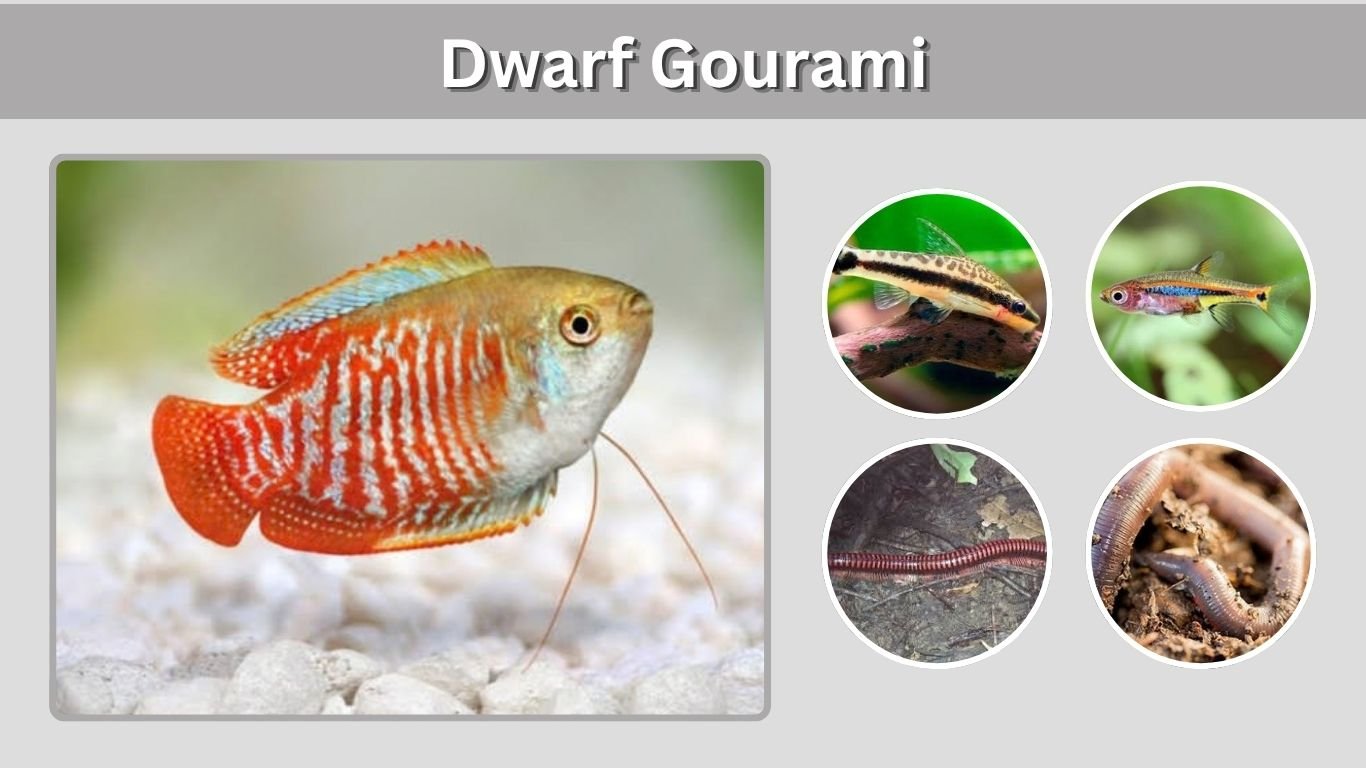
The dwarf gourami (Trichogaster lalius) is a colorful freshwater fish known for its compact size, long feeler-like pelvic fins, and bold personality. Native to South Asia, it naturally inhabits slow-moving, heavily vegetated waters and can breathe atmospheric air using a labyrinth organ. Popular aquarium varieties include powder blue, neon blue, flame, red, and sunset dwarf gouramis. With suitable water conditions, peaceful tank mates, a varied diet, and enough plant cover, this species can become an attractive centerpiece for a community aquarium.
What Is a Dwarf Gourami?
Dwarf gouramis belong to the gourami family Osphronemidae and originate naturally from Pakistan, India, and Bangladesh. They inhabit ponds, swamps, ditches, streams, and other slow-moving waters containing abundant vegetation. Like bettas, dwarf gouramis possess a labyrinth organ that allows them to breathe air directly from the surface, making surface access an important part of aquarium design.
Dwarf Gourami Appearance
The natural form has an attractive blue body crossed by reddish-orange vertical stripes. Males usually display brighter coloration and somewhat longer, more pointed dorsal and anal fins.
Females tend to be less intensely colored and often appear more silver-gray, although selectively bred varieties can make female coloration more noticeable.
Their two long thread-like pelvic fins act as sensory structures, often appearing as though the fish is feeling objects around the aquarium.
Dwarf Gourami Behavior
These fish are frequently described as peaceful community fish, but males can be territorial. Some individuals coexist calmly with other fish, while others chase tank mates entering their preferred area.
They generally spend considerable time in the middle and upper portions of the aquarium and regularly approach the surface to breathe.
Dwarf Gourami Size and Lifespan
Despite their name, dwarf gouramis are not tiny nano fish. Most aquarium specimens remain relatively compact, but adults still need adequate swimming space and territorial room. Their adult size also varies somewhat by genetics and sex. Good water quality, nutrition, genetics, and disease prevention all influence how well an individual develops and how long it survives.
How Big Do Dwarf Gouramis Get?
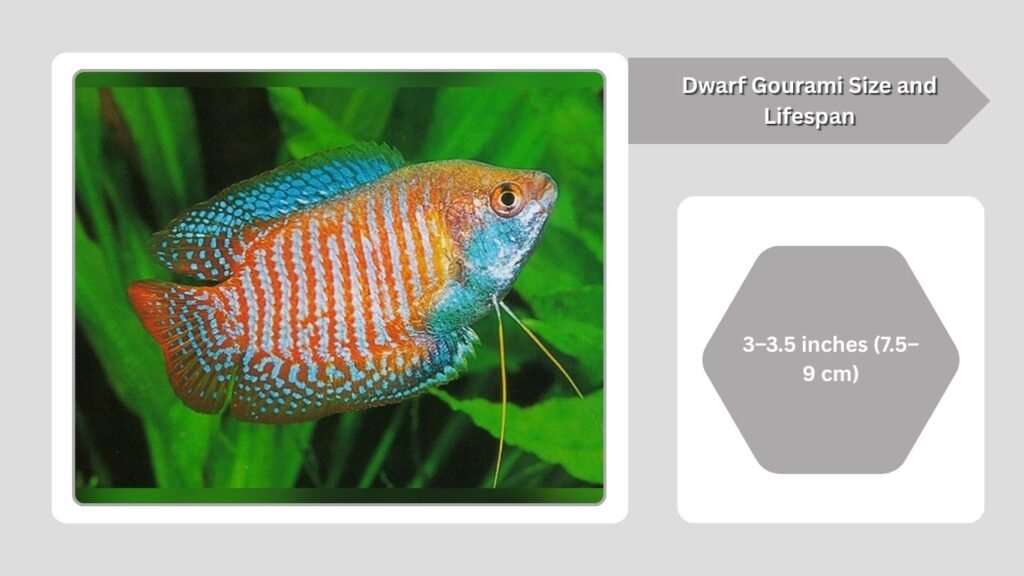
Typical aquarium dwarf gouramis grow to around 3–3.5 inches (7.5–9 cm). FishBase records a maximum total length of approximately 9.5 cm.
Males may appear larger because of their stronger coloration and extended fins.
Powder blue, flame, neon blue, and other color morphs are all forms of the same dwarf gourami species, so their potential adult size is broadly similar.
How Long Do Dwarf Gouramis Live?
A well-kept dwarf gourami can commonly live around 2–4 years, although lifespan varies considerably. Aquarium Co-Op gives approximately this range under good captive care.
Stable water parameters, quality food, low stress, careful sourcing, and avoiding disease are more important than trying to achieve an exact lifespan.
Dwarf Gourami Tank Size and Setup

A planted aquarium that resembles slow, vegetation-rich natural waterways is ideal for dwarf gouramis. These fish appreciate calm areas near the surface and can become uncomfortable in tanks with powerful currents or aggressive companions. Tank size should account not only for body length but also for male territorial behavior and space needed by other community fish.
Basic Tank Requirements
A suitable setup should include:
- Tank size: Around 15 gallons or more is preferable for comfortable long-term housing
- Temperature: Approximately 72–81°F (22–27°C)
- pH: About 6.0–7.5
- Water flow: Gentle to moderate
- Plants: Dense live plants with open swimming areas
- Surface: Easy access for atmospheric breathing
- Cover: A secure aquarium lid
- Filtration: Gentle but effective biological filtration
Seriously Fish recommends about a 60 × 30 × 30 cm aquarium, roughly 56 liters, as just large enough for a properly managed pair.
Dwarf Gourami Temperature
A stable tropical temperature is more important than constantly chasing one exact number.
Seriously Fish gives 22–27°C (72–81°F), while FishBase reports a natural tropical range around 25–28°C. A temperature around 25–27°C is therefore suitable for many community setups when compatible tank mates have similar requirements.
Types of Dwarf Gourami
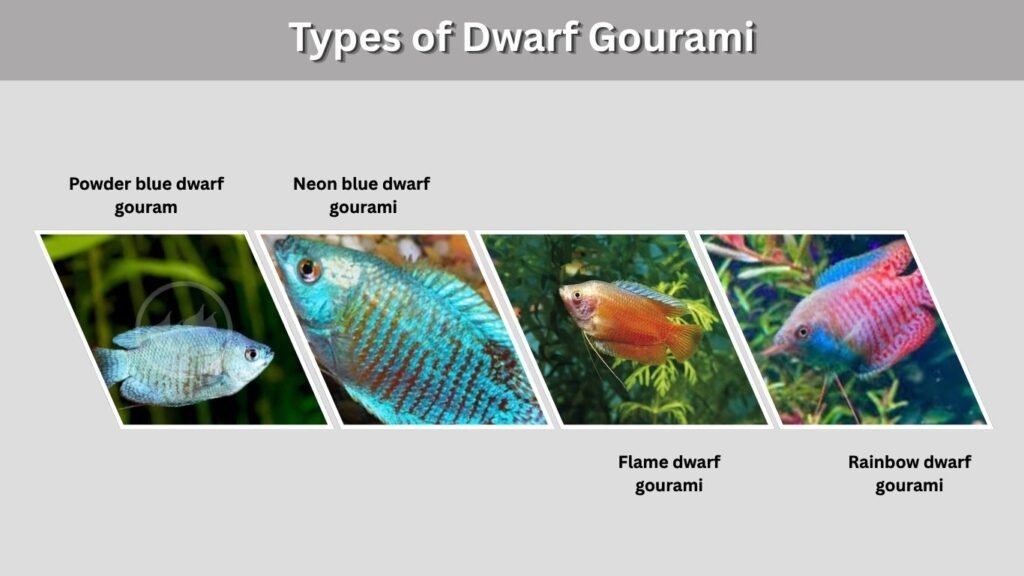
Selective breeding has produced several brightly colored dwarf gouramis. Most of the popular names refer to color morphs of Trichogaster lalius rather than separate species. Retail naming is not always consistent, so identifying the scientific species is useful when comparing fish sold as powder blue, neon, flame, rainbow, sunset, or red gouramis.
Popular Dwarf Gourami Varieties
Common forms include:
- Powder blue dwarf gourami: Predominantly pale or electric blue with little red striping
- Neon blue dwarf gourami: Intense blue coloration, often with contrasting red markings
- Flame dwarf gourami: Strong orange-red or flame coloration with blue fin accents
- Red dwarf gourami: Selectively bred for extensive red coloration
- Sunset dwarf gourami: Usually orange, red, and yellow tones
- Rainbow dwarf gourami: A trade name often used for strongly patterned multicolored specimens
- Longfin dwarf gourami: Selected for more elongated fin development
Aquarium Co-Op specifically distinguishes powder blue and flame forms from the naturally striped variety.
Is a Honey Dwarf Gourami the Same Fish?
Not necessarily. The honey gourami (Trichogaster chuna) is a different species from the dwarf gourami (Trichogaster lalius).
Retailers sometimes use names such as “dwarf honey gourami,” “red honey gourami,” or “sunset honey gourami,” creating confusion. Always check the scientific name before purchasing because honey gouramis can differ in size, temperament, and appearance.
Best Dwarf Gourami Tank Mates
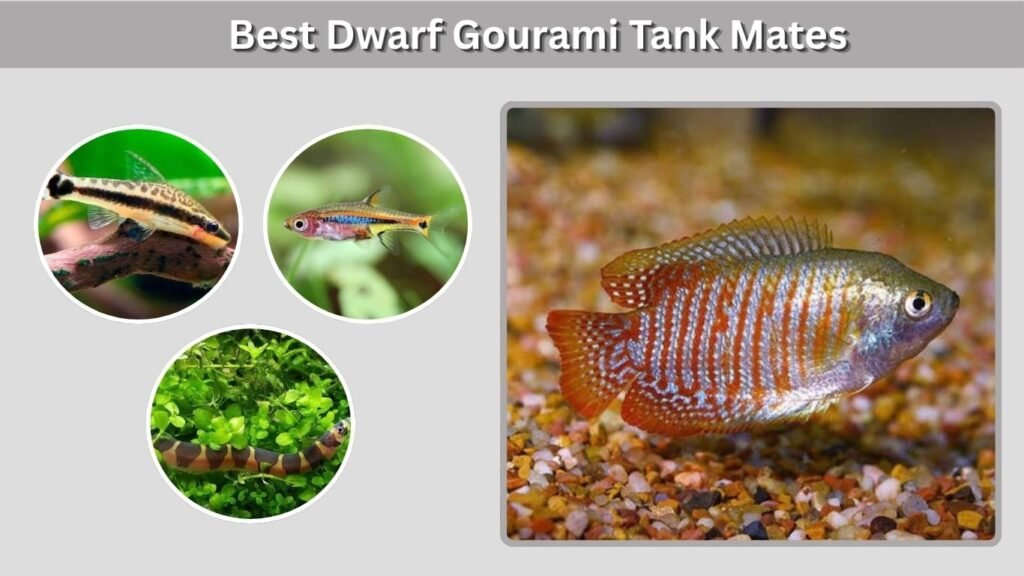
A single dwarf gourami can work well as a centerpiece fish in a peaceful community aquarium. Male temperament varies, however, and keeping multiple males together can lead to persistent chasing and fin damage. Calm schooling fish and bottom dwellers usually make safer companions than other territorial labyrinth fish or aggressive species.
Good Tank Mate Options
Depending on tank size and water parameters, potential companions include:
- Corydoras catfish
- Peaceful tetras
- Rasboras
- Kuhli loaches
- Otocinclus
- Peaceful platies
- Other small, calm community fish
Aquarium Co-Op recommends peaceful species such as corydoras, tetras, rasboras, loaches, and platies for suitably tempered dwarf gouramis.
Dwarf Gourami With Bettas or Angelfish
Keeping a dwarf gourami with a betta is generally risky because both are territorial labyrinth fish. They may interpret each other’s bright colors and long fins as competition.
Angelfish can also create problems because they become substantially larger and territorial. A very large aquarium may reduce conflicts, but this pairing is less predictable than using small peaceful schooling fish.
Do Dwarf Gouramis Eat Shrimp?
Dwarf gouramis are omnivorous opportunistic feeders, and anything small enough to fit into their mouths can potentially become food. Adult shrimp may survive with a calm individual in a densely planted aquarium, but tiny shrimp and newly hatched shrimplets are much more vulnerable.
Keeping Shrimp With Dwarf Gouramis
Success is more likely when you:
- Provide moss and dense plant cover
- Use established shrimp colonies
- Avoid relying on tiny shrimp as guaranteed tank mates
- Keep the gourami well fed
- Provide caves and narrow hiding spaces
- Expect some baby shrimp losses
Seriously Fish notes that freshwater shrimp can sometimes coexist successfully in planted setups, while Aquarium Co-Op warns that dwarf gouramis may opportunistically eat cherry shrimp or other animals small enough to swallow.
What Do Dwarf Gouramis Eat?

Dwarf gouramis are omnivores. In nature they consume small invertebrates, algae, and other available food. Captive fish generally accept commercial foods readily, but feeding only one flake or pellet indefinitely does not provide the same dietary variety. Rotating several foods can support coloration, body condition, activity, and normal feeding behavior.
Foods to Offer
A varied diet can include:
- High-quality tropical flakes
- Small floating pellets
- Gourami or betta pellets
- Frozen bloodworms
- Brine shrimp
- Daphnia
- Small live foods
- Occasional plant or algae-based foods
Feed manageable portions rather than allowing large quantities of uneaten food to fall into the substrate.
How Often Should You Feed?
Small adult meals once or twice daily are usually sufficient. Give only an amount the fish can consume promptly.
Dwarf gouramis can be enthusiastic feeders and may take more than their share in community aquariums, so watch slower fish during feeding rather than simply adding extra food.
Dwarf Gourami Disease and Health
Healthy dwarf gouramis should swim normally, respond to food, breathe without obvious distress, and maintain good body condition. Unfortunately, intensive commercial breeding has raised concern about stock quality and infectious disease. Buying a healthy-looking fish from a reputable source and quarantining newcomers can reduce the chance of introducing illness into an established aquarium.
Dwarf Gourami Iridovirus
Dwarf gouramis have been associated with dwarf gourami iridovirus and related megalocytivirus infections. Seriously Fish notes concerns about highly infectious DGIV in mass-produced stock, while Merck documents megalocytiviruses affecting dwarf gouramis and other ornamental freshwater fish.
Possible illness signs can be nonspecific, so loss of appetite, abnormal coloration, swelling, sores, lethargy, or unexplained decline should not automatically be diagnosed as iridovirus.
A sick fish should be isolated and assessed carefully.
Choosing a Healthy Dwarf Gourami
Before purchasing, look for a fish that:
- Swims actively and evenly
- Shows interest in food
- Has clear eyes
- Has intact fins
- Has no ulcers or unusual swelling
- Breathes normally
- Maintains an appropriate body shape
- Does not isolate itself continuously
Avoid buying visibly weak fish simply because a particular color morph is difficult to find.
Dwarf Gourami Breeding
Dwarf gouramis are bubble-nest breeders. The male constructs a floating nest and guards the eggs after spawning. Plants near the water surface can stabilize the nest and make the breeding aquarium feel more secure. Breeding behavior can also make males significantly more territorial toward females and other fish.
Male vs Female Dwarf Gourami
Males are usually more intensely colored and typically develop a more pointed dorsal fin. Females are generally duller and have a rounder dorsal fin.
During breeding, the male builds a bubble nest and courts the female beneath it. After spawning, he collects eggs and returns them to the nest.
Because males may aggressively chase females afterward, breeding is usually easier to manage in a separate aquarium with abundant plant cover.
FAQs
1. How big do dwarf gouramis get?
Most dwarf gouramis reach around 3–3.5 inches as adults, although FishBase records a maximum total length of about 9.5 cm. Powder blue, flame, neon, and red varieties are color morphs of the same species and therefore reach broadly similar sizes.
2. What tank size does a dwarf gourami need?
A single dwarf gourami benefits from an aquarium around 15 gallons or larger, especially when kept with tank mates. Seriously Fish describes a 56-liter tank measuring approximately 60 × 30 × 30 cm as just large enough for a properly managed pair. More space helps reduce territorial conflicts.
3. Can two male dwarf gouramis live together?
Usually, keeping two males together is risky in a small or medium aquarium because males can become strongly territorial. Chasing, fin nipping, and stress may develop. A single male with peaceful community fish is often easier to manage unless the aquarium is very large and heavily planted.
4. Will a dwarf gourami eat shrimp?
It may. Adult shrimp sometimes coexist with calmer dwarf gouramis, particularly in densely planted tanks, but small shrimp and shrimplets can easily become prey. If maintaining a breeding shrimp colony is important, a dwarf gourami is not a completely shrimp-safe choice.
5. Is a powder blue dwarf gourami a different species?
No. A powder blue dwarf gourami is a selectively bred color form of the regular dwarf gourami, Trichogaster lalius. Its basic adult size, care needs, temperature range, and feeding requirements are similar. Flame, neon, red, and sunset dwarf gouramis are also commonly sold color forms rather than separate species.
