
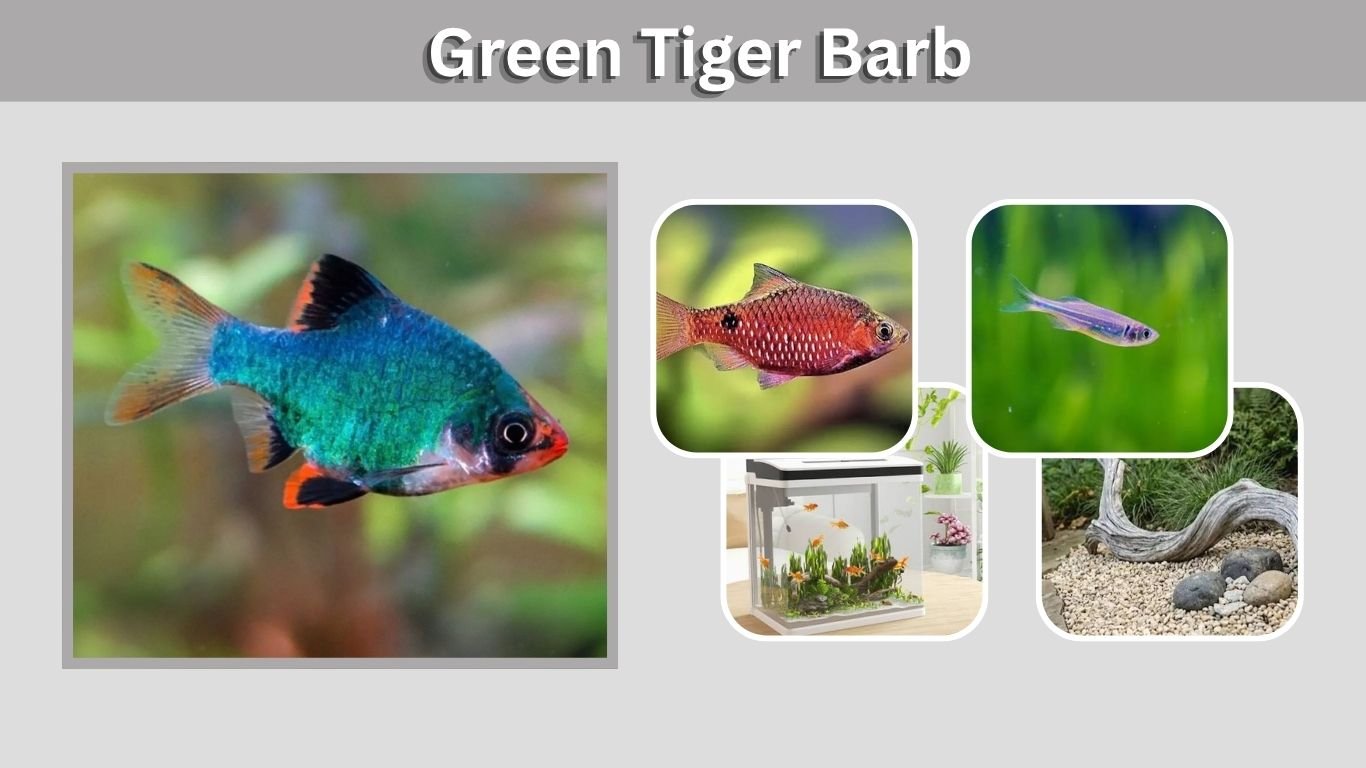
Green tiger barbs are beautiful freshwater aquarium fish known for their shimmering emerald-green bodies, energetic swimming behavior, and striking appearance. Also called moss green tiger barbs, these fish are selectively bred color varieties of the traditional tiger barb. Their active personalities and schooling habits make them attractive additions to spacious tropical aquariums. However, green tiger barbs can occasionally display aggressive behavior, especially when kept in small groups. Understanding their tank requirements, ideal water temperature, feeding habits, compatible tank mates, lifespan, and breeding behavior helps aquarium owners maintain healthy, colorful fish.
What Is a Green Tiger Barb?
The green tiger barb (Puntigrus tetrazona) is a selectively bred color variation of the standard tiger barb, a freshwater species associated with Southeast Asia, particularly Sumatra. Unlike the traditional tiger barb, which features four distinct black stripes, the green variety displays dark metallic green coloration that largely conceals those markings.
Green tiger barbs belong to the Cyprinidae family and share the same general behavior, size, and care requirements as regular tiger barbs.
Green Tiger Barb Fish Facts
- Scientific name: Puntigrus tetrazona
- Common names: Green Tiger Barb, Moss Green Tiger Barb, Moss Barb
- Family: Cyprinidae
- Origin: Captive-bred variety of a Southeast Asian species
- Adult size: 2–3 inches (5–7.5 cm)
- Average lifespan: 5–7 years
- Recommended tank size: 30 gallons or larger
- Water temperature: 72–81°F (22–27°C)
- Preferred pH: 6.0–7.5
- Diet: Omnivorous
- Temperament: Semi-aggressive
- Group size: 8–10 or more
- Care level: Easy to moderate
Green Tiger Barb Appearance and Size
Green tiger barbs have deep, laterally compressed bodies with a distinctive metallic sheen. Their coloration ranges from dark emerald to bluish-green depending on lighting, genetics, and overall health.
Their fins often display orange or reddish coloration, creating an attractive contrast against their dark bodies. Although different ornamental varieties have been developed, they maintain the recognizable body shape of traditional tiger barbs.
How Big Do Green Tiger Barbs Get?
A full-grown green tiger barb typically reaches approximately 2–3 inches in length. Most aquarium specimens remain near the lower end of this range, although well-maintained individuals may grow slightly larger.
Growth depends on genetics, diet, water quality, and available swimming space. Young fish develop gradually, becoming more colorful as they mature.
Male vs Female Green Tiger Barb
Male green tiger barbs are usually slimmer and often display stronger reddish coloration around their mouths and fins. Their colors can become more intense during courtship.
Female green tiger barbs generally have fuller bodies and rounder abdomens. Mature females may appear noticeably swollen when carrying developing eggs.
These differences are easier to recognize in fully grown fish than in juveniles.
Popular Green Tiger Barb Varieties
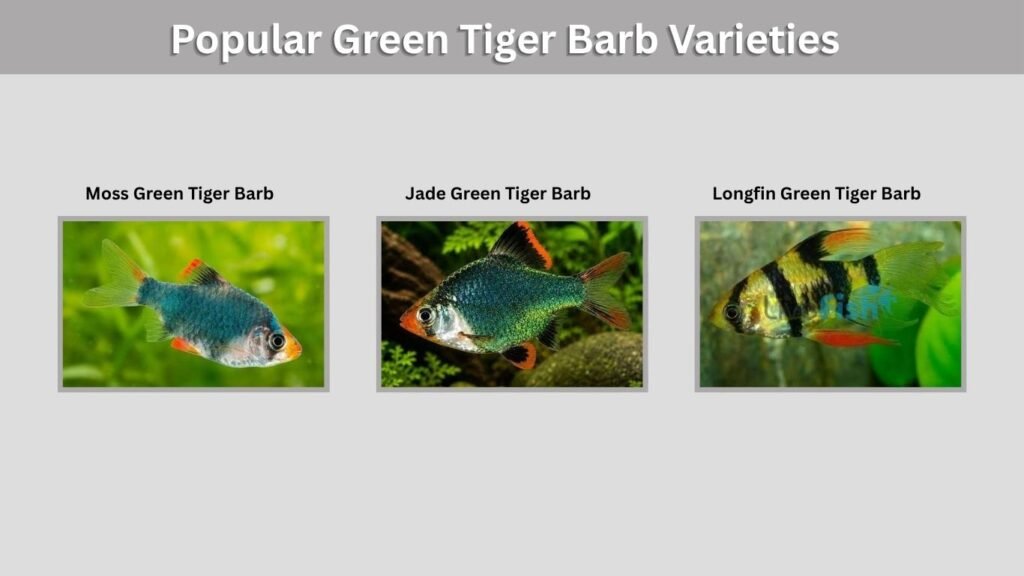
Several ornamental forms of green tiger barbs appear in the aquarium trade. Some result from selective breeding, while others are genetically modified fluorescent fish.
Although their appearances differ, most share the same fundamental aquarium requirements.
Common Green Tiger Barb Varieties
- Moss Green Tiger Barb: The classic variety featuring dark green metallic scales and reddish-orange fin markings.
- Emerald Green Tiger Barb: A commercial name commonly used for particularly vibrant green specimens.
- Jade Green Tiger Barb: Often another trade name for moss-green fish rather than a genetically distinct variety.
- Platinum Green Tiger Barb: A trade description used for lighter metallic or greenish ornamental tiger barbs. Appearance varies among breeders.
- Longfin Green Tiger Barb: Features elongated fins combined with the characteristic dark green body coloration.
- Electric Green GloFish Tiger Barb: A genetically modified fluorescent variety displaying bright green coloration, distinct from the traditionally bred moss-green form.
Some sellers also advertise albino green tiger barbs, although this name is not standardized and may describe different ornamental color combinations.
Green Tiger Barb Tank Size and Aquarium Setup
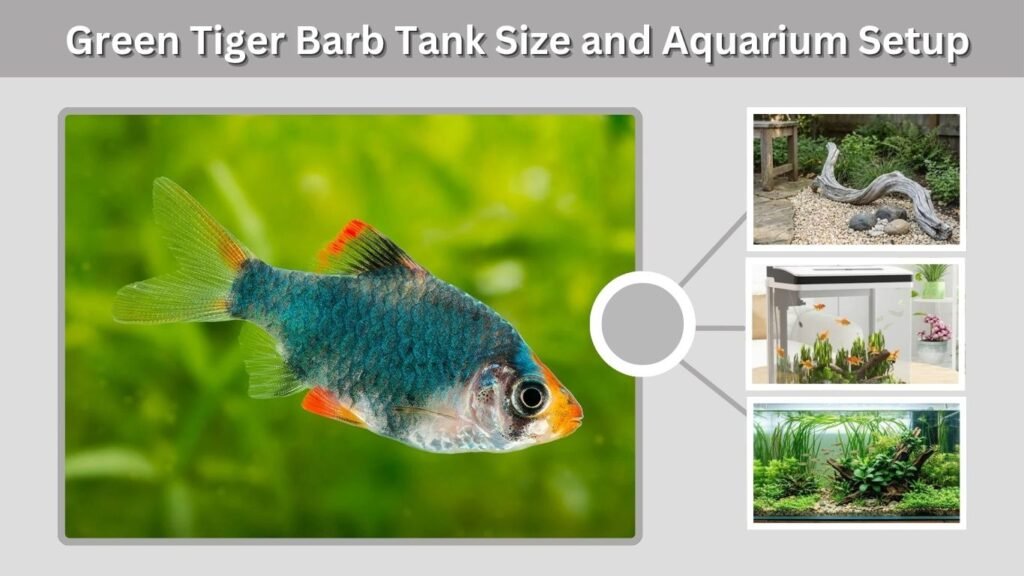
Green tiger barbs are active swimmers that require sufficient space to move and interact with their group. A cramped aquarium can increase territorial competition, stress, and fin-nipping behavior.
A 30-gallon aquarium is a practical starting point for a group of eight to ten fish. Larger tanks provide greater swimming freedom and allow more flexibility when adding compatible community species.
Best Tank Setup for Green Tiger Barbs
A suitable aquarium environment should include:
- A spacious tank with adequate horizontal swimming space
- Live plants such as Java fern, Anubias, and Vallisneria
- Dark gravel or fine sand substrate
- Driftwood and rocks for natural decoration
- Open areas for active group swimming
- Moderate water movement and reliable filtration
- Dense vegetation for hiding and resting
- A heater and thermometer for stable temperatures
Planted aquariums are particularly attractive because green tiger barbs contrast beautifully against natural vegetation.
Green Tiger Barb Temperature and pH
Green tiger barbs generally thrive in water temperatures between 72°F and 81°F (22–27°C), with stable mid-range temperatures often preferred.
Maintain a pH between 6.0 and 7.5 and avoid sudden changes in water chemistry.
A properly cycled aquarium should have zero measurable ammonia and nitrite. Regular partial water changes help maintain low nitrate levels and reduce accumulated waste.
Are Green Tiger Barbs Aggressive?
Green tiger barbs are semi-aggressive fish, meaning they occasionally chase or nip other aquarium inhabitants. This behavior is especially common when they are kept alone, in undersized groups, or alongside slow-moving species.
Despite their reputation, green tiger barbs can coexist successfully with carefully selected fish when provided with appropriate schooling numbers and enough aquarium space.
Why Do Green Tiger Barbs Chase Other Fish?
Green tiger barbs establish social hierarchies through chasing, displaying, and occasional fin-nipping. Males may become particularly competitive during breeding periods.
Keeping only two or three fish can intensify harassment because social interactions become concentrated among fewer individuals.
Maintaining a larger group distributes aggression more evenly, although it does not completely eliminate their fin-nipping tendencies.
Can Green Tiger Barbs Live Alone?
Green tiger barbs should not be kept alone because they are naturally social fish.
Solitary individuals may become stressed, excessively shy, or aggressive toward other aquarium inhabitants.
A group of at least eight to ten green tiger barbs encourages more natural schooling behavior and provides a healthier social environment.
Best Green Tiger Barb Tank Mates
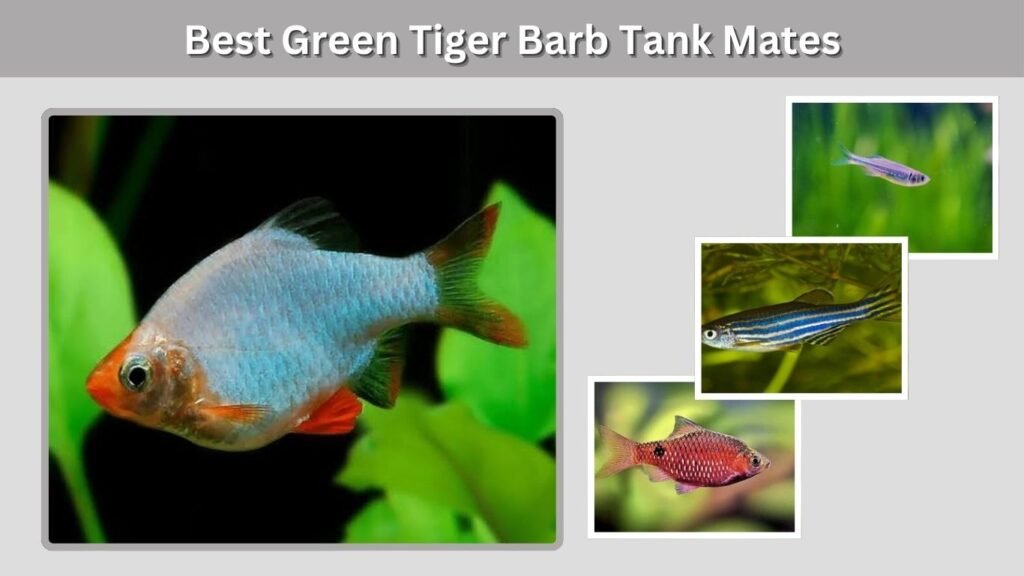
Choosing appropriate tank mates is essential for maintaining a balanced aquarium. Green tiger barbs generally perform best alongside active fish that can tolerate their energetic behavior.
Fast-moving species with short fins are often more suitable than delicate or slow-swimming aquarium fish.
Compatible Fish for Green Tiger Barbs
Potential companions include zebra danios, giant danios, rosy barbs, Odessa barbs, and certain active rainbowfish. Some robust bottom-dwelling species, including suitable loaches and Corydoras catfish, may also coexist successfully in spacious aquariums.
Compatibility depends on aquarium dimensions, group sizes, and individual fish behavior.
Green tiger barbs can live with traditional tiger barbs because both belong to the same species. They usually recognize one another as group members and can form mixed-color schools.
Fish That Should Not Live With Green Tiger Barbs
Betta fish, fancy guppies, and angelfish are generally poor companions because their long, delicate fins are vulnerable to nipping.
Slow-moving gouramis and very timid fish may also experience stress.
Large aggressive cichlids should be avoided because they may injure or prey upon smaller green tiger barbs.
What Do Green Tiger Barbs Eat?

Green tiger barbs are omnivorous fish that consume both animal and plant-based foods. Their natural relatives feed on small invertebrates, aquatic organisms, algae, and organic material.
In captivity, they readily accept commercial tropical fish foods. However, a varied diet supports proper growth, attractive coloration, and reproductive health.
Best Food for Green Tiger Barbs
High-quality tropical flakes or appropriately sized omnivore pellets should form the foundation of their diet.
Frozen or live brine shrimp, daphnia, and occasional bloodworms provide additional protein. Spirulina-based foods and suitable vegetable matter can also improve dietary variety.
Feed adult fish once or twice daily, offering only what they can consume within approximately two minutes. Excessive feeding can cause water quality problems.
How to Breed Green Tiger Barbs
Green tiger barb breeding is similar to breeding standard tiger barbs because they are varieties of the same species.
They are egg-scattering fish that release eggs among plants and other spawning materials. Unlike livebearing species, females do not give birth to fully developed young.
Successful breeding requires healthy adults, suitable water conditions, and protection for the eggs.
Green Tiger Barb Breeding Steps
- Prepare a breeding tank: Set up a separate, mature aquarium with gentle sponge filtration.
- Add spawning materials: Use Java moss, spawning mops, or protective mesh to shelter eggs.
- Condition breeding adults: Provide nutritious foods such as brine shrimp and daphnia.
- Introduce breeding fish: Transfer a healthy male and egg-filled female into the aquarium.
- Observe courtship: Males pursue females as eggs are scattered and fertilized.
- Remove the parents: Adult green tiger barbs may consume their eggs after spawning.
- Care for the fry: Once the fry become free-swimming, provide infusoria or other appropriately sized starter foods.
Green Tiger Barb Eggs and Hatching
Green tiger barb eggs are small and generally hatch within approximately 24–48 hours, depending on water temperature.
Newly hatched fry initially rely on their yolk sacs before becoming free-swimming several days later.
Green tiger barbs can breed with standard tiger barbs because they belong to the same species. Their offspring may display different coloration depending on inherited traits.
Green Tiger Barb Lifespan and Health Problems

Green tiger barbs generally live around five to seven years in well-maintained aquariums. Some individuals may survive longer with excellent care.
Their lifespan depends on genetics, nutrition, water quality, and stress management. A stable aquarium with adequate swimming space and compatible companions supports their overall well-being.
Common health problems include ich, fin rot, bacterial infections, and stress-related conditions. Warning signs include faded coloration, damaged fins, reduced appetite, abnormal swimming, or unusual hiding.
Quarantining new fish, maintaining water quality, and identifying illnesses before treatment help reduce serious health risks.
FAQs
1. Can Green Tiger Barbs Live With Regular Tiger Barbs?
Yes, green tiger barbs can live with regular tiger barbs because they are different color varieties of the same species. They share similar water requirements, feeding habits, and social behaviors. Both varieties can form mixed groups when sufficient aquarium space is available.
2. Are Green Tiger Barbs Good for Beginners?
Green tiger barbs are relatively hardy and suitable for beginners who understand their schooling requirements and semi-aggressive temperament. They require stable freshwater conditions, a varied diet, and appropriate tank mates. Maintaining a large enough group helps reduce unwanted aggressive behavior.
3. Are Green Tiger Barbs and Electric Green GloFish the Same?
No. Traditional green tiger barbs are selectively bred fish with dark metallic green coloration. Electric Green GloFish barbs are genetically modified tiger barbs that produce fluorescent coloration. Both belong to the same species, but their pigmentation differs significantly.
4. How Many Green Tiger Barbs Should Be Kept Together?
Green tiger barbs should ideally live in groups of eight to ten or more. Larger groups encourage natural social behavior and help distribute aggression. Keeping only one or two individuals can increase stress and lead to persistent chasing or fin-nipping.
5. How Long Do Green Tiger Barbs Live?
Green tiger barbs typically live five to seven years when maintained under suitable aquarium conditions. Their longevity depends on stable water parameters, balanced nutrition, appropriate group sizes, and disease prevention. Regular aquarium maintenance helps support their long-term health and lifespan.