
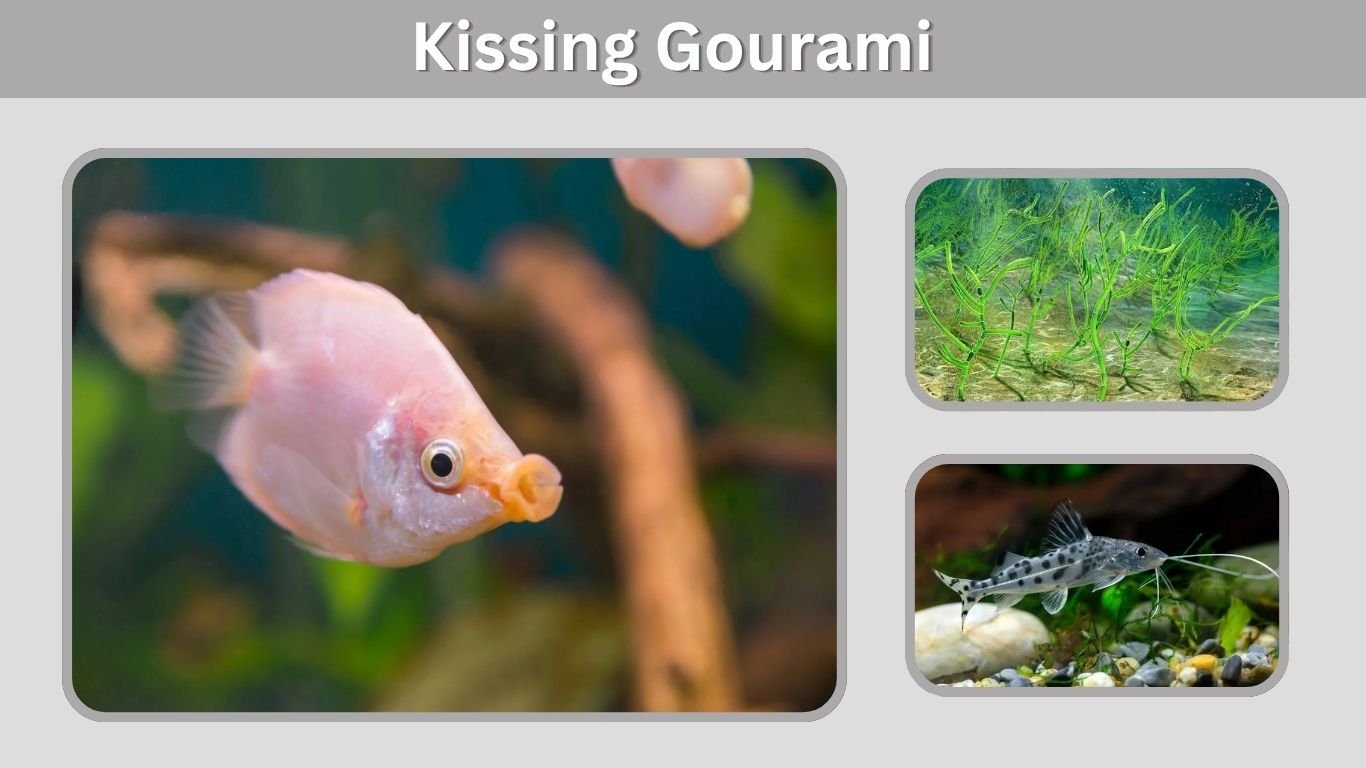
The kissing gourami (Helostoma temminckii) is a distinctive freshwater fish famous for its thick lips and unusual “kissing” behavior. Native to Southeast Asia, this gourami can grow much larger than many beginners expect and may live for more than 20 years with excellent care. Pink kissing gouramis are especially common in aquariums, although the natural form is greenish-gray. Proper tank size, water quality, diet, and carefully selected tank mates are essential because mature fish can become territorial or aggressive.
What Is a Kissing Gourami?
The kissing gourami is the only living species in the family Helostomatidae. Its scientific name is Helostoma temminckii, and its native distribution extends through parts of Southeast Asia from Thailand to Indonesia. Wild fish inhabit slow-moving freshwater environments with abundant vegetation. Like other anabantoid fishes, kissing gouramis can breathe atmospheric air in addition to obtaining oxygen from water.
Kissing Gourami Identification
Typical characteristics include:
- Scientific name: Helostoma temminckii
- Deep, laterally compressed body
- Thick, protrusible lips
- Long dorsal and anal fins
- Greenish-gray coloration in the natural form
- Pinkish-white coloration in the common aquarium variety
- Maximum recorded length around 30 cm (12 inches)
- Ability to breathe atmospheric air
- Omnivorous feeding behavior
The fleshy mouth is particularly distinctive and allows the fish to scrape algae and other material from surfaces.
Pink Kissing Gourami
The pink kissing gourami is not a separate species. It is a leucistic form selectively bred for the aquarium trade.
These fish usually have pale pink, peach, or whitish bodies rather than the greenish-gray coloration of wild specimens. The pink form has become much more common in aquariums than the natural coloration.
There are also short-bodied or “balloon” varieties, but these deliberately altered body shapes may be associated with poorer welfare and shorter lives.
Kissing Gourami Size and Growth
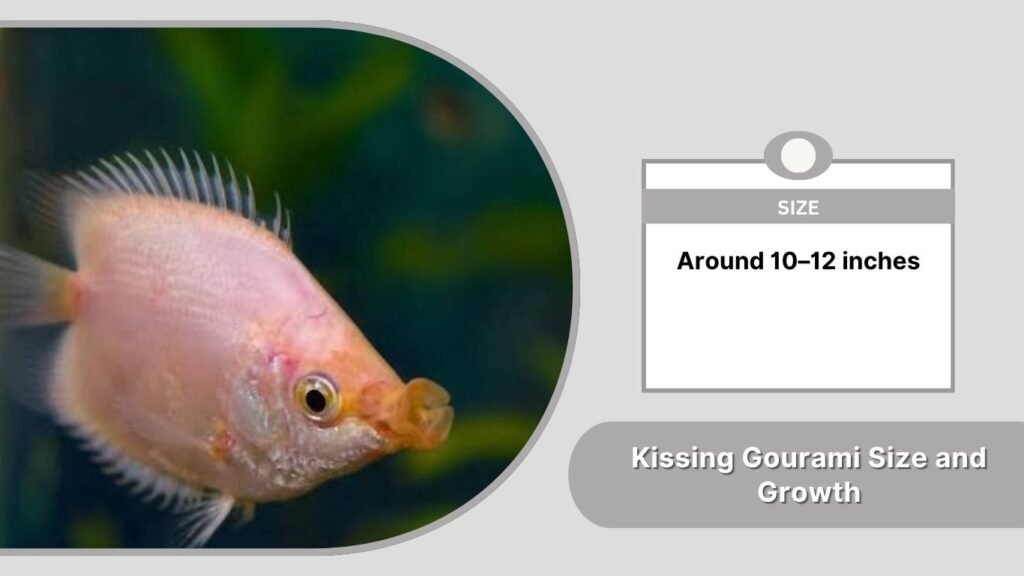
Kissing gouramis are frequently sold when small, which can give new aquarists an inaccurate idea of their adult requirements. They are considerably larger than dwarf, honey, or many commonly kept gouramis. FishBase records a maximum total length of approximately 30 cm, making adequate swimming space particularly important for long-term care.
How Big Do Kissing Gouramis Get?
A full-grown kissing gourami can reach around 10–12 inches (25–30 cm), although aquarium individuals may remain somewhat smaller depending on conditions.
Growth depends on genetics, diet, water quality, aquarium size, and overall husbandry.
Young fish may appear suitable for a relatively small community aquarium, but owners should plan around adult size rather than the size of a juvenile purchased from a store.
Kissing Gourami Tank Size
Important tank considerations include:
- Around 80 gallons or larger is a more appropriate long-term starting point for an adult.
- A tank approximately 60 inches long provides a useful swimming room.
- Strong biological filtration is important.
- Avoid excessive water turbulence.
- Leave access to the water surface for atmospheric breathing.
- Provide open swimming areas.
- Driftwood can provide surfaces for grazing.
- Tough-leaved or floating plants are preferable to delicate vegetation.
SeriouslyFish recommends minimum base dimensions around 150 × 45 cm for long-term maintenance.
Kissing Gourami Care and Water Conditions
Kissing gouramis are relatively adaptable fish, but their large adult size produces substantial waste, making water quality one of the most important parts of care. They naturally inhabit warm, slow-moving waters and should be given adequate swimming space without extremely strong currents. Consistent maintenance is much more important than trying to achieve one exact water parameter.
Water Parameters
A practical range includes:
- Temperature: approximately 72–86°F (22–30°C)
- pH: roughly 6.0–8.0
- Low to moderate water hardness
- Gentle to moderate water movement
- Efficient filtration
- Regular partial water changes
FishBase reports a natural temperature range around 22–28°C, while aquarium-care references indicate the species tolerates somewhat warmer conditions.
Aquarium Setup
Provide plenty of horizontal swimming room rather than filling the entire tank with decoration.
Driftwood can be particularly useful because kissing gouramis naturally graze biofilm and algae from solid surfaces. They may nibble softer plants, so species such as Anubias and Java fern are generally more practical than delicate plants.
Because they possess a labyrinth-type air-breathing system, they must also be able to reach the surface.
What Do Kissing Gouramis Eat?
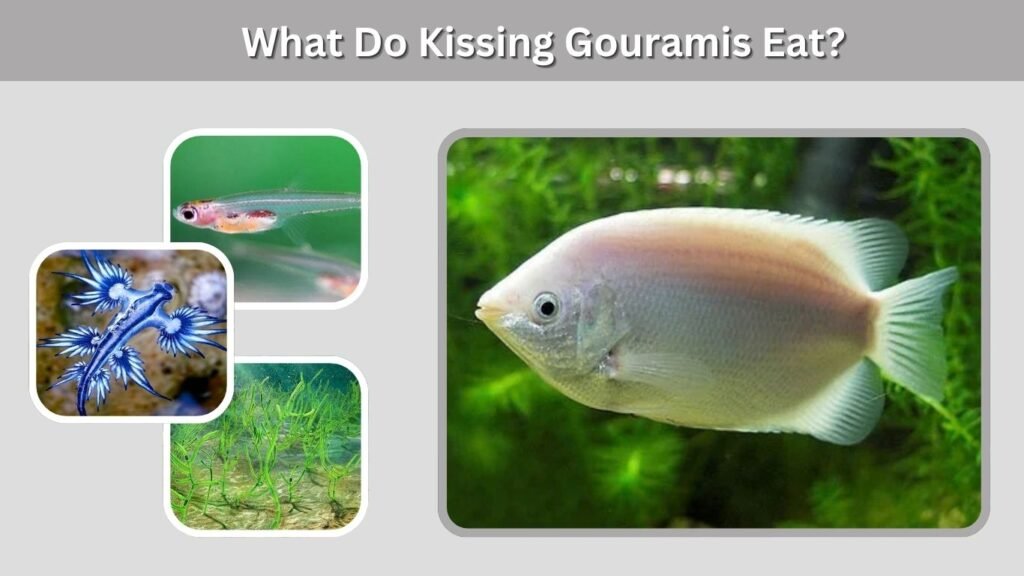
Kissing gouramis are omnivores. In nature, their diet includes algae, zooplankton, plant material, and small aquatic animals. Their specialized lips and mouthparts allow them to graze algae and microorganisms from vegetation and other underwater surfaces. Aquarium diets should therefore contain both vegetable-based and animal-based foods rather than relying entirely on one type.
Best Food for Kissing Gourami
A varied diet can include:
- Quality omnivore pellets or flakes
- Spirulina-based foods
- Algae-based foods
- Brine shrimp
- Bloodworms
- Mosquito larvae
- Other suitable frozen foods
- Vegetable-rich prepared foods
Allowing some natural algae and biofilm to develop on appropriate aquarium surfaces can also provide grazing opportunities.
Why Is My Kissing Gourami Not Eating?
Temporary appetite loss can occur after transportation or changes in the aquarium, but persistent refusal to eat can indicate stress, inappropriate water conditions, aggression, or illness.
Check temperature and water quality first. Also observe whether another fish is intimidating the gourami during feeding.
If appetite loss continues alongside abnormal swimming, breathing difficulties, discoloration, lesions, or swelling, investigate the possibility of disease rather than simply changing foods repeatedly.
Why Do Kissing Gouramis Kiss?
The famous “kiss” is not normally an expression of affection or mating behavior. Two gouramis may push their protruding lips together during a social contest. This behavior is often associated with dominance and territorial disputes, particularly between similarly sized individuals.
Kissing or Fighting?
During the behavior, two fish face one another and lock or press their mouths together.
Although it may look gentle, it is essentially a competitive interaction. One fish may eventually retreat after dominance is established.
Occasional encounters may not cause serious problems, but constant chasing and repeated confrontations suggest that the tank lacks sufficient space or that the individuals are incompatible.
Are Kissing Gouramis Aggressive?
They can be.
Temperament varies between individuals, but adults may become territorial and aggressive, particularly in confined aquariums. SeriouslyFish notes that a dominant individual can severely harass another kissing gourami when space is inadequate.
Keeping exactly two can therefore be problematic because the stronger fish may continually bully the weaker one.
Kissing Gourami Tank Mates
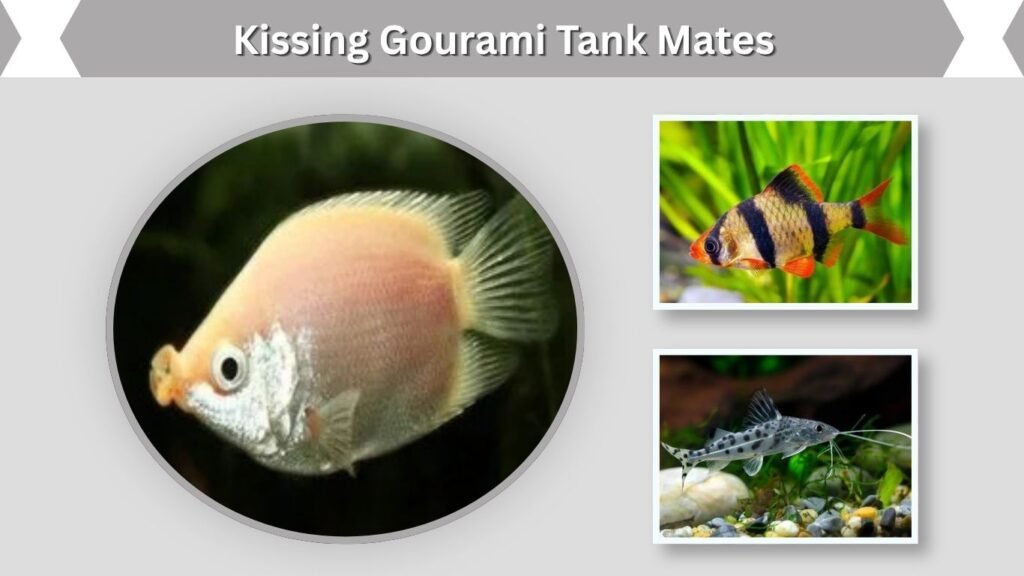
Choosing kissing gourami tank mates requires considering the species’ adult size and potential territorial behavior. They are not ideal inhabitants for small peaceful community tanks. Larger, robust species may coexist successfully when the aquarium offers sufficient swimming room and territories, but individual temperament should always be monitored.
Possible Tank Mate Considerations
Potential companions in sufficiently large aquariums may include:
- Robust schooling barbs
- Larger peaceful catfish
- Suitable medium-to-large characins
- Some similarly robust gouramis
- Certain appropriately sized cichlids
Avoid very small, extremely timid, slow, or delicate fish if the kissing gourami is showing aggressive behavior.
Can Kissing Gourami Live With Angelfish?
It is possible in a very large, carefully managed aquarium, but the combination is not automatically safe.
Both species can develop territorial behavior, and kissing gouramis may harass similarly shaped fish. Angelfish also have long fins that can become vulnerable during conflicts.
Monitor closely and provide sufficient space and visual barriers.
Can Kissing Gourami Live With Goldfish?
They are generally not ideal tank mates.
Kissing gouramis are tropical fish that prefer warm water, while many goldfish varieties are normally maintained under cooler conditions. Their feeding habits, waste production, and social requirements also differ.
Separate setups are usually easier to manage correctly.
Kissing Gourami Breeding
Breeding differs from that of many familiar gouramis. Kissing gouramis do not rely on the elaborate bubble-nest care seen in several other gourami species. Spawning commonly occurs around floating vegetation, and eggs rise or remain associated with vegetation near the surface. Parents provide little prolonged care after spawning.
Eggs and Fry
During successful reproduction, spawning typically occurs beneath floating vegetation.
FishBase reports that eggs can hatch in approximately one day, with fry becoming free-swimming around two days later.
Young fry require appropriately tiny foods once they begin feeding independently. Raising a large spawning successfully requires substantial space and excellent water quality.
Male vs Female Kissing Gourami
Sexing kissing gouramis by appearance is difficult because males and females lack dramatic permanent color differences.
A mature female may look fuller-bodied when carrying eggs, but body shape alone is not always reliable.
For ordinary aquarium keeping, it can therefore be difficult to confidently identify a male or female without observing mature breeding conditions or spawning behavior.
Kissing Gourami Lifespan
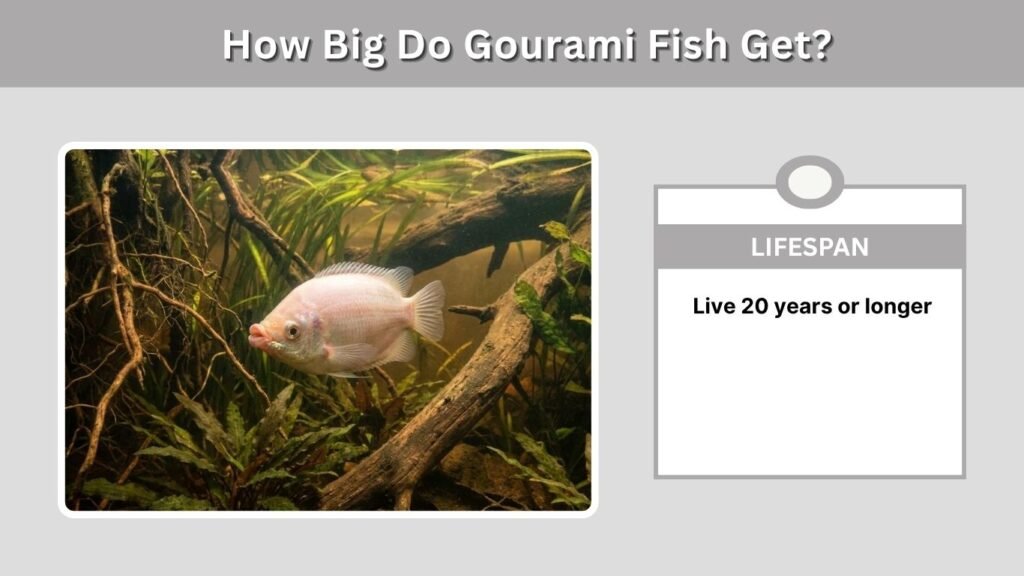
Kissing gouramis are potentially very long-lived aquarium fish. This is important because buying a small juvenile can represent a commitment lasting decades. Good water quality, adequate swimming space, appropriate feeding, and avoiding chronic aggression all influence long-term health.
How Long Do Kissing Gouramis Live?
Well-maintained kissing gouramis can live 20 years or longer, with SeriouslyFish reporting that the species’ lifespan can exceed 20 years.
Their combination of large adult size and long lifespan is why they are not suitable for every aquarium despite being commonly sold as juveniles.
FAQs
Kissing gouramis are unusual fish whose famous behavior often creates misconceptions about their temperament and care. Their large adult size, long lifespan, specialized feeding behavior, and potential aggression should all be considered before adding one to an aquarium.
1. Why Do Kissing Gouramis Kiss?
They usually press their mouths together as part of a dominance or territorial contest rather than romantic behavior.
2. How Big Does a Kissing Gourami Get?
The species can reach approximately 30 cm, or around 12 inches, in total length.
3. What Size Tank Does a Kissing Gourami Need?
For long-term care, a tank around 80 gallons or larger, with approximately 60 inches of length, is a more appropriate starting point for an adult.
4. Are Pink Kissing Gouramis a Different Species?
No. Pink kissing gouramis are a leucistic aquarium-bred form of Helostoma temminckii. The natural form is typically grayish to greenish.
5. Are Kissing Gouramis Aggressive?
They can be territorial and aggressive, particularly as they mature or when kept in insufficient space. Careful tank-mate selection and a large aquarium are important for reducing conflicts.