
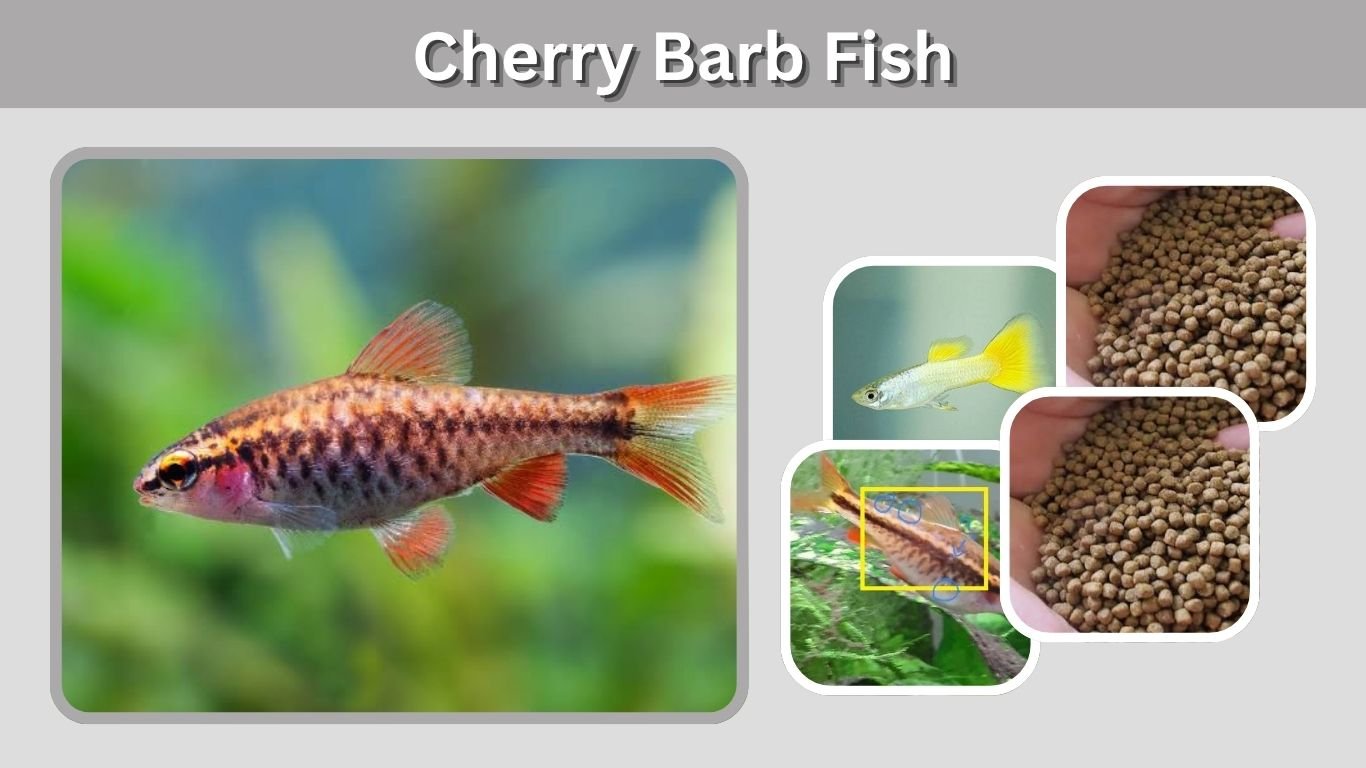
Cherry barb fish are colorful, peaceful freshwater aquarium fish known for their beautiful red bodies and active swimming behavior. Native to Sri Lanka, these small tropical fish are popular among beginners and experienced aquarists because of their hardy nature and relatively simple care requirements. Cherry barbs thrive in planted aquariums, where they can swim freely and interact with other peaceful species. Understanding their ideal tank conditions, feeding habits, lifespan, breeding behavior, and compatible tank mates helps aquarium owners maintain healthy, vibrant cherry barb fish for years.
What Is a Cherry Barb Fish?
The cherry barb (Puntius titteya) is a small freshwater tropical fish belonging to the Cyprinidae family. It naturally inhabits slow-moving, shaded streams in Sri Lanka, where aquatic vegetation provides shelter and feeding opportunities.
Unlike some aggressive barb species, cherry barbs are generally peaceful and adapt well to community aquariums. Their brilliant red coloration, especially among males, makes them attractive additions to planted tanks.
Cherry Barb Fish Facts
- Scientific name: Puntius titteya
- Family: Cyprinidae
- Origin: Sri Lanka
- Adult size: 1.5–2 inches (4–5 cm)
- Average lifespan: 4–6 years
- Minimum tank size: 15 gallons (approximately 60 liters)
- Water temperature: 72–81°F (22–27°C)
- Ideal pH: 6.0–7.5
- Diet: Omnivorous
- Temperament: Peaceful
- Group size: At least 6, preferably 8–10
- Care level: Beginner-friendly
Cherry Barb Fish Appearance and Size

Cherry barbs have slender, streamlined bodies with small fins and distinctive horizontal markings. Their coloration varies depending on sex, age, genetics, and breeding condition. Healthy fish develop their strongest colors when maintained in stable aquarium conditions with appropriate lighting, vegetation, and nutrition.
Male vs Female Cherry Barb Fish
Male cherry barbs usually display intense cherry-red coloration, particularly during courtship. They have slimmer bodies and may become brighter when competing for female attention.
Female cherry barbs are generally golden-brown or reddish-brown with a more noticeable dark horizontal stripe. Mature females often develop fuller, rounder abdomens, especially when carrying eggs.
Albino and Longfin Cherry Barb Fish
Albino cherry barbs are ornamental varieties featuring pale pink, cream, or yellowish coloration with reduced dark pigmentation. Their appearance differs significantly from standard red cherry barbs.
Longfin cherry barbs possess elongated fins that create a graceful swimming appearance. Both varieties require similar aquarium conditions, although longfin specimens may be more vulnerable to fin damage.
Cherry Barb Fish Tank Setup and Water Requirements
A properly maintained aquarium provides cherry barbs with the security and stability they need to remain healthy. These fish prefer planted environments with gentle water movement and sufficient swimming space.
Although cherry barbs tolerate a reasonable range of freshwater conditions, sudden temperature changes, overcrowding, and poor filtration can cause stress.
Ideal Tank Size and Decorations
A 15-gallon aquarium can accommodate a small group of cherry barbs, but a 20-gallon-long tank provides more swimming space and greater flexibility for community setups.
Recommended aquarium decorations include:
- Live plants such as Java fern, Anubias, and Cryptocoryne
- Dark sand or fine gravel substrate
- Driftwood and natural hiding places
- Floating plants for gentle shade
- Open swimming areas between plants
- A gentle filtration system
Dense planting helps shy fish feel secure while allowing males to establish temporary display spaces during breeding activities.
Water Temperature, pH, and Maintenance
Cherry barbs thrive at temperatures around 72–81°F (22–27°C), with slightly acidic to neutral water being particularly suitable.
Maintain a pH between 6.0 and 7.5, although captive-bred specimens may tolerate somewhat broader conditions.
Perform approximately 20–30% water changes weekly, depending on aquarium stocking and water quality. Keep ammonia and nitrite at zero and nitrate levels low.
A properly cycled aquarium and stable parameters are more important than constantly adjusting water chemistry.
What Do Cherry Barb Fish Eat?
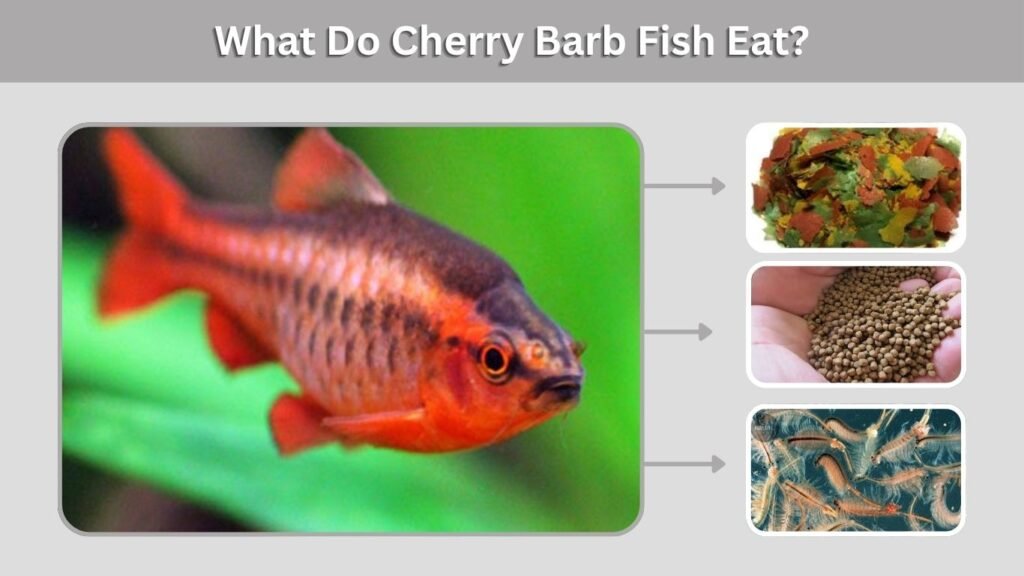
Cherry barbs are omnivorous fish that consume small aquatic organisms, plant material, algae, and organic particles in their natural environment.
In captivity, they readily accept commercial aquarium foods. However, a varied diet supports strong coloration, healthy development, and successful reproduction.
Best Foods for Cherry Barbs
Suitable foods include:
- High-quality tropical fish flakes
- Small sinking or slow-sinking pellets
- Frozen or live brine shrimp
- Daphnia
- Bloodworms offered occasionally
- Spirulina-based fish foods
- Finely prepared vegetable-based foods
Feed adult cherry barbs once or twice daily, providing only what they can consume within approximately two minutes.
Avoid excessive feeding because leftover food increases waste and can negatively affect aquarium water quality.
Cherry Barb Fish Behavior and Schooling
Cherry barbs are peaceful, social fish that naturally form loose groups. They are often described as schooling fish, although their behavior is more accurately considered shoaling.
Rather than swimming in perfectly coordinated formations, cherry barbs frequently spread throughout planted areas while maintaining social contact.
Keeping at least six individuals reduces stress, while groups of eight to ten often display more natural behavior.
Are Cherry Barb Fish Aggressive?
Cherry barbs are generally non-aggressive toward other peaceful community fish. However, males sometimes chase one another or briefly pursue females during courtship.
Occasional chasing is normal, but persistent harassment, damaged fins, or fish hiding continuously may indicate overcrowding, competition, or an unsuitable male-to-female ratio.
Maintaining more females than males and providing sufficient plant cover can reduce excessive chasing.
Best Cherry Barb Fish Tank Mates
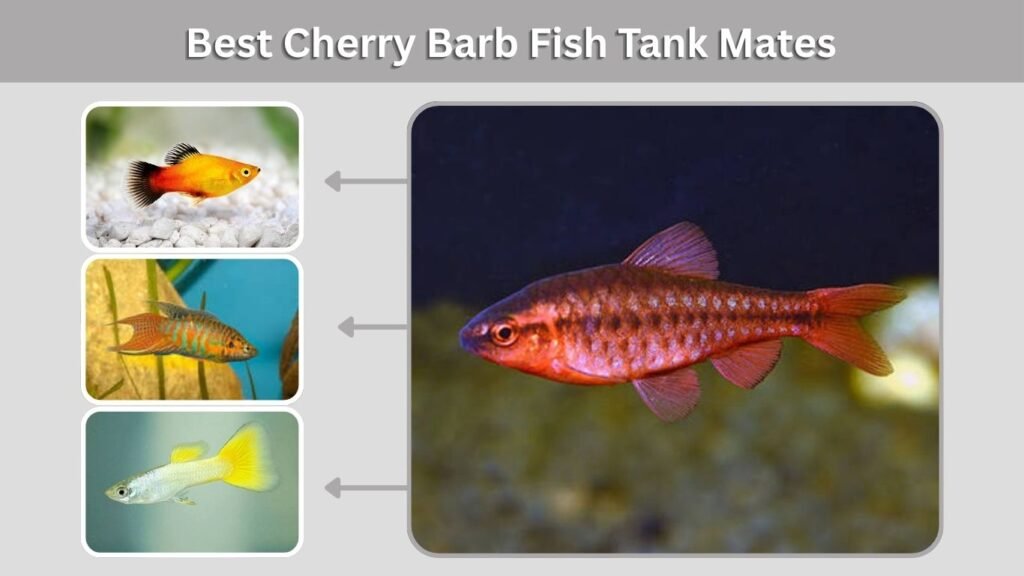
Cherry barbs make excellent community aquarium inhabitants because they usually coexist peacefully with similarly sized, non-aggressive species.
Compatible fish should share similar temperature, pH, and environmental requirements. Adequate space is essential because even peaceful fish become stressed in overcrowded aquariums.
Fish Compatible With Cherry Barbs
Good tank mates include:
- Neon tetras
- Ember tetras
- Harlequin rasboras
- Corydoras catfish
- Kuhli loaches
- Peaceful small gouramis
- Platies
- Guppies
- Other cherry barbs
Guppies can coexist with cherry barbs when water requirements overlap and the aquarium is spacious enough. However, monitor long-finned guppies for occasional fin-nipping.
Can Cherry Barbs Live With Bettas and Shrimp?
Cherry barbs and betta fish may coexist in a sufficiently spacious, planted aquarium. Compatibility depends heavily on the individual betta’s temperament.
Cherry barbs can also live with adult cherry shrimp in some aquariums, particularly where dense moss and vegetation provide shelter. However, they may eat small shrimp offspring.
Avoid combining cherry barbs with large predatory fish, aggressive cichlids, or highly territorial species.
How to Breed Cherry Barb Fish
Breeding cherry barb fish is relatively straightforward when healthy adults receive proper nutrition and suitable spawning conditions.
Cherry barbs are egg-scattering fish, meaning females release eggs among plants rather than giving birth to live young. Adults provide no parental care and may consume their own eggs.
Cherry Barb Fish Breeding Steps
- Prepare a breeding tank: Set up a small, mature aquarium with gentle sponge filtration and soft lighting.
- Provide spawning surfaces: Add Java moss, spawning mops, or protective mesh to prevent adults from reaching scattered eggs.
- Condition breeding adults: Feed healthy males and females nutritious live or frozen foods.
- Introduce breeding fish: Place a conditioned pair or small breeding group into the aquarium.
- Observe spawning behavior: Males chase females through vegetation, where eggs are scattered and fertilized.
- Remove adult fish: Transfer the adults after spawning to prevent egg predation.
- Raise the fry: Once the young become free-swimming, offer infusoria or appropriately sized commercial fry food before introducing newly hatched brine shrimp.
Cherry Barb Eggs and Hatching Time
Cherry barb eggs are small and typically hatch within approximately 24–48 hours, depending on temperature and water conditions.
The newly hatched fry initially rely on their yolk sacs before becoming free-swimming.
Female cherry barbs may appear pregnant because their abdomens become swollen with developing eggs. However, they are egg-laying fish and do not experience pregnancy in the same way as livebearing species.
Cherry Barb Fish Lifespan and Common Diseases
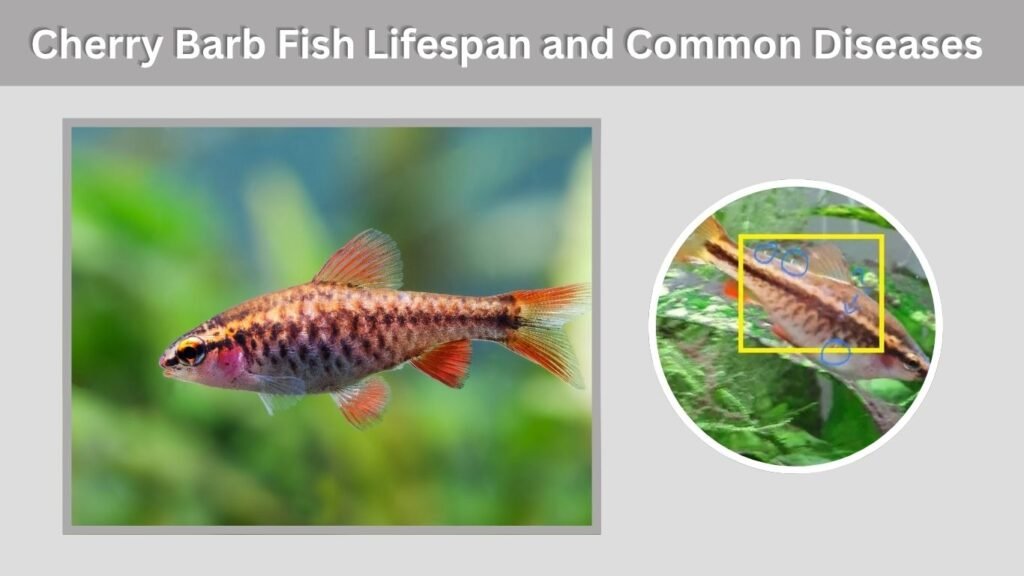
Cherry barb fish generally live around four to six years, although individual lifespans vary depending on genetics, feeding quality, environmental stability, and disease prevention.
Healthy cherry barbs typically display bright coloration, steady swimming movements, normal appetites, and intact fins.
Common Cherry Barb Health Problems
Cherry barbs can experience several aquarium health problems, including:
- Ich: Small white spots appearing on the body and fins
- Fin rot: Frayed or deteriorating fins associated with infection or poor conditions
- Fungal infections: Cotton-like growths on affected tissues
- Stress-related illness: Reduced coloration, hiding, or appetite loss
- Digestive problems: Abnormal swelling or difficulty passing waste
Because different illnesses can produce similar symptoms, inspect water quality and obtain a reliable diagnosis before using medication.
Quarantining newly purchased fish and maintaining consistent aquarium conditions help reduce disease risks.
FAQs
1. Are Cherry Barb Fish Good for Beginners?
Yes, cherry barbs are excellent beginner aquarium fish because they are peaceful, relatively hardy, and easy to feed. They adapt well to established freshwater aquariums when kept in suitable groups. Beginners should prioritize proper filtration, stable water parameters, and regular maintenance.
2. How Many Cherry Barb Fish Should Be Kept Together?
Cherry barbs should be maintained in groups of at least six individuals, although eight to ten are preferable when aquarium space permits. Larger groups encourage natural social behavior and reduce stress. A balanced combination of males and females also helps minimize excessive chasing.
3. Are Cherry Barbs Cold Water Fish?
Cherry barbs are tropical freshwater fish rather than true cold-water species. They generally thrive at temperatures between 72°F and 81°F. Although they tolerate relatively cool conditions compared with some tropical fish, prolonged exposure to unsuitable temperatures can compromise their health.
4. Can Cherry Barb Fish Live With Angelfish?
Cherry barbs may coexist with angelfish in spacious aquariums, particularly when the angelfish are peaceful and appropriately sized. However, large adult angelfish may prey on smaller cherry barbs. Monitor interactions carefully and provide dense vegetation and adequate hiding places.
5. How Big Do Cherry Barb Fish Get?
Adult cherry barb fish typically reach approximately 1.5–2 inches in length. Females may appear slightly larger because of their fuller bodies, while males are generally slimmer. Their compact size makes them suitable for planted community aquariums with adequate swimming space.