
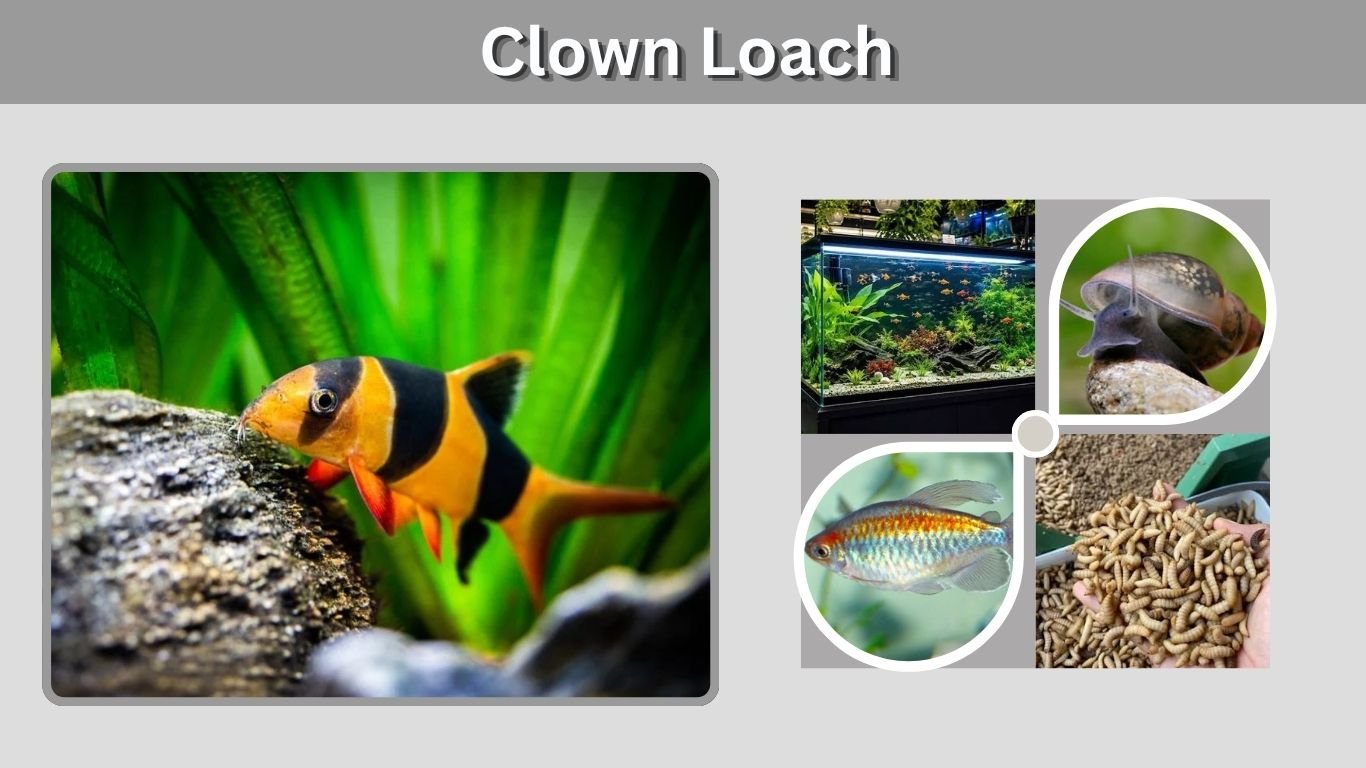
The clown loach (Chromobotia macracanthus) is a colorful freshwater fish recognized for its bright orange body, three bold black stripes, and playful behavior. Native to Indonesia, this tropical fish is popular among aquarium enthusiasts because of its unusual appearance, active personality, and social nature.
Clown loaches are peaceful fish that enjoy living in groups and exploring the bottom of an aquarium. Although young clown loaches are relatively small, adults can grow surprisingly large and require spacious tanks. Understanding their natural habitat, feeding habits, water requirements, and lifespan is essential for keeping them healthy.
Clown Loach Species Overview
The clown loach belongs to the family Botiidae, a group of freshwater fishes commonly known as loaches. Its scientific name is Chromobotia macracanthus, although older aquarium literature sometimes identifies it as Botia macracanthus.
This species is especially popular for its striking colors and interesting social behavior.
| Feature | Description |
| Common name | Clown Loach |
| Scientific name | Chromobotia macracanthus |
| Family | Botiidae |
| Origin | Indonesia |
| Natural habitat | Rivers and floodplains |
| Adult size | Commonly 8–12 inches; sometimes larger |
| Maximum reported size | Around 16 inches |
| Lifespan | 15–20+ years |
| Diet | Omnivorous |
| Temperament | Generally peaceful and social |
| Temperature | 75–86°F (24–30°C) |
| Recommended group | At least 5–6 fish |
| Care level | Moderate to demanding |
How to Identify a Clown Loach
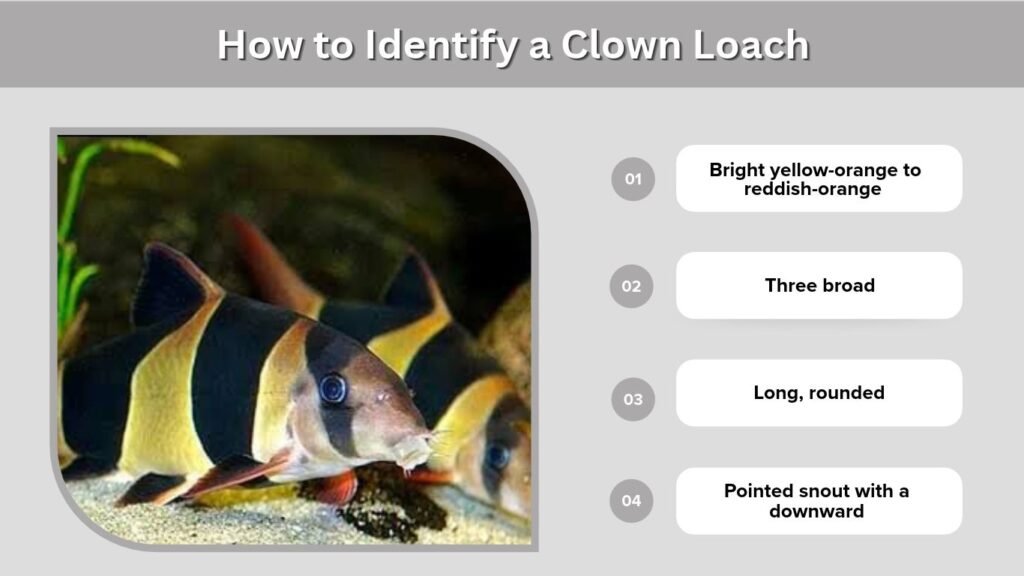
Clown loaches have a distinctive appearance that makes them relatively easy to identify among freshwater aquarium fish.
Their bodies are elongated and slightly compressed, allowing them to move smoothly around rocks, plants, and submerged wood.
Identification Features
- Body color: Bright yellow-orange to reddish-orange, often with a paler underside.
- Black stripes: Three broad, dark vertical bands cross the body.
- Body shape: Long, rounded, and slightly flattened along the sides.
- Head: Pointed snout with a downward-facing mouth.
- Barbels: Small whisker-like structures around the mouth help locate food.
- Fins: Usually orange to reddish, sometimes with darker markings.
- Eyes: Small, dark eyes positioned on either side of the head.
- Defensive spines: Sharp, movable spines beneath the eyes provide protection.
Young clown loaches usually display especially vivid colors. Their markings may become less intense as they mature.
Where Do Clown Loaches Live?
Clown loaches naturally inhabit freshwater environments on the Indonesian islands of Sumatra and Borneo.
They are associated with river systems, streams, and seasonally flooded areas where they search for food near the bottom.
Natural Habitat
Their preferred environments often contain submerged tree roots, fallen branches, and other structures that provide shelter.
During seasonal flooding, clown loaches may move into flooded habitats to take advantage of changing water conditions and food availability.
These natural environments help explain why aquarium clown loaches appreciate hiding places, clean water, and plenty of swimming space.
How Big Do Clown Loaches Get?
Clown loaches are often sold as juveniles measuring only 2–3 inches long. However, their adult size is considerably larger.
Many mature aquarium specimens reach approximately 8–12 inches (20–30 cm), while exceptionally large individuals may approach 16 inches (40 cm).
Clown Loach Growth Rate
Clown loaches generally grow faster when young and more slowly as they approach adulthood.
Their growth depends on several factors, including:
- Aquarium size and swimming space
- Food quality and feeding frequency
- Water temperature and cleanliness
- Genetics and overall health
- Stress levels and social conditions
Because clown loaches grow over many years, a small juvenile should never be considered a permanently small aquarium fish.
Full-Grown Clown Loach
A full-grown clown loach has a thick, muscular body and requires substantial swimming space.
Large adults also produce more waste than juveniles, making effective filtration and regular maintenance increasingly important.
Clown Loach Tank Size and Aquarium Setup
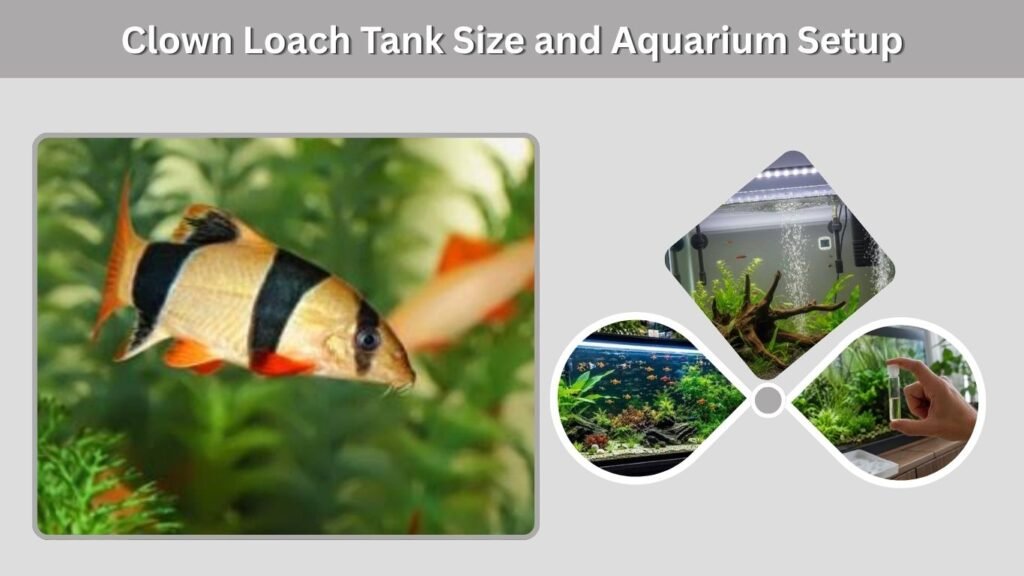
Providing a suitable aquarium is one of the most important aspects of clown loach care.
Although juvenile fish can temporarily live in smaller aquariums, they eventually require a large, established tank.
Recommended Tank Size
For a group of adult clown loaches, a spacious aquarium measuring at least 6 feet long and about 2 feet wide is a useful starting point.
A tank of approximately 150–180 gallons or more is often appropriate, depending on its dimensions, the number of fish, and their adult sizes.
A 10-gallon or 20-gallon aquarium is unsuitable for maintaining clown loaches long-term.
Aquarium Decorations
Clown loaches appreciate surroundings that resemble their natural habitat.
Suitable decorations include driftwood, smooth stones, caves, and sturdy aquarium plants.
Fine sand or smooth gravel is preferable because clown loaches frequently search for food along the substrate.
Provide multiple hiding places while keeping open areas available for swimming. A secure aquarium lid is also important because these fish can jump.
Clown Loach Temperature and Water Conditions
Clown loaches thrive in warm, clean freshwater with stable conditions.
Maintaining consistent water quality is particularly important because sudden environmental changes can cause stress.
| Water parameter | Recommended condition |
| Temperature | 75–86°F (24–30°C) |
| pH | Approximately 5.0–7.0 |
| Water hardness | Soft to moderately hard |
| Ammonia | 0 ppm |
| Nitrite | 0 ppm |
| Water movement | Moderate, with good oxygenation |
A reliable heater helps maintain a stable temperature.
Aquarium owners should also use effective filtration, test water regularly, and perform partial water changes as needed.
Clown loaches should be introduced only after the aquarium has completed its nitrogen cycle.
What Do Clown Loaches Eat?
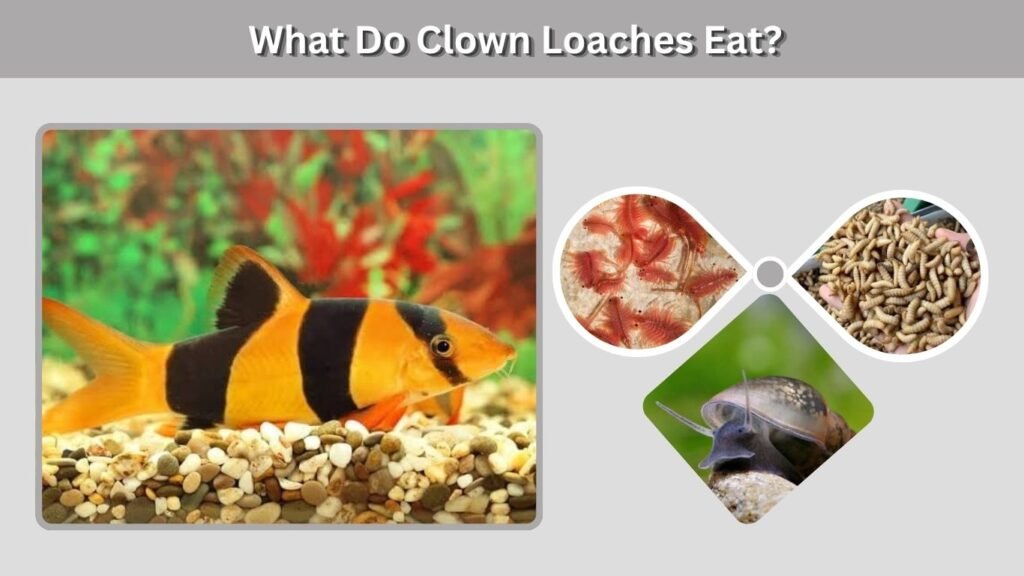
Clown loaches are omnivorous fish that consume both animal-based foods and plant material.
In the wild, their diet includes small aquatic invertebrates, worms, insect larvae, and other available food.
Best Food for Clown Loaches
A balanced aquarium diet may include:
- High-quality sinking pellets
- Frozen bloodworms
- Brine shrimp
- Small aquatic snails
- Suitable insect larvae
- Blanched zucchini
- Other safe vegetable supplements
Sinking foods are particularly useful because clown loaches frequently feed near the aquarium bottom.
A varied diet supports healthy growth and helps prevent nutritional deficiencies.
Do Clown Loaches Eat Snails?
Yes, clown loaches commonly eat small freshwater snails.
They use their mouths and specialized feeding structures to extract or crush suitable prey.
This behavior makes them popular among aquarists dealing with excessive snail populations.
However, clown loaches should not be purchased solely for snail control because they grow large, live for many years, and require social groups.
Snails should also be treated as one part of a varied diet rather than the fish’s only food.
Best Clown Loach Tank Mates
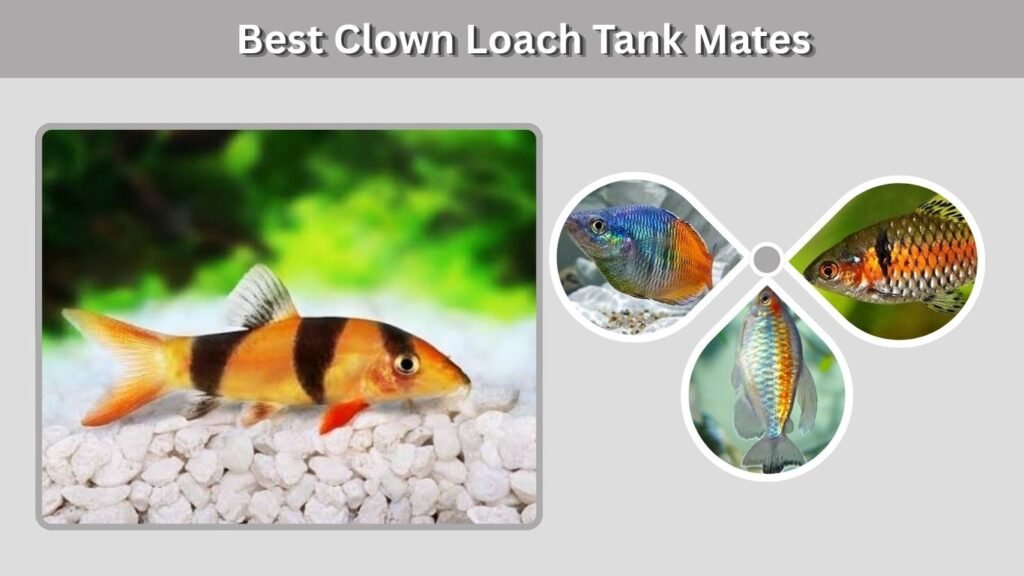
Clown loaches are generally peaceful community fish, but suitable tank mates must tolerate warm water and their active behavior.
Their large adult size should also be considered.
Compatible Aquarium Fish
Potential tank mates include:
- Larger peaceful barbs
- Appropriately sized rainbowfish
- Congo tetras
- Other peaceful medium-sized community fish
- Some compatible bottom-dwelling species
Compatibility depends on aquarium size, individual temperament, and water requirements.
Fish to Avoid
Goldfish are generally unsuitable because they usually require cooler conditions.
Highly aggressive cichlids may intimidate or injure clown loaches, while slow-moving fish with long fins can sometimes experience unwanted attention.
Bettas and very small community fish are usually poor choices, especially when clown loaches become large.
Clown Loach Behavior and Temperament
Clown loaches are social fish that often display unusual behavior.
They regularly swim together, investigate aquarium decorations, and interact with other members of their group.
Are Clown Loaches Aggressive?
Clown loaches are generally not aggressive toward compatible fish.
However, they may occasionally chase one another or engage in dominance-related interactions.
Keeping an appropriately sized group helps distribute social attention and supports more natural behavior.
Are Clown Loaches Nocturnal?
Clown loaches can be especially active during dim lighting and evening hours.
However, well-adjusted fish often become active during the day, particularly when feeding.
Some clown loaches also rest on their sides or in unusual positions. This can be normal behavior when the fish otherwise appears healthy.
They may produce audible clicking sounds during feeding or social interactions.
Clown Loach Lifespan
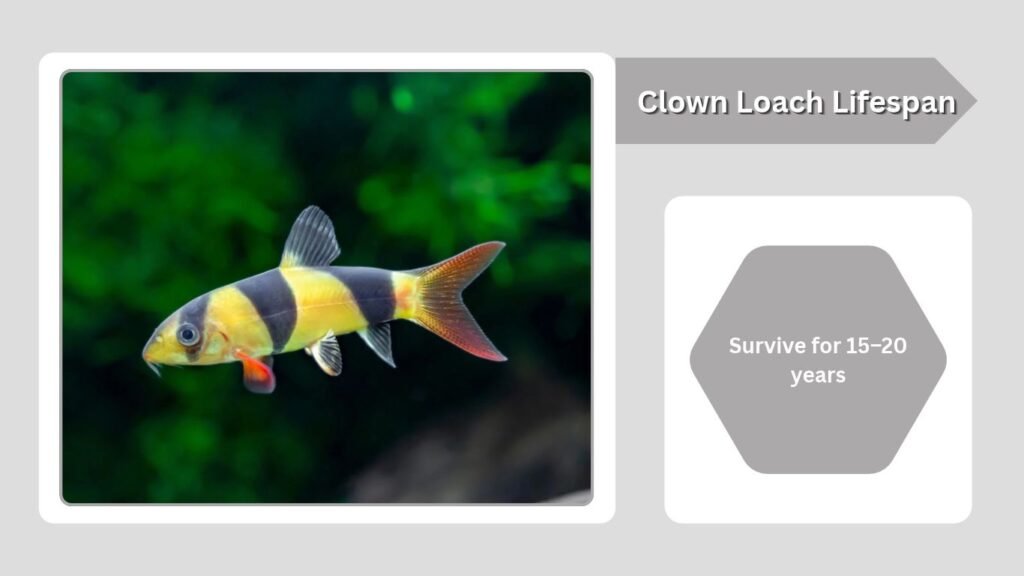
Clown loaches are long-lived aquarium fish.
With suitable conditions, they can survive for 15–20 years or longer. Some individuals have been reported to live for several decades.
Their life expectancy depends heavily on long-term care.
Important factors include appropriate tank dimensions, stable water quality, varied nutrition, and maintaining a suitable social group.
A clown loach purchased as a small juvenile may therefore remain part of an aquarium for many years.
Common Clown Loach Health Problems
Clown loaches can develop health problems when exposed to poor water conditions, overcrowding, or unsuitable tank mates.
One common concern is ich, also known as white spot disease, which can produce small white spots on the body and fins.
Other warning signs include:
- Unusual loss of appetite
- Rapid breathing
- Persistent hiding accompanied by other symptoms
- Damaged fins
- Unexplained weight loss
- Abnormal swimming
Not every change in behavior indicates illness, but persistent symptoms deserve attention.
New fish should be quarantined when possible, and treatment should be selected carefully because some medications can be unsuitable for loaches.
Clown Loach Breeding
Breeding clown loaches in home aquariums is extremely difficult.
In their natural environment, reproduction is associated with seasonal changes and movements through river systems.
Successfully reproducing these conditions in captivity is challenging.
Commercial breeding programs have used specialized techniques, including hormone-assisted reproduction.
For most hobbyists, the primary goal should be maintaining a healthy social group rather than attempting to breed these fish.
FAQs
1. How Many Clown Loaches Should Be Kept Together?
Clown loaches should generally be kept in groups of at least five or six. They are highly social fish, and keeping just one or two may contribute to stress and abnormal behavior.
2. Are Clown Loaches Easy to Keep?
Clown loaches are moderately demanding aquarium fish. Their feeding requirements are manageable, but their large adult size, social needs, and sensitivity to poor water quality make them unsuitable for many small beginner aquariums.
3. Are Clown Loaches Bottom Feeders?
Yes. Clown loaches frequently search the aquarium bottom for food using their sensitive barbels. However, they also swim through the middle levels of the aquarium, especially during feeding.
4. Can Clown Loaches Live With Angelfish?
Clown loaches and angelfish can sometimes coexist in spacious aquariums with compatible water conditions. However, the loaches’ active behavior may disturb slower angelfish, so individual compatibility must be monitored.
5. Do Clown Loaches Eat Algae?
Clown loaches may occasionally consume algae or plant material, but they are not dedicated algae eaters. Their diet should include nutritious sinking foods, animal-based protein, and suitable vegetable supplements.