
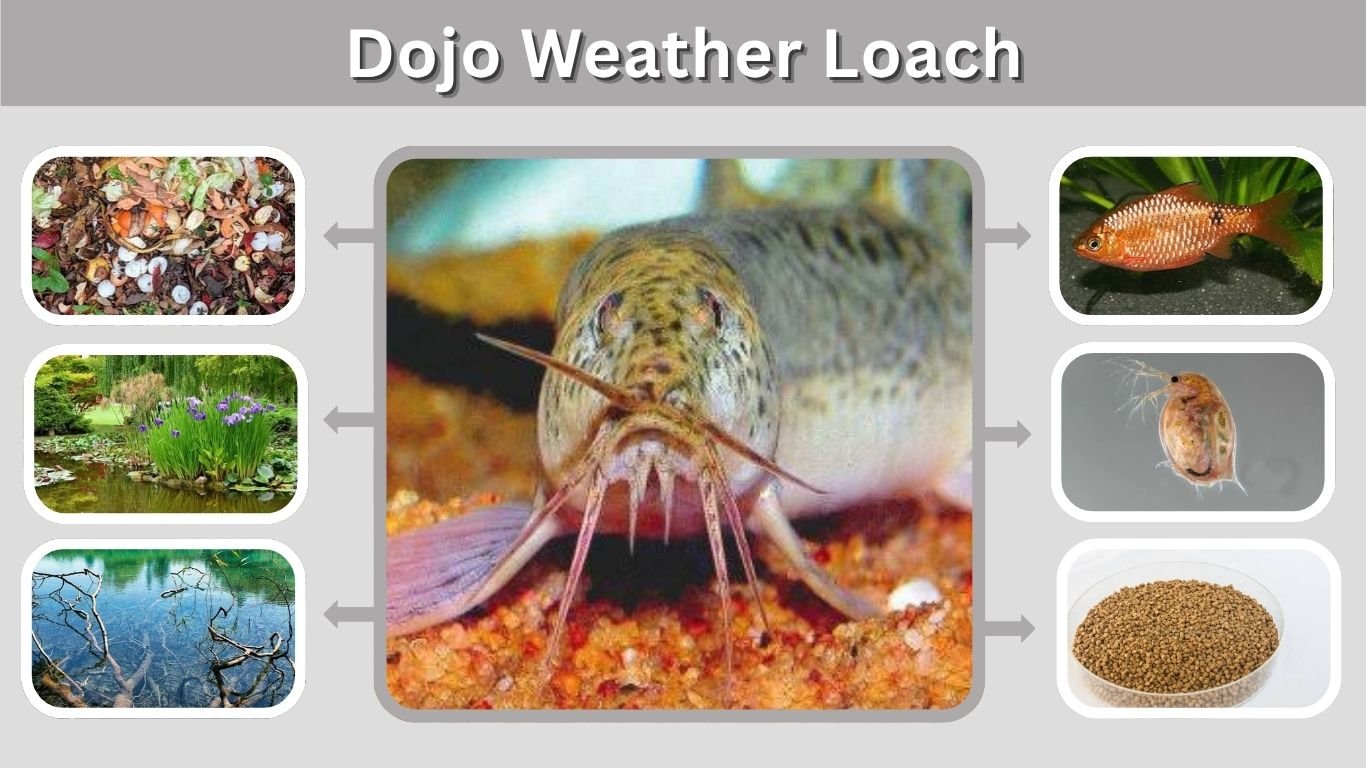
The dojo weather loach (Misgurnus anguillicaudatus) is a fascinating freshwater fish known for its eel-like body, peaceful temperament, and unusual reactions to changing weather conditions. Often called the weather loach, Oriental weatherfish, or pond loach, this species is famous for becoming unusually active before some storms. Its curious movements, bottom-dwelling habits, and ability to breathe atmospheric air make it different from many other aquarium fish. Native to East Asia, dojo weather loaches prefer cooler freshwater and soft-bottom environments. Understanding their behavior, weather sensitivity, and aquarium requirements helps fishkeepers distinguish normal activity from signs of stress.
What Is a Dojo Weather Loach?
The dojo weather loach is a freshwater fish belonging to the Cobitidae family. It naturally inhabits ponds, rivers, wetlands, rice fields, and other slow-moving freshwater environments.
These fish are particularly recognizable because of their elongated bodies and whisker-like structures around their mouths.
How to Identify a Dojo Weather Loach
Several physical characteristics help distinguish dojo weather loaches from other freshwater fish.
- Body shape: Long, cylindrical, and similar to an eel.
- Body color: Usually olive, brown, or yellowish with darker markings.
- Mouth: Downward-facing with sensory barbels.
- Fins: Relatively small and rounded.
- Movement: Often swims close to the aquarium bottom.
- Size: Adults commonly reach 6–10 inches, sometimes growing larger.
The barbels help dojo loaches locate small aquatic organisms hidden within sand, mud, and other soft substrates.
Why Are Dojo Loaches Called Weather Loaches?
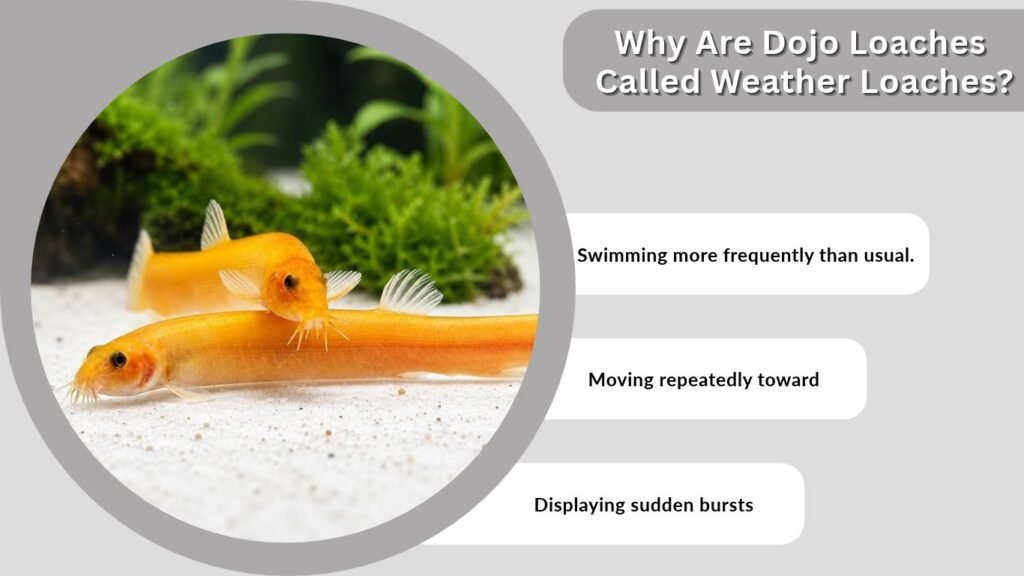
Dojo loaches earned their common name because of their reported sensitivity to changes in atmospheric pressure.
Before certain storms, atmospheric pressure decreases as weather systems approach. Aquarium owners sometimes notice dojo loaches becoming more active during these periods.
Instead of remaining near the bottom, they may begin swimming rapidly around the tank.
How Do Dojo Loaches React to Weather Changes?
Commonly reported behavioral changes include:
- Swimming more frequently than usual.
- Moving repeatedly toward the water surface.
- Exploring different areas of the aquarium.
- Displaying sudden bursts of activity.
- Becoming restless after periods of inactivity.
These movements may occur around changes in atmospheric pressure.
However, not every dojo loach responds in the same way, and similar behaviors can have other causes.
Can Dojo Weather Loaches Predict Rain?
Dojo weather loaches have a long-standing reputation for predicting storms.
Their reported sensitivity to falling atmospheric pressure may explain why increased activity sometimes occurs before rainy weather.
However, dojo loaches are not reliable weather forecasting tools. There is insufficient evidence that observing one fish can accurately predict when rain or storms will occur.
An active loach may simply be exploring, searching for food, or responding to changes inside the aquarium.
Dojo Weather Loach Behavior Before a Storm
One of the most interesting characteristics of dojo weather loaches is their occasional transition from resting quietly to swimming energetically.
Under ordinary conditions, they often remain close to the substrate, searching for food or hiding beneath decorations.
During periods of increased activity, they may swim through the middle of the aquarium or repeatedly approach the surface.
Normal Behavior vs. Signs of Stress
Not every unusual movement is related to weather. Aquarium conditions should be checked when a fish behaves differently.
| Behavior | Possible explanation |
| Occasional rapid swimming | Normal activity or environmental changes |
| Brief trips to the surface | Supplementary air breathing |
| Digging beneath sand | Natural foraging or resting |
| Persistent frantic swimming | Stress or unsuitable tank conditions |
| Repeated loss of balance | Possible health problem |
| Continuous surface distress | Poor water conditions or insufficient oxygen |
If unusual behavior continues, test ammonia, nitrite, temperature, and other water parameters.
Weather-related activity should not automatically be assumed when a fish shows signs of distress.
Dojo Loach vs. Weather Loach: Are They Different?
For the commonly kept species Misgurnus anguillicaudatus, the terms dojo loach and weather loach refer to the same fish.
The naming difference comes primarily from regional usage.
In the United States, the species is commonly called the dojo loach, while weather loach is frequently used elsewhere.
Both names describe a fish with the same general appearance, behavior, and aquarium requirements.
However, the name weather loach is sometimes applied to other related species, so scientific identification is useful when purchasing fish.
Golden dojo loaches are color variations of the same commonly kept species.
Natural Habitat of Dojo Weather Loaches
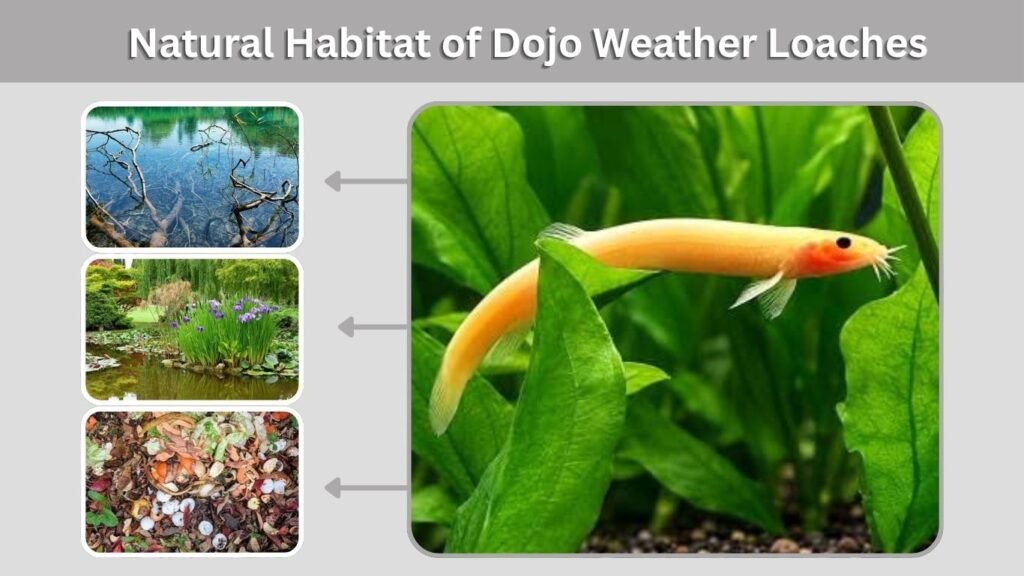
Dojo weather loaches originate from East Asia, including parts of China, Japan, Korea, and nearby regions.
They naturally inhabit environments with muddy or silty bottoms, including shallow rivers, ponds, wetlands, and rice fields.
These habitats often contain aquatic plants, submerged branches, and decaying organic material.
Why Do Weather Loaches Bury Themselves?
Burrowing is a natural behavior that provides shelter and allows dojo loaches to search for food.
They may bury much of their bodies beneath soft substrate, leaving only their heads exposed.
In aquariums, fine sand allows them to display this behavior without scraping their sensitive skin.
Coarse or sharp gravel can cause injuries and should be avoided.
Can Dojo Weather Loaches Breathe Air?
Yes. Dojo weather loaches possess specialized adaptations that allow them to obtain some oxygen from swallowed atmospheric air.
Their intestinal tract can absorb oxygen, helping them survive in naturally oxygen-poor environments.
They may occasionally swim to the surface, swallow air, and release gas afterward.
This ability does not eliminate the need for clean, oxygenated aquarium water.
Dojo Weather Loach Tank Size and Water Conditions
Dojo weather loaches require spacious aquariums because they can become relatively large and remain active throughout their lives.
An aquarium with a footprint of at least 48 × 18 inches, holding approximately 65 gallons or more, is a reasonable long-term starting point.
Groups and community aquariums may require additional space.
Recommended Water Parameters
| Parameter | Recommended range |
| Temperature | 64–74°F (18–23°C) |
| pH | 6.0–8.0 |
| Hardness | Approximately 1–12 dGH |
| Ammonia | 0 ppm |
| Nitrite | 0 ppm |
| Water movement | Gentle to moderate |
Dojo weather loaches prefer cooler freshwater conditions.
They should not be maintained continuously at high tropical aquarium temperatures.
A fully cycled aquarium with effective filtration and regular water changes is important.
Best Aquarium Decorations
Fine sand, driftwood, smooth stones, and sheltered areas create a comfortable environment.
Hardy aquarium plants can provide additional cover, although dojo loaches may uproot plants while digging.
A tightly fitted aquarium lid is essential because these fish can jump or escape through small openings.
What Do Dojo Weather Loaches Eat?

Dojo weather loaches are omnivorous bottom feeders that primarily search for small aquatic animals.
Their natural diet includes worms, insect larvae, small crustaceans, and other organisms found near the bottom of freshwater habitats.
Best Aquarium Foods
Suitable foods include:
- High-quality sinking pellets.
- Frozen bloodworms.
- Brine shrimp.
- Daphnia.
- Appropriate worm-based foods.
- Balanced commercial bottom-feeder diets.
A varied diet supports healthy growth and normal feeding behavior.
Offer manageable portions once or twice daily, adjusting feeding to the fish’s size and appetite.
Dojo weather loaches may also eat small aquarium snails, shrimp, and fish fry.
Dojo Weather Loach Tank Mates
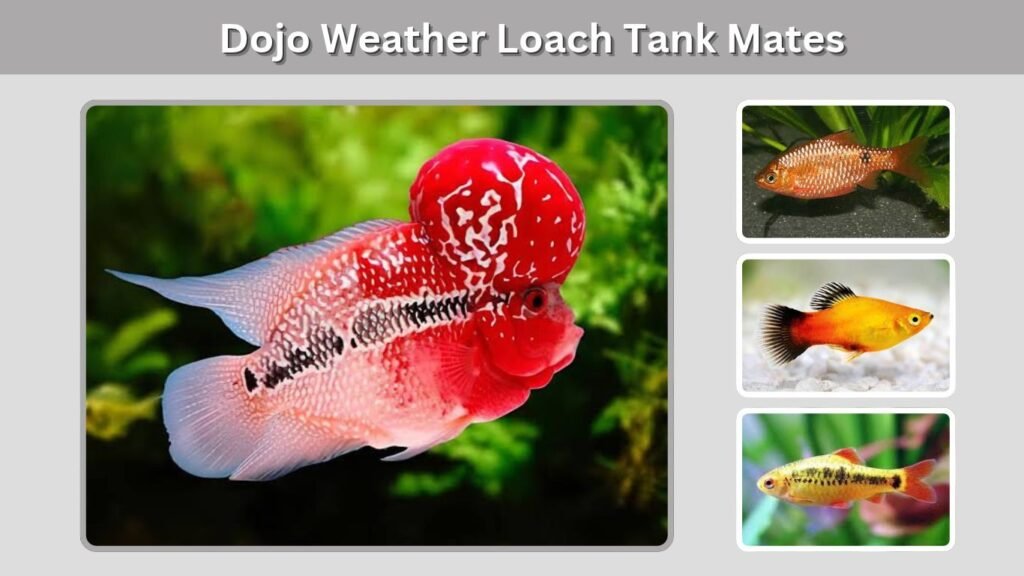
Dojo weather loaches are generally peaceful and can share aquariums with compatible freshwater fish.
The most important considerations are temperature requirements, adult size, and behavior.
Potential companions include:
- Other dojo weather loaches.
- Golden dojo loaches.
- Rosy barbs.
- Golden barbs.
- Variatus platies.
- Suitable single-tailed goldfish.
Avoid aggressive fish and species requiring consistently warm tropical water.
Some fancy goldfish may also be unsuitable because active dojo loaches can disturb them while feeding.
Keeping dojo loaches with others of their species is generally beneficial when sufficient space is available.
Dojo Weather Loach Size and Lifespan
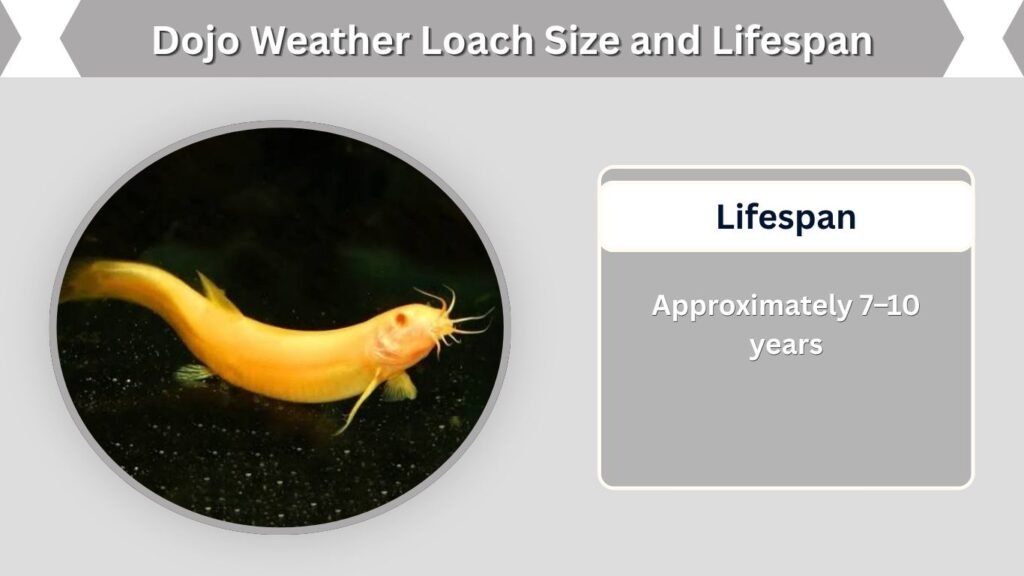
A full-grown dojo weather loach commonly reaches approximately 6–10 inches, although large individuals may exceed 11 inches.
Their size makes long-term aquarium planning important.
With appropriate care, dojo weather loaches may live approximately 7–10 years or longer.
A suitable environment, nutritious food, stable temperature, and clean water support long-term health.
Golden and normally colored dojo weather loaches have similar adult sizes and potential lifespans.
Dojo Weather Loach Breeding
Breeding dojo weather loaches in home aquariums is uncommon.
In natural environments, reproduction is associated with seasonal conditions and suitable aquatic vegetation.
During spawning, the male wraps around the female while eggs are released and fertilized.
The eggs develop separately from the adults, and newly hatched fry require appropriate food and protection.
Successful captive breeding can be challenging and is not generally expected in a standard community aquarium.
FAQs
1. Do Dojo Loaches Really Predict the Weather?
Dojo loaches are traditionally associated with changes in atmospheric pressure and may become more active before storms. However, their behavior is not a dependable method of predicting weather.
2. Why Is My Dojo Weather Loach Swimming Frantically?
Rapid swimming can occur during normal activity or environmental changes. Persistent frantic behavior may indicate unsuitable water conditions, stress, or another problem that requires investigation.
3. Can Dojo Weather Loaches Live With Goldfish?
Yes, some dojo weather loaches can live with appropriately sized single-tailed goldfish when both species have adequate space and compatible water conditions.
4. Are Dojo Weather Loaches Nocturnal?
Dojo weather loaches are often more active during evening and nighttime hours. However, they can also swim, explore, and feed during the day.
5. Can Golden Dojo Loaches Live With Regular Weather Loaches?
Yes. Golden dojo loaches and normally colored dojo weather loaches belong to the same species and generally have identical care requirements. They can live together in a suitably sized aquarium.