
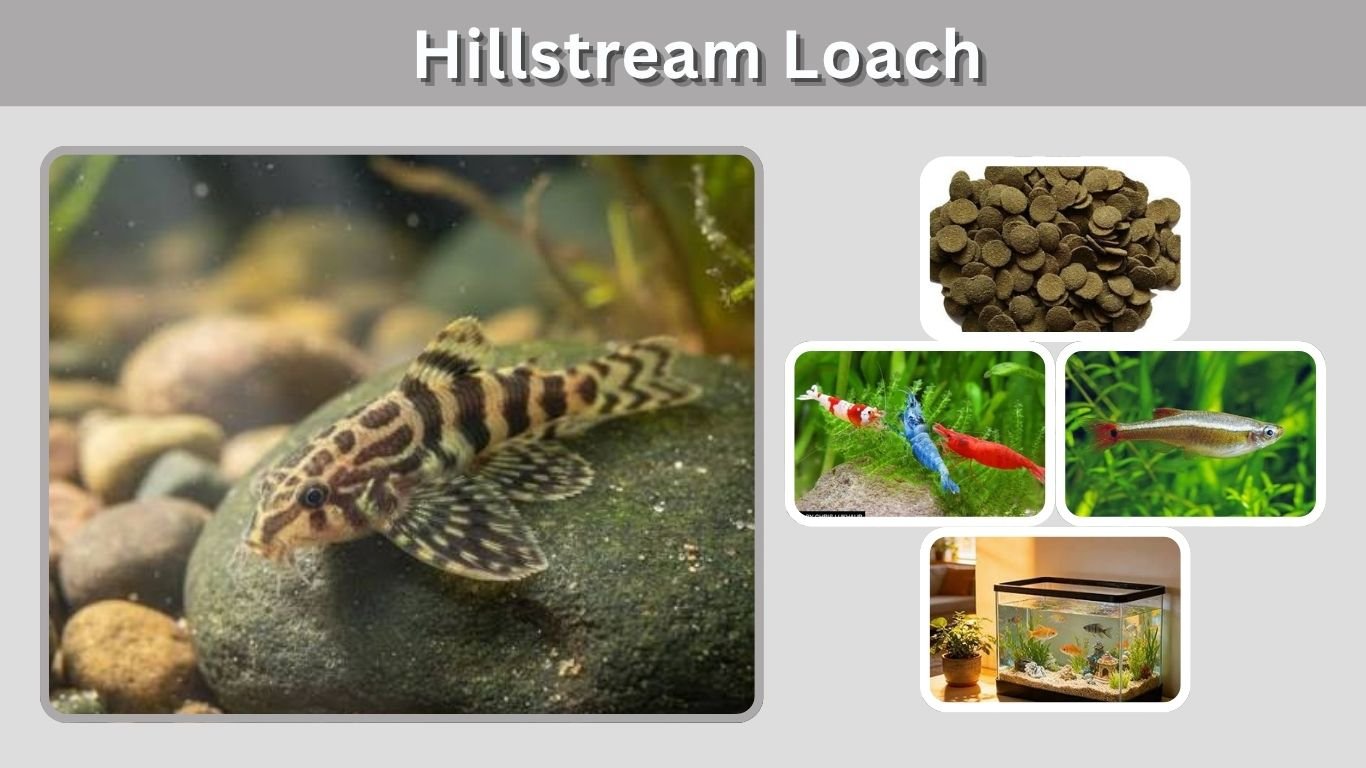
Hillstream loaches are small freshwater fish known for their flattened bodies, patterned fins, and ability to cling to rocks in moving water. Their unusual appearance makes them popular with aquarium keepers, but their needs differ from those of many tropical fish. Clean, oxygen-rich water, suitable food, and plenty of grazing surfaces are especially important. Whether you are considering a reticulated hillstream loach or already keeping one, this guide covers identification, tank size, temperature, feeding, tank mates, lifespan, and breeding.
What Is a Hillstream Loach?
The name hillstream loach describes several related bottom-dwelling fish adapted to flowing Asian streams. They are not miniature stingrays, even though their wide fins and flat undersides resemble them. Many species cling to stones while searching for food.
How to Identify a Hillstream Loach
Typical features include:
- Flattened body: Helps reduce resistance from moving water.
- Wide pectoral and pelvic fins: Allow the fish to grip smooth rocks and glass.
- Underside-facing mouth: Suited to grazing on submerged surfaces.
- Spots or stripes: Patterns vary substantially between species.
Common Types of Hillstream Loaches
The reticulated or tiger hillstream loach (Sewellia lineolata) has pale markings over a darker body. Fish sold as butterfly, spotted, or Borneo hillstream loaches may belong to other genera, including Beaufortia and Gastromyzon. Names such as blue-tail, golden, or red-fin may be trade labels rather than scientific identifications. Check the species before buying because care requirements differ.
Hillstream Loach Tank Size and Setup
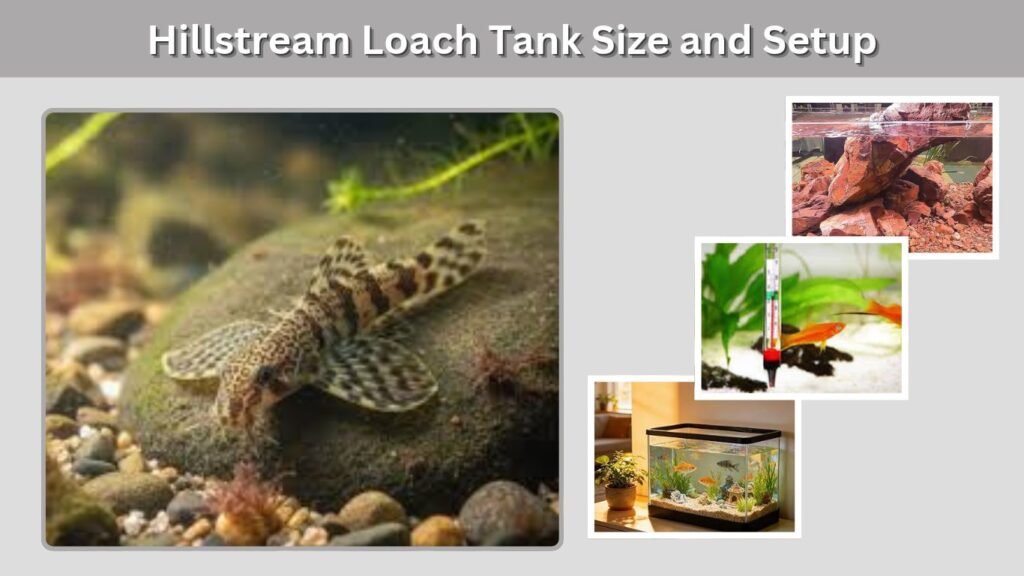
A hillstream loach aquarium should resemble a clean, rocky stream with sheltered areas. Floor space matters more than height because these fish move across stones, glass, and decorations. Established biological filtration is essential; a mature aquarium is safer than a newly filled tank.
What Size Tank Does a Hillstream Loach Need?
For a reticulated hillstream loach, 20 gallons (75 liters) with a footprint around 30 × 12 inches is a practical starting point. Groups need more grazing surfaces and room for separate territories. Other species may need more space. Do not choose a tank based only on adult size.
Essential Tank Equipment
- Reliable filtration: Keeps waste low and water conditions stable.
- Water movement: A suitable filter outlet or powerhead creates flowing areas.
- Aeration: Surface agitation or an air stone helps support oxygen exchange.
- Secure lid: These fish can climb glass and may escape through openings.
Add smooth stones, rounded pebbles, and secure hiding places. Provide light for algae and biofilm growth alongside shaded retreats. Avoid sharp or unstable rocks.
Water Temperature and Parameters
Water quality is central to hillstream loach care. For Sewellia lineolata, moderately cool, oxygen-rich water is a dependable starting point. Requirements vary among species, so identify your fish and prioritize stability over repeatedly chasing exact numbers.
| Water condition | General starting point for Sewellia lineolata |
| Temperature | 68–75°F (20–24°C) |
| pH | Approximately 6.0–7.5 |
| Hardness | About 1–10 dGH |
| Ammonia and nitrite | 0 ppm |
| Nitrate | Keep low through regular maintenance |
| Water movement | Moderate to strong areas, with quieter resting spots |
Warm water holds less oxygen, so prolonged heat can be stressful. Test regularly, perform partial water changes, and preserve beneficial bacteria when cleaning filters. Finish cycling a new aquarium before adding loaches. Leave natural growth on some rocks for grazing.
What Do Hillstream Loaches Eat?

Hillstream loaches are marketed as algae eaters, but algae alone is insufficient. In streams, many graze on algae, microscopic organisms, and small invertebrates living on submerged surfaces. In aquariums, combine grazing opportunities with prepared and occasional frozen foods.
Best Foods for Hillstream Loaches
Offer a rotation of foods such as:
- Algae-covered stones and biofilm: Valuable daily grazing surfaces.
- Quality sinking algae wafers: Convenient supplemental food.
- Spirulina-based or vegetable-rich gel foods: Help diversify the diet.
- Small frozen foods: Daphnia or brine shrimp provide additional animal-based nutrients.
How Often Should You Feed Them?
Offer small daily portions alongside continuous grazing. Observe feeding in community tanks, where faster swimmers may steal food. Remove leftovers before they foul the water. A spotless tank may have too little natural food for a new loach.
Hillstream Loach Tank Mates and Behavior
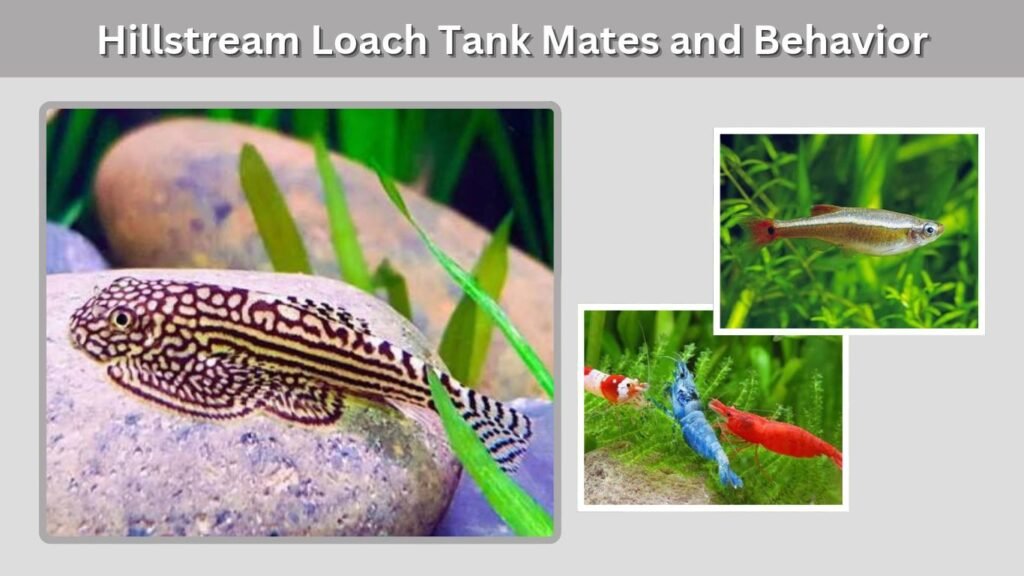
Most hillstream loaches are peaceful, although individuals may defend favorite rocks. They are not conventional schooling fish, but several can share a spacious aquarium. Tank mates must tolerate similar temperatures, flow, and oxygen levels without aggressively taking food.
Suitable Tank Mates
Depending on the species and aquarium conditions, possible companions include:
- Small danios: Active fish that often appreciate flowing water.
- Peaceful minnows: Choose varieties suited to the same temperature range.
- Some shrimp: Generally compatible with adults, although tiny shrimplets may be vulnerable.
- Peaceful snails: Usually coexist without problems.
Avoid predators, aggressive bottom dwellers, and fish needing hot, still water. Bettas are generally unsuitable for high-flow, cooler setups. Give groups multiple feeding rocks and visual barriers.
Hillstream Loach Size, Lifespan, and Breeding
Reticulated hillstream loaches reach about 2–3 inches (5–7.5 cm) as adults, depending on the individual. With good care they may live several years; estimates for Sewellia lineolata commonly reach 8–10 years. Small size does not mean low maintenance.
Male vs. Female Hillstream Loaches
In adult reticulated hillstream loaches, males often show a more angular outline near the front edges of the pectoral fins, while females tend to have rounder contours and fuller bodies. Young fish are harder to identify reliably. These differences should not automatically be applied to every species sold under the hillstream loach name.
Can Hillstream Loaches Breed in Aquariums?
Yes. Sewellia lineolata has bred in mature home aquariums. Pairs may rise into the water and release eggs that settle among gravel. Dense rockwork, fine spaces within the substrate, gentle protection over filter intakes, and plentiful microscopic food can improve fry survival. Breeding is less predictable in other hillstream loach species, and young fish initially need much smaller foods than adults.
FAQs
Are Hillstream Loaches Good for Beginners?
They can suit careful beginners who understand the aquarium nitrogen cycle and can maintain clean, oxygen-rich water. However, they are less forgiving of an immature aquarium or poor feeding than some hardy community fish. Establish the tank fully and confirm the species before purchasing.
Can a Hillstream Loach Live Alone?
One hillstream loach can live without companions of its own species, but a small group may display more natural interactions when the aquarium has enough room, food, and shelter. Do not crowd multiple fish into a small tank simply to create a group.
Do Hillstream Loaches Eat All Types of Algae?
No. They graze readily on biofilm and certain soft algae, but they are not a guaranteed solution to hair algae, tough algae, or dirty water. Their appetite also varies by species and individual. Feed a balanced diet instead of expecting them to clean the aquarium.
Do Hillstream Loaches Need a Strong Current?
They benefit from moving, well-oxygenated water, especially species adapted to fast streams. However, the entire aquarium does not need to be a powerful river. Create flowing feeding areas and calmer resting spots, then watch whether the fish can move, rest, and feed comfortably.
Can Hillstream Loaches Live With Goldfish?
Some experienced aquarists have kept them together, but compatibility is not guaranteed. Large goldfish may outcompete smaller fish for food or even swallow them, while heavy waste production raises filtration demands. Similar temperature preferences alone are not enough to make the combination safe.