
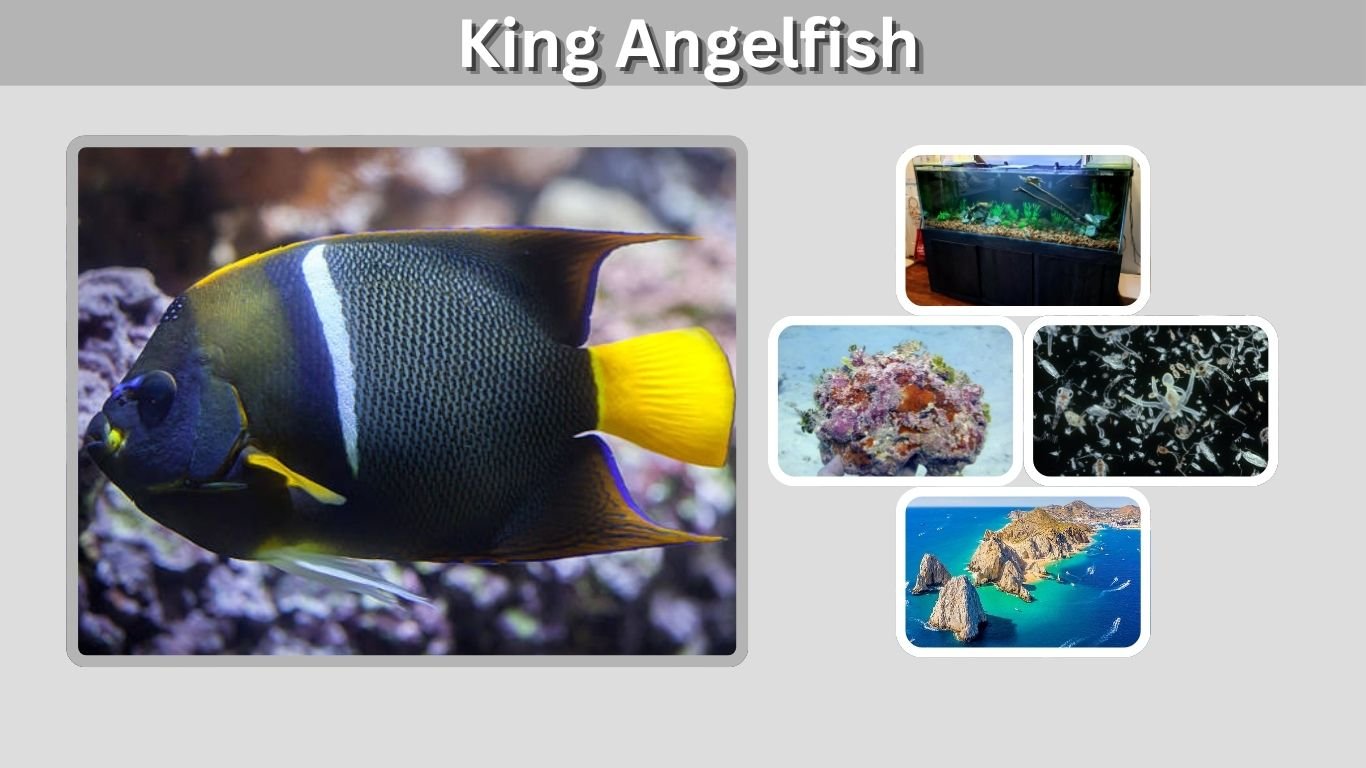
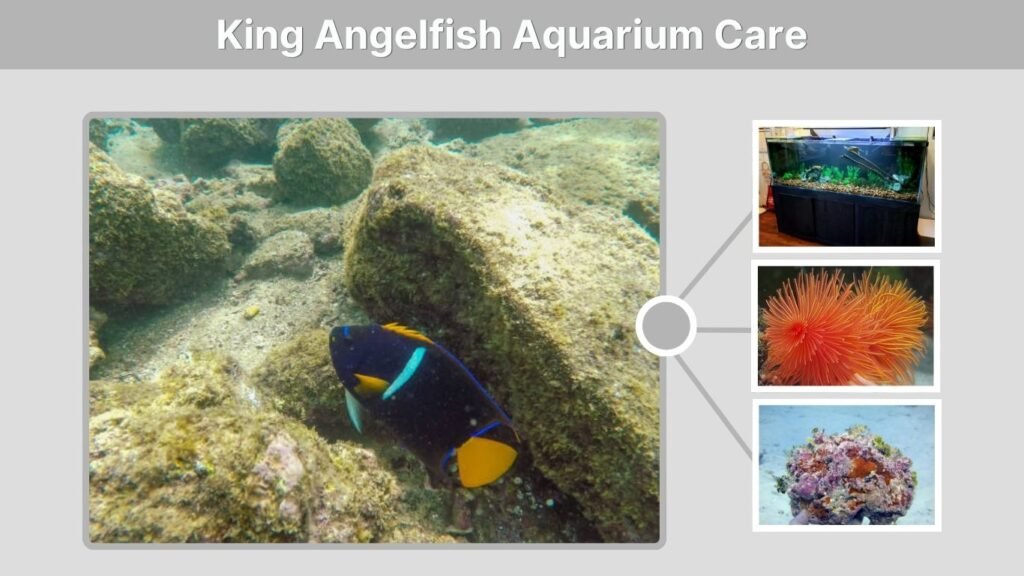
The King Angelfish (Holacanthus passer), also called the Passer Angelfish, is a striking marine fish of the eastern Pacific Ocean. Adults are recognized by their deep blue-gray bodies, bright yellow-orange fins, electric-blue edging, and a bold white vertical band. Juveniles look noticeably different, displaying brighter orange coloration with blue stripes. Found from the Gulf of California south to Peru, including the Galápagos Islands, King Angelfish inhabit rocky reefs and feed heavily on sponges, algae, and other marine organisms. They are also popular—but demanding—saltwater aquarium fish.
What Is a King Angelfish?
The King Angelfish is a large marine angelfish belonging to the family Pomacanthidae.
Its scientific name is Holacanthus passer.
It should not be confused with freshwater angelfish or color varieties such as the Red King Koi Angelfish, which belong to the freshwater genus Pterophyllum.
King Angelfish Identification
Important characteristics include:
- Deep, laterally compressed body
- Dark blue, bluish-gray, or brownish adult coloration
- Bold white vertical bar on the body
- Electric-blue edging around portions of the fins
- Bright yellow to orange tail
- Yellow pectoral fins
- Small mouth adapted for grazing
- Strong spine near the gill cover
Adults have a distinctive appearance that makes them relatively easy to recognize among eastern Pacific reef fish.
King Angelfish Size
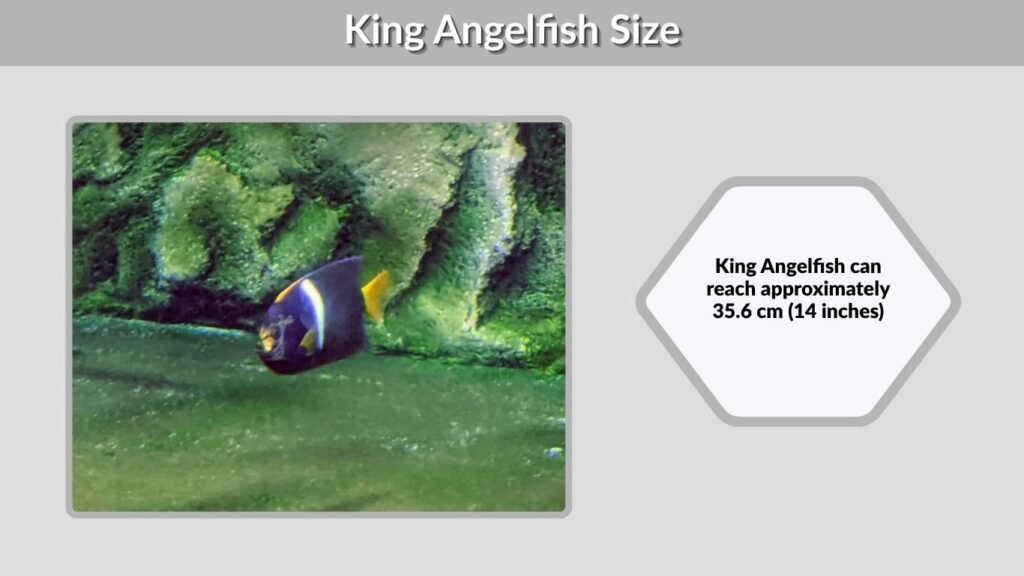
King Angelfish can reach approximately 35.6 cm (14 inches) in total length, although FishBase reports a common length closer to 15 cm.
| Feature | King Angelfish |
| Scientific name | Holacanthus passer |
| Family | Pomacanthidae |
| Maximum length | About 35.6 cm (14 in) |
| Habitat | Rocky and coral reefs |
| Depth | About 4–30 m |
| Diet | Omnivorous, especially sponges |
| Temperament | Semi-aggressive |
| Distribution | Eastern Pacific |
| Reef safe | Generally with caution |
Their relatively large adult size is an important consideration for anyone interested in keeping one in an aquarium.
Juvenile King Angelfish
Juvenile King Angelfish look dramatically different from adults.
Young fish typically have a bright orange to brown-orange body decorated with brilliant blue markings. A conspicuous pale or white vertical band crosses the body.
As the fish matures, its body becomes darker and develops the characteristic adult coloration.
Do Juvenile King Angelfish Clean Other Fish?
Yes. Cleaning behavior has been observed in juvenile King Angelfish.
Young fish may remove parasites or material from larger reef fish. This behavior becomes less important as they mature and transition toward the feeding habits typical of adults.
The dramatic difference between juvenile and adult coloration may also help young angelfish interact differently with other reef inhabitants.
Where Does the King Angelfish Live?
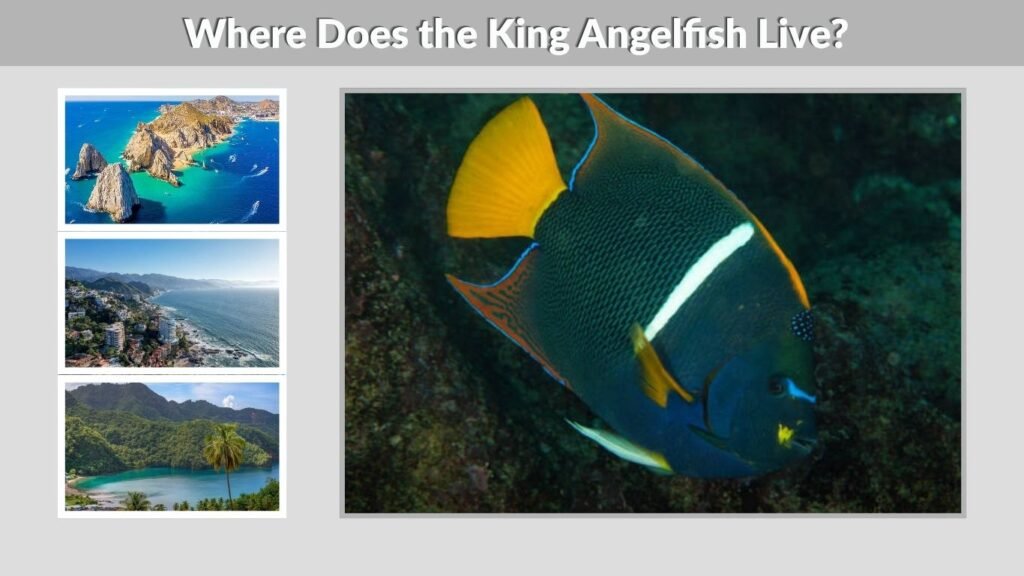
King Angelfish are native to the eastern Pacific Ocean.
Their range extends from the Gulf of California southward toward Peru and includes offshore islands such as the Galápagos.
They may be found around:
- Gulf of California
- Pacific coast of Mexico
- Central American coast
- Colombia
- Ecuador
- Peru
- Galápagos Islands
King Angelfish in the Galápagos
King Angelfish are part of the diverse marine community surrounding the Galápagos Islands. FishBase records the species around islands including Isabela and Fernandina.
Their bright colors make them particularly noticeable to divers exploring rocky reefs.
King Angelfish Habitat
King Angelfish are reef-associated marine fish.
They are generally recorded at depths of approximately 4–30 meters (13–98 feet) and prefer tropical waters.
Typical habitat includes rocky reefs, reef walls, underwater structures, and areas containing abundant encrusting organisms.
Rocky surfaces are particularly useful because they support many of the sponges and algae that King Angelfish naturally graze upon.
What Do King Angelfish Eat?
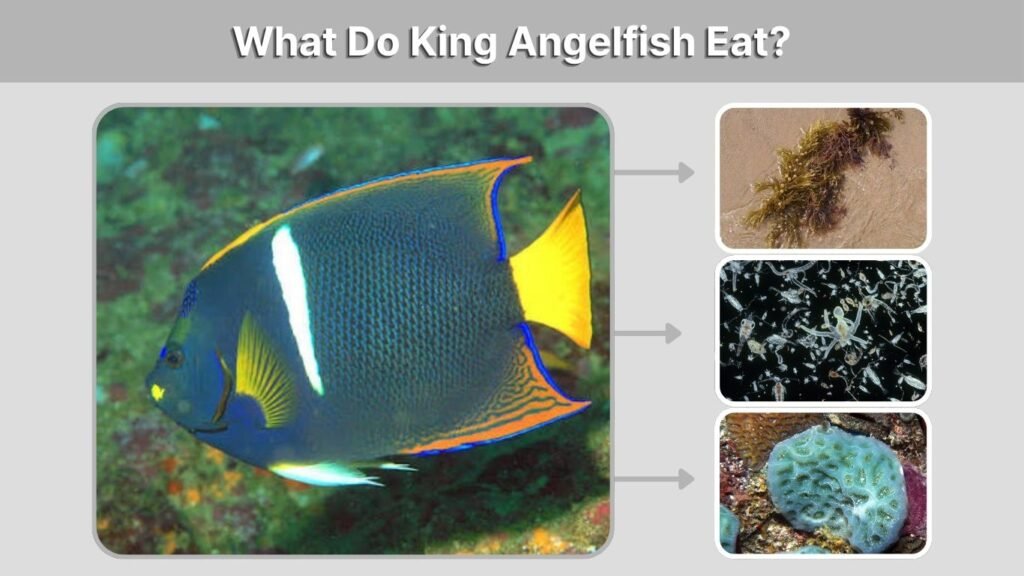
King Angelfish are omnivorous reef grazers, but sponges form an especially important component of their natural diet.
They also consume:
- Marine algae
- Other sessile invertebrates
- Plankton
- Small marine organisms
- Material growing on reef surfaces
FishBase describes them as daytime grazers that feed on algae and attached invertebrates while specializing to a greater extent on sponges.
King Angelfish Diet in an Aquarium
Captive King Angelfish need a varied diet rather than ordinary flakes alone.
Suitable foods include marine algae, spirulina-based foods, meaty marine foods, and angelfish preparations containing sponge material. Live rock can also provide natural grazing opportunities.
Offering several smaller meals throughout the day can better match their natural grazing behavior.
King Angelfish Behavior
King Angelfish are active daytime fish.
Adults can be bold and territorial, especially around other large angelfish or fish with similar body shapes.
In their natural habitat, King Angelfish have been observed forming pairs. FishBase describes them as monogamous, home-ranging pairs rather than fish that always defend a completely exclusive territory.
They may also occasionally occur around other angelfish species.
King Angelfish Aquarium Care
King Angelfish are beautiful aquarium fish, but their size and temperament make them better suited to experienced marine aquarists.
Tank Size and Water Conditions
A mature King Angelfish needs considerable swimming space.
A commonly recommended setup includes:
- Minimum tank: around 250 gallons
- Temperature: 72–78°F (22–26°C)
- pH: 8.1–8.4
- Specific gravity: 1.020–1.025
- Plenty of live rock
- Strong filtration
- Open swimming space
- Caves and hiding locations
Because adults can exceed a foot in length and become territorial, undersized aquariums are inappropriate for long-term care.
Is the King Angelfish Reef Safe?
King Angelfish are not considered reliably reef safe.
They naturally feed on sponges and other attached organisms and may nip at:
- Soft corals
- Stony corals
- Clam mantles
- Other sessile invertebrates
Some individuals may cause more damage than others, but keeping one in a prized coral reef aquarium carries significant risk.
A large fish-only-with-live-rock setup is generally easier to manage.
King Angelfish Reproduction
King Angelfish reproduce by laying eggs.
FishBase reports reproduction occurring particularly during late summer, with females forming pair bonds with males. Spawning can occur repeatedly during the reproductive period.
The eggs enter the water column rather than being guarded on a rock or nest like those of some freshwater cichlids.
This reproductive strategy helps disperse offspring through marine currents.
Are King Angelfish Endangered?
King Angelfish are currently listed by FishBase as Least Concern, based on the referenced IUCN assessment.
They occur across a relatively broad portion of the eastern Pacific and are also collected for the marine aquarium trade.
Maintaining healthy reef habitats remains important because these fish depend heavily on complex reef communities for food and shelter.
Interesting King Angelfish Facts
Here are several quick facts about the species:
- Their scientific name is Holacanthus passer.
- They are also called Passer Angelfish.
- Adults can reach about 14 inches long.
- Juveniles look very different from adults.
- Young King Angelfish have been observed cleaning other fish.
- Sponges are a major natural food source.
- They occur around the Galápagos Islands.
- They live primarily around eastern Pacific reefs.
- Adults often live as pairs.
- They are not reliably reef safe in home aquariums.
FAQs
1. How big does a King Angelfish get?
King Angelfish can reach approximately 35.6 cm, or around 14 inches, in total length. Their large adult size means captive individuals require spacious marine aquariums with substantial swimming room, hiding places, and live rock.
2. What does a juvenile King Angelfish look like?
Juveniles generally have orange to brown-orange coloration with vivid blue markings and a conspicuous pale vertical band. Their coloration gradually changes as they mature, eventually developing the darker body and yellow-orange fins characteristic of adults.
3. What do King Angelfish eat?
King Angelfish eat sponges, algae, sessile invertebrates, plankton, and other marine foods. Sponges are particularly important in their natural diet. Captive fish should receive a varied marine diet that includes algae and angelfish foods containing sponge material.
4. Is a King Angelfish reef safe?
Not reliably. King Angelfish naturally graze on attached marine organisms and may nip at soft and stony corals as well as clam mantles. They are therefore usually better suited to large fish-only or fish-only-with-live-rock aquariums.
5. Where are King Angelfish found?
King Angelfish inhabit the eastern Pacific from the Gulf of California southward to Peru, including the Galápagos Islands. They are reef-associated fish commonly found around rocky structures at depths of roughly 4–30 meters.