
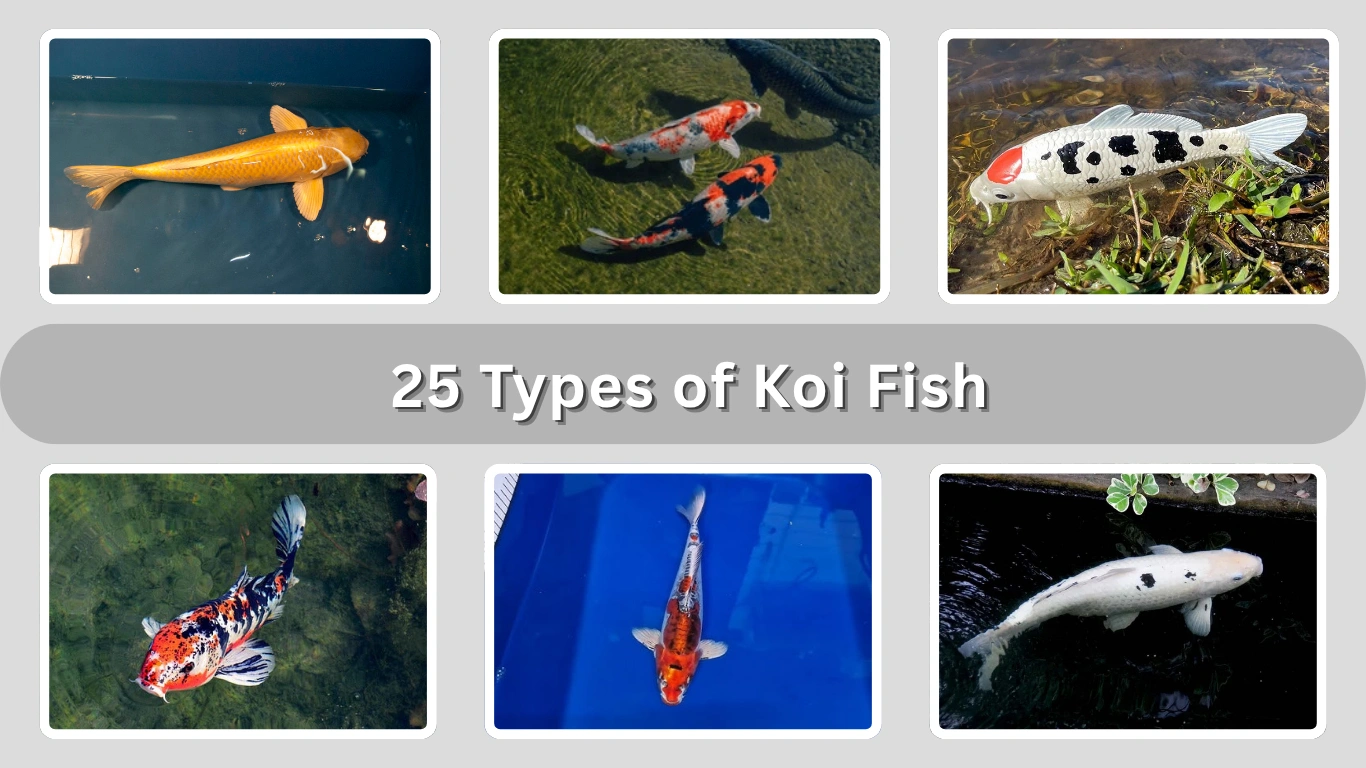
Koi fish are among the most beautiful and symbolic ornamental fish, admired for their vibrant colors, unique patterns, and graceful movement. Originating from Japan, these fish are not only popular in decorative ponds but also valued for their cultural significance and long lifespan.
In this guide, you will discover 25 different types of koi fish, each with its own distinctive features and charm. Whether you are a beginner or an experienced koi keeper, this list will help you understand the diversity and beauty of these fascinating fish.
1. Kohaku Koi
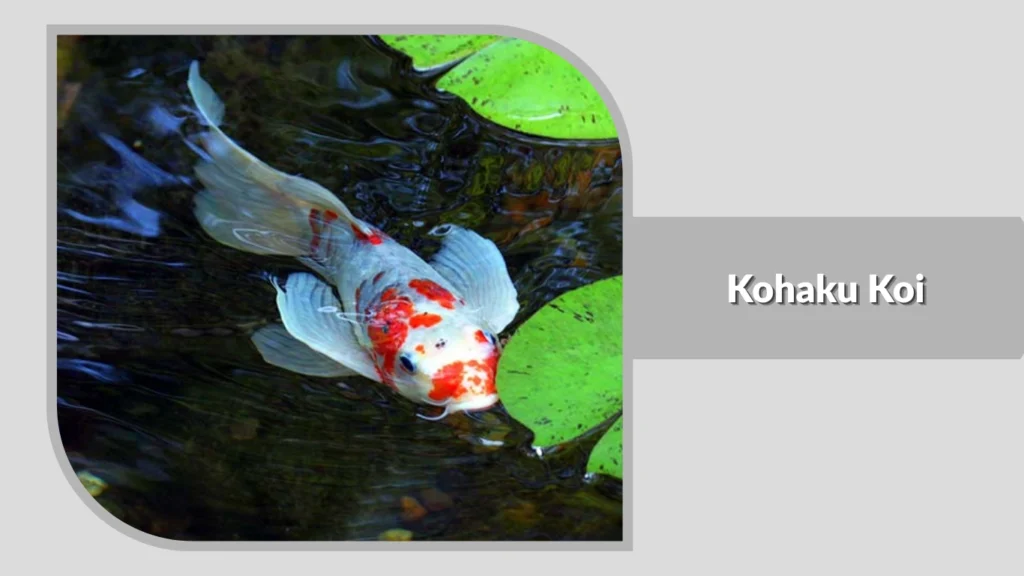
The Kohaku Koi is one of the most iconic and foundational koi varieties, known for its simple yet elegant color pattern. It features a pure white body with bold red markings, creating a striking contrast. This variety is highly valued for its clean appearance and balanced pattern, making it a favorite among koi enthusiasts and collectors.
Identification
- White (shiroji) base color
- Bright red (hi) markings on the body
- No black coloration
- Clean, well-defined pattern edges
- Symmetrical or balanced pattern preferred
- Can grow up to 24–36 inches in large ponds
Origin
The Kohaku Koi originated in Japan in the late 19th century. It was developed through selective breeding of red and white carp to enhance color clarity and pattern definition. Over time, it became one of the “Big Three” koi varieties and a standard in koi breeding.
Behavior
Kohaku Koi are calm, social fish that thrive in groups. They are active swimmers but maintain a peaceful temperament, making them suitable for community pond environments. Their behavior is similar to most koi, showing curiosity and responsiveness during feeding.
Care
This variety requires a spacious pond with clean, well-filtered water to maintain its bright colors. Stable water conditions are essential for preserving the sharp contrast between white and red. A high-quality diet with color-enhancing nutrients helps keep their pattern vibrant and healthy.
2. Taisho Sanke Koi
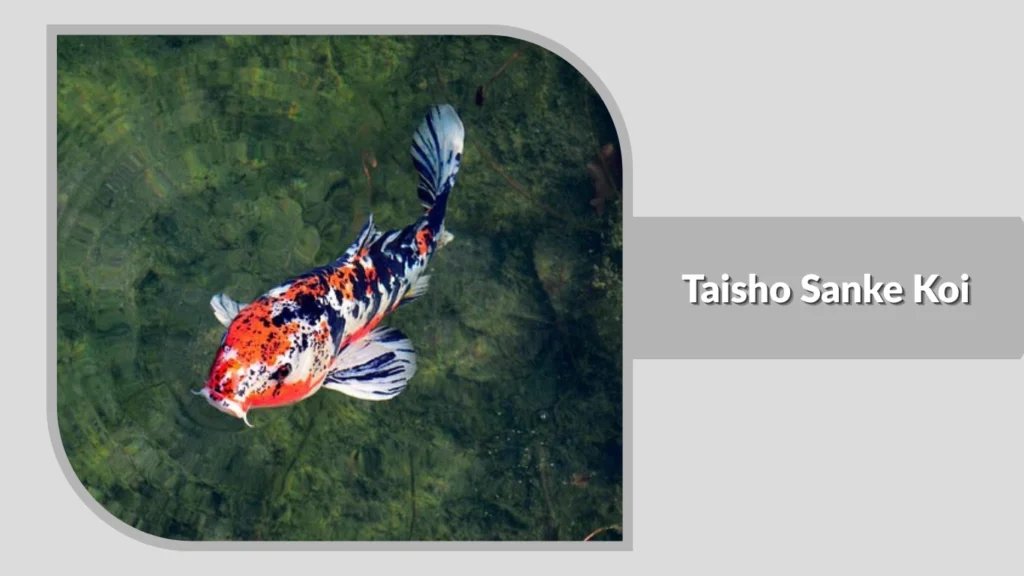
The Taisho Sanke, often simply called Sanke, is one of the most popular koi varieties and part of the “Big Three.” It features a white base with red and black markings, creating a refined and balanced appearance. Known for its elegance, the Sanke is highly valued for clean patterns and harmonious color placement across its body.
Identification
- White (shiroji) base color
- Red (hi) patterns similar to Kohaku
- Black (sumi) markings on the body
- No black on the head
- Clean, well-balanced color distribution
- Can grow up to 24–36 inches in large ponds
Origin
The Taisho Sanke originated in Japan during the Taisho era (early 20th century). It was developed by adding black markings to the Kohaku variety, resulting in a more complex and visually appealing pattern. It quickly became one of the most prized koi types.
Behavior
Sanke Koi are peaceful and social, making them ideal for community ponds. They are active swimmers and interact well with other koi varieties. Their calm nature and graceful movement make them a popular choice for koi keepers.
Care
This variety requires a large, well-maintained pond with high-quality filtration. Stable water conditions help maintain the clarity of white skin and the sharpness of red and black markings. A balanced diet with color-enhancing nutrients supports their vibrant appearance and overall health.
3. Showa Sanshoku Koi
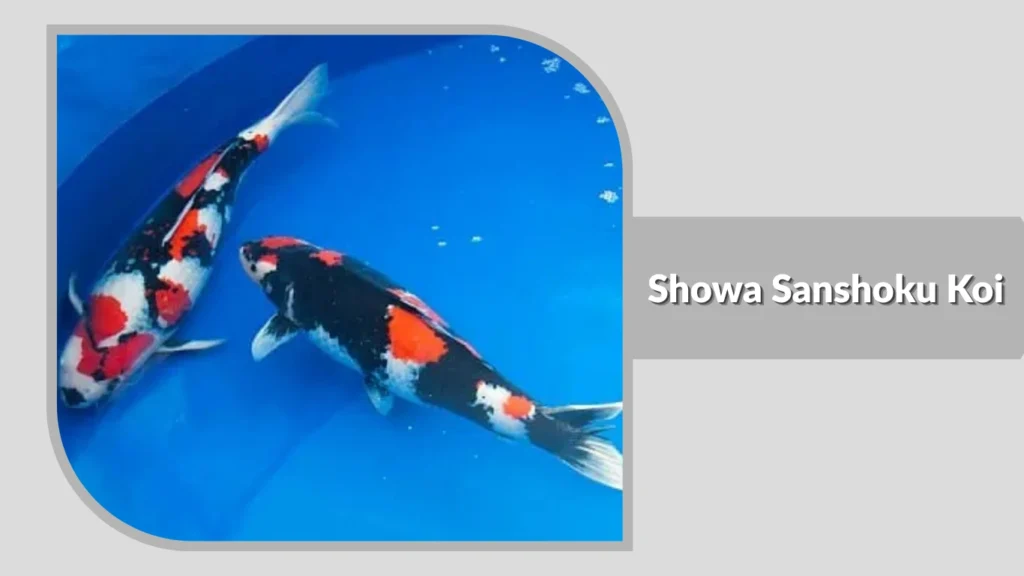
The Showa Sanshoku, commonly known as Showa, is another member of the “Big Three” koi varieties. It features a bold combination of black, red, and white, with black serving as the base color. Unlike Sanke, the black pattern is more dominant and wraps around the body, creating a powerful and dramatic appearance.
Identification
- Black (sumi) base color
- Red (hi) and white (shiroji) patterns layered over black
- Black markings present on the head
- Bold, wrapping patterns across the body
- Strong contrast between all three colors
- Can grow up to 24–36 inches in large ponds
Origin
The Showa Sanshoku originated in Japan during the Showa era (early 20th century). It was developed by breeding Kohaku with black carp to create a koi with a dominant black base and layered color patterns.
Behavior
Showa Koi are active and social fish. They thrive in groups and interact well with other koi varieties. Their bold appearance and energetic swimming make them a standout presence in any pond.
Care
This variety requires a spacious pond with clean, well-filtered water. Maintaining stable conditions is important to preserve the clarity and contrast of its three colors. A high-quality diet helps enhance color development and overall health.
4. Tancho Koi
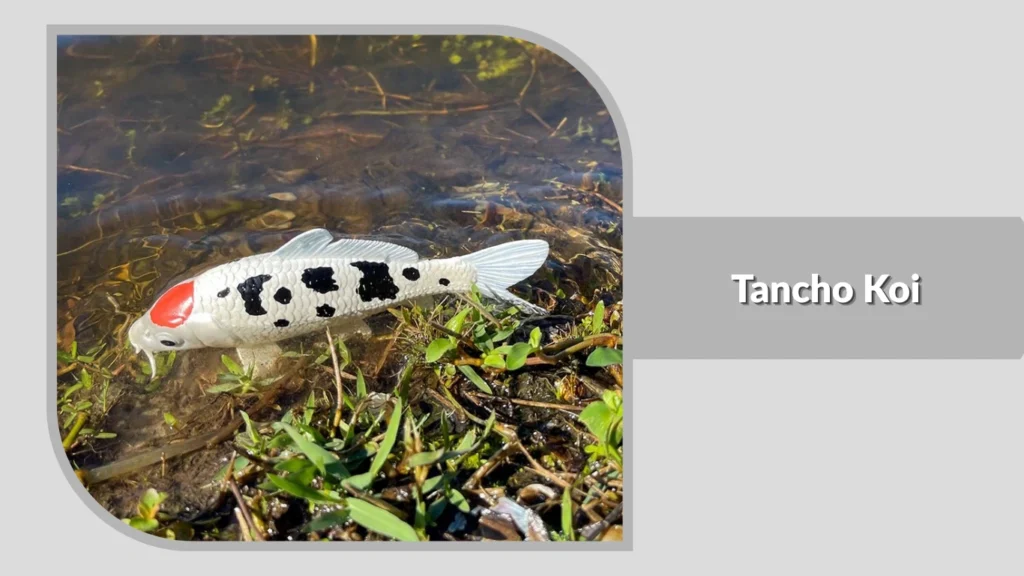
The Tancho Koi is a unique and highly prized variety known for its single red marking on the head, resembling the Japanese flag. Its body is completely white, with the red spot (hi) ideally centered on the head. This simple yet symbolic pattern makes Tancho one of the most elegant and recognizable koi types.
Identification
- Pure white (shiroji) body
- Single red (hi) circle on the head
- No other markings on the body
- Clean, well-defined red spot
- Symmetrical and centered head marking preferred
- Can grow up to 24–36 inches in large ponds
Origin
The Tancho Koi originated in Japan and is named after the Tancho crane, a bird with a similar red marking on its head. It is not a separate bloodline but a pattern that can appear in varieties like Kohaku, Sanke, and Showa.
Behavior
Tancho Koi are calm and social, similar to other koi varieties. They adapt well to community ponds and are active swimmers. Their peaceful nature makes them easy to keep alongside other koi.
Care
This variety requires a clean, spacious pond with stable water conditions to maintain its bright white body and vivid red marking. A high-quality diet helps preserve color clarity. Proper care ensures the red spot remains sharp and well-defined over time.
5. Asagi Koi
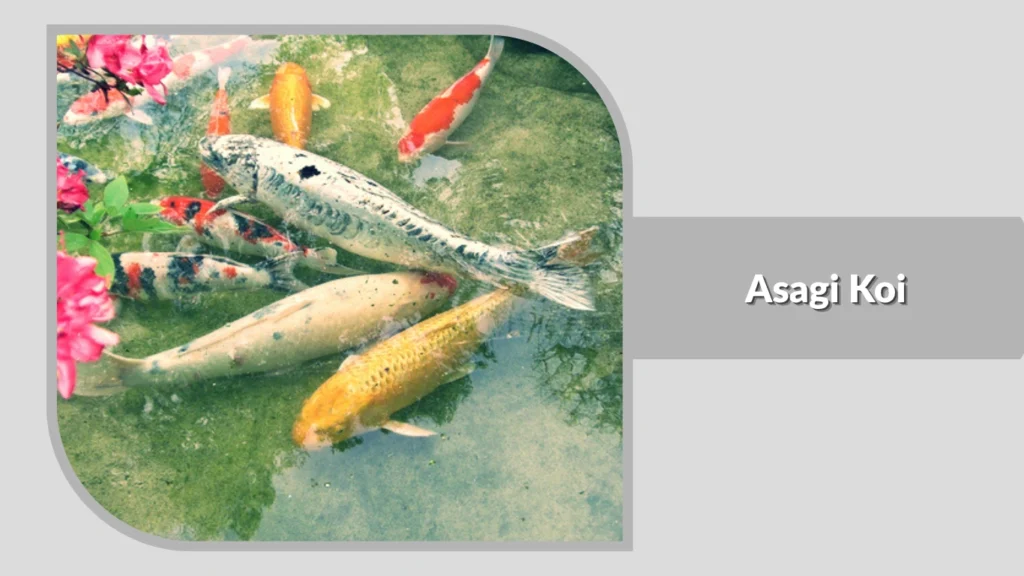
The Asagi Koi is one of the oldest and most traditional koi varieties, known for its calm blue coloration and subtle beauty. It features a blue-gray net-like pattern on the back with red or orange accents along the sides and fins. Unlike more flashy koi, Asagi is appreciated for its balanced and natural appearance.
Identification
- Blue or gray net-like pattern on the back
- Red or orange (hi) along the belly, gill plates, and fins
- Light-colored head, usually clean and unmarked
- Reticulated scale pattern (net effect)
- Symmetrical color distribution preferred
- Can grow up to 24–36 inches in large ponds
Origin
The Asagi Koi originated in Japan and is considered one of the earliest koi varieties. It was developed from wild carp through selective breeding to enhance the blue scaling and red accents, forming the foundation for many modern koi types.
Behavior
Asagi Koi are calm, friendly, and social fish. They adapt well to pond life and interact peacefully with other koi. Their steady swimming and gentle nature make them a relaxing presence in any pond.
Care
This variety requires a clean, well-maintained pond with stable water conditions. Their lighter colors make water quality especially important. A balanced diet with proper nutrients helps maintain their blue tone and enhances the red coloration along their body.
6. Shusui Koi
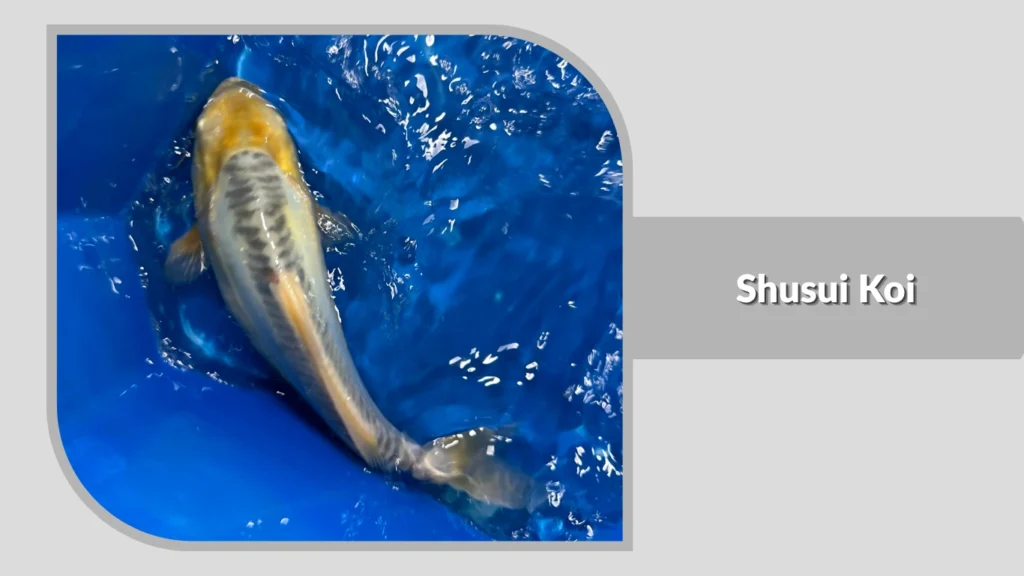
The Shusui Koi is a scaleless (Doitsu) version of the Asagi, known for its clean lines and striking contrast. It features a smooth body with a row of large scales along the dorsal line, combined with blue and red coloration. Its simple yet bold appearance makes it a favorite among koi keepers who appreciate clarity and symmetry.
Identification
- Scaleless (Doitsu) body
- Single row of large scales along the back
- Blue or gray dorsal area
- Red or orange (hi) along the sides and fins
- Clean, light-colored head
- Can grow up to 24–36 inches in large ponds
Origin
The Shusui Koi originated in Japan and was developed by crossing Asagi koi with German mirror carp. This breeding introduced the scaleless trait while maintaining the classic Asagi coloration pattern.
Behavior
Shusui Koi are calm, social, and active swimmers. They adapt well to pond environments and get along easily with other koi varieties. Their smooth body and steady movement make them visually appealing in the water.
Care
This variety requires a clean, well-filtered pond with stable water conditions. Their scaleless body makes them slightly more sensitive to water quality and injuries. A balanced diet with quality nutrients helps maintain their color and overall health.
7. Utsurimono Koi
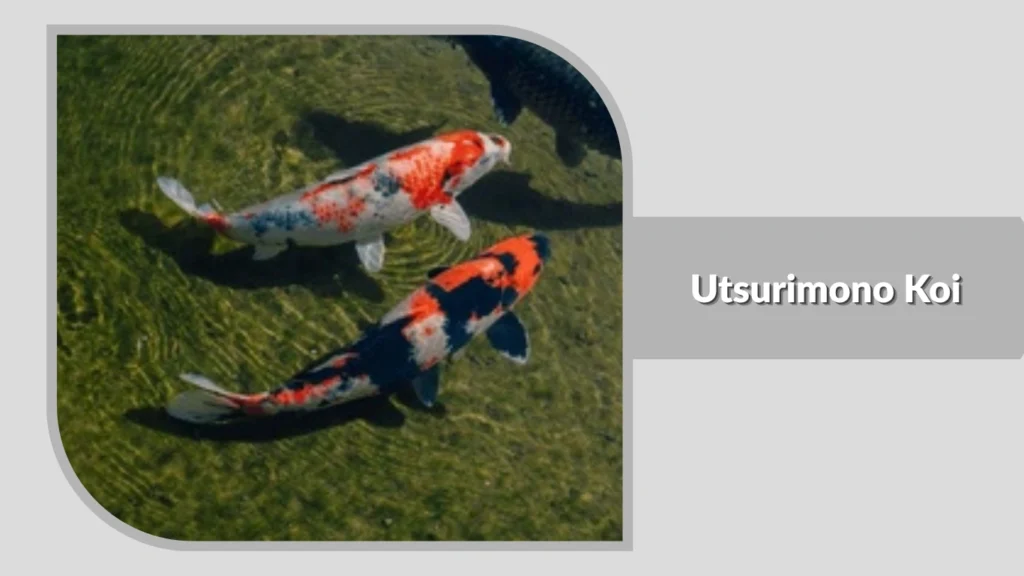
The Utsurimono Koi is a striking variety known for its bold two-color patterns, typically featuring black combined with another contrasting color. The black base is overlaid with white, red, or yellow markings, creating a dramatic and eye-catching appearance. This variety is admired for its strong contrast and balanced pattern distribution.
Identification
- Black (sumi) base color
- Contrasting patterns in white, red, or yellow
- Colors wrap around the body
- Black markings extend onto the head
- Strong, bold pattern contrast
- Can grow up to 24–36 inches in large ponds
Origin
The Utsurimono Koi originated in Japan and was developed through selective breeding of black-based koi. Over time, breeders refined the contrast and pattern balance, resulting in distinct subtypes like Shiro Utsuri, Hi Utsuri, and Ki Utsuri.
Behavior
Utsurimono Koi are active, social, and adapt well to pond environments. They interact peacefully with other koi and display steady swimming behavior. Their bold coloration makes them stand out while moving through the water.
Care
This variety requires a clean, spacious pond with stable water conditions to maintain its strong color contrast. Proper filtration and regular maintenance are essential. A balanced diet with color-enhancing nutrients helps preserve the intensity of both black and secondary colors.
8. Bekko Koi
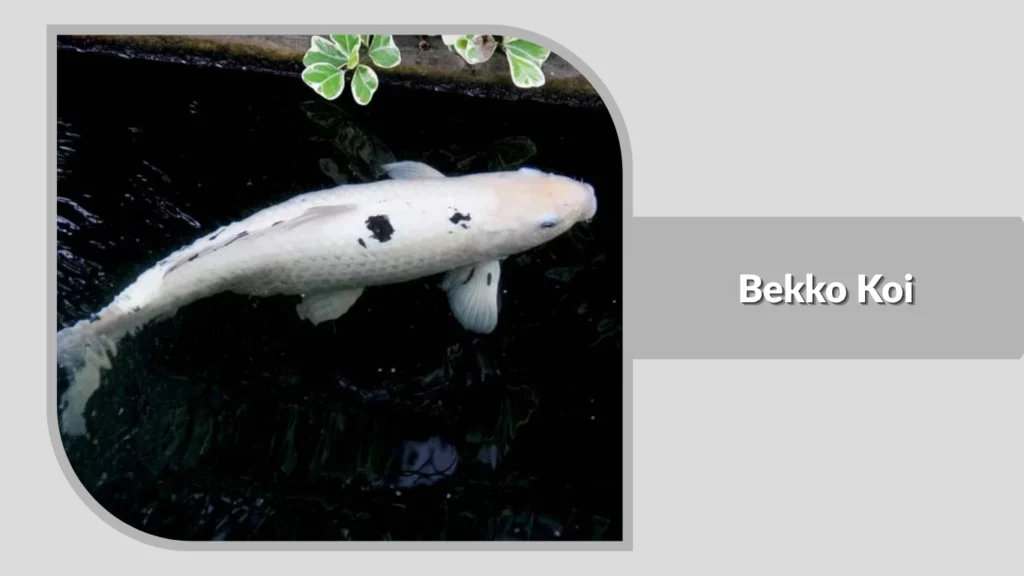
The Bekko Koi is a simple yet elegant variety known for its clean base color with scattered black markings. Unlike more complex koi, Bekko has a minimalistic pattern that highlights contrast and clarity. It comes in three main types based on base color—white, red, or yellow—each accented with black spots. Its refined appearance makes it a favorite for those who prefer subtle beauty.
Identification
- Solid base color (white, red, or yellow)
- Black (sumi) spots across the body
- No black markings on the head (ideal standard)
- Clean, uncluttered pattern
- Balanced placement of black spots
- Can grow up to 24–36 inches in large ponds
Origin
The Bekko Koi originated in Japan and was developed from Taisho Sanke breeding lines. It was selectively bred to remove red patterns, leaving a clean base color with black markings.
Behavior
Bekko Koi are calm, social, and active swimmers. They adapt well to community ponds and coexist peacefully with other koi varieties. Their steady movement and simple pattern make them visually soothing.
Care
This variety requires a clean, well-filtered pond with stable water conditions. Maintaining water quality helps preserve the clarity of the base color and sharpness of black markings. A balanced diet supports healthy growth and overall coloration.
9. Goshiki Koi
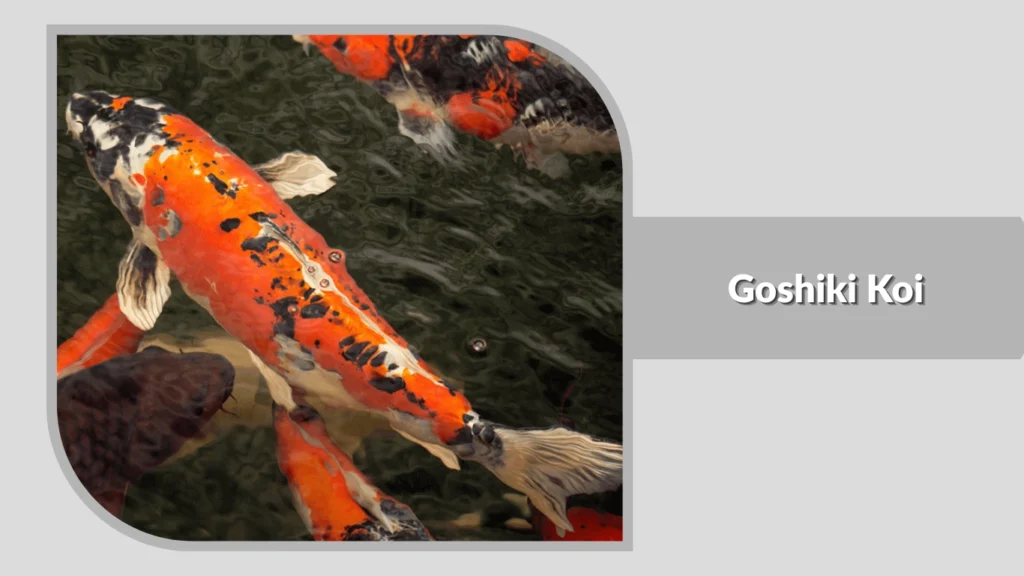
The Goshiki Koi is a beautiful and complex variety known for its five-color combination layered over a net-like pattern. It typically features red markings over a dark, reticulated base that may appear blue, gray, or black. The mix of colors creates a rich and textured look, making Goshiki a standout in any koi pond.
Identification
- Dark, net-like (reticulated) base pattern
- Red (hi) markings similar to Kohaku
- Combination of five colors: white, red, black, blue, and gray
- Scales often have a mesh or net appearance
- Strong contrast between red and darker background
- Can grow up to 24–36 inches in large ponds
Origin
The Goshiki Koi originated in Japan and was developed by crossing Asagi with Kohaku varieties. Breeders aimed to combine the net-like pattern of Asagi with the bold red markings of Kohaku, resulting in this multi-colored koi.
Behavior
Goshiki Koi are calm, social, and active swimmers. They adapt well to pond environments and coexist peacefully with other koi varieties. Their steady movement and unique coloration make them visually appealing.
Care
This variety requires a clean, well-maintained pond with stable water conditions to preserve its complex color pattern. Proper filtration and regular maintenance are essential. A high-quality diet helps enhance color contrast and maintain overall health.
10. Ogon Koi
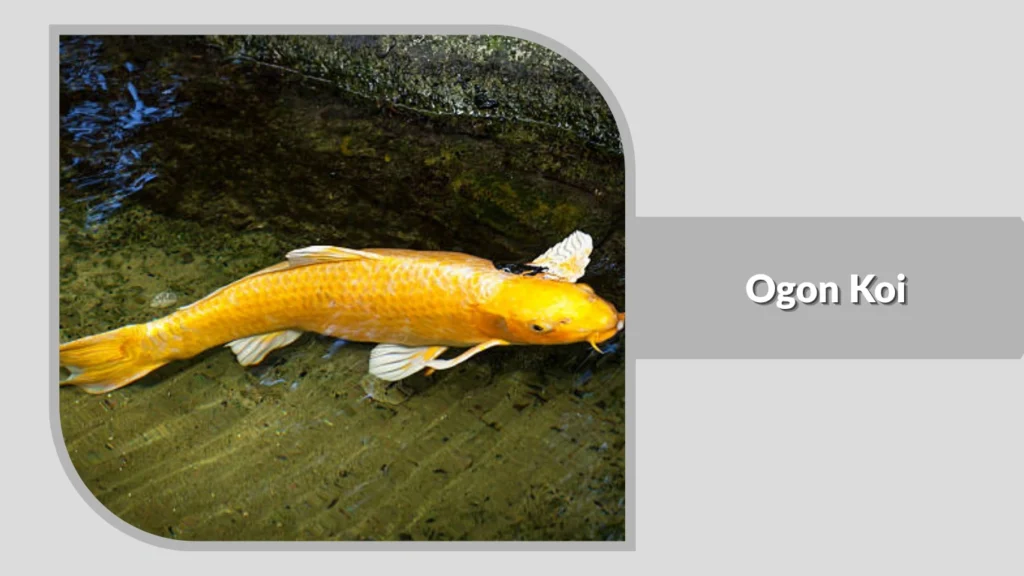
The Ogon Koi is a metallic variety known for its single, solid color and brilliant shine. Unlike patterned koi, Ogon stands out for its simplicity and reflective scales that give it a glowing appearance in the water. It is highly valued for its purity of color and luster, making it a striking addition to any pond.
Identification
- Solid, single color (no patterns)
- Metallic, reflective scales
- Common colors include gold, platinum, and orange
- Smooth, uniform coloration across the body
- Bright, glossy appearance
- Can grow up to 24–36 inches in large ponds
Origin
The Ogon Koi originated in Japan and was developed in the early 20th century. It was one of the first metallic koi varieties, created through selective breeding to enhance shine and color uniformity.
Behavior
Ogon Koi are active, social, and easy to manage. They adapt well to community ponds and interact peacefully with other koi. Their bright, reflective body makes them easy to spot as they swim.
Care
This variety requires clean, well-filtered water to maintain its metallic shine. Stable pond conditions are important for preserving color quality. A balanced diet with proper nutrients helps enhance their luster and overall health.
11. Hikarimono Koi
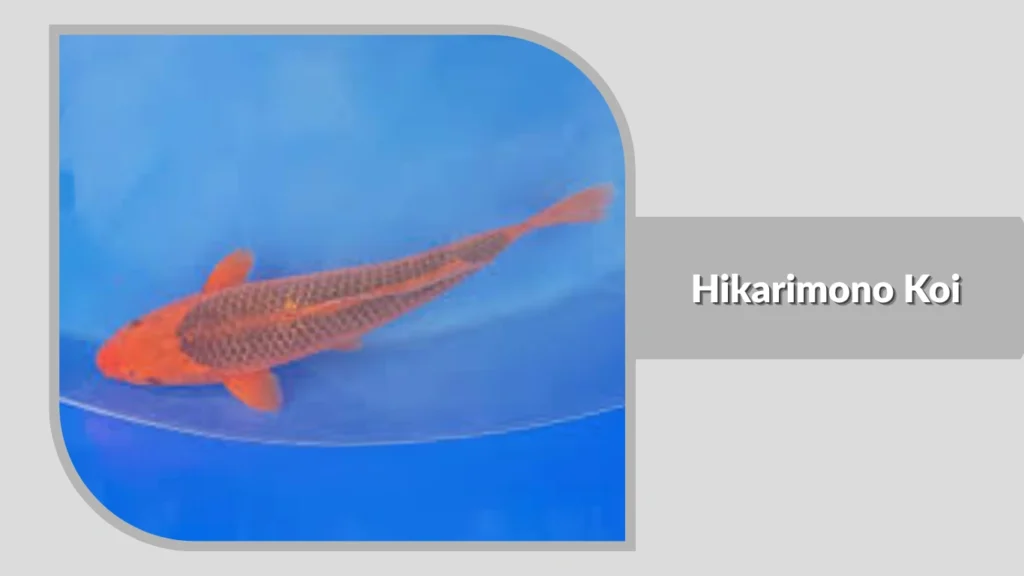
The Hikarimono Koi is a group of metallic koi varieties known for their bright, reflective scales and vibrant colors. Rather than being a single type, it includes several metallic-colored koi such as Ogon and Hariwake. These koi are admired for their shimmering appearance, which stands out clearly in ponds, especially under sunlight.
Identification
- Metallic, reflective scales
- Bright, shiny appearance
- Can be solid-colored or patterned
- Common colors include gold, platinum, yellow, and orange
- Smooth, glossy body surface
- Can grow up to 24–36 inches in large ponds
Origin
Hikarimono Koi originated in Japan as part of the development of metallic koi varieties. Breeders focused on enhancing shine and color brilliance, leading to the creation of multiple subtypes within this category.
Behavior
Hikarimono Koi are active and social fish. They adapt well to community ponds and swim confidently among other koi. Their reflective bodies make them highly visible as they move through the water.
Care
This variety requires clean, well-maintained water to preserve its metallic shine. Good filtration and stable conditions are essential. A high-quality diet helps maintain their color brightness and overall health.
12. Koromo Koi
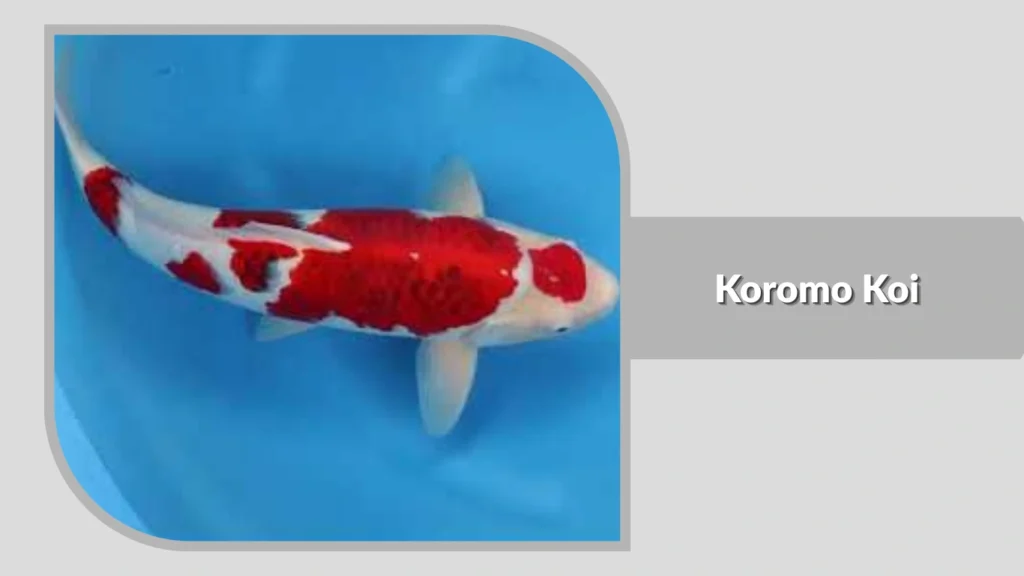
The Koromo Koi is a refined and elegant variety that combines the red patterns of Kohaku with a darker overlay on each scale. This creates a unique “robed” or edged appearance, where the red markings appear wrapped in a subtle blue or black net pattern. It is highly valued for its delicate detailing and balanced coloration.
Identification
- White (shiroji) base color
- Red (hi) patterns similar to Kohaku
- Dark edging (blue or black) on each red scale
- Net-like overlay on red areas
- Clean, well-defined pattern edges
- Can grow up to 24–36 inches in large ponds
Origin
The Koromo Koi originated in Japan and was developed by crossing Kohaku with Asagi varieties. This breeding introduced the net-like scale pattern over the red markings, creating its distinctive layered appearance.
Behavior
Koromo Koi are calm, social, and active swimmers. They adapt well to pond life and coexist peacefully with other koi varieties. Their graceful movement highlights their detailed scale pattern.
Care
This variety requires clean, stable water conditions to maintain the clarity of its white base and the fine edging on its scales. Proper filtration and regular maintenance are essential. A balanced diet helps preserve color contrast and supports overall health.
13. Kujaku Koi
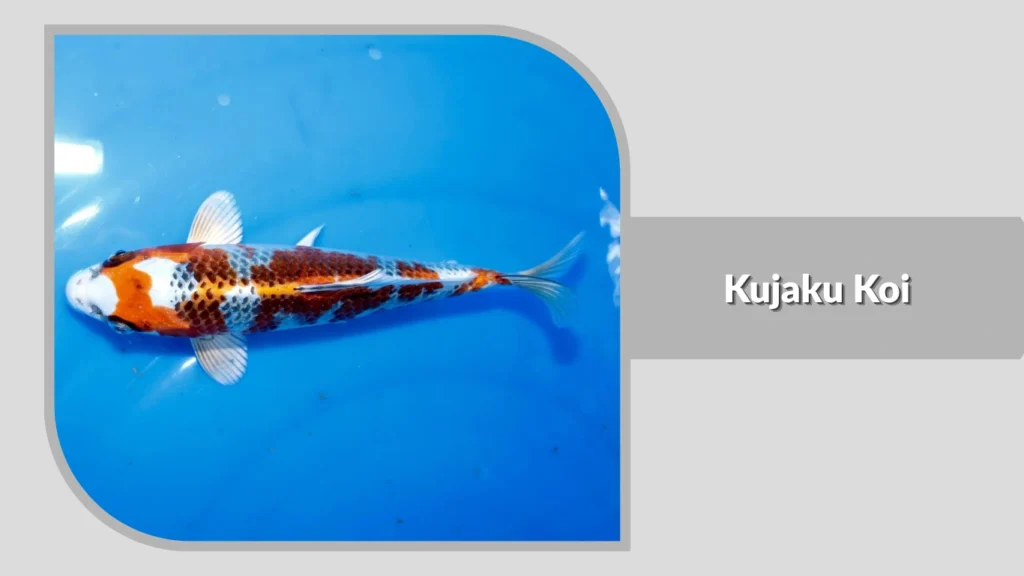
The Kujaku Koi is a stunning metallic variety known for its bright white base, net-like pattern, and vibrant red or orange markings. Its name means “peacock” in Japanese, reflecting its elegant and eye-catching appearance. The combination of metallic shine and reticulated pattern gives it a unique and highly decorative look in any pond.
Identification
- Metallic white base color
- Red or orange (hi) patterns on the body
- Black or dark reticulated (net-like) pattern over scales
- Shiny, reflective appearance
- Clean and balanced color distribution
- Can grow up to 24–36 inches in large ponds
Origin
The Kujaku Koi originated in Japan and was developed by crossing Hikarimono (metallic koi) with Goshiki varieties. This combination created a koi with both metallic shine and a net-like pattern.
Behavior
Kujaku Koi are active, social, and graceful swimmers. They adapt well to community ponds and interact peacefully with other koi varieties. Their shimmering body makes them stand out as they move through the water.
Care
This variety requires clean, well-filtered water to maintain its metallic shine and pattern clarity. Stable pond conditions are important for preserving color contrast. A balanced diet with quality nutrients helps enhance their brightness and overall health.
14. Doitsu Koi
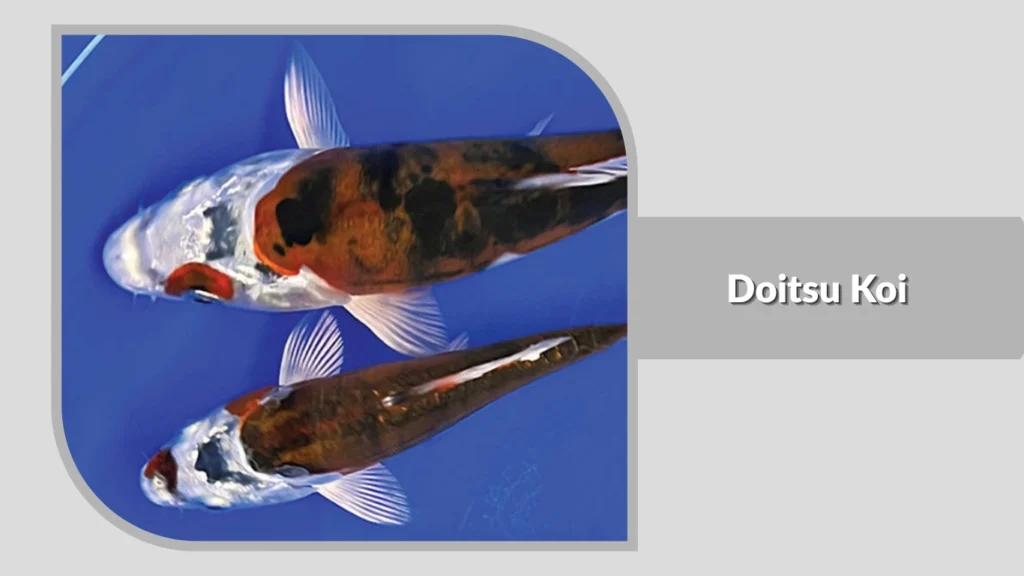
The Doitsu Koi is a unique variety known for its scaleless or partially scaled body, giving it a smooth and clean appearance. Instead of full scales, it may have a single row of large scales along the back or sides. This feature makes its colors appear more vivid and sharply defined, making it highly attractive in ponds.
Identification
- Scaleless or partially scaled body
- May have a single row of large scales along the back
- Smooth, glossy skin
- Can appear in many color patterns depending on type
- Colors often look brighter due to lack of scales
- Can grow up to 24–36 inches in large ponds
Origin
The Doitsu Koi originated in Japan through crossbreeding with German mirror carp. This introduced the scaleless trait into traditional koi, creating a new category that includes many color and pattern variations.
Behavior
Doitsu Koi are active, social, and behave similarly to other koi varieties. They adapt well to pond life and interact peacefully with other fish. Their smooth body makes their movement appear especially graceful.
Care
This variety requires clean, well-maintained water, as their scaleless skin can be more sensitive to injuries and poor conditions. Good filtration and stable water parameters are essential. A balanced diet helps maintain their vibrant colors and overall health.
15. Gin Rin Koi
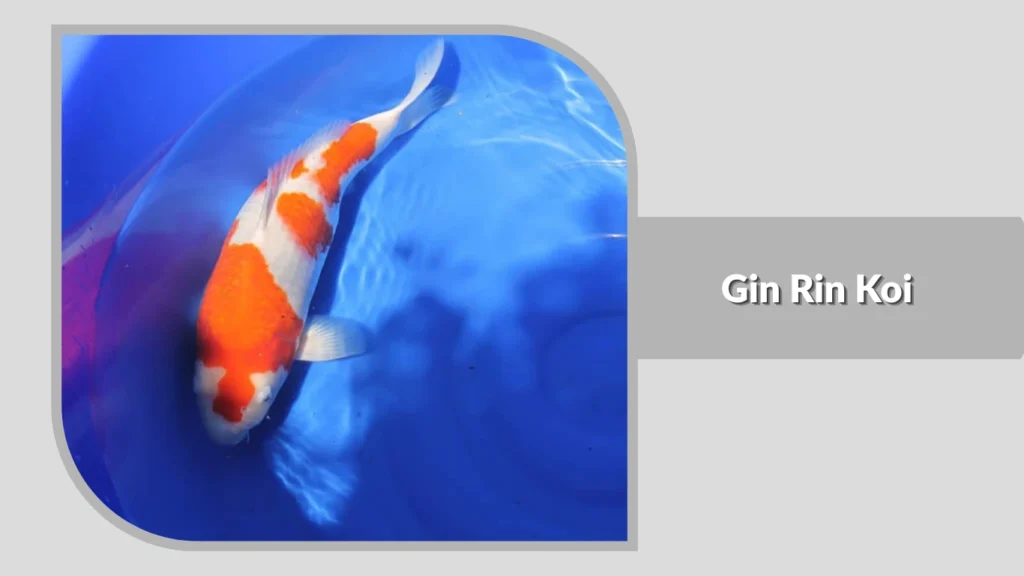
The Gin Rin Koi is a dazzling variety known for its sparkling, diamond-like scales that reflect light as it swims. These reflective scales create a shimmering effect across the body, making the fish highly eye-catching in any pond. Gin Rin is not a specific color pattern but a scale type that can appear on many koi varieties.
Identification
- Shiny, reflective “diamond” scales
- Sparkling appearance under light
- Can appear in various color patterns (Kohaku, Sanke, Showa, etc.)
- Bright, glittering effect across the body
- Scales reflect light individually
- Can grow up to 24–36 inches in large ponds
Origin
The Gin Rin Koi originated in Japan and was developed through selective breeding to enhance the reflective quality of the scales. Over time, this trait was introduced into multiple koi varieties, creating a wide range of sparkling koi types.
Behavior
Gin Rin Koi are active, social, and behave like other koi varieties. They swim confidently and interact well in community ponds. Their shimmering scales make their movement especially noticeable and attractive.
Care
This variety requires clean, clear water to fully display its sparkling scales. Good filtration and stable conditions are essential. A balanced diet helps maintain scale quality and overall health, ensuring the reflective effect remains strong.
16. Chagoi Koi
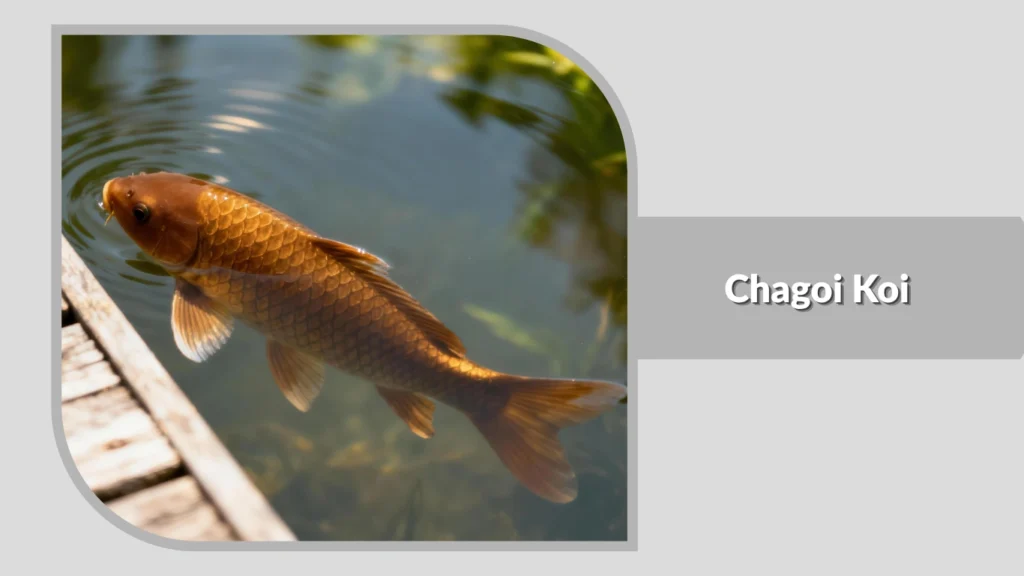
The Chagoi Koi is a simple yet highly valued variety known for its solid brown coloration and friendly nature. It may not have the bright patterns of other koi, but it is prized for its fast growth, large size, and calm temperament. Chagoi are often the first koi to become tame and will readily interact with their owners, making them a favorite in many ponds.
Identification
- Solid brown, tea-colored body
- Uniform coloration with no patterns
- Smooth, non-metallic scales
- Large, strong body structure
- Can also appear in lighter or darker brown shades
- Can grow up to 30–40 inches in large ponds
Origin
The Chagoi Koi originated in Japan and was developed from naturally colored carp. Breeders preserved its simple coloration while selecting for size, strength, and calm behavior, making it one of the largest-growing koi varieties.
Behavior
Chagoi Koi are extremely friendly and social. They are known for their calm temperament and often become hand-fed over time. They also help other koi become less shy, making them a great addition to any pond community.
Care
This variety is hardy and adaptable, thriving in large, well-maintained ponds. Clean water, proper filtration, and stable conditions support their rapid growth. A high-quality diet helps them reach their full size and maintain overall health.
17. Soragoi Koi
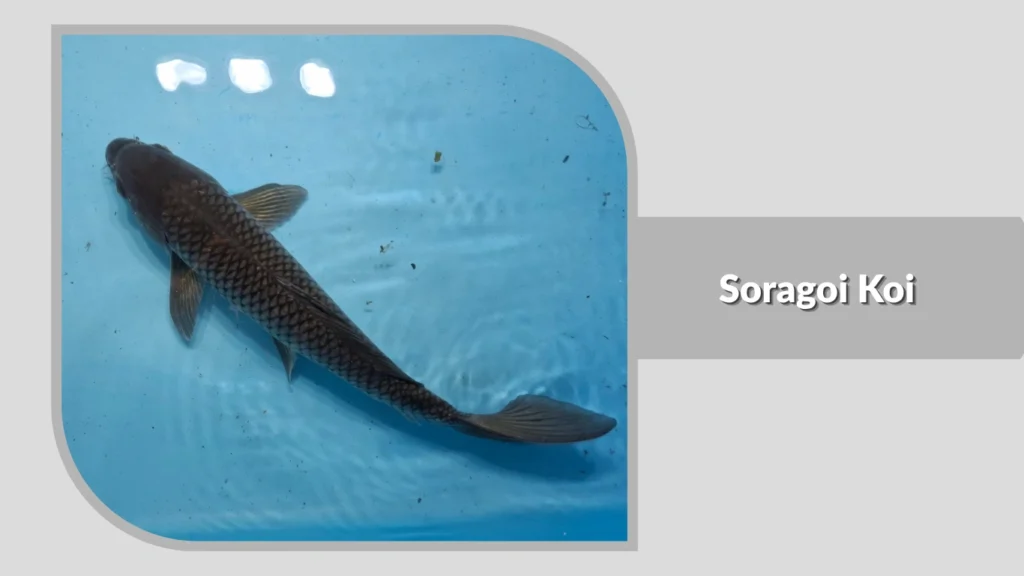
The Soragoi Koi is a simple and elegant variety known for its solid gray coloration. Its name comes from the Japanese word for “sky,” reflecting its soft gray tone. Like Chagoi, it is valued more for its size and friendly personality than for bright patterns. Soragoi are calm, hardy, and often grow quite large, making them a popular choice for pond keepers.
Identification
- Solid gray (light to dark) body color
- Uniform, patternless appearance
- Smooth, non-metallic scales
- Strong, elongated body shape
- Subtle variations in gray tone
- Can grow up to 30–36 inches in large ponds
Origin
The Soragoi Koi originated in Japan and was developed from naturally gray carp. It shares similar breeding origins with Chagoi and is part of a group of koi valued for size and temperament rather than complex patterns.
Behavior
Soragoi Koi are calm, friendly, and highly social. They are known to become tame quickly and often interact with their owners. Their peaceful nature also helps reduce stress among other koi in the pond.
Care
This variety is hardy and easy to care for, thriving in large ponds with good filtration. Clean, stable water conditions support healthy growth. A balanced diet helps maintain their size and overall health, even though their color does not require enhancement.
18. Ochiba Shigure Koi
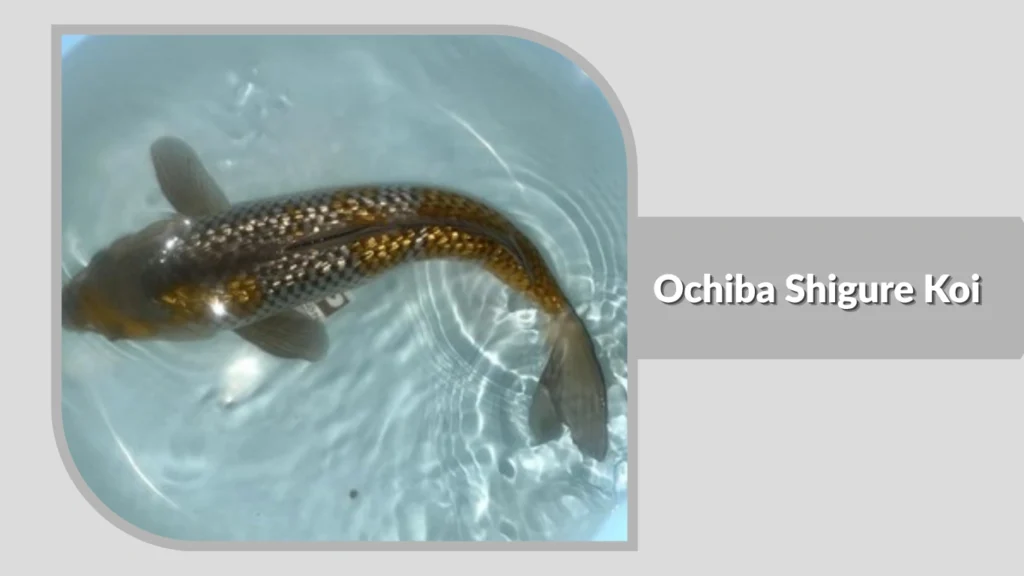
The Ochiba Shigure Koi is a unique and calming variety known for its gray base color with brown or copper patterns. Its name means “fallen leaves on water,” which perfectly describes its appearance. The soft, natural tones give it a peaceful and earthy look, making it stand out in a more subtle way compared to brightly colored koi.
Identification
- Gray or blue-gray base color
- Brown or copper (leaf-like) patterns
- Non-metallic, smooth scales
- Soft, blended color transitions
- Balanced and natural-looking pattern
- Can grow up to 24–36 inches in large ponds
Origin
The Ochiba Shigure Koi originated in Japan and was developed by crossing Soragoi (gray) with Chagoi (brown) koi. This combination created its signature “autumn leaf” appearance.
Behavior
Ochiba Shigure Koi are calm, friendly, and social. Like Chagoi and Soragoi, they are known for becoming tame and interacting with their owners. They help create a peaceful environment in the pond.
Care
This variety is hardy and thrives in large, well-maintained ponds. Clean water, proper filtration, and stable conditions support their health. A balanced diet helps maintain their natural coloration and supports steady growth.
19. Matsuba Koi
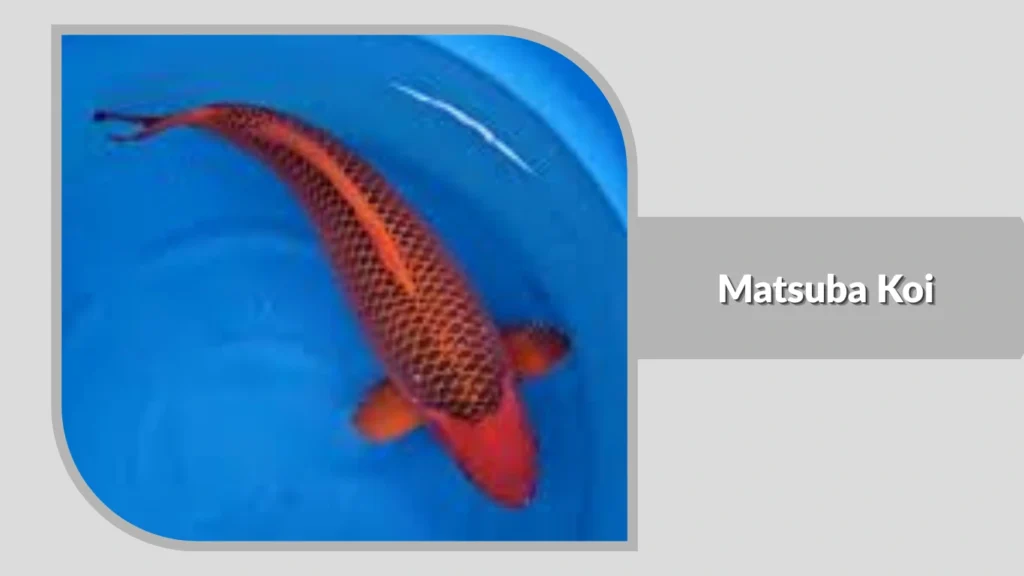
The Matsuba Koi is a distinctive variety known for its pinecone-like scale pattern. Each scale has a darker center, creating a net-like effect across the body. This pattern, combined with a solid base color, gives the fish a textured and elegant appearance. It is appreciated for its clarity, symmetry, and bold visual structure.
Identification
- Solid base color (commonly red, yellow, or white)
- Dark centers on each scale creating a pinecone pattern
- Reticulated (net-like) scale appearance
- Clean, uniform color distribution
- Strong contrast between base color and scale centers
- Can grow up to 24–36 inches in large ponds
Origin
The Matsuba Koi originated in Japan and was developed through selective breeding to enhance the reticulated scale pattern. Different color variations, such as Aka Matsuba (red) and Ki Matsuba (yellow), were later established.
Behavior
Matsuba Koi are active, social, and adapt well to pond life. They interact peacefully with other koi and display steady, graceful swimming. Their patterned scales become more noticeable as they move through the water.
Care
This variety requires clean, well-filtered water to maintain the clarity of its base color and scale pattern. Stable pond conditions are important for preserving contrast. A balanced diet supports healthy growth and overall appearance.
20. Kumonryu Koi
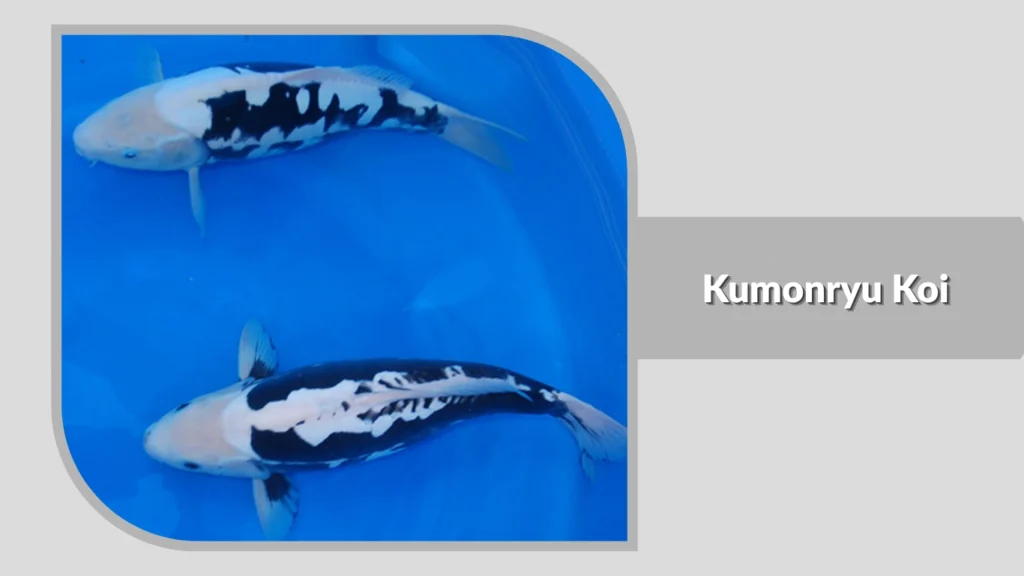
The Kumonryu Koi is a fascinating and ever-changing variety known for its black and white pattern that can shift over time. Its name means “dragon fish,” reflecting its dynamic and flowing appearance. This koi is especially unique because its markings can change with seasons, temperature, and water conditions, making each fish truly one of a kind.
Identification
- Black and white coloration
- Doitsu (scaleless or partially scaled) body
- Bold, flowing patterns
- No red or yellow colors
- Pattern may change over time
- Can grow up to 24–36 inches in large ponds
Origin
The Kumonryu Koi originated in Japan and was developed from Doitsu (German carp) breeding lines. It was selectively bred to produce the striking black and white contrast along with its unique color-changing ability.
Behavior
Kumonryu Koi are active, social, and adapt well to pond environments. They interact peacefully with other koi and display smooth, steady swimming. Their changing pattern makes them especially interesting to observe over time.
Care
This variety requires clean, well-maintained water to support its health and color changes. Stable pond conditions are important, although some variation can influence its pattern. A balanced diet helps maintain overall health and supports natural development.
21. Kikokuryu Koi
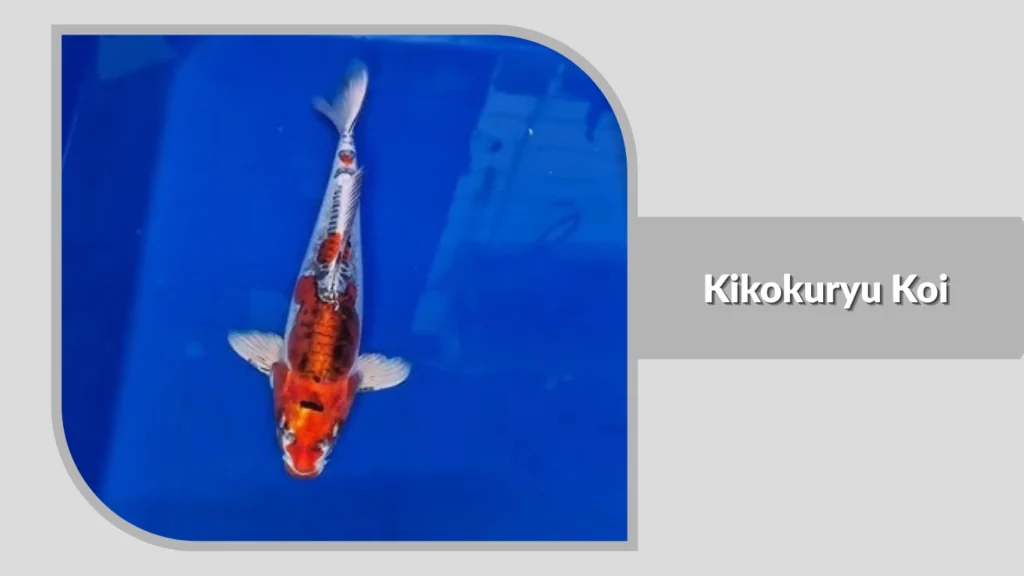
The Kikokuryu Koi is a metallic version of the Kumonryu, known for its striking black, white, and shiny platinum appearance. Like Kumonryu, its pattern can change over time, making each fish unique. The addition of metallic sheen gives it a brighter and more eye-catching look, especially under sunlight.
Identification
- Metallic (shiny) black and white coloration
- Doitsu (scaleless or partially scaled) body
- Platinum white base with black patterns
- Reflective, glossy appearance
- Pattern may change with conditions
- Can grow up to 24–36 inches in large ponds
Origin
The Kikokuryu Koi originated in Japan and was developed by combining Kumonryu with metallic koi varieties. This breeding introduced the reflective quality while maintaining the dynamic pattern-changing trait.
Behavior
Kikokuryu Koi are active and social fish. They adapt well to community ponds and swim gracefully alongside other koi. Their changing pattern and metallic shine make them particularly engaging to observe.
Care
This variety requires clean, well-filtered water to maintain its metallic sheen and health. Stable conditions help preserve color clarity, although some changes are natural. A balanced diet supports overall well-being and enhances their reflective appearance.
22. Beni Kikokuryu Koi
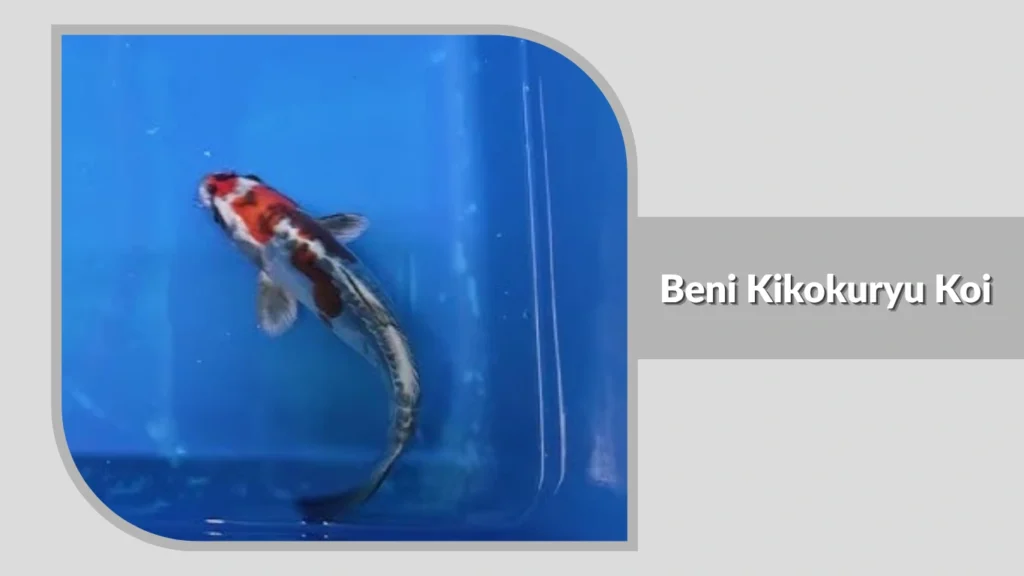
The Beni Kikokuryu Koi is a vibrant variation of the Kikokuryu, featuring an additional red (beni) coloration along with black and white. Its metallic sheen combined with shifting patterns makes it one of the most dynamic and visually striking koi varieties. Like its parent type, its appearance can change over time, adding to its uniqueness.
Identification
- Metallic (shiny) body
- Combination of black, white, and red (beni)
- Doitsu (scaleless or partially scaled) body
- Reflective platinum base with red and black patterns
- Pattern may change over time
- Can grow up to 24–36 inches in large ponds
Origin
The Beni Kikokuryu Koi originated in Japan as a development of the Kikokuryu variety. Breeders introduced red coloration to enhance visual appeal while maintaining the metallic shine and pattern-changing characteristics.
Behavior
Beni Kikokuryu Koi are active, social, and adapt well to pond environments. They interact peacefully with other koi and display smooth swimming patterns. Their changing colors make them especially interesting to observe over time.
Care
This variety requires clean, stable water conditions to maintain its metallic shine and color clarity. Good filtration is essential. A balanced diet supports overall health and helps enhance the brightness of its red, black, and white coloration.
23. Hariwake Koi
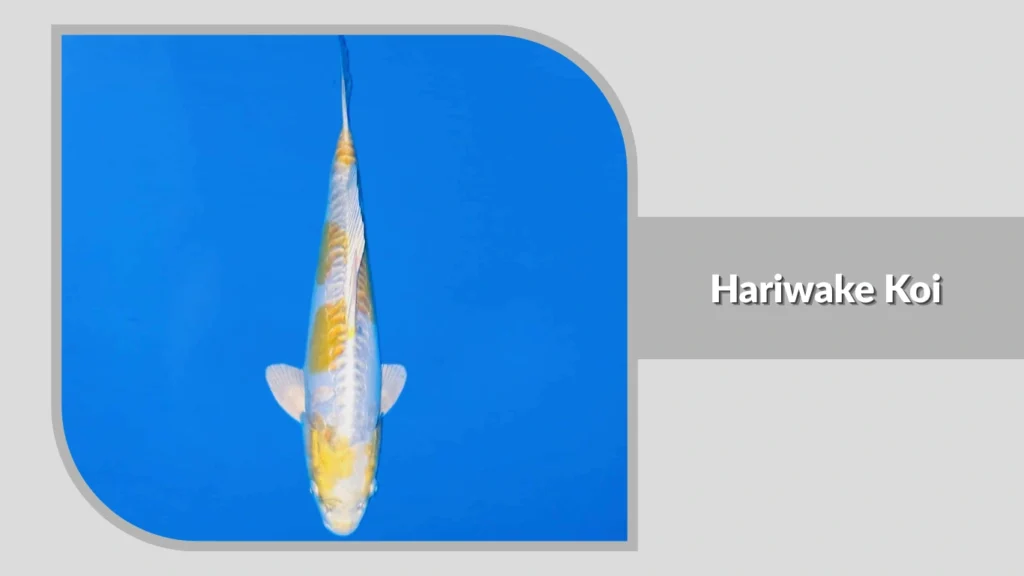
The Hariwake Koi is a beautiful metallic variety known for its bright white or platinum base combined with yellow or orange patterns. Its reflective scales and clean color contrast give it a luminous appearance in the water. This koi is highly appreciated for its simplicity, brightness, and elegant pattern.
Identification
- Metallic white or platinum base
- Yellow or orange (hi) patterns
- Smooth, reflective scales
- Clean and bright color contrast
- No black markings
- Can grow up to 24–36 inches in large ponds
Origin
The Hariwake Koi originated in Japan and was developed by crossing Ogon (metallic koi) with Kohaku-type varieties. This breeding created a koi with both metallic shine and patterned coloration.
Behavior
Hariwake Koi are active, social, and peaceful. They adapt well to community ponds and swim gracefully alongside other koi. Their bright appearance makes them easy to spot as they move through the water.
Care
This variety requires clean, well-filtered water to maintain its metallic shine and bright coloration. Stable pond conditions are important for preserving contrast. A balanced diet helps support healthy growth and enhances overall appearance.
24. Yamabuki Ogon Koi
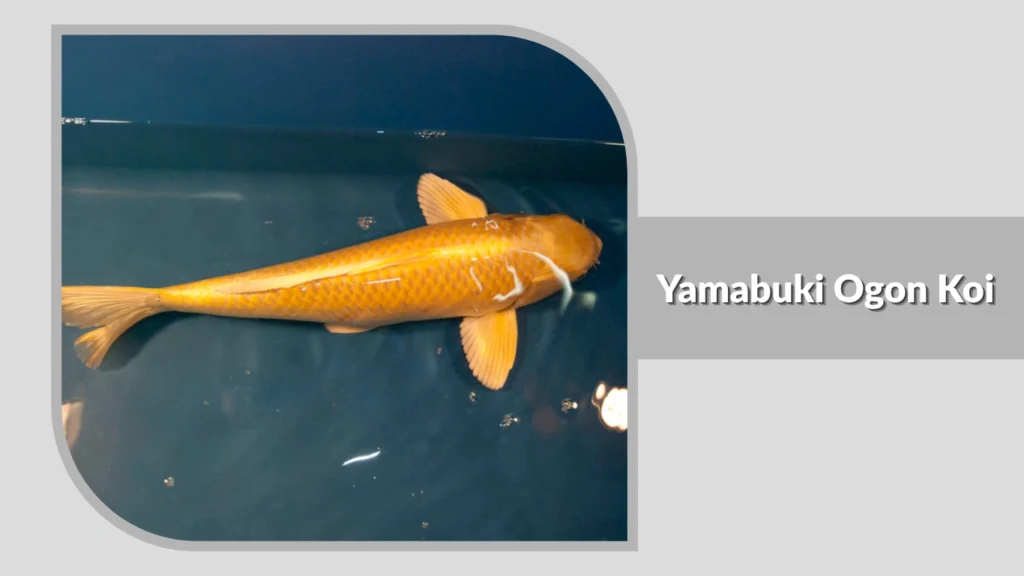
The Yamabuki Ogon Koi is a brilliant metallic variety known for its solid golden-yellow color and intense shine. It is one of the most eye-catching koi types due to its bright, reflective body that stands out clearly in any pond. Its simplicity, combined with strong color and luster, makes it a favorite among koi enthusiasts.
Identification
- Solid golden-yellow (yamabuki) color
- Metallic, highly reflective scales
- No patterns or markings
- Smooth, uniform coloration
- Bright, glowing appearance
- Can grow up to 24–36 inches in large ponds
Origin
The Yamabuki Ogon Koi originated in Japan as a variation of the Ogon group. It was selectively bred to enhance its rich yellow color and metallic shine, resulting in one of the most popular single-colored koi varieties.
Behavior
Yamabuki Ogon Koi are active, social, and easy to keep. They adapt well to community ponds and interact peacefully with other koi. Their bright color makes them highly visible as they swim.
Care
This variety requires clean, well-filtered water to maintain its metallic shine and vibrant color. Stable pond conditions are essential for long-term health. A high-quality diet helps enhance its brightness and supports overall growth.
25. Aka Matsuba Koi
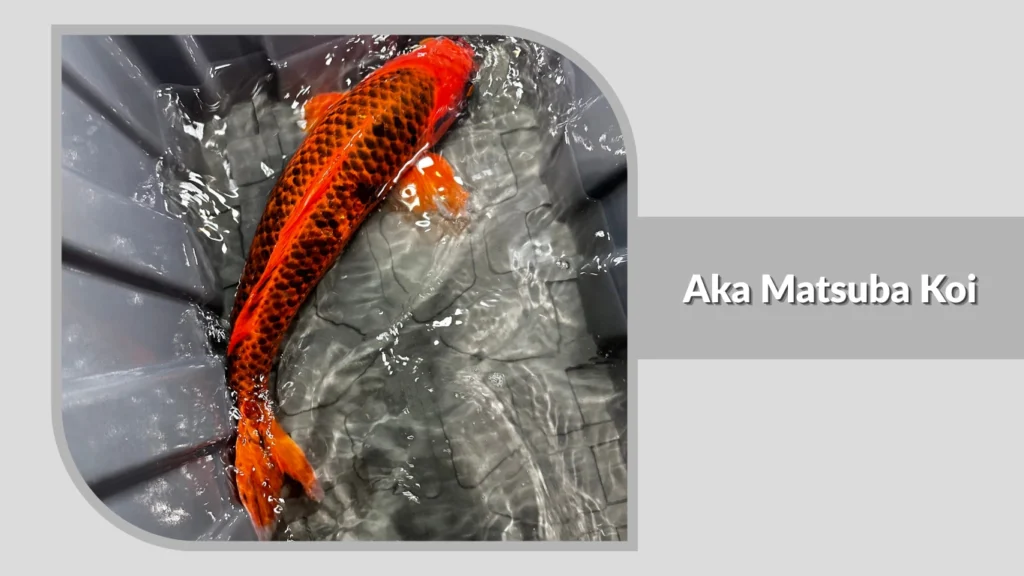
The Aka Matsuba Koi is a striking variation of the Matsuba type, known for its bold red base color combined with a distinctive pinecone-like scale pattern. The contrast between the red body and dark-centered scales creates a textured and eye-catching appearance. It is admired for its strong coloration and well-defined reticulated pattern.
Identification
- Solid red (aka) base color
- Dark centers on each scale forming a pinecone pattern
- Reticulated (net-like) appearance
- Non-metallic scales
- Strong contrast between red and dark scale centers
- Can grow up to 24–36 inches in large ponds
Origin
The Aka Matsuba Koi originated in Japan as a color variation of the Matsuba group. It was selectively bred to enhance the red coloration while maintaining the signature reticulated scale pattern.
Behavior
Aka Matsuba Koi are active, social, and adapt well to pond environments. They interact peacefully with other koi and display steady, graceful swimming. Their bold pattern becomes more noticeable as they move.
Care
This variety requires clean, well-maintained water to preserve the clarity of its red color and scale pattern. Good filtration and stable conditions are essential. A balanced diet helps support healthy growth and maintain vibrant coloration.
FAQs
What is the most popular koi fish variety?
The Kohaku Koi is considered the most popular variety. Its simple white body with red markings makes it easy to recognize and highly valued. It is also one of the “Big Three” koi types, along with Sanke and Showa.
How big do koi fish grow?
Koi fish can grow quite large, typically reaching 24–36 inches in a well-maintained pond. Some varieties, like Chagoi, can grow even bigger under ideal conditions. Proper space, clean water, and good nutrition play a key role in their growth.
Can different koi varieties live together?
Yes, all koi varieties can live together peacefully. They are social fish and thrive in groups. Mixing different types is common in ponds, as it creates a more colorful and visually appealing environment.
How long do koi fish live?
Koi fish are known for their long lifespan. With proper care, they can live 20–30 years, and some have even lived much longer. Their lifespan depends on water quality, diet, and overall care.
What do koi fish eat?
Koi fish are omnivores and eat a variety of foods. Their diet typically includes high-quality pellets, vegetables, and occasional protein like insects or shrimp. A balanced diet helps maintain their color, health, and growth.