
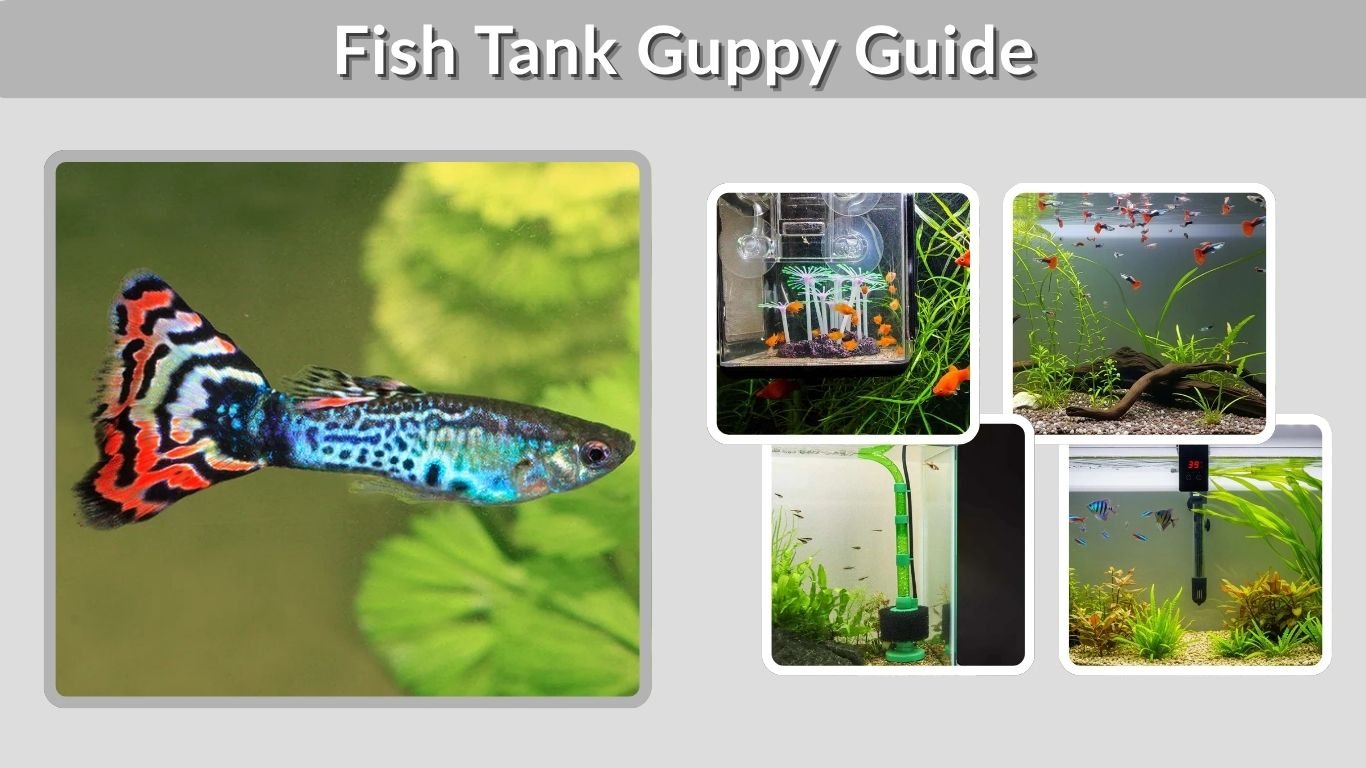
Guppies are colorful, active, and beginner-friendly fish, but they still need the right tank environment to stay healthy. A good fish tank guppy setup includes enough swimming space, clean water, stable temperature, peaceful tank mates, and safe hiding spots. Whether you are setting up your first guppy fish tank or improving an existing aquarium, this guide covers everything you need to know.
Why Guppies Are Popular Fish Tank Pets
Guppies are one of the most common freshwater aquarium fish because they are beautiful, hardy, and easy to care for. Their bright colors, flowing tails, and active swimming make them a lively addition to small and medium-sized aquariums.
Another reason people love guppies is that they adapt well to community tanks. A fish tank with guppies can look peaceful and colorful when the setup is done correctly. They are also livebearers, meaning they give birth to free-swimming fry instead of laying eggs. This makes guppy breeding interesting for many aquarium keepers.
However, guppies are not “no-care” fish. They still need proper water quality, the right tank size, suitable food, and compatible tank mates.
Best Fish Tank Size for Guppies
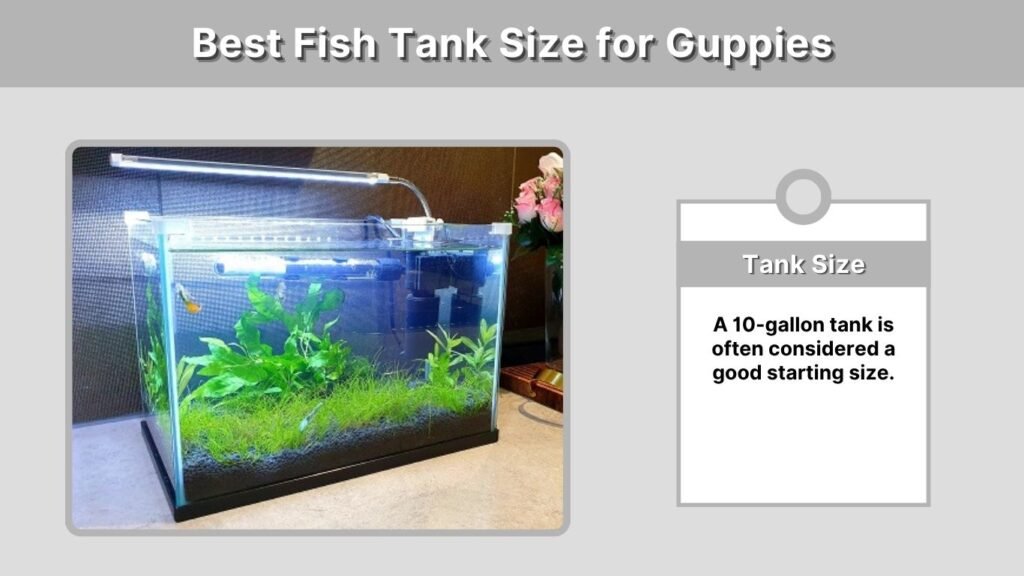
Choosing the right guppy fish tank size is one of the most important steps. Many beginners think guppies can live happily in tiny bowls or very small tanks, but that usually leads to poor water quality and stress.
A 10-gallon tank is often considered a good starting size for a small group of guppies. It gives them enough room to swim and makes it easier to keep the water stable. A 5-gallon tank may work for a very small number of guppies, but it requires more careful maintenance.
How Many Guppies Can Live in a Tank?
A simple beginner’s rule is to avoid overcrowding. Guppies are active fish and produce waste, so too many fish in a small tank can quickly cause ammonia buildup.
| Tank Size | Suggested Guppy Count | Best Use |
| 5 gallons | 2–3 guppies | Small beginner tank, preferably males only |
| 10 gallons | 5–6 guppies | Best starter guppy tank |
| 20 gallons | 10–12 guppies | Community or breeding setup |
| 30 gallons+ | 15+ guppies | Larger community tank |
If you keep both male and female guppies together, remember that they breed quickly. A few guppies can turn into many fish within a short time, so plan extra space before breeding starts.
How to Set Up a Guppy Fish Tank
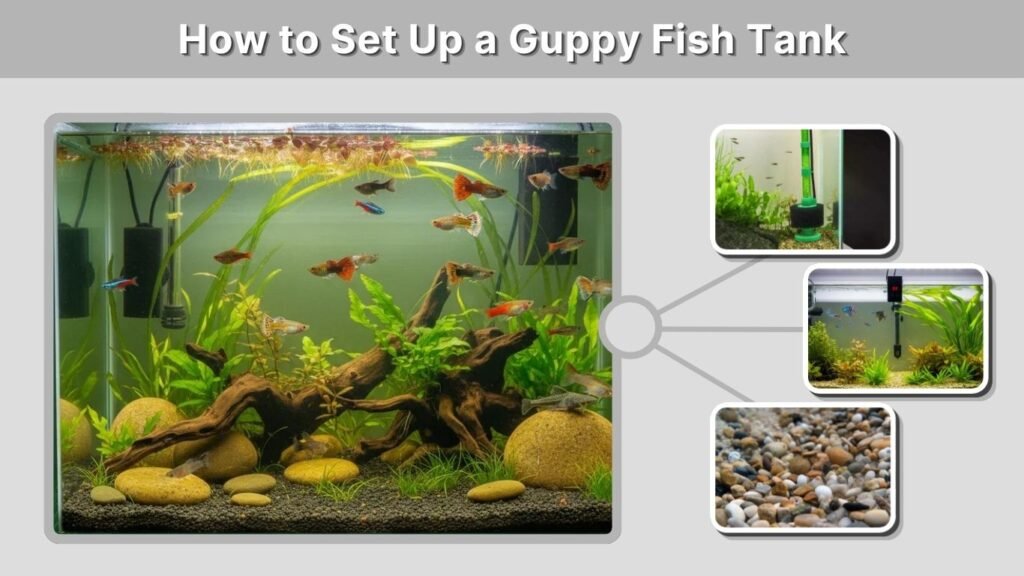
A proper guppy fish tank setup should be simple, stable, and easy to maintain. Guppies do best in a clean aquarium with filtration, gentle water flow, hiding places, and open swimming space.
Basic Guppy Tank Requirements
Before adding guppies, prepare the tank carefully. A rushed setup can expose fish to harmful ammonia and nitrite spikes.
You will need:
- A suitable aquarium, ideally 10 gallons or larger
- A gentle filter
- A heater for stable temperature
- Aquarium substrate such as gravel or sand
- Live or artificial plants
- Water conditioner
- Test kit for ammonia, nitrite, nitrate, and pH
- Quality guppy food
The tank should be cycled before fish are added. Cycling allows beneficial bacteria to grow in the filter and substrate. These bacteria help break down fish waste and keep the water safer.
Substrate and Decorations
Guppies are not very demanding about substrate. Gravel, sand, or planted aquarium soil can all work. Choose a substrate that is easy to clean and safe for freshwater fish.
Decorations should not have sharp edges because guppies, especially males with long tails, can tear their fins. Smooth rocks, driftwood, caves, and plants are better choices. Guppy fish tank decorations should improve the fish’s comfort, not just the appearance of the aquarium.
Ideal Guppy Fish Tank Temperature
Guppies are tropical fish, so they need warm water. The ideal guppy fish tank temperature is usually around 72°F to 82°F. Many aquarists keep them near 76°F to 78°F for a stable, comfortable range.
Sudden temperature changes can stress guppies and make them more vulnerable to disease. That is why a heater is recommended, even if the room feels warm during the day. Room temperature can drop at night, especially in cooler seasons.
Signs the Temperature Is Wrong
If the water is too cold, guppies may become slow, inactive, or more likely to get sick. If the water is too warm, they may breathe rapidly, stay near the surface, or become stressed.
Watch for these signs:
- Guppy fish staying at the top of the tank
- Guppy fish laying on the bottom of the tank
- Fast breathing or weak swimming
- Loss of appetite
- Clamped fins
- Unusual hiding behavior
Temperature is not the only cause of these symptoms, but it is one of the first things to check.
Best Plants for a Guppy Fish Tank
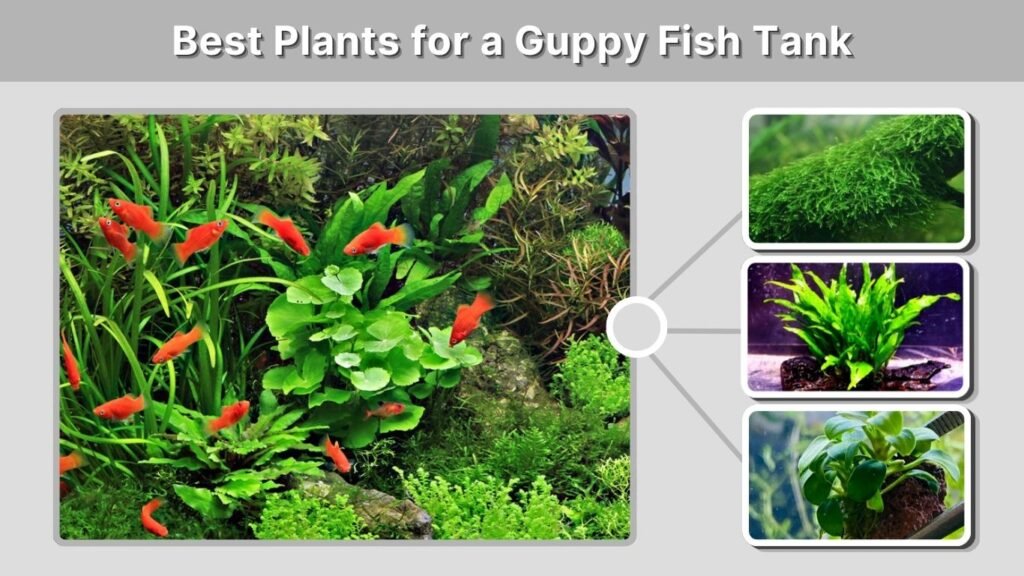
Plants are excellent for guppy tanks. They provide hiding spaces, improve the natural look of the aquarium, and help fry survive in breeding tanks. Live plants can also support water quality by absorbing some waste nutrients.
Good Plant Choices for Guppies
Some of the best guppy fish tank plants include:
- Java moss
- Java fern
- Anubias
- Hornwort
- Water sprite
- Guppy grass
- Amazon sword
- Floating plants like frogbit or salvinia
Floating plants are especially useful because guppies often swim near the top of the tank. They create shade and help fry hide from adult fish. Java moss and guppy grass are also excellent for breeding tanks because baby guppies can hide inside the dense growth.
Guppy Fish Tank Mates
Guppies are peaceful fish, so they should live with other peaceful species. The best guppy fish tank mates are small, calm fish that enjoy similar water conditions.
Good Tank Mates for Guppies
Suitable tank mates may include:
- Corydoras catfish
- Neon tetras
- Ember tetras
- Harlequin rasboras
- Platies
- Mollies
- Small peaceful snails
- Cherry shrimp, with caution
Corydoras are a popular choice because they stay near the bottom while guppies swim mostly in the middle and upper areas. This helps balance activity in the aquarium.
Fish to Avoid with Guppies
Not every fish should live with guppies. Some fish nip fins, chase guppies, or grow too large.
Avoid keeping guppies with:
- Aggressive cichlids
- Tiger barbs
- Large predatory fish
- Goldfish
- Fin-nipping species
- Bettas, unless carefully monitored
Many people ask, “Can betta fish and guppies be in the same tank?” The answer is: sometimes, but it is risky. Bettas may mistake male guppies for rival fish because of their bright colors and long fins. Some bettas ignore guppies, while others attack them. A backup plan is important if you try this pairing.
Goldfish are also not ideal tank mates. Guppy fish and goldfish in the same tank usually have different temperature and care needs. Goldfish also grow large and produce a lot of waste.
Guppy Fish Breeding Tank Setup
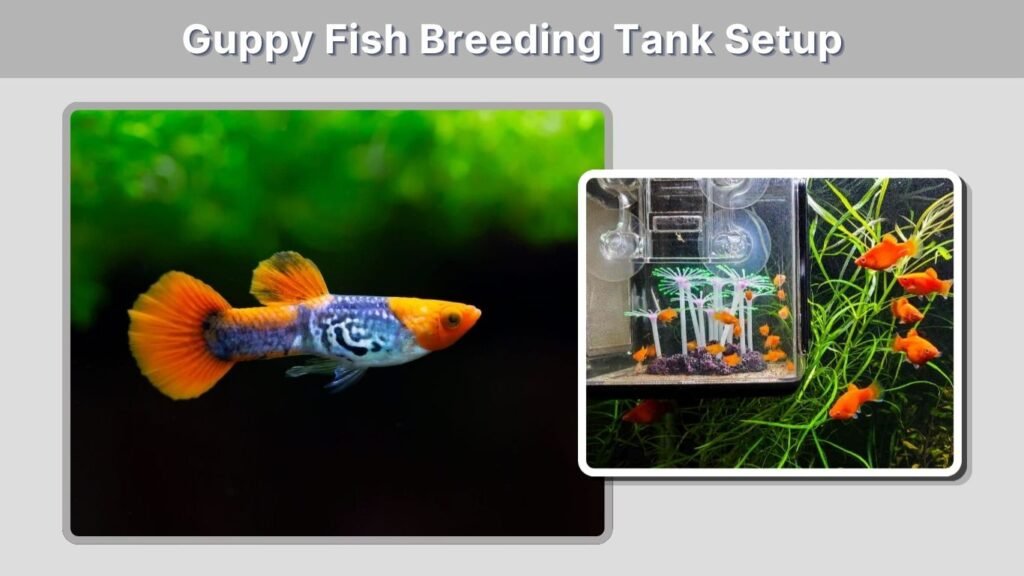
Guppies breed easily, which can be exciting but also overwhelming. A guppy fish breeding tank should be safe for fry and easy to manage.
A 10-gallon breeding tank can work well for a small breeding group. Many keepers use a ratio of one male to two or three females. This helps reduce stress on female guppies because males often chase them.
What Breeding Guppies Need
A breeding tank should include:
- Gentle filtration, such as a sponge filter
- Stable warm water
- Dense plants or moss
- Hiding places for fry
- Clean water with regular maintenance
- Separate space for baby guppies if needed
Guppies do not lay eggs. So if you search for guppy fish eggs in a tank, you may be misunderstanding their breeding style. Female guppies give birth to live fry. Adult guppies may eat the babies, so plants and hiding spots are very important.
How to Clean a Guppy Fish Tank
Cleaning a guppy fish tank is not about removing everything and starting over. In fact, deep cleaning the entire tank can remove beneficial bacteria and harm the aquarium cycle.
Instead, clean the tank regularly and gently.
Weekly Cleaning Routine
A simple cleaning routine includes:
- Change 20% to 30% of the water weekly
- Use a gravel vacuum to remove waste
- Wipe algae from the glass
- Rinse filter media only in old tank water
- Remove uneaten food and dead plant leaves
- Test water parameters when needed
Never wash filter media under tap water because chlorine can kill beneficial bacteria. Also, avoid changing all the water at once unless there is an emergency.
If you notice a dead guppy in the fish tank, remove it quickly. Then check water quality, temperature, and the behavior of the remaining fish.
Common Guppy Fish Tank Problems
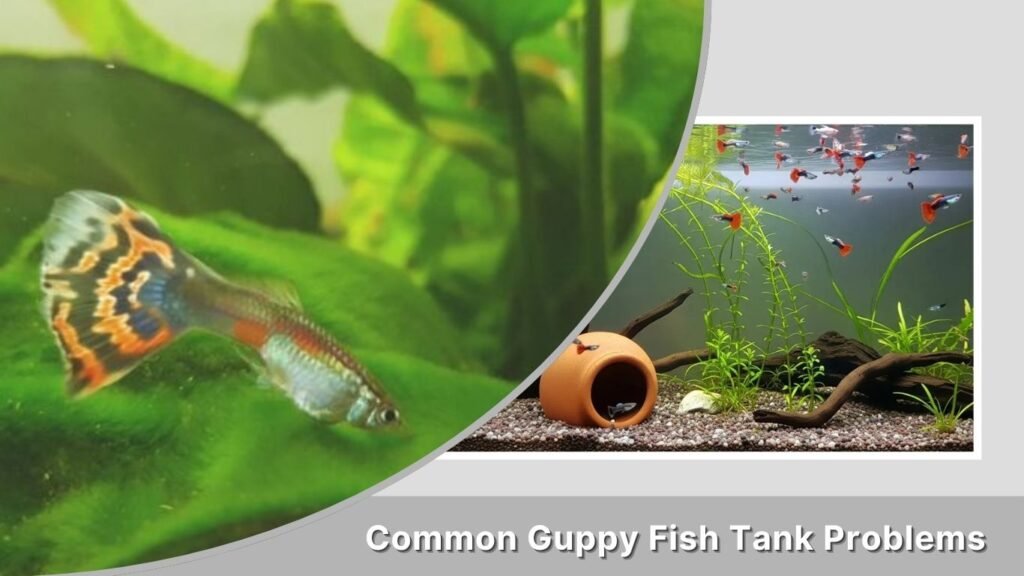
Even hardy fish like guppies can face problems. Most issues come from poor water quality, stress, overcrowding, or incompatible tank mates.
Guppy Fish Staying at the Top of the Tank
If guppies stay near the top, they may be looking for oxygen. This can happen when the tank has low oxygen, poor water quality, or high temperature.
Check the filter, water movement, and ammonia levels. Adding gentle surface agitation can help improve oxygen exchange.
Guppy Fish Sitting at the Bottom of the Tank
A guppy sitting at the bottom may be stressed, sick, cold, pregnant, or affected by poor water quality. Test the water first. Ammonia and nitrite should be zero.
If only one guppy is acting this way, watch for disease signs such as clamped fins, white spots, bloating, or damaged fins.
Guppy Fish Jumping Out of the Tank
Yes, guppies can jump out of fish tanks. This may happen because of stress, poor water conditions, sudden movement, or simply active behavior near the surface.
Use a tank lid, especially if your guppies are active. Keep the water level slightly below the rim if the tank has no tight cover.
Guppy Fish Disappeared from the Tank
If a guppy disappears, check behind decorations, inside filter spaces, around the tank, and on the floor. Small fish can hide when stressed or sick. In community tanks, a dead fish may also be eaten quickly by other fish or snails.
What Do Guppy Fish Like in Their Tank?
Guppies like a tank that feels safe, clean, and active without being stressful. They enjoy open swimming space, gentle water flow, plants, and stable water conditions.
A good aquarium for guppies should include both open areas and covered areas. Open space lets them swim freely, while plants and decorations help them feel secure.
Food and Feeding Tips
Guppies are omnivores. They can eat flakes, micro pellets, frozen foods, and live foods. A varied diet helps improve color, growth, and health.
Good food options include:
- High-quality guppy flakes
- Micro pellets
- Frozen or live brine shrimp
- Daphnia
- Bloodworms as an occasional treat
- Crushed spirulina flakes
Feed small amounts once or twice daily. Only give what they can eat within a short time. Overfeeding is one of the most common causes of dirty water in guppy tanks.
Best Fish Tank Ideas for Guppies
A beautiful guppy fish tank does not need to be complicated. The best design depends on your goal.
For beginners, a planted 10-gallon tank with a small group of male guppies is simple and colorful. For breeders, a bare-bottom tank with sponge filtration and dense moss may be easier to clean. For a community aquarium, a 20-gallon tank with guppies, corydoras, and small tetras can look balanced and lively.
You can also create a natural-style guppy tank using live plants, driftwood, and floating plants. This setup gives guppies hiding areas while making the aquarium look more realistic.
FAQs
How many guppy fish can live in a 10-gallon tank?
A 10-gallon tank can usually hold around five to six adult guppies if the tank is filtered and maintained well. If you keep males and females together, plan for babies because guppies breed quickly. Avoid overcrowding, and test the water regularly to keep ammonia and nitrite at zero.
What temperature should a fish tank be for guppies?
The best temperature for guppies is usually between 72°F and 82°F. Many keepers aim for 76°F to 78°F because it is stable and comfortable. Use an aquarium heater to prevent sudden drops, especially at night or during colder weather.
Can betta fish and guppies be in the same tank?
Betta fish and guppies can sometimes live together, but it is risky. Male guppies have bright colors and flowing tails, which may trigger aggression in some bettas. If you try this setup, use a larger tank with plants and have a backup tank ready.
How often should you clean a guppy fish tank?
Most guppy tanks benefit from a weekly partial water change of about 20% to 30%. You should also remove waste from the substrate, clean algae from the glass, and check the filter. Do not replace all the water or wash filter media with tap water.
Do guppy fish jump out of the tank?
Yes, guppies can jump out of a tank, especially if they are stressed, startled, or swimming actively near the surface. Poor water quality can also cause unusual behavior. A secure lid is the best way to prevent jumping and keep guppies safe.