
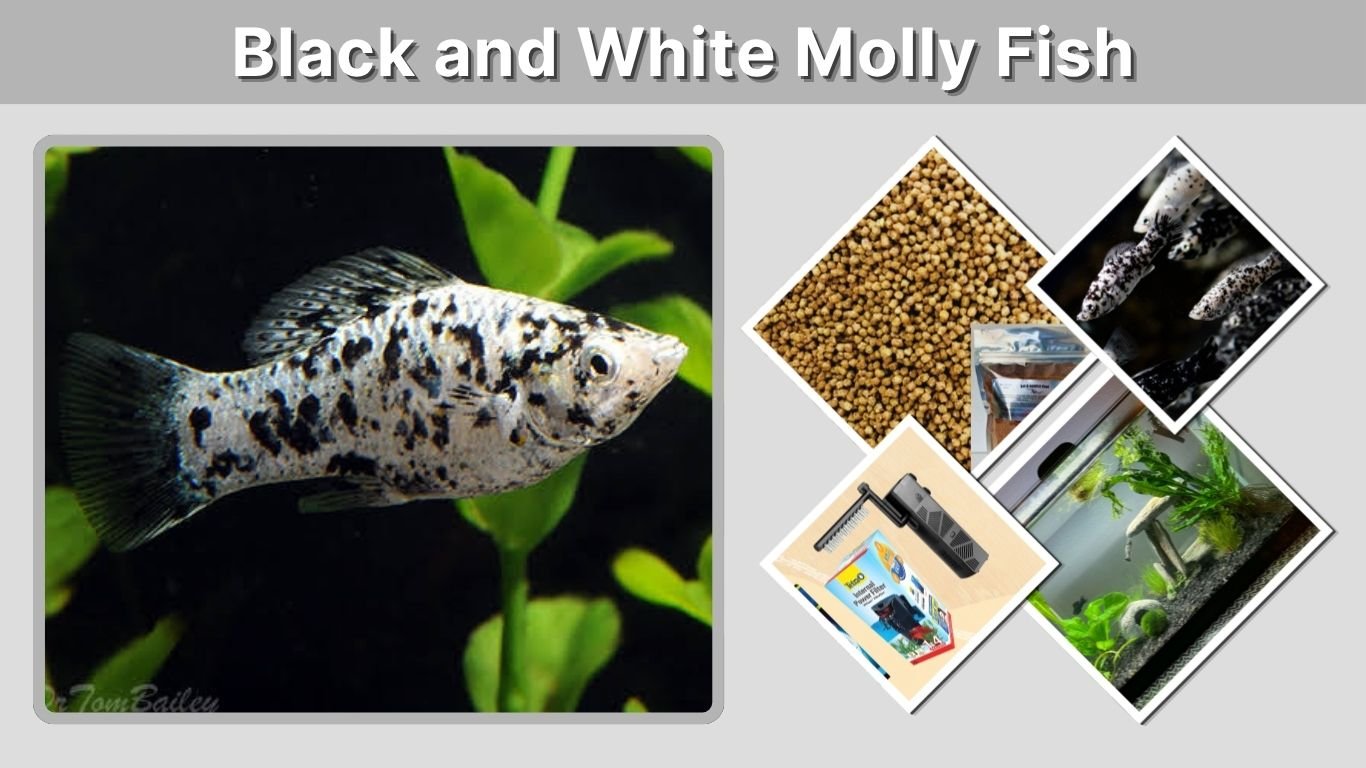
Black and white molly fish are attractive livebearers known for their bold contrast, active behavior, and beginner-friendly care needs. Some have natural spotted, marbled, panda, or dalmatian-style patterns, while others may develop white spots or patches from stress or disease. Understanding the difference between normal coloration and warning signs helps you keep your molly healthy, comfortable, and thriving in a community aquarium.
What Is a Black and White Molly Fish?
A black and white molly fish is a color variety of molly with both dark and light markings. These fish belong to the molly group, which includes several freshwater livebearers commonly kept in home aquariums.
Black and white mollies may have different patterns. Some are mostly black with white patches, some are mostly white with black spots, and others have a marbled or speckled appearance. Many fish sold as black and white mollies may also be called dalmatian mollies, panda mollies, marble mollies, or black and white balloon mollies.
Like other mollies, they are livebearers. This means females give birth to live fry instead of laying eggs.
Common Types of Black and White Molly Fish
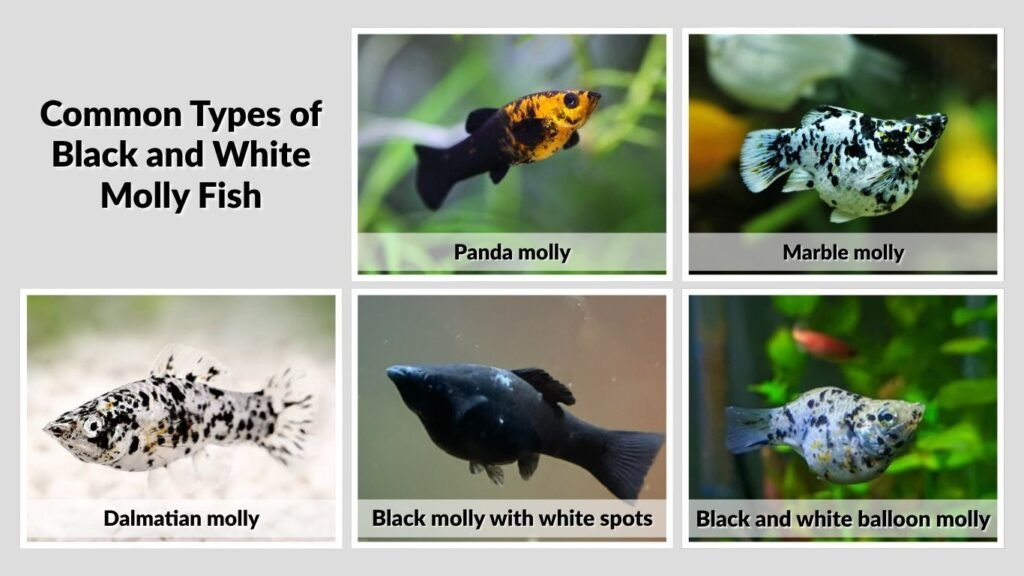
Black and white mollies come in several body shapes and patterns. Their care is usually similar, but some varieties may need extra attention because of body shape or genetics.
| Type | Appearance | Notes |
|---|---|---|
| Dalmatian molly | White or silver body with black spots | One of the most common black and white types |
| Panda molly | Black and white patches, often with darker head or tail | Popular for bold contrast |
| Marble molly | Mixed black, white, gray, or silver pattern | Pattern varies from fish to fish |
| Black molly with white spots | Mostly black body with white markings | May be natural or disease-related |
| Black and white balloon molly | Rounded body with black and white pattern | Cute but may be more sensitive |
| Black and white lyretail molly | Black and white color with extended tail shape | Needs clean water and space |
| Black and white sailfin molly | Larger body with tall dorsal fin | Needs a larger aquarium |
Black and White Molly Fish Care
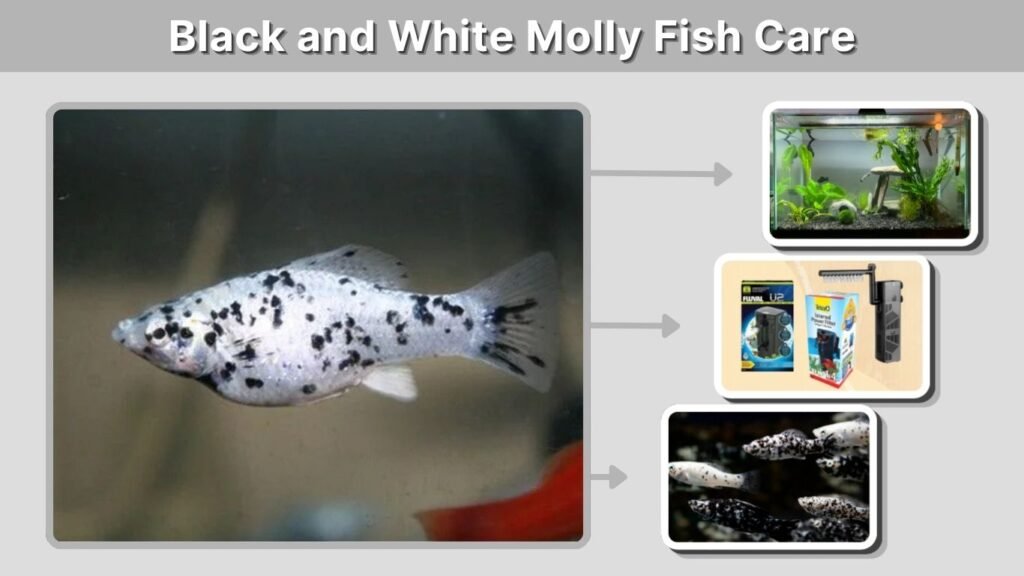
Black and white mollies are generally hardy, but they still need stable water and good aquarium care. They are tropical fish, so they require warm water, filtration, and regular maintenance.
A small bowl is not suitable for mollies. They are active swimmers and do best in a properly cycled aquarium. A 20-gallon tank is a good starting size for a small group, while larger tanks are better for mixed communities or breeding groups.
Basic Care Needs
- Keep them in a heated tropical aquarium.
- Use a filter that matches the tank size.
- Provide open swimming space.
- Add plants and hiding areas.
- Keep water clean with regular water changes.
- Avoid overcrowding.
- Test water for ammonia, nitrite, and nitrate.
Mollies are often considered beginner-friendly, but they are not maintenance-free. Poor water quality can quickly lead to stress, disease, white patches, or unusual behavior.
Tank Setup for Black and White Mollies
A good molly tank should be clean, spacious, and stable. Mollies prefer water that is warm, slightly alkaline, and moderately hard. Sudden water changes can stress them, so consistency is important.
Live plants can help create a natural environment. Java fern, hornwort, anubias, water sprite, and floating plants are useful options. Plants also provide hiding places for fry if your mollies breed.
Tank Setup Checklist
- Minimum tank size: around 20 gallons for a small group
- Temperature: tropical range, usually around 72–78°F
- pH: slightly alkaline is often preferred
- Filter: gentle to moderate flow
- Substrate: gravel or sand
- Decor: plants, rocks, driftwood, and hiding places
- Lighting: normal aquarium day/night cycle
Do not add new mollies to an uncycled tank. Ammonia and nitrite can harm fish quickly, especially if the aquarium is newly set up.
What Do Black and White Molly Fish Eat?
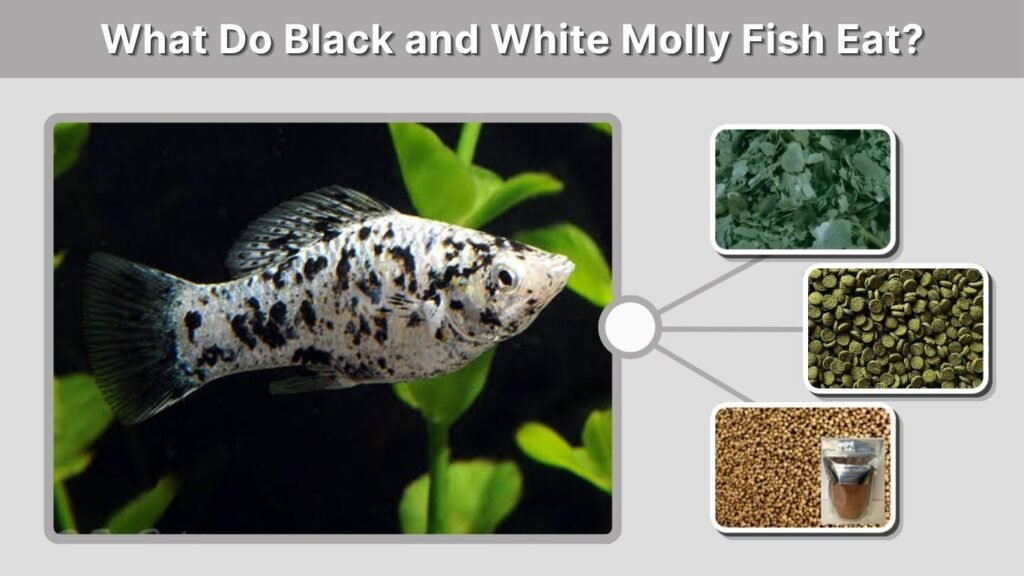
Black and white mollies are omnivores, but they benefit from plant-based foods. In aquariums, they often graze on algae, surfaces, and plant matter. A varied diet helps support color, growth, immunity, and breeding health.
Good foods include high-quality tropical flakes, spirulina flakes, algae wafers, small pellets, brine shrimp, daphnia, and blanched vegetables such as zucchini or spinach.
Feeding Tips
- Feed small portions once or twice daily.
- Offer plant-based foods regularly.
- Remove uneaten food after feeding.
- Avoid overfeeding.
- Use a varied diet instead of one food only.
Overfeeding can cause cloudy water, bloating, long stringy poop, and poor water quality. If your black and white molly looks swollen or sluggish, review both diet and water conditions.
Black and White Molly Fish Male or Female
You can usually tell male and female mollies apart by looking at the anal fin. Male mollies have a narrow, pointed fin called a gonopodium. Female mollies have a wider, fan-shaped anal fin.
Females are often larger and rounder, especially when pregnant. Males may chase females frequently, which can stress them if there are too many males in the tank.
Male and Female Differences
- Males have a pointed gonopodium.
- Females have a fan-shaped anal fin.
- Females are usually fuller-bodied.
- Males may chase females during mating.
- Females can store sperm and become pregnant even after being separated from males.
A good breeding group usually has more females than males. A common ratio is one male to two or three females to reduce stress.
Black and White Molly Fish Pregnant Signs
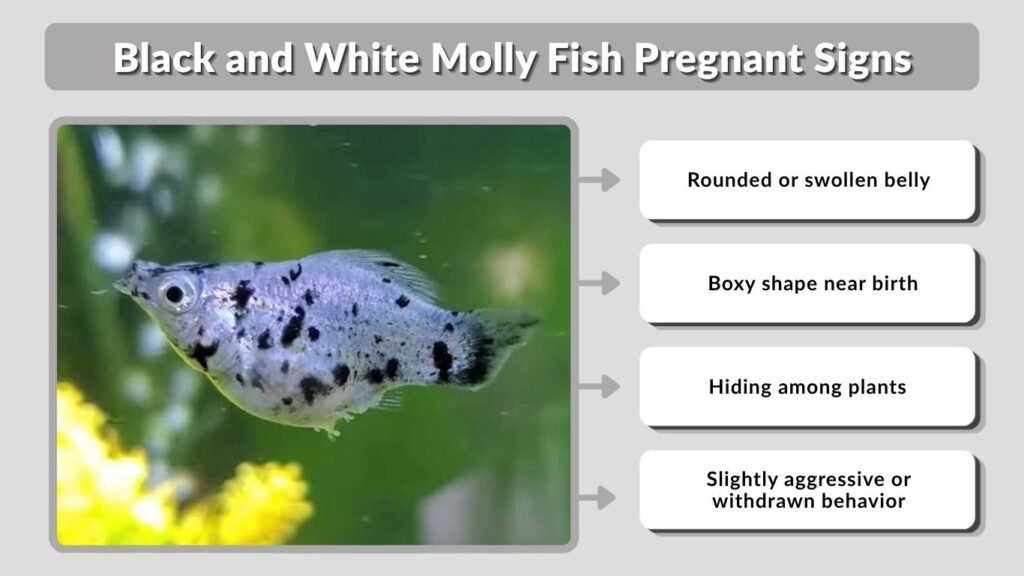
A pregnant black and white molly fish will usually develop a rounder belly. As she gets closer to giving birth, her belly may look squared off near the back. She may hide more often, eat more, or become less active.
Because black and white mollies have mixed coloring, the gravid spot may be easy or hard to see depending on the fish’s pattern. In darker fish, pregnancy can be harder to identify visually.
Signs of Pregnancy
- Rounded or swollen belly
- Boxy shape near birth
- Hiding among plants
- Increased appetite
- Slightly aggressive or withdrawn behavior
- Fry appearing suddenly in the tank
Mollies do not lay eggs. If you are searching for black and white molly fish eggs, remember that mollies give birth to live babies.
Black and White Molly Fish Breeding
Breeding black and white mollies is usually easy if males and females are kept together. Females can give birth every few weeks under good conditions.
However, adult mollies may eat their fry. If you want the babies to survive, provide dense plants, floating plants, moss, or a separate fry tank. A breeding box can help short-term, but it should not be used for too long because it can stress the female.
Fry Care Tips
- Use a sponge filter or covered filter intake.
- Feed crushed flakes or fry food.
- Keep water clean and stable.
- Provide hiding spaces.
- Separate fry from adults if survival is important.
Black and white molly babies may not show their final color pattern immediately. Their markings can become more noticeable as they grow.
Black Molly with White Spots: Normal or Disease?

Not every black molly with white spots is sick. Some mollies naturally have white, silver, or pale markings. However, sudden white spots, fuzzy patches, or color changes can signal a health problem.
A natural black and white molly pattern is usually smooth, flat, and part of the fish’s normal coloration. Disease-related spots may appear suddenly, spread quickly, look raised, or come with behavior changes.
When White Spots May Be Normal
White spots may be normal if the fish has always had them, the markings are flat, the fish is active, and there are no other symptoms. Many dalmatian, panda, marble, and spotted mollies naturally have black and white patterns.
When White Spots May Be Ich
Tiny white dots that look like grains of salt may indicate ich, also called white spot disease. Fish with ich may scratch against objects, clamp their fins, breathe faster, or act stressed.
Ich can spread to other fish, so treatment should begin quickly after confirming symptoms. Always check water quality, because stress makes fish more vulnerable.
When White Patches May Be Fungus
White fuzzy patches on a black molly may suggest fungus or bacterial infection. Fuzzy growth around the mouth, fins, body, or wounds should not be ignored.
A black molly with white fungus may also become lethargic, stop eating, hide, or sit near the bottom. Poor water quality, injuries, and stress are common triggers.
Why Is My Black Molly Turning White?
A black molly turning white may be experiencing stress, age-related color change, poor water quality, illness, injury, or genetic color changes. Some color shifts can be normal, but sudden fading often points to a problem.
Check the tank first. Test ammonia, nitrite, nitrate, pH, and temperature. If ammonia or nitrite is present, perform a water change and correct the tank conditions.
Common causes of fading or white patches include:
- Stress from bullying
- Poor water quality
- Ich
- Fungal infection
- Bacterial infection
- Injury
- Aging
- Genetics
- Sudden temperature changes
If the fish is also gasping, clamping fins, refusing food, or sitting at the bottom, treat it as a health concern.
Best Tank Mates for Black and White Mollies
Black and white mollies are peaceful community fish, but they are active. They do best with tank mates that enjoy similar warm, slightly alkaline water.
Good tank mates may include platies, swordtails, guppies, peaceful rainbowfish, some larger tetras, and other mollies. Avoid aggressive fish, fin nippers, or species that need very soft or cool water.
Goldfish are not ideal tank mates because they prefer cooler water and produce heavy waste. Betta fish may or may not work with mollies depending on tank size and temperament.
Common Problems in Black and White Mollies
Most molly health issues come from stress, poor water quality, overcrowding, or incompatible tank mates. Watch your fish daily so you can notice changes early.
Warning Signs
- White spots or fuzzy patches
- Clamped fins
- Sitting at the bottom
- Gasping at the surface
- Not eating
- Long white stringy poop
- Swollen belly
- Torn fins
- Scratching against decorations
- Sudden color fading
When something looks wrong, test the water before adding medicine. Many fish problems improve when water quality is corrected early.
FAQs
Are black and white molly fish easy to care for?
Yes, black and white molly fish are fairly easy to care for when kept in a cycled, heated, and filtered aquarium. They need clean water, stable temperature, enough swimming space, and a varied diet. They are hardy, but poor water quality can quickly cause stress and disease.
Is a black molly with white spots normal?
It can be normal if the fish has a natural black and white pattern. However, sudden white spots may indicate ich, fungus, injury, or stress. Tiny salt-like dots, fuzzy patches, or spreading white marks should be treated as possible health problems.
Do black and white molly fish lay eggs?
No, black and white molly fish do not lay eggs. They are livebearers, which means females give birth to live, free-swimming fry. Pregnant females may develop a rounded belly, hide more often, and give birth every few weeks under good conditions.
How do you tell if a black and white molly is male or female?
Look at the anal fin. A male has a narrow, pointed gonopodium, while a female has a wider, fan-shaped anal fin. Females are usually rounder and may become noticeably larger when pregnant. Males often chase females during breeding behavior.
Why is my black molly turning white?
A black molly may turn white because of stress, poor water quality, illness, injury, aging, or natural color change. Sudden fading, white patches, fuzzy growth, clamped fins, or bottom-sitting behavior should be checked quickly, starting with a water test.