
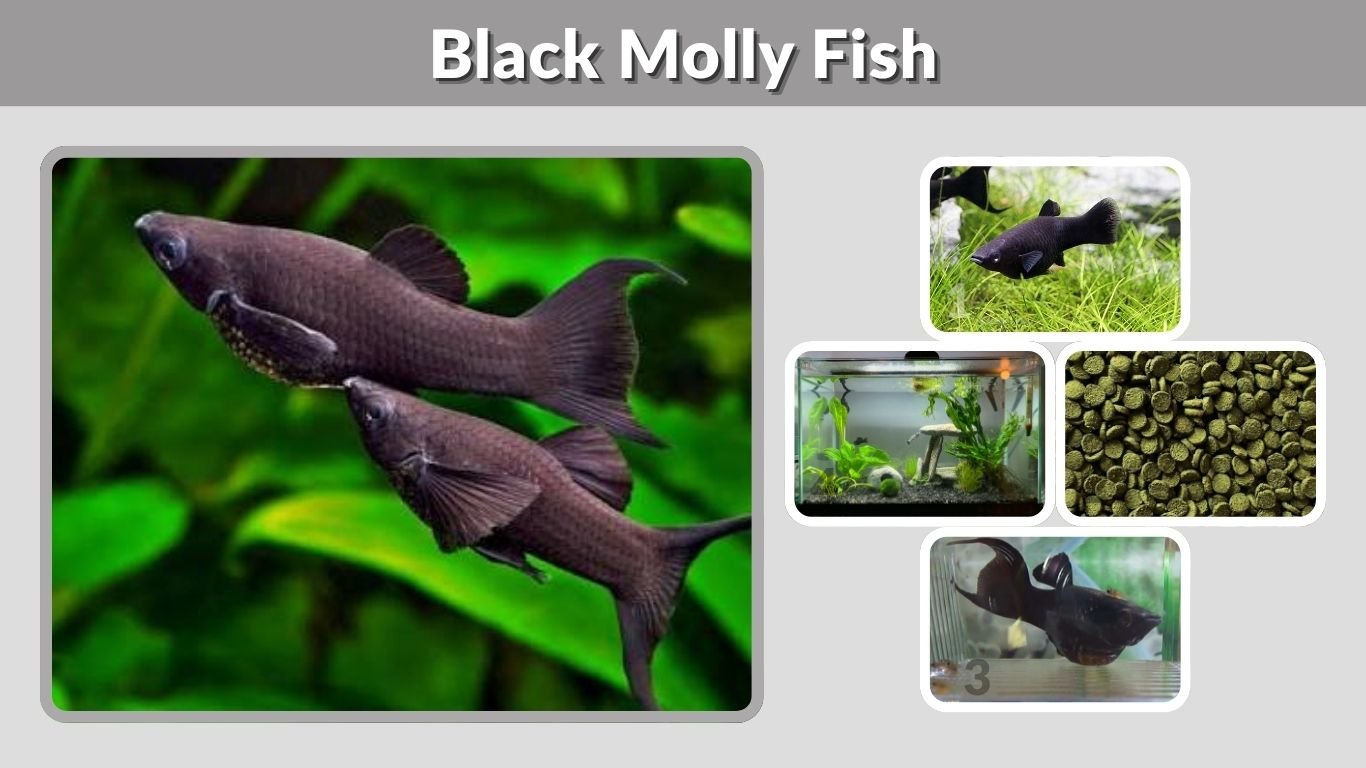
Black molly fish are popular freshwater aquarium fish known for their deep black color, active swimming, and beginner-friendly nature. They are livebearers, which means females give birth to free-swimming fry instead of laying eggs. With the right tank size, warm water, stable conditions, and a balanced diet, black mollies can become peaceful, attractive members of a community aquarium.
What Is a Black Molly Fish?
A black molly fish is a dark-colored variety of molly, a tropical livebearing fish from the genus Poecilia. Black mollies are usually bred for their solid black appearance, although some may have silver, orange, white, gold, or spotted markings.
They are commonly sold in pet shops because they are hardy, active, and relatively easy to care for. However, they still need clean water, proper temperature, enough swimming space, and good nutrition. Poor water quality is one of the most common reasons black mollies become stressed or sick.
Black Molly Fish Facts
Black mollies are peaceful fish, but they are active and social. They do best in groups and should not be kept alone if possible. They spend much of their time swimming around the middle and upper parts of the aquarium, picking at algae, plants, and leftover food.
| Category | Black Molly Fish Care Details |
|---|---|
| Common name | Black molly fish |
| Scientific group | Poecilia species and hybrids |
| Fish type | Tropical freshwater livebearer |
| Temperament | Peaceful to mildly active |
| Diet | Omnivore with strong plant/algae preference |
| Adult size | Usually around 3–5 inches, depending on type |
| Lifespan | Often 3–5 years with good care |
| Reproduction | Livebearer, gives birth to fry |
| Care level | Beginner to intermediate |
Black Molly Fish Size and Lifespan
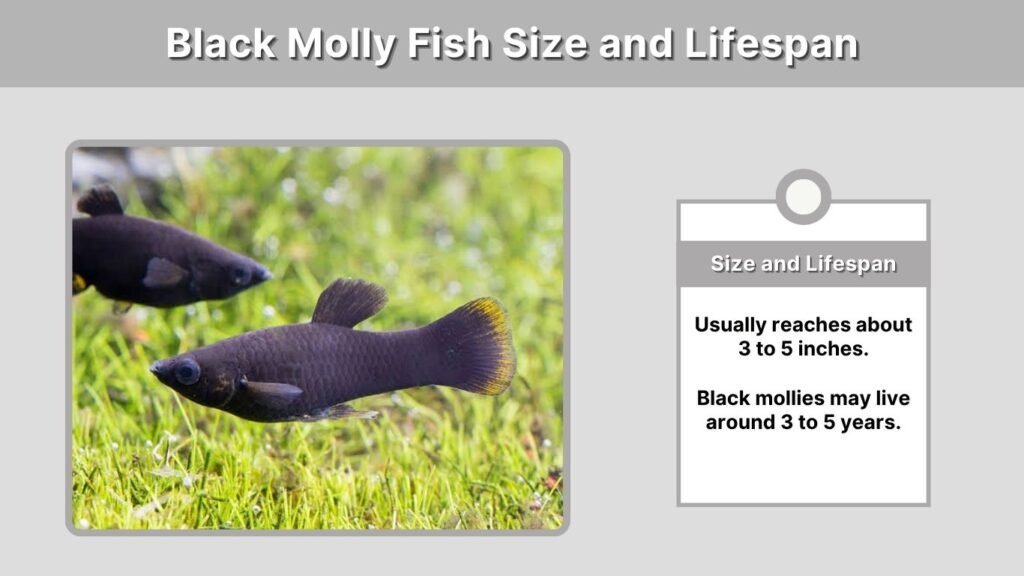
A full-grown black molly fish usually reaches about 3 to 5 inches, depending on the variety. Standard black mollies are often smaller, while sailfin mollies and some larger types can grow bigger.
With proper care, black mollies may live around 3 to 5 years. Their lifespan depends on water quality, diet, genetics, tank size, stress level, and disease prevention. A well-maintained aquarium can make a major difference in how long they live.
Black Molly Fish Tank Size
Black mollies are active swimmers, so they need more space than many beginners expect. A small bowl or tiny tank is not suitable. A 20-gallon tank is often considered a good minimum for a small group, while a larger tank is better if you want several mollies or a community setup.
Larger tanks are easier to keep stable. They dilute waste better, provide more swimming room, and reduce aggression between males. If you plan to keep males and females together, remember that mollies breed quickly, so extra space may be needed for fry.
Black Molly Fish Tank Setup
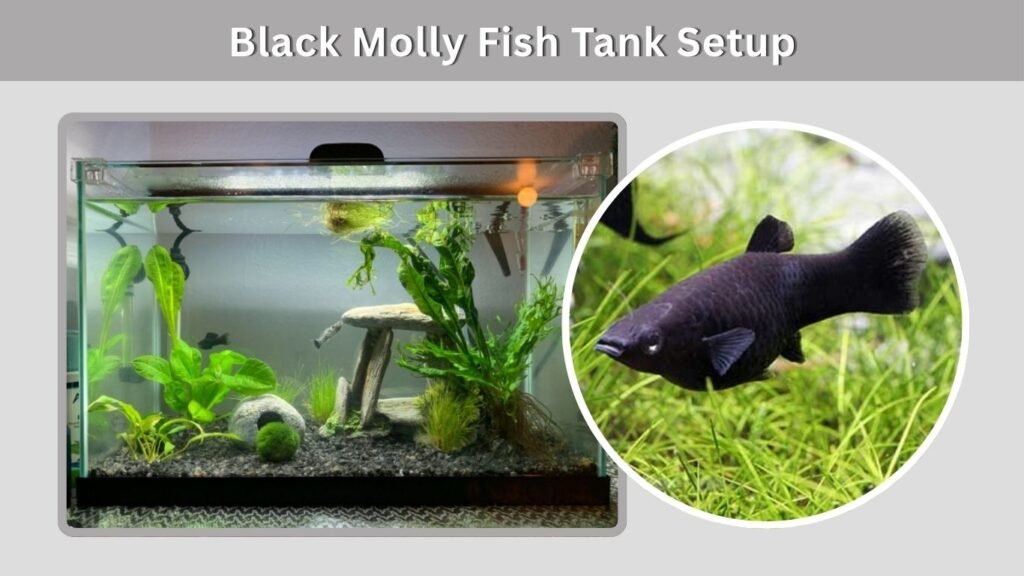
A good black molly fish aquarium should be clean, stable, and well-filtered. Mollies prefer warm tropical water and do best in tanks with gentle to moderate water movement.
Add live or artificial plants, open swimming space, and hiding spots. Plants help fry survive and give stressed fish places to rest. Hardy live plants such as Java fern, hornwort, anubias, and floating plants can work well.
Basic Tank Setup
- 20 gallons or larger for a small group
- Aquarium heater for stable tropical temperature
- Filter sized for the tank
- Gentle to moderate water flow
- Plants and hiding spaces
- Open swimming area
- Secure lid
- Regular water changes
Before adding black mollies, cycle the tank fully. A new uncycled tank can expose fish to ammonia and nitrite, which are dangerous.
Black Molly Fish Temperature and Water Conditions
Black mollies prefer warm, stable water. Many care references recommend tropical temperatures around the low to upper 70s Fahrenheit, with slightly alkaline and moderately hard water. Mollies can be sensitive to sudden changes, so stability is more important than chasing perfect numbers.
| Water Parameter | Recommended Range |
|---|---|
| Temperature | About 72–78°F |
| pH | Around 7.5–8.5 |
| Water hardness | Moderate to hard |
| Ammonia | 0 ppm |
| Nitrite | 0 ppm |
| Nitrate | Keep low with water changes |
| Water type | Freshwater; some mollies tolerate slight brackish conditions |
Do not add aquarium salt automatically unless you understand your tank and the needs of all fish. Some tank mates and plants do not tolerate salt well. Clean, stable freshwater is usually the best starting point for beginners.
Black Molly Fish Food and Diet
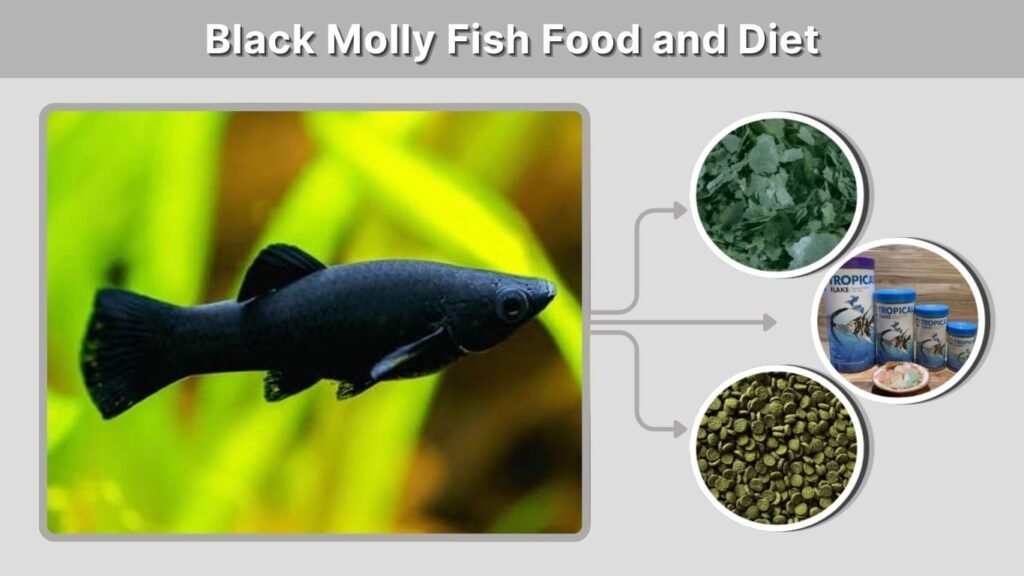
Black molly fish are omnivores, but they benefit from a diet with plenty of plant-based foods. In nature and aquariums, mollies graze on algae and plant material. Spirulina flakes, algae wafers, high-quality tropical flakes, and blanched vegetables can all be useful foods.
You can also offer protein foods such as brine shrimp, daphnia, bloodworms, or high-quality micro pellets. These should be part of a varied diet, not the only food.
Good Foods for Black Mollies
- Spirulina flakes
- Tropical fish flakes
- Algae wafers
- Blanched spinach or zucchini
- Brine shrimp
- Daphnia
- Small pellets
- Occasional frozen or freeze-dried foods
Feed small portions once or twice daily. Only give what they can eat within a short time. Overfeeding can cause poor water quality, bloating, and excess waste.
Black Molly Fish Male and Female Differences
It is usually easy to tell adult male and female black mollies apart by looking at the anal fin. Males have a gonopodium, which is a narrow, pointed modified anal fin used for mating. Females have a normal fan-shaped anal fin and usually look larger or rounder.
| Feature | Male Black Molly | Female Black Molly |
|---|---|---|
| Anal fin | Pointed gonopodium | Fan-shaped anal fin |
| Body shape | Slimmer | Rounder and fuller |
| Size | Often smaller | Often larger |
| Behavior | May chase females | Usually less chasing |
| Pregnancy | Cannot become pregnant | Can become pregnant |
| Best ratio | One male to multiple females | Keep more females than males |
A good ratio is often one male with two or three females. This reduces stress because males may constantly chase females to mate.
Black Molly Fish Pregnant Signs
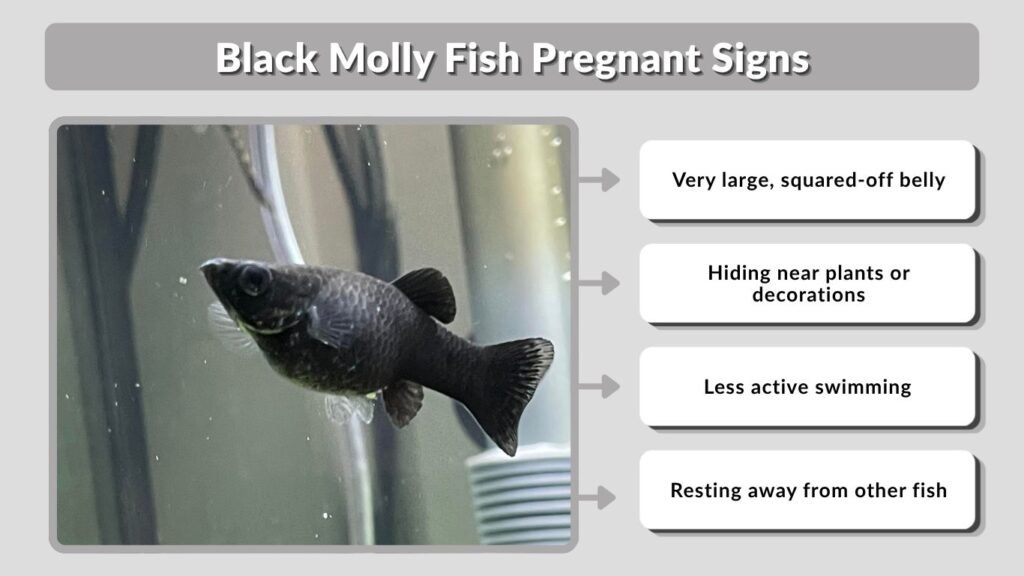
Black molly fish are livebearers, so females do not lay eggs. Instead, they carry developing fry inside their bodies and give birth to live young. A pregnant black molly may become rounder, especially near the belly.
Common pregnant black molly signs include a swollen belly, increased appetite, hiding behavior, boxy body shape near birth, and sometimes a darker gravid area near the rear of the belly. In black mollies, the gravid spot can be difficult to see because the body is already dark.
Signs a Black Molly Is Close to Giving Birth
- Very large, squared-off belly
- Hiding near plants or decorations
- Less active swimming
- Resting away from other fish
- Slightly faster breathing
- Fry appearing suddenly in the tank
Mollies can give birth to many fry at once. Adult fish may eat the babies, so provide floating plants, moss, or a separate fry tank if you want the fry to survive.
Black Molly Fish Fry Care
Black molly fry are tiny but free-swimming at birth. They can eat powdered fry food, crushed flakes, baby brine shrimp, or specialized livebearer fry food.
The biggest challenge is survival. Adult mollies and other tank mates may eat fry. Dense plants, floating cover, and hiding areas increase survival rates. If you want to raise many fry, move them to a separate grow-out tank with clean, warm water and gentle filtration.
Avoid strong filter intakes that can suck in fry. Use a sponge filter or cover the intake with a sponge.
Black Molly Fish Behavior
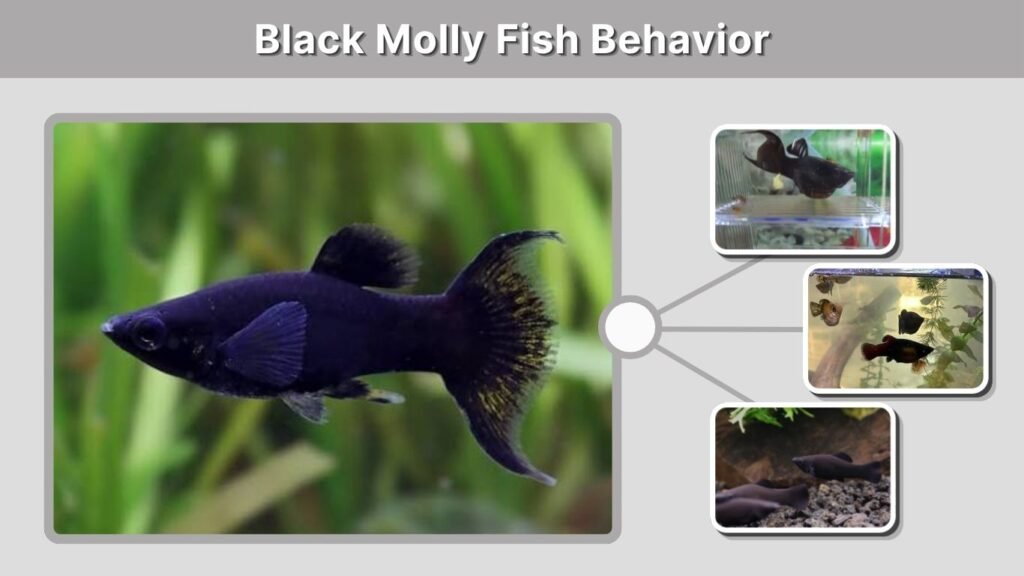
Black mollies are active, curious fish. They often swim around the tank, graze on algae, and interact with other fish. They are generally peaceful, but males can be pushy during breeding.
Black mollies may become aggressive or stressed if the tank is overcrowded, too small, poorly filtered, or has too many males. Fin nipping can happen when fish are stressed or competing for space.
If a black molly is sitting at the bottom of the tank, hiding constantly, gasping, clamping fins, or refusing food, check water quality first. Ammonia, nitrite, poor oxygen, and unstable temperature are common causes of unusual behavior.
Black Molly Fish Tank Mates
Black mollies usually do well with peaceful community fish that enjoy similar water conditions. Good tank mates may include platies, swordtails, guppies, larger tetras that tolerate harder water, peaceful corydoras in suitable conditions, and some peaceful rainbowfish.
Avoid aggressive or fin-nipping species. Also avoid fish that need very different temperatures or water chemistry.
Can Black Mollies Live With Betta Fish?
Sometimes, but it depends on the betta and the tank setup. Bettas can be territorial, and mollies are active swimmers. A large, planted tank may work better than a small tank. Watch for chasing, fin nipping, or stress.
Can Black Molly Fish Live With Goldfish?
Black mollies and goldfish are not ideal tank mates. Goldfish prefer cooler water and produce a lot of waste, while black mollies are tropical fish that need warmer water. Their care needs are too different for most beginner setups.
Types and Colors of Black Molly Fish
Although solid black mollies are the classic variety, many related color types exist. Some have mixed patterns or special fin shapes.
Popular varieties include:
- Black molly fish
- Black velvet molly fish
- Black lyretail molly fish
- Black sailfin molly fish
- Black balloon molly fish
- Black and white molly fish
- Orange and black molly fish
- Black and gold molly fish
- Black and yellow molly fish
- Black spotted molly fish
- Black panda molly fish
Balloon mollies have a rounded body shape, but some keepers avoid them because their body type may make them more prone to health issues. Choose active fish with clear eyes, smooth swimming, and no visible disease signs.
Common Black Molly Fish Diseases
Black mollies can suffer from common aquarium diseases, especially when water quality is poor. White spots on a black molly fish may indicate ich, a common parasite. Clamped fins, heavy breathing, shimmying, or sitting at the bottom can indicate stress, poor water conditions, or illness.
Common problems include:
- Ich or white spot disease
- Fin rot
- Fungal infections
- Swim bladder problems
- Stress from poor water quality
- Aggression-related injuries
- Poor appetite
- Shimmying or shaking
Always test water before treating disease. Many symptoms are caused or worsened by ammonia, nitrite, high nitrate, temperature swings, or overcrowding.
Black Molly Fish Price and Buying Tips
The price of a black molly fish depends on location, size, variety, and seller. Standard black mollies are usually affordable, while special types such as lyretail, sailfin, balloon, or rare color mixes may cost more.
When buying black mollies, choose fish that are active, alert, and swimming normally. Avoid fish with clamped fins, white spots, torn fins, sunken bellies, cloudy eyes, or unusual breathing. If possible, quarantine new fish before adding them to your main tank.
FAQs
Are black molly fish good for beginners?
Yes, black molly fish can be good for beginners if the tank is properly cycled, heated, and maintained. They are hardy compared to many fish, but they still need stable water, enough space, good filtration, and regular water changes.
Do black molly fish lay eggs?
No, black molly fish do not lay eggs. They are livebearers, which means the female gives birth to live, free-swimming fry. A pregnant black molly can give birth to many babies, and adults may eat the fry if they do not have hiding places.
How can you tell male and female black molly fish apart?
Look at the anal fin. A male black molly has a pointed gonopodium, while a female has a fan-shaped anal fin. Females are usually rounder and larger, especially when pregnant. Males may chase females more often during mating behavior.
What do black molly fish eat?
Black molly fish eat a mix of plant and protein foods. Good options include spirulina flakes, algae wafers, tropical flakes, blanched vegetables, brine shrimp, daphnia, and small pellets. A varied diet helps support color, growth, and healthy breeding.
Why is my black molly fish sitting at the bottom of the tank?
A black molly sitting at the bottom may be stressed, sick, pregnant, bullied, or affected by poor water quality. Test ammonia, nitrite, nitrate, temperature, and pH first. If water conditions are good, check for disease signs such as white spots, clamped fins, or heavy breathing.