
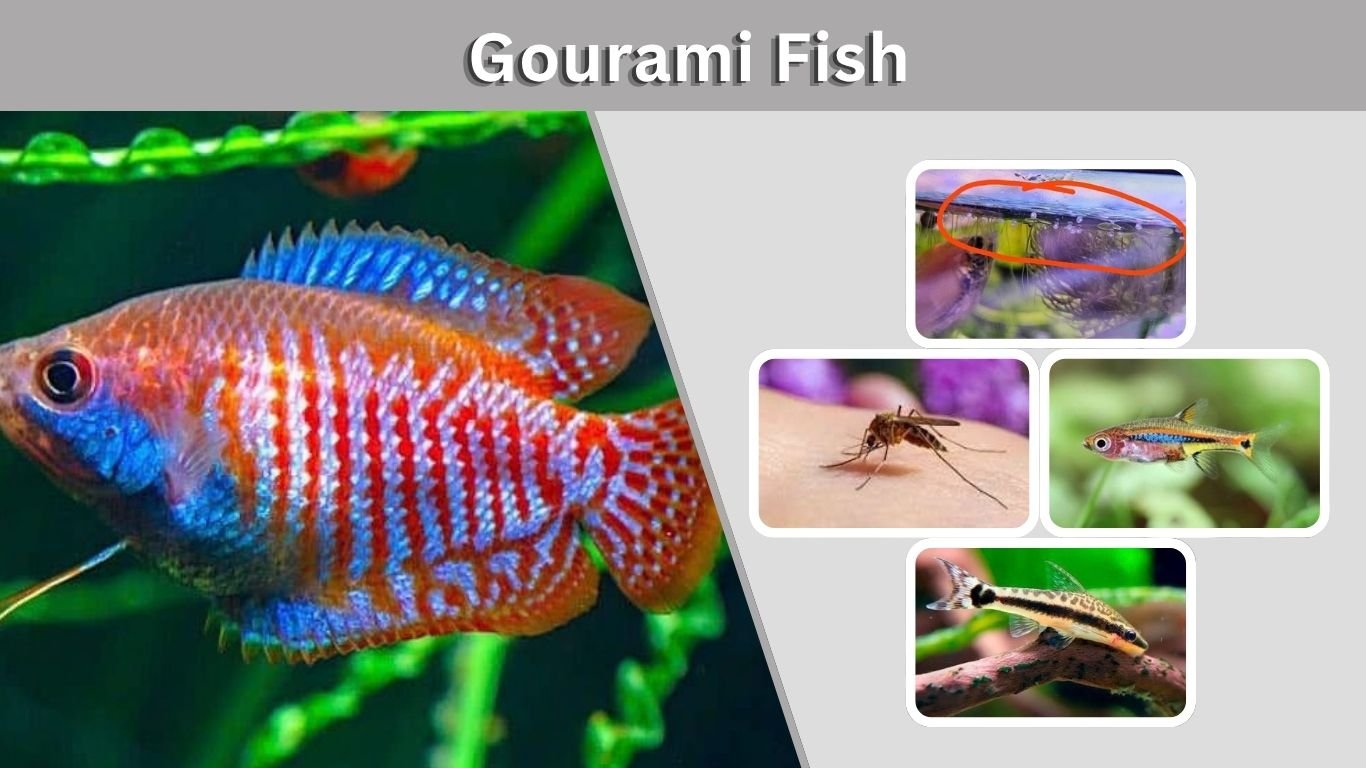
Gourami fish are colorful freshwater labyrinth fish popular for their unusual shapes, flowing fins, varied personalities, and ability to breathe atmospheric air. Popular aquarium choices include dwarf, honey, pearl, blue, kissing, and giant gouramis, ranging from tiny peaceful species to fish that become more than two feet long. Because different gourami species vary greatly in size and temperament, successful care depends on selecting the right tank, temperature, food, and companions. This guide explains the major types and their essential aquarium requirements.
What Is a Gourami Fish?
Gouramis are primarily freshwater labyrinth fishes native to Asia. Many familiar aquarium species belong to the family Osphronemidae, although the kissing gourami belongs to Helostomatidae. Their most distinctive adaptation is the labyrinth organ, which lets them breathe atmospheric oxygen at the water’s surface. Many also have long, thread-like pelvic fins used to investigate their surroundings.
Are Gouramis Freshwater Fish?
Yes. The aquarium gouramis discussed here are freshwater fish. Their natural environments often include ponds, marshes, floodplains, lakes, rice fields, and slow-moving streams.
Many species come from warm waters with abundant vegetation and relatively gentle currents. A planted aquarium with open surface access therefore suits numerous commonly kept gouramis.
Why Do Gouramis Breathe Air?
The labyrinth organ contains folded respiratory tissue that enables gouramis to use oxygen from atmospheric air.
This adaptation allows many species to survive in warm, stagnant habitats where dissolved oxygen can become low. Aquarium gouramis regularly rise to the surface to gulp air, so the surface should never be completely blocked.
Popular Types of Gourami Fish
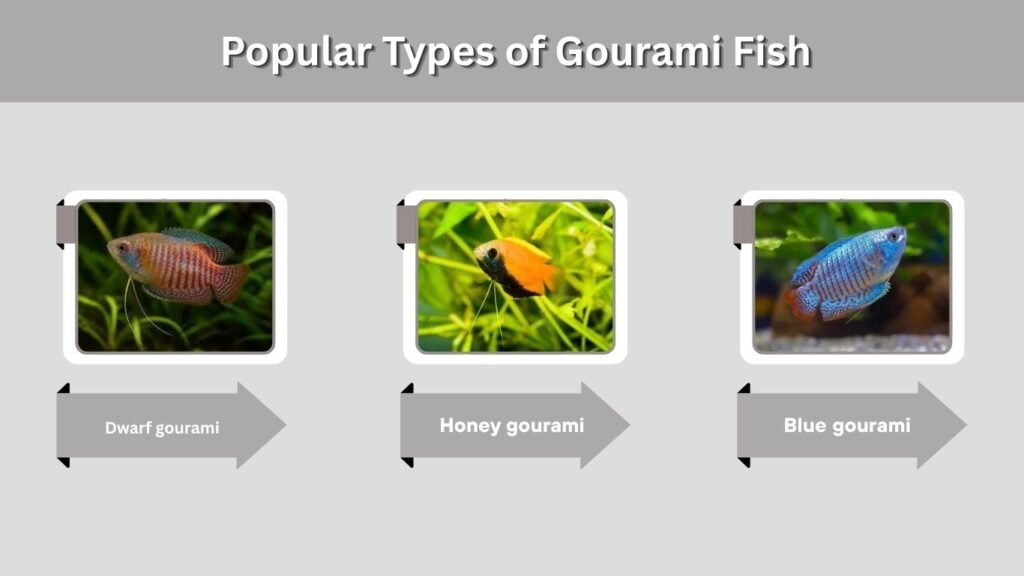
There are many gourami fish types, ranging from delicate two-inch species to enormous giant gouramis. Their color, temperament, and care needs can differ considerably, so identifying the exact species is important before buying one. Fish sold under blue, gold, opaline, or other color names may actually be varieties of the same species.
Common Gourami Varieties
Popular aquarium varieties include:
- Dwarf gourami (Trichogaster lalius) – Small and brightly colored
- Honey gourami (Trichogaster chuna) – Small, gentle, and golden-yellow
- Pearl gourami (Trichopodus leerii) – Elegant with pearl-like spots
- Blue gourami (Trichopodus trichopterus) – A blue form of the three-spot gourami
- Gold gourami – Golden color morph of the three-spot gourami
- Kissing gourami (Helostoma temminckii) – Famous for its lip-locking behavior
- Giant gourami (Osphronemus goramy) – Extremely large aquarium species
- Sparkling gourami (Trichopsis pumila) – Small, colorful labyrinth fish
- Banded gourami (Trichogaster fasciata) – Attractive striped South Asian species
FishBase recognizes pearl, moonlight, snakeskin, and three-spot gouramis within Trichopodus, while Trichogaster includes honey, banded, thick-lipped, and dwarf gouramis.
What About Paradise Gourami Fish?
The fish commonly searched as a paradise gourami or blue paradise gourami is generally the paradise fish, Macropodus opercularis. It is a related labyrinth fish rather than one of the typical Trichogaster or Trichopodus gouramis.
Paradise fish are beautiful but can be considerably more territorial than peaceful honey or pearl gouramis, so their tank mates require careful selection.
How Big Do Gourami Fish Get?
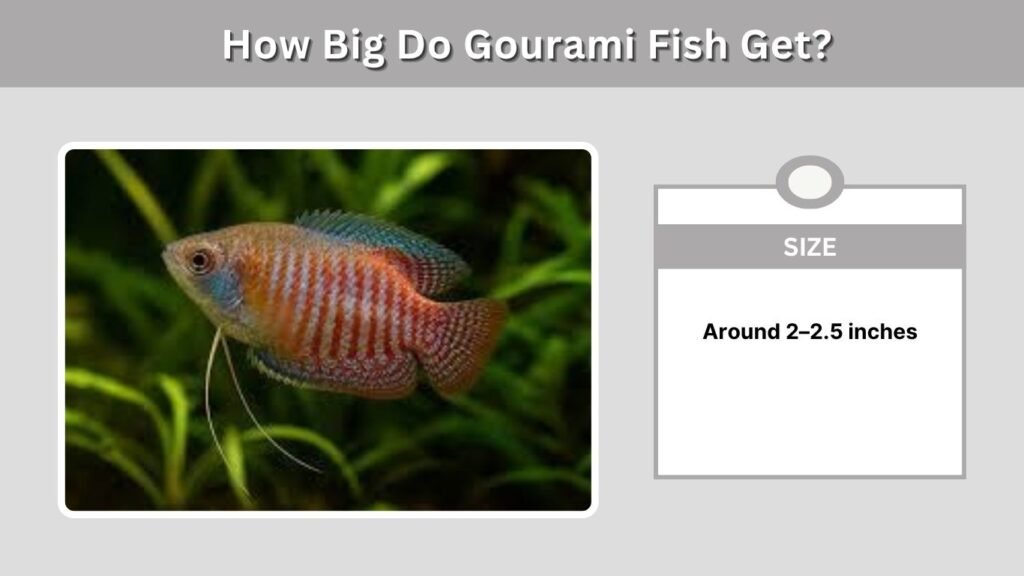
There is no single gourami fish size because the group includes species with dramatically different adult dimensions. This is one of the most important facts to understand before purchasing a gourami. A fish measuring two inches in a pet-store tank may remain relatively small—or eventually become far too large for a normal home aquarium.
Size by Popular Species
Approximate maximum sizes include:
- Honey gourami: around 2–2.5 inches in typical aquarium conditions
- Dwarf gourami: around 3–3.75 inches
- Pearl gourami: up to roughly 4.5–5 inches
- Three-spot/blue gourami: up to about 6 inches
- Snakeskin gourami: potentially around 10 inches
- Giant gourami: potentially more than 2 feet long
FishBase records the dwarf gourami at up to 9.5 cm and the three-spot gourami at up to 15 cm standard length. Giant gouramis can reach about 70 cm standard length.
Giant Gourami Tank Requirements
A giant gourami is completely different from a dwarf or honey gourami in space requirements.
Seriously Fish recommends an aquarium around 180 U.S. gallons as an absolute minimum for an adult giant gourami, emphasizing how inappropriate ordinary community tanks are for this species.
Gourami Fish Tank and Water Requirements
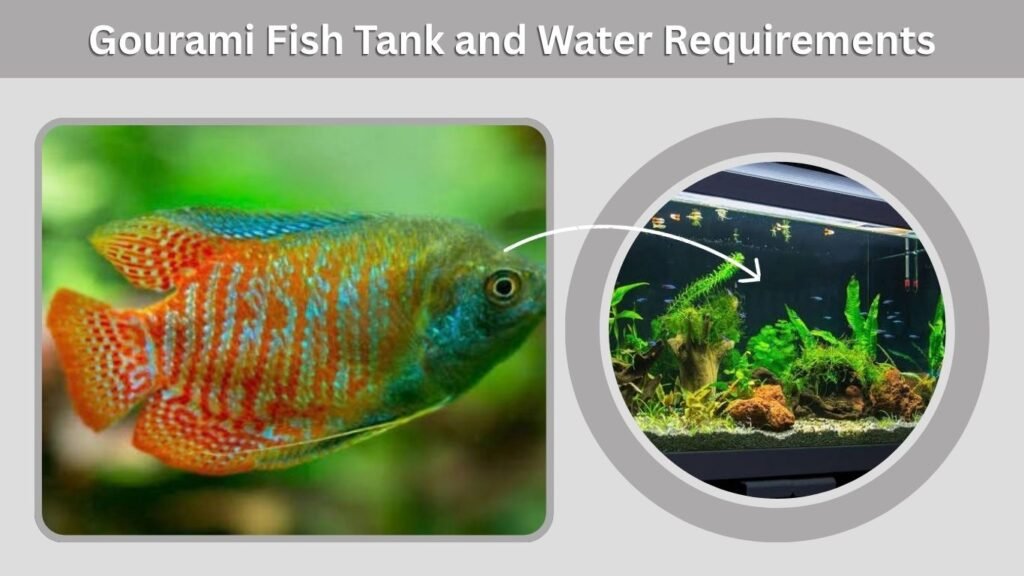
A good gourami tank should provide swimming room, vegetation, hiding places, gentle filtration, and unobstructed surface access. Exact requirements depend on species because a sparkling gourami and giant gourami cannot share one universal setup. Many smaller species appreciate floating plants and calm water resembling their naturally slow-moving habitats.
Basic Aquarium Setup
For many small-to-medium gouramis, consider:
- A properly cycled freshwater aquarium
- Live or artificial plant cover
- Floating plants with some open surface
- Gentle to moderate filtration
- Hiding areas using plants or driftwood
- Stable tropical water temperature
- Regular partial water changes
- A secure lid
- Open access to atmospheric air
Do not choose tank size based only on the fish’s current juvenile size.
Do Gourami Fish Need an Air Pump?
Not necessarily for breathing atmospheric air because gouramis possess a labyrinth organ. However, this does not mean they can live in dirty or oxygen-depleted aquariums without proper filtration.
An air stone may still improve circulation and oxygenation, especially in crowded or warm aquariums, but good filtration and water quality remain essential.
What Do Gourami Fish Eat?
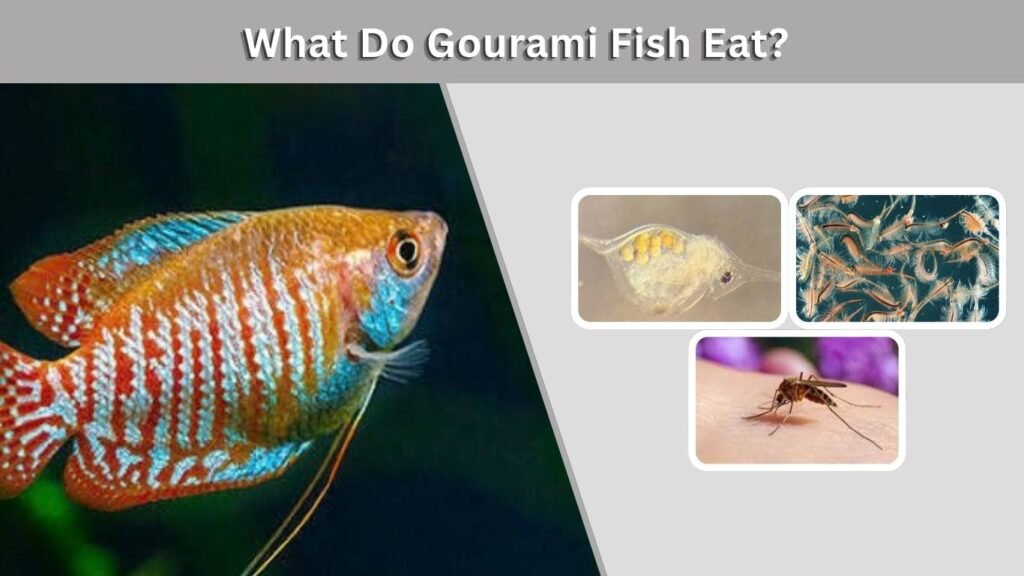
Most aquarium gouramis are omnivorous and readily accept prepared foods. A varied diet tends to work better than feeding one product exclusively because it provides broader nutrition and encourages natural feeding behavior. Mouth size matters, particularly with small honey, sparkling, and dwarf gouramis.
Best Food for Gourami Fish
Suitable foods can include:
- Quality tropical flakes
- Small floating or slow-sinking pellets
- Brine shrimp
- Daphnia
- Bloodworms
- Mosquito larvae from safe cultured sources
- Small insect larvae
- Species-appropriate plant-based foods
Feed portions small enough to be consumed promptly. Leftover food decomposes and can reduce water quality.
How Often Should Gouramis Be Fed?
Most adult aquarium gouramis can be fed once or twice daily in modest portions.
Young growing fish may need smaller, more frequent meals. Giant gouramis and specialized species have different requirements, so feeding schedules should always be adjusted for species, age, body condition, and aquarium temperature.
Are Gourami Fish Aggressive?
Gouramis are sometimes described as peaceful community fish, but that description does not apply equally to every species or individual. Honey gouramis are generally mild, while male dwarf and three-spot gouramis can become territorial. Paradise fish and some larger gouramis may show considerably stronger aggression, especially toward similar-looking fish.
Signs of Gourami Aggression
Watch for:
- Persistent chasing
- Fin nipping
- Guarding one section of the tank
- Preventing another fish from feeding
- Repeated displays between males
- One fish hiding continuously
- Torn fins or physical injuries
Providing visual barriers with plants and allowing sufficient space can reduce territorial pressure.
Can Gouramis Live Alone?
Yes. Many gouramis do not need a large school to feel secure, and a single centerpiece gourami can work very well in a community aquarium.
Some species, such as honey gouramis, can also be maintained socially when sufficient space is available. Seriously Fish describes honey gouramis as peaceful fish that can do particularly well in a suitable group.
Best Tank Mates for Gourami Fish
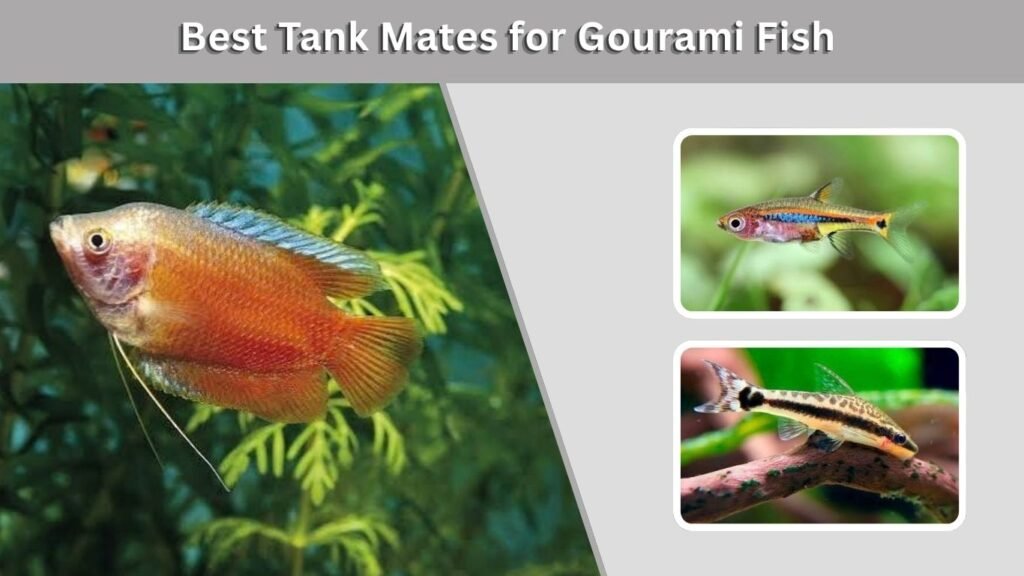
Tank-mate selection should consider the exact gourami species, aquarium dimensions, temperature, and individual temperament. Calm schooling fish and peaceful bottom dwellers are often suitable companions for smaller community gouramis. Avoid overcrowding and combinations that force territorial species to compete continuously for the same part of the aquarium.
Potential Gourami Tank Mates
Depending on species, possibilities include:
- Peaceful tetras
- Rasboras
- Corydoras catfish
- Kuhli loaches
- Otocinclus
- Peaceful barbs
- Small rainbowfish
- Suitable livebearers
Choose fish with similar temperature and water requirements rather than combining species simply because they are all labeled “community fish.”
Can Betta Fish Live With Gourami?
Keeping a betta fish with gourami is generally risky. Both are labyrinth fish, and males can interpret each other’s colors, fins, and behavior as competition.
Some individual combinations may appear peaceful initially, but aggression can develop later. Separate tanks are usually the more predictable approach, particularly with territorial males.
Kissing Gourami Fish Behavior
The kissing gourami is famous for pressing its mouth against another fish’s mouth. Although it may resemble affection, the behavior is generally a form of interaction or dominance rather than romantic “kissing.” These fish also become considerably larger than dwarf gouramis, so they require more aquarium space than their juvenile appearance suggests.
Why Do Kissing Gouramis Kiss?
Two kissing gouramis may lock lips while establishing social dominance.
Therefore, repeated kissing between two fish does not necessarily mean they are a breeding pair. Owners should watch for persistent harassment, especially if one individual continually retreats or shows signs of stress.
Are Kissing Gouramis Good Community Fish?
They can be maintained with appropriately sized companions, but their size and personality need to be considered.
Small fish may become stressed around large adult kissing gouramis, and their eventual dimensions make them unsuitable for small community tanks.
Gourami Fish Breeding
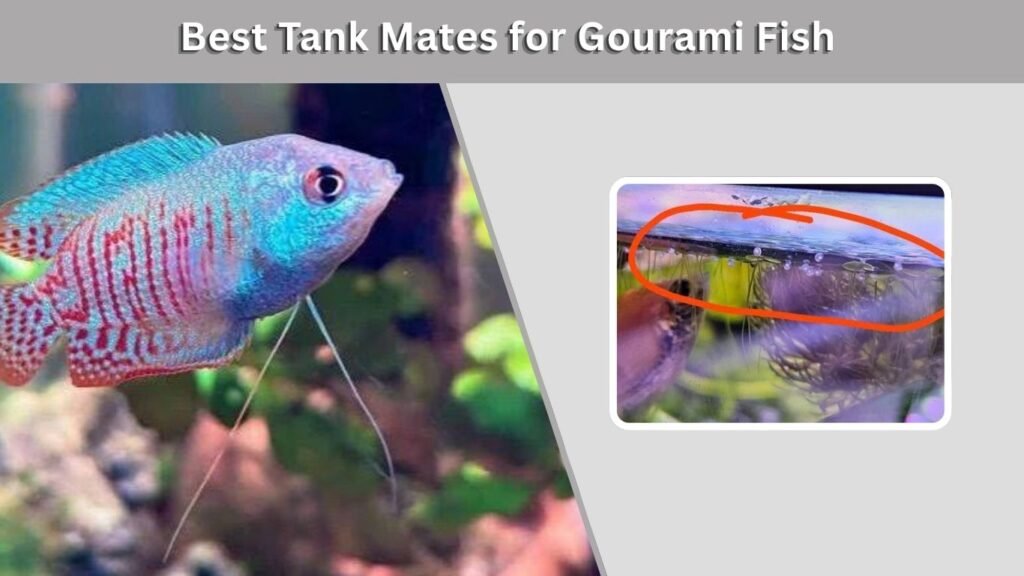
Many familiar gouramis are bubble-nest breeders. A male builds a floating nest from bubbles, frequently among surface plants, and courts a female beneath it. After spawning, he may gather eggs and place them into the nest. Breeding behavior can make otherwise peaceful males considerably more territorial.
Do Gourami Fish Lay Eggs?
Yes. Gouramis are egg-laying fish rather than livebearers.
In bubble-nesting species, eggs float toward the nest after spawning. The male may then guard the eggs and developing fry until they become free-swimming.
Not every species follows exactly the same breeding strategy, so breeding setups should be researched at species level.
Gourami Fish Lifespan and Buying Tips
Gourami fish lifespan varies considerably between species and depends on genetics, water quality, disease, diet, and stress. Smaller aquarium species may live several years, while some larger labyrinth fishes can live much longer. Healthy stock and an appropriate permanent tank are more important than choosing fish solely by color or price.
Choosing a Healthy Gourami
Before purchasing, look for:
- Clear eyes
- Intact fins
- Normal swimming
- Good body condition
- Interest in food
- Smooth breathing
- No ulcers or white spots
- No severe abdominal swelling
Also research the scientific name because trade names such as blue, gold, flame, orange, or sunset can be confusing.
Gourami Fish Price
Prices vary according to species, size, color morph, availability, breeder, and location. Common dwarf, honey, or three-spot gouramis are generally easier to find than unusual wild species.
The initial fish price should not be the main consideration. Tank size, filtration, heating, food, water testing, and long-term care usually cost substantially more than the fish itself.
FAQs
1. What is the best gourami fish for beginners?
Honey gouramis are often excellent choices because they stay relatively small and generally have a peaceful temperament. Dwarf gouramis are also popular, although individual males can become territorial. Beginners should choose healthy stock and provide a mature, planted aquarium rather than selecting only by color.
2. How big do gourami fish get?
Size depends entirely on species. Dwarf gouramis remain around 3–4 inches, while three-spot gouramis can reach roughly 6 inches. Giant gouramis are dramatically larger and may reach about 70 cm standard length, meaning they require exceptionally large aquariums as adults.
3. Are gourami fish aggressive?
Some are, while others are quite peaceful. Honey gouramis are generally gentle, whereas male dwarf and three-spot gouramis can become territorial. Aggression depends on species, sex, individual temperament, aquarium size, and tank mates. Plenty of plants and visual barriers can reduce conflicts.
4. Can gourami fish live with bettas?
Combining them is generally not recommended because both occupy similar aquarium zones and can display territorial behavior. A calm individual may tolerate another labyrinth fish temporarily, but conflict is unpredictable. Keeping bettas and gouramis separately is usually the safer choice when planning a stable community aquarium.
5. What food is best for gourami fish?
Most gouramis benefit from a varied omnivorous diet using quality flakes or pellets supplemented with foods such as brine shrimp, daphnia, or bloodworms. Food should match the fish’s mouth size, and portions should remain small enough to prevent uneaten material from accumulating and damaging water quality.
