
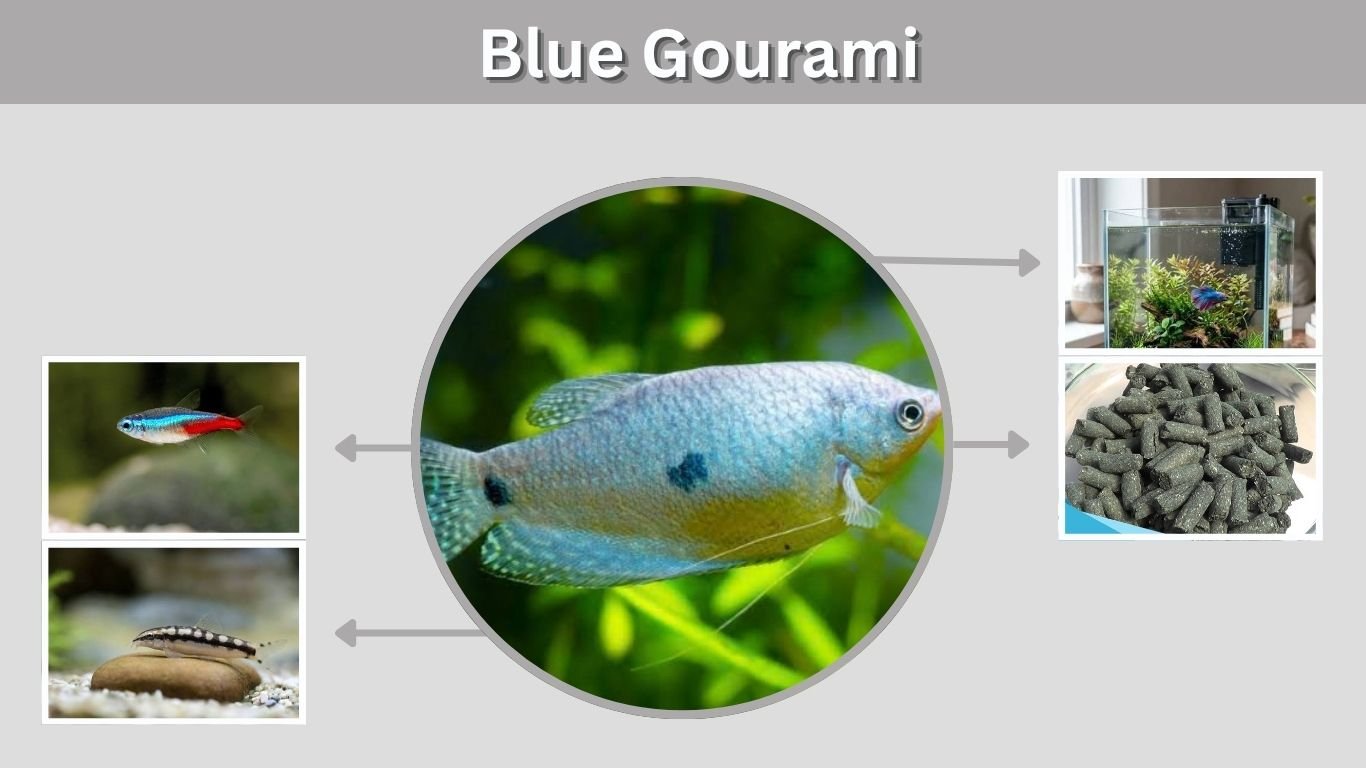
The blue gourami (Trichopodus trichopterus) is a hardy freshwater fish known for its shimmering blue-gray body, dark spots, and long thread-like pelvic fins. Also called the three-spot gourami, it comes from slow-moving waters of Southeast Asia and can grow much larger than dwarf gouramis. Although generally easy to care for, mature males may become territorial. A spacious planted aquarium, warm stable water, varied omnivorous diet, and carefully selected tank mates are important for keeping a blue gourami healthy long term.
What Is a Blue Gourami?
The blue gourami is a color form of the three-spot gourami, Trichopodus trichopterus. The name “three-spot” comes from two dark spots on the body, with the eye traditionally counted as the third. Wild populations occur across parts of Southeast Asia, particularly the Mekong region, where they inhabit slow, heavily vegetated freshwater habitats.
Blue Gourami Identification
Common characteristics include:
- Scientific name: Trichopodus trichopterus
- Family: Osphronemidae
- Blue-gray or silvery-blue body
- Dark spot near the middle of the body
- Second dark spot near the tail base
- Long thread-like pelvic fins
- Laterally compressed body
- Labyrinth organ for breathing atmospheric air
- Adult length potentially around 15 cm or 6 inches
The species is also available in gold, opaline, Cosby, marbled, and silver color forms.
Blue Gourami vs Powder Blue Dwarf Gourami
A powder blue dwarf gourami is not simply a smaller blue gourami.
Powder blue and neon blue dwarf gouramis are color varieties of the dwarf gourami, Trichogaster lalius, whereas the standard blue gourami belongs to Trichopodus trichopterus.
This difference matters because dwarf gouramis stay considerably smaller and have different space and compatibility requirements. When researching care, tank size, or male-versus-female differences, make sure you are looking at the correct species.
Blue Gourami Size and Tank Size

Blue gouramis are frequently sold as small juveniles, but owners should plan for their adult size. FishBase records a maximum standard length of approximately 15 cm (6 inches), although around 10 cm is common. Their combination of adult size and territorial behavior means horizontal swimming space and visual cover are important.
How Big Do Blue Gouramis Get?
A full-grown blue gourami may reach around 4–6 inches, with particularly large specimens approaching 6 inches.
Growth depends on genetics, diet, water quality, temperature, and overall husbandry. Males may also appear slightly larger and more streamlined than mature females.
They should not be confused with dwarf gouramis, which remain substantially smaller.
Blue Gourami Tank Size
Important setup considerations include:
- At least about 20–30 gallons for one adult, with larger being preferable
- A tank around 36 inches long or more
- Floating plants or surface cover
- Open areas for swimming
- Dense planting around the sides and rear
- Gentle to moderate filtration
- Easy access to the water surface
- A secure lid
SeriouslyFish gives a minimum base dimension of approximately 90 × 30 cm for the species. A larger aquarium provides more flexibility when keeping tank mates.
Blue Gourami Care and Water Conditions
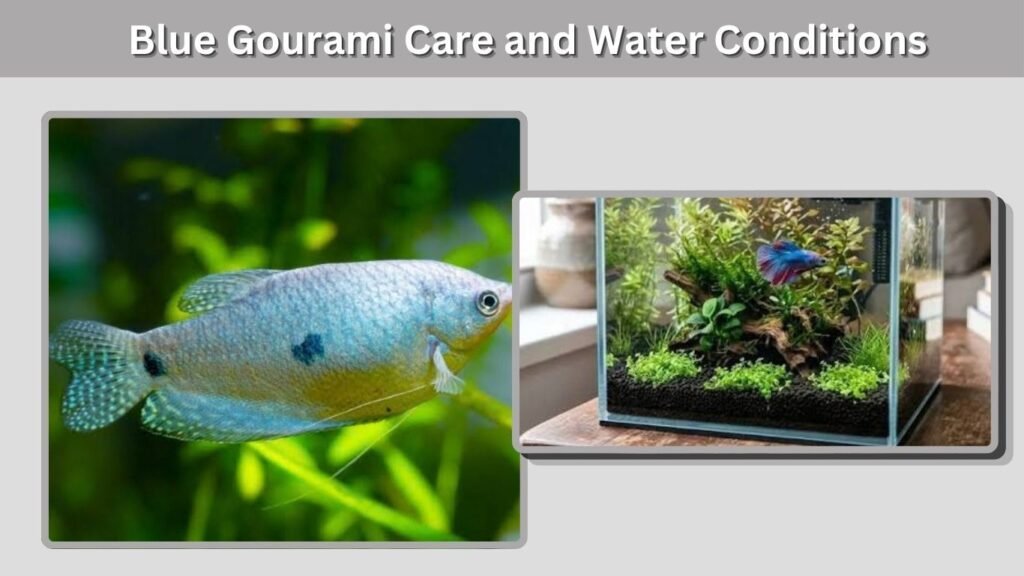
Blue gouramis are considered relatively hardy and can adapt to a broad range of freshwater conditions. Their natural habitats include ponds, marshes, ditches, swamps, and other slow-moving waters with heavy vegetation. Stability and good water quality are more important than trying to maintain one exact pH or hardness value.
Ideal Water Parameters
A suitable range includes:
- Temperature: about 75–86°F (24–30°C)
- pH: approximately 5.5–8.5
- Hardness: around 3–35 dGH
- Gentle to moderate current
- Consistently low ammonia and nitrite
- Regular partial water changes
FishBase reports somewhat narrower natural values of roughly 22–28°C and pH 6.0–8.0.
Why Surface Access Matters
Blue gouramis are labyrinth fishes. Their specialized labyrinth organ enables them to breathe atmospheric oxygen at the surface.
For this reason, floating plants should not completely block the surface. The fish must always be able to rise and gulp air.
Strong currents near the surface are also unnecessary because the species naturally occurs in relatively calm habitats.
What Do Blue Gouramis Eat?

Blue gouramis are adaptable omnivores. Wild fish consume algae, plant material, zooplankton, small invertebrates, and other organic material. Aquarium fish generally accept commercial foods readily, but providing variety helps maintain body condition, coloration, and reproductive health.
Best Food for Blue Gourami
A balanced diet can include:
- Quality tropical pellets
- Flake food
- Algae- or spirulina-based foods
- Frozen brine shrimp
- Daphnia
- Bloodworms in moderation
- Other appropriately sized frozen or live foods
Feed amounts the fish can consume without leaving excessive waste in the aquarium.
A mixture of plant-based and animal-based foods more closely reflects the species’ naturally varied diet.
Are Blue Gouramis Aggressive?
Blue gouramis are sometimes described as community fish, but their temperament can vary significantly. Some individuals remain relatively peaceful, while others become territorial with maturity. Adult males are particularly likely to challenge other gouramis and can become more aggressive when establishing breeding territories.
Signs of Aggression
Watch for:
- Persistent chasing
- Fin nipping
- Guarding one section of the aquarium
- Preventing another fish from feeding
- Repeatedly driving tank mates into corners
- Fighting between mature males
Plants, driftwood, and other visual barriers can help reduce constant line-of-sight confrontations.
Can You Keep Two Male Blue Gouramis?
Keeping multiple adult males in a small aquarium is risky.
Males can become territorial and fight, especially during breeding periods. If more than one gourami is kept, a larger tank with dense vegetation and broken sight lines becomes increasingly important.
SeriouslyFish specifically notes that males can squabble and may become highly aggressive during reproduction.
Blue Gourami Tank Mates

Choosing appropriate blue gourami tank mates depends heavily on the temperament of the individual fish. Robust, active species of similar size tend to be better candidates than delicate, slow-moving fish. Avoid overcrowding and provide enough space so fish can move away from one another when territorial behavior develops.
Possible Tank Mates
Potential companions include:
- Medium-sized barbs
- Larger peaceful tetras
- Rasboras of suitable size
- Loaches
- Corydoras in sufficiently spacious tanks
- Loricariid catfish
- Other robust community species
SeriouslyFish recommends robust fish such as barbs, larger characters, loricariids, and loaches because blue gouramis can become territorial.
Blue Gourami With Angelfish
Angelfish and blue gouramis can sometimes coexist in a sufficiently large aquarium, but the combination requires observation.
Both species can become territorial, and individuals differ greatly in temperament. Provide plenty of space, vegetation, and visual barriers. Be prepared to separate fish if one repeatedly harasses the other.
Blue Gourami With Guppies
Guppies are not always the best companions for an aggressive adult blue gourami. Their long fins and smaller size can attract unwanted attention.
A particularly calm gourami may tolerate them, but a robust community containing similarly sized fish generally offers a more predictable setup.
Male vs Female Blue Gourami
Sexing mature blue gouramis is relatively straightforward once the dorsal fin and body shape are developed. Juveniles can be more difficult to distinguish. The most useful feature is usually the shape of the dorsal fin rather than coloration alone.
Male and Female Differences
Adult males generally develop a longer, more pointed dorsal fin and may be somewhat larger. Females tend to have a shorter, rounder dorsal fin and often develop a fuller abdomen, especially when carrying eggs.
These characteristics become more obvious as the fish reaches maturity.
Blue Gourami Breeding
Blue gouramis are bubble-nest builders. During breeding, the male creates a floating nest of bubbles, often among floating vegetation. The male then courts a receptive female and collects fertilized eggs into the nest.
Eggs and Fry
After spawning, the male guards the bubble nest and may become particularly territorial.
Breeding tanks generally use shallow water, gentle filtration, and floating plants. Once spawning has finished, the female may need to be removed if the male becomes aggressive toward her.
SeriouslyFish recommends using gentle filtration and plenty of floating vegetation when breeding this species.
Blue Gourami Lifespan

Blue gouramis can be a multi-year commitment. Lifespan varies according to genetics, water quality, nutrition, disease exposure, and chronic stress. Aquarium references commonly place their expected lifespan at approximately 5–8 years under good husbandry.
Helping a Blue Gourami Live Longer
Stable water conditions, sufficient swimming space, a varied diet, and compatible tank mates are more important than constantly adjusting the aquarium.
Avoid chronic aggression because a fish that is continually chased or prevented from feeding may become stressed and more vulnerable to disease.
FAQs
Blue gouramis are hardy, attractive fish, but their adult size and variable temperament make correct planning important. Knowing their tank requirements, sex differences, diet, and compatibility before purchasing one can prevent many common aquarium problems.
1. How Big Does a Blue Gourami Get?
A blue gourami can reach approximately 15 cm, or about 6 inches, although many are closer to 4–5 inches in aquariums.
2. What Size Tank Does a Blue Gourami Need?
Around 20–30 gallons or larger is a practical starting point for one adult. Larger tanks are preferable when keeping multiple gouramis or other medium-sized fish.
3. Are Blue Gouramis Aggressive?
They can be. Temperament varies, but adult males are often territorial and may become especially aggressive during breeding.
4. What Is the Difference Between Male and Female Blue Gouramis?
Mature males typically have a longer, pointed dorsal fin, while females have a shorter, rounder dorsal fin and often a fuller abdomen.
5. Is a Powder Blue Dwarf Gourami the Same as a Blue Gourami?
No. A powder blue dwarf gourami is a color form of the dwarf gourami, while the blue gourami is Trichopodus trichopterus. They differ substantially in adult size and some care requirements.