
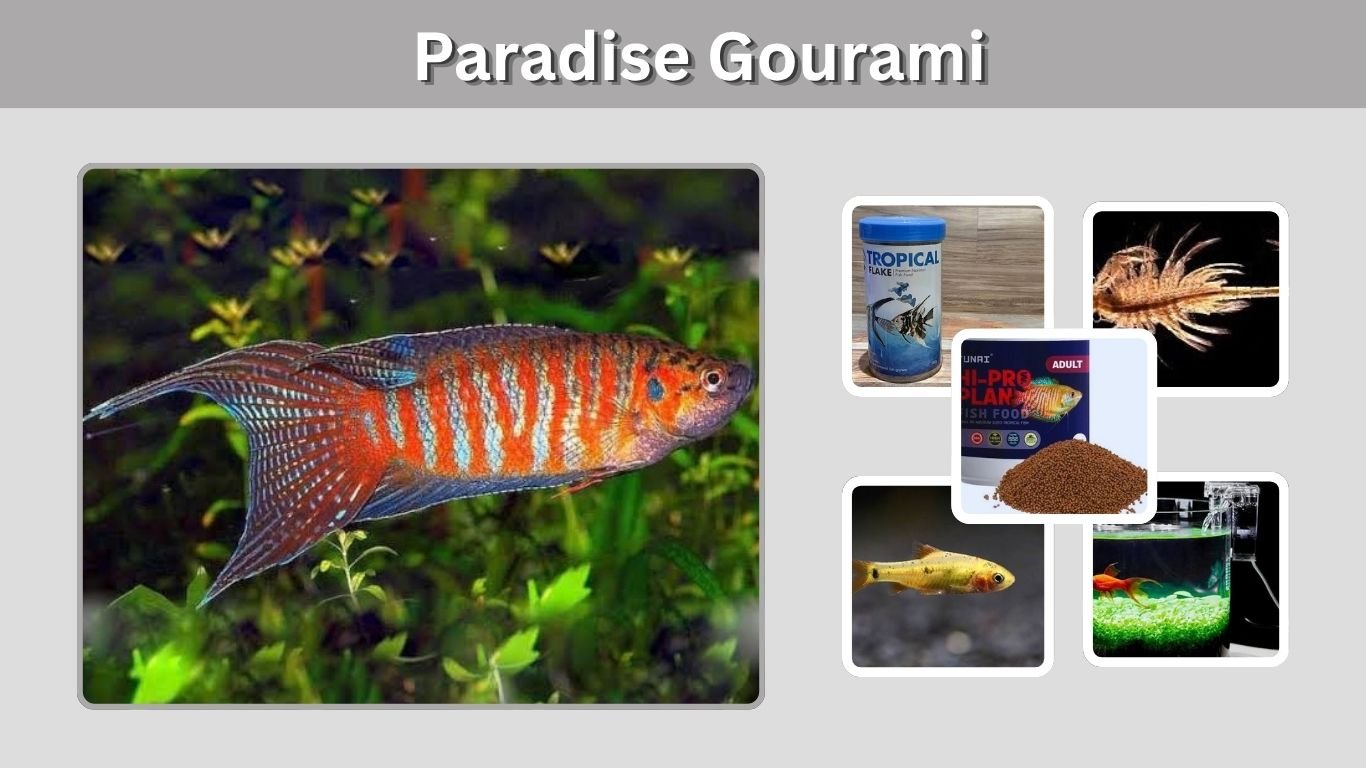
The paradise gourami (Macropodus opercularis), also called the paradise fish, is a colorful freshwater species known for its flowing fins and confident personality. Native to parts of East and Southeast Asia, it thrives in planted aquariums and tolerates cooler water than many tropical fish. However, its territorial behavior makes careful tank planning essential. This guide covers paradise gourami size, popular color varieties, tank requirements, compatible tank mates, feeding habits, and breeding. Understanding these characteristics helps fishkeepers create a healthy and comfortable environment for this beautiful aquarium species.
Paradise Gourami Identification and Appearance
Paradise gouramis belong to the Osphronemidae family, which includes other gouramis and bettas. Their beautiful colors, elongated fins, and distinctive swimming behavior make them recognizable aquarium fish. Although their appearance varies between males, females, and selectively bred varieties, several physical characteristics remain consistent. Understanding these features makes identifying healthy paradise gouramis and distinguishing different varieties much easier.
Key Identification Features
- Body shape: Slender, elongated, and slightly compressed from side to side.
- Coloration: Commonly features bright blue, red, and orange vertical bands.
- Fins: Long dorsal, anal, and tail fins, particularly noticeable in adult males.
- Head: Small, pointed head with a slightly upward-facing mouth.
- Breathing: Possesses a labyrinth organ that allows it to breathe atmospheric air.
- Tail: Often features elongated, pointed extensions, especially in mature males.
Paradise Gourami Size and Growth
Adult paradise gouramis generally reach 3–4 inches (7.5–10 cm) in total length, including their fins. Males are usually slightly larger and develop longer fin extensions.
Their growth depends on genetics, nutrition, water quality, and available swimming space. Proper feeding and consistent aquarium maintenance support healthy development.
Popular Paradise Gourami Color Varieties
Blue paradise gouramis display striking blue coloration, often combined with contrasting reddish markings. Red paradise gouramis have stronger red or orange pigmentation, creating a particularly colorful appearance.
Albino paradise gouramis feature pale cream, pinkish, or white bodies with reddish eyes. Golden varieties have yellowish coloration, while names such as blue flame may describe selectively bred color patterns.
The black paradise fish is generally a separate species, Macropodus spechti, rather than simply a black variety of Macropodus opercularis. Similarly, the spiketail paradisefish belongs to another genus.
Paradise Gourami Tank Size and Water Requirements
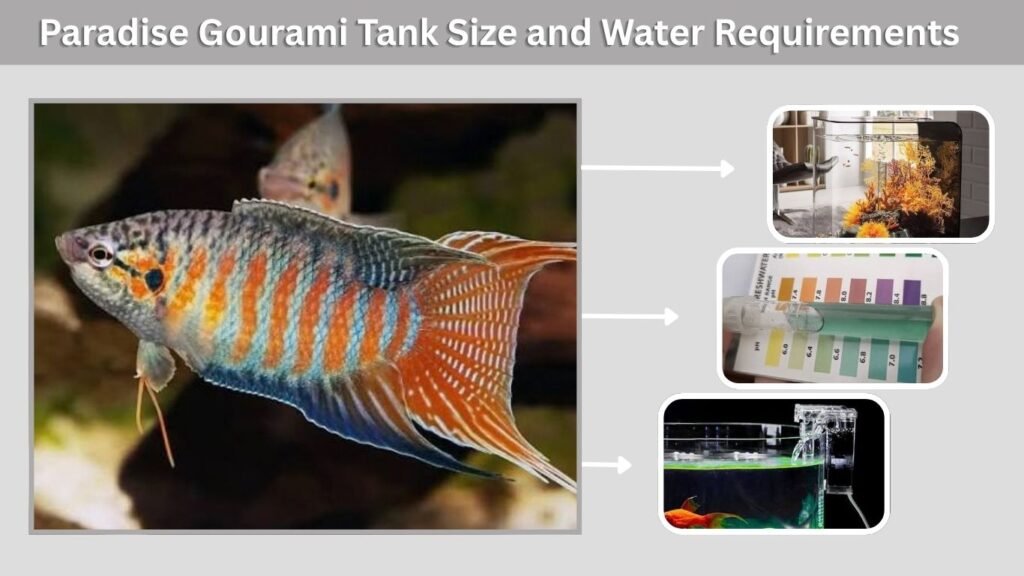
Creating a suitable aquarium environment is essential for maintaining healthy paradise gouramis. These hardy freshwater fish can tolerate various water conditions, but stability remains important. They naturally inhabit ponds, rice paddies, streams, and other slow-moving waters with abundant vegetation. A properly sized aquarium with gentle filtration, hiding places, and open swimming areas helps reproduce their natural habitat.
Ideal Tank Conditions
- Minimum tank size: Approximately 20 gallons for a single adult; larger tanks are preferable for pairs.
- Water temperature: Around 64–75°F (18–24°C) is a practical everyday range.
- pH level: Generally 6.0–8.0.
- Water hardness: Approximately 5–20 dGH.
- Water movement: Gentle to moderate, avoiding strong currents.
- Lighting: Moderate lighting with shaded areas.
- Filtration: A properly maintained filter that provides biological filtration without excessive flow.
Aquarium Decorations and Plants
Paradise gouramis benefit from densely planted aquariums containing Java fern, Anubias, floating plants, and other suitable freshwater vegetation.
Driftwood, rocks, and plant clusters help establish separate territories and reduce aggressive encounters.
Because paradise gouramis breathe air from the surface, leave adequate open surface space. A secure aquarium lid is also important because these fish can jump.
Water Changes and Maintenance
Regular partial water changes help maintain water quality and reduce accumulated waste. Changing approximately 20–30% of the water weekly is a reasonable starting point, adjusted according to aquarium conditions.
Always use dechlorinated replacement water and avoid sudden temperature changes. Monitor ammonia, nitrite, and nitrate levels, especially in newly established aquariums.
Paradise Gourami Temperament and Tank Mates

Paradise gouramis are attractive but territorial fish, particularly when males encounter competitors. Their behavior can become more aggressive during breeding or when available swimming space is limited. Although certain individuals coexist with other species, they are not ideal inhabitants for every community aquarium. Understanding compatibility helps prevent chasing, fin damage, unnecessary stress, and fighting between aquarium residents.
Potentially Compatible Tank Mates
In a spacious aquarium, carefully selected companions may include:
- Zebra danios: Active swimmers that can tolerate similar cooler temperatures.
- Gold barbs: Robust schooling fish that may coexist when given adequate space.
- Bristlenose plecos: Bottom-oriented fish that generally occupy different areas.
- Bronze corydoras: Peaceful bottom dwellers that may work in appropriately sized aquariums.
Compatibility is never guaranteed. Tank size, individual temperament, water requirements, and adequate group sizes should all be considered.
Fish to Avoid Keeping Together
Avoid housing paradise gouramis with bettas, dwarf gouramis, and other similarly shaped territorial labyrinth fish. They may view these species as competitors.
Small shrimp, tiny fish, and guppy fry can become prey. Long-finned fish may also experience aggression or fin damage.
Keeping multiple males together is particularly risky unless the aquarium is exceptionally spacious and carefully designed.
Are Paradise Gouramis Aggressive?
Yes, paradise gouramis can be aggressive, especially mature males. Their territorial behavior becomes more noticeable when protecting breeding areas.
A single paradise gourami in a planted aquarium is often easier to manage than multiple individuals. Carefully observe interactions and separate fish if persistent aggression occurs.
Paradise Gourami Food and Feeding Habits
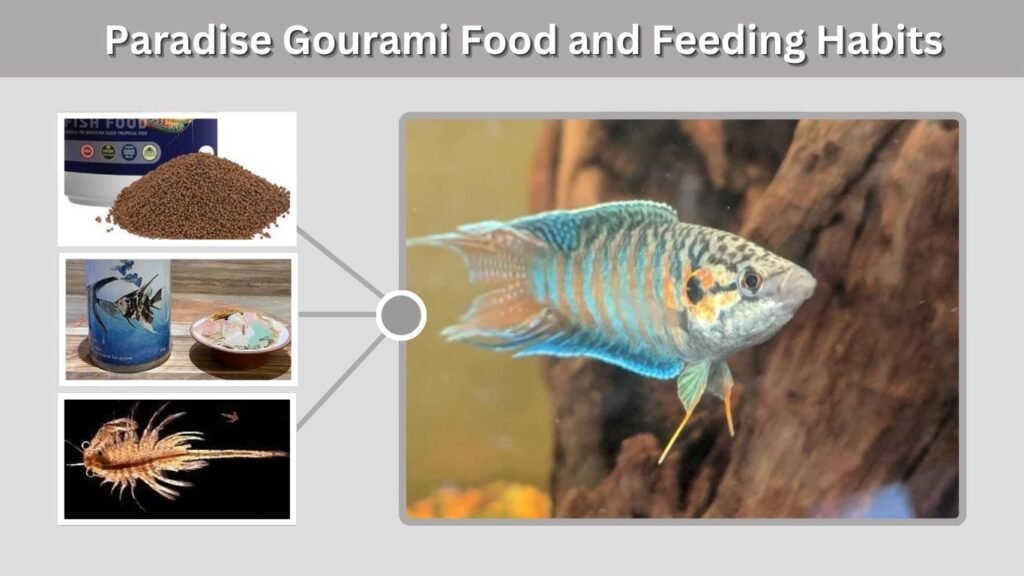
Paradise gouramis are opportunistic predators that naturally consume insect larvae, small crustaceans, and other aquatic invertebrates. In captivity, they readily accept various prepared and frozen foods. However, providing a balanced diet is essential for maintaining healthy growth, strong coloration, and reproductive condition. Combining quality staple food with occasional protein-rich supplements helps satisfy their nutritional requirements and encourages natural feeding behavior.
Best Foods for Paradise Gouramis
- Quality pellets: Small, protein-rich pellets formulated for carnivorous or insect-eating fish.
- Flake food: Nutritious tropical fish flakes suitable for their mouth size.
- Frozen foods: Brine shrimp, daphnia, and bloodworms offered as dietary supplements.
- Live foods: Small aquatic invertebrates that stimulate natural hunting behavior.
Feeding Schedule and Nutrition
Feed adult paradise gouramis once or twice daily, offering only what they can consume within a short period.
Overfeeding can reduce water quality and contribute to health problems. Remove leftover food when necessary.
Rotating different foods provides nutritional variety and helps prevent dependence on a single food source.
Paradise Gourami Breeding and Lifespan

Paradise gouramis reproduce through bubble-nest breeding, a reproductive strategy shared with several other labyrinth fish. Successful breeding generally requires healthy adults, suitable water conditions, and a calm environment. Males develop stronger territorial instincts during courtship and nest protection. Understanding the differences between male and female paradise gouramis is particularly important when preparing a breeding aquarium and preventing injuries.
Male vs. Female Paradise Gourami
Male paradise gouramis typically display longer, more pointed dorsal, anal, and tail fins. Their coloration is often brighter, especially during courtship.
Females generally have shorter fins and rounder bodies. Mature females may develop fuller abdomens when carrying eggs.
These differences become easier to recognize as the fish mature.
How Paradise Gouramis Breed
During breeding, the male builds a bubble nest near the water surface, frequently beneath floating vegetation.
After courtship and spawning, the male collects eggs and places them inside the nest. He then guards the developing eggs and newly hatched larvae.
The female may need to be removed if the male becomes aggressive. Once the fry become free-swimming, separating the male can help protect them. Tiny live foods or appropriately sized fry foods support early development.
Paradise Gourami Lifespan
Paradise gouramis commonly live around 5–8 years in captivity, although individual longevity varies.
Good nutrition, stable water conditions, adequate swimming space, and suitable tank companions all contribute to their long-term well-being.
FAQs
Paradise gouramis often attract attention because of their unusual appearance, adaptable nature, and territorial personality. Fishkeepers commonly have questions about aquarium size, temperature, compatibility, and differences between color varieties. The following answers address several important concerns and provide practical guidance for keeping paradise gouramis successfully, particularly for those considering this beautiful freshwater fish for the first time.
1. Can paradise gouramis live in a 10-gallon tank?
A 10-gallon aquarium is generally too restrictive for long-term adult care. A 20-gallon aquarium with adequate horizontal swimming space is preferable.
2. Can paradise gouramis live with betta fish?
Generally, no. Both species can display territorial behavior, increasing the likelihood of fighting, chasing, and fin injuries.
3. Do paradise gouramis need a heater?
Not always. They tolerate cooler temperatures and can live in unheated indoor aquariums when temperatures remain within a suitable, stable range.
4. How can you tell male and female paradise gouramis apart?
Males usually develop longer, pointed fins and brighter coloration. Females generally have shorter fins and rounder body shapes.
5. Are blue paradise gouramis different from regular paradise gouramis?
Blue paradise gouramis are typically color varieties of Macropodus opercularis. Their basic care requirements and territorial behavior are similar to those of standard paradise fish.
