
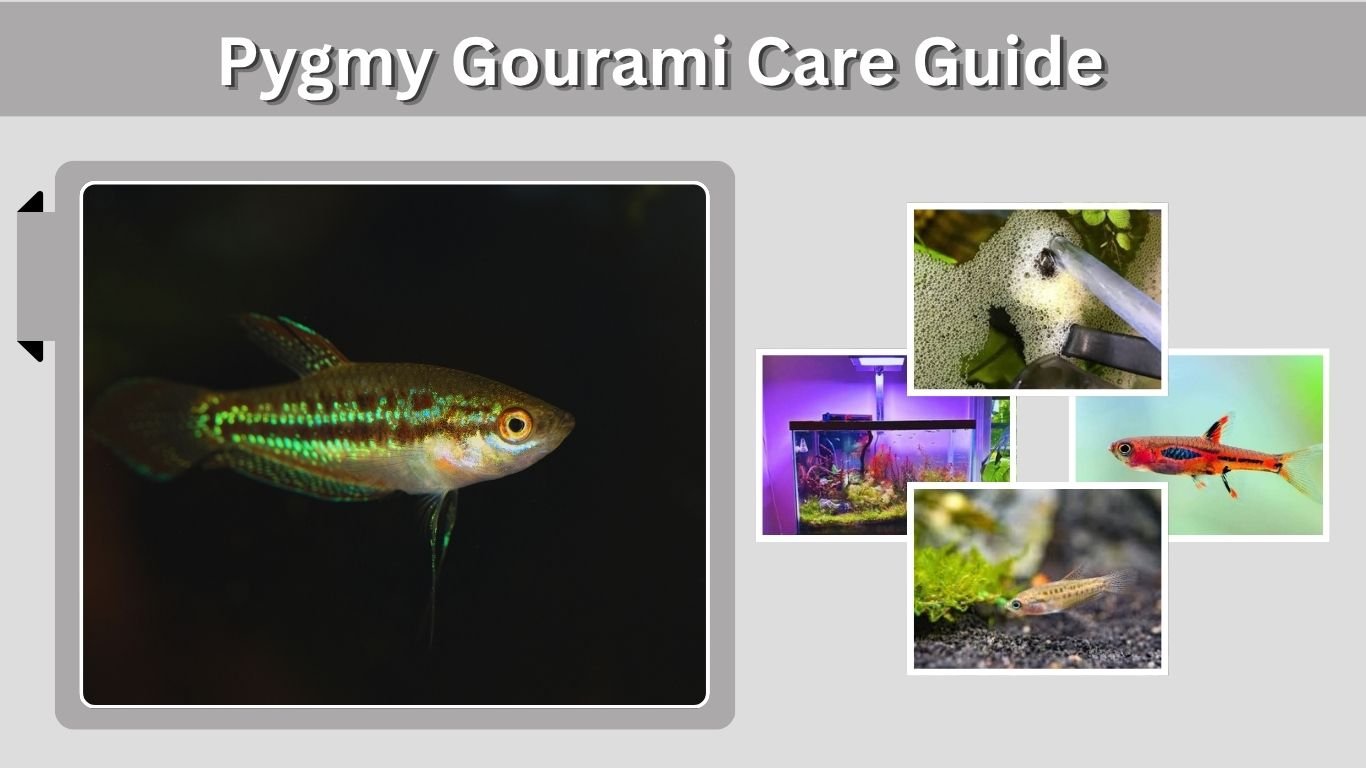
The pygmy gourami (Trichopsis pumila), also known as the sparkling gourami, is a tiny freshwater fish admired for its shimmering colors and peaceful personality. Native to Southeast Asia, this species is popular among aquarium enthusiasts who enjoy small, planted tanks. Despite its delicate appearance, the pygmy gourami is relatively adaptable when provided with suitable water conditions and a balanced diet. Understanding its size, lifespan, feeding habits, tank requirements, compatible tank mates, and breeding behavior helps aquarists maintain a healthy, comfortable environment for these fascinating fish.
Pygmy Gourami Identification and Characteristics
Pygmy gouramis are among the smallest members of the gourami family, making them attractive choices for carefully planned nano aquariums. Their colorful bodies, unusual sounds, and interesting social behavior distinguish them from many other freshwater fish. Although frequently confused with dwarf gouramis, pygmy gouramis belong to a different species with distinct physical characteristics and environmental preferences.
Physical Appearance and Identification
Pygmy gouramis have slender bodies decorated with iridescent blue-green markings that sparkle under aquarium lighting. Their identification characteristics include:
- Scientific name: Trichopsis pumila.
- Common names: Pygmy gourami, sparkling gourami, and dwarf croaking gourami.
- Body color: Brownish-gold with shimmering blue or green markings.
- Body pattern: Dark horizontal stripes and scattered spots.
- Fins: Delicate, often displaying reddish and blue coloration.
- Adult size: Approximately 1.5 inches (3–4 cm).
- Body shape: Small, elongated, and slightly compressed.
Natural Habitat and Distribution
Pygmy gouramis naturally inhabit Thailand, Cambodia, Laos, and Vietnam. They occupy rice paddies, swamps, shallow ponds, and slow-moving waterways containing abundant aquatic vegetation.
These environments provide shelter from predators and access to small aquatic organisms. Floating plants, submerged roots, and calm water are important features of their habitat.
Pygmy Gourami Size and Lifespan
Adult pygmy gouramis generally reach around 1.5 inches, making them suitable for smaller aquariums.
Their typical captive lifespan is approximately 3–5 years, although individual longevity varies. Stable water conditions, nutritious food, and minimal stress contribute to a longer and healthier life.
Pygmy Gourami Care and Tank Requirements
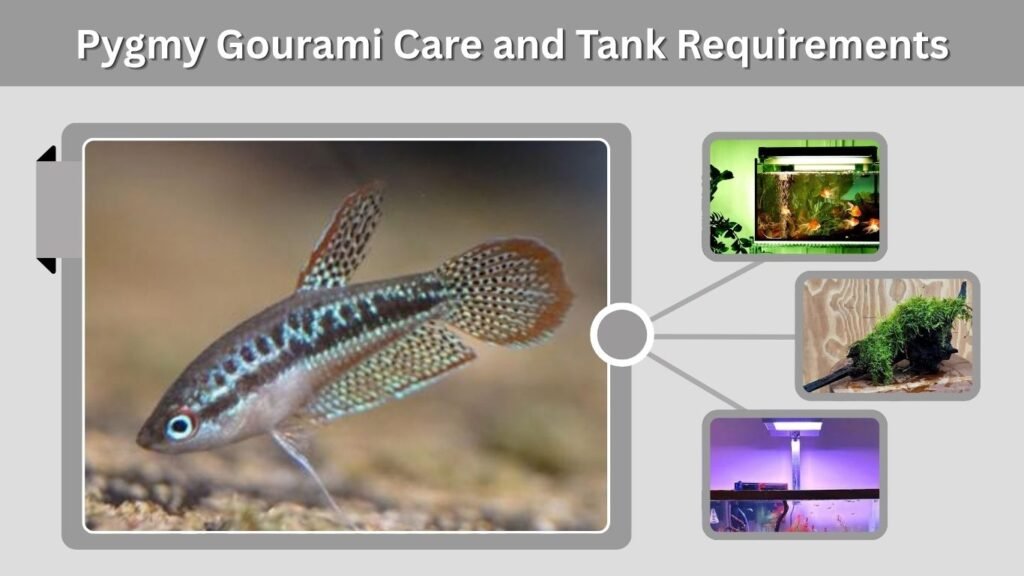
Proper pygmy gourami care begins with recreating the calm, densely planted environments these fish naturally inhabit. Although they can live in compact aquariums, adequate swimming space and stable water quality remain essential. Suitable filtration, comfortable temperatures, and accessible hiding places encourage natural behavior. A well-established aquarium also helps prevent stress and common health problems associated with sudden environmental changes.
Pygmy Gourami Tank Size and Setup
A 10-gallon aquarium is a practical starting point for a pair or small group of pygmy gouramis. Larger tanks are preferable when keeping additional fish.
Important aquarium requirements include:
- Tank size: Approximately 10 gallons or larger.
- Filtration: Gentle sponge filtration or adjustable low-flow filters.
- Plants: Java moss, Java fern, Cryptocoryne, and floating plants.
- Substrate: Fine sand or smooth gravel.
- Lighting: Moderate or subdued aquarium lighting.
- Decorations: Driftwood, natural shelters, and aquatic plants.
- Lid: A secure cover with space for warm, humid air above the water.
Water Temperature, pH, and Hardness
Pygmy gouramis generally thrive at temperatures of 72–82°F (22–28°C). A stable temperature around 75–79°F is comfortable for many established aquariums.
Their preferred pH ranges approximately from 5.0 to 7.5, with soft to moderately soft water often working well. A general hardness of 1–12 dGH is suitable.
Maintaining consistency is more important than frequently adjusting water chemistry.
Aquarium Maintenance and Water Quality
Perform partial water changes of approximately 15–25% weekly, adjusting the schedule according to aquarium conditions. Test ammonia, nitrite, and nitrate regularly.
Ammonia and nitrite should remain at zero. Avoid strong currents because pygmy gouramis prefer calm water.
Always establish the aquarium’s biological filtration before introducing fish, and avoid sudden temperature changes during maintenance.
Pygmy Gourami Diet and Compatible Tank Mates
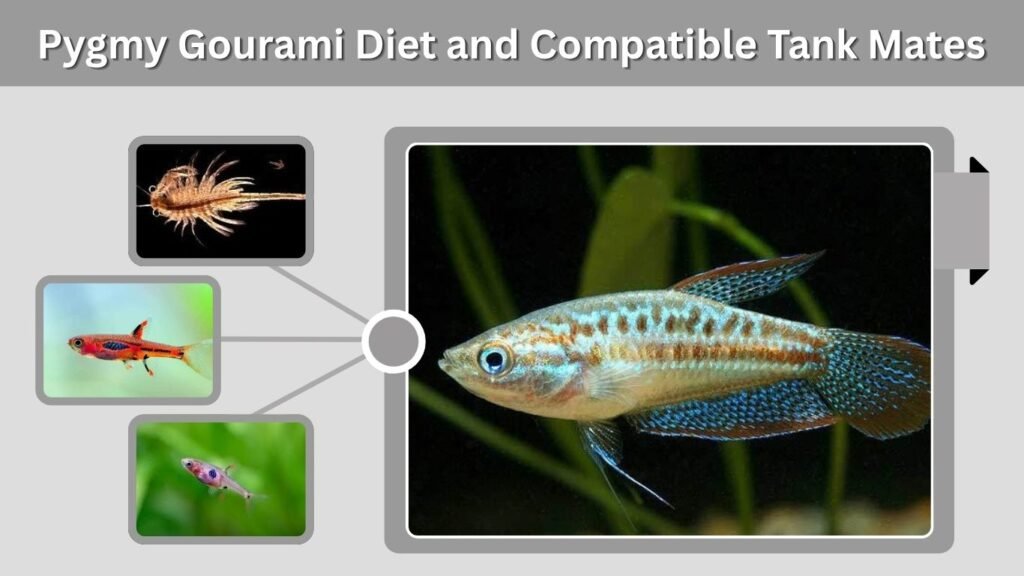
Pygmy gouramis are micropredators that naturally feed on tiny insects, larvae, and aquatic invertebrates. Their small mouths require appropriately sized foods, while their timid behavior makes careful tank mate selection important. They generally coexist with peaceful nano fish but may struggle around aggressive or fast-feeding species. A balanced diet and suitable companions help encourage healthy activity and coloration.
What Do Pygmy Gouramis Eat?
A varied pygmy gourami diet supports growth, coloration, and reproductive health. Suitable foods include:
- Daphnia: Small aquatic crustaceans that encourage natural hunting.
- Baby brine shrimp: Nutritious live or frozen food.
- Bloodworms: Finely sized portions offered occasionally.
- Micro pellets: High-quality foods designed for small fish.
- Crushed flakes: Fine particles that fit their small mouths.
- Microworms: Especially useful for juvenile fish.
Feed small portions once or twice daily, ensuring that uneaten food does not accumulate.
Best Pygmy Gourami Tank Mates
Suitable companions should be peaceful, relatively small, and comfortable in similar water conditions.
Potential pygmy gourami tank mates include:
- Chili rasboras
- Phoenix rasboras
- Ember tetras
- Other small Boraras species
- Kuhli loaches
- Peaceful small bottom-dwelling fish
- Nerite snails
Compatibility depends on aquarium size, temperament, available shelter, and stocking density.
Can Pygmy Gouramis Live With Bettas or Shrimp?
Keeping pygmy gouramis with bettas is generally discouraged. Both species may establish territories, and aggressive interactions can occur, especially in small aquariums.
Adult dwarf shrimp sometimes coexist with pygmy gouramis, but baby shrimp are vulnerable to predation. Dense moss and vegetation improve shrimp survival without eliminating the risk.
Pygmy Gourami Behavior, Breeding, and Health
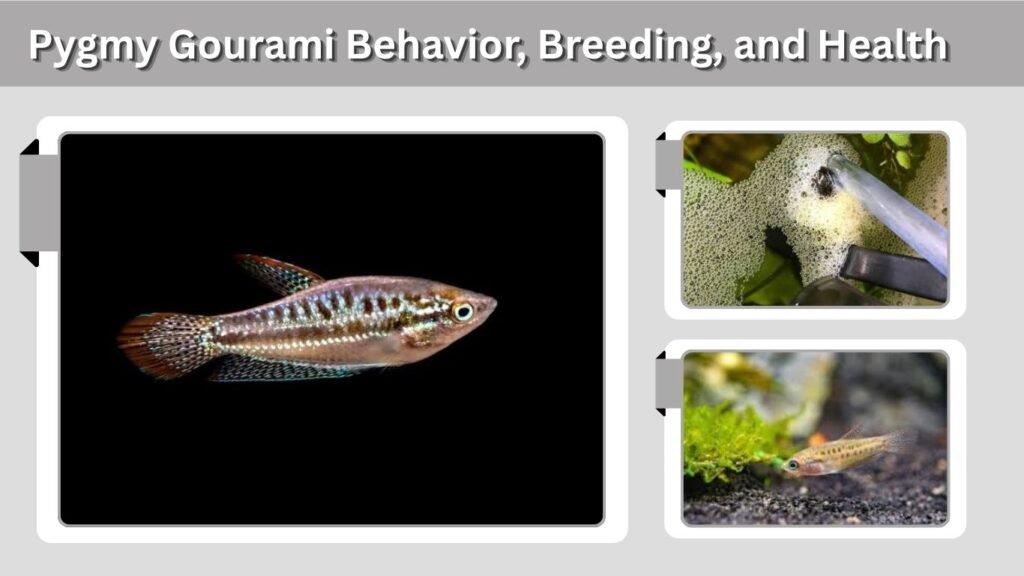
Pygmy gouramis display fascinating behaviors that make them rewarding aquarium inhabitants. They communicate through faint croaking sounds, establish small territories, and develop interesting breeding relationships. Although generally peaceful toward other species, males occasionally compete with one another. Understanding their social behavior, reproductive process, and common health concerns helps aquarium owners create a safer environment and identify problems early.
Behavior and Croaking Sounds
One unusual characteristic of pygmy gouramis is their ability to produce audible clicking or croaking sounds.
These sounds originate from specialized structures associated with their pectoral fins. Both males and females can produce them during courtship and territorial interactions.
Pygmy gouramis often remain close to vegetation, becoming more confident when sufficient hiding places are available.
How to Breed Pygmy Gouramis
Pygmy gouramis reproduce by building bubble nests. Mature males typically develop more pronounced fin extensions and stronger coloration, although identifying their sex can be challenging.
During breeding, the male constructs a nest beneath floating vegetation or other sheltered surfaces. Following courtship and spawning, he collects the eggs and guards them within the nest.
Eggs generally hatch within 24–48 hours. Newly hatched fry remain near the nest before becoming free-swimming.
Very small foods such as infusoria are necessary initially. As the fry grow, they can gradually transition to microworms and newly hatched brine shrimp.
Common Health Problems and Prevention
Pygmy gouramis may experience fin damage, parasitic infections, and stress-related illnesses when aquarium conditions deteriorate.
Clamped fins, faded coloration, rapid breathing, and reduced appetite can indicate health problems.
Preventive care includes maintaining clean water, avoiding overcrowding, quarantining new fish, and providing nutritious food. Persistent symptoms require appropriate diagnosis rather than unnecessary medication.
FAQs
Pygmy gouramis are relatively straightforward to maintain once their environmental needs are understood. However, aquarium owners frequently have questions about their suitability for small tanks, social behavior, feeding requirements, and compatibility with other freshwater species. The following answers address common concerns and provide practical guidance for maintaining pygmy gouramis in healthy, stable aquarium conditions over the long term.
1. Are Pygmy Gouramis Good for Beginners?
Yes. Pygmy gouramis can suit beginners who maintain established aquariums with stable water conditions. Their small size and timid temperament require careful feeding and tank mate selection.
2. Can Pygmy Gouramis Live in a 5-Gallon Tank?
A single pygmy gourami may be maintained in a carefully managed 5-gallon aquarium, but 10 gallons or more provides better stability and space. Five gallons is not recommended for a group.
3. How Many Pygmy Gouramis Should Be Kept Together?
A pair or small group can work well in a sufficiently planted aquarium. Providing hiding places and enough space reduces territorial conflicts, especially between males.
4. Do Pygmy Gouramis Need an Air Pump?
Not necessarily. They possess a labyrinth organ that allows them to breathe atmospheric air. However, they still require clean, appropriately oxygenated water and biological filtration.
5. Are Pygmy Gouramis the Same as Dwarf Gouramis?
No. The pygmy gourami (Trichopsis pumila) is a separate species from the dwarf gourami (Trichogaster lalius). Pygmy gouramis are significantly smaller and produce characteristic croaking sounds.
