
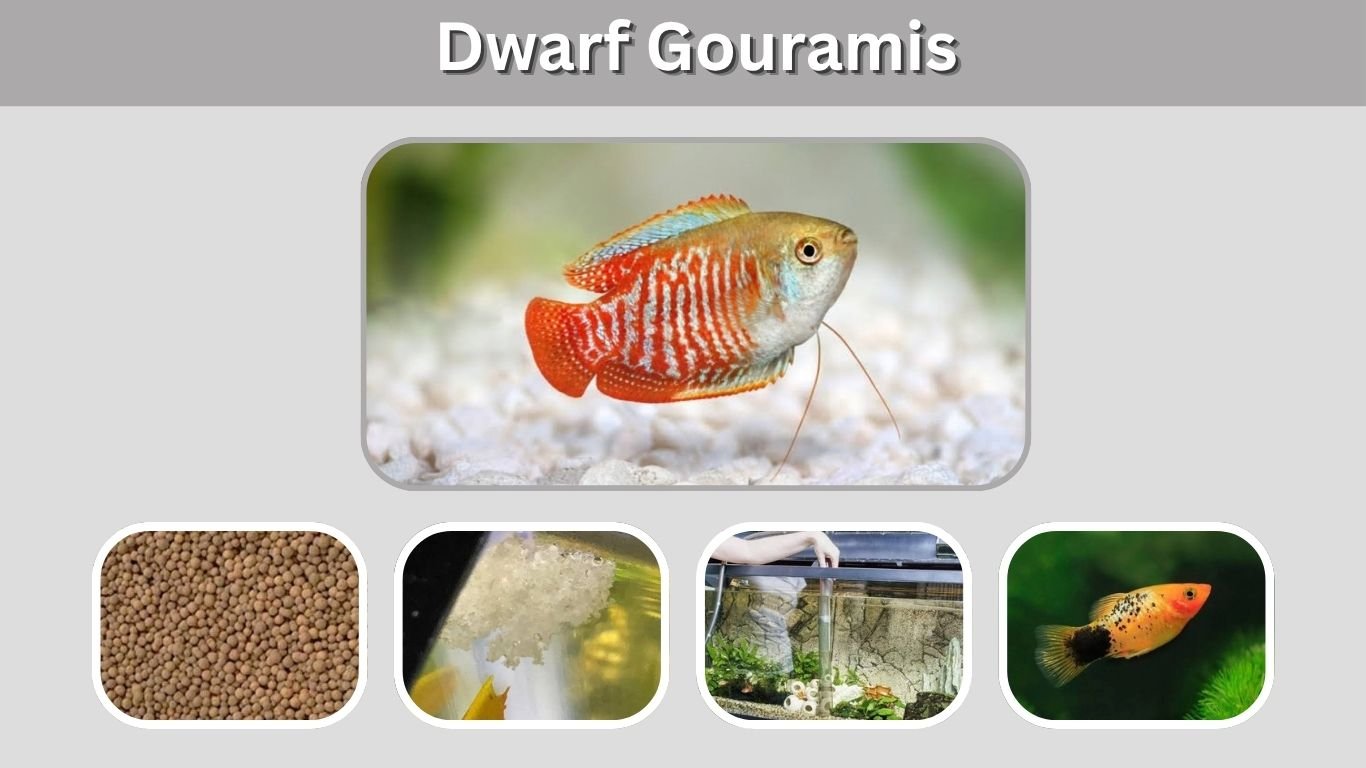
Dwarf gouramis are colorful freshwater fish popular among aquarium enthusiasts for their bright appearance, peaceful swimming style, and interesting behavior. Native to South Asia, these small tropical fish are recognized for their beautiful red and blue patterns and unique ability to breathe air from the water’s surface. Although dwarf gouramis are relatively easy to maintain, they can become territorial when kept with incompatible fish. Understanding their adult size, lifespan, aquarium requirements, diet, and breeding habits helps owners create a healthy environment and choose suitable companions for a community aquarium.
What Are Dwarf Gouramis?
Dwarf gouramis (Trichogaster lalius) are small freshwater fish belonging to the family Osphronemidae. They naturally inhabit slow-moving rivers, ponds, wetlands, and heavily vegetated waters throughout parts of India, Bangladesh, and Pakistan. These fish possess a specialized labyrinth organ that allows them to breathe atmospheric oxygen. Their attractive coloration and relatively manageable size make them popular aquarium fish.
Dwarf Gourami Identification
Common physical characteristics include:
- Body shape: Oval, laterally compressed, and relatively deep.
- Coloration: Bright orange-red bodies with iridescent blue markings.
- Size: Usually approximately 2–3.5 inches long.
- Fins: Rounded, flowing fins with threadlike pelvic extensions.
- Breathing: A labyrinth organ allowing them to gulp air.
- Sexual differences: Males are usually brighter than females.
Types of Dwarf Gouramis
Several selectively bred color varieties are available in the aquarium trade.
The powder blue dwarf gourami displays an attractive blue body, while the flame dwarf gourami features vivid orange-red coloration.
Neon blue and sunset varieties are also popular. These fish belong to the same species despite their different appearances.
Honey gouramis and sparkling gouramis are separate species rather than dwarf gourami color varieties.
How Big Do Dwarf Gouramis Get?
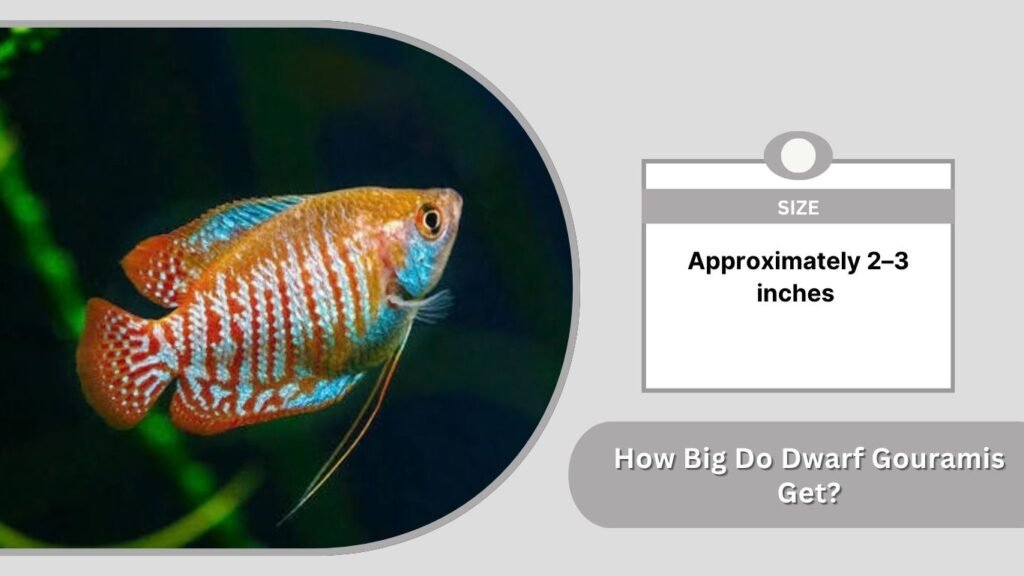
Dwarf gouramis remain significantly smaller than many other commonly kept gourami species. However, their adult size varies according to sex, genetics, and environmental conditions. Understanding their natural growth helps aquarium owners select suitable tanks and avoid overcrowding. Proper nutrition, stable water parameters, and reduced stress contribute to healthy development throughout their lives.
Full-Grown Dwarf Gourami Size
Adult dwarf gouramis typically reach approximately 2–3 inches (5–8 cm), although some individuals may approach 3.5 inches.
Males are often slightly larger and more colorful than females.
Their compact bodies make them suitable for smaller freshwater aquariums, but they still need adequate swimming space and territorial boundaries.
How Long Do Dwarf Gouramis Live?
Dwarf gouramis commonly live around 2–4 years in captivity.
Some healthy individuals may survive longer with excellent care, although breeding conditions and disease susceptibility influence longevity.
Stable water quality, appropriate feeding, and careful selection of healthy fish improve their chances of living longer.
Dwarf Gourami Tank Size and Water Requirements
A properly maintained aquarium is essential for keeping dwarf gouramis healthy. These fish naturally inhabit shallow, slow-moving environments containing dense aquatic vegetation. They prefer gentle filtration, stable tropical temperatures, and sheltered swimming areas. Although dwarf gouramis are adaptable, sudden water changes and excessive currents can cause stress. Providing suitable conditions supports natural behavior and reduces aggression.
Minimum Tank Size for Dwarf Gouramis
A 10-gallon aquarium is a commonly accepted minimum for one dwarf gourami.
However, a 20-gallon aquarium provides better swimming space, more stable water conditions, and greater flexibility for peaceful companions.
Larger aquariums are preferable for breeding pairs or community setups involving several fish species.
Ideal Water Parameters
Recommended aquarium conditions include:
- Temperature: 72–81°F (22–27°C).
- pH level: Approximately 6.0–7.5.
- Water hardness: About 2–18 dGH.
- Minimum tank size: 10 gallons for one individual.
- Water movement: Gentle or slow-moving.
- Ammonia and nitrite: Maintain at 0 ppm.
- Nitrate: Keep low through regular aquarium maintenance.
Best Aquarium Plants for Dwarf Gouramis
Dwarf gouramis appreciate heavily planted aquariums containing Java fern, Anubias, water sprite, and floating plants.
Floating vegetation provides shade and supports bubble-nest construction during breeding.
Maintain some open surface space because dwarf gouramis regularly breathe atmospheric air. A secure aquarium lid also helps prevent accidental jumping.
Are Dwarf Gouramis Peaceful or Aggressive?
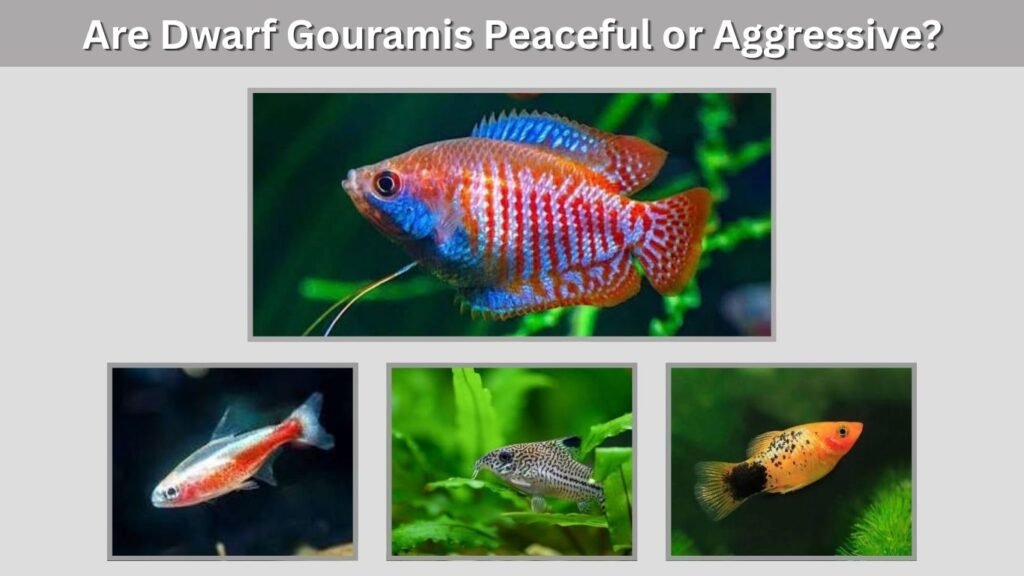
Dwarf gouramis are generally considered semi-peaceful fish, but their temperament varies considerably between individuals. Males can become territorial, particularly when competing with other gouramis or defending breeding areas. Community compatibility depends on aquarium size, available hiding places, and the behavior of neighboring species. Carefully selecting tank mates helps prevent aggression, stress, and injuries.
Are Dwarf Gouramis Aggressive?
Male dwarf gouramis may chase rivals or defend preferred areas near floating plants.
Aggression becomes more likely when multiple males share limited space.
Females are generally less territorial, although individual differences exist. Dense vegetation and visual barriers can reduce confrontations but cannot guarantee compatibility.
Best Tank Mates for Dwarf Gouramis
Potentially compatible aquarium companions include:
- Neon tetras: Peaceful schooling fish with similar water requirements.
- Harlequin rasboras: Calm swimmers that generally avoid territorial conflicts.
- Corydoras catfish: Peaceful bottom-dwellers requiring suitable groups.
- Kuhli loaches: Shy bottom-dwellers that appreciate planted aquariums.
- Platies: Possible companions where water parameters overlap.
- Otocinclus catfish: Peaceful algae grazers suited to mature aquariums.
Can Dwarf Gouramis Live With Bettas?
Keeping dwarf gouramis with bettas is generally discouraged.
Both species possess labyrinth organs and may defend similar territories near the water’s surface.
Their interactions can cause persistent chasing, damaged fins, and stress. Even female bettas may display territorial behavior.
Angelfish and larger gouramis can also create compatibility problems.
How Many Dwarf Gouramis Should Be Kept Together?
Dwarf gouramis are not schooling fish and do not require groups to remain healthy. Unlike tetras or rasboras, they often prefer maintaining individual territories. Keeping several males together may cause repeated fighting, especially in smaller aquariums. Understanding stocking limits and differences between males and females helps aquarists avoid overcrowding and create a more peaceful environment.
Can Dwarf Gouramis Live Alone?
Yes. A single dwarf gourami can live comfortably without another member of its species.
One male often works well as the centerpiece of a peaceful planted community aquarium.
Providing plants, suitable companions, and swimming space helps prevent stress and encourages natural behavior.
How Many Dwarf Gouramis in a 20-Gallon Tank?
One dwarf gourami is generally the safest choice for a 20-gallon community aquarium.
A male-female pair may be possible in a carefully arranged, densely planted tank, but males sometimes harass females.
Keeping two males together in this space is not recommended.
Can Two Male Dwarf Gouramis Live Together?
Two males frequently establish competing territories and may repeatedly chase or attack each other.
Even larger aquariums cannot guarantee peaceful coexistence.
A single male is usually the most predictable choice. If attempting a breeding pair, provide separate hiding areas and be prepared to separate the fish if aggression develops.
Dwarf Gourami Food and Breeding
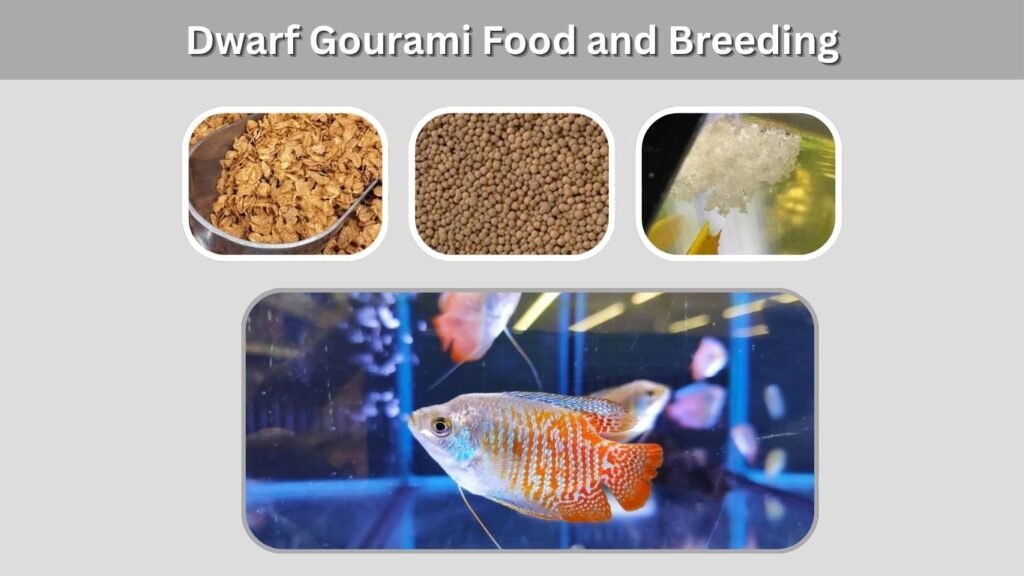
Dwarf gouramis are omnivorous fish that consume small invertebrates, plant material, and commercially prepared aquarium foods. Providing a varied diet supports their coloration, growth, and reproductive health. These fish are also bubble-nest builders, meaning males construct floating nests during breeding. Successful reproduction requires suitable water conditions and careful management of territorial behavior.
What Do Dwarf Gouramis Eat?
Dwarf gouramis readily accept high-quality tropical flakes, small pellets, and suitable frozen foods.
Brine shrimp, daphnia, and bloodworms can provide additional dietary variety.
Feed small portions once or twice daily, avoiding excessive food accumulation.
A balanced diet containing animal protein and appropriate plant-based ingredients supports overall health.
How Do Dwarf Gouramis Breed?
Male dwarf gouramis create bubble nests near floating plants at the water’s surface.
During spawning, the male embraces the female, fertilizes the released eggs, and gathers them into the nest.
The male then guards the developing eggs. Females may require separation after spawning because males sometimes become aggressive.
Newly hatched fry require appropriately sized microscopic foods before progressing to larger food sources.
Dwarf Gourami Care and Common Health Problems

Although dwarf gouramis are often marketed as beginner-friendly fish, they require consistent aquarium maintenance and careful health monitoring. Poor water conditions, aggressive companions, and disease exposure can shorten their lifespan. Captive-bred dwarf gouramis may also be vulnerable to specific viral infections. Selecting healthy specimens and maintaining suitable environmental conditions are important parts of successful long-term care.
Essential Dwarf Gourami Care Tips
Routine maintenance should include:
- Water changes: Replace approximately 20–25% regularly, adjusting to water-test results.
- Water testing: Monitor temperature, ammonia, nitrite, nitrate, and pH.
- Balanced feeding: Provide varied foods without overfeeding.
- Plant maintenance: Maintain shelter and accessible surface areas.
- Behavior monitoring: Watch for chasing, hiding, or reduced appetite.
- Quarantine: Isolate new fish before introducing them into established aquariums.
Dwarf Gourami Iridovirus Disease
Dwarf gourami iridovirus (DGIV) is a serious viral infection associated with some commercially bred fish.
Affected individuals may develop unusual darkening, lethargy, loss of appetite, and other nonspecific symptoms.
There is no established curative treatment for this infection. However, these symptoms can also indicate other diseases.
Quarantine new fish, maintain good aquarium hygiene, and consult an aquatic veterinarian when illness is suspected.
FAQs
Dwarf gouramis are attractive freshwater fish, but their behavior and care requirements can raise several questions among aquarium owners. Many beginners want to know whether these fish can live alone, share smaller aquariums, or coexist with popular community species. Understanding their temperament, adult size, and environmental needs helps prevent common aquarium problems.
1. Are Dwarf Gouramis Good Beginner Fish?
Dwarf gouramis can be suitable for beginners who understand aquarium cycling, water maintenance, and fish compatibility. However, territorial behavior and potential health problems require attention.
2. Can Two Dwarf Gouramis Live in a 10-Gallon Tank?
Keeping two dwarf gouramis in a 10-gallon aquarium is generally not recommended. Territorial disputes and limited space can create stress, particularly between males.
3. Are Dwarf Gouramis Schooling Fish?
No. Dwarf gouramis are not schooling fish and can live individually. Males often establish territories rather than forming coordinated groups.
4. Can Dwarf Gouramis Live With Shrimp?
Adult shrimp may coexist with some peaceful dwarf gouramis in densely planted aquariums. However, smaller shrimp and newly hatched shrimplets may be eaten.
5. Are Dwarf Gouramis Hardy Fish?
Dwarf gouramis can tolerate a reasonable range of water conditions, but poor breeding stock, territorial stress, and infectious diseases can affect their health. Choosing healthy fish and maintaining stable aquarium conditions is essential.
