
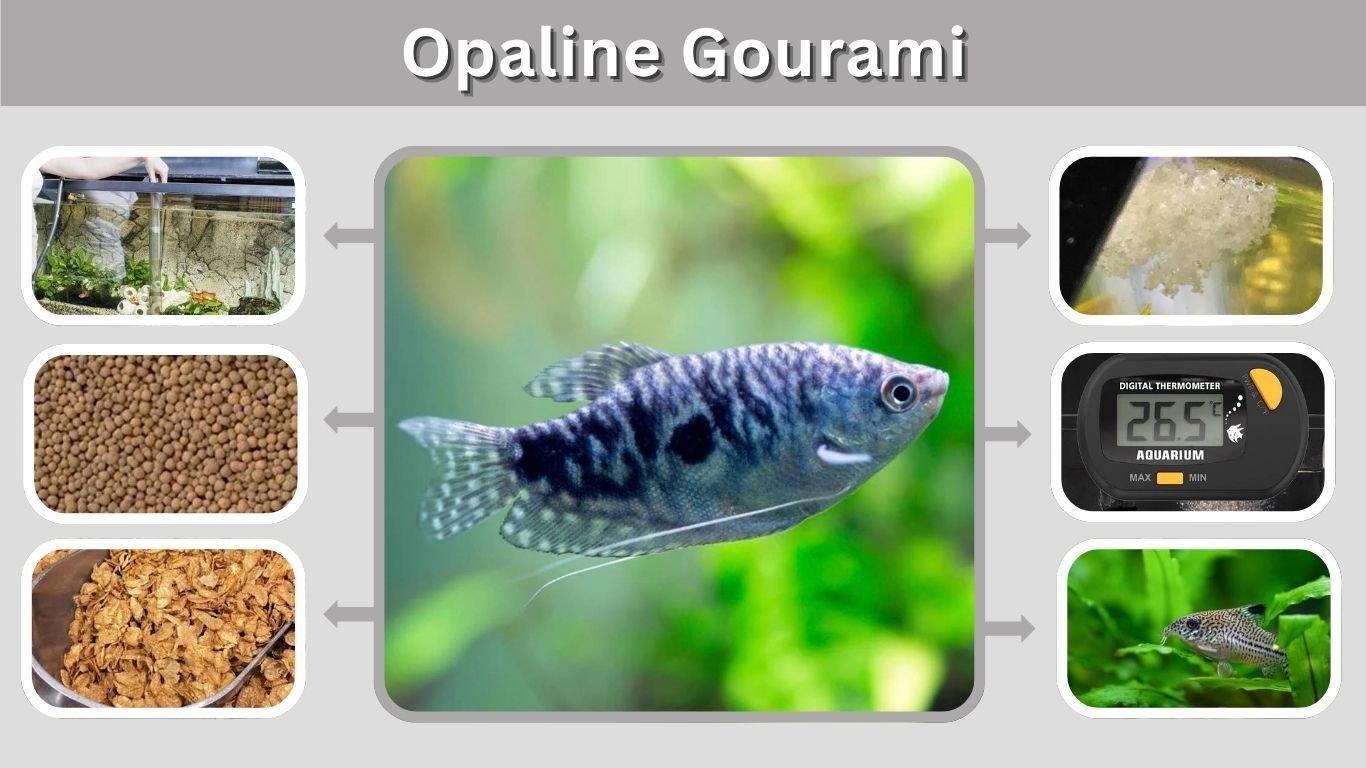
The opaline gourami is a beautiful freshwater aquarium fish recognized for its shimmering blue coloration and distinctive marbled patterns. A selectively bred variety of the three-spot gourami, this tropical fish is popular among aquarium enthusiasts because of its attractive appearance, adaptability, and interesting behavior. However, opaline gouramis can become territorial, especially when kept with incompatible fish. Understanding their adult size, tank requirements, temperament, diet, and breeding habits is essential for successful care. This guide explains everything you need to know about keeping healthy opaline gouramis in a home aquarium.
What Is an Opaline Gourami?
The opaline gourami (Trichopodus trichopterus) is a selectively bred color variety of the three-spot gourami, a freshwater species native to Southeast Asia. It belongs to the family Osphronemidae and is also called the marbled or Cosby gourami. Its distinctive coloration and hardy nature make it popular among aquarists, although individual fish may display territorial behavior as they mature.
Opaline Gourami Identification
Common identifying characteristics include:
- Body color: Silvery-blue or bluish-gray with dark marbled markings.
- Body shape: Oval, laterally compressed, and relatively deep.
- Fins: Long dorsal and anal fins extending along the body.
- Pelvic fins: Two threadlike feelers used to explore surroundings.
- Eyes: Round, prominent eyes positioned near the head.
- Pattern: Irregular dark patches instead of the typical blue gourami’s distinct body spots.
Blue vs. Opaline Gourami
Blue and opaline gouramis are color varieties of the same species, Trichopodus trichopterus.
Blue gouramis usually display two dark body spots, with the eye forming the third apparent spot. Opaline gouramis have irregular marbled patterns across their bodies.
Gold gouramis are another selectively bred variety of this species. Their care requirements and potential territorial behavior are essentially identical.
Opaline Gourami Size and Lifespan
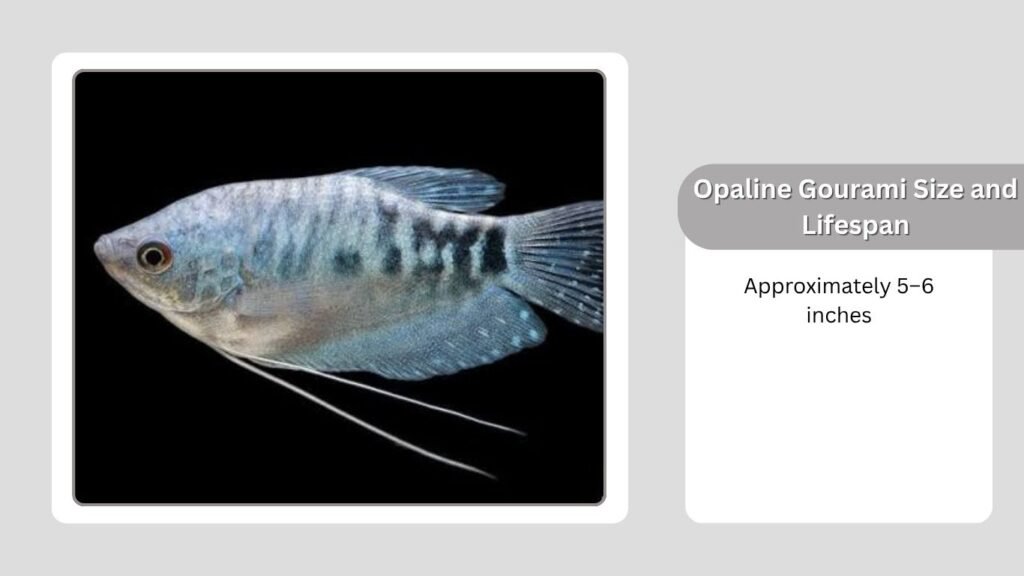
Understanding opaline gourami size and lifespan helps aquarium owners provide suitable living conditions. Although juvenile fish appear relatively small in pet stores, they grow considerably as they mature. Their development depends on genetics, nutrition, water quality, and available space. A properly maintained aquarium supports healthy growth and allows these tropical fish to reach their natural adult proportions.
How Big Do Opaline Gouramis Get?
A full-grown opaline gourami typically measures approximately 5–6 inches (13–15 cm).
Males may become slightly larger than females, although individual differences occur.
Because these fish grow considerably larger than dwarf gouramis, they require sufficient swimming space and should not be permanently housed in small aquariums.
Opaline Gourami Lifespan
Opaline gouramis commonly live around 4–6 years under appropriate aquarium conditions.
Some individuals may live longer with excellent care.
Consistent water quality, balanced nutrition, limited stress, and compatible tank mates significantly contribute to their overall health and longevity.
Opaline Gourami Tank Size and Water Requirements
Providing a suitable aquarium environment is essential for healthy opaline gouramis. These fish naturally belong to a species inhabiting slow-moving, heavily vegetated waters throughout Southeast Asia. They prefer stable tropical temperatures, moderate lighting, and sheltered swimming areas. Although relatively adaptable, they require adequate swimming space, proper filtration, and access to the water surface for breathing atmospheric air.
Minimum Opaline Gourami Tank Size
A 30-gallon aquarium is a practical starting point for keeping one adult opaline gourami, with 40 gallons or more offering additional flexibility.
A 20-gallon tank is generally restrictive for long-term housing, particularly in a community setup.
For multiple opaline gouramis, a larger aquarium with separate territories is necessary. Even a 55-gallon tank does not guarantee compatibility among four individuals.
Ideal Water Parameters
Recommended aquarium conditions include:
- Temperature: 75–82°F (24–28°C) for routine care.
- pH level: Approximately 6.0–8.0.
- Water hardness: Generally soft to moderately hard water.
- Minimum tank: Approximately 30 gallons for one adult.
- Water movement: Gentle to moderate flow.
- Ammonia and nitrite: Maintain at 0 ppm.
- Nitrate: Keep low through maintenance and regular water changes.
Aquarium Plants and Decorations
Live plants, floating vegetation, driftwood, and sheltered areas make opaline gouramis feel secure.
A combination of open swimming space and dense planting helps reduce territorial encounters.
Because these fish possess a labyrinth organ, they must have access to atmospheric air at the surface. Use a secure aquarium lid while maintaining an air gap above the water.
Opaline Gourami Temperament and Tank Mates
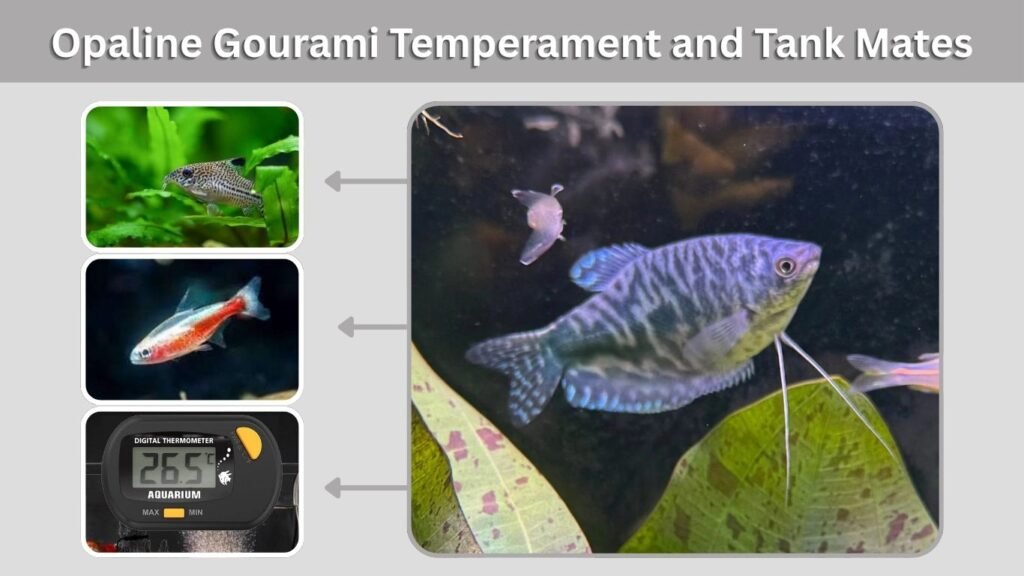
Opaline gouramis are often described as semi-aggressive freshwater fish. Their temperament varies considerably between individuals, with some remaining relatively peaceful and others becoming territorial as they mature. Males can be especially defensive toward similar-looking fish. Choosing compatible tank mates, providing sufficient space, and creating visual barriers are important for maintaining a stable and relatively peaceful community aquarium.
Are Opaline Gouramis Aggressive?
Opaline gouramis can become aggressive, particularly during breeding or competition for territory.
Mature males may chase other gouramis or intimidate smaller fish occupying similar swimming areas.
Aggression can increase when fish are crowded or unable to establish separate territories. Providing hiding places and monitoring behavior helps reduce conflicts.
Best Opaline Gourami Tank Mates
Potentially suitable tank mates include:
- Corydoras catfish: Peaceful bottom-dwelling fish kept in suitable groups.
- Bristlenose plecos: Generally compatible bottom-dwellers.
- Larger tetras: Peaceful, appropriately sized schooling species.
- Peaceful barbs: Non-fin-nipping varieties with compatible water requirements.
- Suitable loaches: Bottom-dwelling species requiring similar aquarium conditions.
Compatibility depends on individual temperament, tank dimensions, group sizes, and available shelter.
Fish to Avoid With Opaline Gouramis
Bettas and dwarf gouramis are generally risky companions because territorial interactions may occur.
Tiger barbs can nip the gourami’s long fins, while small guppies and delicate fish may become targets of harassment.
Angelfish and other territorial cichlids can sometimes coexist in spacious aquariums, but aggression remains a possibility. Monitor all combinations carefully.
Male vs. Female Opaline Gourami and Breeding

Male and female opaline gouramis have similar coloration, but several physical features help distinguish them. These differences become more obvious as fish mature. Understanding their reproductive behavior is particularly important because breeding males establish territories and construct bubble nests. Successful breeding requires controlled water conditions, suitable floating vegetation, and careful monitoring to prevent aggression between adults.
How to Tell Male and Female Opaline Gouramis Apart
Males generally develop longer, more pointed dorsal fins, whereas females typically have shorter, rounded dorsal fins.
Mature females may also display fuller abdomens, particularly when carrying eggs.
Color intensity alone is not a reliable way to determine sex. Examining adult fin shapes provides a more dependable distinction.
How Do Opaline Gouramis Breed?
Opaline gouramis are bubble-nest builders. During breeding, the male constructs a floating nest near the water surface.
After courtship and spawning, the male collects the floating eggs and guards them inside the bubble nest.
Eggs often hatch within approximately 20–30 hours. Once spawning ends, separating the female may be necessary because the male can become aggressive.
The male should also be removed when the fry become free-swimming.
Opaline Gourami Diet and Daily Care
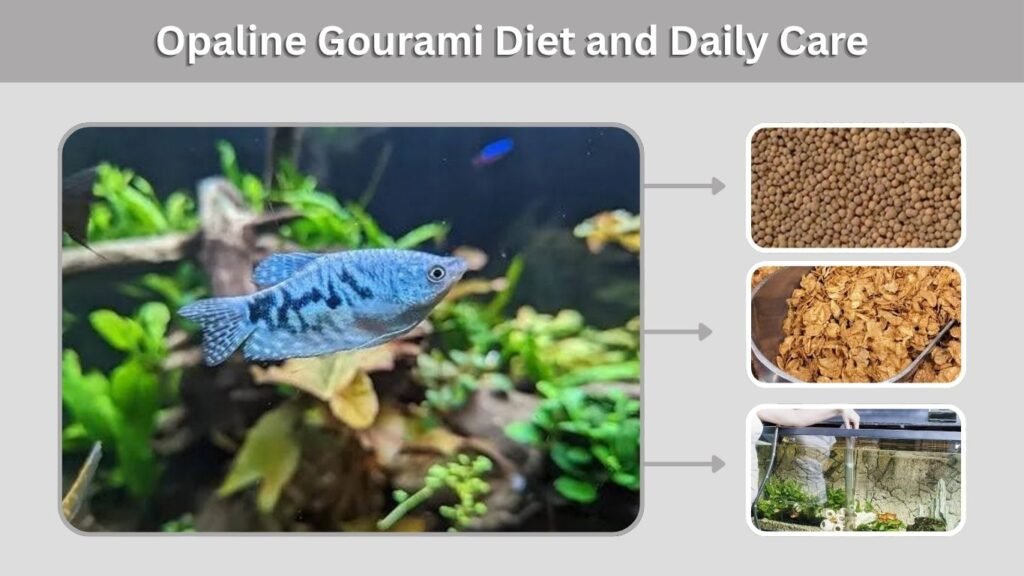
Opaline gouramis are omnivorous fish that accept many commercially available aquarium foods. A balanced diet helps maintain their body condition, coloration, and immune health. Their relatively hardy nature makes routine care manageable, but consistent aquarium maintenance remains important. Poor water quality, inappropriate feeding, and aggressive tank mates can cause stress, reduced appetite, and noticeable behavioral changes.
What Do Opaline Gouramis Eat?
Opaline gouramis readily consume quality tropical flakes, small pellets, and suitable vegetable-based foods.
Frozen or live foods such as brine shrimp, daphnia, and bloodworms can provide dietary variety.
Feed moderate portions once or twice daily, offering only what the fish can consume within a short period.
Essential Opaline Gourami Care Tips
Routine care should include:
- Weekly water testing: Monitor ammonia, nitrite, nitrate, and pH.
- Regular water changes: Replace approximately 20–30% as needed based on water quality.
- Balanced feeding: Rotate appropriate foods without overfeeding.
- Aggression monitoring: Observe chasing, hiding, or damaged fins.
- Equipment checks: Maintain filtration, heating, and safe surface access.
- Quarantine: Isolate new fish before introducing them to established communities.
Why Is My Opaline Gourami Changing Color?
Opaline gouramis may appear darker or paler because of stress, lighting, social interactions, or breeding activity.
Sudden discoloration accompanied by lethargy, clamped fins, unusual swelling, or loss of appetite may indicate illness.
Check water parameters first and seek advice from an experienced aquatic veterinarian when symptoms persist.
FAQs
Opaline gouramis are hardy and attractive freshwater fish, but their size, temperament, and breeding behavior can raise questions for aquarium owners. Understanding their compatibility with other fish and the space they require helps prevent common care problems. These frequently asked questions address practical concerns about adult growth, community tanks, aggression, and suitable aquarium conditions for keeping opaline gouramis healthy.
1. Are Opaline Gouramis Good for Beginners?
Yes, opaline gouramis are relatively hardy and adaptable. However, their territorial behavior requires careful tank mate selection and sufficient aquarium space.
2. Can Opaline Gouramis Live in a 20-Gallon Tank?
A 20-gallon aquarium is generally too restrictive for a full-grown opaline gourami. A 30-gallon or larger tank is preferable for long-term care.
3. Can Male and Female Opaline Gouramis Live Together?
Yes, but males may chase females, especially during breeding. Spacious aquariums, hiding places, and careful observation help reduce aggression.
4. Can Opaline Gouramis Live With Bettas?
This combination is generally not recommended. Both fish can become territorial, potentially causing persistent chasing, stress, or injury.
5. How Many Opaline Gouramis Can Live in a 55-Gallon Tank?
One opaline gourami can live comfortably in a properly maintained 55-gallon aquarium with suitable companions. Keeping multiple individuals requires careful consideration of sex, temperament, territories, and available hiding places.
