
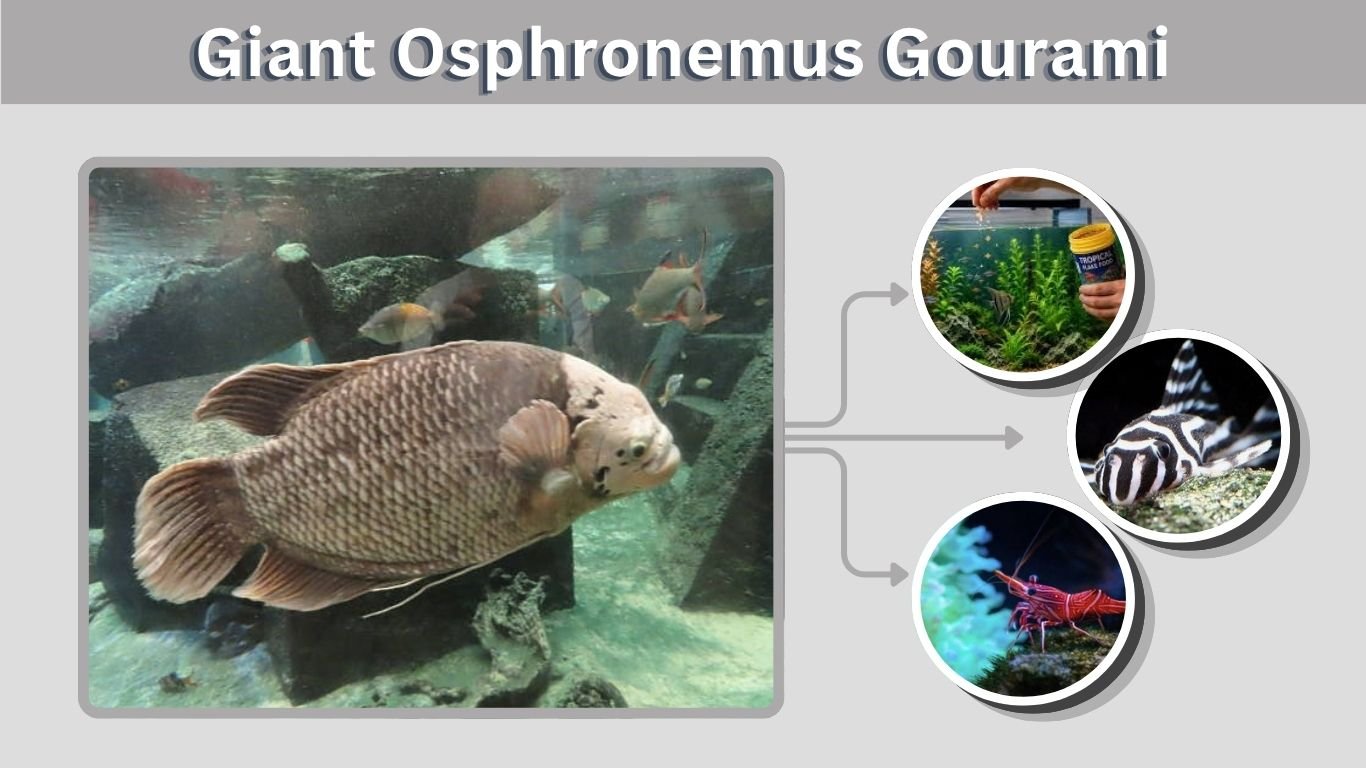
The giant Osphronemus gourami is one of the largest freshwater gourami species, admired for its impressive size, distinctive appearance, and intelligent behavior. Scientifically known as Osphronemus goramy, this tropical fish originates from Southeast Asia and can grow much larger than typical aquarium gouramis. Although juveniles are sometimes sold in pet stores, adults require enormous aquariums or suitable ponds to remain healthy. Understanding their maximum size, lifespan, diet, temperament, breeding habits, and tank requirements is essential before keeping one. This guide explores everything aquarists should know about these remarkable freshwater giants.
What Is a Giant Osphronemus Gourami?
The giant Osphronemus gourami (Osphronemus goramy) is a large freshwater fish belonging to the family Osphronemidae. It naturally inhabits rivers, swamps, lakes, and slow-moving waters throughout Southeast Asia. Unlike smaller ornamental gouramis, this species develops a massive, muscular body as it matures. Its unusual appearance, long lifespan, and ability to recognize familiar caretakers make it particularly interesting to experienced aquarists.
Giant Osphronemus Gourami Identification
Common physical characteristics include:
- Body shape: Large, deep-bodied, and strongly compressed from side to side.
- Coloration: Adults commonly display gray, brown, silver, or pale golden tones.
- Juvenile markings: Young fish often have noticeable dark vertical stripes.
- Head shape: Mature individuals develop thick lips and a prominent forehead.
- Fins: Long dorsal and anal fins extending toward the tail.
- Pelvic fins: Threadlike feelers used to investigate their surroundings.
Natural Habitat and Distribution
Giant gouramis are native to parts of Southeast Asia, including Indonesia, Thailand, Malaysia, and surrounding regions.
They inhabit slow-moving rivers, swamps, and standing freshwater environments containing abundant vegetation.
Their specialized labyrinth organ allows them to breathe atmospheric oxygen, helping them survive in waters with relatively low dissolved oxygen.
However, they still require clean, properly maintained water.
Golden Osphronemus Giant Gourami
The golden giant gourami is a selectively bred color variety of Osphronemus goramy.
It typically displays pale yellow, cream, or golden coloration instead of the darker natural appearance.
Golden individuals have the same enormous adult size and general care requirements as wild-colored giant gouramis.
They should not be confused with the much smaller gold three-spot gourami.
Giant Osphronemus Gourami Size and Lifespan

Size is one of the most important considerations when keeping giant Osphronemus gouramis. Small juveniles may appear manageable in ordinary aquariums, but their growth can eventually make standard home tanks unsuitable. These fish also have unusually long lifespans compared with many popular aquarium species. Providing sufficient space and proper nutrition throughout adulthood requires considerable planning.
How Big Do Giant Gouramis Get?
Adult Osphronemus goramy can reach approximately 28 inches (70 cm) in standard length, excluding the tail fin.
Many individuals remain smaller, but they still develop into exceptionally large and heavy fish.
Their substantial body depth and swimming requirements make them unsuitable for conventional 55-gallon or 75-gallon aquariums.
How Long Do Giant Osphronemus Gouramis Live?
Giant gouramis can live for more than 20 years under excellent captive conditions.
Their lifespan depends on genetics, nutrition, water quality, and environmental stability.
Because they may survive for decades, keeping one represents a long-term commitment rather than a temporary aquarium project.
Giant Osphronemus Gourami Tank Size and Water Conditions
Providing sufficient swimming space is essential for giant gouramis. These fish require considerably larger aquariums than dwarf, pearl, or three-spot gouramis. Their heavy bodies and substantial waste production also demand efficient filtration and regular maintenance. Although giant gouramis tolerate a relatively broad range of water conditions, stable temperatures and clean water remain necessary for healthy development.
Minimum Tank Size for Giant Gouramis
An adult giant gourami requires an exceptionally spacious aquarium.
A tank measuring approximately 6 feet long and 2 feet wide, holding around 180 gallons, is sometimes cited as an absolute minimum. However, 250–300 gallons or more is a more practical long-term planning target, with additional length and width highly desirable.
Custom aquariums or properly maintained tropical ponds often provide better accommodation for fully grown specimens.
Ideal Water Parameters
Recommended aquarium conditions include:
- Temperature: Approximately 75–82°F (24–28°C) for routine tropical care.
- pH level: Around 6.5–8.0.
- Water hardness: Approximately 5–25 dGH.
- Tank capacity: Preferably 250 gallons or larger for adults.
- Filtration: Powerful biological and mechanical filtration.
- Ammonia and nitrite: Maintain at 0 ppm.
- Water movement: Gentle to moderate circulation.
Aquarium Decoration and Setup
Large pieces of driftwood, smooth rocks, and sturdy decorations can provide shelter without restricting swimming space.
Avoid sharp materials that could injure the fish.
Giant gouramis may uproot or consume delicate aquatic plants, making durable decorations preferable.
Maintain unobstructed access to the surface because these fish regularly breathe atmospheric air.
Giant Osphronemus Gourami Diet and Feeding
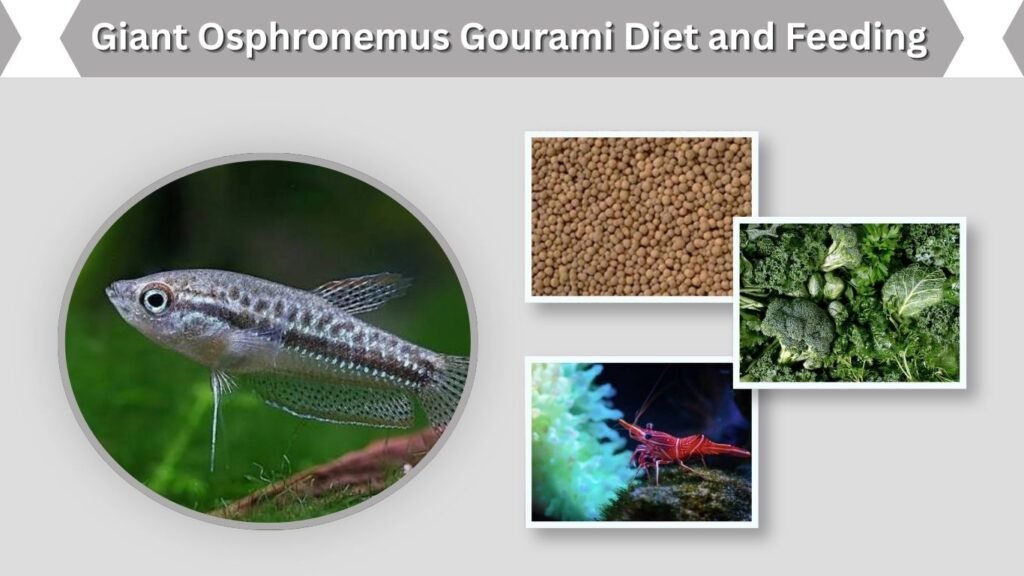
Giant gouramis are omnivorous fish that consume both plant and animal material. In natural environments, their diet includes aquatic vegetation, algae, invertebrates, and other available food sources. Captive individuals generally accept many prepared foods, but nutritional variety is important. Their large appetites also contribute to substantial waste production, making careful feeding and aquarium maintenance essential.
What Do Giant Osphronemus Gouramis Eat?
Suitable foods include:
- High-quality pellets: Large, nutritionally balanced omnivore pellets.
- Vegetables: Blanched spinach, peas, and suitable leafy greens.
- Plant-based foods: Spirulina and algae-based preparations.
- Frozen foods: Appropriate shrimp and other aquatic invertebrates.
- Occasional fruit: Small portions of suitable fruits as treats.
- Protein supplements: Moderate amounts of appropriate animal-based foods.
How Often Should Giant Gouramis Be Fed?
Young giant gouramis generally require more frequent feeding than mature adults.
Adult fish can often be fed once or twice daily, with portions adjusted to body condition and activity.
Avoid excessive protein-rich foods, overfeeding, and leaving uneaten material in the aquarium.
A varied diet containing substantial vegetable matter supports healthy long-term development.
Giant Osphronemus Gourami Temperament and Tank Mates
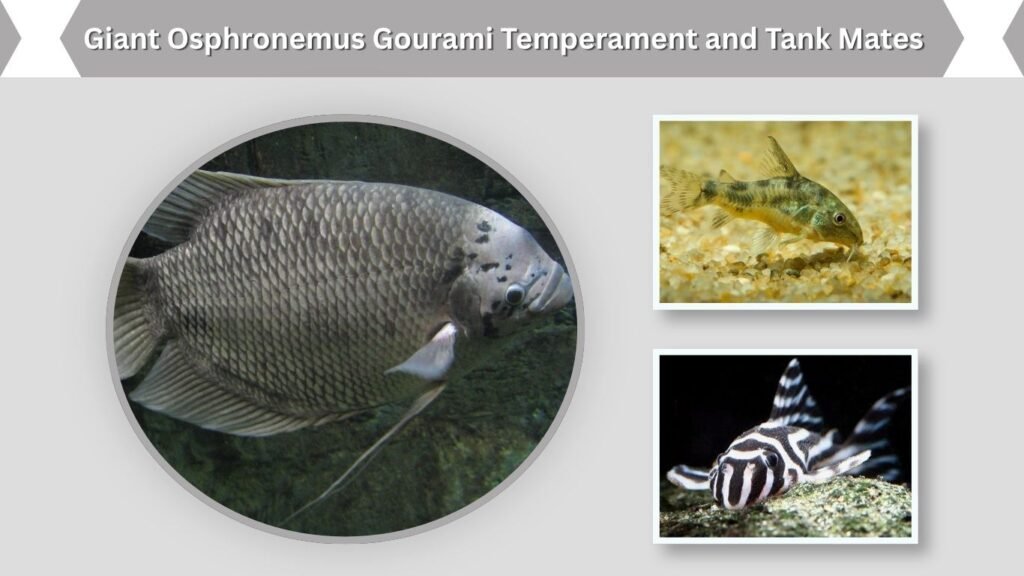
Giant gouramis are known for their intelligence and distinctive personalities. Some individuals become comfortable around familiar caretakers and recognize regular feeding routines. However, their temperament varies, and adults may become territorial or aggressive. Their enormous size also creates compatibility problems with smaller fish. Suitable tank mates must be selected carefully, considering swimming space and individual behavior.
Are Giant Osphronemus Gouramis Aggressive?
Giant gouramis are not consistently aggressive, but some adults become highly territorial.
Individuals kept in cramped aquariums may display increased aggression toward other fish.
They can also consume smaller tank mates that fit inside their mouths.
Providing generous swimming space helps reduce stress, although peaceful behavior cannot be guaranteed.
Best Tank Mates for Giant Gouramis
Large, robust catfish and some similarly sized freshwater fish may coexist with giant gouramis in exceptionally spacious aquariums.
However, compatibility depends on temperament, feeding behavior, and available territory.
Small tetras, guppies, dwarf gouramis, and delicate ornamental fish are generally unsuitable companions.
Keeping a single giant gourami is often the most practical option for a private aquarium.
Giant Osphronemus Gourami Breeding
Breeding giant Osphronemus gouramis requires considerable space and specialized preparation. Unlike many smaller aquarium gouramis, these fish construct substantial nests incorporating plant material. They reproduce naturally in suitable ponds and are commercially bred for food production in several Southeast Asian countries. Their reproductive behavior includes nest construction, spawning, and parental protection of developing eggs.
Male vs. Female Giant Gourami
Mature male giant gouramis often develop more pointed dorsal and anal fins than females.
Adult males may also display a more prominent forehead and thicker lips.
However, external differences are not always obvious, especially in younger fish.
Accurate sex identification becomes easier when individuals reach maturity.
How Do Giant Osphronemus Gouramis Breed?
During breeding, the male primarily constructs a nest using plant fibers and other available vegetation.
After spawning, the eggs remain protected inside the nest while the male guards them.
Successful breeding generally requires spacious ponds or specialized facilities.
Because mature fish can become territorial, breeding attempts should be undertaken only by experienced keepers with appropriate accommodation.
Giant Osphronemus Gourami Care and Buying Considerations
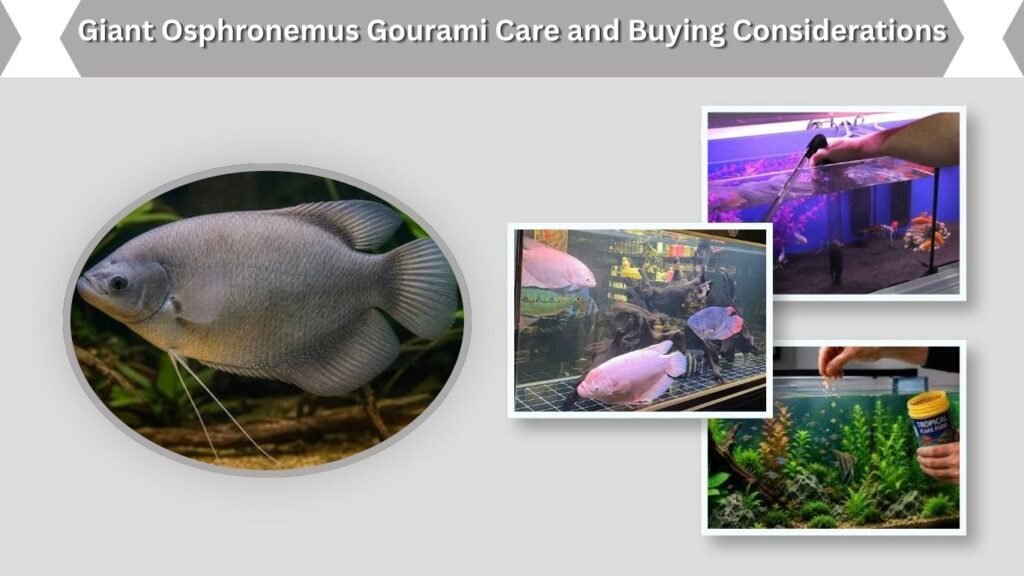
Despite their relatively hardy nature, giant gouramis are unsuitable for most small home aquariums. Their long lifespan, substantial feeding requirements, and eventual adult size create significant responsibilities. Prospective owners should consider aquarium dimensions, equipment capacity, maintenance expenses, and long-term housing before acquiring a juvenile or golden variety from an aquarium retailer.
Giant Osphronemus Gourami for Sale
Giant gouramis are sometimes available through specialty aquarium stores, breeders, and ornamental fish suppliers.
Young specimens may appear small, but their eventual size should determine whether they are suitable for purchase.
Always verify the scientific name, examine the fish for signs of illness, and confirm that adequate long-term housing is available.
Essential Giant Gourami Care Tips
Important maintenance practices include:
- Regular water changes: Replace water according to test results and waste accumulation.
- Strong filtration: Maintain equipment capable of handling heavy biological waste.
- Balanced feeding: Provide varied plant-based and protein-containing foods.
- Health monitoring: Watch for injuries, appetite changes, and abnormal swimming.
- Stable temperatures: Avoid sudden temperature fluctuations.
- Adequate space: Upgrade accommodation before the fish becomes overcrowded.
FAQs
Giant Osphronemus gouramis attract attention because of their massive adult size, unusual appearance, and long lifespan. However, their requirements differ substantially from those of smaller aquarium gouramis. Understanding their growth, temperament, feeding habits, and housing needs helps prospective owners determine whether these impressive freshwater fish are appropriate for their aquarium or pond.
1. How Big Does a Giant Osphronemus Gourami Get?
A giant Osphronemus gourami can reach approximately 28 inches (70 cm) in standard length. Many aquarium specimens remain smaller but still require enormous enclosures.
2. Are Giant Osphronemus Gouramis Aggressive?
They can become territorial, especially when housed in confined spaces. Individual temperament varies, and smaller fish may be eaten.
3. What Is the Minimum Tank Size for a Giant Gourami?
Approximately 180 gallons is sometimes considered an absolute minimum, but 250–300 gallons or more is preferable for adult housing. Tank dimensions are as important as total volume.
4. How Long Do Giant Osphronemus Gouramis Live?
Well-maintained giant gouramis can live for more than 20 years, making them a significant long-term responsibility.
5. Are Golden Giant Gouramis a Different Species?
No. Golden giant gouramis are color varieties of Osphronemus goramy. They share the same adult size, feeding habits, and general care requirements as naturally colored individuals.