
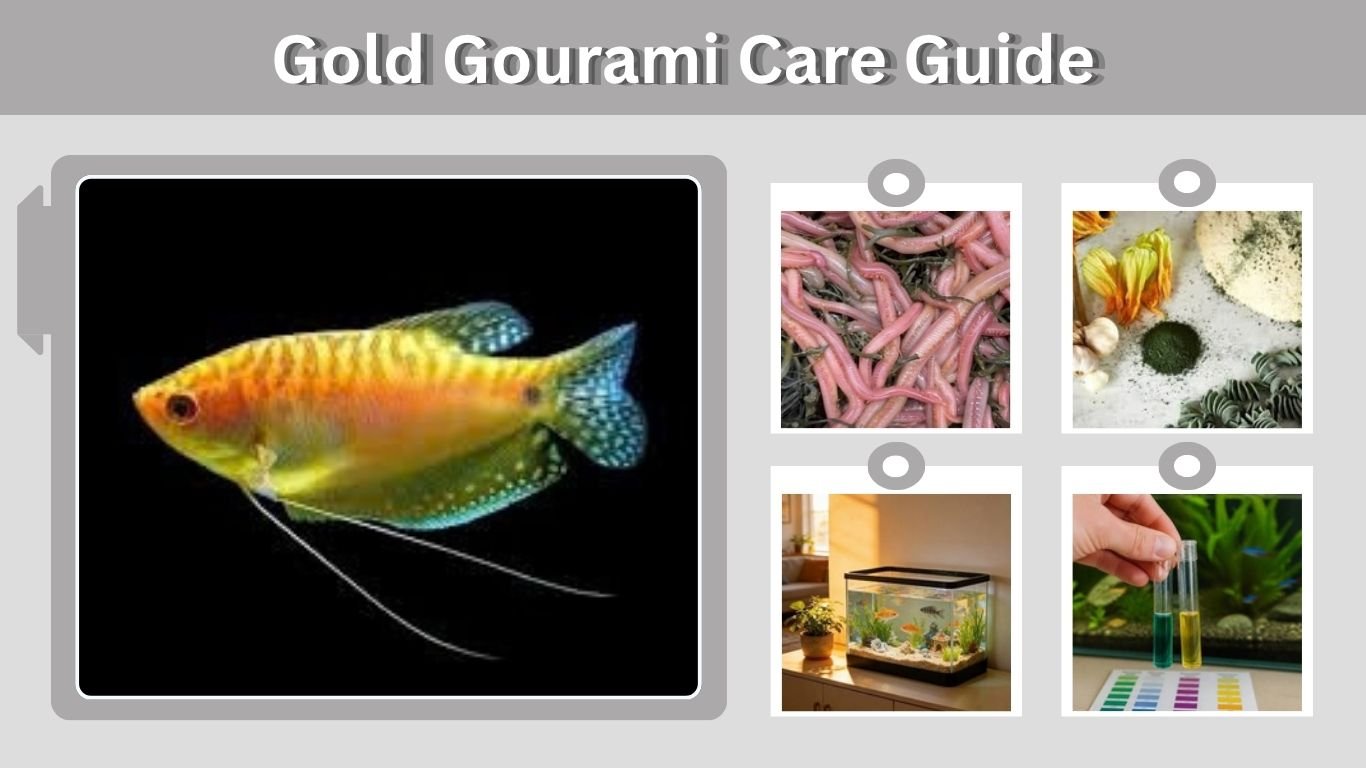
The Gold Gourami is a beautiful freshwater aquarium fish known for its golden-yellow coloration, graceful swimming, and curious personality. This attractive fish is a selectively bred variety of the three-spot gourami and has become popular among aquarium enthusiasts. Although gold gouramis are relatively hardy and easy to maintain, they require proper tank conditions, suitable companions, and a balanced diet. Understanding their adult size, temperament, lifespan, and breeding behavior helps aquarium owners create a comfortable environment where these colorful fish can thrive for years.
Gold Gourami Identification and Characteristics
Gold gouramis belong to the Osphronemidae family and are a golden color variety of the three-spot gourami (Trichopodus trichopterus). Originally developed through selective breeding, these fish display striking yellow and orange shades. Their distinctive appearance, moderate size, and ability to breathe atmospheric air make them fascinating additions to freshwater aquariums.
Gold Gourami Identification
Gold gouramis have several recognizable physical characteristics that distinguish them from other aquarium fish.
- Body Color: Bright golden-yellow or orange coloration with occasional darker markings.
- Body Shape: Oval, laterally compressed body with a slightly pointed head.
- Fins: Long dorsal and anal fins, with thin, threadlike pelvic fins used for sensing their surroundings.
- Eyes: Prominent, rounded eyes that may appear orange or reddish.
- Breathing Organ: A specialized labyrinth organ allows them to breathe atmospheric oxygen.
Gold Gourami Size and Lifespan
A full-grown gold gourami typically reaches 4–6 inches (10–15 cm) in length. Males may develop slightly larger bodies and more pointed dorsal fins than females.
Their average lifespan is approximately 4–6 years, although some individuals live longer with excellent care. Stable water conditions, nutritious food, and reduced stress contribute to healthy development and longevity.
Gold Gourami Tank Size and Water Requirements
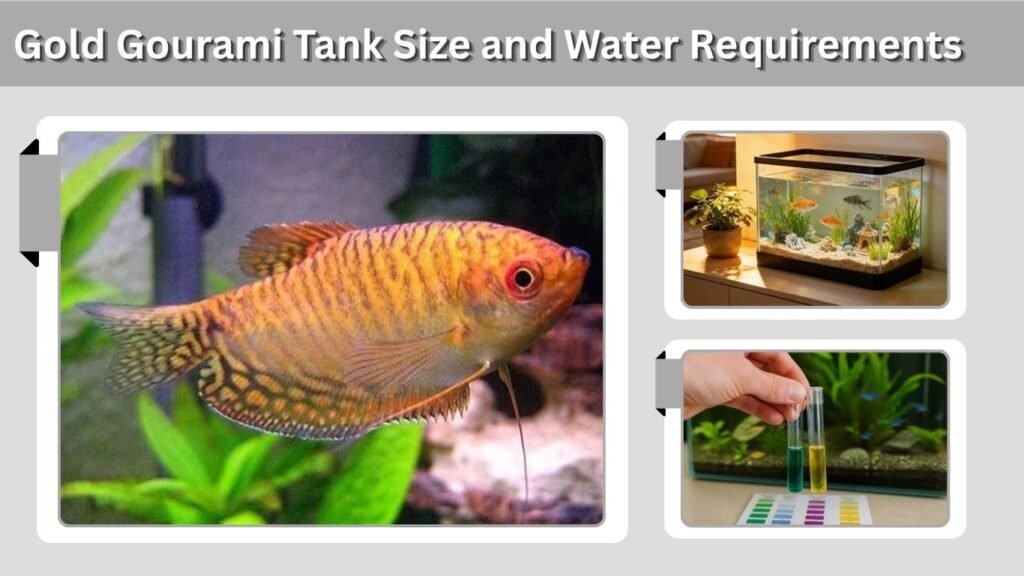
Creating a suitable aquarium environment is essential for maintaining healthy gold gouramis. Although these fish tolerate a relatively broad range of water conditions, consistent temperatures and clean water remain important. Their natural ancestors inhabit slow-moving, vegetation-rich waters, so a well-planted aquarium with gentle circulation and sufficient swimming space provides an appropriate environment.
Ideal Gold Gourami Tank Size
A 30-gallon aquarium is a practical starting point for one adult gold gourami, while a 40-gallon or larger tank is preferable for a community setup.
Larger aquariums provide additional swimming space and help reduce territorial disputes. Gold gouramis frequently occupy the middle and upper sections of the tank, so maintaining open swimming areas is important.
Gold Gourami Temperature and Water Parameters
Maintaining suitable water conditions supports healthy growth, natural behavior, and long-term survival.
- Water Temperature: Approximately 75–82°F (24–28°C).
- pH Level: Around 6.0–8.0.
- Water Hardness: Approximately 5–20 dGH.
- Ammonia: 0 ppm.
- Nitrite: 0 ppm.
- Water Changes: Replace roughly 20–25% weekly, depending on aquarium conditions.
Always establish a fully cycled aquarium before introducing gold gouramis.
Aquarium Plants and Decorations
Gold gouramis appreciate planted environments containing Java fern, Anubias, Amazon swords, and floating vegetation. These plants provide hiding places while reducing stress and territorial encounters.
Driftwood and smooth decorations can create additional shelter. A gentle filtration system is preferable because strong currents may interfere with their natural swimming behavior. Leave accessible open areas at the water surface for breathing.
Gold Gourami Diet and Feeding Habits
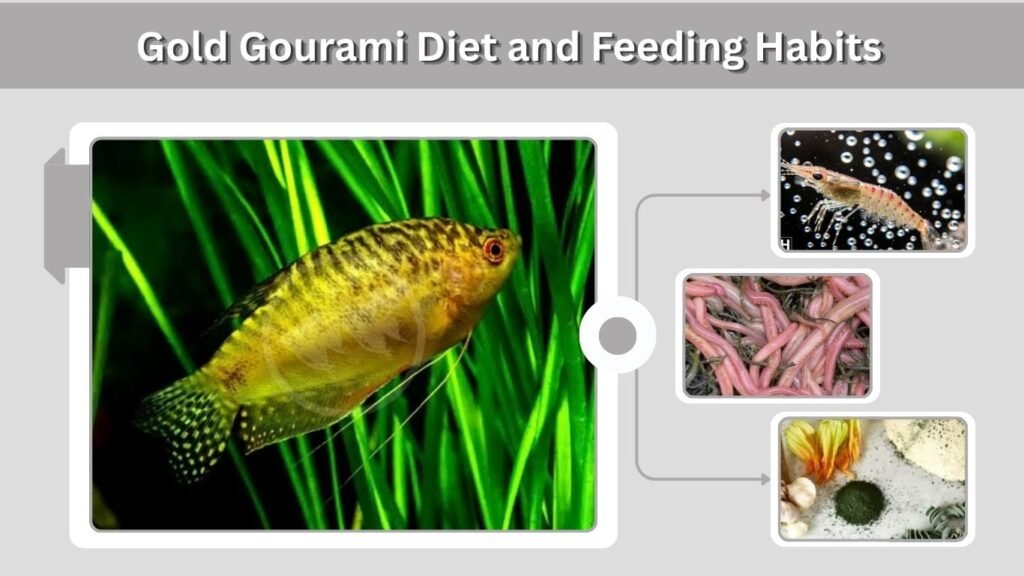
Gold gouramis are omnivorous fish that consume both animal and plant-based foods. In natural environments, three-spot gouramis feed on small aquatic organisms, insect larvae, and various plant materials. Aquarium specimens generally accept commercial foods readily. Providing dietary variety helps maintain their coloration, supports healthy growth, and reduces the likelihood of nutritional deficiencies.
What Do Gold Gouramis Eat?
A balanced gold gourami diet can include several nutritious food options.
- High-Quality Flakes: Provide essential daily nutrients for aquarium fish.
- Floating Pellets: Offer balanced nutrition suitable for surface-feeding gouramis.
- Bloodworms: Supply protein as an occasional treat.
- Brine Shrimp: Encourage natural feeding behavior and provide additional nutrients.
- Daphnia: Offer variety and support a balanced feeding routine.
- Vegetable-Based Foods: Spirulina flakes and suitable vegetable preparations provide plant-based nutrients.
How Often Should You Feed Gold Gouramis?
Adult gold gouramis generally benefit from one or two small meals daily. Provide only as much food as they can consume within approximately two minutes.
Overfeeding can cause digestive problems and increase waste accumulation. Remove uneaten food promptly to maintain aquarium cleanliness.
A varied feeding routine is more beneficial than relying exclusively on one commercial food.
Gold Gourami Tank Mates and Temperament
Choosing compatible tank mates is particularly important because gold gouramis can become territorial as they mature. While some individuals remain relatively peaceful, others display aggressive behavior toward similar-looking fish or competitors. Aquarium size, hiding places, and individual personality strongly influence compatibility. Careful observation helps prevent persistent chasing, stress, and injuries among aquarium inhabitants.
Best Gold Gourami Tank Mates
Potential companions include peaceful but reasonably robust fish that can tolerate similar water conditions.
- Bristlenose Plecos: Bottom-dwelling fish that usually occupy different aquarium areas.
- Corydoras Catfish: Peaceful bottom dwellers suitable for appropriately maintained community tanks.
- Larger Peaceful Tetras: Active schooling fish that are less likely to be intimidated.
- Peaceful Rasboras: May coexist successfully in spacious, planted aquariums.
- Selected Peaceful Barbs: Compatible species that do not regularly nip fins.
Compatibility is never guaranteed, and individual fish should be monitored.
Are Gold Gouramis Aggressive?
Gold gouramis are considered semi-aggressive, particularly mature males. Territorial behavior may include chasing, fin nipping, or defending preferred areas near the water surface.
Keeping multiple males in a confined aquarium increases the likelihood of aggression. Bettas, tiger barbs, and certain aggressive cichlids are generally unsuitable companions.
Angelfish may also compete for territory, making this combination unpredictable.
Can Blue and Gold Gouramis Live Together?
Blue and gold gouramis are color varieties of the same species, Trichopodus trichopterus. They can interbreed, but keeping them together does not guarantee peaceful behavior.
Adult males may become territorial regardless of color. A spacious aquarium, visual barriers, and carefully managed stocking are necessary when attempting this combination.
Gold Gourami Male vs Female and Breeding
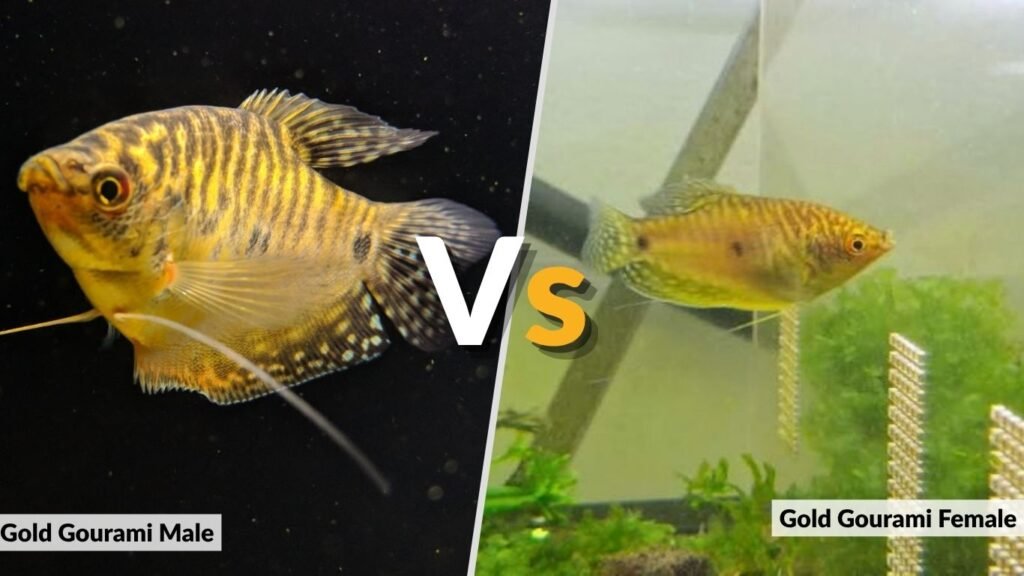
Understanding the differences between male and female gold gouramis is useful for aquarium management and breeding. These fish reproduce through bubble nesting, a behavior shared by numerous gourami species. Successful reproduction requires healthy breeding specimens, warm water, and minimal disturbance. Territorial behavior becomes especially noticeable when males begin constructing nests and protecting their spawning areas.
Male vs Female Gold Gourami
Male gold gouramis usually have longer, more pointed dorsal fins and may display stronger territorial behavior. Females typically have shorter, rounded dorsal fins and fuller abdomens, particularly when carrying eggs.
These differences become easier to identify as the fish mature. Juveniles can be difficult to distinguish accurately.
Gold Gourami Breeding Process
During breeding, the male constructs a bubble nest near the water surface, often beneath floating plants. He then courts a receptive female and fertilizes her eggs during spawning.
The eggs rise toward the nest, where the male collects and guards them. Remove the female if the male begins aggressively driving her away.
The male generally protects the developing eggs until the fry become free-swimming. At that stage, he should also be removed to prevent possible predation.
Gold Gourami Health and Common Diseases
Gold gouramis are relatively hardy freshwater fish, but poor water quality and stressful environments can increase their susceptibility to illness. Regular observation helps aquarium owners identify changes before conditions worsen. Maintaining stable temperatures, providing balanced nutrition, and preventing aggressive interactions are important steps toward supporting healthy fish and extending their lifespan.
Common Gold Gourami Health Problems
Gold gouramis may develop fin rot, ich, bacterial infections, or abnormal abdominal swelling. Symptoms can include damaged fins, white spots, reduced appetite, unusual swimming, or persistent hiding.
A bloated gold gourami may be experiencing constipation, egg retention, infection, or another medical problem. Swelling alone does not identify the cause.
Testing water parameters and seeking advice from an aquatic veterinarian are important when symptoms persist.
Preventing Health Problems
Preventive care begins with clean, properly filtered aquarium water. Perform partial water changes, avoid overcrowding, and quarantine newly acquired fish before introducing them into an established aquarium.
Inspect fish regularly for changes in appearance, breathing, and behavior. Addressing water-quality problems early can prevent more serious complications.
Gold Gourami vs Honey Gourami and Other Varieties
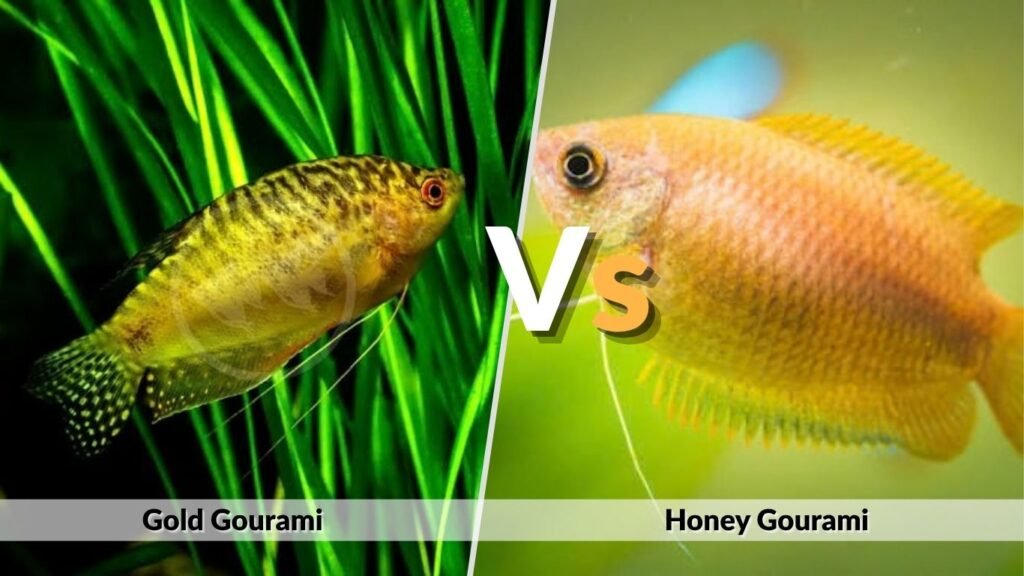
Several gourami varieties share similar golden coloration, which can create confusion when identifying aquarium fish. However, these names do not always refer to the same species. Gold gouramis, gold honey gouramis, and pearl gouramis differ in body size, temperament, and environmental needs. Accurate identification is particularly important when planning smaller aquariums or selecting community tank companions.
Gold Gourami vs Gold Honey Gourami
The standard gold gourami is a color variety of Trichopodus trichopterus, while a true gold honey gourami belongs to Trichogaster chuna.
Gold honey gouramis generally grow to approximately 2 inches and have a much gentler temperament. They are better suited to smaller, peaceful planted aquariums.
Gold gouramis grow considerably larger and may become territorial. Retail names are sometimes inconsistent, so checking the scientific name is advisable.
Gold Gourami vs Gold Pearl Gourami
Pearl gouramis belong to a different species, Trichopodus leerii. They are recognized by their distinctive pearlescent markings and comparatively peaceful temperament.
The term “gold pearl gourami” may be used inconsistently in aquarium shops. Buyers should verify the scientific identification rather than relying only on coloration.
Similarly, gold dwarf gouramis and golden giant gouramis are not simply smaller or larger forms of the standard gold gourami.
FAQs
Gold gouramis are popular among freshwater aquarium enthusiasts because of their attractive appearance and adaptability. However, prospective owners often have questions about their maximum size, aggression, breeding, and compatibility. Understanding these characteristics can help prevent common aquarium management mistakes and ensure that each fish receives appropriate care throughout its life.
1. How Big Does a Gold Gourami Get?
A full-grown gold gourami generally reaches 4–6 inches (10–15 cm). Proper nutrition, genetics, and aquarium conditions influence its final size.
2. Can Gold Gouramis Live With Guppies?
Gold gouramis may coexist with guppies, but the combination carries risks. Some individuals chase smaller fish or nip their long fins, particularly in cramped aquariums.
3. How Long Do Gold Gouramis Live?
Gold gouramis typically live around 4–6 years. Excellent water quality, appropriate feeding, and low-stress conditions may help some individuals live longer.
4. Can Gold and Blue Gouramis Breed?
Yes. Gold and blue gouramis are varieties of the same species and can reproduce together. Their offspring may display different color patterns.
5. Are Gold Gouramis Good for Beginners?
Gold gouramis can be suitable for beginners familiar with aquarium cycling and basic maintenance. However, their adult size and potential territorial aggression require thoughtful tank planning.
