
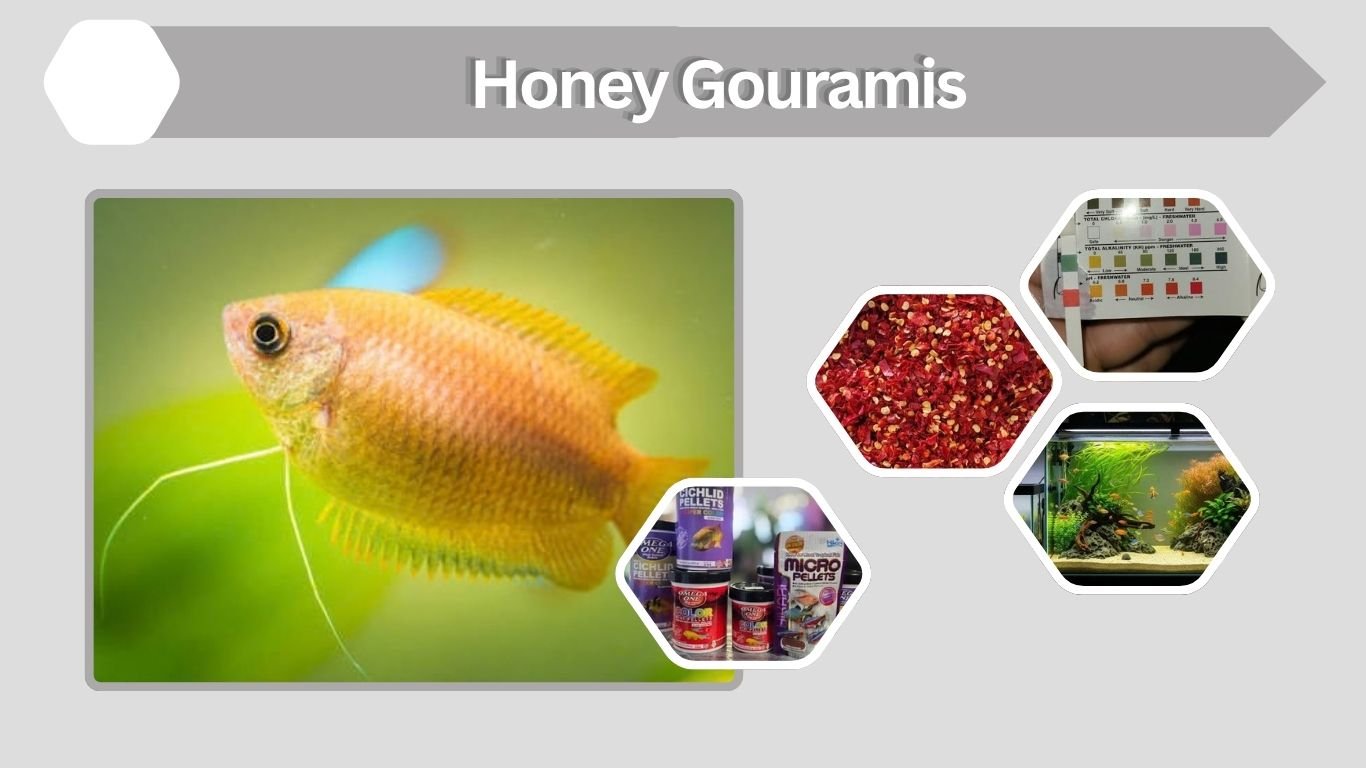
Honey gouramis are peaceful freshwater fish admired for their beautiful golden-yellow coloration, gentle temperament, and fascinating behavior. Native to South Asia, these small tropical fish are popular among beginner and experienced aquarium enthusiasts. Unlike larger gourami species, honey gouramis adapt well to smaller, planted community aquariums. However, maintaining their health requires suitable water conditions, proper feeding, and compatible tank mates. Understanding how many honey gouramis should be kept together, their adult size, breeding habits, and lifespan helps aquarium owners provide a comfortable and healthy environment.
Honey Gouramis Identification, Size, and Lifespan
Honey gouramis (Trichogaster chuna) belong to the Osphronemidae family and naturally inhabit slow-moving freshwater environments in India and Bangladesh. Their peaceful nature, small body size, and attractive coloration make them excellent aquarium inhabitants. These fish possess specialized breathing organs that allow them to absorb atmospheric oxygen, an adaptation commonly found among labyrinth fish.
Honey Gouramis Identification
Honey gouramis have several distinctive physical characteristics that make them relatively easy to recognize.
- Body Shape: Small, oval-shaped, and laterally compressed body with a slightly pointed head.
- Coloration: Golden-yellow, orange, or reddish shades depending on variety and sex.
- Fins: Rounded tail and elongated dorsal and anal fins, with threadlike pelvic fins.
- Eyes: Rounded, prominent eyes with dark pupils.
- Breathing: A labyrinth organ allows honey gouramis to breathe atmospheric air.
How Big Do Honey Gouramis Get?
Adult honey gouramis generally reach approximately 1.5–2.2 inches (4–5.5 cm) in standard body length. Their compact size makes them suitable for smaller aquariums.
Females can appear slightly larger and fuller-bodied than males. Proper nutrition and stable water conditions encourage healthy development.
Honey gouramis typically live around 4–6 years, although individual lifespans vary depending on genetics, aquarium conditions, and overall care.
Red, Gold, and Sunset Honey Gouramis
Honey gouramis are available in several attractive color varieties. Gold honey gouramis display bright yellow or golden coloration, while red varieties feature richer orange-red shades.
Wild-type males develop striking orange coloration and may show a dark throat during breeding.
Some fish sold as sunset honey gouramis are actually thick-lipped gouramis (Trichogaster labiosa), which grow larger. Confirming the scientific name helps prevent misidentification.
Honey Gouramis Tank Size and Water Requirements

Providing a suitable aquarium environment is essential for keeping honey gouramis healthy and active. These fish naturally inhabit heavily vegetated ponds, floodplains, and slow-moving waterways. They prefer gentle water movement, abundant plants, and sheltered swimming areas. Although relatively hardy, honey gouramis perform best when water chemistry remains stable and aquarium maintenance is consistent.
How Many Honey Gouramis in Different Tank Sizes?
The appropriate number of honey gouramis depends on aquarium dimensions, filtration, available hiding places, and other fish.
- 10-Gallon Tank: One honey gourami is a practical choice. A pair may experience territorial stress in limited space.
- 15-Gallon Tank: A carefully selected pair can be maintained with adequate plants and hiding places.
- 20-Gallon Tank: A pair or trio is usually manageable in a well-planted aquarium.
- 29-Gallon Tank: Approximately three or four honey gouramis may coexist comfortably with appropriate stocking.
- 40-Gallon Tank: A group of four to six is possible when sufficient territory and visual barriers are available.
These are planning guidelines rather than guaranteed stocking numbers. A longer aquarium generally provides better territorial separation than a tall aquarium of similar volume.
Honey Gouramis Temperature and Water Parameters
Honey gouramis tolerate moderately varied freshwater conditions, but sudden fluctuations should be avoided.
- Water Temperature: Approximately 74–81°F (23–27°C).
- pH Level: Around 6.0–7.5.
- Water Hardness: Approximately 2–15 dGH.
- Ammonia: 0 ppm.
- Nitrite: 0 ppm.
- Water Changes: Approximately 20–25% weekly, adjusted according to water testing.
A fully cycled aquarium is essential before introducing new fish.
Best Aquarium Setup for Honey Gouramis
Honey gouramis appreciate aquariums containing Java fern, Anubias, floating water sprite, and other suitable aquatic plants.
Floating vegetation creates shaded areas and makes timid individuals feel secure. Driftwood and plant clusters provide additional hiding spaces.
Use gentle filtration because strong currents may stress these slow-swimming fish. Maintain a secure lid while leaving access to warm, humid air above the water surface.
How Many Honey Gouramis Should Be Kept Together?
Honey gouramis are peaceful social fish, but they do not form tightly coordinated schools. They can live individually, in pairs, or in carefully managed groups. Their behavior depends on available territory, gender combinations, and aquarium conditions. Understanding these social preferences helps aquarium owners prevent unnecessary aggression while encouraging natural interaction between fish.
Can Honey Gouramis Live Alone or in Pairs?
A single honey gourami can live successfully in a suitable aquarium. However, keeping multiple individuals may encourage more varied social behavior.
Pairs can also coexist, although breeding males occasionally chase females. Dense vegetation allows individuals to retreat when necessary.
A male with two females may be appropriate in a larger aquarium, provided each fish has sufficient space and shelter.
Are Honey Gouramis Aggressive With Each Other?
Honey gouramis are generally peaceful, but occasional territorial disputes occur, especially among males.
Breeding males may defend nesting areas or chase competitors. Even females can display temporary dominance during feeding.
Groups of four to six can work well in spacious, heavily planted aquariums. Multiple males require separate territories, and persistent chasing indicates that stocking or aquarium layout needs adjustment.
Best Honey Gouramis Tank Mates
Honey gouramis coexist best with peaceful species that share similar water requirements and do not compete aggressively for food.
- Neon Tetras: Peaceful schooling fish suitable for established community aquariums.
- Harlequin Rasboras: Calm, active fish that generally coexist well with honey gouramis.
- Corydoras Catfish: Bottom-dwelling fish that occupy different aquarium areas.
- Kuhli Loaches: Shy bottom dwellers that appreciate planted aquariums and hiding spaces.
- Celestial Pearl Danios: Small fish that can coexist in sufficiently planted and appropriately sized aquariums.
Avoid aggressive cichlids, persistent fin nippers, and overly competitive feeders.
Bettas and other gouramis are less predictable companions because territorial conflicts may occur.
Honey Gouramis Diet and Feeding Requirements
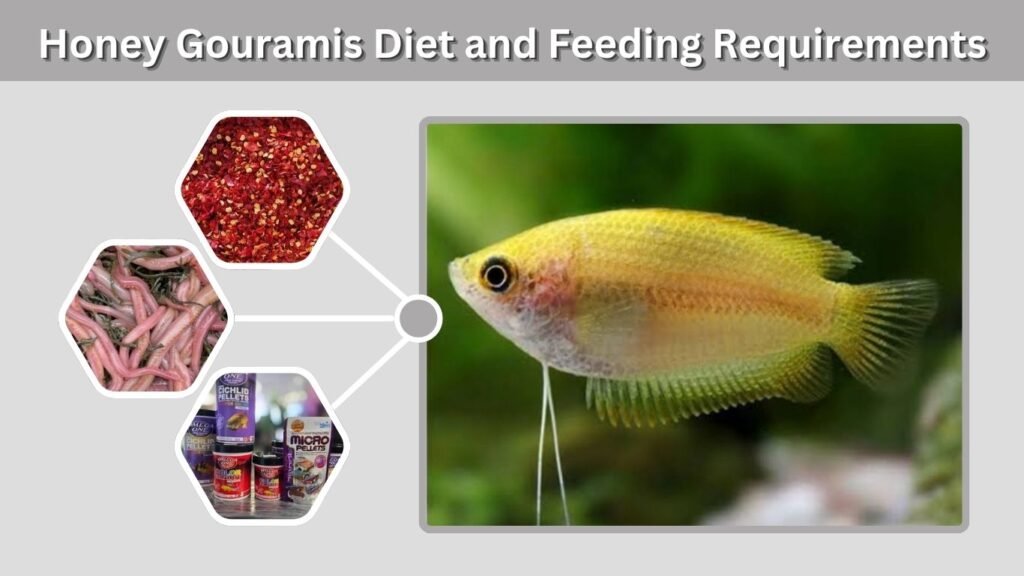
Honey gouramis are omnivorous fish that primarily consume small insects, larvae, and aquatic invertebrates in their natural habitat. In captivity, they readily accept appropriately sized commercial foods along with live and frozen alternatives. A varied diet supports natural coloration, immune function, and healthy growth. Proper feeding also helps prevent digestive problems and unnecessary aquarium waste.
What Do Honey Gouramis Eat?
Honey gouramis accept finely crushed flakes, small tropical fish pellets, frozen brine shrimp, daphnia, and bloodworms.
Small live foods can encourage natural hunting behavior. Commercial foods designed for small omnivorous fish provide a convenient nutritional foundation.
Feed adults once or twice daily in modest portions. Avoid allowing uneaten food to accumulate, since decomposing food affects water quality.
Do Honey Gouramis Eat Shrimp, Snails, or Plants?
Honey gouramis generally coexist with adult Amano shrimp and many adult cherry shrimp, but they may eat newly hatched shrimp.
They usually ignore healthy adult aquarium snails, although tiny snails or eggs may occasionally be consumed.
Honey gouramis do not normally damage healthy aquarium plants. Instead, they often investigate plant surfaces while searching for microscopic food organisms.
Are Honey Gouramis Hardy Fish?
Honey gouramis are considered relatively hardy when kept in properly maintained aquariums. Nevertheless, ammonia exposure, temperature fluctuations, overcrowding, and stress can cause serious health problems.
They may develop bacterial infections, parasitic diseases, or fin damage.
True honey gouramis are generally considered less associated with dwarf gourami iridovirus than dwarf gouramis, but they are not immune to other diseases.
Honey Gouramis Male vs Female and Breeding
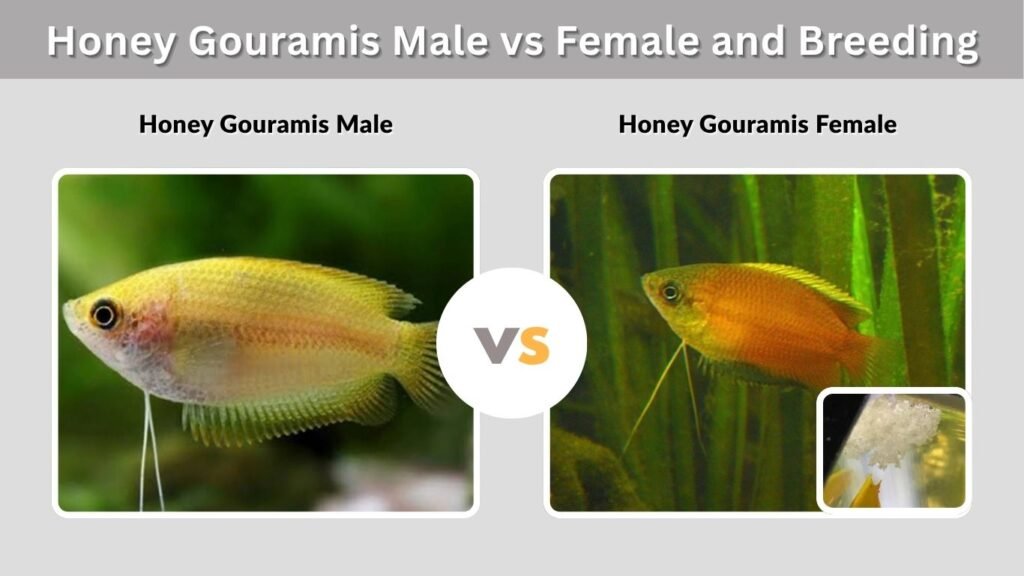
Breeding honey gouramis can be an interesting experience for aquarium enthusiasts. Like several related species, they reproduce by constructing bubble nests at the water surface. Successful breeding requires healthy adult fish, gentle filtration, suitable temperatures, and floating vegetation. Understanding differences between males and females helps aquarists identify potential breeding pairs and recognize courtship behavior.
Male vs Female Honey Gouramis
Male honey gouramis typically develop brighter golden or orange coloration, especially during breeding. Wild-type breeding males may display a dark blue-black throat and underside.
Females usually have fuller bodies and more subdued coloration, often with a visible horizontal body stripe.
Identifying the sexes can be more difficult in selectively bred red and gold varieties because their natural color differences are less obvious.
How to Breed Honey Gouramis
A breeding aquarium should contain floating plants, gentle filtration, and stable, warm water conditions.
The male constructs a bubble nest near the surface and courts a receptive female. After spawning, he gathers the fertilized eggs and places them inside the nest.
Eggs commonly hatch within approximately 24–36 hours. The fry become free-swimming shortly afterward.
The female should be separated if the male begins aggressively chasing her. Once the fry swim independently, removing the male helps protect them.
Newly hatched fry require extremely small foods, such as infusoria, before progressing to larger live foods.
FAQs
Honey gouramis are popular for their gentle behavior and manageable size, but aquarium owners often have questions about their social needs and compatibility. Knowing how these fish interact with other aquarium inhabitants, how much space they require, and whether they exhibit territorial behavior can help prevent common fishkeeping mistakes and improve long-term aquarium success.
1. Can You Keep Two Honey Gouramis in a 10-Gallon Tank?
Two honey gouramis may coexist in a 10-gallon aquarium, but limited space can create territorial problems. A 15–20-gallon tank is generally preferable for a pair.
2. Do Honey Gouramis Need to Be Kept in Groups?
Honey gouramis do not strictly require groups and can live alone. However, pairs or small groups may display more natural social interactions when sufficient space is available.
3. Can Honey Gouramis Live With Bettas?
Honey gouramis and bettas sometimes coexist, but the combination is risky because both species may defend territories. Separate aquariums are generally safer.
4. Do Honey Gouramis Jump Out of Tanks?
Yes. Honey gouramis occasionally jump, particularly when startled. A secure aquarium lid helps prevent accidental escapes while maintaining warm, humid air above the water.
5. How Long Do Honey Gouramis Live?
Honey gouramis generally live approximately 4–6 years. Stable water conditions, appropriate nutrition, and peaceful tank mates contribute to better long-term health.
