
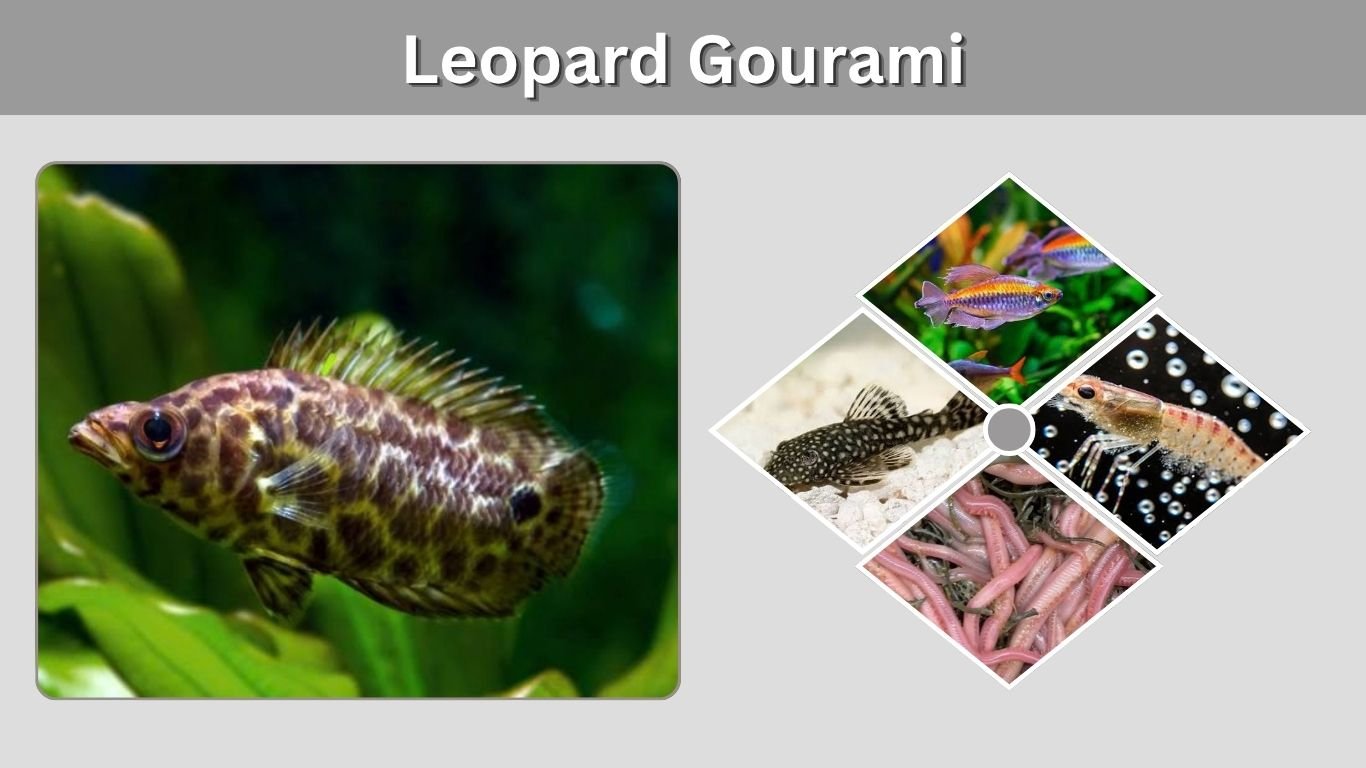
The Leopard Gourami is a fascinating freshwater fish recognized for its leopard-like spots, unusual hunting behavior, and distinctive appearance. Also known as the leopard bush fish, this African species attracts aquarium enthusiasts who appreciate unique predatory fish. Although relatively hardy, leopard gouramis require spacious aquariums, suitable tank mates, and a protein-rich diet to remain healthy. Understanding their adult size, natural habitat, feeding habits, lifespan, and breeding behavior is essential for successful aquarium care. This guide explains everything you need to know about keeping leopard gouramis.
Leopard Gourami Identification and Natural Habitat
The leopard gourami, scientifically known as Ctenopoma acutirostre, belongs to the Anabantidae family. Despite its common name, it is not a true gourami from the Osphronemidae family. Instead, it is an African labyrinth fish closely related to climbing perches. Its spotted body, slow movements, and remarkable camouflage help distinguish it from other freshwater aquarium species.
Leopard Gourami Identification
Leopard gouramis have several distinctive physical characteristics that make them recognizable.
- Body Color: Yellowish-brown, beige, or olive coloration with dark leopard-like spots.
- Body Shape: Oval, laterally compressed body with a pointed snout.
- Fins: Long dorsal and anal fins with noticeable spiny sections.
- Eyes: Large, rounded eyes that help detect movement and potential prey.
- Mouth: Relatively large, extendable mouth adapted for swallowing smaller fish.
- Breathing Organ: A labyrinth organ that allows the fish to breathe atmospheric oxygen.
Where Do Leopard Gouramis Live?
Leopard gouramis originate from the Congo River basin in Central Africa. They inhabit slow-moving rivers, forest waterways, and heavily vegetated freshwater environments.
These habitats contain submerged roots, fallen branches, aquatic vegetation, and shaded areas.
Their spotted coloration provides natural camouflage among leaves and underwater debris, allowing them to approach prey without attracting attention.
Leopard Gourami Size and Lifespan
Adult leopard gouramis commonly reach approximately 6 inches (15 cm), although some individuals may approach 8 inches (20 cm).
They grow relatively slowly compared with many popular aquarium fish.
With excellent care, leopard gouramis can live for more than 10 years, and some individuals have reportedly survived beyond 15 years.
Leopard Gourami Tank Size and Water Requirements
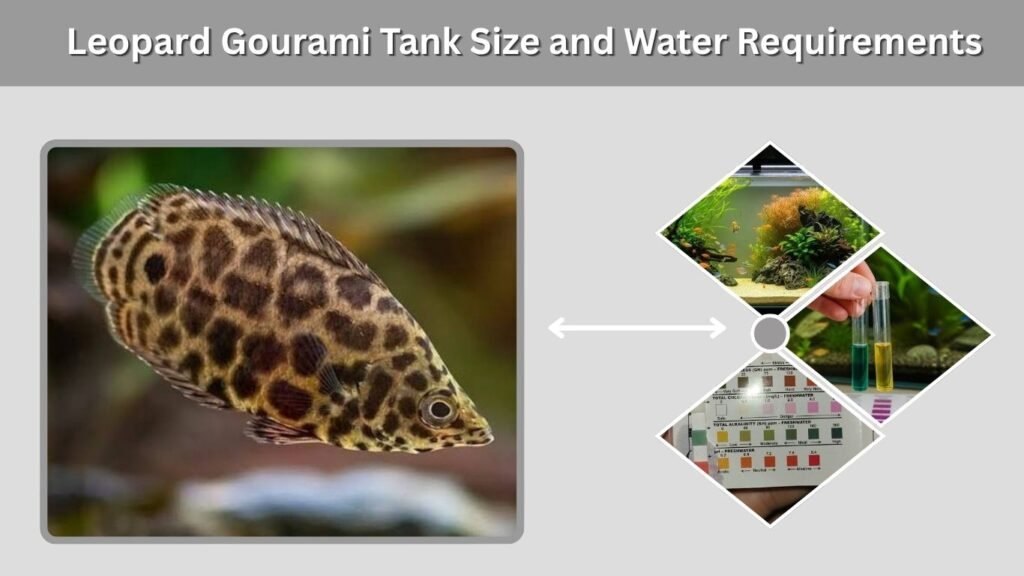
Providing appropriate aquarium conditions is essential for maintaining healthy leopard gouramis. Although these fish are adaptable to various freshwater environments, they require sufficient swimming space, stable water parameters, and numerous hiding places. Their preference for subdued lighting and gentle water movement reflects their natural habitat, where dense vegetation provides security and opportunities to hunt.
Ideal Leopard Gourami Tank Size
A 55-gallon aquarium is a practical recommended size for one adult leopard gourami.
Choose a tank approximately 48 inches long to provide sufficient horizontal swimming space. Larger aquariums are preferable when keeping multiple leopard bush fish or compatible tank mates.
Smaller aquariums may temporarily accommodate juveniles, but they are unsuitable as permanent homes for fully grown specimens.
Leopard Gourami Temperature and Water Parameters
Maintaining stable aquarium conditions encourages healthy growth and natural behavior.
- Water Temperature: 68–82°F (20–28°C).
- pH Level: Approximately 5.5–7.5.
- Water Hardness: Around 2–12 dGH.
- Ammonia: 0 ppm.
- Nitrite: 0 ppm.
- Water Changes: Approximately 20–25% weekly, adjusted according to water quality.
A properly cycled aquarium is important before introducing leopard gouramis.
Plants, Decorations, and Lighting
Leopard gouramis appreciate heavily planted aquariums containing Anubias, Java fern, and floating plants.
Driftwood, branches, and caves create shaded resting areas and reduce stress.
Use moderate or subdued lighting and avoid excessive water currents. A secure aquarium lid is also important because these fish can jump when startled.
Leave access to the water surface so they can breathe atmospheric air.
Leopard Gourami Diet and Feeding Habits

Leopard gouramis are carnivorous ambush predators that primarily consume smaller fish and aquatic invertebrates in their natural habitat. Unlike many common gourami species, they require a meat-based diet rather than conventional tropical flakes alone. Their feeding behavior involves slowly approaching prey before making a sudden strike. Providing appropriate frozen or prepared meaty foods supports their health and natural instincts.
What Do Leopard Gouramis Eat?
A suitable leopard gourami diet includes several protein-rich food sources.
- Bloodworms: Appropriate for younger specimens and occasional dietary variety.
- Earthworms: Nutritious food for juveniles and adults when suitably sized.
- Shrimp: Chopped or appropriately sized plain shrimp provides animal protein.
- Mussels: Offer additional nutritional variety for larger individuals.
- Fish Flesh: Small portions of suitable fish flesh can supplement their diet.
- Carnivore Pellets: Some individuals learn to accept high-quality prepared predator foods.
Avoid using feeder goldfish or other potentially disease-carrying feeder fish.
How Often Should You Feed Leopard Gouramis?
Young leopard gouramis generally require more frequent, smaller meals to support development.
Healthy adults can often be fed modest portions daily or every other day, depending on their size, condition, and food type.
These fish may initially refuse unfamiliar commercial foods. Gradually introducing frozen alternatives helps them adapt.
Remove uneaten food promptly to prevent water-quality problems.
Leopard Gourami Tank Mates and Temperament
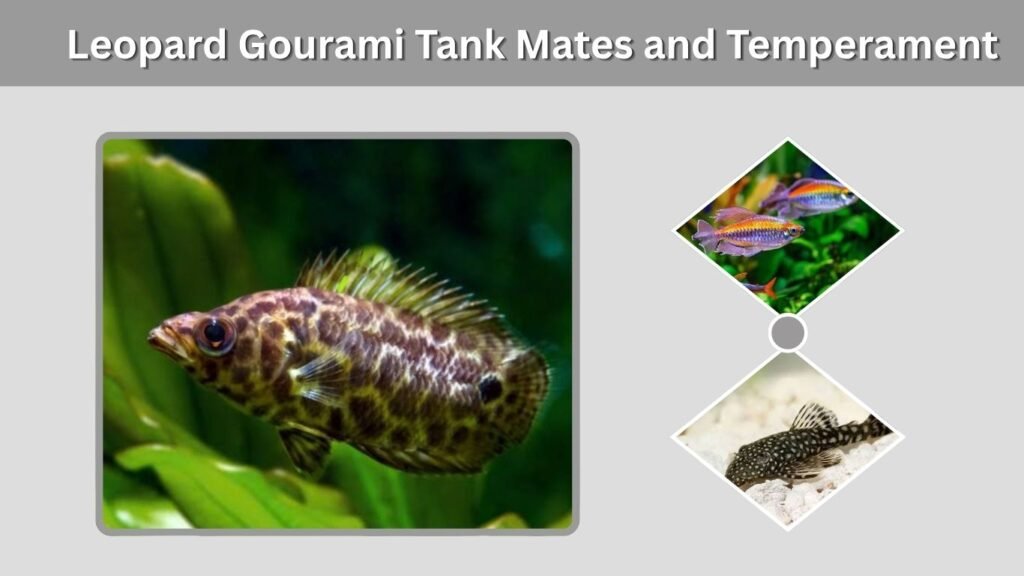
Leopard gouramis are generally calm fish, but their predatory feeding habits make community aquarium planning challenging. They are not necessarily aggressive toward every aquarium inhabitant, yet smaller fish may become prey. Their relatively large mouths allow them to swallow fish that appear surprisingly substantial. Choosing peaceful, appropriately sized companions is essential for maintaining a stable aquarium environment.
Are Leopard Gouramis Aggressive?
Leopard gouramis are usually peaceful toward fish too large to swallow.
However, they are territorial under certain circumstances, particularly when aquarium space or hiding places are limited.
They prefer slow, deliberate swimming and often remain hidden during daylight hours.
Their predatory behavior should not be confused with constant aggression. They may quietly stalk and swallow smaller aquarium inhabitants without prolonged chasing.
Best Leopard Gourami Tank Mates
Suitable companions should be large enough to avoid predation while remaining relatively peaceful.
- Adult Congo Tetras: Active schooling fish that may coexist when sufficiently large.
- Larger Synodontis Catfish: Robust bottom-dwelling companions with appropriate water requirements.
- Bristlenose Plecos: Adult specimens may coexist in spacious, well-structured aquariums.
- Peaceful Medium-Sized Cichlids: Certain species may work when carefully selected for temperament and size.
Compatibility depends on individual temperament, aquarium dimensions, and feeding competition.
Fish to Avoid With Leopard Gouramis
Small fish such as neon tetras, guppies, tiny rasboras, and juvenile community fish are unsuitable companions because they may be swallowed.
Small shrimp and newly hatched fish are also vulnerable.
Highly aggressive cichlids may intimidate or injure leopard gouramis, while extremely active species can interfere with feeding.
Choose companions based on their adult size rather than their appearance when purchased.
Leopard Gourami Breeding, Growth, and Health
Breeding leopard gouramis in captivity is uncommon and presents challenges even for experienced aquarium enthusiasts. Their slow growth, difficult sex identification, and specific reproductive behaviors make successful spawning unpredictable. Maintaining excellent water conditions and understanding their natural instincts are important. Regular health monitoring also helps owners recognize stress, nutritional deficiencies, and potential diseases before they become serious.
Leopard Gourami Male vs Female
Male and female leopard gouramis look remarkably similar, making visual identification difficult.
Mature males may develop additional spines around the gill covers and a roughened area near the base of the tail.
Females lack some of these characteristics, although differences are often difficult to observe without close examination.
Body size or coloration alone is not a reliable way to determine sex.
Leopard Gourami Breeding Process
Leopard gouramis are rarely bred successfully in home aquariums.
During spawning, the male and female embrace near the surface, releasing eggs that float among surface vegetation.
Unlike bubble-nesting gouramis, leopard bush fish do not normally construct protective bubble nests.
Adults provide little or no parental care and may consume eggs or fry.
Successful breeding requires a spacious aquarium, floating vegetation, suitable breeding specimens, and specialized fry care.
Common Health Problems and Prevention
Leopard gouramis can experience parasitic infections, bacterial diseases, and injuries resulting from unsuitable aquarium conditions.
Warning signs include loss of appetite, abnormal swimming, damaged fins, and unusual skin markings.
Maintain stable water conditions, provide nutritious foods, and quarantine newly acquired fish.
When purchasing leopard gouramis, select active specimens with clear eyes, undamaged fins, and normal breathing.
FAQs
Leopard gouramis attract considerable attention because of their spotted appearance, interesting hunting behavior, and unusual aquarium requirements. However, prospective owners frequently have questions about their adult size, temperament, tank compatibility, and breeding potential. Understanding these characteristics helps aquarium enthusiasts determine whether this distinctive African predator is suitable for their existing aquarium setup and experience level.
1. How Big Does a Leopard Gourami Get?
Leopard gouramis typically reach around 6 inches (15 cm), although larger individuals may approach 8 inches (20 cm). Their relatively slow growth means reaching adult size can take several years.
2. Are Leopard Gouramis Aggressive?
Leopard gouramis are generally calm toward appropriately sized companions. However, they are predatory fish and may swallow smaller aquarium inhabitants.
3. What Is the Minimum Tank Size for a Leopard Gourami?
A 55-gallon aquarium with approximately 48 inches of length is a practical recommendation for an adult leopard gourami. Larger tanks provide additional swimming space and territorial separation.
4. Can Leopard Gouramis Live With Other Gouramis?
Some larger, peaceful gourami species may coexist with leopard gouramis in spacious aquariums. However, smaller gouramis may be vulnerable to predation, and territorial conflicts remain possible.
5. Are Leopard Gouramis Easy to Breed?
No. Leopard gourami breeding is uncommon in captivity because identifying compatible pairs and successfully raising fry can be challenging. They scatter floating eggs rather than building conventional bubble nests.