
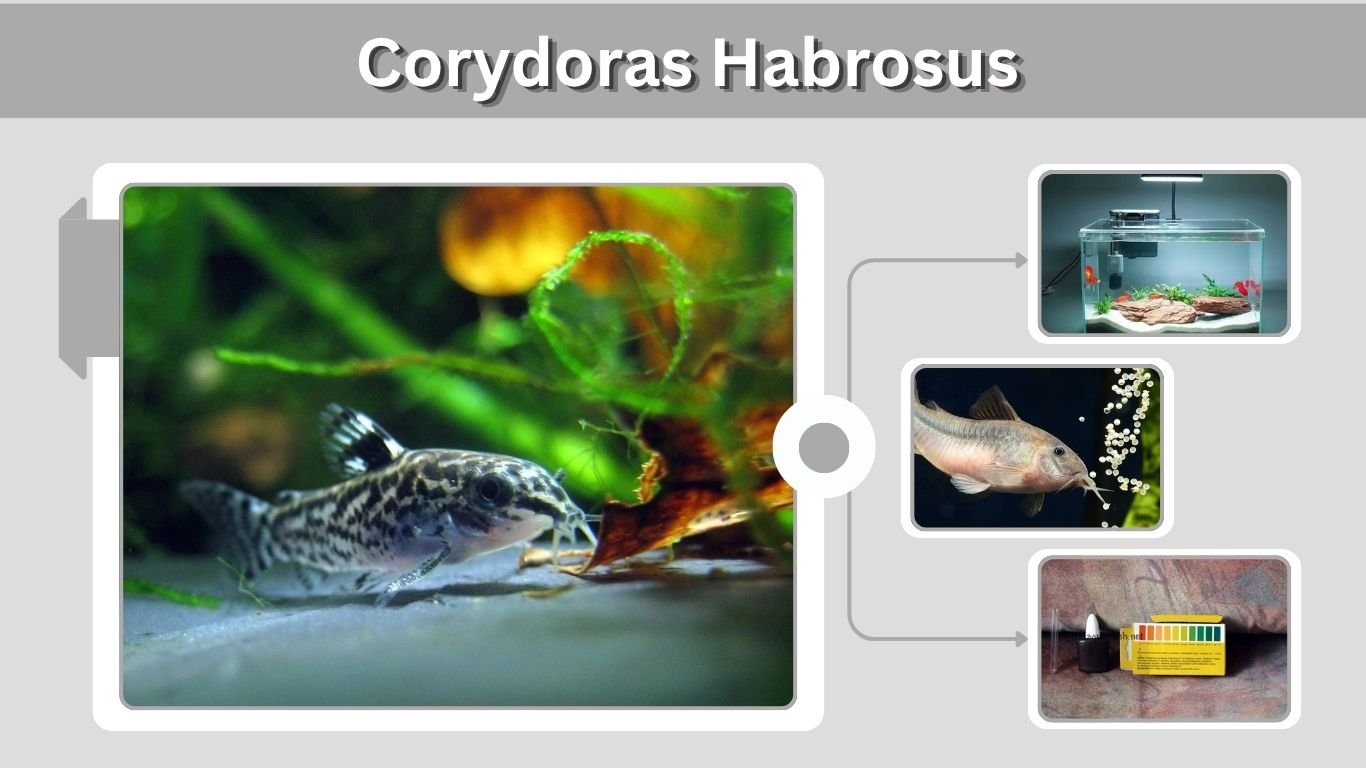
Corydoras habrosus, commonly known as the salt and pepper Corydoras, is a tiny freshwater catfish admired for its peaceful personality and attractive spotted pattern. These dwarf bottom-dwelling fish are especially popular in planted and nano aquariums because of their small size and active behavior. Native to South America, Habrosus Corydoras thrive in groups and prefer clean water, soft substrates, and gentle filtration. Understanding their tank requirements, feeding habits, breeding behavior, and suitable companions helps aquarists maintain a healthy and colorful community aquarium.
What Is Corydoras Habrosus?
Corydoras habrosus is a small armored catfish belonging to the family Callichthyidae. It is also called the salt and pepper cory, dwarf Habrosus Corydoras, or Venezuelan pygmy cory.
Following a scientific classification revision in 2024, its accepted scientific name is Hoplisoma habrosum, although Corydoras habrosus remains widely used throughout the aquarium trade.
The species originates from the upper Orinoco River basin in Venezuela and Colombia. In nature, these fish inhabit freshwater environments with vegetation, roots, and areas of slower-moving water.
Corydoras Habrosus Quick Facts
| Characteristics | Details |
| Common name | Salt and Pepper Corydoras |
| Scientific name | Hoplisoma habrosum |
| Former name | Corydoras habrosus |
| Origin | Venezuela and Colombia |
| Adult size | 1–1.5 inches |
| Lifespan | Approximately 3–5 years |
| Temperature | 72–79°F (22–26°C) |
| Recommended tank size | 10–15 gallons or larger |
| Temperament | Peaceful |
| Diet | Omnivorous |
| Recommended group | 8–12 individuals |
Corydoras Habrosus Appearance and Size
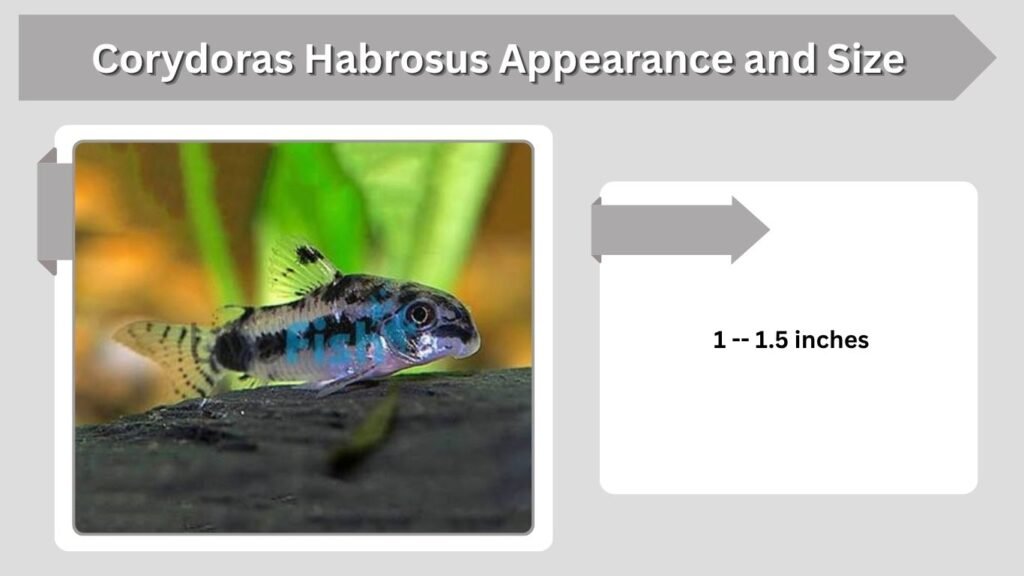
Corydoras habrosus has a compact body with light silver, tan, or cream coloration. Its distinctive black spots and irregular horizontal markings create the salt-and-pepper appearance.
Unlike larger cory catfish, this species retains its miniature size throughout adulthood.
How Big Do Corydoras Habrosus Get?
Adult Corydoras habrosus typically reach 1 — 1.5 inches (2.5 — 3.5 cm). Females are generally larger and rounder than males, particularly during breeding.
Young fish may initially measure less than an inch but gradually develop their adult markings as they mature.
Their small bodies make them suitable for carefully planned nano aquariums. However, adequate bottom space remains important because these active fish continuously search for food.
Corydoras Habrosus Care and Tank Requirements
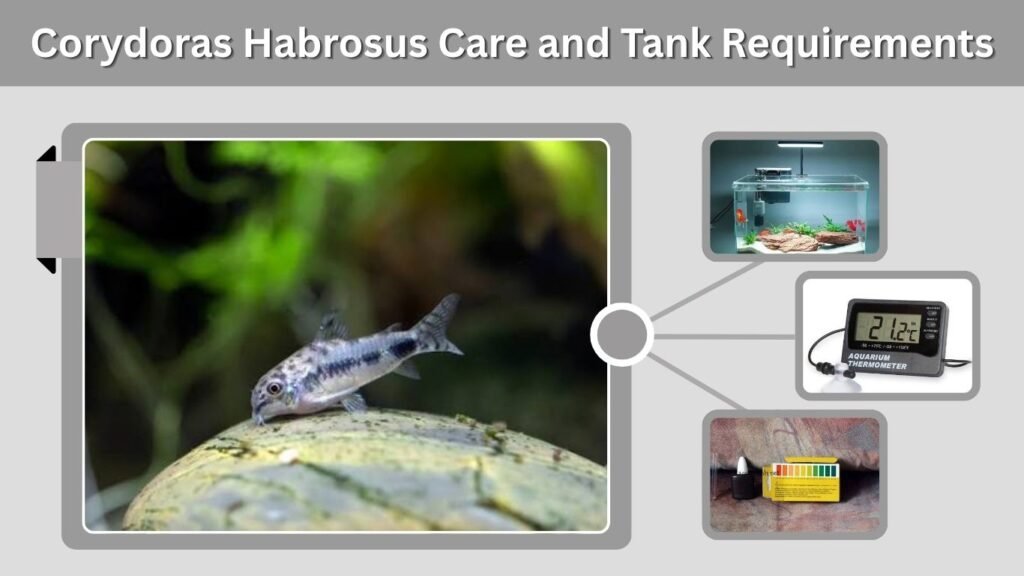
Habrosus Corydoras are moderately easy to maintain when their aquarium is properly established. They need stable water parameters, gentle filtration, and a suitable substrate that allows natural bottom-foraging behavior.
Ideal Tank Size and Setup
A 10-gallon aquarium can accommodate a suitably sized group in a carefully maintained, lightly stocked setup. However, a 15–20-gallon long aquarium provides more bottom space and greater flexibility.
Fine aquarium sand is particularly suitable because Corydoras use their sensitive barbels to search through the substrate.
Include live plants, driftwood, and hiding areas while maintaining open sandy sections for feeding. A mature biological filter and gentle water movement help provide a comfortable environment.
Corydoras Habrosus Temperature and Water Parameters
Maintaining appropriate water conditions is essential for their long-term health.
| Water Parameter | Recommended Range |
| Temperature | 72–79°F (22–26°C) |
| pH | 6.0–7.5 |
| General hardness | Approximately 2–10 dGH |
| Ammonia | 0 ppm |
| Nitrite | 0 ppm |
| Nitrate | Preferably below 20 ppm |
Stable water conditions are more important than chasing exact readings. Change approximately 20–30% of the aquarium water weekly, adjusting the schedule according to stocking levels and water test results.
Corydoras Habrosus School Size and Behavior
Corydoras habrosus are social fish that feel more secure when living with others of their species. A group of at least six is a basic minimum, while eight to twelve individuals generally encourages more confident behavior.
These tiny catfish spend considerable time exploring the aquarium bottom, occasionally resting on plant leaves or driftwood.
They may also swim quickly toward the surface to gulp air. Occasional surface visits are natural, but repeated gasping can indicate problems with oxygen levels or water quality.
Unlike some other dwarf cory species, Habrosus Corydoras spend most of their time close to the substrate.
What Do Corydoras Habrosus Eat?
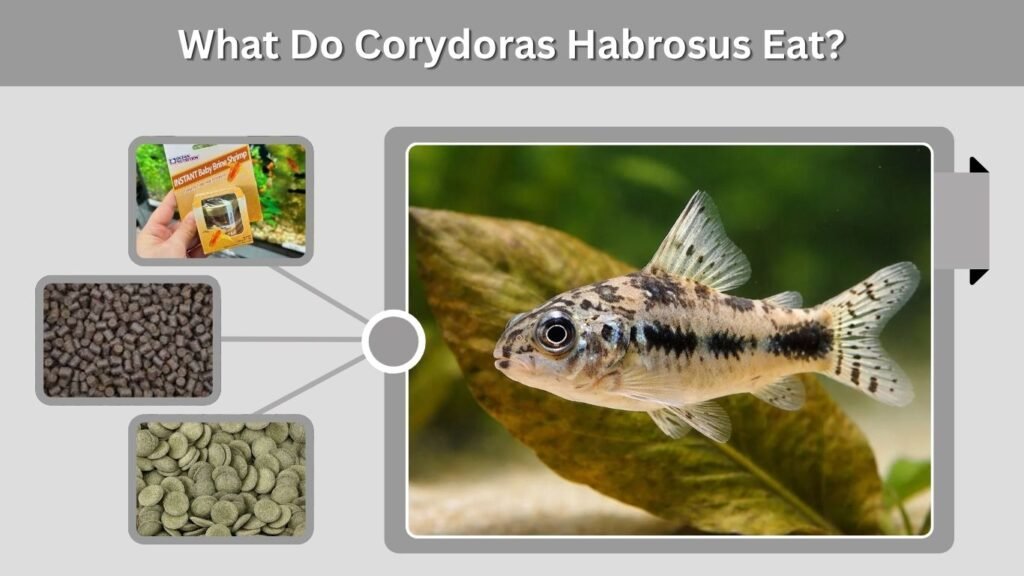
Habrosus Corydoras are omnivorous bottom feeders that naturally consume small aquatic invertebrates and other edible material.
Although they search for leftover food, they require dedicated feeding rather than relying on scraps from other aquarium fish.
Suitable foods include:
- Sinking micro pellets: Provide balanced everyday nutrition.
- Small catfish wafers: Offer food designed for bottom feeders.
- Frozen daphnia: Supply small, protein-rich food particles.
- Baby brine shrimp: Encourage active feeding and support growth.
- Microworms: Provide nutritious live food for small fish.
Feed small portions once or twice daily, ensuring all fish receive enough food.
Avoid excessive feeding because uneaten food can accumulate in the substrate and reduce water quality.
Best Tank Mates for Corydoras Habrosus
Corydoras habrosus are excellent companions for peaceful freshwater fish that do not intimidate or outcompete them.
Their small size makes careful tank mate selection particularly important.
Suitable companions include chili rasboras, ember tetras, green neon tetras, celestial pearl danios, and peaceful snails.
Adult dwarf shrimp can also coexist with Habrosus Corydoras, although newly hatched shrimp may occasionally be eaten.
Can Corydoras Habrosus Live With Bettas?
Yes, Corydoras habrosus can sometimes live with peaceful betta fish in sufficiently spacious aquariums.
However, individual bettas vary considerably in temperament. Some ignore bottom-dwelling catfish, while others may chase or disturb them.
Provide plant cover, hiding spaces, and enough bottom area for the corys to avoid unwanted interaction.
Avoid keeping them together if the betta displays persistent aggression.
Corydoras Habrosus Breeding Guide
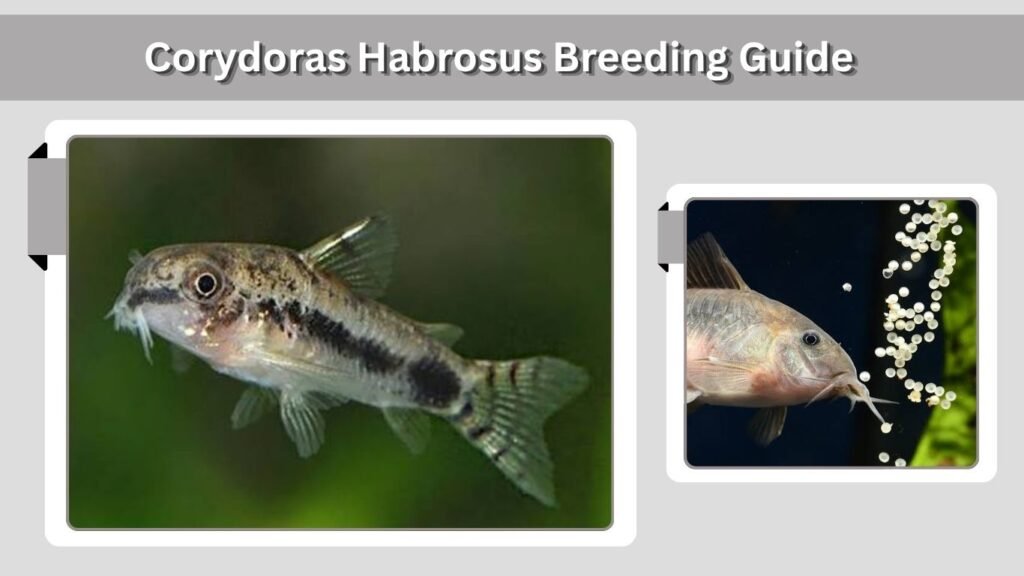
Breeding Corydoras habrosus is possible in home aquariums, although raising the tiny fry requires careful attention.
Healthy, mature fish are more likely to reproduce when provided with nutritious food, stable water quality, and a comfortable breeding environment.
How to Breed Corydoras Habrosus
Begin with a mature group containing both males and females. Condition them with small live and frozen foods such as daphnia, microworms, and baby brine shrimp.
Slightly cooler water changes can sometimes stimulate spawning by imitating seasonal rainfall.
During breeding, males pursue females before spawning. Fertilized adhesive eggs are usually attached to aquarium glass, plants, or spawning mops.
Because adult fish may eat their eggs, breeders often transfer the eggs to a separate container containing clean, matching aquarium water and gentle aeration.
Corydoras Habrosus Eggs and Fry Care
Fertilized eggs usually hatch within several days, depending on water temperature.
After hatching, newly emerged fry absorb their yolk sacs before requiring external food.
Offer infusoria, commercially prepared fine fry food, or similarly small foods during their earliest feeding stages. Introduce microworms and newly hatched brine shrimp when the fry are large enough to consume them.
Clean water and gentle filtration are essential for successful fry development.
Corydoras Habrosus vs Pygmaeus vs Hastatus
Three popular dwarf cory species are frequently confused because of their similar sizes and peaceful personalities.
| Species | Identifying feature | Typical behavior |
| Habrosus | Broken black stripe with spots | Mostly bottom-dwelling |
| Pygmaeus | Thin, continuous dark stripe | Often swims in midwater |
| Hastatus | Prominent black tail-base spot | Frequently swims in midwater |
Corydoras habrosus generally has heavier spotting and a more bottom-oriented lifestyle than the other two.
Pygmy Corydoras (Corydoras pygmaeus) are especially popular for their active midwater swimming, while tail-spot corys (Corydoras hastatus) are recognized by their contrasting tail markings.
Corydoras Habrosus Lifespan and Health
Corydoras habrosus commonly live around 3–5 years under suitable aquarium conditions. Some individuals may live longer with excellent care.
Poor water quality, stressful tank mates, and inadequate feeding can shorten their lifespan.
Watch for warning signs such as damaged barbels, unusual inactivity, rapid breathing, loss of appetite, or visible skin lesions.
Regular water testing, appropriate nutrition, and quarantine of newly purchased fish help reduce disease risks.
Where to Buy Corydoras Habrosus
Corydoras habrosus are sold through specialist aquarium shops, reputable online fish retailers, and ornamental fish breeders.
When searching for Corydoras habrosus for sale, choose active specimens with intact fins, healthy barbels, and normal swimming behavior.
Purchasing captive-bred individuals from reliable suppliers is generally preferable when available. Ask about their current water conditions and avoid fish showing obvious signs of illness.
FAQs
1. Are Corydoras habrosus hard to keep?
Corydoras habrosus are not particularly difficult to keep in mature, well-maintained aquariums. However, their small size makes them sensitive to poor water quality and competition for food. Stable water conditions and appropriate tank mates are especially important.
2. Can Corydoras habrosus live in a 10-gallon tank?
Yes, a 10-gallon aquarium can support a small group of Corydoras habrosus when properly filtered and lightly stocked. However, a larger tank with more bottom space is preferable, particularly for groups of eight or more individuals.
3. How many Corydoras habrosus should be kept together?
Corydoras habrosus should ideally be kept in groups of eight to twelve individuals. Larger groups encourage natural social behavior and help reduce shyness. Keeping only one or two individuals is not recommended because they are naturally social fish.
4. Can Corydoras habrosus live with shrimp?
Yes, Corydoras habrosus can coexist with adult cherry shrimp and other peaceful dwarf shrimp. Their gentle nature makes them suitable aquarium companions. However, they may occasionally consume very young shrimp, so dense plant cover is beneficial.
5. What is the best food for Corydoras habrosus?
The best diet for Corydoras habrosus includes sinking micro pellets, small catfish wafers, frozen daphnia, microworms, and baby brine shrimp. Offering varied, appropriately sized foods supports healthy growth, natural feeding behavior, and successful breeding.
