
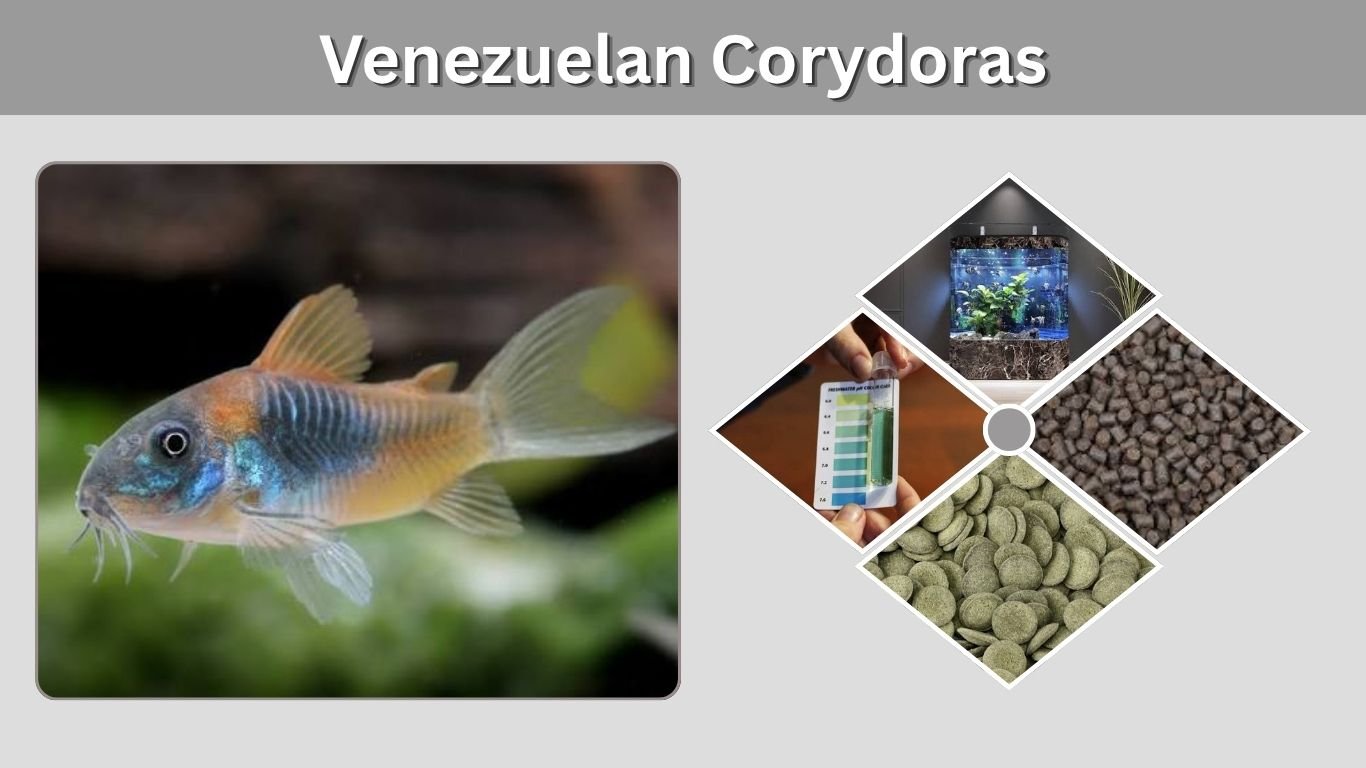
Venezuelan Corydoras are colorful freshwater catfish popular among aquarium enthusiasts for their peaceful behavior, attractive appearance, and easy care requirements. The orange Venezuelan Corydoras feature bright copper-orange markings, while black Venezuelan Corydoras display striking dark bodies with reddish fins. These small bottom-dwelling fish thrive in groups and make excellent additions to peaceful community aquariums. Understanding their differences, ideal tank conditions, feeding habits, and breeding requirements helps aquarists keep these fascinating catfish healthy and active for years.
What Are Venezuelan Corydoras?
Venezuelan Corydoras are small, armored freshwater catfish associated with the bronze cory group. They are popular for their social behavior, distinctive coloration, and constant activity along the aquarium floor.
The name Corydoras venezuelanus is commonly used for orange Venezuelan corys, although some taxonomic treatments place it within the bronze cory species, now known as Osteogaster aenea (formerly Corydoras aeneus). The black aquarium strain also has a complicated naming history.
These fish are native in ancestry to South American freshwater habitats, including populations associated with Venezuela. Many specimens sold today are captive-bred.
Venezuelan Corydoras Quick Facts
| Characteristics | Details |
| Common name | Venezuelan Corydoras |
| Scientific names used in trade | C. venezuelanus, C. aeneus |
| Family | Callichthyidae |
| Adult size | Approximately 2–3 inches |
| Lifespan | Commonly 5–8 years |
| Temperature | 72–79°F (22–26°C) |
| Recommended tank | 20 gallons or larger |
| Temperament | Peaceful and social |
| Diet | Omnivorous |
| Care level | Easy to moderate |
Types of Venezuelan Corydoras
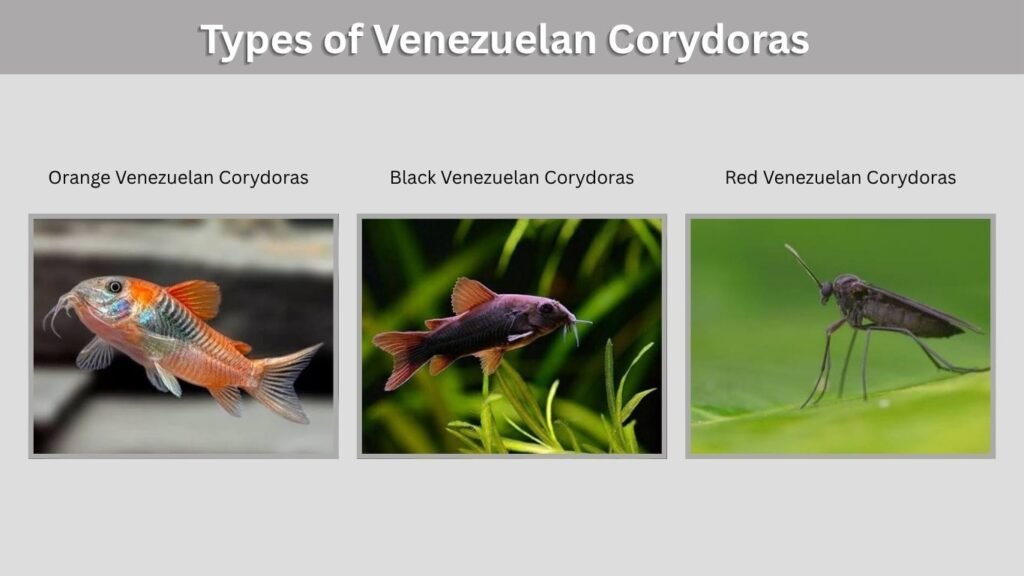
Venezuelan Corydoras are available under several aquarium trade names. The orange and black varieties are especially popular, although differences in coloration do not always indicate separate scientifically recognized species.
1. Orange Venezuelan Corydoras
Orange Venezuelan Corydoras are known for their copper-orange shoulders, reddish upper bodies, and metallic blue-green markings along their sides. Their coloration becomes particularly attractive under natural-looking aquarium lighting.
These fish generally reach approximately 2–2.5 inches in length. They spend much of their time exploring the substrate, searching for food, and interacting with other corys.
Orange Venezuelan Corydoras care is relatively straightforward when they receive clean water, suitable food, and enough space to swim in groups.
2. Black Venezuelan Corydoras
Black Venezuelan Corydoras feature dark charcoal or nearly black bodies, sometimes accompanied by reddish-brown fins. Their dramatic coloration makes them stand out in planted aquariums with pale sandy substrates.
The commonly sold black strain is generally associated with selectively bred bronze-type corys, rather than being a confirmed black color variety of true Venezuelan orange corys. Adults commonly grow around 2–3 inches, depending on their lineage.
Black Venezuelan Corydoras care is similar to that of orange varieties, requiring stable water conditions, peaceful companions, and regular feeding.
3. Red Venezuelan Corydoras
Red Venezuelan Corydoras are another name sometimes used for brightly colored orange Venezuelan corys. Their reddish-orange backs and fins contrast beautifully with their darker metallic sides.
Some aquarium stores also market these fish as Venezuelan red sailfin Corydoras. However, such trade names do not necessarily identify a separate species.
Their coloration may vary according to age, genetics, lighting, and general health.
Venezuelan Corydoras Size and Growth
Venezuelan Corydoras are relatively small aquarium fish. Most commonly sold orange specimens reach around 2–2.5 inches, while some black bronze-type strains may grow closer to 3 inches.
Females generally become larger and noticeably rounder than males, particularly during breeding periods.
Growth depends on several factors, including nutritional quality, water conditions, genetics, and aquarium space.
Although these fish remain small, they need adequate bottom space because they are active foragers. An aquarium with a long, open floor area is usually preferable to a tall tank with limited bottom space.
Venezuelan Corydoras Care and Tank Setup
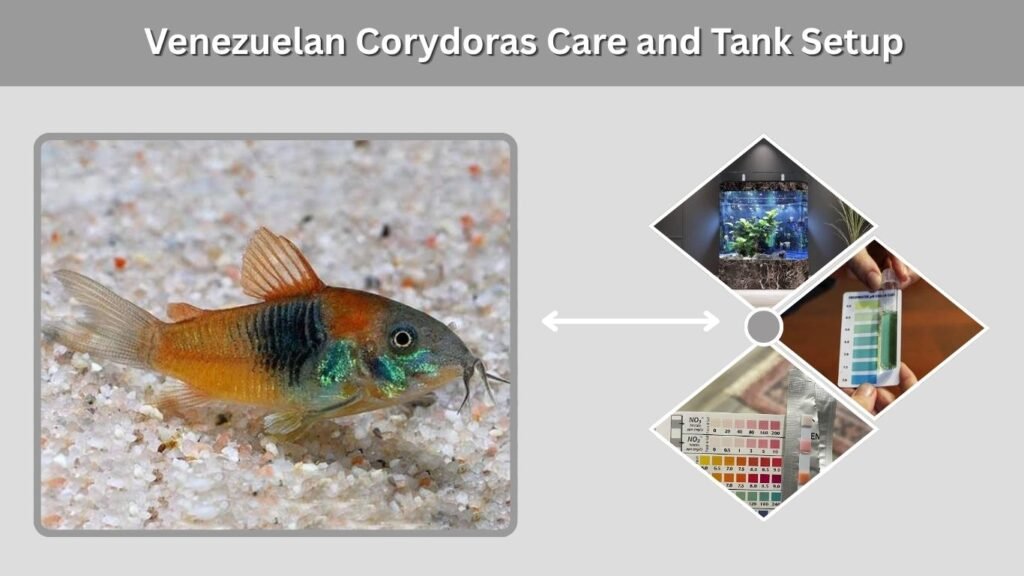
Providing the right aquarium environment is essential for maintaining healthy Venezuelan Corydoras. These peaceful catfish prefer clean freshwater, comfortable hiding places, and soft surfaces suitable for searching for food.
Ideal Tank Size
A 20-gallon long aquarium is a practical starting point for a small group of Venezuelan Corydoras. Larger aquariums provide more swimming space and make maintaining stable water conditions easier.
Because these fish are social, keeping at least six individuals of the same form or species is recommended.
Ideal Water Parameters
Venezuelan Corydoras adapt to moderately varied freshwater conditions, but sudden environmental changes can cause stress.
| Water parameter | Recommended range |
| Temperature | 72–79°F (22–26°C) |
| pH | 6.0–7.5 |
| General hardness | Approximately 2–15 dGH |
| Ammonia | 0 ppm |
| Nitrite | 0 ppm |
| Nitrate | As low as practical, preferably below 20 ppm |
Stable water quality is more important than constantly adjusting the aquarium to achieve exact numbers. The closely related bronze cory group tolerates a somewhat wider range, but these values provide a sensible target for Venezuelan aquarium strains.
Best Substrate for Venezuelan Corydoras
Fine, smooth aquarium sand is an excellent substrate for Venezuelan Corydoras because they naturally search through the bottom for food.
Smooth, rounded fine gravel can also work if maintained carefully.
Avoid sharp or abrasive gravel, which may injure their sensitive barbels. Plants, driftwood, and sheltered areas create a comfortable environment while leaving open space for foraging.
What Do Venezuelan Corydoras Eat?
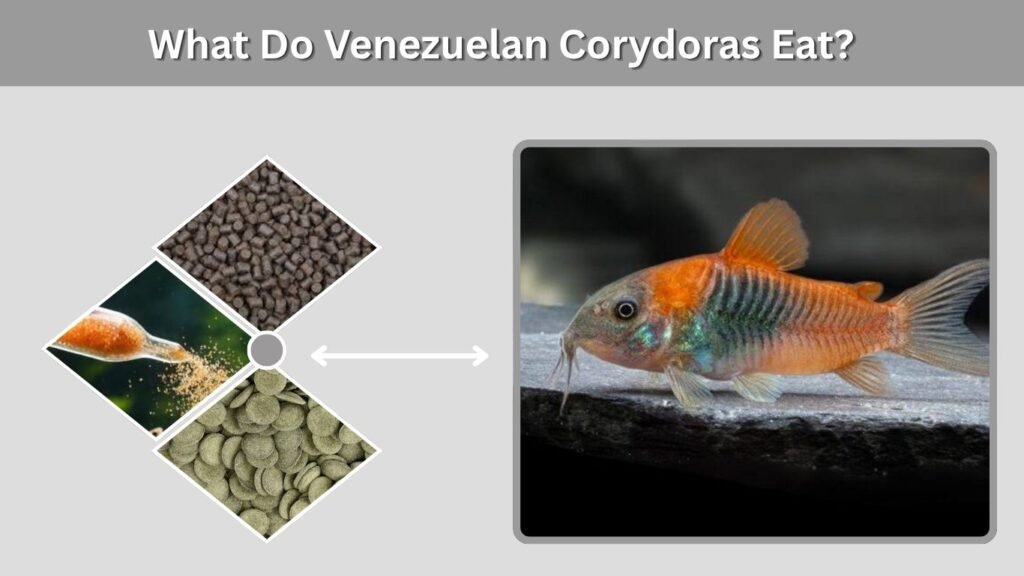
Venezuelan Corydoras are omnivorous fish that consume a variety of small aquatic foods. Although they frequently search the aquarium bottom, they should never depend entirely on leftover fish food.
A balanced diet supports healthy growth, vibrant coloration, and successful breeding.
Suitable foods include:
- Sinking catfish pellets: Provide balanced daily nutrition.
- Bottom-feeder wafers: Offer convenient supplementary food.
- Frozen bloodworms: Supply protein and dietary variety.
- Brine shrimp: Encourage natural feeding behavior.
- Daphnia: Provide another useful small food option.
Feed portions that the fish can consume without leaving excessive waste. Ensure food actually reaches the bottom, especially when keeping fast-feeding community fish.
Venezuelan Corydoras Tank Mates
Venezuelan Corydoras are peaceful fish that generally coexist well with other calm freshwater species.
Suitable tank mates include small tetras, rasboras, peaceful guppies, and compatible dwarf cichlids. Other cory species can also coexist when the aquarium provides enough bottom space.
However, keeping different species together does not necessarily replace the need for a proper same-species group.
Avoid aggressive cichlids, large predatory fish, and species that constantly disturb bottom-dwelling catfish.
A well-planned community aquarium allows Venezuelan Corydoras to forage naturally without competition or harassment.
Venezuelan Corydoras Breeding Guide
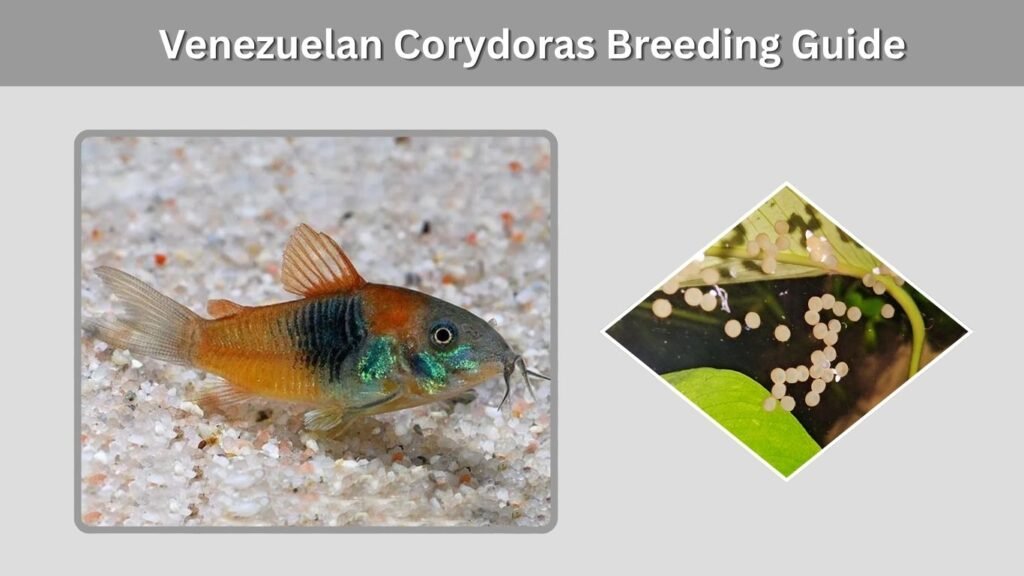
Venezuelan Corydoras breeding is possible in home aquariums when mature, healthy fish receive appropriate conditions.
Both orange and black forms can reproduce in captivity, although breeding success depends on the exact strain and quality of care.
Identifying Males and Females
Female Venezuelan Corydoras are generally larger and broader-bodied than males. Mature females often develop rounded bellies when carrying eggs.
Males usually have slimmer bodies, making their differences easier to recognize when viewed from above.
How to Breed Venezuelan Corydoras
A separate breeding aquarium can improve egg survival. Condition adult fish with nutritious live or frozen foods and maintain excellent water quality.
When females are visibly carrying eggs, a carefully managed, slightly cooler water change may help encourage spawning. Avoid sudden extreme temperature changes.
During breeding, females commonly attach adhesive eggs to aquarium glass, plants, or spawning mops.
Adults may eat the eggs, so breeders often move them to a separate, well-oxygenated container with matching water conditions.
Eggs may hatch after approximately 3–5 days, depending on temperature. Once fry absorb their yolk sacs, offer suitable small foods such as microworms or newly hatched brine shrimp.
Where to Buy Venezuelan Corydoras
Venezuelan Corydoras may be available through aquarium stores, specialist breeders, and reputable online freshwater fish retailers.
When searching for orange Venezuelan Corydoras for sale or black Venezuelan Corydoras for sale, examine fish carefully before purchasing.
Healthy specimens should have clear eyes, intact barbels, normal swimming behavior, and no obvious injuries.
Ask sellers about the fish’s origin, current water parameters, and scientific identification, particularly because orange and black trade names can be confusing.
Purchasing a suitable group from a reliable breeder can make acclimation and long-term aquarium care easier.
FAQs
1. How big do Venezuelan Corydoras get?
Venezuelan Corydoras typically grow between 2 and 3 inches long. Orange varieties commonly remain around 2–2.5 inches, while some black bronze-type strains become slightly larger. Females generally develop fuller, rounder bodies than males as they mature.
2. What temperature do Venezuelan Corydoras need?
Venezuelan Corydoras generally thrive at temperatures between 72°F and 79°F (22–26°C). Consistent temperatures help maintain healthy feeding and activity levels. Avoid sudden fluctuations because rapid changes can stress these peaceful freshwater catfish.
3. Are black Venezuelan Corydoras rare?
Black Venezuelan Corydoras are less commonly encountered than standard bronze corys in some aquarium markets. However, captive-bred black strains are established in the hobby, so availability and prices vary considerably by region and retailer.
4. Can orange and black Venezuelan Corydoras live together?
Yes, orange and black Venezuelan Corydoras can generally share a peaceful aquarium when water conditions and space are suitable. However, their trade names may represent different lineages, so keeping adequate same-type groups remains the safer social arrangement.
5. How long do Venezuelan Corydoras live?
Venezuelan Corydoras commonly live around 5–8 years with proper care, and some may live longer. Clean water, nutritious food, compatible tank mates, and stable aquarium conditions are essential factors supporting their health and longevity.