
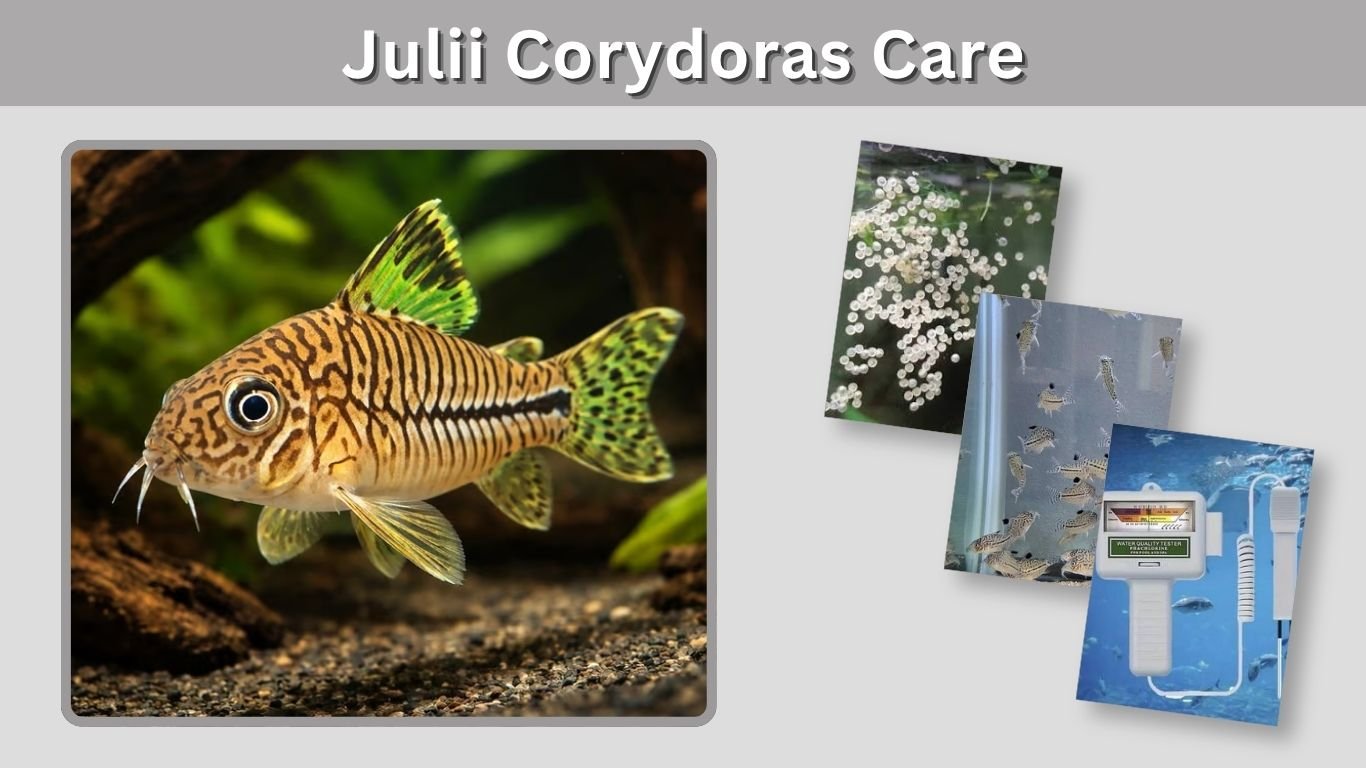
Julii Corydoras are small, peaceful freshwater catfish admired for their spotted bodies and active bottom-dwelling behavior. They are popular in community aquariums, but they need more than leftover food and a small patch of gravel to thrive. Proper Julii Corydoras care involves a spacious tank, soft substrate, stable water conditions, and a group of companions. Many fish sold under this name are actually false Julii Corydoras, which makes identification important. This guide explains their size, lifespan, temperature, feeding needs, breeding, and suitable tank mates.
What Is a Julii Corydoras?
The Julii Corydoras (Hoplisoma julii, formerly Corydoras julii) is a small freshwater catfish belonging to the Callichthyidae family. Also called the Julii Cory or Leopard Cory, this species originates from coastal river systems in northeastern Brazil.
Its peaceful temperament and attractive spotted appearance make it a popular choice among aquarium enthusiasts. However, genuine Julii Corydoras are relatively uncommon in aquarium stores.
Julii Corydoras Appearance and Characteristics
Julii Corydoras have pale silver or cream-colored bodies covered with small, dark spots. Their fins display distinctive black markings, while their mouths contain sensitive barbels used to locate food.
Unlike ordinary scaled fish, Corydoras have protective bony plates along their bodies. They typically spend much of their time exploring the aquarium bottom, occasionally swimming upward to gulp atmospheric air.
Julii Corydoras Size and Growth
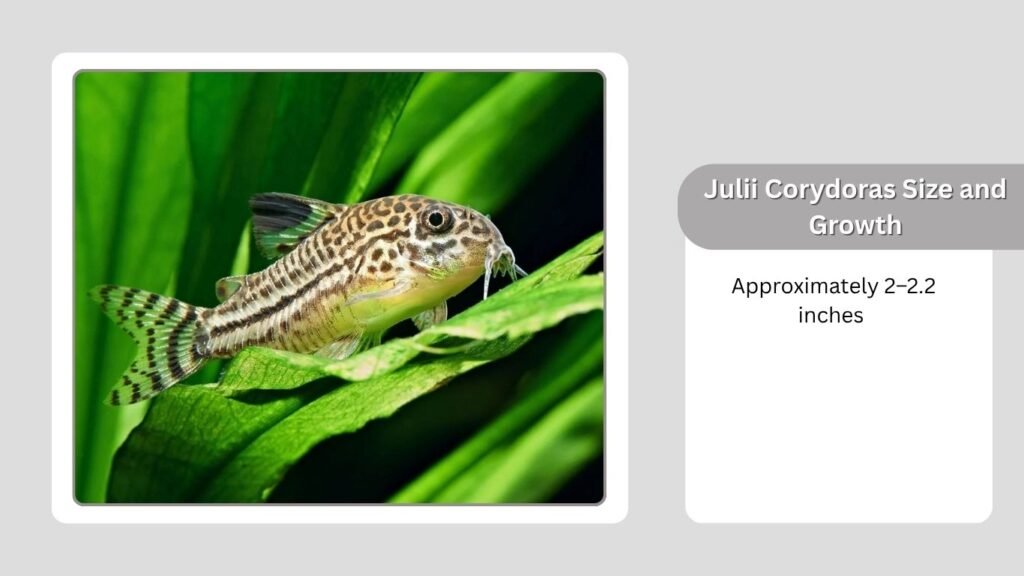
Julii Corydoras remain relatively small throughout their lives. Their compact size makes them suitable for peaceful freshwater community aquariums, provided they have adequate swimming space and suitable companions.
How Big Do Julii Corydoras Get?
Adult Julii Corydoras generally grow to approximately 2–2.2 inches (5–5.5 cm). Their growth rate depends on water quality, nutrition, genetics, and overall aquarium conditions.
Young Corydoras grow gradually, and healthy individuals develop fuller bodies as they mature. A balanced diet and stable environment support normal growth.
Male vs Female Julii Corydoras
Female Julii Corydoras are generally broader and rounder than males, especially when carrying eggs. Males typically have slimmer bodies.
These differences become easier to recognize in mature fish when viewed from above. Juvenile fish are more difficult to distinguish because their body proportions remain similar.
True Julii vs False Julii Corydoras
True Julii Corydoras and false Julii Corydoras are often confused because their markings look remarkably similar. False Julii Corydoras (Hoplisoma trilineatum, formerly Corydoras trilineatus) are commonly sold under the Julii name.
Both species have peaceful temperaments and similar aquarium requirements, but their markings provide useful identification clues.
How to Identify True Julii Corydoras
True Julii Corydoras generally have small, separate black spots across their heads and bodies. Their markings appear more individually defined rather than forming connected patterns.
False Julii Corydoras usually display maze-like markings on the head and a more noticeable horizontal stripe along the body.
However, patterns vary naturally, so markings alone cannot always confirm identification. Reliable information about the fish’s origin provides stronger evidence.
Julii Corydoras vs Sterbai Corydoras
Sterbai Corydoras differ noticeably in appearance. They have light spots against a darker head and body, with distinctive orange coloration on their pectoral fins.
Sterbai Corydoras also tolerate warmer aquarium temperatures than Julii Corydoras, making them more suitable for some tropical community tanks.
Julii Corydoras Tank Size and Setup
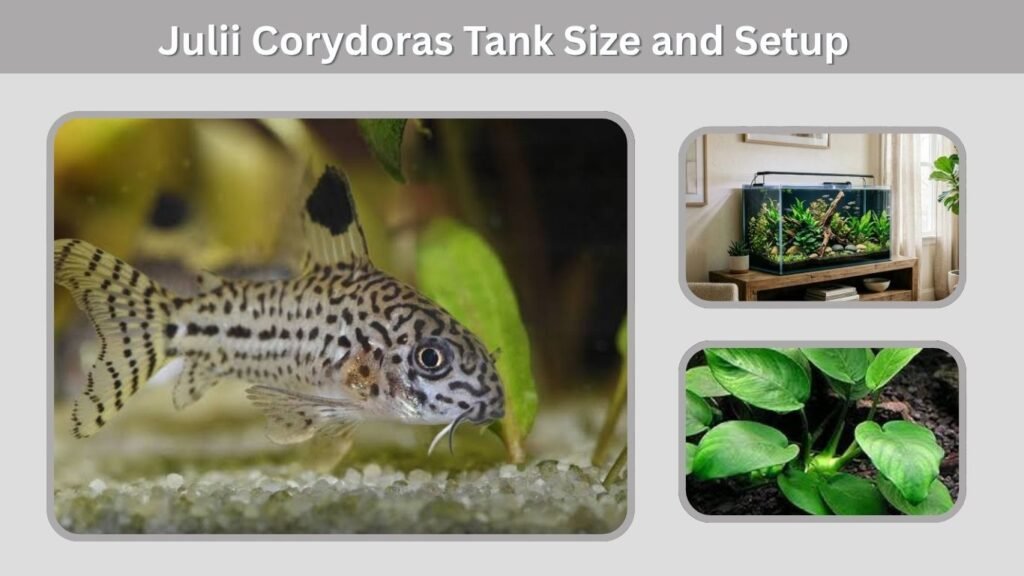
A suitable aquarium should provide enough floor space for exploring, feeding, and resting. Although Julii Corydoras are small, they remain active and prefer living in groups.
Ideal Tank Size and Group Requirements
A 20-gallon long aquarium is a practical starting size for six Julii Corydoras. Larger aquariums provide greater swimming space and help maintain stable water conditions.
Keeping at least six individuals of the same species encourages natural social behavior and reduces stress. Groups of eight or more can be beneficial when space permits.
Best Substrate and Decorations
Create an aquarium environment that resembles their natural freshwater habitat. Suitable features include:
- Fine sand: Protects sensitive barbels and encourages natural foraging.
- Live plants: Java fern, Anubias, and Amazon swords provide shelter.
- Driftwood: Creates shaded resting areas and hiding places.
- Smooth stones: Add natural decorations without sharp surfaces.
- Open bottom areas: Allow comfortable movement and feeding.
Avoid sharp gravel and overcrowded decorations. Clean, smooth substrates are particularly important for maintaining healthy barbels.
Julii Corydoras Temperature and Water Conditions

Maintaining stable water parameters is essential for successful Julii Corydoras care. Sudden changes in temperature, acidity, or water quality can cause stress and increase disease risks.
Ideal Water Parameters
The following conditions provide a suitable starting point for Julii Corydoras:
- Temperature: 72–79°F (22–26°C).
- pH level: Approximately 5.5–7.5.
- Water hardness: Soft to moderately hard water.
- Ammonia: 0 ppm.
- Nitrite: 0 ppm.
Use a reliable aquarium heater when necessary and test water regularly. Clean, well-oxygenated water is important for their long-term health.
Water Changes and Maintenance
Perform partial water changes of approximately 20–30% weekly, depending on aquarium conditions.
Remove leftover food, clean accumulated waste, and maintain efficient filtration. Avoid completely replacing filter media unnecessarily because beneficial bacteria help process harmful waste.
What Do Julii Corydoras Eat?
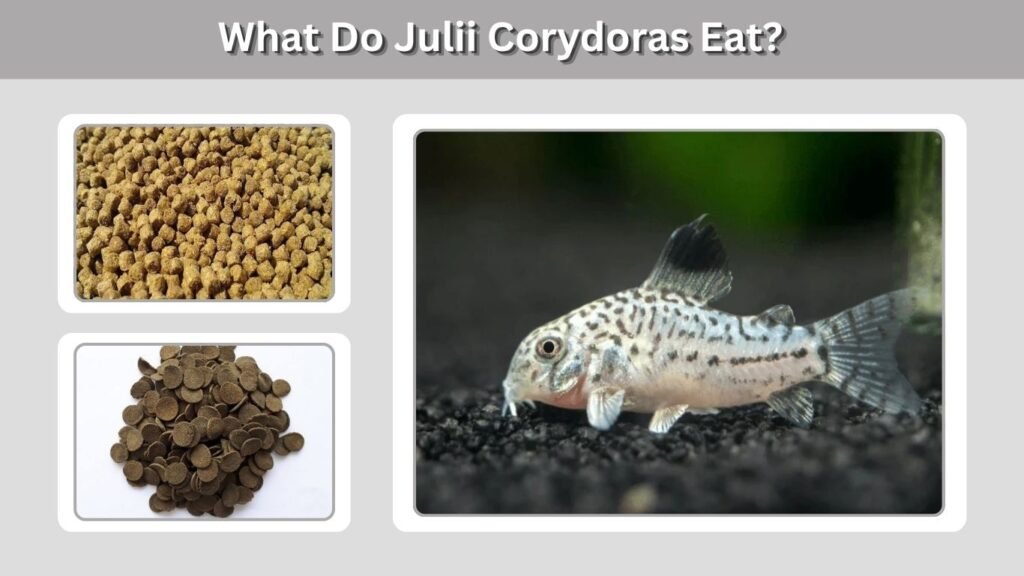
Julii Corydoras are omnivorous fish that feed on small aquatic organisms and other edible material found near the substrate. Although they are bottom feeders, they require dedicated feeding rather than relying entirely on leftovers.
Best Foods for Julii Corydoras
A balanced diet can include several nutritious foods:
- Sinking catfish pellets: Provide essential everyday nutrition.
- Bloodworms: Offer protein as an occasional supplement.
- Brine shrimp: Encourage natural feeding behavior.
- Daphnia: Provide additional dietary variety.
- Quality bottom-feeder tablets: Supply balanced nutrients.
How Often Should You Feed Them?
Feed Julii Corydoras once or twice daily in portions they can consume without excessive leftovers.
Ensure food reaches the bottom, especially when faster-swimming fish share the aquarium. These catfish are not efficient algae cleaners and should never depend exclusively on algae or discarded food.
Julii Corydoras Lifespan and Behavior
Julii Corydoras commonly live around 5–10 years under suitable aquarium conditions. Their lifespan depends on nutrition, water stability, disease prevention, and the quality of their environment.
Natural Behavior and Social Habits
Julii Corydoras are peaceful, social fish that enjoy exploring sandy surfaces together. They often rest beneath plants or decorations between feeding periods.
Occasional trips to the water surface are normal because Corydoras can breathe atmospheric air. However, persistent frantic surfacing may indicate unsuitable water conditions.
Best Julii Corydoras Tank Mates
Peaceful tetras, rasboras, and small livebearers such as guppies can make suitable companions when their environmental requirements overlap.
Avoid aggressive cichlids, predatory fish, and territorial bottom dwellers that may disturb them. Compatible tank mates should not compete excessively for sinking food.
Julii Corydoras Breeding and Reproduction

Breeding Julii Corydoras is possible in captivity, although verified true Julii Corydoras are less commonly bred than false Julii Corydoras.
Healthy adults, excellent water quality, and nutritious food improve the chances of successful reproduction.
How to Breed Julii Corydoras
Begin with a mature group containing both males and females. Feed nutritious live or frozen foods to encourage breeding readiness.
A partial water change with slightly cooler, conditioned water may help trigger spawning.
During reproduction, Corydoras typically display a T-shaped mating position. Females subsequently attach adhesive eggs to aquarium glass, plants, or other surfaces.
Caring for Julii Corydoras Eggs and Fry
Corydoras eggs generally hatch within several days, depending on species and water temperature.
Protect the eggs from adults that might eat them, and maintain gentle water circulation.
Once the fry absorb their yolk sacs, offer appropriately sized fry food or newly hatched brine shrimp. Clean water is particularly important during early development.
FAQs
1. Are Julii Corydoras Good for Beginners?
Yes, Julii Corydoras are excellent for beginners because they are peaceful, hardy, and relatively easy to maintain. However, they require a fully cycled aquarium, stable water conditions, a soft substrate, and a group of at least six fish.
2. Can Julii Corydoras Live With Guppies?
Yes, Julii Corydoras can live peacefully with guppies in a community aquarium. Both species generally have calm temperaments and can share suitable water conditions. Provide enough swimming space, hiding places, and sinking food to ensure the Corydoras receive proper nutrition.
3. Do Julii Corydoras Eat Aquarium Plants?
No, Julii Corydoras do not normally eat healthy aquarium plants. They primarily feed on small aquatic organisms and sinking foods. While searching through the substrate, they may occasionally disturb delicate plant roots, but they rarely cause significant damage to established plants.
4. Why Are My Julii Corydoras Losing Their Barbels?
Julii Corydoras may lose their barbels because of abrasive substrates, poor water quality, bacterial infections, or accumulated waste. To prevent further damage, maintain clean aquarium conditions, provide smooth sand, monitor water parameters, and seek appropriate treatment if signs of infection appear.
5. Can You Keep One Julii Corydoras Alone?
Keeping one Julii Corydoras alone is not recommended because these fish are naturally social and prefer living in groups. A group of at least six individuals of the same species encourages natural behavior, reduces stress, and supports their overall well-being.
