
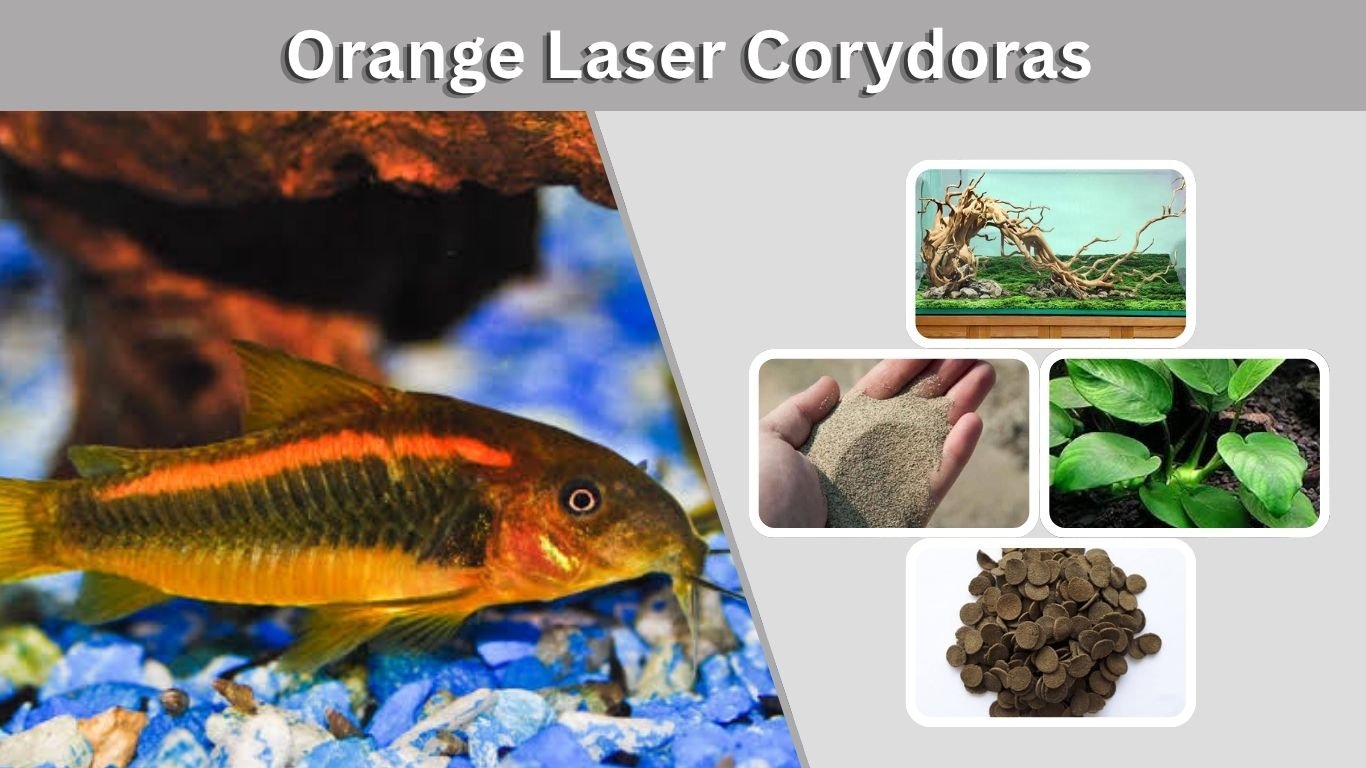
Orange Laser Corydoras are colorful freshwater catfish known for their glowing orange stripes, peaceful personalities, and active bottom-dwelling behavior. These attractive fish are popular among aquarium enthusiasts who want a unique addition to their community tanks. Although they are relatively easy to maintain, proper care requires clean water, suitable temperatures, soft substrates, and nutritious food. Orange Laser Corydoras are also sometimes confused with Gold Laser Corydoras because of their similar appearance. This guide covers their size, lifespan, ideal tank setup, feeding habits, breeding methods, and identification differences.
What Are Orange Laser Corydoras?
Orange Laser Corydoras are South American armored catfish belonging to the Callichthyidae family. These fish are associated with the Osteogaster group, previously classified within Corydoras.
The Orange Stripe form, CW023, originates from Peru and is commonly associated with the Orange Laser name. However, aquarium retailers sometimes use the same name for CW010, which specialists generally identify as the Gold Laser Cory.
Orange Laser Corydoras Appearance
Orange Laser Corydoras have a bronze, olive, or dark-colored body decorated with a striking orange stripe across the upper body. Their fins are often translucent yellowish-orange, while their undersides appear lighter.
Their mouths contain sensitive barbels that help locate food along the aquarium bottom. These fish also have protective bony plates instead of ordinary scales.
Their glowing markings become particularly noticeable under suitable aquarium lighting.
Orange Laser Corydoras Size and Growth

Orange Laser Corydoras are small aquarium catfish, making them suitable for community aquariums with adequate bottom space. Their adult size depends partly on which laser form is being sold under the common name.
How Big Do Orange Laser Corydoras Get?
Adult Orange Laser Corydoras typically reach approximately 2–2.5 inches (5–6.5 cm), although some related forms may grow slightly larger.
Young fish gradually develop their adult coloration as they mature. Healthy growth depends on proper nutrition, stable water conditions, and sufficient space.
Females are generally broader and fuller-bodied than males, especially during breeding periods.
Orange Laser Corydoras vs Gold Laser Corydoras
Orange Laser and Gold Laser Corydoras are closely related aquarium forms with attractive metallic markings. Their trade names are frequently confused, making accurate identification challenging.
Main Differences Between Orange and Gold Laser Corydoras
The Orange Stripe Cory, commonly identified as CW023, usually has an orange or reddish stripe that is strongest toward the front of its body and becomes less distinct toward the tail.
Gold Laser Corydoras, identified as CW010, typically display a brighter gold stripe extending more consistently along the upper body.
However, their coloration may change with lighting, substrate, age, and environmental conditions. Requesting the seller’s identification code is more reliable than judging color alone.
Orange Laser Corydoras Tank Size and Setup
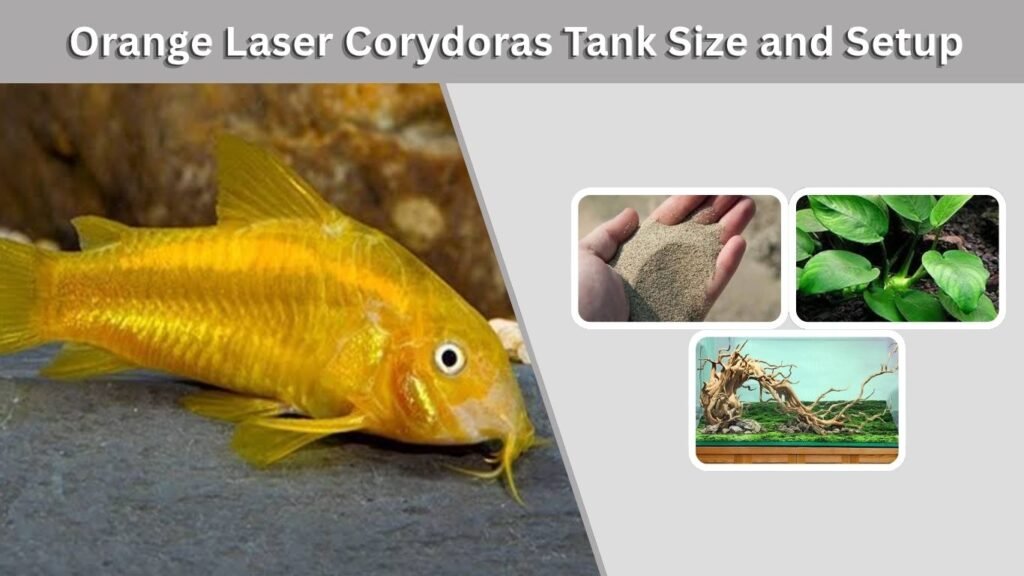
Providing a spacious, comfortable aquarium helps Orange Laser Corydoras remain active and healthy. These fish spend considerable time exploring the substrate, so bottom space is especially important.
Ideal Tank Size and Group Requirements
A 20-gallon long aquarium is a reasonable starting point for a small group, although 30 gallons provides more room for six or more adults.
Orange Laser Corydoras are social fish that should ideally live in groups of at least six individuals of the same form. Larger groups encourage natural movement and reduce stress.
Best Substrate and Tank Decorations
A natural-looking aquarium with open swimming areas and shaded resting places creates a comfortable environment.
Recommended aquarium features include:
- Fine sand: Allows safe bottom foraging and protects delicate barbels.
- Live plants: Java fern, Anubias, and Amazon swords provide shelter.
- Driftwood: Creates hiding places and shaded resting areas.
- Smooth stones: Offer decorations without sharp surfaces.
- Open sandy areas: Provide convenient feeding and swimming space.
Avoid abrasive gravel, sharp ornaments, and overcrowded decorations.
Orange Laser Corydoras Temperature and Water Conditions
Stable water conditions are essential for maintaining healthy Orange Laser Corydoras. Although they can adapt to suitable aquarium environments, sudden changes may cause stress.
Ideal Water Parameters
For CW023-type Orange Laser Corydoras, suitable starting conditions include:
- Temperature: 72–79°F (22–26°C).
- pH level: Approximately 6.0–7.5.
- Water hardness: Soft to moderately hard.
- Ammonia: 0 ppm.
- Nitrite: 0 ppm.
- Nitrate: Keep low through regular maintenance.
Use reliable filtration and maintain adequate oxygenation. Check the requirements of the specific CW form purchased because recommendations can differ slightly.
Water Changes and Maintenance
Perform partial water changes of approximately 20–30% weekly, adjusting the schedule according to aquarium conditions.
Remove accumulated waste and uneaten food from the substrate. Test water regularly and ensure replacement water has compatible temperature and chemistry.
Good maintenance helps prevent stress, infections, and damage to sensitive barbels.
What Do Orange Laser Corydoras Eat?
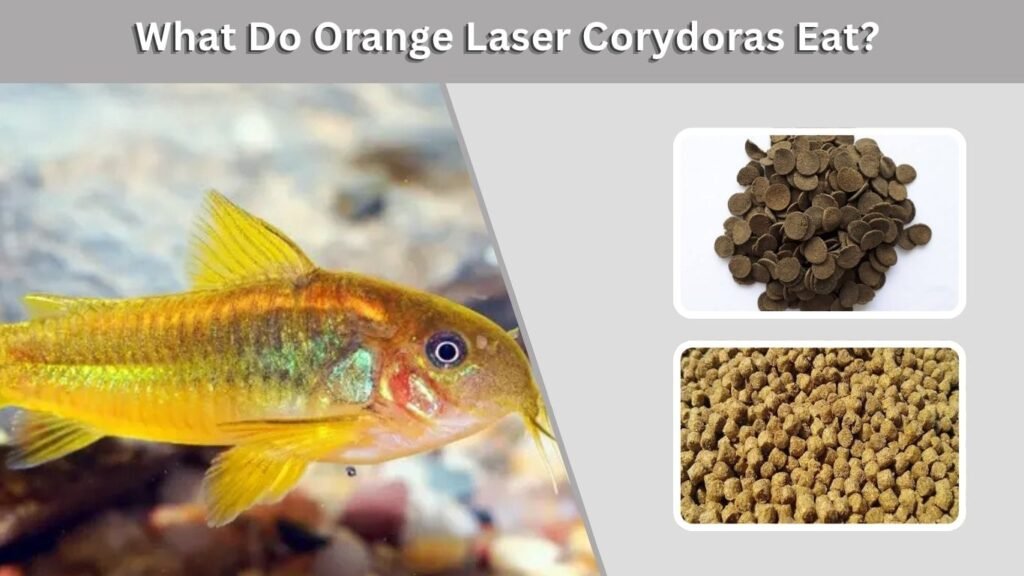
Orange Laser Corydoras are omnivorous bottom feeders. In their natural habitats, they search for small aquatic organisms and edible particles along the riverbed.
A varied diet supports healthy growth, vibrant coloration, and successful breeding.
Best Foods for Orange Laser Corydoras
Suitable foods include:
- Sinking catfish pellets: Provide balanced daily nutrition.
- Bloodworms: Supply protein as an occasional supplement.
- Brine shrimp: Encourage natural feeding behavior.
- Daphnia: Offer nutritious dietary variety.
- Sinking omnivore tablets: Provide additional essential nutrients.
How Often Should You Feed Them?
Feed Orange Laser Corydoras once or twice daily, offering portions they can finish without leaving excessive waste.
Ensure food reaches the aquarium bottom, particularly in community tanks with fast-swimming fish.
These catfish are not primarily algae eaters and should never rely entirely on leftovers from other aquarium inhabitants.
Orange Laser Corydoras Lifespan and Behavior
Orange Laser Corydoras may live approximately 5–10 years with proper aquarium care. Their lifespan depends on stable water conditions, nutritious feeding, disease prevention, and suitable social companionship.
Natural Behavior and Activity
These fish are peaceful, active bottom dwellers that enjoy exploring sandy surfaces together.
They occasionally rest beneath plants or driftwood before returning to food searching. Swimming briefly to the surface to gulp air is normal Corydoras behavior.
However, repeated frantic surfacing may indicate oxygen or water-quality problems.
Best Orange Laser Corydoras Tank Mates
Peaceful tetras, rasboras, small rainbowfish, and other compatible community fish can make suitable tank mates.
Avoid aggressive cichlids, large predators, and territorial bottom dwellers. Choose fish with similar temperature and water requirements.
Breeding Orange Laser Corydoras

Breeding Orange Laser Corydoras is possible in home aquariums, although it requires healthy adults and stable water conditions.
Females typically become noticeably rounder when carrying eggs, while males remain slimmer.
How to Breed Orange Laser Corydoras
Begin with mature fish and condition them using nutritious live or frozen foods.
A partial water change with slightly cooler, appropriately treated water may encourage spawning.
During reproduction, Corydoras commonly display the characteristic T-position. Females subsequently attach adhesive eggs to aquarium glass, plants, or decorations.
A separate breeding aquarium can make egg protection easier.
Caring for Orange Laser Corydoras Eggs and Fry
The eggs generally hatch within several days, depending on water temperature and environmental conditions.
Protect them from adult fish that may consume them. Maintain clean water and gentle circulation.
Once the fry absorb their yolk sacs, provide appropriately sized fry food or newly hatched brine shrimp.
Orange Laser Corydoras for Sale and Buying Tips
Orange Laser Corydoras are sold through specialty aquarium retailers and breeders. Their availability and price vary according to region, identification, size, and whether they are captive-bred or wild-caught.
What to Check Before Buying
Before purchasing Orange Laser Corydoras, consider these factors:
- Identification: Confirm whether the fish are CW023, CW010, or another form.
- Appearance: Choose fish with intact fins, clear eyes, and healthy barbels.
- Activity: Look for natural swimming and feeding behavior.
- Group size: Purchase enough compatible individuals for a social group.
- Tank readiness: Ensure the aquarium is fully cycled before introducing fish.
Quarantine new arrivals when possible to reduce the risk of introducing disease.
FAQs
1. Are Orange Laser Corydoras Good for Beginners?
Yes, Orange Laser Corydoras can be suitable for beginners who understand basic aquarium maintenance. They are peaceful and adaptable under appropriate conditions. However, they need a fully cycled aquarium, clean water, suitable temperatures, nutritious food, and companionship from other Corydoras.
2. How Many Orange Laser Corydoras Should Be Kept Together?
Orange Laser Corydoras should ideally be kept in groups of at least six individuals of the same form. They are social fish that feel more comfortable with companions. Larger groups encourage natural foraging, coordinated swimming, and more confident behavior.
3. Can Orange Laser Corydoras Live With Shrimp?
Yes, Orange Laser Corydoras can generally coexist with adult freshwater shrimp in peaceful community aquariums. However, they may occasionally consume tiny shrimp babies while searching for food. Dense plants, moss, and hiding spaces help improve the survival chances of young shrimp.
4. Why Is My Orange Laser Corydoras Losing Its Color?
Orange Laser Corydoras may appear less colorful because of stress, poor water conditions, unsuitable lighting, illness, or environmental changes. Their coloration can also vary naturally. Check water parameters, observe feeding and activity, and provide a comfortable aquarium environment.
5. Are Orange Laser Corydoras Rare or Expensive?
Orange Laser Corydoras are generally less common than standard Bronze or Peppered Corydoras. Their prices vary depending on identification, breeder availability, location, and whether they are imported or captive-bred. Specialist aquarium stores may charge more for healthy, accurately identified specimens.
