
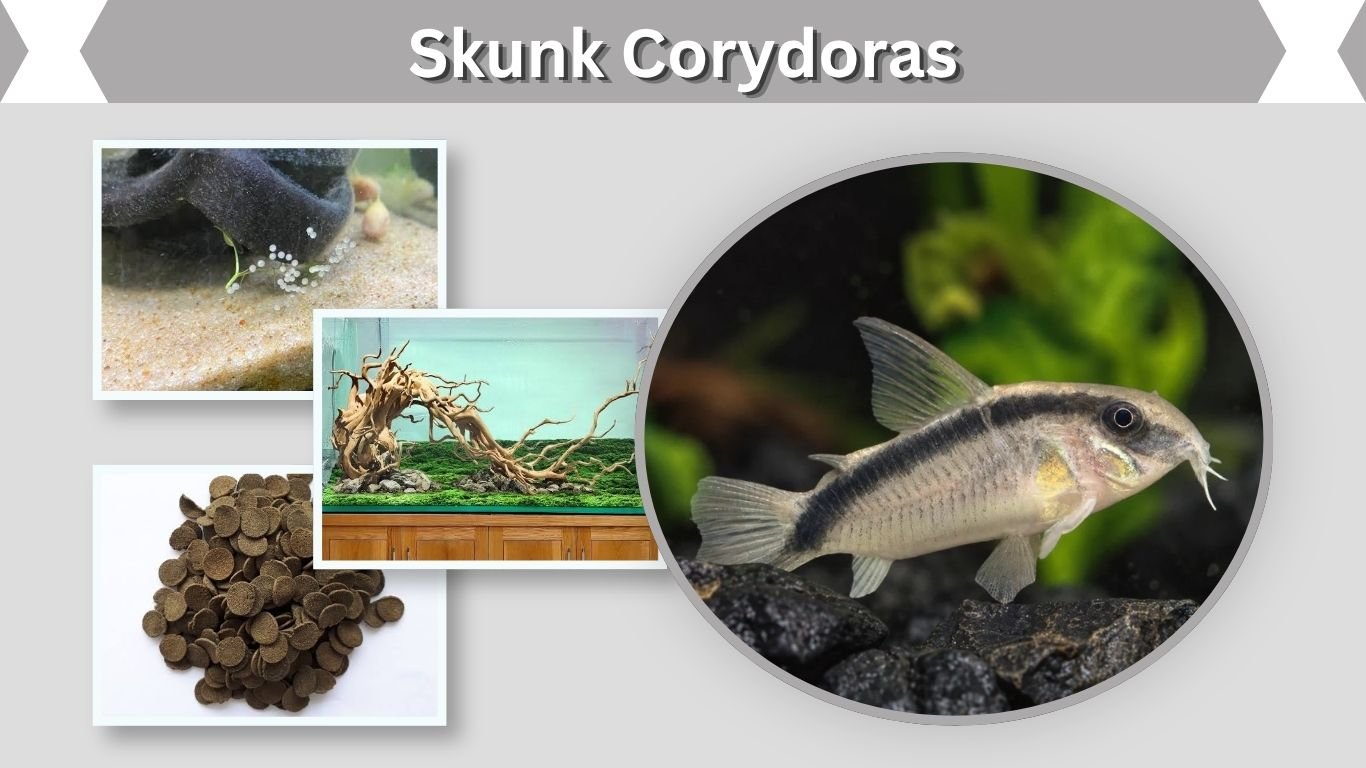
Skunk Corydoras are peaceful freshwater catfish known for their distinctive black stripes, gentle personalities, and active bottom-dwelling behavior. These attractive fish are popular among aquarium enthusiasts because they bring movement and character to community tanks. Native to South America’s Amazon basin, Skunk Corydoras thrive in clean, well-maintained aquariums with soft substrates and suitable companions. However, proper care requires understanding their preferred water conditions, feeding requirements, and social behavior. This complete guide covers Skunk Corydoras size, lifespan, tank setup, breeding, diet, and important identification details.
What Is a Skunk Corydoras?
The Skunk Corydoras is a small armored freshwater catfish belonging to the Callichthyidae family. The common aquarium Skunk Cory, identified as C020, is now generally classified as Hoplisoma granti, although many sellers still use the name Corydoras arcuatus.
These fish inhabit freshwater environments throughout parts of the western Amazon basin, including Brazil, Peru, Colombia, and Ecuador.
Skunk Corydoras Appearance and Identification
Skunk Corydoras have pale cream, silver, or light brown bodies decorated with a distinctive curved black stripe extending from the head toward the tail.
Their bodies contain protective bony plates rather than ordinary scales. Sensitive mouth barbels help them locate food along sandy riverbeds.
Their contrasting coloration and streamlined appearance make them easily recognizable among aquarium catfish.
Skunk Corydoras Size and Growth
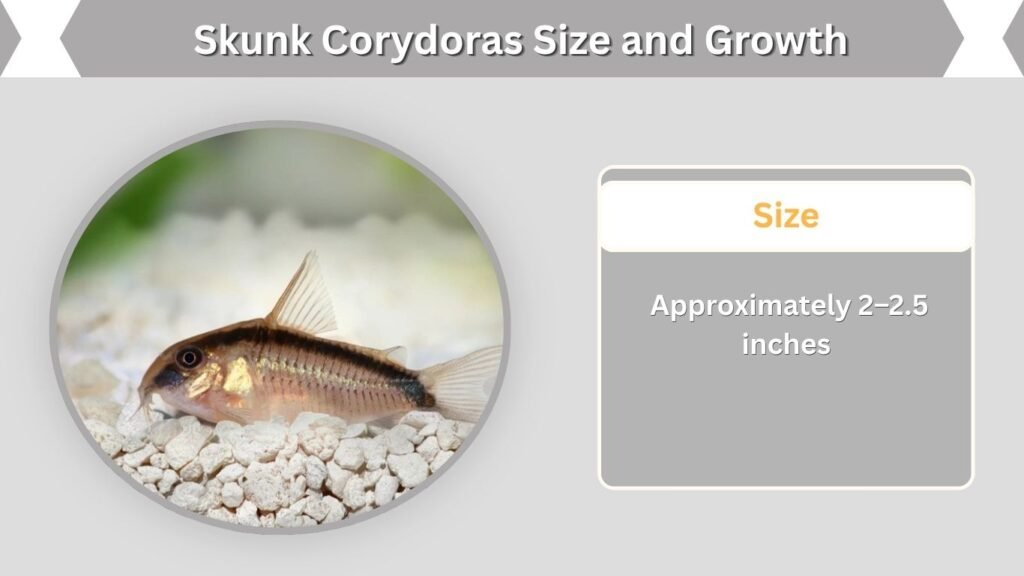
Skunk Corydoras are relatively small fish that fit comfortably into appropriately sized community aquariums. However, their active behavior and social nature require more space than their compact bodies might suggest.
How Big Do Skunk Corydoras Get?
Adult Skunk Corydoras generally reach approximately 2–2.5 inches (5–6.5 cm), depending on the species and how their length is measured.
Young fish grow gradually when provided with nutritious food and stable water conditions.
Females are generally broader than males, particularly during breeding periods. Their small size makes them suitable for planted aquariums with adequate bottom space.
Skunk Corydoras Male vs Female
Male Skunk Corydoras typically have slimmer bodies, while mature females appear rounder and noticeably wider when viewed from above.
These differences become more apparent when females carry developing eggs. Juvenile fish are harder to distinguish because their body proportions are less developed.
Skunk Corydoras vs Corydoras Arcuatus
The identification of Skunk Corydoras has caused considerable confusion in the aquarium trade. For decades, the common aquarium Skunk Cory was sold as Corydoras arcuatus.
Scientific research later established that the familiar C020 aquarium fish is a separate species, now known as Hoplisoma granti.
How to Tell Them Apart
The common C020 Skunk Cory typically has a shorter, more rounded snout, while true Brochis arcuata, historically called Corydoras arcuatus, has a different head and body structure.
Both species have similar curved black stripes, making identification difficult from coloration alone.
True Brochis arcuata is associated with the identification code CW036 and is less common in aquarium stores.
Skunk Corydoras Tank Size and Setup

A comfortable aquarium environment encourages healthy growth, active behavior, and natural feeding habits. Skunk Corydoras spend much of their time exploring the aquarium bottom, so horizontal swimming space is especially important.
Ideal Tank Size
A 20-gallon long aquarium is a practical starting size for six Skunk Corydoras. Larger aquariums provide additional bottom space and help maintain stable water conditions.
These fish are naturally social and should ideally be kept in groups of at least six individuals of the same species.
Best Substrate and Decorations
Provide a natural-looking aquarium with shaded hiding places and open areas for feeding.
Suitable aquarium features include:
- Fine sand: Protects sensitive barbels and supports natural foraging.
- Live plants: Java fern, Anubias, and Amazon swords provide shelter.
- Driftwood: Creates shaded resting places and hiding spots.
- Smooth stones: Add natural structure without sharp edges.
- Open sandy areas: Allow comfortable swimming and bottom feeding.
Avoid sharp gravel and overcrowded decorations that restrict movement.
Skunk Corydoras Temperature and Water Conditions
Skunk Corydoras require clean, oxygenated water with stable temperature and chemistry. Their sensitivity to poor aquarium conditions makes regular monitoring important, especially after introducing new fish.
Ideal Water Parameters
Recommended aquarium conditions for the commonly sold C020 Skunk Cory include:
- Temperature: 72–79°F (22–26°C).
- pH level: Approximately 5.5–7.5.
- Water hardness: Soft to moderately hard.
- Ammonia: 0 ppm.
- Nitrite: 0 ppm.
- Nitrate: Keep low through regular maintenance.
Slightly acidic to neutral water is generally preferred. Avoid sudden changes in temperature and water chemistry.
Aquarium Water Maintenance
Change approximately 20–30% of the aquarium water weekly, adjusting the amount according to water testing and stocking levels.
Remove accumulated waste, maintain effective filtration, and ensure sufficient oxygenation.
Clean water helps prevent infections and supports healthy barbels.
What Do Skunk Corydoras Eat?

Skunk Corydoras are omnivorous bottom feeders that search for small aquatic organisms and edible particles. They require a varied diet rather than depending exclusively on leftover fish food.
Best Foods for Skunk Corydoras
Offer different nutritious foods to support normal growth and overall health.
Recommended foods include:
- Sinking catfish pellets: Provide balanced daily nutrition.
- Bloodworms: Supply protein as an occasional treat.
- Brine shrimp: Encourage natural feeding behavior.
- Daphnia: Offer additional nutrients and dietary variety.
- Sinking omnivore tablets: Provide convenient supplemental nutrition.
How Often Should You Feed Them?
Feed Skunk Corydoras once or twice daily, offering portions they can consume without leaving excessive waste.
Ensure sinking food reaches the aquarium bottom, particularly when other community fish are present.
These catfish are not dedicated algae eaters and should never be expected to survive on scraps alone.
Skunk Corydoras Lifespan and Behavior
Skunk Corydoras may live approximately 5–8 years or longer under favorable aquarium conditions. Their longevity depends on suitable nutrition, stable water parameters, disease prevention, and proper social care.
Natural Behavior and Social Habits
Skunk Corydoras are peaceful, social fish that enjoy exploring the substrate together.
They frequently rest beneath plants or driftwood before returning to their regular feeding activities.
Occasional swimming to the surface to gulp air is normal Corydoras behavior. However, frequent frantic surfacing may indicate water-quality problems or insufficient oxygen.
Best Skunk Corydoras Tank Mates
Suitable tank mates include peaceful tetras, rasboras, pencilfish, and other small community fish with compatible water requirements.
Avoid large predatory fish, aggressive cichlids, and territorial bottom dwellers that may intimidate them.
Keeping Skunk Corydoras with calm companions helps maintain a peaceful aquarium environment.
Breeding Skunk Corydoras

Breeding Skunk Corydoras is possible in captivity, although successful reproduction can be more challenging than with common Bronze Corydoras.
Healthy breeding adults, excellent water quality, and nutritious food improve the chances of spawning.
How to Breed Skunk Corydoras
Begin with a mature breeding group containing both males and females. Condition the fish using high-quality live or frozen foods.
A partial water change with slightly cooler, properly treated water may encourage spawning by resembling seasonal rainfall.
During reproduction, Corydoras commonly display the characteristic T-shaped mating position. Females then attach adhesive eggs to aquarium glass, plants, or other suitable surfaces.
Caring for Skunk Corydoras Eggs and Fry
Eggs typically hatch within approximately three to five days, depending on temperature.
Adult fish may consume the eggs, so breeders often separate the eggs or remove the adults.
Once the fry absorb their yolk sacs, provide microworms, powdered fry food, or newly hatched brine shrimp.
Maintain clean water and gentle filtration throughout early development.
Skunk Corydoras for Sale and Buying Tips
Skunk Corydoras are available through some aquarium retailers, specialty fish stores, and breeders. Their availability and price depend on location, seasonal imports, and whether the fish are wild-caught or captive-bred.
What to Check Before Buying
Before purchasing Skunk Corydoras, examine their condition carefully.
- Healthy appearance: Choose fish with clear eyes and intact fins.
- Barbel condition: Check for damaged or missing mouth barbels.
- Natural activity: Look for active swimming and bottom foraging.
- Species identification: Confirm whether the fish are C020 or another similar form.
- Group size: Purchase enough individuals to maintain a suitable social group.
Quarantine new fish when possible before introducing them into an established aquarium.
FAQs
1. Are Skunk Corydoras Good for Beginners?
Skunk Corydoras can be suitable for beginners who understand aquarium maintenance and water-quality management. They are peaceful and social fish but require a properly cycled aquarium, soft substrate, stable temperatures, nutritious food, and a group of compatible companions.
2. How Many Skunk Corydoras Should Be Kept Together?
Skunk Corydoras should ideally be kept in groups of at least six individuals of the same species. They naturally enjoy social interaction and coordinated foraging. Larger groups help encourage confident behavior and reduce stress when sufficient aquarium space is available.
3. Can Skunk Corydoras Live With Shrimp?
Yes, Skunk Corydoras can generally coexist with adult freshwater shrimp in peaceful aquariums. However, they may occasionally eat newly hatched shrimp while searching for food. Dense plants, aquarium moss, and suitable hiding spaces help protect young shrimp from accidental predation.
4. Why Are My Skunk Corydoras Hiding All the Time?
Skunk Corydoras may hide because of stress, bright lighting, aggressive tank mates, unfamiliar surroundings, or insufficient group size. Providing shaded areas, peaceful companions, stable water conditions, and a group of at least six fish can encourage more confident behavior.
5. Are Skunk Corydoras Rare or Expensive?
Skunk Corydoras are less commonly available than Bronze or Peppered Corydoras in some aquarium markets. Their prices vary depending on region, availability, identification, and breeding source. Confirm the species and examine the fish’s health before purchasing from any retailer.