
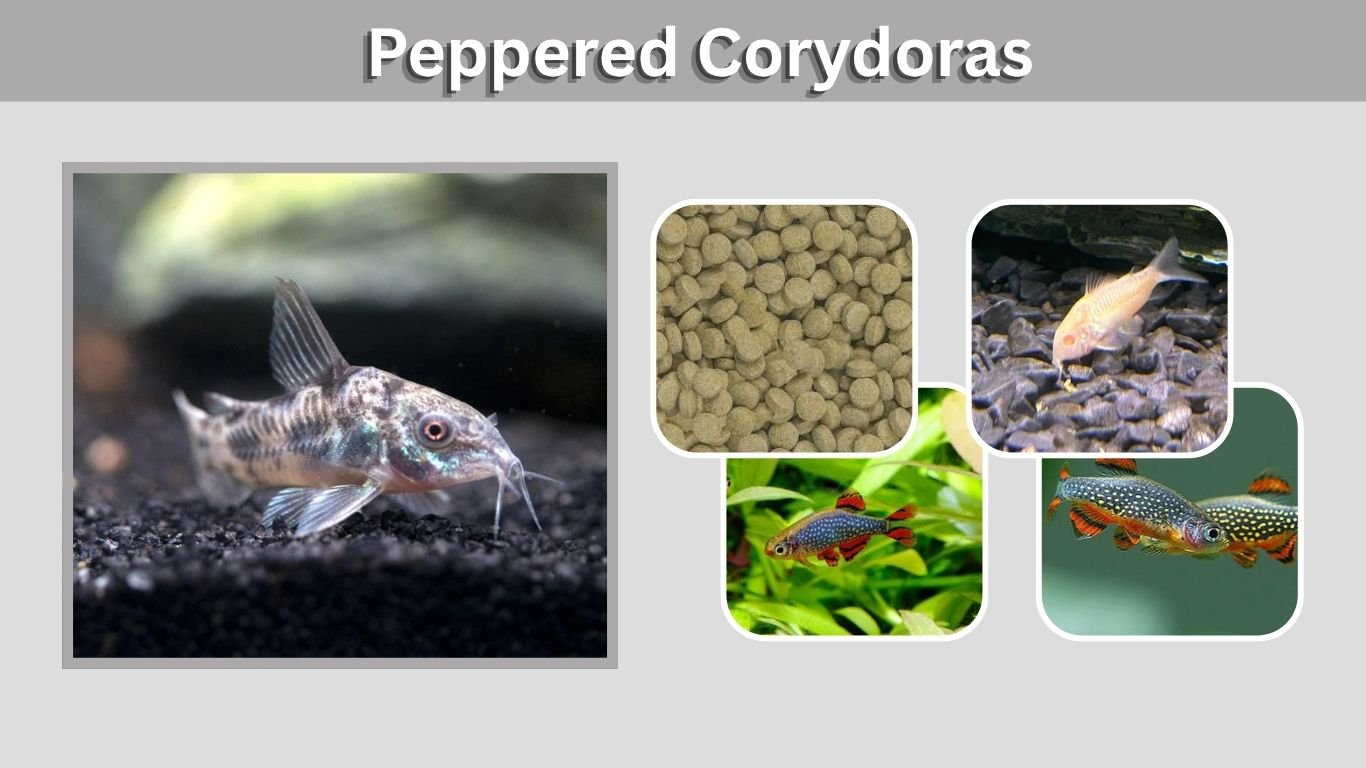
Peppered Corydoras are peaceful freshwater catfish known for their spotted appearance, active bottom-dwelling behavior, and easy care requirements. These small South American fish are popular among aquarium beginners because they adapt well to properly maintained community tanks. They enjoy living in groups, searching the substrate for food, and exploring their surroundings. Understanding their ideal tank size, water temperature, feeding habits, and breeding behavior is essential for keeping them healthy. This guide covers everything you need to know about Peppered Corydoras care.
Peppered Corydoras Quick Facts
Peppered Corydoras, commonly called Peppered Cory Catfish, belong to the armored catfish family. They are hardy, social fish that thrive in freshwater aquariums with suitable water conditions and plenty of swimming space.
| Characteristics | Details |
| Common Name | Peppered Corydoras |
| Scientific Name | Hoplisoma paleatum (formerly Corydoras paleatus) |
| Family | Callichthyidae |
| Origin | South America |
| Adult Size | 2.5–3 inches |
| Lifespan | 5–10 years |
| Minimum Tank Size | 20 gallons recommended |
| Water Temperature | 72–79°F (22–26°C) |
| pH Level | Approximately 6.0–7.5 |
| Diet | Omnivore |
| Temperament | Peaceful |
| Group Size | At least 6 fish |
| Care Level | Easy |
Peppered Corydoras Appearance and Identification
Peppered Corydoras have a distinctive spotted appearance that makes them easy to recognize. Their bodies feature irregular dark markings, while their peaceful behavior and unusual movements make them interesting additions to freshwater aquariums.
Physical Appearance
Adult Peppered Corydoras have short, rounded bodies covered with protective bony plates. Their coloration usually consists of gray, silver, olive, and dark green shades, with irregular black markings across their bodies.
They also have small barbels near their mouths that help them locate food along the aquarium bottom. Their fins are generally translucent with scattered dark markings.
Common Color and Fin Variations
Aquarium breeders have developed several variations, including albino and longfin Peppered Corydoras. Albino varieties have pale bodies and reddish eyes, while longfin varieties have extended dorsal and tail fins.
These varieties generally require the same water conditions and diet as standard Peppered Corydoras.
Peppered Corydoras should not be confused with Salt and Pepper Corydoras (Corydoras habrosus), a separate, considerably smaller species.
Peppered Corydoras Size and Lifespan

Peppered Corydoras are relatively small aquarium fish, although they grow larger than some dwarf Corydoras species. Their adult size and lifespan depend on genetics, feeding quality, and environmental conditions.
How Big Do Peppered Corydoras Get?
Most adult Peppered Corydoras reach approximately 2.5–3 inches (6–7.5 cm) in length. Females are generally larger and have wider bodies, especially when carrying eggs.
Young fish gradually develop their characteristic spotted patterns as they mature. A nutritious diet and sufficient aquarium space support healthy growth.
How Long Do Peppered Corydoras Live?
Peppered Corydoras commonly live around 5–10 years with proper care. Consistent water quality, appropriate food, and a comfortable social group can contribute to a longer lifespan.
Poor water conditions, overcrowding, and improper temperatures may shorten their lives.
Peppered Corydoras Tank Size and Setup
Creating a suitable aquarium environment is essential for Peppered Corydoras. These bottom-dwelling fish need adequate floor space, smooth substrate, and hiding areas where they can rest comfortably.
Ideal Tank Size
A 20-gallon long aquarium is a practical starting point for a group of six Peppered Corydoras. Larger aquariums are preferable when keeping additional fish.
Because these catfish spend most of their time near the bottom, aquarium length and floor space are particularly important.
Very small tanks, such as 1.5-gallon aquariums, are unsuitable for their long-term care.
Water Temperature and pH
Peppered Corydoras prefer moderately cool freshwater conditions compared with many tropical aquarium fish.
Recommended conditions include:
- Temperature: 72–79°F (22–26°C)
- pH level: Approximately 6.0–7.5
- Water hardness: Soft to moderately hard
- Ammonia: 0 ppm
- Nitrite: 0 ppm
They can tolerate cooler water under appropriate conditions, but sudden temperature changes should be avoided. Consistent water parameters are more important than frequently adjusting the aquarium.
Substrate, Plants, and Decorations
Fine aquarium sand is an excellent substrate because Peppered Corydoras naturally sift through the bottom while searching for food.
Smooth, rounded gravel can also work, but sharp materials should be avoided.
Live plants such as Java fern, Anubias, and Amazon swords provide cover. Driftwood, smooth rocks, and shaded areas make the aquarium more comfortable.
Leave open spaces where the fish can forage freely.
Aquarium Cleaning and Maintenance
Regular aquarium maintenance helps prevent disease and supports healthy behavior.
Perform partial water changes of approximately 20–30% weekly, adjusting according to water tests and aquarium conditions.
Use a suitable filtration system, remove accumulated waste, and avoid overfeeding. Always use dechlorinated replacement water with a temperature close to that of the aquarium.
What Do Peppered Corydoras Eat?
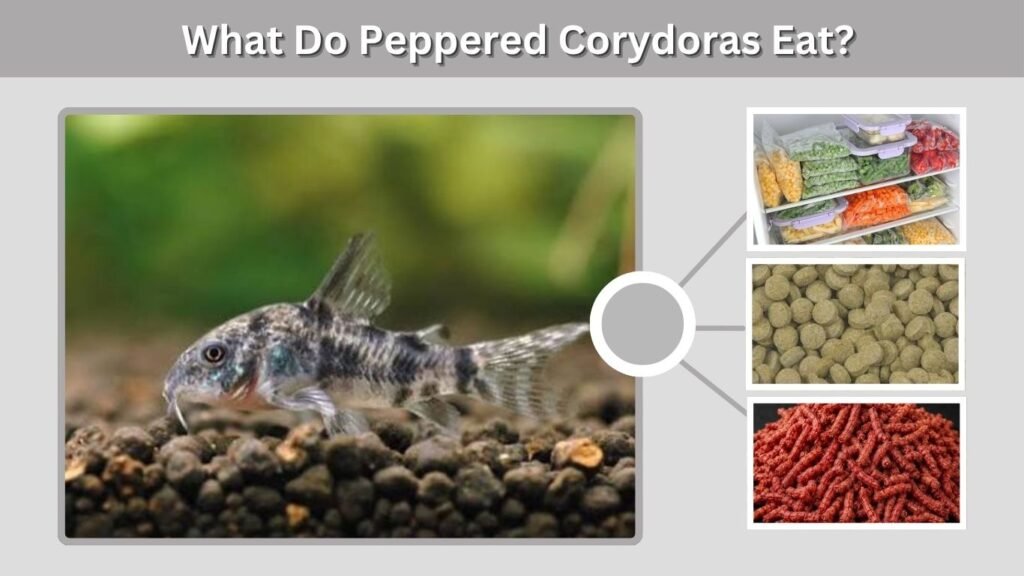
Peppered Corydoras are omnivorous bottom feeders that consume a combination of animal-based and plant-based materials. A balanced diet provides the nutrients necessary for healthy growth, coloration, and reproduction.
Best Food for Peppered Corydoras
Suitable foods include:
- Sinking pellets: Provide essential everyday nutrition.
- Bottom-feeder tablets: Offer a convenient complete food source.
- Bloodworms: Supply protein as an occasional supplement.
- Brine shrimp: Encourage natural feeding behavior.
- Daphnia: Add dietary variety.
- Frozen foods: Provide additional nutrients.
Feed small portions once or twice daily, ensuring the food reaches the bottom.
Although Peppered Corydoras search for leftover food, they should receive their own nutritious meals rather than depend on scraps from other fish.
Do Peppered Corydoras Eat Algae?
Peppered Corydoras are not effective algae-eating fish. They may consume tiny amounts of plant material while searching for food, but algae is not their primary diet.
They should not be purchased specifically for algae control. Proper aquarium maintenance remains necessary.
Peppered Corydoras Behavior and Tank Mates

Peppered Corydoras are peaceful, social fish that spend much of their time exploring the aquarium bottom. They generally coexist well with other calm freshwater species.
How Many Peppered Corydoras Should Be Kept Together?
A minimum group of six Peppered Corydoras is recommended, although larger groups can encourage more natural social behavior.
When kept together, these fish forage, rest, and explore in loose groups. A single Peppered Corydoras may become shy or display less activity.
Occasional trips to the water surface for a quick gulp of air are normal. However, repeated frantic surfacing can indicate water quality or oxygen problems.
Best Tank Mates
Suitable companions include peaceful fish that tolerate similar water conditions, such as certain small tetras, danios, and peaceful rasboras.
Avoid aggressive cichlids, large predatory fish, and species that repeatedly disturb bottom dwellers.
Always consider the temperature requirements and available swimming space before introducing tank mates.
Peppered Corydoras Breeding Guide
Breeding Peppered Corydoras is possible in home aquariums when mature fish receive nutritious food and suitable water conditions. These egg-laying catfish may reproduce naturally in well-maintained tanks.
Male vs. Female Peppered Corydoras
Female Peppered Corydoras usually have larger, rounder bodies than males. Their bellies become noticeably fuller when developing eggs.
Males are generally smaller and slimmer. Comparing several mature fish from above can make these differences easier to identify.
A breeding group containing two males for each female can improve spawning opportunities.
How to Breed Peppered Corydoras
Begin by feeding adult fish high-quality sinking foods supplemented with protein-rich live or frozen foods.
A partial water change using slightly cooler, properly conditioned water can sometimes encourage spawning by imitating seasonal rainfall.
During courtship, males actively pursue females. The fish may adopt a characteristic T-shaped spawning position.
Females then deposit small, adhesive eggs on aquarium glass, plants, or decorations.
Adults may eat some eggs, so separating the eggs or removing the parents can improve survival.
Peppered Corydoras Eggs and Fry Care
Fertilized Peppered Corydoras eggs generally hatch in approximately three to five days, depending on water temperature.
Newly hatched fry initially rely on their yolk sacs for nutrition. Once they begin swimming and feeding independently, offer appropriately sized foods such as microworms, powdered fry food, and newly hatched brine shrimp.
Keep the breeding aquarium clean, maintain gentle filtration, and protect tiny fry from being drawn into filter intakes.
Common Peppered Corydoras Health Problems
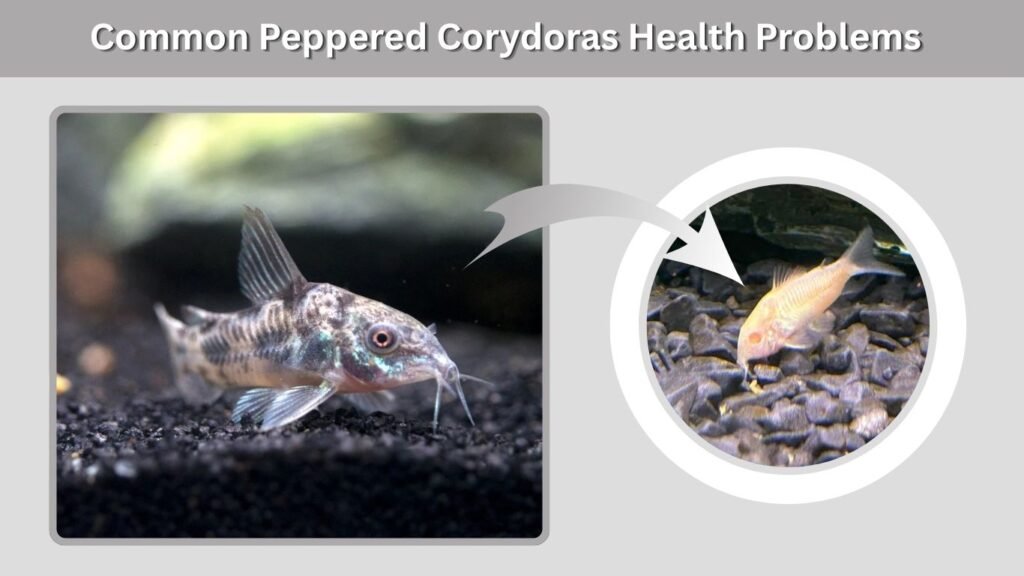
Peppered Corydoras are relatively hardy, but they can develop health problems when aquarium conditions deteriorate.
Common warning signs include damaged barbels, loss of appetite, unusual inactivity, rapid breathing, and visible skin abnormalities.
Poor water quality, excessive waste, and unsuitable tank conditions can contribute to illness.
Test the aquarium water regularly, provide nutritious food, and observe the fish daily. A fish that remains motionless, breathes abnormally, or refuses food repeatedly should be assessed promptly rather than assumed to be resting.
FAQs
1. Are Peppered Corydoras Good for Beginners?
Yes. Peppered Corydoras are suitable for beginners because they are peaceful, adaptable, and relatively easy to feed. However, they still require a properly cycled aquarium, stable water conditions, and a group of their own species.
2. Can Peppered Corydoras Live in Cold Water?
Peppered Corydoras tolerate cooler temperatures than many tropical catfish. They can live in some unheated aquariums if the temperature remains stable and suitable, but they are not appropriate for freezing or extremely cold conditions.
3. How Many Peppered Corydoras Can Live in a 75-Gallon Tank?
A 75-gallon aquarium can accommodate a larger group, often 12–20 Peppered Corydoras, depending on its footprint, filtration, maintenance, and other inhabitants. Stocking should be based on the entire aquarium community.
4. How Do You Know if a Peppered Corydoras Is Pregnant?
Peppered Corydoras do not become pregnant because they lay eggs. A mature female carrying developed eggs may appear noticeably rounder, particularly when viewed from above.
5. Why Is My Peppered Corydoras Not Moving?
Peppered Corydoras sometimes rest quietly on the substrate. However, prolonged inactivity accompanied by poor appetite, unusual breathing, or difficulty swimming may indicate stress or illness. Check water parameters and observe the fish closely.