
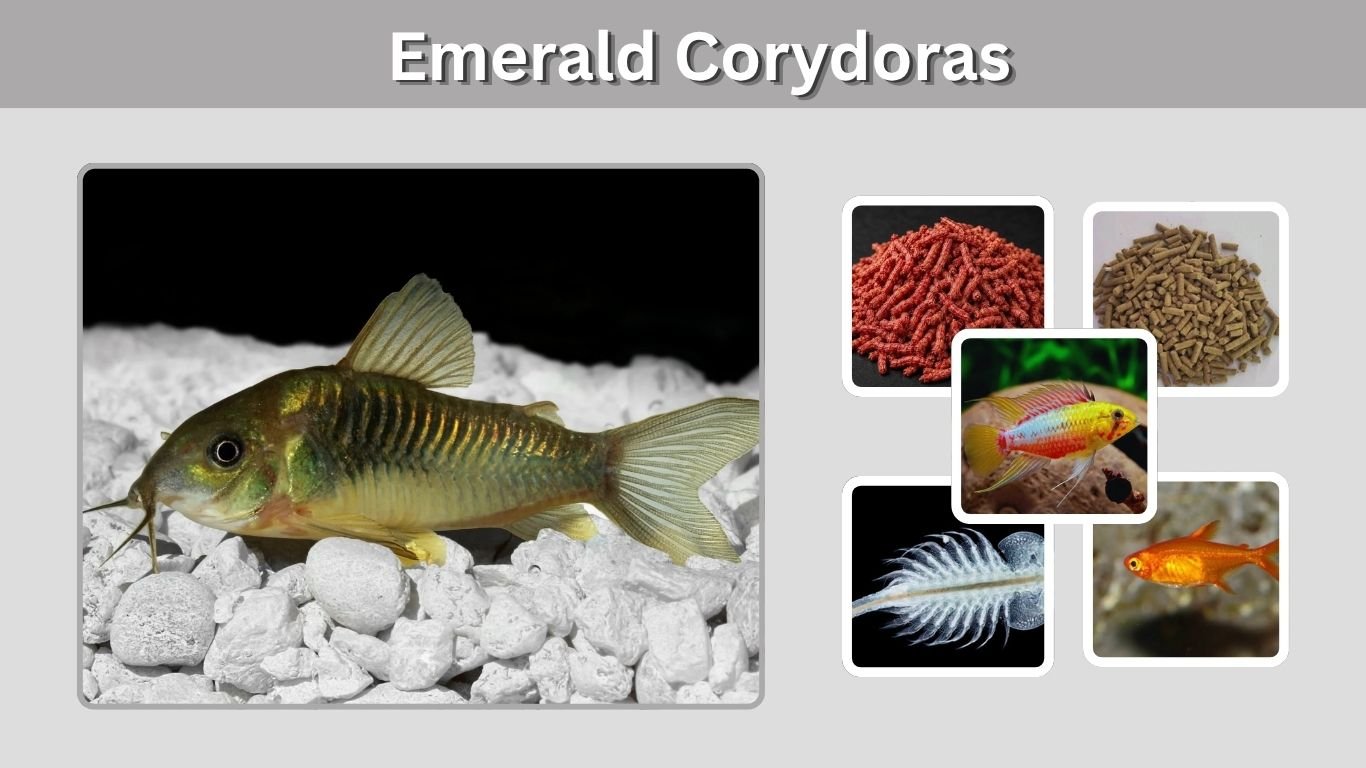
Emerald Corydoras are peaceful freshwater catfish admired for their shimmering green bodies, gentle temperament, and entertaining bottom-dwelling behavior. Also called Emerald Green Corydoras or Emerald Brochis, these South American fish are larger than many common cory catfish and need plenty of floor space to thrive. They do best in social groups, with clean water, smooth sand, and a varied diet. This guide explains Emerald Corydoras size, lifespan, tank requirements, feeding habits, suitable tank mates, breeding, and common health concerns so you can care for them confidently.
Emerald Corydoras Quick Facts
Emerald Corydoras are members of the Callichthyidae family, known for their armored bodies and peaceful behavior. Their scientific name is Brochis splendens, although they are also widely recognized as Corydoras splendens. These fish are popular among aquarium enthusiasts because of their beautiful coloration and social nature.
| Characteristics | Details |
| Common Name | Emerald Corydoras |
| Scientific Name | Brochis splendens |
| Other Names | Emerald Green Cory, Emerald Brochis |
| Family | Callichthyidae |
| Origin | South America |
| Adult Size | Approximately 3–3.5 inches |
| Lifespan | 8–10 years, sometimes longer |
| Recommended Tank | 48-inch-long aquarium |
| Water Temperature | 68–82°F (20–28°C) |
| pH Level | 5.0–8.0 |
| Diet | Omnivore |
| Temperament | Peaceful |
| Group Size | At least 6–8 |
| Care Level | Easy to moderate |
Emerald Corydoras Appearance and Identification
Emerald Corydoras have a distinctive metallic appearance that makes them stand out in freshwater aquariums. Their shimmering bodies, rounded shape, and active behavior distinguish them from many other bottom-dwelling catfish.
Physical Appearance
Emerald Corydoras have deep, rounded bodies covered with overlapping bony plates instead of ordinary scales. Their coloration ranges from metallic emerald green to blue-green, depending on lighting and individual variation.
Their undersides are generally pale cream or pinkish, creating a noticeable contrast with their darker upper bodies.
They also possess sensitive barbels around their mouths that help them search for food along the aquarium bottom.
Emerald Green Corydoras vs. Bronze Corydoras
Emerald Corydoras are often confused with Bronze Corydoras because both species may display greenish coloration.
However, Emerald Corydoras generally have deeper bodies, grow larger, and possess longer dorsal fins with more fin rays.
Emerald Corydoras typically have 10–12 dorsal-fin rays, while Bronze Corydoras have fewer. This difference helps distinguish the two species.
Emerald Corydoras Size and Lifespan
Emerald Corydoras grow larger than many commonly kept Corydoras species. Understanding their adult size and expected lifespan is important when selecting an appropriate aquarium and planning long-term care.
How Big Do Emerald Corydoras Get?
Adult Emerald Corydoras commonly reach approximately 3–3.5 inches (7.5–9 cm) in length.
Females generally grow larger and develop fuller bodies than males, particularly when carrying eggs.
Juvenile Emerald Corydoras may initially appear duller or more mottled, but their metallic coloration usually becomes more noticeable as they mature.
How Long Do Emerald Corydoras Live?
Emerald Corydoras can live approximately 8–10 years, sometimes longer under excellent aquarium conditions.
Their lifespan depends on water quality, nutrition, genetics, and overall aquarium maintenance.
Providing stable temperatures, a varied diet, and enough swimming space helps support long-term health.
Emerald Corydoras Tank Size and Setup
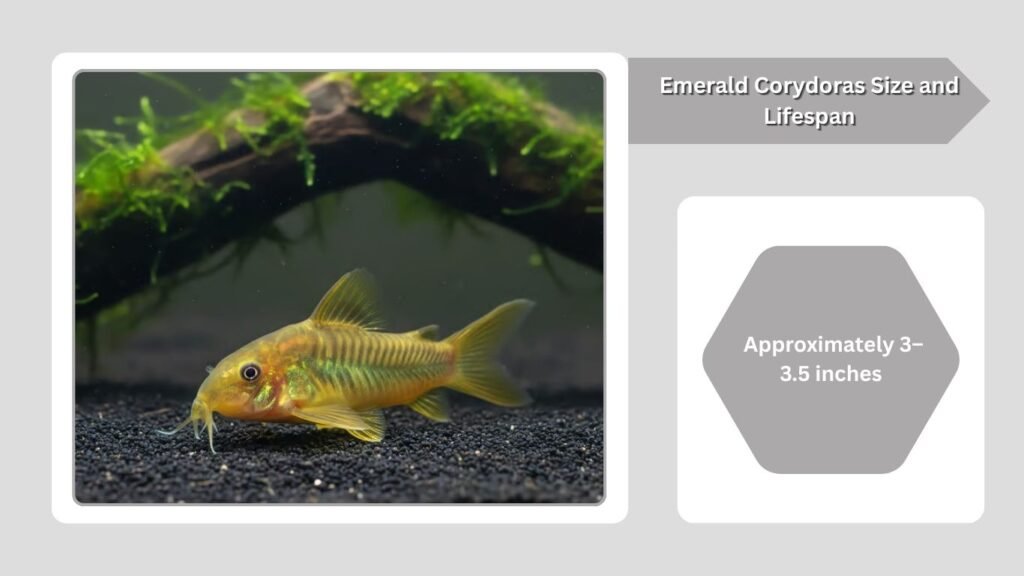
A suitable aquarium environment is essential for Emerald Corydoras because they are active bottom dwellers that require enough room to explore. Their larger adult size makes floor space especially important.
Ideal Tank Size
A spacious aquarium with a footprint of approximately 48 × 18 inches is recommended for a full group of adult Emerald Corydoras. This corresponds to many aquariums in the 60–65-gallon range, depending on height.
Smaller tanks may restrict natural movement, especially when housing six or more fish.
Long, wide aquariums are preferable to tall, narrow tanks because Emerald Corydoras spend much of their time near the bottom.
Water Temperature and Parameters
Emerald Corydoras originate from tropical freshwater habitats and prefer stable, clean water conditions.
Recommended aquarium parameters include:
- Temperature: 68–82°F (20–28°C).
- pH Level: Approximately 5.0–8.0.
- Water Hardness: Around 2–15 dGH.
- Ammonia: Maintain 0 ppm.
- Nitrite: Maintain 0 ppm.
- Filtration: Provide effective biological filtration and gentle-to-moderate circulation.
Avoid sudden temperature changes and unstable water chemistry. Consistent conditions are particularly important when introducing newly purchased fish.
Substrate, Plants, and Decorations
Fine aquarium sand is an excellent substrate because Emerald Corydoras naturally dig and sift through bottom materials while searching for food.
Smooth, rounded gravel can also work if it remains clean and does not damage their sensitive barbels.
Live plants such as Java fern, Amazon swords, and Anubias provide shaded areas and natural shelter.
Driftwood and smooth rocks can create additional hiding spaces while leaving open areas for feeding.
Aquarium Maintenance
Regular aquarium cleaning prevents harmful waste accumulation and supports healthy fish.
Perform partial water changes of approximately 20–30% weekly, adjusting according to stocking levels and water test results.
Remove leftover food, maintain the filtration system, and gently clean the substrate without disturbing beneficial bacteria unnecessarily.
What Do Emerald Corydoras Eat?
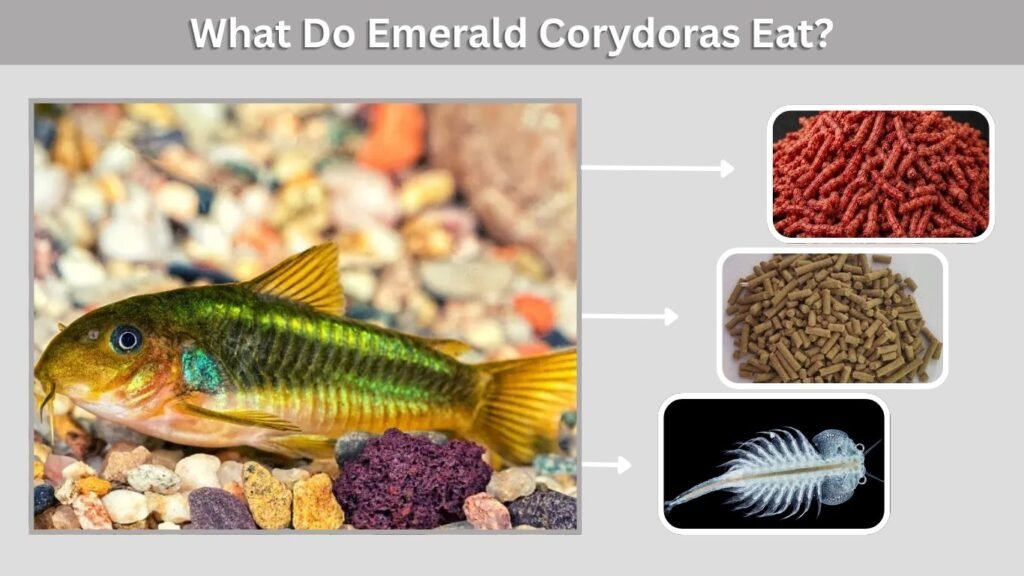
Emerald Corydoras are omnivorous fish that feed on small aquatic organisms and other edible materials. In home aquariums, they accept a variety of sinking foods and protein-rich supplements.
Best Food for Emerald Corydoras
A balanced diet supports healthy growth, strong immune function, and attractive coloration.
Suitable foods include:
- Sinking catfish pellets: Provide everyday nutritional requirements.
- Bottom-feeder tablets: Offer convenient meals at the substrate.
- Bloodworms: Supply additional protein.
- Brine shrimp: Encourage natural feeding behavior.
- Daphnia: Provide variety and essential nutrients.
- Frozen foods: Supplement a balanced feeding routine.
Choose food that reaches the bottom without being consumed entirely by faster-swimming tank mates.
How Often Should You Feed Emerald Corydoras?
Feed Emerald Corydoras once or twice daily using moderate portions.
They should consume most of the food within a short feeding period. Overfeeding can increase waste and reduce water quality.
Although these catfish search for leftovers, they should never depend entirely on scraps from other aquarium fish.
Do Emerald Corydoras Eat Algae?
Emerald Corydoras are not specialized algae eaters. They may consume small amounts of plant material while foraging, but algae does not provide a complete diet.
They are better suited for peaceful community aquariums than dedicated algae-control duties.
Emerald Corydoras Behavior and Tank Mates
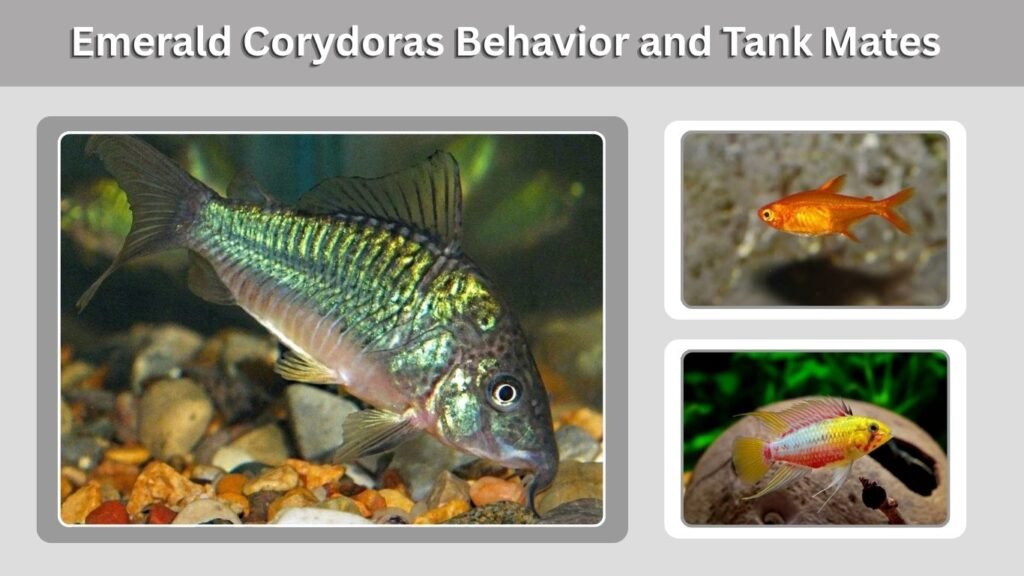
Emerald Corydoras are peaceful and social fish that enjoy spending time with members of their own species. Their active bottom-dwelling behavior makes them entertaining additions to suitable freshwater community tanks.
How Many Emerald Corydoras Should Be Kept Together?
Emerald Corydoras should be kept in groups of at least six to eight individuals.
Living in groups encourages natural foraging, reduces stress, and helps the fish feel secure.
When maintained alone or in very small groups, they may become shy and spend more time hiding.
Occasionally swimming to the surface for a quick gulp of air is normal behavior because these catfish can absorb atmospheric oxygen.
Best Tank Mates for Emerald Corydoras
Choose peaceful freshwater fish that tolerate similar water temperatures and environmental conditions.
Suitable companions include:
- Peaceful tetras: Small schooling species can coexist in community tanks.
- Rasboras: Many peaceful varieties are suitable companions.
- Pencilfish: Generally calm fish that occupy upper swimming areas.
- Peaceful dwarf cichlids: Some species can work in sufficiently spacious aquariums.
- Other peaceful catfish: Compatible species may coexist when adequate bottom space is available.
Avoid aggressive cichlids, large predatory fish, and species that frequently harass bottom dwellers.
Emerald Corydoras Breeding Guide
Breeding Emerald Corydoras is possible in home aquariums, although successful reproduction can be more challenging than breeding some smaller Corydoras species. Healthy adults, nutritious food, and appropriate spawning conditions improve the chances of success.
Male vs. Female Emerald Corydoras
Female Emerald Corydoras are typically larger and have fuller, rounder bodies than males.
Males usually appear slimmer, especially when viewed from above.
Mature females carrying developed eggs may display noticeably swollen abdominal areas before spawning.
How to Breed Emerald Corydoras
Breeding often involves conditioning adult fish and encouraging spawning through environmental changes.
Follow these steps:
- Select healthy adults: Choose mature males and females with normal feeding behavior.
- Provide protein-rich foods: Offer bloodworms, brine shrimp, and nutritious sinking pellets.
- Maintain clean water: Keep aquarium conditions stable before attempting breeding.
- Perform a cooler water change: A modest reduction in temperature may stimulate spawning activity.
- Observe courtship: Males may pursue females before eggs are deposited.
- Protect the eggs: Separate eggs from adults when necessary to improve survival.
Spawning may occur on aquarium glass, plants, or other smooth surfaces.
Emerald Corydoras Eggs and Fry Care
Emerald Corydoras lay small adhesive eggs, sometimes near the upper portions of the aquarium.
Fertilized eggs generally hatch within several days, depending on temperature and environmental conditions.
Newly hatched fry initially rely on their yolk sacs before beginning independent feeding.
Once free-swimming, they can receive microworms, appropriately sized powdered fry foods, and newly hatched brine shrimp.
Clean water and gentle filtration are especially important for developing fry.
Common Emerald Corydoras Health Problems
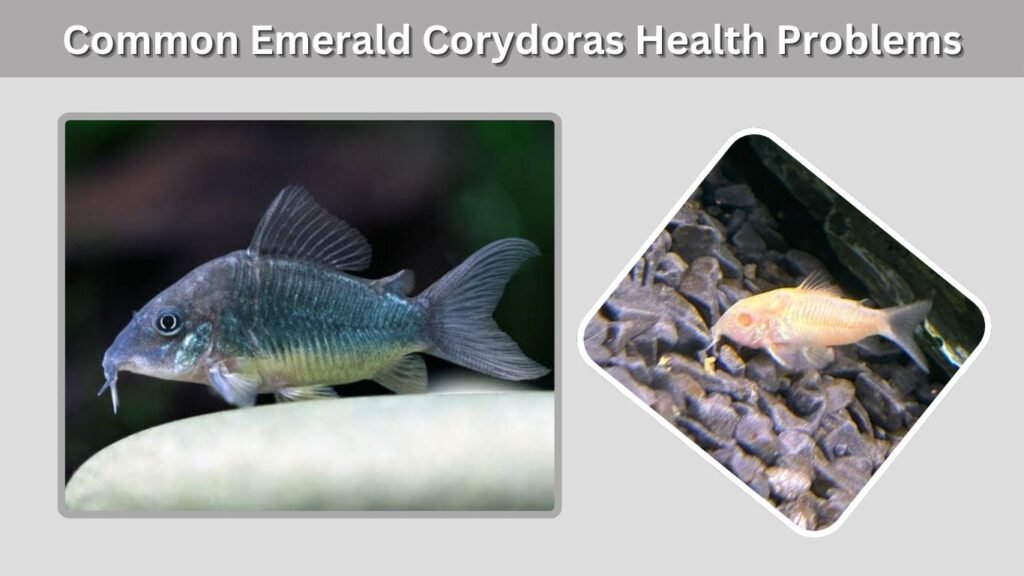
Emerald Corydoras are generally hardy, but unsuitable aquarium conditions can cause stress and illness. Maintaining clean water and observing their behavior regularly helps prevent many common problems.
Signs of an Unhealthy Emerald Corydoras
Common warning signs include prolonged inactivity, rapid breathing, damaged barbels, unusual swimming movements, loss of appetite, and noticeable changes in body coloration.
An Emerald Corydoras may occasionally rest quietly on the substrate. However, persistent inactivity combined with other symptoms can indicate stress or disease.
How to Keep Emerald Corydoras Healthy
Maintain a properly cycled aquarium with stable water parameters and an appropriate substrate.
Provide balanced nutrition, avoid overcrowding, and introduce new aquarium inhabitants carefully.
If illness is suspected, test water quality promptly and identify the likely cause before using medication.
FAQs
1. Are Emerald Corydoras Good for Beginners?
Yes. Emerald Corydoras are relatively easy to care for when provided with a spacious aquarium, clean water, suitable food, and a social group of at least six individuals.
2. How Many Emerald Corydoras Should Be Kept Together?
Emerald Corydoras should be maintained in groups of at least six to eight fish. Larger groups can encourage confident swimming, natural foraging, and better social behavior.
3. Can Emerald Corydoras Live With Other Corydoras?
Yes. Emerald Corydoras can coexist with other peaceful Corydoras species when water conditions and aquarium space are suitable. However, they should still have a proper group of their own species.
4. Why Is My Emerald Corydoras Turning Gray?
Emerald Corydoras may appear gray because of lighting, juvenile coloration, stress, or poor water conditions. A persistent color change accompanied by unusual behavior should prompt aquarium water testing.
5. Do Emerald Corydoras Need a Heater?
Emerald Corydoras need stable temperatures within their suitable range. A heater is recommended when room temperatures fluctuate or fall below the desired level. Consistent temperatures are more important than unnecessary heating.
