
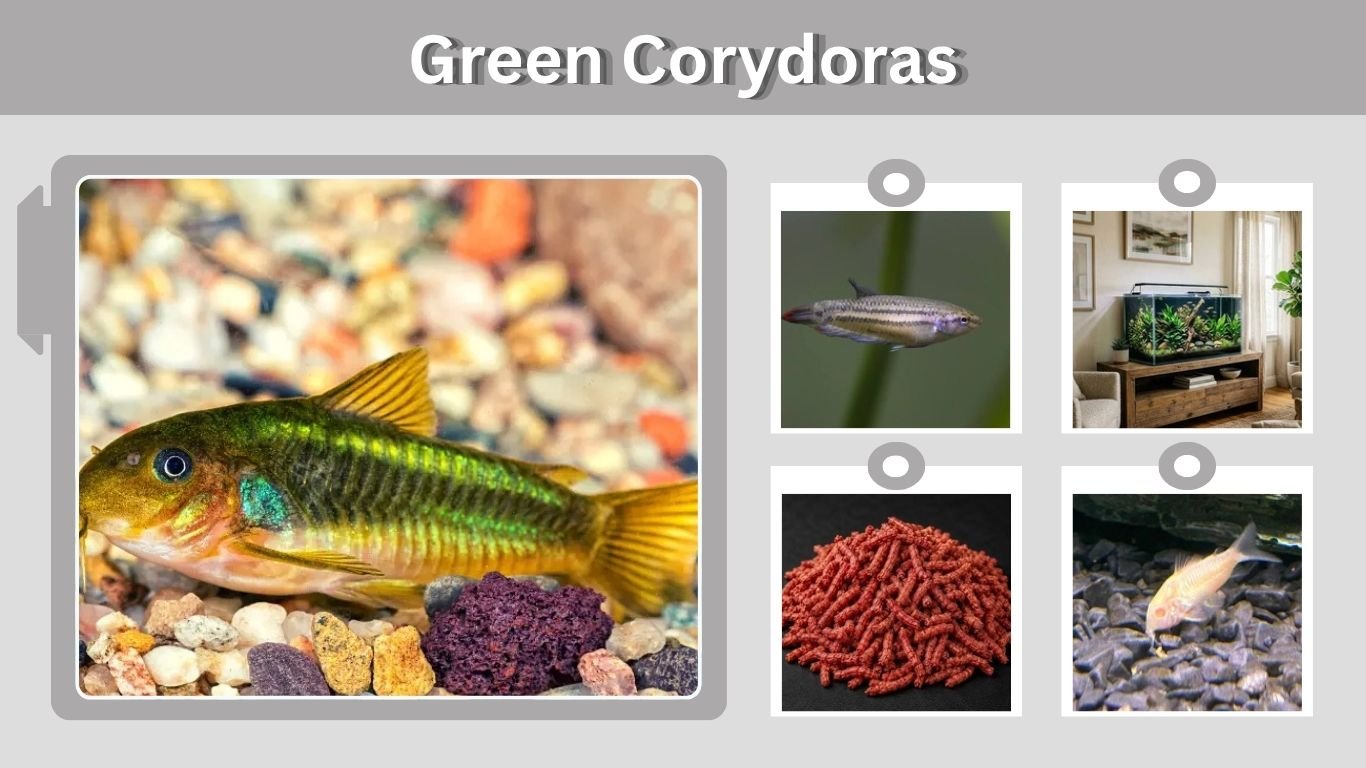
Green Corydoras are peaceful freshwater catfish recognized for their metallic green sheen, active bottom-dwelling behavior, and easygoing nature. Often sold as Green Cory Catfish or Green Aeneus Corydoras, they are closely associated with the familiar Bronze Corydoras. These social South American fish thrive in groups and enjoy searching smooth sand for food. With suitable water conditions, balanced feeding, and enough swimming space, they make rewarding community aquarium residents. This guide covers their appearance, adult size, lifespan, tank setup, diet, breeding, and essential everyday care requirements.
Green Corydoras Quick Facts
Green Corydoras belong to the Callichthyidae family, a group of armored freshwater catfish. The common green form of the Bronze Corydoras is scientifically recognized as Osteogaster aenea, formerly Corydoras aeneus. These attractive fish are popular among beginners because of their peaceful temperament and manageable care requirements.
| Characteristics | Details |
| Common Name | Green Corydoras |
| Scientific Name | Osteogaster aenea |
| Former Scientific Name | Corydoras aeneus |
| Other Names | Green Cory, Green Aeneus, Bronze Cory |
| Family | Callichthyidae |
| Origin | South America |
| Adult Size | 2.5–3 inches |
| Lifespan | 5–10 years |
| Minimum Tank Size | 20 gallons recommended |
| Water Temperature | 72–79°F (22–26°C) |
| pH Level | 6.0–8.0 |
| Diet | Omnivore |
| Temperament | Peaceful |
| Group Size | At least 6 |
| Care Level | Easy |
Green Corydoras Appearance and Identification
Green Corydoras are attractive bottom-dwelling fish with metallic coloration and compact bodies. Their appearance can vary depending on genetics, lighting, and age, making identification important when purchasing them for an aquarium.
Physical Appearance
Green Corydoras have rounded, slightly elongated bodies protected by overlapping bony plates instead of traditional fish scales.
Their upper bodies usually display metallic olive-green, bronze, or dark green coloration, while their bellies are lighter.
These fish possess small barbels around their mouths that help them detect food along the aquarium bottom. Their fins are generally translucent with subtle coloration.
Green Corydoras vs. Emerald Corydoras
Green Corydoras and Emerald Corydoras are often confused because both display metallic green coloration.
However, Green Corydoras generally have slimmer bodies and shorter dorsal fins. Emerald Corydoras (Brochis splendens) are typically larger, deeper-bodied fish with more dorsal-fin rays.
Although their care requirements overlap, they are different species.
Green Laser Corydoras
Green Laser Corydoras, commonly identified as CW009, are another attractive green catfish found in the aquarium trade.
Unlike ordinary Green Corydoras, Green Laser Corydoras feature a bright, reflective green stripe along their upper bodies.
They belong to the same broader Corydoras group but represent a distinct, scientifically undescribed form rather than simply being a standard green Bronze Cory.
Green Corydoras Size and Lifespan
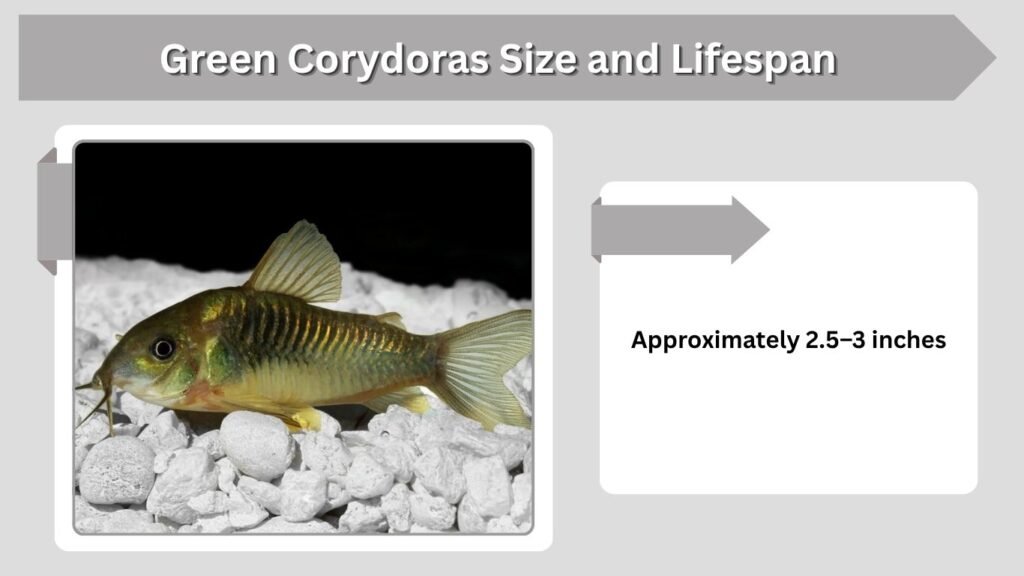
Green Corydoras are relatively small freshwater catfish, making them suitable for many community aquariums. Their adult size and lifespan depend on genetics, diet, and environmental conditions.
How Big Do Green Corydoras Get?
Adult Green Corydoras typically reach approximately 2.5–3 inches (6–7.5 cm) in length.
Females generally grow slightly larger and have rounder bodies than males.
Young Green Corydoras gradually develop their adult body shape and metallic coloration as they mature. Proper nutrition and stable water quality support healthy development.
How Long Do Green Corydoras Live?
Green Corydoras commonly live around 5–10 years with proper aquarium care.
Some individuals may live longer when provided with excellent water quality, nutritious food, and a comfortable environment.
Stress, overcrowding, poor water conditions, and unsuitable temperatures can reduce their lifespan.
Green Corydoras Tank Size and Setup
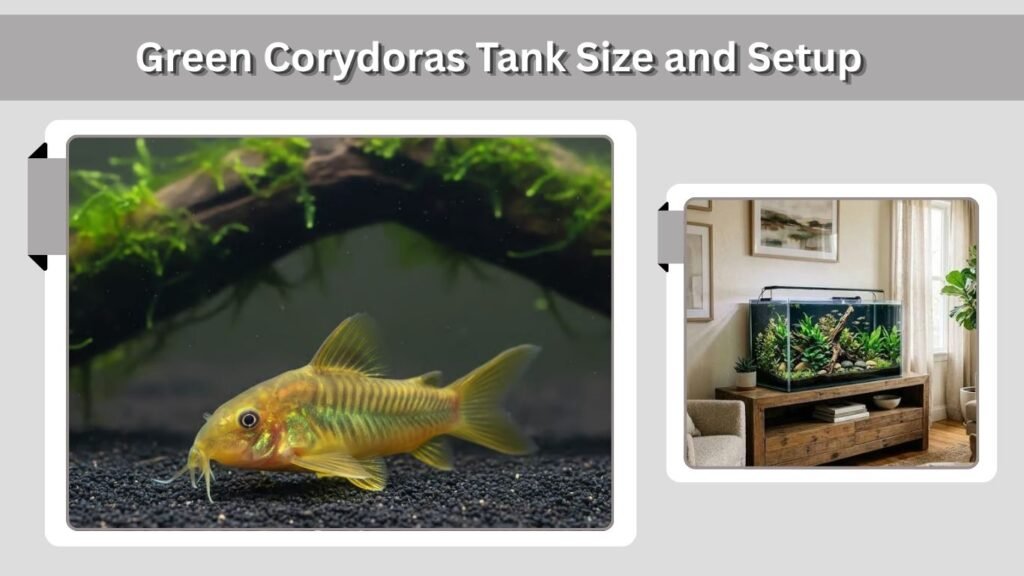
Creating a suitable aquarium environment is essential for keeping Green Corydoras healthy. These bottom-dwelling fish need adequate floor space, smooth substrate, and sheltered areas where they can rest comfortably.
Ideal Tank Size
A 20-gallon long aquarium is a practical starting point for a group of six Green Corydoras.
Larger aquariums are preferable when keeping additional fish because they provide more room for natural foraging and swimming.
Longer tanks are generally better than tall, narrow aquariums because Green Corydoras spend most of their time near the substrate.
Water Temperature and Parameters
Green Corydoras prefer stable freshwater conditions with effective filtration and adequate oxygen.
Recommended water parameters include:
- Temperature: Maintain approximately 72–79°F (22–26°C).
- pH Level: Keep water around 6.0–8.0.
- Water Hardness: Soft to moderately hard water is suitable.
- Ammonia: Maintain 0 ppm.
- Nitrite: Maintain 0 ppm.
- Filtration: Use an established biological filter with suitable water circulation.
Avoid sudden changes in temperature or water chemistry because fluctuations may stress the fish.
Substrate and Aquarium Decorations
Fine aquarium sand is an excellent substrate because Green Corydoras naturally search through bottom materials for food.
Smooth, rounded gravel can also work, but sharp materials should be avoided because they may damage their sensitive barbels.
Live plants such as Java fern, Anubias, and Amazon swords provide shaded hiding places.
Driftwood and smooth rocks can create additional shelter while leaving open feeding areas.
Aquarium Cleaning and Maintenance
Regular maintenance helps maintain healthy water conditions and prevents harmful waste accumulation.
Perform partial water changes of approximately 20–30% weekly, adjusting according to water tests and aquarium stocking levels.
Remove leftover food, clean the substrate gently, and maintain the filtration system without unnecessarily disrupting beneficial bacteria.
What Do Green Corydoras Eat?
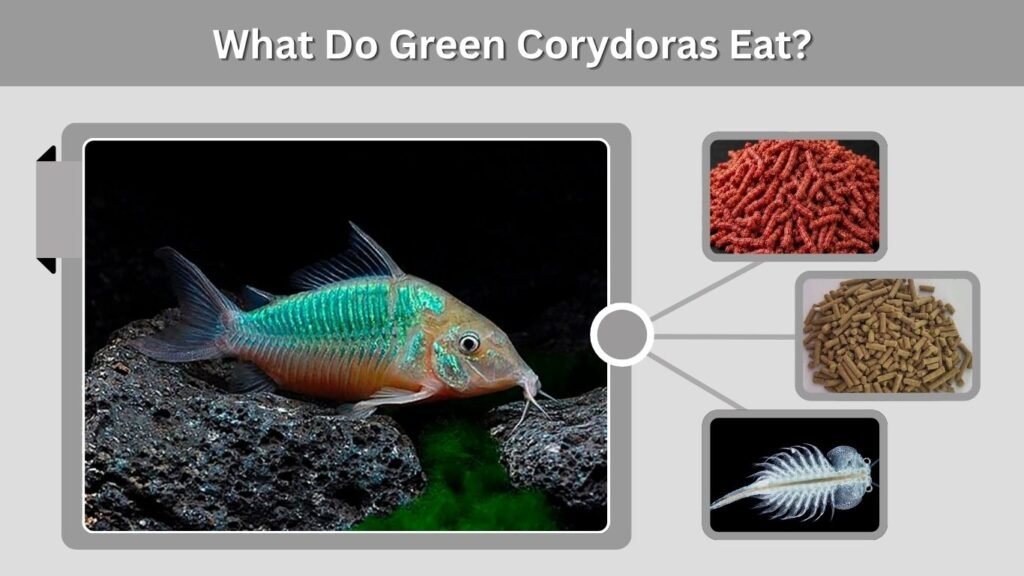
Green Corydoras are omnivorous bottom feeders that eat a combination of small aquatic organisms and prepared aquarium foods. A balanced diet supports their growth, coloration, and overall health.
Best Food for Green Corydoras
Providing different types of nutritious food encourages natural feeding behavior and helps prevent nutritional deficiencies.
Suitable foods include:
- Sinking pellets: Provide balanced daily nutrition.
- Bottom-feeder tablets: Deliver nutrients directly to the aquarium bottom.
- Bloodworms: Supply additional protein as an occasional treat.
- Brine shrimp: Encourage natural feeding activity.
- Daphnia: Provide dietary variety.
- Frozen foods: Supplement their regular feeding routine.
Choose sinking foods that other fish cannot consume before they reach the substrate.
How Often Should You Feed Green Corydoras?
Green Corydoras should generally be fed once or twice daily using moderate portions.
Offer enough food for them to eat within a short period and remove excessive leftovers.
Although they search for uneaten food, they should receive their own nutritious meals rather than relying entirely on scraps.
Do Green Corydoras Eat Algae?
Green Corydoras are not specialized algae-eating fish.
They may occasionally consume small amounts of plant material while searching for food, but algae should not be considered their main food source.
Regular aquarium maintenance is still necessary to control algae growth.
Green Corydoras Behavior and Tank Mates
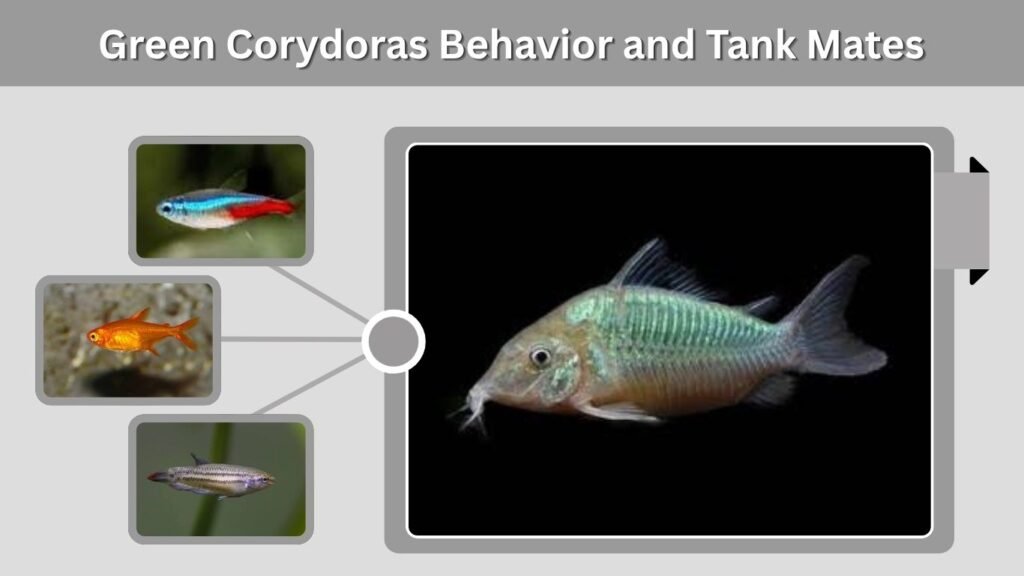
Green Corydoras are peaceful, social fish that spend much of their time exploring the aquarium bottom. Their gentle temperament makes them excellent companions for compatible freshwater community species.
How Many Green Corydoras Should Be Kept Together?
Keep at least six Green Corydoras together to encourage natural social behavior.
Larger groups often become more confident, actively searching the substrate and resting near one another.
Keeping them alone or in pairs may increase stress and cause unusually shy behavior.
Best Tank Mates for Green Corydoras
Green Corydoras coexist well with peaceful species that share similar water requirements.
Suitable tank mates include:
- Neon Tetras: Peaceful schooling fish that occupy the middle swimming levels.
- Harlequin Rasboras: Gentle fish suitable for planted community aquariums.
- Ember Tetras: Small, calm fish that rarely disturb bottom dwellers.
- Peaceful Bettas: May coexist in sufficiently spacious tanks when individual temperament allows.
- Other peaceful Corydoras: Can share an aquarium when floor space and social grouping are adequate.
Avoid aggressive cichlids, large predatory fish, and species that constantly harass bottom dwellers.
Green Corydoras Breeding Guide
Breeding Green Corydoras is possible in home aquariums when mature fish receive nutritious food and appropriate water conditions. These catfish reproduce by depositing adhesive eggs on aquarium surfaces.
Male vs. Female Green Corydoras
Female Green Corydoras usually have wider, rounder bodies than males, especially when carrying developed eggs.
Males are generally smaller and slimmer.
Viewing several mature fish from above makes these differences easier to recognize.
How to Breed Green Corydoras
Healthy breeding adults, nutritious feeding, and suitable environmental conditions improve spawning success.
Follow these basic steps:
- Select mature fish: Choose healthy males and females showing normal activity.
- Provide nutritious food: Offer high-quality pellets with protein-rich live or frozen foods.
- Maintain clean water: Keep the breeding aquarium properly filtered and stable.
- Perform a cooler water change: A modest temperature reduction may encourage spawning.
- Observe courtship: Males may pursue females before adopting a characteristic T-shaped spawning position.
- Protect the eggs: Separate eggs or adults when necessary to reduce egg predation.
Avoid extreme temperature changes when attempting to stimulate breeding.
Green Corydoras Eggs and Fry Care
Female Green Corydoras deposit small adhesive eggs on aquarium glass, plants, or other surfaces.
Fertilized eggs usually hatch within approximately three to five days, depending on water temperature.
Newly hatched fry initially absorb their yolk sacs before beginning independent feeding.
Once free-swimming, they can eat microworms, powdered fry foods, and newly hatched brine shrimp.
Maintain clean water and gentle filtration to protect developing fry.
Common Green Corydoras Health Problems
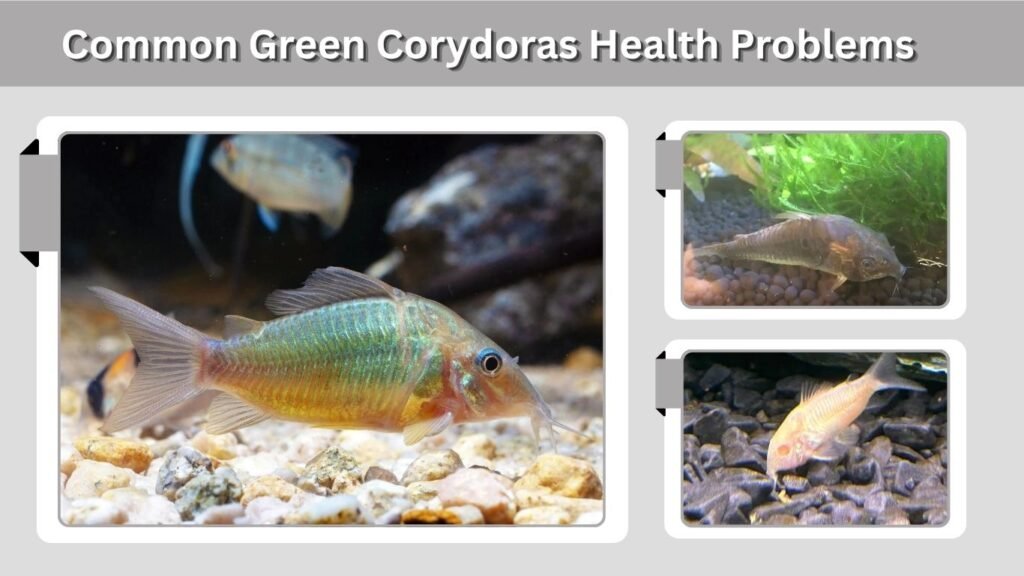
Green Corydoras are generally hardy, but poor aquarium conditions can contribute to illness. Water quality, feeding habits, and substrate cleanliness are particularly important for their long-term health.
Signs of an Unhealthy Green Corydoras
Common warning signs include prolonged inactivity, rapid breathing, damaged barbels, unusual swimming, and loss of appetite.
Green Corydoras occasionally rest motionless on the substrate, which is normal. However, persistent inactivity accompanied by other symptoms may indicate stress or disease.
How to Keep Green Corydoras Healthy
Maintain stable water conditions, provide suitable food, and avoid overcrowding.
Observe their behavior regularly and test aquarium water when unusual symptoms appear.
Avoid unnecessary medication, particularly because some aquarium treatments can be harmful when used incorrectly.
FAQs
1. Are Green Corydoras Good for Beginners?
Yes. Green Corydoras are beginner-friendly freshwater fish because they are peaceful, adaptable, and relatively easy to feed. They still require a properly cycled aquarium and stable water conditions.
2. Can Green Corydoras Live With Bettas?
Yes, Green Corydoras can sometimes live with peaceful Bettas in sufficiently spacious aquariums. However, compatibility depends on the Betta’s temperament, and a 10-gallon tank is generally too small for a full Green Corydoras group and a Betta.
3. Are Green Corydoras and Bronze Corydoras the Same?
Yes. The common Green Corydoras is generally a green-colored form of the Bronze Corydoras, traditionally identified as Corydoras aeneus. However, Emerald Corydoras and Green Laser Corydoras are different fish.
4. Why Is My Green Corydoras Turning Red?
A Green Corydoras may appear reddish because of lighting, visible blood vessels, irritation, injury, or illness. Persistent redness accompanied by unusual behavior should prompt immediate water testing and further assessment.
5. Do Green Corydoras Need a Heater?
Green Corydoras need stable temperatures within their suitable range. A heater is recommended when room temperatures fluctuate or fall below the desired level. Consistent temperature is more important than unnecessary heating.
