
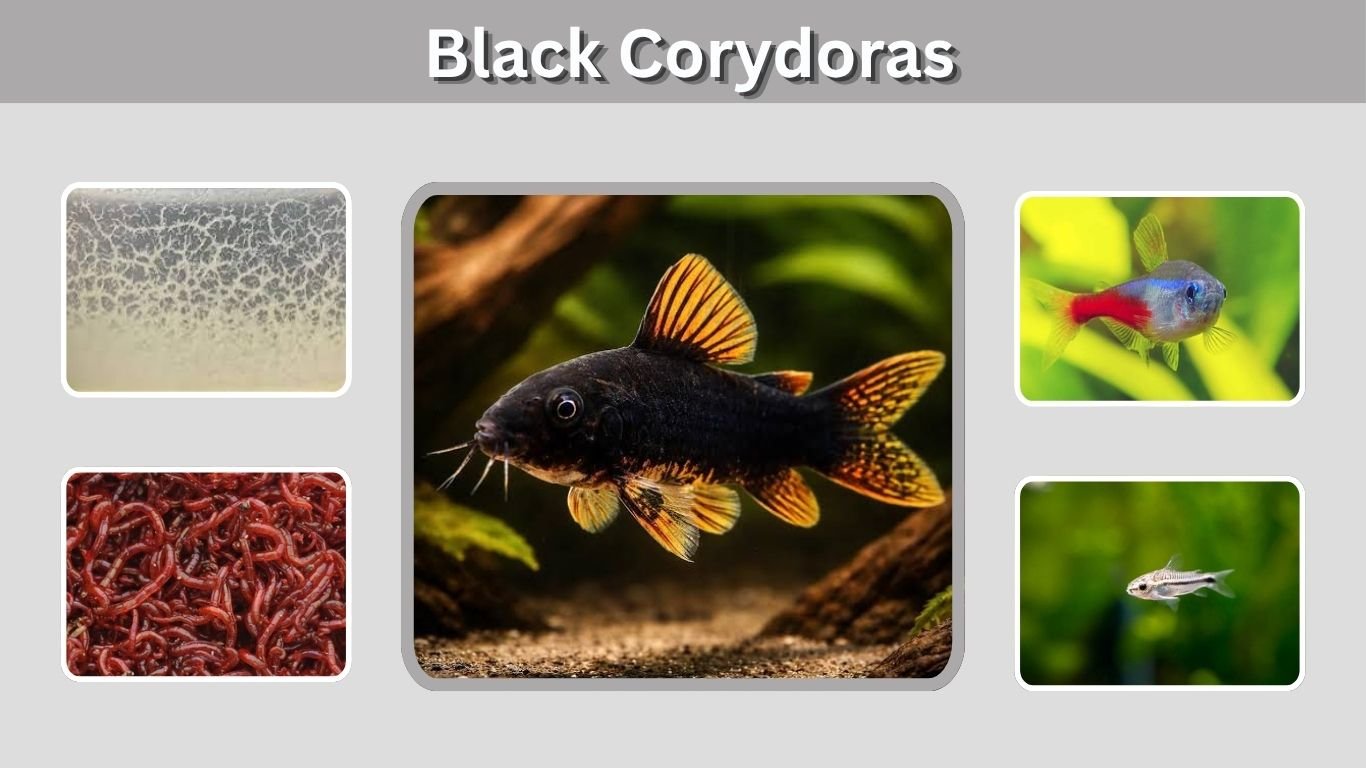
Black Corydoras are beautiful freshwater catfish known for their striking dark coloration, peaceful behavior, and active bottom-dwelling habits. Among the most popular varieties is the Black Venezuelan Corydoras, a selectively bred fish prized for its deep charcoal-black body and contrasting reddish-brown fins. These social catfish make excellent additions to planted community aquariums when provided with suitable water conditions, a balanced diet, and compatible tank mates. Understanding their adult size, lifespan, tank requirements, and breeding behavior is essential for keeping them healthy. This guide covers everything you need to know about Black Corydoras care.
What Are Black Corydoras?
Black Corydoras are small, armored freshwater catfish belonging to the family Callichthyidae. The popular Black Venezuelan Corydoras is commonly sold as Corydoras schultzei “Black,” although newer classifications place the schultzei group in the genus Osteogaster.
Despite its name, the familiar aquarium strain was developed through selective breeding in Germany during the 1990s. It is not the same as the naturally occurring Venezuelan Corydoras, Osteogaster venezuelanus.
Black Corydoras Quick Facts
| Characteristics | Details |
| Common name | Black Corydoras |
| Popular variety | Black Venezuelan Corydoras |
| Scientific identification | Osteogaster schultzei “Black” |
| Adult size | Approximately 2–2.5 inches |
| Lifespan | Around 5–8 years |
| Minimum tank size | 20 gallons |
| Water temperature | 72–79°F (22–26°C) |
| pH level | 6.0–7.5 |
| Diet | Omnivore |
| Temperament | Peaceful |
| Recommended group | 6–8 or more |
| Care difficulty | Easy to moderate |
Black Corydoras Size and Lifespan
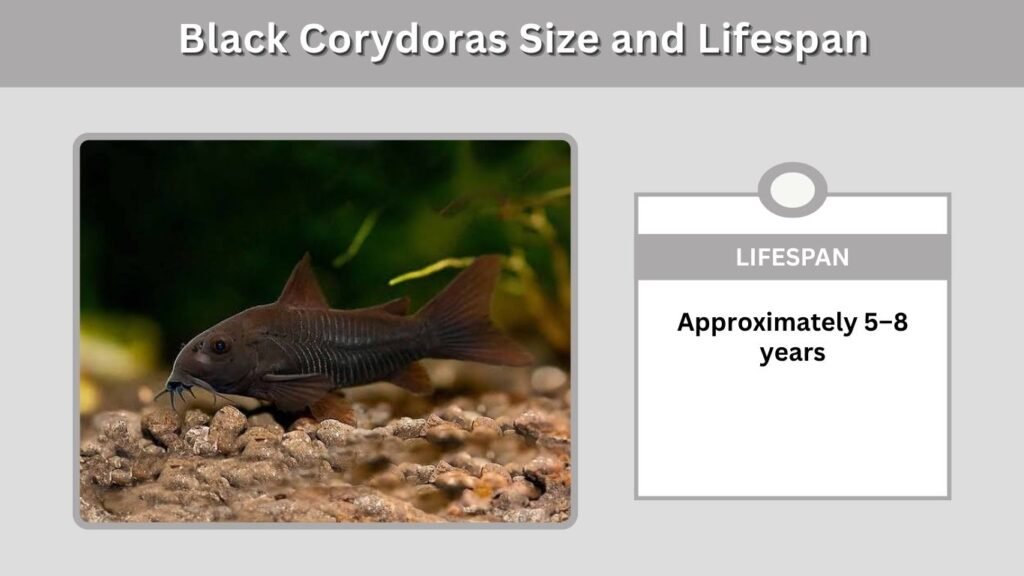
Black Corydoras are relatively small freshwater fish that can live for several years under appropriate aquarium conditions. Their growth and longevity depend on genetics, nutrition, water quality, and overall care. Healthy adults usually develop compact, rounded bodies with attractive dark pigmentation.
How Big Do Black Corydoras Get?
Adult Black Venezuelan Corydoras generally grow to approximately 2–2.5 inches (5–6.5 cm) long.
Females are usually slightly larger and broader than males, particularly when carrying eggs.
Young black corydoras may initially have lighter brown or gray coloration, which often becomes darker as they mature.
Although relatively small, these fish require adequate floor space for active foraging and social swimming.
How Long Do Black Corydoras Live?
Black Corydoras commonly live approximately 5–8 years in well-maintained aquariums.
Their lifespan depends on stable water conditions, suitable food, and disease prevention.
Maintaining a mature aquarium, providing companionship, and avoiding sudden temperature changes can help these fish remain healthy throughout their lives.
Black Venezuelan Corydoras Care Guide
Black Venezuelan Corydoras are considered relatively hardy aquarium fish, making them suitable for aquarists with basic freshwater experience. However, their long-term health depends on clean water, adequate swimming space, proper substrate, and a balanced diet. They perform best in mature aquariums with stable environmental conditions.
Ideal Black Corydoras Tank Size
A 20-gallon long aquarium is a recommended starting size for a group of six to eight Black Corydoras.
A longer aquarium is preferable because these fish spend considerable time exploring the bottom.
For larger groups or community aquariums with additional species, consider a 30-gallon or larger setup.
Black Corydoras should not be kept alone. Groups of at least six are essential for social behavior, while eight or more are preferable when space permits.
Black Corydoras Temperature and Water Parameters
Maintaining stable water conditions is important for Black Corydoras health.
Recommended parameters include:
- Temperature: 72–79°F (22–26°C)
- pH: 6.0–7.5
- Water hardness: Approximately 2–15 dGH
- Ammonia: 0 ppm
- Nitrite: 0 ppm
Use a properly cycled aquarium with reliable filtration and adequate oxygenation.
Regular partial water changes of around 20–30% weekly help maintain water quality, although the exact schedule should depend on water testing and aquarium stocking.
Best Substrate for Black Corydoras
Fine, smooth aquarium sand is generally the best substrate for Black Corydoras.
Their sensitive barbels allow them to locate food particles while searching through the aquarium bottom. Rough surfaces and accumulated waste can cause irritation or injury.
Black aquarium sand can create an attractive appearance, but it should be smooth and specifically suitable for aquatic use.
Products such as Black Diamond blasting sand receive mixed recommendations because their texture and composition differ from standard aquarium sand. Smooth aquarium-grade sand is the safer default.
Add driftwood, plants, and open foraging areas to create a comfortable environment.
What Do Black Corydoras Eat?
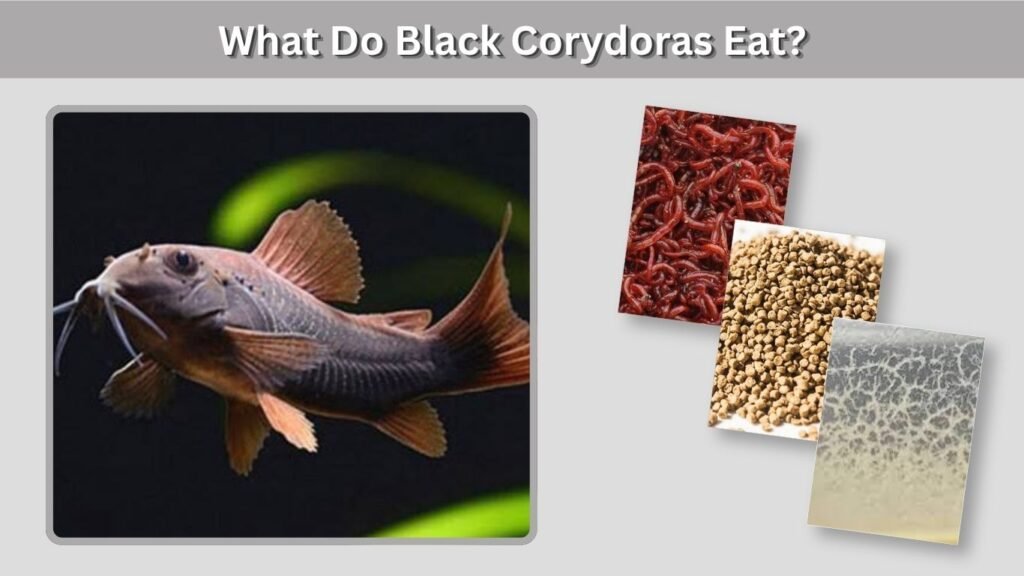
Black Corydoras are omnivorous bottom feeders that consume small aquatic organisms and other edible materials. They need a balanced diet containing sufficient animal protein and other nutrients.
Although they search for leftover particles along the aquarium bottom, they should not depend on scraps from other fish.
Best Foods for Black Corydoras
Suitable foods include:
- Sinking catfish pellets: Provide balanced daily nutrition.
- Bloodworms: Offer supplemental protein.
- Brine shrimp: Encourage natural feeding behavior.
- Daphnia: Provide nutritional variety.
- Quality bottom-feeder tablets: Supply additional nutrients.
Feed small amounts once or twice daily, ensuring enough food reaches the bottom.
Avoid excessive feeding because uneaten food can deteriorate water quality.
Black Corydoras are not specialized algae eaters and should receive dedicated meals.
Black Corydoras Behavior and Tank Mates
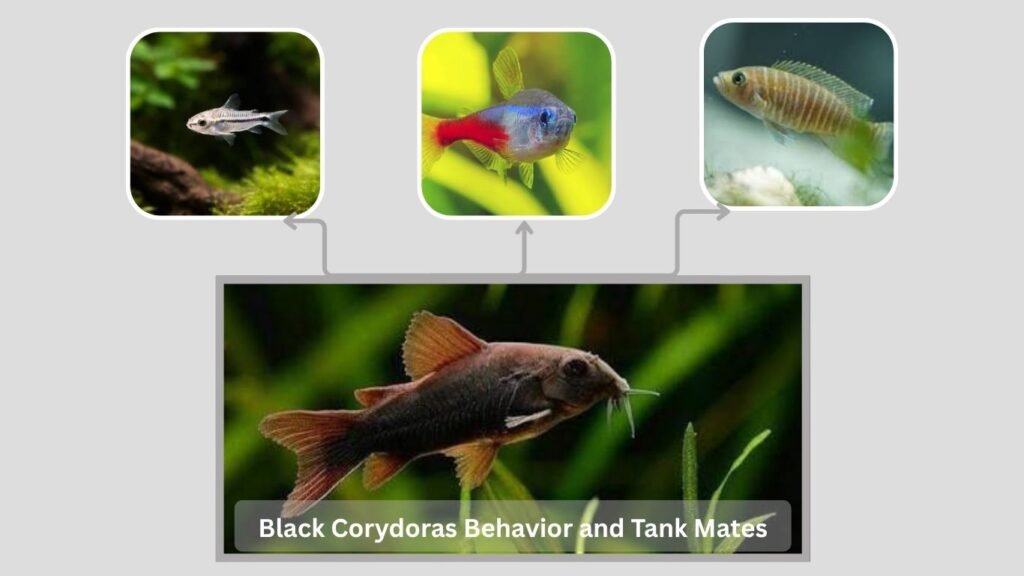
Black Corydoras are peaceful, social fish that spend much of their time exploring the aquarium floor. They frequently move together while searching for food and resting near plants or decorations. Their calm nature makes them excellent additions to suitable freshwater community aquariums.
Best Tank Mates for Black Corydoras
Compatible fish include:
- Neon tetras: Peaceful, active schooling fish.
- Harlequin rasboras: Suitable community companions.
- Guppies: Generally compatible where water conditions overlap.
- Honey gouramis: Calm fish occupying different swimming levels.
- Other Black Corydoras: Ideal companions for social interaction.
Avoid large predatory fish, aggressive cichlids, and species that repeatedly disturb bottom dwellers.
Black Corydoras may occasionally swim rapidly toward the surface to gulp air. This can be normal behavior, but persistent surface visits combined with rapid breathing should prompt water-quality testing.
Black Corydoras Breeding Guide
Breeding Black Corydoras is possible in home aquariums when mature fish receive appropriate nutrition and stable environmental conditions. Like related cory catfish, they reproduce by laying adhesive eggs on aquarium glass, plant leaves, or other surfaces.
Male vs Female Black Corydoras
Adult female Black Corydoras typically appear larger and rounder than males.
Males are generally slimmer, especially when viewed from above.
These physical differences become easier to recognize as the fish reach reproductive maturity.
How to Breed Black Corydoras
Follow these steps:
- Select healthy adults: Establish a mature breeding group containing males and females.
- Condition the fish: Offer high-quality sinking foods and protein-rich live or frozen foods.
- Encourage spawning: Perform a partial water change using slightly cooler, conditioned water.
- Observe egg laying: Females deposit adhesive eggs on glass, plants, or other aquarium surfaces.
- Protect the eggs: Separate the eggs or breeding adults to reduce egg predation.
Eggs generally hatch within approximately 3–5 days, depending on temperature.
After absorbing their yolk sacs, the fry can consume appropriately sized foods such as microworms and newly hatched brine shrimp.
Black Corydoras Varieties and Identification
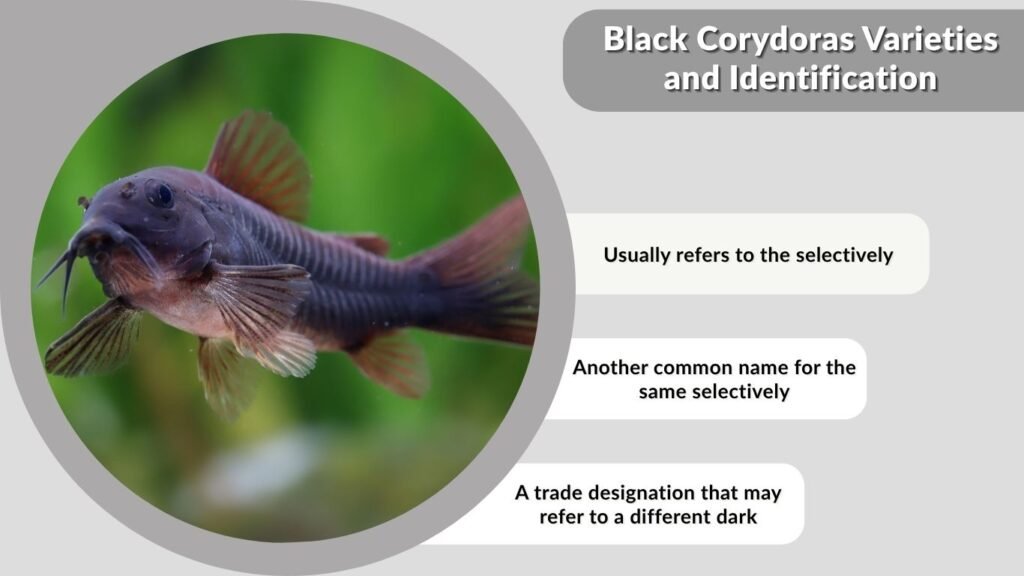
Several dark-colored Corydoras are available in the aquarium trade, but they are not necessarily varieties of the same species. Their identification can be confusing because common names are sometimes used inconsistently.
Common trade names include:
- Black Venezuelan Corydoras: Usually refers to the selectively bred black schultzei form.
- Black Schultzei Corydoras: Another common name for the same selectively bred strain.
- Black Diamond Corydoras: A name used for other dark-patterned corys, including the fish identified as CW049.
- Black Peru Corydoras: A trade designation that may refer to a different dark-colored species or regional form.
When purchasing these fish, verify the scientific identification and ask whether they are captive-bred.
Black Corydoras Price and Availability
Black Venezuelan Corydoras are generally less common than standard bronze or albino Corydoras, and they may command higher prices.
The price depends on fish size, availability, breeding origin, and the retailer.
When buying Black Corydoras, choose active individuals with intact barbels, clear eyes, and healthy fins.
Avoid fish showing unusual breathing, damaged mouths, visible lesions, or difficulty swimming.
Purchase enough healthy fish to establish a proper social group.
FAQs
1. Are Black Corydoras Rare?
Black Venezuelan Corydoras are less commonly available than standard bronze Corydoras. However, captive breeding has made them accessible through some specialist aquarium retailers.
2. Can Black Corydoras Live With Other Corydoras?
Yes. Black Corydoras can generally coexist with peaceful Corydoras species when space and water conditions are suitable. They should still have an adequately sized group of their own kind.
3. Are Black Venezuelan Corydoras Aggressive?
No. Black Venezuelan Corydoras are peaceful catfish that rarely display aggression toward other aquarium fish.
4. Can Black Corydoras Live on Black Sand?
Yes. Smooth, aquarium-safe black sand is suitable for Black Corydoras. Avoid substrates with sharp or abrasive particles that could damage their sensitive barbels.
5. How Many Black Corydoras Should Be Kept Together?
Keep at least six Black Corydoras together. A group of eight or more is preferable when sufficient aquarium space is available.