
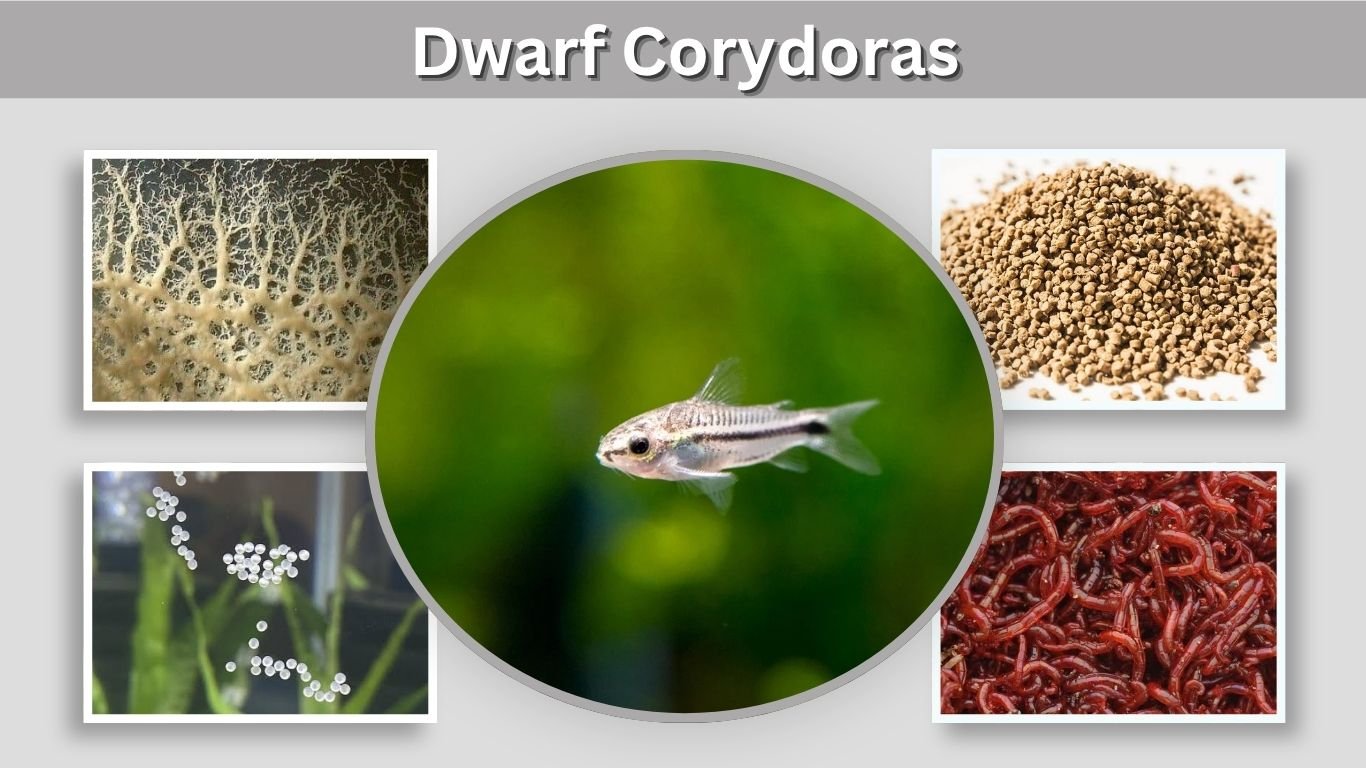
Dwarf corydoras are small, peaceful freshwater catfish popular among aquarium enthusiasts for their active personalities and attractive markings. These miniature bottom dwellers are particularly suitable for planted aquariums and carefully maintained community tanks. Despite their small size, dwarf corydoras need proper water conditions, suitable food, and companions of their own species to remain healthy. Several species are commonly called dwarf corydoras, including pygmy, salt-and-pepper, and tail-spot corydoras. Understanding their differences is important when choosing the right fish for your aquarium. This guide covers their size, care, lifespan, feeding, tank mates, and breeding.
What Are Dwarf Corydoras?
Dwarf corydoras are miniature freshwater catfish belonging to the family Callichthyidae. They originate from South American freshwater habitats, including streams, shallow waterways, and seasonally flooded areas.
Unlike larger cory catfish, dwarf species generally grow to approximately 1–1.5 inches long. They possess armored bodies, delicate barbels around their mouths, and peaceful temperaments.
The term dwarf corydoras does not describe just one species. It commonly refers to three closely related-looking aquarium fish, although a 2024 taxonomic revision placed them in two different genera.
Dwarf Corydoras Quick Facts
| Characteristics | Details |
| Common name | Dwarf Corydoras |
| Family | Callichthyidae |
| Origin | South America |
| Adult size | Approximately 1–1.5 inches |
| Typical lifespan | Around 3–5 years |
| Tank size | 10–15+ gallons, depending on species |
| Temperature | 72–79°F (22–26°C) |
| Diet | Omnivore |
| Temperament | Peaceful |
| Recommended group | 6 minimum; preferably 8–12+ |
| Care difficulty | Easy to moderate |
3 Common Types of Dwarf Corydoras
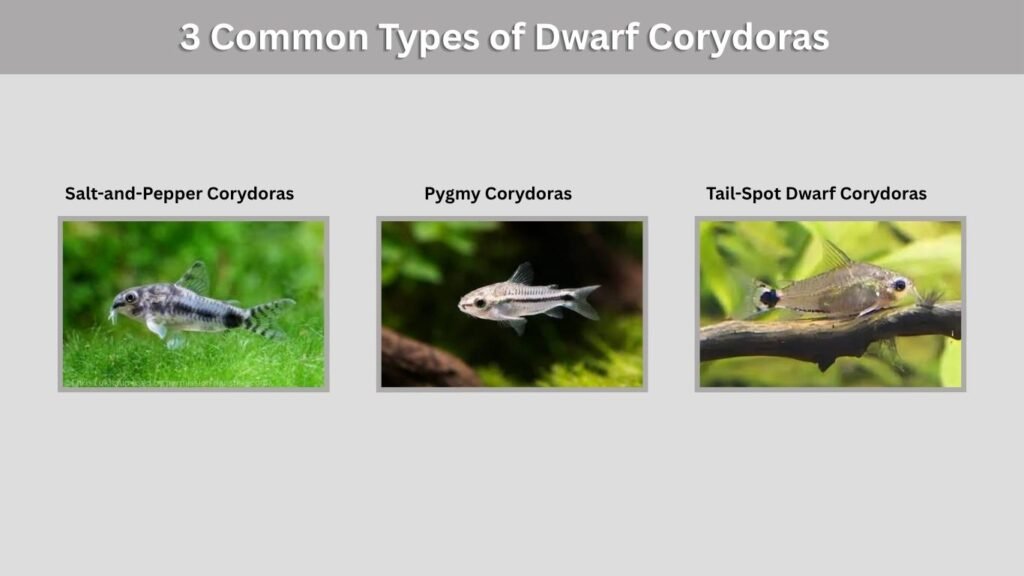
Three miniature species are especially popular in freshwater aquariums. Although they share similar body shapes and social behaviors, they differ in coloration, swimming patterns, and natural habitats. Identifying each species helps aquarists select suitable tank conditions and compatible companions.
1. Salt-and-Pepper Corydoras
The salt-and-pepper cory (Hoplisoma habrosum, formerly Corydoras habrosus) features a pale body with irregular dark spots and stripes. Adults typically reach approximately 1.4 inches and spend most of their time foraging along the aquarium floor.
2. Pygmy Corydoras
Pygmy corydoras (Gastrodermus pygmaeus, formerly Corydoras pygmaeus) have slender silver bodies with distinct horizontal black stripes. They grow approximately 1 inch long and frequently swim through the middle of the aquarium.
3. Tail-Spot Dwarf Corydoras
Tail-spot Corydoras (Gastrodermus hastatus, formerly Corydoras hastatus) are recognized by a prominent black marking near the tail. These small fish reach approximately 1.3 inches and often swim in groups in open water.
Species identification and swimming behavior are supported by established aquarium-care profiles.
Dwarf Corydoras vs Pygmy Corydoras
The terms dwarf corydoras and pygmy corydoras are sometimes used interchangeably, creating confusion among aquarium owners. However, they can refer to different species with recognizable physical characteristics and swimming habits.
| Feature | Dwarf Cory (Hastatus) | Pygmy Cory (Pygmaeus) |
| Adult size | Around 1–1.3 inches | Around 1–1.2 inches |
| Body markings | Black tail-base spot | Horizontal black stripe |
| Swimming level | Mostly midwater | Bottom and midwater |
| Temperament | Peaceful | Peaceful |
| Group size | Preferably 8–12+ | Preferably 8–12+ |
The main difference is their coloration. Tail-spot dwarf corydoras display a distinctive black spot near the tail, while pygmy corydoras have a dark stripe extending along the body.
Both prefer peaceful aquarium environments and companionship from members of their own species.
Dwarf Corydoras Size and Lifespan
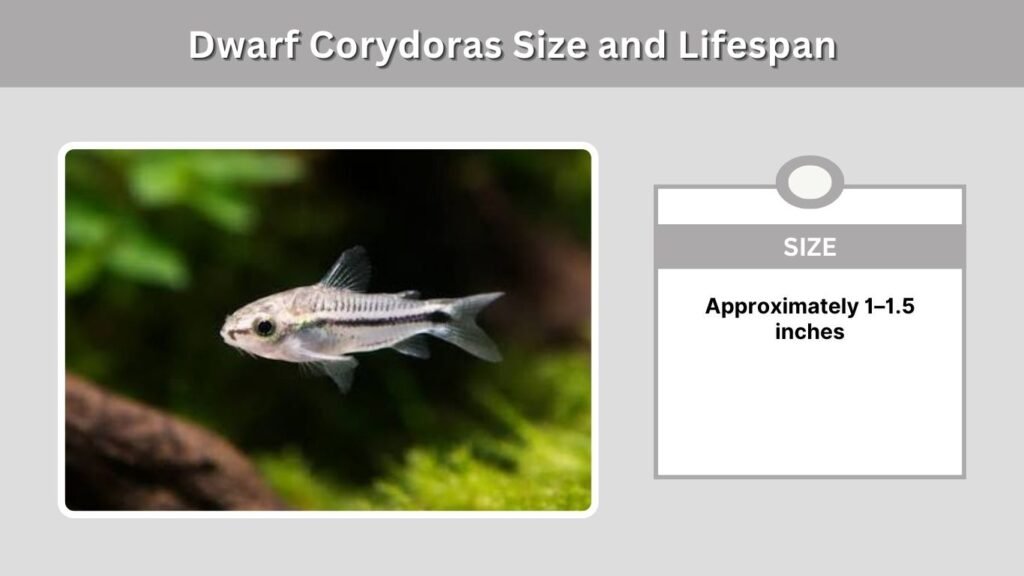
Dwarf corydoras are among the smallest commonly kept armored catfish. Their compact size allows them to inhabit smaller aquariums than standard bronze or peppered corydoras, although sufficient swimming space remains essential.
How Big Do Dwarf Corydoras Get?
Most adult dwarf corydoras reach approximately 1–1.5 inches (2.5–3.8 cm), depending on the species.
Females are generally slightly larger and rounder than males, particularly during breeding periods. Proper feeding, stable temperatures, and clean water encourage healthy development.
How Long Do Dwarf Corydoras Live?
Dwarf corydoras are commonly reported to live around 3–5 years in aquariums, although lifespan varies by species and individual.
A balanced diet, stable water conditions, appropriate tank mates, and reduced stress can improve their chances of living longer.
Dwarf Corydoras Care Guide
Providing a suitable aquarium environment is essential for maintaining healthy dwarf corydoras. These small catfish prefer clean freshwater, gentle filtration, and enough hiding places to feel secure. Although some varieties are relatively hardy, they are sensitive to unstable water conditions and accumulated waste.
Dwarf Corydoras Tank Size
A 10-gallon aquarium can accommodate a suitable group of pygmy corydoras when carefully maintained. For salt-and-pepper and tail-spot dwarf corydoras, a longer aquarium with approximately 15 gallons or more is preferable.
Tank footprint matters because these fish require room to forage and move as a group.
Keeping at least six individuals is important, although groups of eight to twelve or more generally display greater confidence.
Water Temperature and pH
Recommended water parameters for many dwarf corydoras include:
- Temperature: 72–79°F (22–26°C)
- pH: Approximately 6.4–7.4
- Ammonia: 0 ppm
- Nitrite: 0 ppm
- Water flow: Gentle to moderate
These values represent an overlapping range; exact preferences vary by species.
Maintain consistent water parameters and perform regular partial water changes to prevent waste accumulation.
Best Substrate for Dwarf Corydoras
Fine aquarium sand is an excellent substrate for dwarf corydoras because it allows them to search naturally for food without injuring their sensitive barbels.
Smooth, rounded gravel can also work when maintained properly.
Avoid sharp substrates and dirty aquarium bottoms. Add plants such as Java moss, Anubias, and Java fern, along with driftwood and shaded hiding areas.
What Do Dwarf Corydoras Eat?

Dwarf corydoras are omnivorous fish that consume small invertebrates and other edible material while foraging. In captivity, they require appropriately sized foods that provide balanced nutrition.
Best Foods for Dwarf Corydoras
Suitable foods include:
- Micro sinking pellets: Convenient daily nutrition.
- Baby brine shrimp: Small, protein-rich food.
- Daphnia: Excellent live or frozen supplemental food.
- Microworms: Particularly useful for tiny fish and fry.
- Finely crushed flakes: Suitable when they reach the fish.
Feed small portions once or twice daily. Make sure food reaches the fish rather than being consumed entirely by faster tank mates.
Dwarf corydoras should never rely exclusively on aquarium leftovers.
Best Tank Mates for Dwarf Corydoras
Dwarf corydoras are peaceful fish that thrive alongside small, nonaggressive aquarium species. Their miniature size makes careful tank mate selection particularly important.
Suitable companions include ember tetras, chili rasboras, small peaceful shrimp, and otocinclus in an appropriately sized, established aquarium.
Adult cherry shrimp generally coexist well with dwarf corydoras, although tiny shrimplets may occasionally be eaten.
Betta fish and dwarf gouramis require more caution because individual temperaments vary. African dwarf frogs can also create feeding challenges because they eat slowly.
Avoid large cichlids, aggressive fish, and predatory crayfish that could injure or consume these tiny catfish.
Dwarf Corydoras Breeding Guide
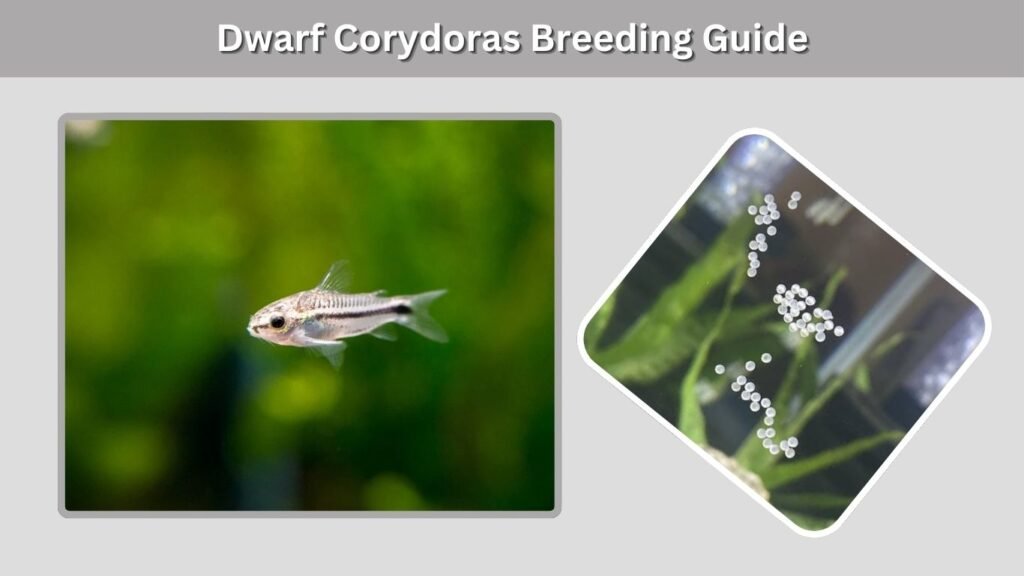
Breeding dwarf corydoras is possible in captivity, although raising their tiny fry requires careful attention. Healthy breeding adults, stable water conditions, and suitable spawning surfaces improve the likelihood of success.
How to Breed Dwarf Corydoras
- Select mature fish: Maintain a healthy group containing males and females.
- Provide nutritious food: Offer live or frozen protein-rich foods to condition the adults.
- Encourage spawning: Slightly cooler, conditioned water changes may stimulate breeding.
- Protect the eggs: Females deposit adhesive eggs on plants, aquarium glass, or other surfaces.
- Raise the fry: Protect eggs from adults and provide appropriately sized foods after hatching.
Eggs of some dwarf species hatch within approximately 3–5 days, depending on temperature. Newly hatched fry require excellent water quality and tiny foods such as microworms or freshly hatched brine shrimp.
FAQs
1. Are Dwarf Corydoras Bottom Feeders?
Yes. Most dwarf corydoras forage near the aquarium bottom. However, pygmy and tail-spot corydoras also spend considerable time swimming in midwater.
2. How Many Dwarf Corydoras Can Live in a 10-Gallon Tank?
A properly maintained 10-gallon aquarium may accommodate approximately 8–10 pygmy corydoras, depending on filtration, dimensions, and other inhabitants. Larger tanks are preferable for the other dwarf species.
3. Can Dwarf Corydoras Live With Bettas?
Yes, sometimes. Peaceful bettas may coexist with dwarf corydoras in sufficiently spacious aquariums. Monitor their behavior carefully because some bettas are territorial or aggressive.
4. Do Dwarf Corydoras Need to Be in Schools?
Yes. Dwarf corydoras are social fish and should generally be kept in groups of at least six, preferably eight to twelve or more of the same species.
5. Are Dwarf Corydoras Hardy Fish?
Dwarf corydoras can be relatively hardy once acclimated to a mature aquarium. However, poor water quality, unsuitable substrates, and sudden temperature changes can negatively affect their health.
