
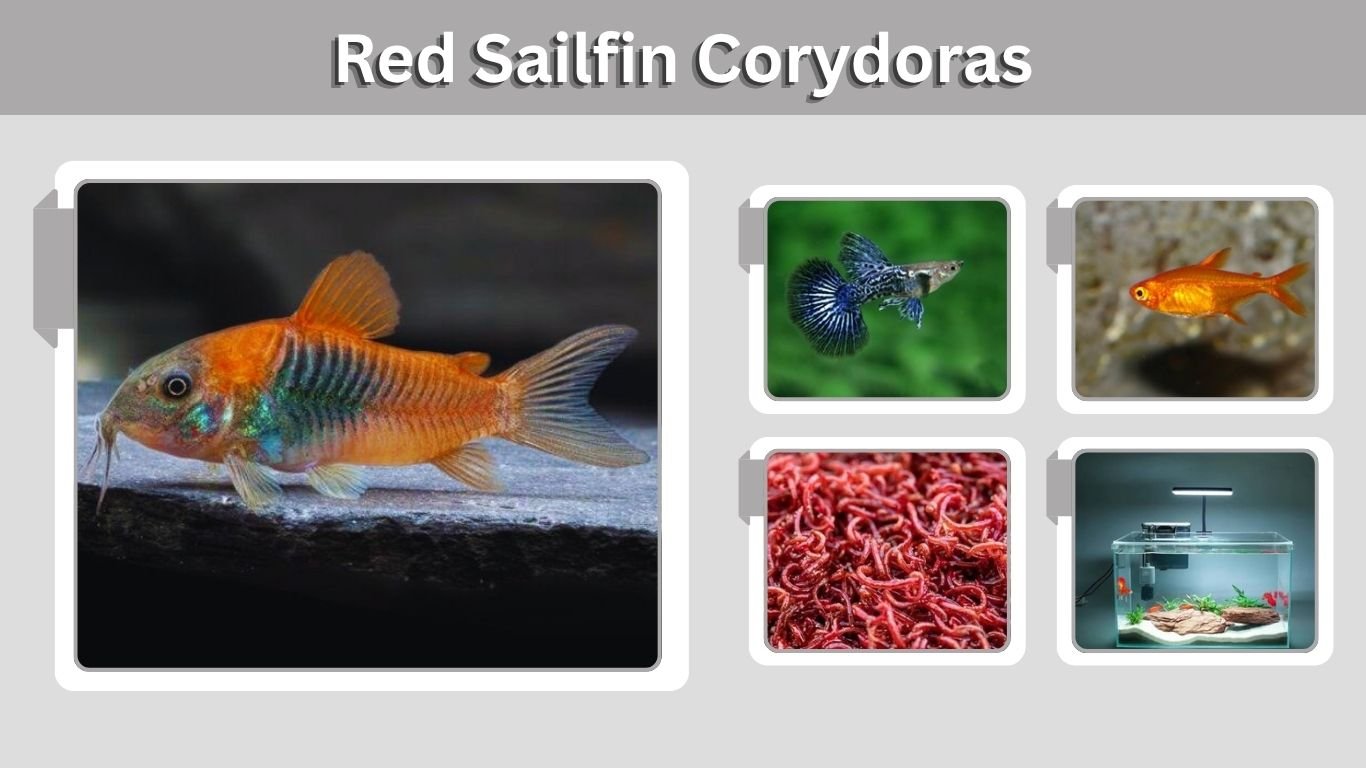
Red Sailfin Corydoras are colorful freshwater catfish admired for their reddish-orange backs, metallic blue-green markings, and peaceful personalities. Also known as Red Venezuelan Corydoras, these attractive bottom-dwelling fish make excellent additions to planted community aquariums. They are social, active, and relatively easy to maintain when provided with suitable water conditions and nutritious food. Understanding their appearance, ideal tank setup, feeding habits, breeding behavior, and compatible tank mates helps aquarists keep these fascinating catfish healthy for years.
What Are Red Sailfin Corydoras?
Red Sailfin Corydoras are small, armored freshwater catfish associated with the Venezuelan form of the bronze cory group. They are commonly sold as Corydoras venezuelanus, Corydoras aeneus “Venezuela,” or Corydoras sp. aff. aeneus. Scientific classification and aquarium trade naming are not entirely consistent.
These fish are associated with northern South American freshwater habitats, particularly Venezuelan drainages. Many specimens sold for aquariums are captive-bred.
Their attractive coloring and social behavior make them popular among freshwater aquarium enthusiasts.
Red Sailfin Corydoras Quick Facts
| Characteristics | Details |
| Common name | Red Sailfin Corydoras |
| Other name | Red Venezuelan Corydoras |
| Scientific name in trade | Corydoras venezuelanus |
| Family | Callichthyidae |
| Adult size | Approximately 2–2.5 inches |
| Lifespan | Commonly around 5 years |
| Temperature | 72–79°F (22–26°C) |
| Recommended tank | 20 gallons or larger |
| Temperament | Peaceful and social |
| Diet | Omnivorous |
| Care level | Easy to moderate |
Red Sailfin Corydoras Appearance and Coloration
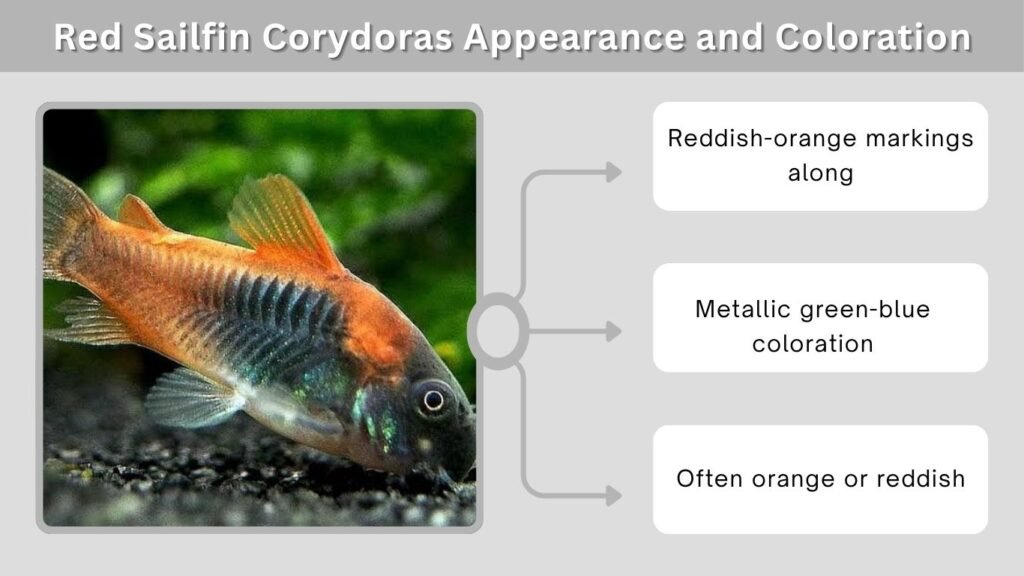
Red Sailfin Corydoras have a distinctive appearance that separates them from many ordinary bronze cory catfish. Their bodies combine warm reddish-orange coloration with darker metallic patterns.
The upper body often displays orange or copper-red coloring, while the sides may shimmer with blue-green reflections. Their dorsal fins can also display attractive reddish shades.
How to Identify Red Sailfin Corydoras
Several physical characteristics help aquarists recognize these fish:
- Body color: Reddish-orange markings along the back and shoulders.
- Side markings: Metallic green-blue coloration with darker patches.
- Dorsal fin: Often orange or reddish, sometimes appearing prominently extended.
- Body shape: Rounded, armored body with a slightly flattened underside.
- Barbels: Short, sensitive whisker-like structures surrounding the mouth.
Color intensity varies between individuals depending on genetics, age, lighting, and overall condition. The name “sailfin” is a trade description rather than proof of a distinct species.
Red Sailfin Corydoras Size and Lifespan
Red Sailfin Corydoras are relatively small freshwater catfish. Most adults grow approximately 2–2.5 inches long, making them suitable for moderately sized community aquariums.
Females are generally larger and broader than males. Their bodies become particularly rounded during breeding periods.
With proper care, these fish commonly live around five years, with some potentially surviving longer.
Providing stable water conditions, nutritious food, and appropriate companions helps support their lifespan. Poor water quality and frequent stress can shorten their lives.
Red Sailfin Corydoras Care and Tank Setup
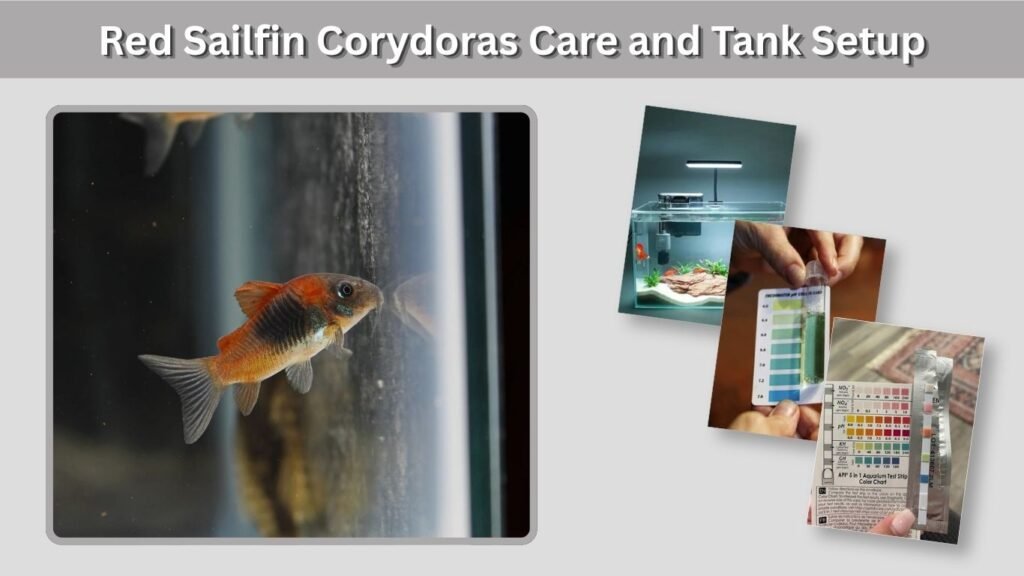
Corydora’s care involves providing a clean, established aquarium with enough bottom space for active foraging.
Although these fish are generally adaptable, they perform best in stable environments that resemble their natural freshwater habitats.
Ideal Tank Size
A 20-gallon long aquarium is a practical minimum recommendation for a group of six Red Sailfin Corydoras.
These fish spend considerable time swimming close to the bottom, so horizontal floor space is more important than aquarium height.
Larger aquariums provide additional swimming room and make maintaining stable water quality easier.
Red Sailfin Corydoras Temperature and Water Parameters
Maintaining consistent water parameters is essential for keeping these catfish healthy.
| Water Parameter | Recommended Range |
| Temperature | 72–79°F (22–26°C) |
| pH | 6.0–7.5 |
| Water hardness | Approximately 5–15 dGH |
| Ammonia | 0 ppm |
| Nitrite | 0 ppm |
| Nitrate | Preferably below 20 ppm |
Avoid sudden changes in water temperature or chemistry. Regular testing helps identify problems before they affect the fish.
Best Substrate and Decorations
Fine aquarium sand is an excellent choice because Red Sailfin Corydoras naturally search through the bottom for small food particles.
Smooth, rounded gravel may also work, but sharp or abrasive substrates should be avoided because they can damage sensitive barbels.
Include live plants, driftwood, smooth rocks, and shaded hiding places.
Leave some open sandy areas where the fish can explore and feed without obstruction.
What Do Red Sailfin Corydoras Eat?
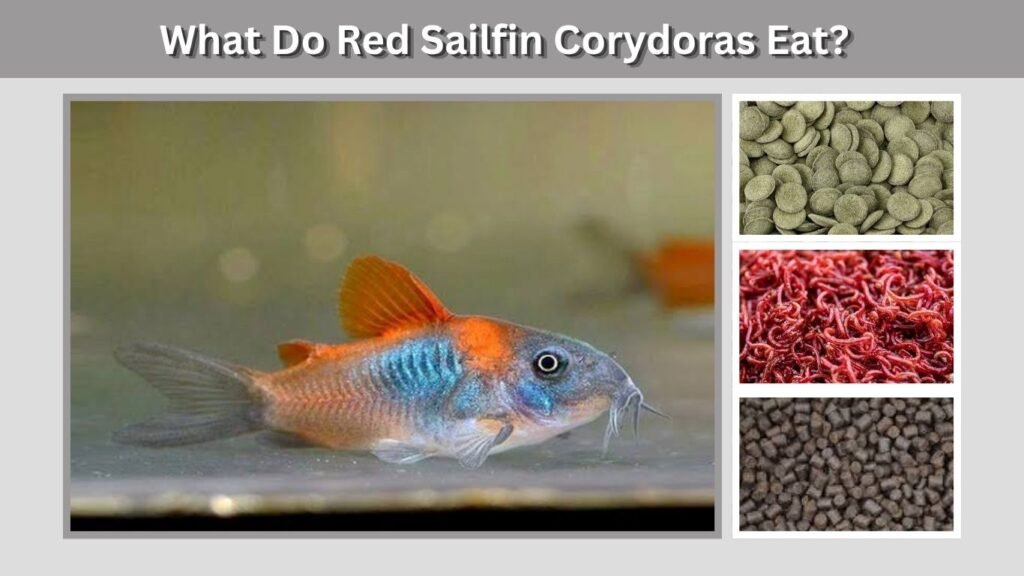
Red Sailfin Corydoras are omnivorous bottom feeders that require a varied, balanced diet.
They naturally search through the substrate for small aquatic organisms and edible organic material.
However, they should not be expected to survive exclusively on leftover food from other aquarium inhabitants.
Best Foods for Red Sailfin Corydoras
- Sinking catfish pellets: Provide essential nutrients for everyday feeding.
- Bottom-feeder wafers: Offer convenient supplementary nutrition.
- Frozen bloodworms: Supply additional protein.
- Brine shrimp: Encourage natural feeding behavior.
- Daphnia: Provide small, nutritious food suitable for varied feeding.
Feed small portions once or twice daily, making sure food reaches the bottom.
Remove excessive uneaten food to prevent water quality problems.
Red Sailfin Corydoras Tank Mates
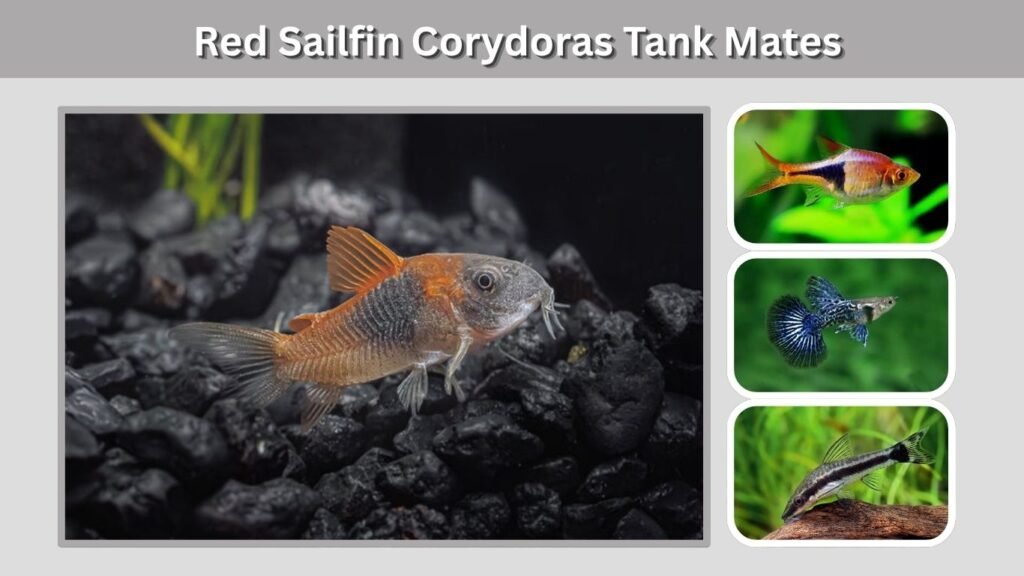
Red Sailfin Corydoras are peaceful community fish that generally coexist well with other nonaggressive freshwater species.
Their gentle behavior makes them suitable for planted aquariums containing fish with similar environmental requirements.
Best Compatible Tank Mates
Suitable companions include neon tetras, ember tetras, harlequin rasboras, peaceful guppies, and otocinclus catfish.
Adult cherry shrimp and peaceful aquarium snails may also coexist with them, although very small shrimp babies can occasionally be eaten.
Avoid aggressive cichlids, large predatory fish, and highly territorial bottom dwellers.
How Many Red Sailfin Corydoras Should Be Kept Together?
Red Sailfin Corydoras are social fish that should be kept in groups of at least six individuals.
A group of eight or more can encourage confident behavior when the aquarium has enough room.
Keeping a proper group allows these catfish to forage, rest, and interact naturally.
Red Sailfin Corydoras Breeding Guide
Breeding Red Sailfin Corydoras is possible in home aquariums when mature fish receive suitable conditions.
Like other bronze-type cory catfish, they reproduce by laying adhesive eggs on aquarium surfaces.
How to Breed Red Sailfin Corydoras
Begin with healthy adults that receive nutritious live or frozen foods. Females should appear noticeably rounded when carrying eggs.
A carefully managed water change using slightly cooler, conditioned water may encourage spawning.
During courtship, males pursue females before the fish adopt the characteristic cory catfish breeding position.
Females attach fertilized eggs to aquarium glass, leaves, or other suitable surfaces.
The adults may consume the eggs, so breeders often move them to a separate hatching container with matching water conditions.
Red Sailfin Corydoras Eggs and Fry Care
Eggs generally hatch in approximately three to five days, depending on water temperature.
Once the newly hatched fry absorb their yolk sacs, they require appropriately sized food.
Microworms, fine powdered fry food, and newly hatched brine shrimp are useful options.
Clean water, gentle aeration, and protection from adult fish improve fry survival.
Red Sailfin Corydoras vs Red Laser Corydoras

Red Sailfin Corydoras and Red Laser Corydoras are sometimes confused because both feature reddish coloration.
However, they are different aquarium trade forms with distinct visual characteristics.
| Feature | Red Sailfin Corydoras | Red Laser Corydoras |
| Appearance | Orange-red back and darker metallic sides | Bright red-orange stripe along the upper body |
| Classification in trade | C. venezuelanus or related forms | Often CW014 or CW023 forms |
| Adult size | Around 2–2.5 inches | Around 2–2.75 inches |
| Temperament | Peaceful | Peaceful |
| Aquarium behavior | Mainly bottom-dwelling | Mainly bottom-dwelling |
Red Laser Corydoras are generally associated with the CW014 and CW023 aquarium forms, currently placed in the genus Osteogaster. They should not automatically be identified as Venezuelan Red Sailfin Corydoras.
Red Blotch Disease in Corydoras: Important Warning
Natural red coloration should not be confused with unhealthy red patches on a Corydoras.
Red blotch disease is a descriptive aquarium term often used when fish develop abnormal red areas, bleeding beneath the skin, or inflamed sores.
Such symptoms may result from bacterial infections, physical injuries, or environmental problems.
If a Corydoras develops sudden red spots, lethargy, damaged fins, or unusual breathing, test the aquarium water immediately.
Affected fish should be assessed promptly, and severely ill fish may need isolation and veterinary care. Antibiotics should not be selected solely on appearance because the cause needs to be established.
FAQs
1. Are Red Sailfin Corydoras easy to care for?
Red Sailfin Corydoras are relatively easy to maintain in established freshwater aquariums. They require clean water, soft substrate, suitable temperatures, and peaceful companions. Keeping them in groups and providing a varied diet helps support natural behavior and long-term health.
2. How big do Red Sailfin Corydoras get?
Red Sailfin Corydoras typically reach approximately 2–2.5 inches in length. Females generally grow slightly larger and develop broader bodies than males. Their compact size makes them suitable for community tanks with enough horizontal swimming space and appropriate filtration.
3. What temperature do Red Sailfin Corydoras prefer?
Red Sailfin Corydoras generally thrive between 72°F and 79°F (22–26°C). Stable temperatures are essential because sudden fluctuations can cause stress. A reliable aquarium heater may be necessary depending on room temperature and the needs of other aquarium inhabitants.
4. Are Red Venezuelan Corydoras the same as Red Sailfin Corydoras?
Red Venezuelan Corydoras and Red Sailfin Corydoras are often overlapping aquarium trade names. Both commonly refer to reddish-orange Venezuelan bronze-type corys. However, naming varies among retailers, so scientific identification should be checked before assuming specimens are identical.
5. Can Red Sailfin Corydoras live with shrimp?
Red Sailfin Corydoras can generally live peacefully with adult freshwater shrimp. Their calm temperament makes them suitable for many planted shrimp aquariums. However, they may occasionally eat newly hatched shrimp, so moss and dense vegetation provide useful hiding places.